


Interview: Screenwriter Sarah Louise Madden on her TV debut ‘The Quiet Hour’
Rhys John Edwards
Ahead of writing her television debut, ‘The Quiet Hour’, Sarah Louise Madden set out to discover what life is really like on the frontline of healthcare.
As a former teacher, she was more than used to seeing her own profession twisted in the public sphere. Too often her everyday challenges were batted away by people eager to point out just how nice it must be to have a summer holiday.
Like soldiers told to stop complaining about landmines because their medals are so shiny, most public servants expect a bit of ignorant vitriol from the people they serve. Their punishing workloads and personal sacrifices are routinely shrugged off by the ‘we pay your wages’ brigade – the kind of people who wilfully forget there’s a human being behind the job title.
So, before putting pen to paper, Madden met with a number of healthcare workers to ask: “What do you want the public to know about what you do?”
Their answer was simple but heartbreaking: “That we’re doing our best.”
Madden was approached to write for Channel 5’s ‘Play for Today’ – the revived anthology series that helped launch the careers of Alan Bleasdale, Caryl Churchill and Mike Leigh – and given one stipulation: set the episode in a hospital. The rest was up to her.
The prospect of writing about a night shift immediately appealed to her. “It’s that switch between the mundane and the critical that can happen in an instant overnight. Doctors are often overseeing 150 to 200 patients, but the nurses are on the ground, having to respond to emergencies and having to give life-saving care until the doctor arrives.”
The concept of the ‘quiet hour’ came from her conversations with these nurses, the idea being that between 4am and 5am, there can often be an unsettling sense of calm, during which time the sickest patients seem to slip away.
The notion of a lull coexisting with an extreme is woven into the drama, with this hushed ward trying to trick itself into tranquillity and yet always pulsating with building tension. Watching the episode feels like sitting in a library where the head librarian is walking around in wooden clogs telling people to shhh through a megaphone.
This conflicting blend is integral to Madden’s writing. Yes, there is clearly a wider socio-political point to be made about how we view and treat NHS workers, but first and foremost, she wants to thrill the audience with a proper, pressure-cooker drama.
The aim, Madden says, is to “make a big point by shining a light on an area that we don’t want to look at,” but she believes there’s no reason this can’t be achieved through entertainment. A spoonful of sugar to help the… devastating truth about our crumbling society… go down?
It’s something Madden believes the original series excelled at. “It can be comedy, like ‘Abigail’s Party’, or it can be brutal like ‘Scum’, but it must always be something people want to watch.”
“I try to Trojan horse in wider themes, but for me, firstly, I just want it to be entertaining. I want it to have spectacle.”
She applies the same sentiment when writing about her working-class roots. “Why do working class stories have to be bleak? There’s community and there’s love and there’s adventure! It’s like that stuff isn’t allowed to be shown on council estates.”
She also bemoans the tendency to associate working-class stories with a kind of ‘poverty porn’. “It seems like the only stories we’re allowed to tell involve drugs or crime, and yeah it does happen, but that’s not all there is…. where’s the council estate rom-com?”
Representation is clearly important to her, with Madden citing Sophie Willan and her work on ‘Alma’s Not Normal’ as a step in the right direction but, “when you can’t name more than ten people who are writing these kinds of stories, it’s clear there’s still an issue.”
Welsh identity is equally important, but she similarly questions why a story set in Wales necessarily has to be about Wales itself. “There are people in the industry who think that any Welsh story has to relate to our language or history or rural agriculture or whatever. And I’m kind of like, why can’t it just be set in Wales? An original story with Welsh characters.”
Without a mention of a miners’ strike or a male voice choir?! Doesn’t bear thinking about…
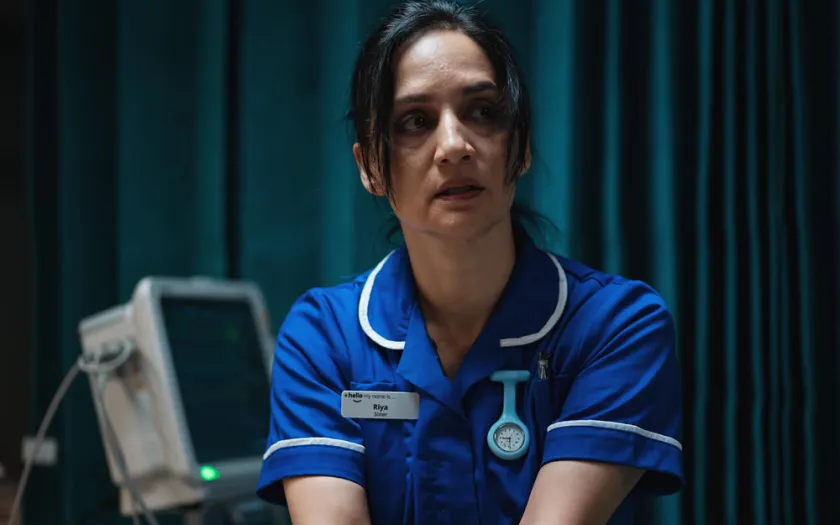
Madden has written pieces set both inside and outside of her home country, but always ensures there is at least one Welsh character present. ‘The Quiet Hour’ was no different, with Aled ap Steffan playing Samuel, a sparky colleague of Riya, the central character played by Archie Panjabi.
“I’ll always make sure we have a Welshie in there somewhere!” Madden promises. “Home is such a huge part of my writing. Especially dialect, how we speak, that’s something that will always be there. I’ve had Americans reading my scripts, questioning bits of dialogue and it’s like… no, that’s just how we talk.”
Her episode aired earlier this month and is still available to stream on Channel 5’s streaming service. Madden says the response so far has been overwhelming.
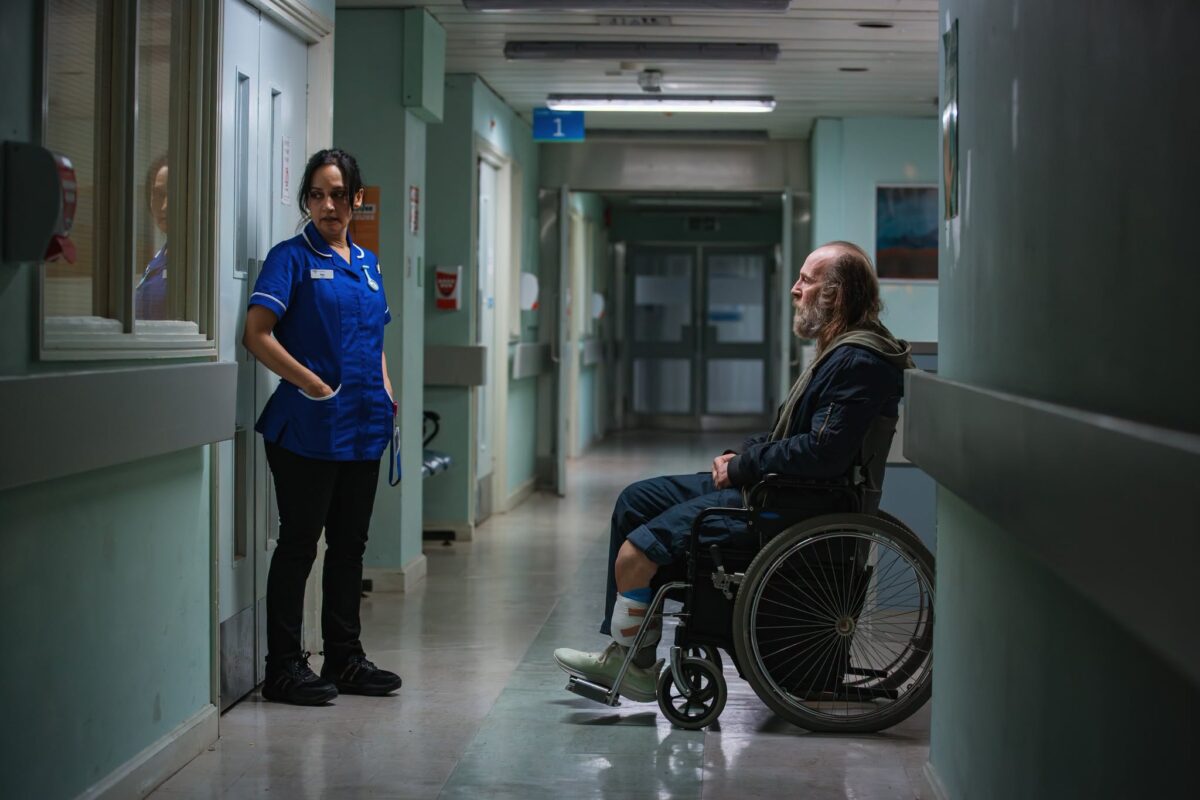
A promotional clip posted on social media really seemed to resonate with healthcare professionals. The scene shows Riya having an unpleasant altercation with a patient played by Paul Kaye, who is demanding she make him a cup of tea, despite the fact she’s just been dealing with a literal life-or-death situation.
“I got really emotional reading the comments because there were a lot of nurses talking about how accurate it was… suggesting that watching it actually felt quite triggering.”
“It just hammered home – why aren’t we talking more about PTSD? This is the reality for so many people. I spoke to a nurse who told me about how she had to respond to a cardiac arrest while another patient was screaming at her that he needed his biscuits.”
“It’s those kinds of things that you hope you’re just dramatising, but no, this is genuinely what happens.”
Ideally, the aim is for this authenticity to break through, create a positive impact and perhaps even inspire change. “It would be great if it could provoke a bit more empathy. To encourage people to make more of an effort to see the person behind the uniform.”
Not that she doesn’t sympathise with those who are frustrated or even suffering at the hands of an imperfect service. “Look, all of us have gone to hospital, and all of us have been frustrated with the wait times, and there’s a lot that can be done better, but I think it’s important to give a little grace to those who are trying to help.”
But ultimately, Madden simply hopes people will watch. “Our TV programmes are dictated by viewership. So, if we, as an audience, watch something, there’ll be more of that made. And if we don’t, there won’t be. If we want more working-class voices behind the camera, we need to support them. We need to watch these kinds of shows.”
“I hope it’s entertaining. I hope it’s something you feel absorbed in, and for those 45 minutes you’re just somewhere else. I hope it gives you a peek behind the curtain into a world that not many of us see, and when you come out, you have questions about the world and think about what we can all do to make it a bit better.”
‘Play for Today: The Quiet Hour’ is available to stream now on Channel 5:
https://www.channel5.com/show/play-for-today
Support our Nation today
For the price of a cup of coffee a month you can help us create an independent, not-for-profit, national news service for the people of Wales, by the people of Wales.
Get more trusted Welsh news
Choose Nation.Cymru as a preferred source in Google News to see more of our journalism.


