

Interview: Shân Morgain: Mabinogi scholar, priestess and radical feminist
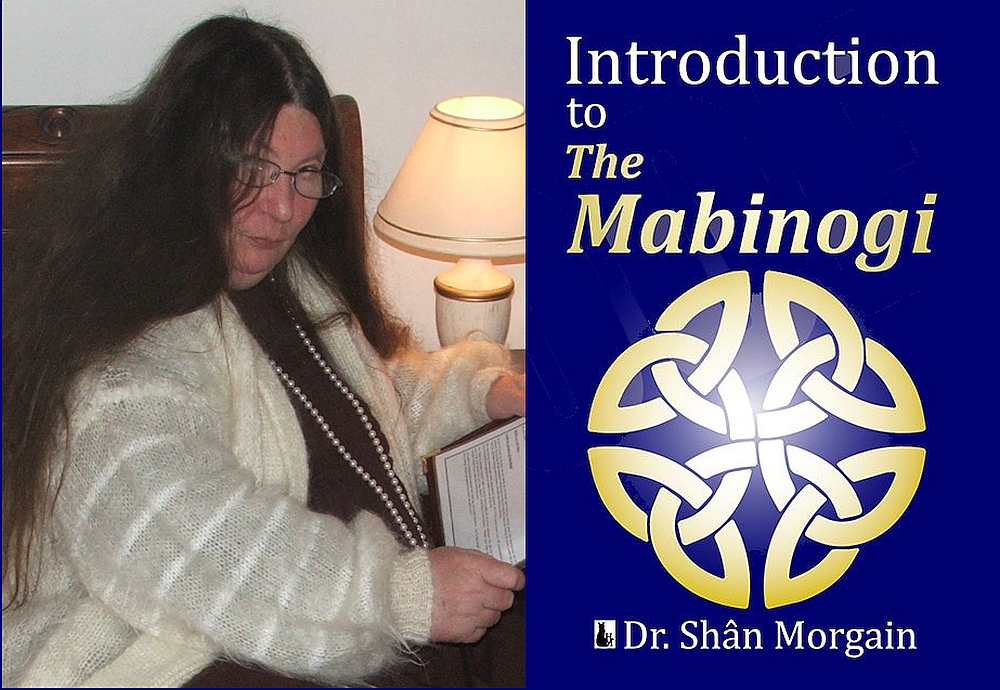
Dr. Shân Morgain is one of Wales’ leading experts on the Mabinogi, and her ongoing, hugely successful Nation Cymru series has introduced new audiences to the eternally-inspiring text.
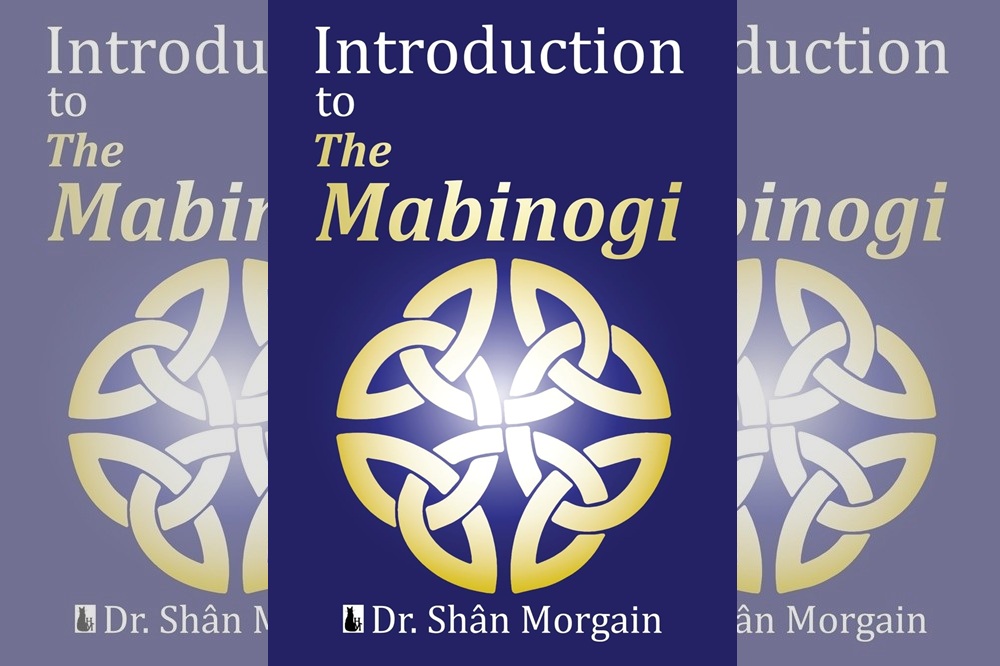
This month will see the release of her latest book, Introduction to the Mabinogi, which Dr. Simon Rodway called ‘a truly useful and accessible introduction to the Four Branches … she deserves our gratitude’.
Shân also writes on feminist issues including masculinity and Gisèle Pelicot.
Under the pseudonym ‘Shan Jayran’, she wrote a collection of books on modern Paganism (1980s/ 1990s).
She is particularly known for her clear, easy to read style, her sharp insight into people and politics, and her adoration of cats.
To celebrate the release of her latest book, we spoke with Shân about her work, and found out more about the woman behind the pen.
Can you tell us a little more about your formative years?
Well, I was born in London to a magnificent mama who married many times. My main childhood happened during her third marriage to a farmer, so I had a country childhood.
My first job at 15 was as a Woolworths Saturday girl. Later I did jobs in trendy boutiques as I love clothes. But my teens were very unhappy, as so many are. I was yanked over to New York.
Greenwich Village in the 60s. Yuck. A young girl like me was just meat for the guys. I very nearly succeeded at suicide, and did therapy.
Did London University in my 20s (UCL), studying formal Philosophy which I loved. Trained to teach English to foreigners, and pioneered teaching online.
This helped hone my writing too. For someone learning a language you must use short sentences. No short forms without spelling them out. Speak to an intelligent 12 year old, cut the jargon, be human, use pictures.
And how did you begin as a writer?
Almost as soon as I could do joined up writing as a little girl.
When I was 13, on holiday in Italy, I loved sitting in the pretty hotel garden, writing with a purple felt tip pen.
I was building a fantasy world. Back in 1962 fantasy writing barely existed. A shimmering lady in silver white stood at my right shoulder and flowed words down into my hand. That was lovely.
But with all the recovery from unhappy teen years, I was 30 before I really felt I was a writer.
As for your influences and inspirations, who has helped shape your writing today?
Lots. Tolkien. Plato. John Donne. Wittgenstein. Robin Morgan. Ursula K. LeGuin. Doreen Valiente. Anne Dickson’s assertiveness training. Starhawk. Co-Counselling. Christine James, ArchDruid of the Eisteddfod. Simon Rodway. John Davies, my beloved.
You’re known for your feminist writing too. Could you tell us more about this?
I’m she, happy in my female body, but I loathe feminine limits and men’s violence against us. I lived as a boy at 19, a very instructive loneliness.
My core heart was always dyke, then I ended up at 40 loving my friend John as a person. I adore being a mama.
You call yourself a Radical Feminist, too…
Yes! And I insist you keep this in. I hate the global epidemic levels of violence, rape, abuse – and it’s almost all by men.
But remember how I wrote about men here on Nation Cymru? I said I felt men were unhappy and lonely, and could learn to be more real, but they need help.
My beautiful son and his dad are living evidence I’m right. With help, men can be grand.
So what does ‘Radical Feminist’ mean to you?
It means that if I want, when I want, I can put being a woman first. Not so terribly radical today but believe me for my generation, it was.
Even now too many women put a man first and let them become nasty, out of control.
What was your first independent business?
At 30 I created Tabbies, a beautiful women’s retreat in London with a cafe, sauna suite and meeting room. Many of the feminist groups of the day used to meet there, and we’d dance in sisterhood.
Tell us about your work with AHP (Association of Humanistic Psychology).
I was a humanistic counsellor for 20 years. The old-guy Chair of AHP fancied me (groan) so he invited me onto their committee. Two of my AHP articles are My Child, and Stand Up and be a Woman!
Are you really a Witch?
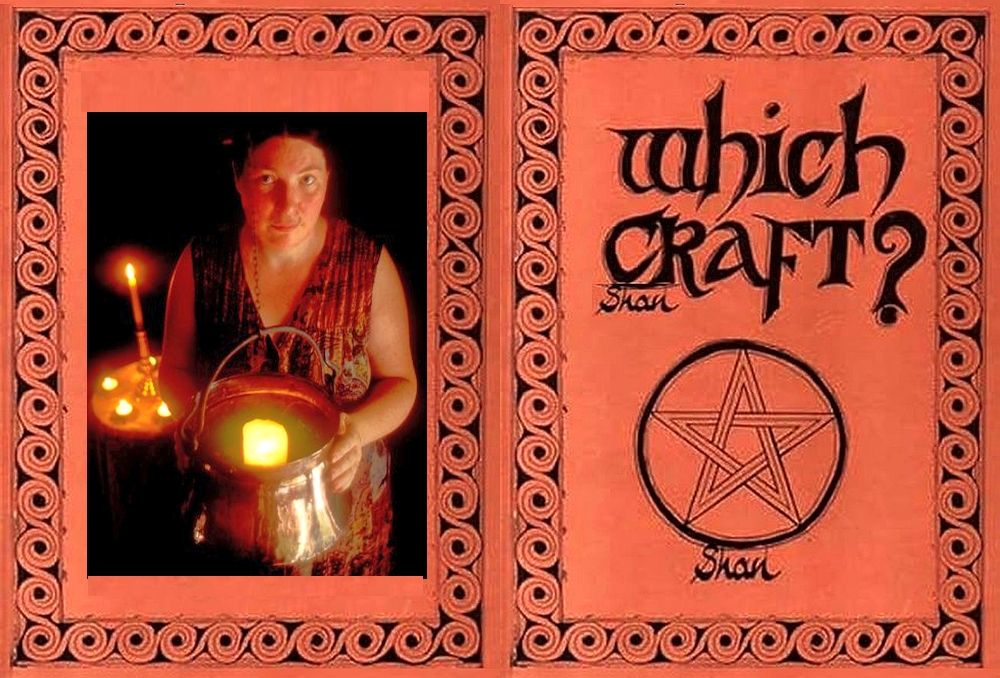
Yep I surely am. I initiated 1985.
To be a Witch is about the Earth Mother, magic being natural, trusting your own inner wisdom. The Craft is the only faith that puts females first, so obviously for me it’s my home.
I closed my lovely Tabbies women’s retreat due to exhaustion.
Then I created House of the Goddess 1985 – 2005. A real cauldron of creativity, with a national Pagan network, groups, covens, courses, seasonal rites, life rites, my published books. Which after 20 years meant exhaustion – again.
Is it difficult being both an eminent scholar and a priestess?
What’s difficult is that other people find it difficult. They want me to be one or the other. It stretches them to cope with both – whichever side they’re on.
The scholar stops the priestess getting wiffly and wacky, and the priestess stops the scholar being stuffy and boring. So I really like being both.
How did you come to Wales?
My two best friends ‘just happened to be’ Welsh. Goddess ‘coincidence’.
I came to visit John in Pembrokeshire when his mama died in 1989. He showed me his beautiful land, and I fell in love with BOTH of them, my head full of Mabinogi legends.
As Simon Rodway said of his own coming to Wales, I came here seeking Celts and discovered the Welsh. A practical, efficient, poetic, humane people, who genuinely love children.
What made you fall in love with the Mabinogi?
The tales are so ALIVE. The people are so understandable in their struggles and triumphs. Much more sophisticated than the Irish swordslingers.
My most beloved Mabinogi person is Rhiannon who is strong (of course) but also deeply vulnerable as a mother. I love Pwyll her partner too, who stands by her so cleverly.
There’s a grand parallel because, like Rhiannon, I came to Dyfed and chose my bloke, and we have one beautiful son.
You did ten years research for a whopping PhD about the Mabinogi. Why did it take so long?
Cancer, in a word. Mine was a quickie about 8 years ago, so I’ve got one smaller than the other.
But my brave John and his blood demon was a ghastly journey. He died last Christmas, and I wrote this tribute to him.
He was immensely proud of my work, which he constantly helped me do. He loved my little book Introduction to the Mabinogi.
What’s your main message about the Mabinogi?
It’s very very political. Many people love it as mythology. Recent generations of scholars concentrate on the tales as fine literature. Then there’s politics.
These stories were put together around 1100 as a native, national showcase, when the Normans invaded. The tales said loud and clear that we, the natives of Britain, are more cultured, more sophisticated than you are (you nasty horde of raiding mice!).
Since then English translations have almost taken over, as if this is an English literature. NOT SO.
But although it’s a work of genius, the pioneer of prose storytelling, it’s rarely acknowledged for what it is outside Wales, because it’s Welsh.
You are highly respected by the National Library of Wales. What is it they like so much?
My website www.mabinogistudy.com which tells the tales, offers articles, pictures, and searchable lists including a huge Mabinogi Bibliography.
But mostly I think NLW likes it that I try so hard to be accurate, and that I’m standing up for the Cymru producing a work of world-status genius.
There are a lot of parallels between how women are put down and how the Welsh are too. So I found a lot of Welsh politics familiar.
What is ‘Gwead Cymraeg’?
My PhD had to be in English. I knew no matter how hard I studied the Cymraeg I’d never be much good at it as a writer.
I’m only ‘adopted Welsh’. So I tried to nourish how the Mabinogi is WELSH even though I write about it in English.
My title and subtitles are Cymraeg. Quotes from the Mabinogi are in the original Cymraeg – English translation is secondary, footnoted. I scatter key words in the Cymraeg, again footnoted translation. So everywhere I signal the Cymraeg comes first.
It was one of my examiners Daniel Williams who named what I was doing ‘Gwead Cymraeg’ (Welsh weave).
Tell us more about your new book, Introduction to the Mabinogi.
I wanted to help ordinary people to read the Mabinogi tales for fun (so they’re right there in the book).
But also I wanted to help people to enjoy the exciting theories that open up more in the tales. Plus some of the scholars are such naughty people.
Oh and I collected lots of pictures from old books.
So there you are, £8.25 on amazon and other book sites.
After all this, what’s coming next?
More Mabinogi. I have the honour of permission to republish Ifor Williams PKM (Pedeir Cainc y Mabinogi) from his son Sion – that’s the original mediaeval Welsh. I shall match it page by page with English translation.
People have been asking for years for reprints of my Pagan books, especially Which Craft? and Circlework.
I’m hatching a book about Cat language, and people have been nagging for an autobiography (blush). More feminism …
But I’m old now. I think I’m slowing down.
Pet hate? Great love?
Hate – the way almost all authors present cats (and other animals) as stuffed toys. They just eat, sleep and look cute. In fact, cats have a whole culture of their own, politics, yoga, conflicts, alliances, and then there are familiars. Another book to do.
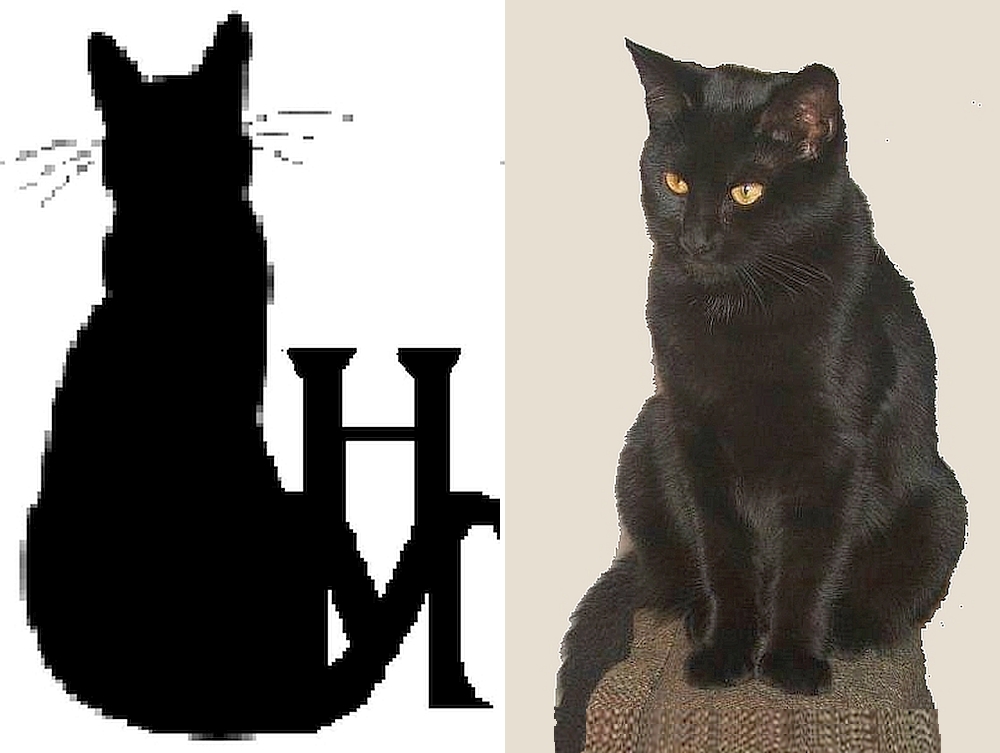
Great love … er CATS obviously. You can see my beloved friend Etsaana in my publisher logo.
Read Dr. Simon Rodway’s review of Introduction to the Mabinogi here
Support our Nation today
For the price of a cup of coffee a month you can help us create an independent, not-for-profit, national news service for the people of Wales, by the people of Wales.


