


Interview: Tori Lyons and Eleri B. Jones on their new play ‘My Normal F**king Sex Life’
Rhys John Edwards
While working on her debut play, My Normal F**king Sex Life, Tori Lyons discovered something important: she is, and always has been, a clown.
‘I was raised on slapstick comedies,’ she explains. ‘Jim Carrey and Eddie Murphy were my absolute favourites as a kid, so I think it was always there…’
Lyons now proudly exhibits the boundless energy and wit of her heroes, but it was not until she embarked on an ‘R&D’ (research and development) for her play that she recognised just how naturally she embodied this kind of comic persona.
‘We were doing some clowning work as part of our R&D, and I suddenly realised just how much of a clown I already was! All this time, I’d been doing this stuff naturally…’
‘You’re given that chance to be bad’
She believes the R&D phase is ‘absolutely crucial’ when it comes to creating new theatre. Without it, she may never have uncovered, or had the opportunity to refine, those underlying comedic instincts.
‘It’s paid time in the room, which is the most important thing, but you’re also given an opportunity to just throw things at the wall and see what sticks. You’re given that chance to be bad…’
Research and development is an aspect of theatre production that casual audiences may be unfamiliar with.
There is a tendency to assume that when a budding playwright writes a script, they simply send it off to some theatre bigwig who, if they deem it good enough, allows them to put it on stage. If only it were that easy…
‘It’s a space to be creative and play’
Writing the play is barely the first hurdle for Lyons. Next comes an extensive Arts Council of Wales funding application, where she must justify why the story deserves to be staged. If successful, she might then be awarded time to ‘research and develop’ the work further, collaborating with creatives, testing material with audiences and refining the play before returning to the Arts Council in the hope of gaining a larger grant to stage the play in full.
To the uninitiated, this process might sound exhausting, or even unnecessary. Surely, if it’s good enough on the page, why not just get cracking?
And yet, despite the process having taken almost three years, Lyons and her director Eleri B. Jones still believe an R&D is an integral part of theatre-making.
‘It just completely releases pressure on everybody,’ Jones says. ‘It’s a space to be creative and to play, which is so important because at the start of your career, you simply don’t know what you don’t know.’
‘You don’t have all the answers when you start out, and an R&D can act as a kind of education.’
Quoting the play, Lyons adds, ‘Because how can you make any choices if all the doors are locked and bolted, and you don’t even know where the doors are?!’
For Lyons and Jones, it’s not about jumping through hoops to justify the play’s existence, it’s about enhancing the blueprint of the story so that it can become something multifaceted.
‘This is just the beginning’
The pair are fast becoming a double act. Alongside My Normal F**king Sex Life, they have also collaborated on the short film Justice, and their creative partnership shows no signs of slowing down.
‘There’s no limit to the possibilities of our collaboration and the work that we make,’ says Lyons.
Jones echoes this. ‘It feels like we can do anything and tell any story.’
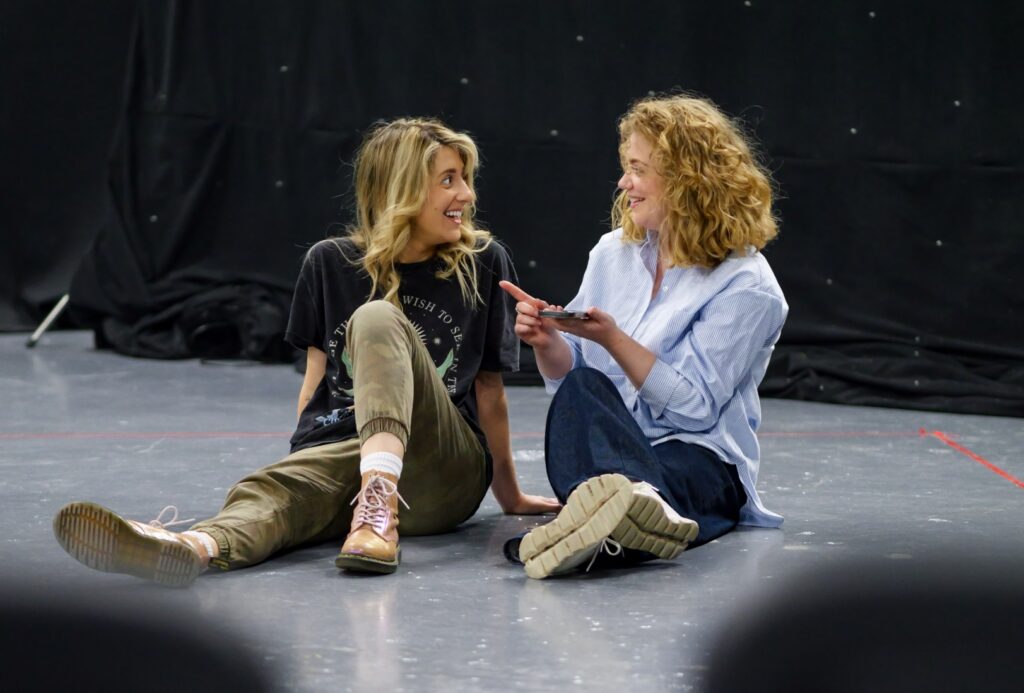
Their work delves into some dark themes, but this doesn’t seem to stop them from having an absolute blast behind the scenes. They always make time to dance around the rehearsal studio to a Steps megamix, even if the next scene they are working on deals with complete and utter devastation.
Just as they balance their sense of humour with serious subject matter in rehearsals, they also believe in bringing levity to heavier material on stage.
‘I feel like there is such a pressure on creatives to make a certain type of work, or to make the kind of work they’re already known for,’ Jones says. ‘But I think what I’ve found really exciting about our working relationship is that it doesn’t feel like it has those constraints.’
‘And this is just the beginning,’ Lyons adds.
‘You don’t have to bleed on stage’
The pair are open about having experienced similar traumatic events in their pasts, and these experiences have enabled them to connect on both a personal and professional level. I ask if Lyons ever fears giving too much of herself away in her work and, consequently, whether Jones, as her director, ever feels a responsibility to hold back in order to protect her.
‘My safety and my wellbeing is always the top priority,’ Lyons says, having already given a great deal of thought to the dangers of autobiographical performance.
‘One of my most important values, more important than the work we make and the things that we do, is to keep people safe.’
‘That comes above everything else,’ Jones agrees. ‘At the end of the day, it’s important that we can leave the work behind because it is just a job.’
Both have been in rehearsal rooms over the years where delving into serious trauma to inform a performance has been encouraged, but this is a type of method acting that thankfully, they believe the industry has now wised up to.
‘You don’t have to bleed on stage in order to make something really universal and relatable and powerful,’ Lyons says.
‘It celebrates being messy’
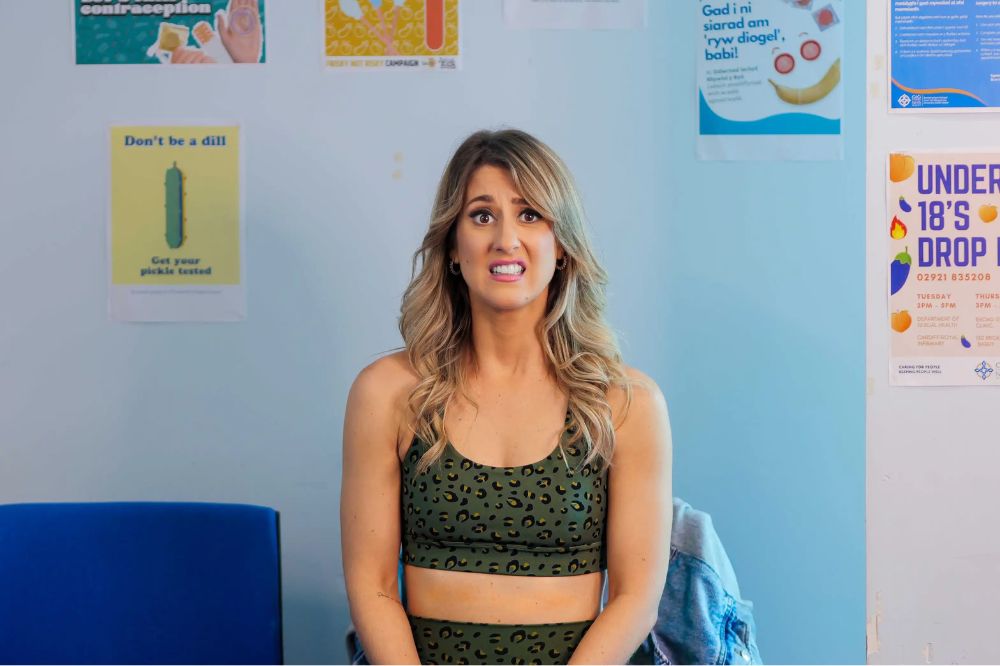
The play follows Tori as a newly single woman attending an appointment in a sexual health clinic after contracting her first STI. Described as ‘not your typical comedy night’, it invites audiences to ‘laugh, wince and maybe see themselves in the unfolding chaos’.
‘It’s very much my experience, and something that I wish I’d seen on stage,’ Lyons says. ‘It’s my perspective of what the truth is. What my truth is.’
‘I think it celebrates being messy,’ Jones suggests. ‘It’s all about perception and how people perceive themselves and other people in relation to those timelines that we’re taught. It sort of kicks the door down on that.’
Lyons seems particularly interested in these proposed timelines of life, this idea that, depending on your age, your life should look a certain way.
‘You know, everybody is on their own journey, and that’s okay. It doesn’t matter if that doesn’t look the same as other people’s journeys. This show is all about time, and running out of time, and feeling like you have to do certain things… that you have to be put in a box and that you have to follow a script.’
Lyons reflects on this idea in the context of her chosen career. Many actors she has known over the years had given themselves arbitrary timelines for success and decided, if they didn’t ‘make it’ by a certain point, they’d give up.
‘I turned 36 this year and so many actors would have given up by now. But I just thought, why would I do that actually?’
‘Because I feel like in the last few years I’ve made huge waves. And I think just giving myself permission has been the most empowering thing for me in this process.’
‘It’s got legs to go everywhere’
Both Lyons and Jones seem immensely grateful that this show has finally made it to the stage, but they admit, they have still yet to reach the ceiling of their ambition for the play.
‘The idea is for it to tour and for as many people to see it as possible,’ Lyons says. ‘We were talking about Edinburgh…’
‘…and Hollywood!’ Jones says, playfully. But she’s only half-joking. ‘I do believe it’s got national and international universality.’
‘I think it’s got legs to go everywhere, and I think it truly deserves that.’
In terms of what Lyons hopes audiences will take away from her story, she says, ‘I just really hope that it poses some questions.’
‘I hope it gives the audience permission to really think about who they are and what they want, and the endless possibilities of what that could be…’
My Normal F**king Sex Life is performing at The Riverfront, Newport from Thursday 21 – Saturday 23 May 2026.
Tickets and more information here.
Support our Nation today
For the price of a cup of coffee a month you can help us create an independent, not-for-profit, national news service for the people of Wales, by the people of Wales.
Get more trusted Welsh news
Choose Nation.Cymru as a preferred source in Google News to see more of our journalism.


