


Interview: Welsh artist Neale Howells shapes a career outside the rules
Amelia Jones
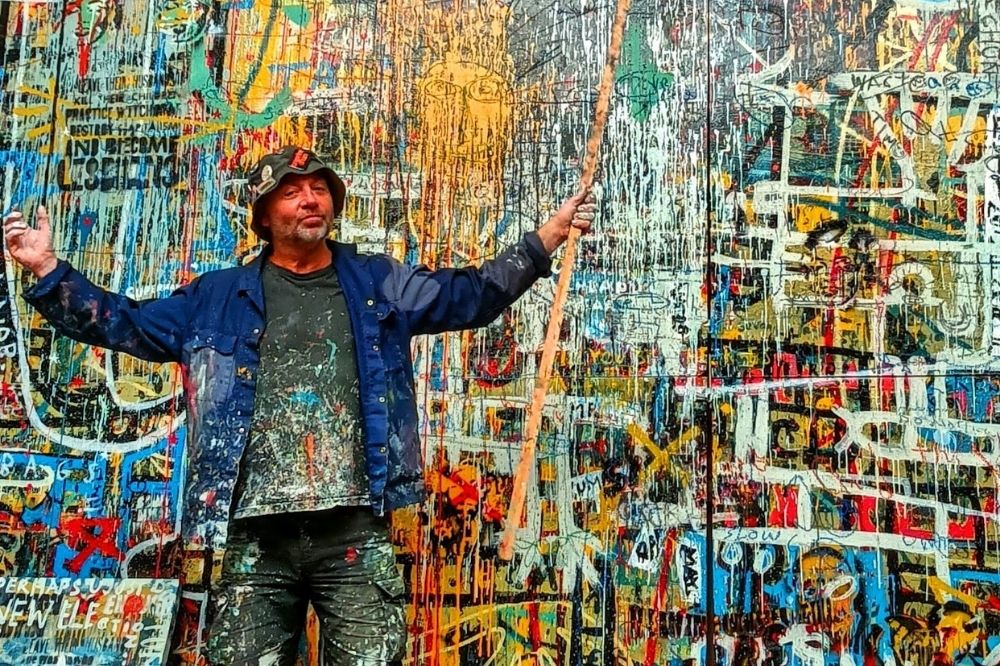
Never polite and rarely comfortable, Welsh artist Neale Howells’ paintings insist on being seen, he has built a successful career outside of easy approval.
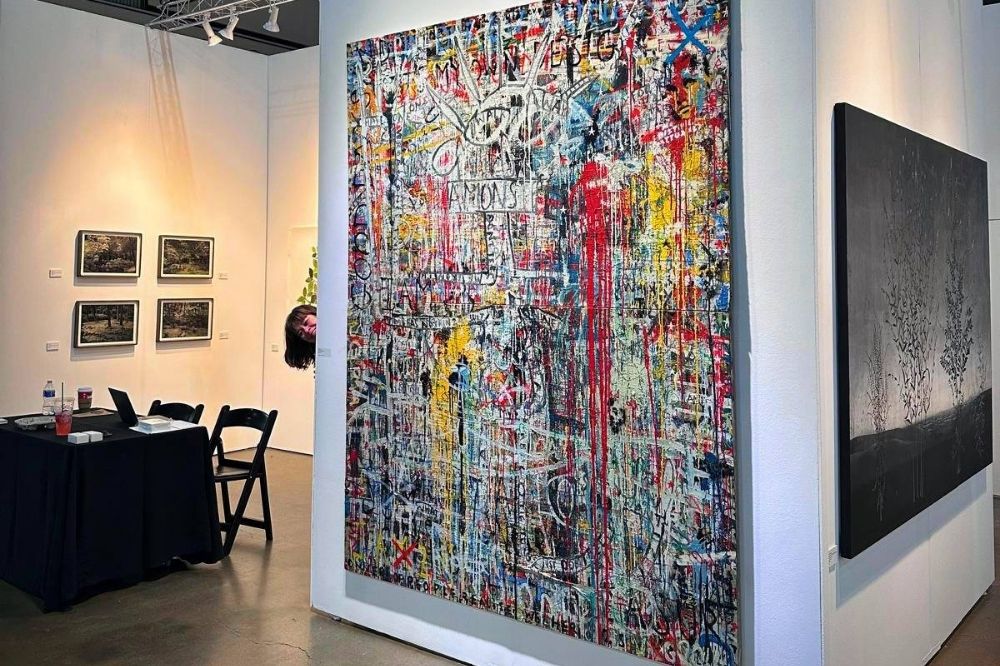
Most recently, his work was exhibited in Los Angeles, reaching a younger audience and marking another shift in his output, that has always resisted containment.
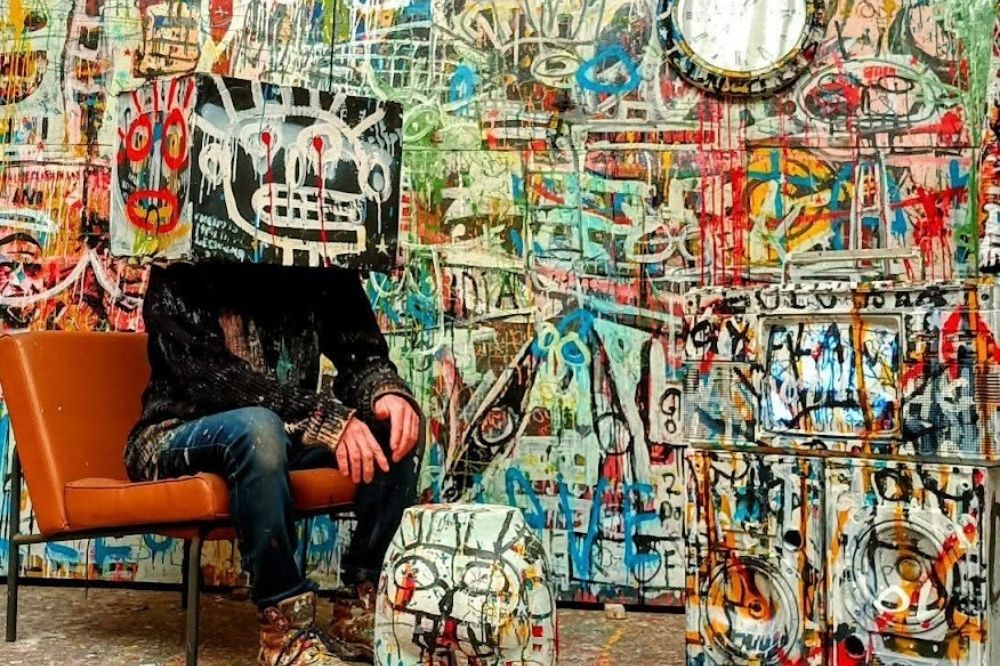
Alongside this, his paintings and imagery have entered popular culture through collaborations with musicians, fashion designers, filmmakers, and television producers, appearing on album covers, fashion runways, music videos, and major TV dramas.
Born in Neath and coming of age in the 1980s, Howells first worked as a labourer on government schemes, but left that behind when he enrolled on an A-level art course at a local college, almost by accident.
That decision became the starting point of a lifelong commitment to making work that demands attention.
From Bath College of Fine Art to cancelled exhibitions, and from national controversy to international collaborations, Howells has consistently pushed boundaries.
In this interview with Nation.Cymru, Howells looks back on an uncompromising career and the moments that continue to shape his work.
Your career includes moments of public controversy and cancellation. How have those experiences reshaped the way you think about risk and responsibility in your work?
I don’t write the word “FUCK” in huge letters in public anymore – so yes, I’ve learned something. But seriously, I never let those moments define me.It was a fun, creative time, and I don’t regret it.
Over the years I’ve stopped correcting people who describe my work as graffiti. If that helps them find a way in, I leave it alone. Sometimes I explain the work like music: the colour is the sound, the rhythm is the composition, and the mark-making is the lyrics.
When people asked, ‘What’s it all about?’ I’d play a time-lapse animation of the painting building itself layer by layer. Watching the work evolve said more than words
There were moments when provocation went too far for some audiences. Saying a painting contained amphetamines and bodily fluids didn’t go down well at the National Eisteddfod – but it got attention.
Artists need room to manoeuvre. We’re not ordinary thinkers. Sometimes that means putting your reputation and people’s comfort on the line.
You describe your journey as ‘anything but quiet.’ Looking back, which disruption or setback ultimately strengthened your artistic voice the most?
I once reported my own death to the BBC. That probably tops the list. A wreath was delivered to our door and someone even came to check if I was still alive.
But honestly, I’m not sure any single act strengthened my voice. I’ve never been invited to exhibit at my closest public gallery; the establishment hasn’t been interested, and probably decided I was too attention-seeking.
In 2003, Wales and the Venice Biennale made their minds up about me. That was confirmed recently by someone involved at the time who said, that I would never represent Wales. But I’m more interested in artists still making work here than institutional approval.
Not long ago I bumped into a former curator from the Museum of Wales at Port Talbot train station. He declined the offer of one of my postcards. That probably says everything you need to know about the establishment.
At the same time, other institutions and individuals have supported me. MOMA Machynlleth showed the work.
I often have lovely conversations with artists and viewers who say they were inspired by the work, or who simply enjoyed it because it felt more controversial, more alive. That matters.
What do you want your viewer to feel first when standing in front of your work?
What you see is what you get.
I want the work to grab you by the balls, twist them, and pull you closer – then give your eyes somewhere to live. Something that sparks creativity.
People still think I draw cocks and balls. I tell them it’s noses and eyes. The human figure keeps appearing in my work. It’s probably buried somewhere in my DNA, like ancient figures carved into hillsides.
I’ve tried removing it, but the paintings stop working. Take one component out of a mathematical formula and the whole thing collapses. Painting is like that: endless new formulas, no rules, but somehow still rules.
The best advice I can give is don’t overthink it. That’s what drives you mad.
Do you think the art world rewards provocation, or only tolerates it under certain conditions?
I’ve had opportunities given and taken away, so I wouldn’t say provocation has brought me stability.
I see the art world as a pyramid: art and money, art and disruption, art and controversy, art as commodity. It’s all of those things at once.
Success is slippery.
Provocation gets attention – but attention isn’t the same as sustainability. The art world isn’t one organisation; it’s a shifting ecosystem. As long as artists keep thinking differently, it will keep evolving.
Was there anything about exhibiting in LA that challenged your assumptions about how your work would be received?
Yes, the openness.
My only reference point had been New York, but LA felt like a different country altogether.
The response from younger audiences was especially strong. Social media allowed deeper engagement – from short films to behind-the-scenes content. Other galleries reached out. Conversations started.
What’s next for you?
I want to build on those connections—with galleries and collectors in the US, Asia, and beyond. India’s contemporary art scene left a huge impression on me.
Travel feeds the work.
I’m realistic about Wales’s major institutions, but I’d love to be part of a serious contemporary painting exhibition here.
I’m also excited by where the work turns up: appearing in television series, collaborating with production designers, fashion designers, musicians. Our work will feature in the upcoming ITV series The Capital, following recent placements with the BBC.
We’re developing new exhibitions with the John Martin Gallery in London, continuing animation projects, and documenting street art in Port Talbot.
It’s always felt like jumping from one lily pad to another. You never quite know where you’ll land, but that uncertainty keeps it alive.
Support our Nation today
For the price of a cup of coffee a month you can help us create an independent, not-for-profit, national news service for the people of Wales, by the people of Wales.


