

Interview: Welsh author discusses his latest book on Okinawa
Stephen Price
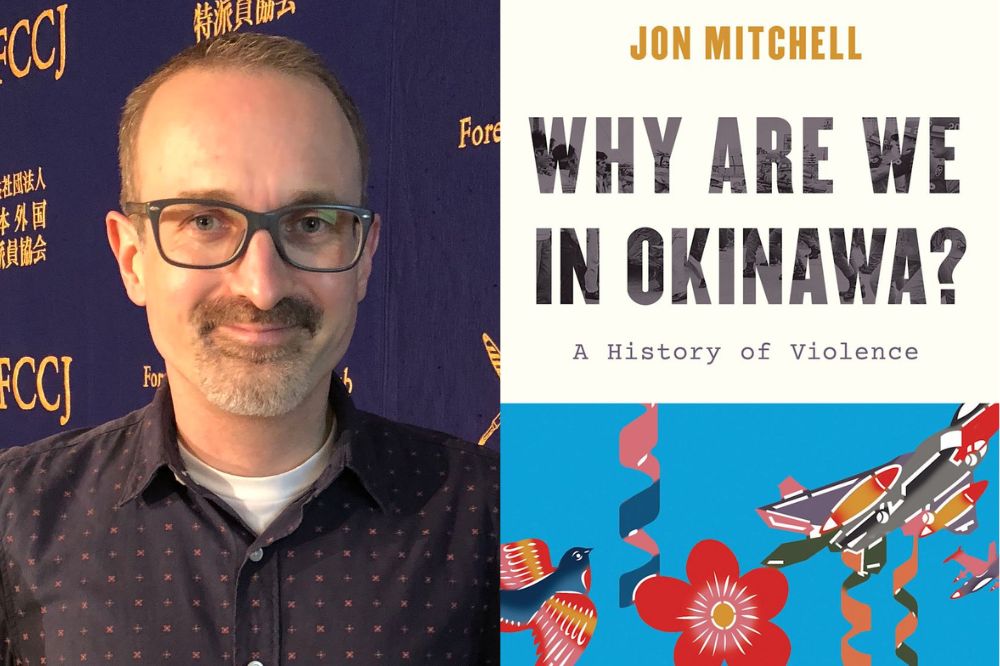
Celebrated author, Jon Mitchell is set to hold a talk in Wales this March, discussing his latest book ‘Why are we in Okinawa? A History of Violence’, where he will discuss similarities between Wales and Okinawa – from persecution to today’s language revitalisation.
Jon Mitchell is a Welsh journalist with Okinawa Times. An expert in the US Freedom of Information Act, his investigations regularly make headlines in Japan and feature in reports for the US Congress.
Author of four Japanese books, his first English book, Poisoning the Pacific (2020), was a winner in the US Society of Environmental Journalists’ annual awards. In 2023, Mitchell received Japan’s most prestigious journalism prize, the Waseda Ishibashi Tanzan Memorial Journalism Award for public service.
Once a wealthy kingdom, Okinawa was seized by the Meiji government in the late 19th century then abandoned to US rule after World War II.
During 27 years without civil or labour rights, Okinawans developed a powerful pacifist movement that helped secure reversion to Japan in 1972.
Today, 31 US bases still occupy Okinawa, and tensions are rising as China questions Japan’s sovereignty over the islands, firing missiles into nearby seas.
Amid these ongoing problems, Okinawans resist through protest, music, comedy and art, offering an inspirational model of grassroots democracy and civic engagement.
To celebrate the launch of his latest book, which traces Okinawa’s annexation by Japan, occupation by the United States, and its ongoing tensions with China, Mitchell is holding a talk at the Temple of Peace in Cardiff on Thursday 12 March.
In the talk, he will be discussing the similarities between Wales and Okinawa, including our shared histories of discrimination and our peace movements.
The talk in Wales will follow a launch event on 4 March SOAS University of London.
Ahead of his return to Wales, we chatted with the author to learn more about Wales’ links with Okinawa, his interest in its history and what led him to write ‘Why are we in Okinawa? A History of Violence’
First, can you start by telling us a little about Okinawa?
Okinawa is the southernmost prefecture of Japan, consisting of around 160 islands running from the coast of mainland Japan to within view of Taiwan.
I think it is the most beautiful place in the world – white sand beaches, coral reefs, rainforests and mangrove swamps. But Okinawa has experienced a lot of suffering. It used to be an independent state famous for maritime trade – but it was annexed by Japan in 1879.
During World War II, the Japanese military sacrificed Okinawa to delay the US invasion of mainland Japan, resulting in the deaths of more than 122,000 Okinawans. Then, after the war Japan handed administration of Okinawa to the United States for 27 years.
Today, even though Okinawa is back under Japanese control, there are 31 US bases packed into a land mass one tenth the size of Wales. Environmental contamination, discrimination and poverty are rife.
Faced with these problems, Okinawans from all walks of life have developed a remarkable resistance movement which I believe is an inspiration for the world.
How long have you been writing about Okinawa?
I first visited Okinawa in 2009. At that time, I was working for a film studio in Tokyo, so I went there to research a script we were developing.
When I was in Okinawa, I started hearing about things that most residents of mainland Japan – including me – did not know. For example, during the Cold War, the islands used to have one of the largest stockpiles of US nuclear weapons in the world; the sheer number of murders and crimes committed against Okinawans; and the fact that Okinawa has its own distinct languages that are on the verge of extinction but the Japanese government does almost nothing to protect them.
When I came back to Tokyo after that first trip, I could not forget what I had learned about Okinawa. So, I started researching as much as possible, travelling back and forth there to interview residents.
That led me to write about Okinawa for newspapers and magazines; now I work for one of the islands’ newspapers, Okinawa Times.
Can you tell us about your work as a journalist in Japan?
TV stations and newspapers in Okinawa tend to be more outspoken than in mainland Japan where the media is usually conservative and happy to tow the government line.
The reason lies in their different histories. Before the war, journalists in Okinawa glorified the Japanese military and encouraged civilians to fight for the emperor. But then during the actual battle in 1945, Japanese soldiers slaughtered the very civilians they were supposed to be protecting.
After the war, the US military censored Okinawan newspapers and interrogated journalists critical of their rule. Those two experiences still shape the outlook of the Okinawan media, making it more sceptical of the authorities and aware of its duty to protect residents’ rights.
Our newspaper, Okinawa Times, was founded in 1948 – literally in the rubble of the war – and it has always placed a high priority on investigative journalism.
For me, the main tool of my trade is the US Freedom of Information Act (FOIA) to access records from the American government entities most active in Okinawa: the Department of Defence, the State Department and the Central Intelligence Agency.
Primarily I write about the environmental impact of the bases, as well as unreported crimes, aircraft accidents, and covert operations.
Can you share what inspired you to write your new book, Why are We in Okinawa? A History of Violence.
There are a lot of misunderstandings and lack of knowledge about Okinawa.
The Japanese government has tried to erase information about its military’s atrocities from school textbooks, the US military doesn’t teach its troops about Okinawa’s history, and the Chinese government spreads disinformation to undermine Japanese sovereignty over the islands.
So, this book is my attempt to put Okinawans’ voices first and provide a thorough understanding of the history and the current conditions in the islands.
Today, military tensions in the region are rising and there is a very real fear that Okinawa will be engulfed again in war. So now more than ever, it is vital that people have a clear understanding of the islands and the residents who live there.
Are there any particular events mentioned in the book that you hope to bring more attention to?
The book combines research from Okinawan, Japanese and American historians with my own investigations using FOIA.
It features my interviews with US service members sickened by nerve agent in the 1960s. It reveals how Okinawa was a main route for heroin smuggling between Thailand to the United States.
It also shows how the main island’s aquifer has been contaminated with PFAS Forever Chemicals, exposing 450,000 people in the worst environmental catastrophe in recent memory.
But alongside these tragedies, the book shows how Okinawans developed a unique culture of resistance, and today they continue to oppose violence and discrimination via peaceful civil disobedience, music, art and comedy.
Could you let our readers know more about anti-Okinawan discrimination?
After Okinawa was annexed by Japan in 1879, discrimination was rampant. In the early 20th century, employment agencies and boarding houses in mainland Japan displayed signs stating, “No Okinawans, No Koreans” (Koreans are the other long-discriminated minority group in Japan).
Schools introduced hogen fuda (“dialect plaques”) which functioned in an identical way to the Welsh Not to discourage students from speaking Okinawan.
In the war, Japanese troops even executed Okinawans who spoke their own languages on false accusations of spying.
Today, the Japanese government ignores United Nations recommendations to recognise Okinawans as indigenous, and it does almost nothing to protect the islands’ languages which UNESCO categorize as endangered.
In Japanese books and on social media, too, anti-Okinawan discrimination is common.
How has your work had an impact?
Much of my work has focused on helping US veterans and their families exposed to chemical contamination in Okinawa.
I make the documents I obtain through FOIA accessible to anyone so they can understand how they have been exposed.
Due to this, my research has helped Americans to receive compensation from their own government (as we know healthcare in the USA is so expensive). Also, my reporting prompted the Japanese government to introduce water guidelines for the PFAS Forever Chemicals which have contaminated the island’s primary aquifer.
Another impact is the cultural awareness training given to US troops arriving in Okinawa. After I obtained their orientation lectures via FOIA and reported how they were riddled with derogatory comments against Okinawans, the Marine Corps rewrote the materials.
One of my main hopes for this new book, too, is that it will be read by some of the 50,000+ US troops and their family members living in Okinawa.
Unfortunately, the military still does not teach them about the history of the islands – so I hope this book provides some understanding of why their presence engenders strong resistance among some Okinawans.
For the past two years, you have coordinated the translation of the annual Urdd Peace and Goodwill Message into the Okinawan language, Uchinaaguchi. Do you plan to regularly translate the peace message?
Because of Okinawans’ experiences of World War II and Cold War occupation, pacifism runs deep throughout the islands’ society. So, the Urdd’s Peace and Goodwill Message resonates with many people. A
fter Okinawa Times published the message on our front page in 2024, we had a lot of feedback from readers who were inspired by it, some of whom had barely heard of Wales before.
It showed that people 10,000 kilometres apart share the same commitment to peace and social justice. From now, our newspaper will continue to publish a translation of the message every year.
We are lucky to be working with the super talented linguist Byron Fija to translate it. Together, I’m confident we can build long term relationships and understanding between Wales and Okinawa.
What does it mean to you to be holding the talk in Wales?
It’s a massive honour to give a talk at such a historical venue as the Temple of Peace Cardiff.
I greatly admire Academi Heddwch and the work they do to promote Wales as a nation of peace.
There are many similarities between our country and Okinawa, such as discrimination, poverty and the suppression of our countries’ languages.
But I hope people who attend my talk will understand not only these darker aspects but also the messages of hope that when people come together, they can overcome even the most daunting obstacles.
In Uchinaaguchi, there is a saying “Nuchi du takara” (Life is a treasure) which captures Okinawans’ resilience and respect for human dignity.
I hope people who attend my talk – and read my book – will understand how important it is to keep believing and supporting each other during these globally bleak times.
From Okinawa to Wales: Peace and Resistance Across 10,000 Kilometres takes place at the Temple of Peace, Cardiff on Thursday, Mar 12 from 6pm to 8pm. The event is free, but attendees are asked to reserve their spot here.
Purchase the book at all good book stores or direct from Bloomsbury here.
Support our Nation today
For the price of a cup of coffee a month you can help us create an independent, not-for-profit, national news service for the people of Wales, by the people of Wales.


