


Joe McFadden and Charlie Brooks discuss Curious Incident of the Dog in the Night-Time before it heads to Wales’ capital
Stephen Price
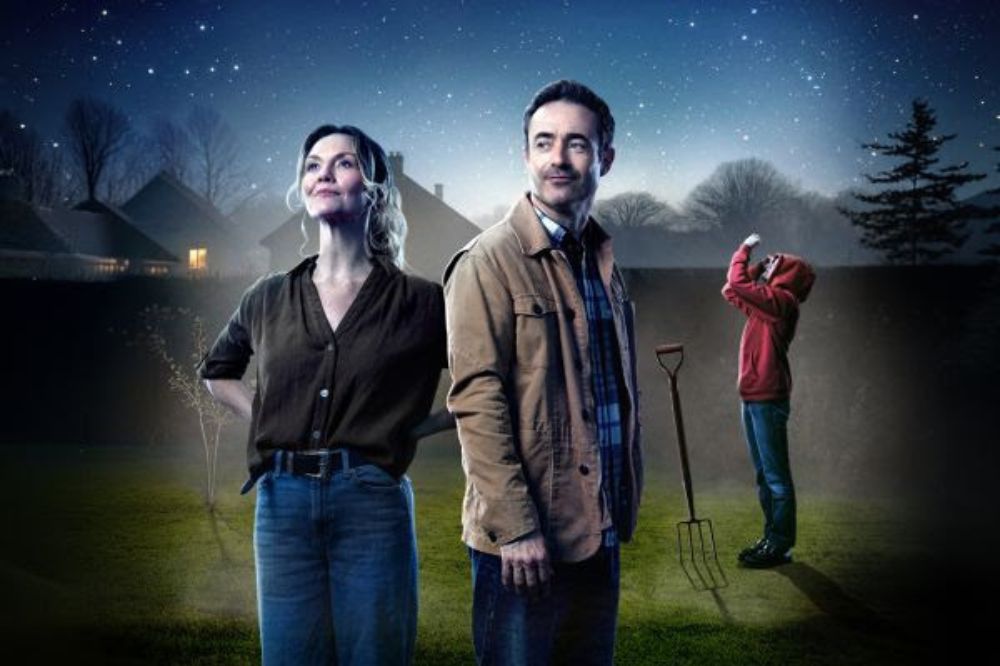
Ahead of a thrilling new production of The Curious Incident of the Dog in the Night-Time’s stop-off in Wales in early 2027, its star adult leads, Charlie Brooks and Joe McFadden, discussed its goosebump-inducing inventiveness and why this production is one not to be missed.
The Curious Incident of the Dog in the Night-Time is inspired by the multi-million-selling novel by Mark Haddon and is set to come to Wales Millennium Centre on the 27 April – 1 May 2027.
The remarkable play – this century’s most popular murder mystery which combines a crime with family drama and an insightful portrait of neurodivergence – is adapted by Olivier and Tony Award-winning playwright Simon Stephens and helmed by visionary director Ned Bennett.
This new staging of the show, which originally premiered at the National Theatre in 2012, also sees the first-ever female casting of the neurodivergent teenage protagonist, now named Chris Boone, bringing a fresh perspective to an iconic character. Chris is played by Alex Keenan, in a role alternated by Imi Price.
The UK tour is also led by two audience favourites as Chris’s parents. Charlie Brooks, beloved for playing Janine Butcher on EastEnders, and whose theatre roles also include The Ocean at the End of the Lane, is Judy. Joe McFadden, known for TV dramas like The Crow Road, plays such as 2:22 A Ghost Story and for winning Strictly Come Dancing in 2017, plays Ed. Judy is absent from Chris’s life when the story begins, while Ed is struggling as, essentially, a single dad.
The Curious Incident novel has captivated 10 million readers since it was published in 2003. Now it has been adapted into a brand-new staging and is “more thrilling than ever.”
The story follows Christopher Boone, who is gifted with a brilliant mind for numbers but unsettled by the unpredictability of people and everyday life.
When a neighbour’s dog is discovered killed, Christopher finds himself under suspicion. Determined to prove his innocence, he becomes both detective and suspect, drawn into a mystery that grows darker and more complex with every clue he uncovers.
What begins as the search for a culprit soon reveals secrets closer to home, forcing him to confront truths that test his courage, his family, and his understanding of trust, independence, and the wider world.
Adapted by Simon Stephens for the National Theatre, the play originally hit the stage in 2012 and has since gone on to tour four times in the UK, with a stint on Broadway as well as in Europe, Australia, Hong Kong, Singapore and China.
When did you both first encounter The Curious Incident of the Dog in the Night-Time?
Joe McFadden: I read the book back in 2003, and like most of the rest of the UK, I loved it. I reread it recently and was blown away again. It gives you such brilliant insight into Christopher’s inner life, his imagination, his world. That’s why it was so groundbreaking: really putting you into the mind of a neurodivergent person. It illuminated that experience.
I saw it in the West End and thought it so inventive. Simon Stephens did such a brilliant job of adapting it, keeping the best bits of the book but also making sure it came alive and really worked as a piece of theatre. When I heard they were doing it again, but with new direction, design, movement, music, that really excited me. I think for people who loved the book and the last production, they’ll love it again but find it’s a real reinterpretation and reimagining of Simon’s script and Mark [Haddon]’s amazing novel.
Charlie Brooks: I read the book a long time ago and then I saw the National Theatre production when it was on in the West End. I thought it was extraordinary. I was so excited when I heard the play was coming back – I immediately wanted to know what the vision was, how they were planning to bring this story life, and how it might be different in this production. Joining the show was an absolute no-brainer.
Can you tell us about the new staging?
Brooks: When they did the design meeting, I was like “Wow” – I got goosebumps. [Set and costume designer] Eleanor Bull has dreamed up this incredible vibrant colour palette, and it’s a very textured set with lots of different materials on stage. It’s going to be a whole sensory experience. Then when Chris is overstimulated and overwhelmed, Ned [Bennett] is bringing that to life in an amazing innovative way with a lot of physical movement and props.
I’ve never been in a rehearsal room that’s so creative and collaborative. The way Ned’s curated these games to help us devise ideas and build them into the production is so thorough and brilliant. I’m really grateful I did The Ocean at the End of the Lane first so I had a sense of what it’s like to play in this way and create worlds.
We also want to make the production accessible for audiences coming to the show who are neurodivergent, so that’s definitely something we’re factoring in, while also making it a thrilling play that’s still entertaining and impactful.

McFadden: It’s so inventive – Ned Bennett’s producing these amazing devices to express the story, and movement director Jenni Jackson is creating this physical language I’ve never really seen before. I can’t remember the last time I was so excited about putting on a show and seeing what people think. Eleanor Bull has done an incredible job with the design as well. It’s a real treat for the senses.
One significant change is that while previously it only became apparent at the end of the show that you’re watching a play based on Chris’s writing, in ours you know from the start that it’s a play within a play, so the audience is getting to see the workings of staging a show. That’s fun.
Joe, Tell us about your character Ed and your way into him
McFadden: Brilliantly, Simon came in to talk to us in our first week of rehearsals. My big question for him was: how do you play these characters sympathetically? They aren’t always fantastic parents; they make some big mistakes in the course of the story. He said, “What parent is perfect all the time?” which I think we can all relate to.
Ed is up against it. He’s a single father; he’s trying. He works full time, trying to put food on the table and look after the house, and parent this quite challenging child. You can understand why he has difficulties, and hopefully we don’t judge him too harshly. I remember thinking “What would I have done in that situation?” There’s not an easy answer.
What do you think drives Ed?
McFadden: He strikes me as quite a private man, quite a serious man. It says in the play that he’s more patient than Judy – he gets on with things and doesn’t let anything affect him. That’s a strength but also a weakness. It means he can’t communicate, can’t reach out for help. He bottles up all his worries. He’s a pressure cooker, and now and then he’ll blow.
That feels like an honest depiction of a parent who means well, but struggles with the emotional side of things. Ed’s a grafter: he’s a hard-working plumber; he’s used to getting his head down. That’s at the heart of who he is. I remember being shocked when I first saw the moment where he lashes out. Now that I’m a bit older, I understand his frustrations, the pressure he’s under to survive and to protect this vulnerable child.
How about you, Charlie – tell us about your character Judy and your way into her
Brooks: She’s written with so much complexity. She’s flawed, as are many characters within the play. But she’s really doing her best. She’s found herself in a situation where she was unable to cope with the challenges in front of her and she didn’t feel like she had much choice. It’s a horrible question to contemplate: what if me leaving is the best thing for my child? Judy thinks “I’m explosive, I’m reactive, I can’t cope”. That must be a really difficult thing to go through, totally heartbreaking, especially since Judy obviously deeply loves her child.
Do you think the play allows sympathy for her?
Brooks: Yes, what’s really great is she’s not judged in the play. The audience is allowed to find some sort of identification with her. She speaks her truth. This is a play about communication and honesty – or the lack of it, in some cases. Her truth is that she felt invisible and unable to manage. There aren’t enough representations of mothers saying “It’s so hard, I want to run away”. The show has empathy for her. I sometimes had those feelings as a mum. I think lots of women do!
How does the representation of a neurodivergent character land differently now?
McFadden: In some ways we’ve moved on a lot, and we do know more about neurodivergence, but there’s still a long way to go. This is a story that still needs to be told. Chris has this amazing brain – she’s so adept at these complex mathematical problems. Bringing that to life is exciting: expressing on stage how her mind works. It’s an effective way to tell stories, through theatre, because it’s all happening right in front of you.
Brooks: There were far fewer people diagnosed when the novel was first out, or when the show was originally on, compared to now, when this is something that’s much more talked about. That’s a brilliant thing: there’s much deeper understanding and completely different language in the way we discuss neurodiversity today. The conversation has been blown wide open, and so it felt important to bring the play into 2026. But there’s still a way to go, and plays like this, which put the audience right in Chris’s experience and allow them to experience the world through Chris’s eyes, help so much.
How does making Chris a female character change the production?
McFadden: There aren’t as many stories about neurodivergence told from the female perspective. Lots of girls are being underdiagnosed, or diagnosed later in life, because they’re better at masking their symptoms. It felt important that we tell the story from the female point of view. In the way that lots of neurodiverse teenage boys came and saw the show last time, and felt their story was being told, hopefully teenage girls will feel that way now.
Brooks: The gender swap gives a completely fresh perspective on the story and the characters. My understanding is that girls who are neurodivergent often have a different journey: there’s a lot of masking of symptoms, so they may not get diagnosed, or not as soon as boys. Simon Stephens and Mark Haddon are very much on board with the change and all the new things it throws up.
The girls who are playing Chris are incredible – they’re just buzzing for it, they have this amazing energy. And I love Joe, he’s the best. The whole cast are just wicked.
Does it also change your character’s relationship with her child?
McFadden: Yes, it definitely has repercussions: Ed is now a single dad with a daughter instead. I was interested in what that would do to their relationship. I think that while he was already protective, now it’s a female character he’s even more protective of her. It doesn’t fundamentally change the story, but it raises the stakes, and it changes the family dynamic. Judy leaving her daughter feels like a bigger thing. It’s a subtle shift that audiences who saw the show before will recognise and feel like it’s a fresh experience.
Brooks: Yes, I think it does shift slightly. A mother leaving is such a huge thing – you don’t necessarily hear about that as often as you would when a man leaves his family. Also, mother-daughter relationships are complicated. I’ve got a daughter, so I know! I know I was an imperfect mother. I can relate to some of their challenges. It’s really helpful to show all the sides of these relationships, rather than some ideal. But whether you’re in this exact situation or not, I think everyone can relate to worrying that you’re not doing something well enough, not doing a good job, or not fitting in.
Why are you excited to tour with the production?
Brooks: I really think this is a properly brilliant show and we need to get good theatre out into the regions. That’s hugely important. It’s personal for me: I’m from Barmouth, a little town in North Wales, and regional theatre was all I saw when I was younger. It made a big impact.
This is the sort of play you might go to see as a young person, or as an adult actually, and your thoughts will be provoked. I think there’ll be great audiences for this. It’s a fantastic one for families too. It’ll spark people’s imagination and hopefully also conversation.
McFadden: I love touring. I did a tour of The Shawshank Redemption last year and played some amazing venues, and now I get to go back to lots of them. I’m excited. We’re opening in Birmingham, which is one of my favourite cities – audiences there are up for having a good time. The wonderful thing about touring is it informs and changes the play because the audiences have different personalities in different parts of the country.
The Curious Incident of the Dog in the Night-Time will show at the Wales Millennium Centre’s Donald Gordon Theatre from 27 April – 1 May 2027. Tickets are on sale now via the Wales Millennium Centre site here.
Support our Nation today
For the price of a cup of coffee a month you can help us create an independent, not-for-profit, national news service for the people of Wales, by the people of Wales.
Get more trusted Welsh news
Choose Nation.Cymru as a preferred source in Google News to see more of our journalism.


