


Language exchange drives cultural change

Aran Jones, Author, SaySomethingIn
I spent two hours last week in the Galeri in Caernarfon drinking coffee and talking in Welsh (and then Spanish) with Patricia from Spain (although she lives in Mexico now).
She’s been learning Welsh for five years, and doing online Welsh/Spanish intercambios for about a year, and this was her first visit to Wales.
She’s spending a month in Caernarfon to get as many opportunities as possible to speak Welsh, and then going to the Eisteddfod for the week.
She’s already a confident Welsh speaker, on her first visit to Wales. A lot of that is because she’s willing to put herself into environments where she needs to use her Welsh.
The point of an intercambio is to put both of you firmly under the language spotlight – one-on-one conversations strip away all the hiding places that learners usually build for themselves.
You’re either speaking or doing your best to understand, and there’s no time for a sneaky look at Google translate, so you find out exactly how close you are to being able to communicate.
They’re also perfect accelerators.
Missing pieces
No course can ever cover exactly the right mix of words you’ll need for the things you have a habit of saying in conversations.
But when you get yourself into a conversation – however simple it is – you find out very quickly where your personal missing pieces are, and you usually see a massive step forwards in confidence just by noticing and then learning less than a dozen or so key words or phrases.
In other words, I strongly recommend a weekly intercambio for anyone and everyone learning Welsh.
But there’s something even more important about them than just the process of improving your language skills.
Intercambios, you see, are the reason it’s worth learning a new language.
They lead to new connections, new friendships, and new perceptions of the world.
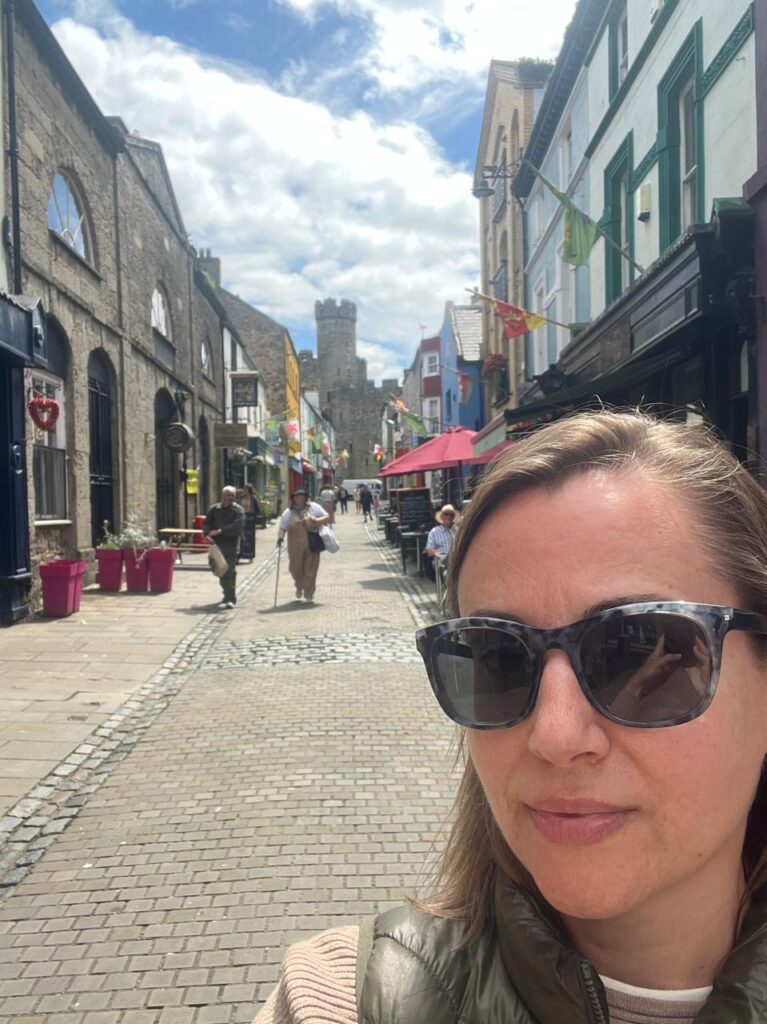
Patricia is a particularly good example of this. We have a tendency in Wales – perhaps driven by years of political arguments – to see our language as something of a problem, something not particularly valuable, something we don’t expect other people to be interested in.
But then you meet someone who grew up in Spain and lives in Mexico who started to learn Welsh because she saw a video of Ioan Gruffudd encouraging people to vote for expanding the powers of the Assembly to make it a Senedd – and although she didn’t understand a word, she thought the language sounded so beautiful she wanted to find out more about it.
Here’s the video that created at least one new Welsh speaker (diolch, Ioan!):
There’s a tipping point, in my experience, when you’ve met enough people from other countries who’ve learnt conversational Welsh because they’re interested in our culture and our history and the beauty of the language itself – a tipping point where it doesn’t seem strange any more.
It seems normal.
A wider view of the world
Of course people would be interested in learning Welsh. Of course our culture and our history and our language are every bit as interesting and as valuable as anyone else’s.
Of course people will come on holiday to Wales if we promote our language in other countries. Of course people will watch our films and television series with subtitles, just as they do with Nordic productions.
In fact, the more proud we are of our language, the more we celebrate and promote it, however much we do or don’t speak it ourselves, the more interested people will be, and the more people will come to Wales for the beautiful experience of hearing our old language alive and well in everyday life.
And, of course, our own experience of life is made richer and more colourful by experiencing other languages.
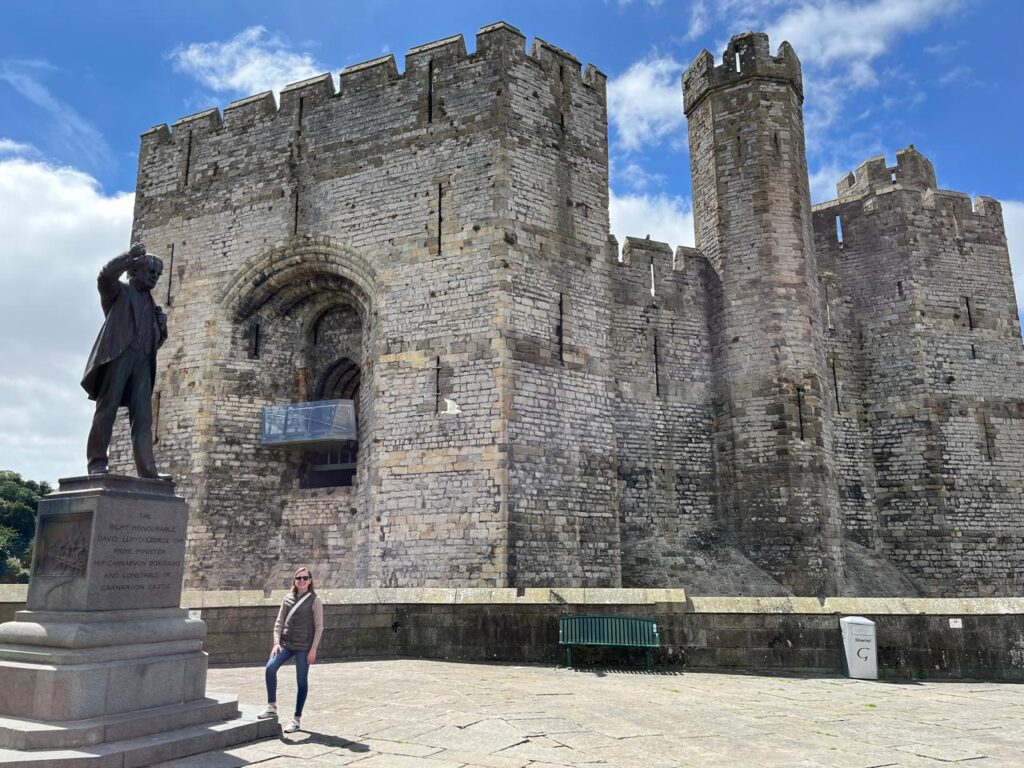
I now have a Spanish friend in Mexico who speaks Welsh, and I’ve had my first couple of rusty Spanish conversations for about six months, which makes me feel as though my brain is still more or less in working order.
Because of friends like Patricia, I get a wider view of the world. I get insights into how things look from a completely different viewpoint and experience of life.
And I know from that viewpoint, Welsh seems interesting and valuable.
Which makes it easier for me to carry on with the work we’re doing at SaySomethingin to make Welsh available to be learnt through the medium of other languages.
The beauty of connection
Patricia said the other night that she had been surprised by what an unusually warm welcome she’d received in Caernarfon, just because she was trying to learn the language. I wasn’t surprised at all.
From her Welsh, you’d never guess that she was Spanish, so I suspect she’s been leaving a trail of startled Welsh speakers scattered behind her around Caernarfon.
And I suspect that they’ll all feel a little more confident about the value of our language on the world stage.
Above all, I’m grateful to her. Partly for not laughing at my Spanish, but mostly because this kind of shot in the arm really matters for a minoritised language community.
So if you’re going to the Eisteddfod, and you happen to hear someone switching in and out of Spanish, do give her a chance to practise some Welsh with you as well.
There’s no reason why Welsh can’t be a central and beautiful part of what connects us to the wider world, after all.
Find out more about SaySomethingIn here.
Support our Nation today
For the price of a cup of coffee a month you can help us create an independent, not-for-profit, national news service for the people of Wales, by the people of Wales.



I find those outside of Wales have more of an appreciation of our history, language and culture than we do at times. Sad really. Because as Welsh people if you don’t know where you’ve come from how on earth do you know where you are going too?
That country over the border, who made us their first (and last) colony, have very little appreciation of our language and many want our culture lost in history.