


Language expert explains why preserving native languages like Welsh isn’t ‘performative’
Nation Cymru staff
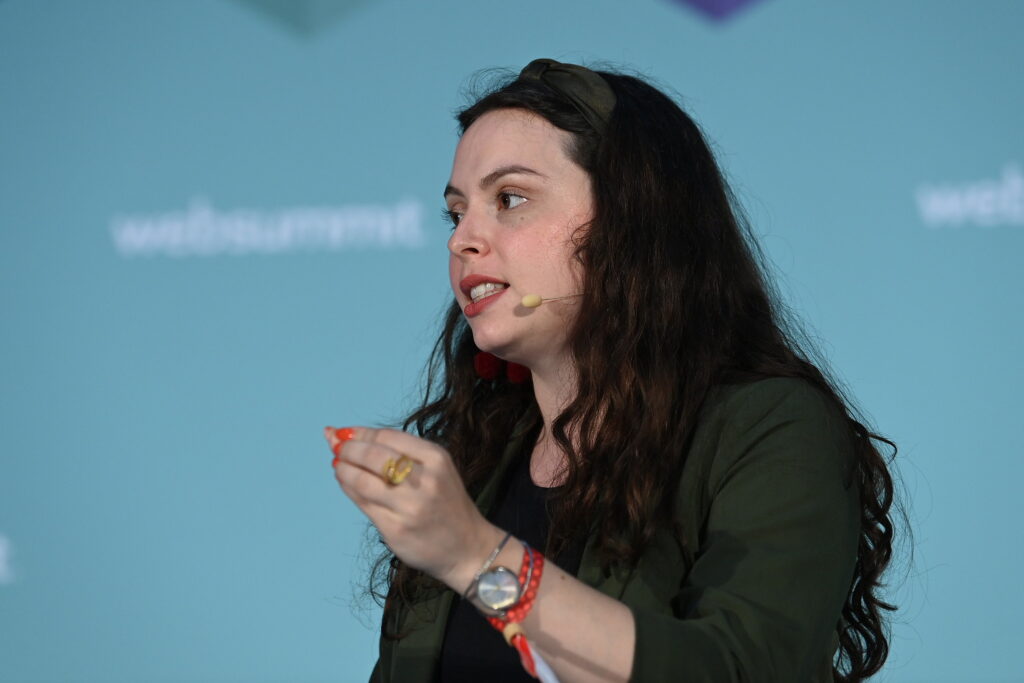
An author and content creator has spoken on Times Radio about the importance of preserving minority languages such as Welsh, explaining that “if I said you couldn’t speak English tomorrow, it would be distressing.”
Sophia Smith Galer is a London-based award-winning journalist, author and content creator credited for pioneering TikTok journalism in the UK.
Many of her TikToks and Reels concern language learning and loss, and she famously published her second book, How To Kill A Language, in 2026.
In a recent Times Radio interview with member of the House of Lords, Ed Vaizey, she discussed the fragility of languages and the need to defend them.
Opening the conversation, Vaizey shared: “I mean it strikes me to a certain extent that the United Kingdom is perhaps more enlightened than the Italians because obviously keep Welsh in particular going.
“And if you go to Wales all the road signs are bilingual but someone like me parochial Brits living in London – he doesn’t get out much thinks this is performative and a real pain – but it strikes me listening to you it’s actually a very good thing that we do.
She shares: “If you don’t have another language besides English in your life of course it’s easy to think that but if I said to you from tomorrow you can’t speak English that would be extremely distressing.
“My mum are my nonna, this language that I’m talking about – that’s the language they spoke to each other every day and this was the language of daily life this was the language of community connection in jokes that you wouldn’t understand – it’s the fiber that connects community and empowers them.
“I think that a language is a testimony that a people are in a place and whether that that’s a testimony of what’s happened in the past in the present and in the future.
“And that’s why if you take for example what’s happened with the Russian invasion of Ukraine, language has been a very powerful component of that war.
“The minute that the Russians occupied territory they would immediately remove Ukrainian language instruction in schools and impose Russian language instruction which comes from the rulebook of the USSR before it, of the Russian Empire before that, the success of linguicide is that languages are actually really desperately quite fragile and speakers of minoritised languages know this and they know they have to fight to defend it.”
“Defiance and connection”
In her bestselling book, How to Kill a Language, she maintains that we are impoverishing ourselves, linguistically, at a terrifying rate. We currently have around 7,000 world languages but within 100 years, Galer warns, we might have half that number. This is not a natural rate of attrition, she maintains: “Something is disappearing them.”
A Times focus on the book shared: If you want to take a “small action” against linguicide, Galer suggests, start learning a language. Or just keep speaking your mother tongue, if you have one alongside English.
“Parents are often mistakenly encouraged to abandon minority or endangered languages in favour of global ones, but needlessly.
“Bilingualism offers significant cognitive and psychological benefits. It delays the onset of dementia and stimulates creativity. It can also underpin community cohesion and personal resilience. ”
James McConnachie writes: “This is a skilfully journalistic book, but it is driven by a personal search for the mysterious language spoken between Galer’s mother and her nonna — her Italian grandmother.
“They called it “dialët”. Her mother finds her daughter’s interest “quaint, and even confusing”, but Galer travels to Emilia-Romagna, all the same, in search of her linguistic roots.”
He adds: “Galer sets to work on dialët — and every time she speaks or hears a word of it “Nonna is there, along with the home she once knew”.
“Languages are not dictionaries, she says, they are encyclopaedias. ‘In an age that forces impermanence and monoculture’, she concludes, speaking an endangered language is an act of defiance and connection — of love.”
Listen to Times Radio here.
Support our Nation today
For the price of a cup of coffee a month you can help us create an independent, not-for-profit, national news service for the people of Wales, by the people of Wales.
Get more trusted Welsh news
Choose Nation.Cymru as a preferred source in Google News to see more of our journalism.


