


Letter from Coedpoeth
Julie Brominicks
“But why have you come to Coedpoeth?” asks Wendy, who like me and a handful of heat-wilted men, is seeking shade in The Red Lion.
Because it might be where an eighteenth-century travel writer found a pair of lead cubes that remind me of cue chalk, is the honest but puzzling answer.
The antiquarian, naturalist and writer Thomas Pennant (whose Tour in Wales motivated multitudes to explore Cymru) was born down the road in Sir Fflint. Many of the minerals, shells, birds and fossils Pennant collected on his travels are now scattered around the Natural History Museum.
In order to reunite these specimens, Mary-Ann Constantine of the Centre for Advanced Welsh and Celtic Studies, with characteristic zeal is establishing an online Virtual Cabinet of Curiosities, and I am one of several writers and artists invited to respond to an artefact.
From a tray of minerals, I selected two deadly lead cubes. But their shapes were humble and pleasing; rubbed-off corners, dints and hollows, and pocketable. Very like cue chalk. Except for their weight.
Where did Pennant find them? Brynhaelog, Denbighshire according to the dusty label. A misspelling of Bron Heulog, a small lead mine near Abergele in Conwy, or of Bryn Heulog, in the middle of Coedpoeth?
Mary-Ann plumps for the latter. Coedpoeth abuts the Mwynglawdd (Minera) lead mines, which Pennant described in Tour of Wales.
I circled Coedpoeth like a cat. Saw it across fields of stubble. Walked along Clawdd Offa, the dyke thick with trees but still there, still obvious, and found a family living in a caravan.
They had dogs and a couple of sheep. “We’re future-proofing,” said Dominic, one of Katherine’s sons, “with how chaotic the world is now.”
After six years of research, the family bought some land, registered with Farming Connect, and moved up last year from south Cymru.
“The plan is to run courses, and produce added-value food like spatchcock quail,” said Katherine, whose background is in regulatory compliance. “We’ve got six commercial ex-layers,” she added, handing me a box of eggs. “They were in a shocking state with floppy combs, but they soon perked up and last night they were roaming around trying to catch moths.”
At Vron, further along Clawdd Offa, Freddy, Evan and Joseph, enjoying the leafy shade, race their bikes around ancient red-earth ramparts. Did they know who built these jumps? “No, they’ve been here ages. If you stand there you can watch us!” I did. Let the kids ride.
Let there be fish for the boys with rods, crossing the playing fields too hot to play on. Wrecsam council workers, having just finished mowing the parched grass, were on a break in the shelter, their Hi-Viz like hothouse-flowers blooming against a backdrop of aerosol art. “We do an excellent job but could do with a pay rise!” they said.
In the community centre, which has a café, library, nine business units (six rented by care agencies) and a Speed Awareness course taking place in the meeting room, I asked Ian Williams about Coedpoeth’s industrial past. He told me about the opencast coalmine at Moss Valley. “It’s two big lakes now. When we were kids we crawled into a tunnel that went through the mountain. We snuck in with torches and after 200 yards we found a train from the 1800s. It must still be there.”
I located Bryn Heulog; a grassy slope between houses and the Evangelical Church, where a hot wind tousled a cherry tree. Did the lead cubes come from here? Silence. Judging a furled parasol jiggling above a wooden fence to be a sign, I knocked on the garden gate, and asked if Bryn Heulog was ever a lead mine.
“Not that I know of,” said David, looking at the parasol, “I was just trying to put this bugger up. I’ve lived here 77 years. My mother was English, my father Welsh. They weren’t allowed to teach Welsh and I don’t think that’s right. There’s nothing on that Union flag for me. There should be a dragon in the corner. We’re left out.”
Miners or steelworkers
David said everyone here was miners or steelworkers. “Your fathers used to have to sign something to agree to you going down the pit but my father was a miner and wouldn’t sign it, so my friends were on £15 a week in the pits and I was on £5 as an apprentice engineer at Wrecsam Lager Brewery.
“When they call it the good old days I can’t understand it. My father worked eight till eight. On a Friday I used to pick him up. The first place we had to go was the pub because of all the dust in his throat.”
My dry throat led me to The Red Lion. “The lead cubes are why I’m in Coedpoeth,” I finish explaining to Wendy, “but maybe there wasn’t a mine at Bryn Heulog.” “There was lead all around,” she replies, draining her glass.
“They were building a council house just by me on Waun Road. Then they tested the soil, found lead and levelled it.”
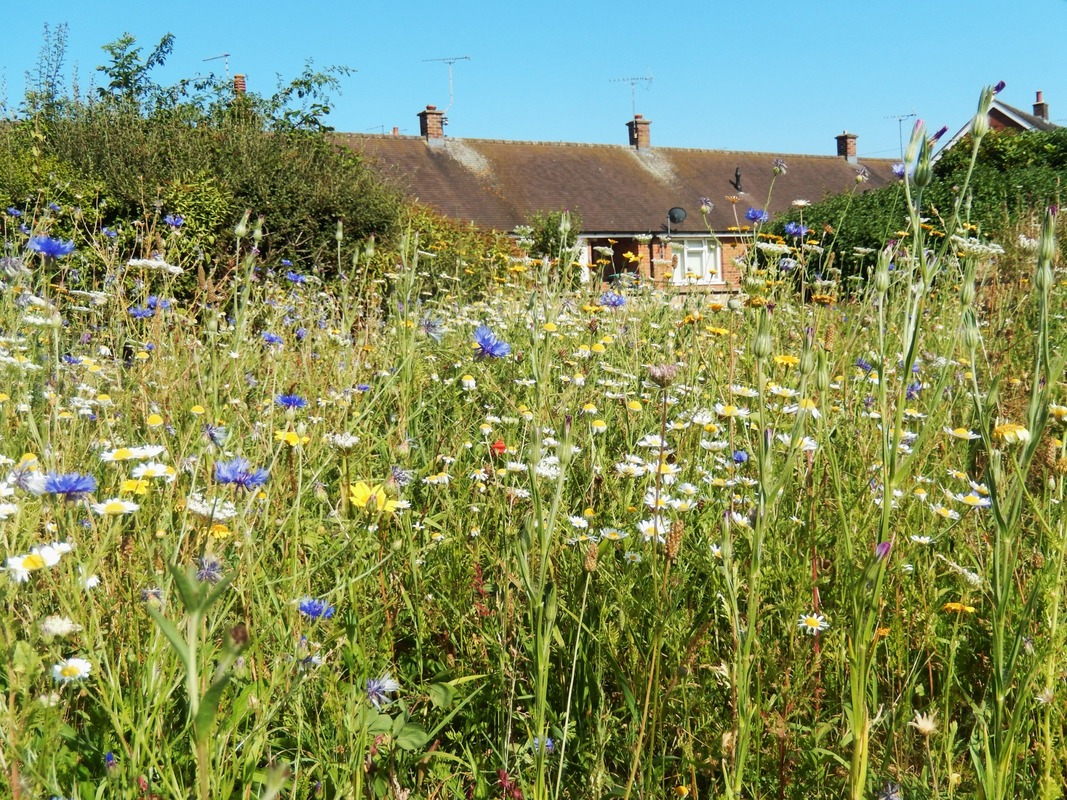
Even though The Smelt is now a riot of wildflowers, lead lurks. Even though a heron rises from the river, and trees colonise the Minera workings. Was this where two small lumps piqued Pennant’s curiosity some 250 years ago? Did he handle them here, contemplating how lead ore forms in cubes? I’m not feeling it.
Back in Coedpoeth, caretaker David Williams has flung wide open the doors of a grand building. “It was a Carnegie Library,” he says. “They paid the dole here and it’s still a hub for the community. Knit and Natter. People come all the way from Rhuthun to play snooker.”
Snooker room
The snooker room is upstairs. Light falls onto the baize. Dave hands me some cue chalk. One green cube, one blue.
Made in Chicago, apparently, from a compound of silicate, abrasive, binder and pigment. Similar dints. Humble. Pleasing to hold and to pocket, but no weight at all.
And suddenly I’m feeling it. A lightness. So these cubes are why I’m in Coedpoeth.
Find out more about Thomas Pennant and the Virtual Cabinet of Curiosities here
Support our Nation today
For the price of a cup of coffee a month you can help us create an independent, not-for-profit, national news service for the people of Wales, by the people of Wales.
Get more trusted Welsh news
Choose Nation.Cymru as a preferred source in Google News to see more of our journalism.



“Why have you come to Coedpoeth”?
Um! thinks, I can’t remember…
Loss of memory is just one symptom of lead poisoning…
Mr Sheen and Monsanto’s eternal gift to Cymru is an awful tale…