


Letter from Cors Bodgynydd
Catherine Duigan
The car shuddered violently as each vehicle sped past the deeply pot-holed Felin Hen layby.
It was a relief when Dwynwen appeared for our latest adventure in Gwydir Forest, an ancient place, where “the noblest oaks in all Wales” once grew, according to Thomas Pennant.
Last autumn we had explored the patchwork landscape of abandoned metal mines and reservoirs used to power ore crushing machines.
The longest day of the year was starting to fade as we set off on Telford’s great stagecoach A5 road towards Betws-y-Coed.
Lingering heatwave
Wispy remnants of the heatwave lingered in the Nant Ffrancon Valley and the warm air was heavy with water molecules. We passed under a cloud roof resting on the surrounding mountain ridges. Would it rain? The atmosphere tingled; it felt like thunder.
A thin white blanket of evaporated lake spilled out of Cwm Idwal, flowing in crumpled layers down to Ogwen Cottage.
Head lights on now.
Gwydir arrival
Dwynwen gasped at my ill executed sharp turn at the Tŷ Hyll tearoom. Beware, it is a very awkward junction, but I soon regained my driving composure crafted on the nerve-wracking streets of Dublin. Down into the lowest gear and the car fitted comfortably into the very narrow soft funnel of moss-covered walls. Snow or even ice must make this steep incline completely impossible.
Mark from the North Wales Wildlife Trust and his two companions in high-vis vests, were waiting for us at the car park by the Cyffty Mines. Wildlife Trust walks are very enjoyable inter-generational experiences made up of local people and visitors.
Everyone is invited to contribute their knowledge, and we all learn from each other. Most importantly for me there is always time to take in our surroundings – to stand and stare at the wonders of nature.
Plants & ponies
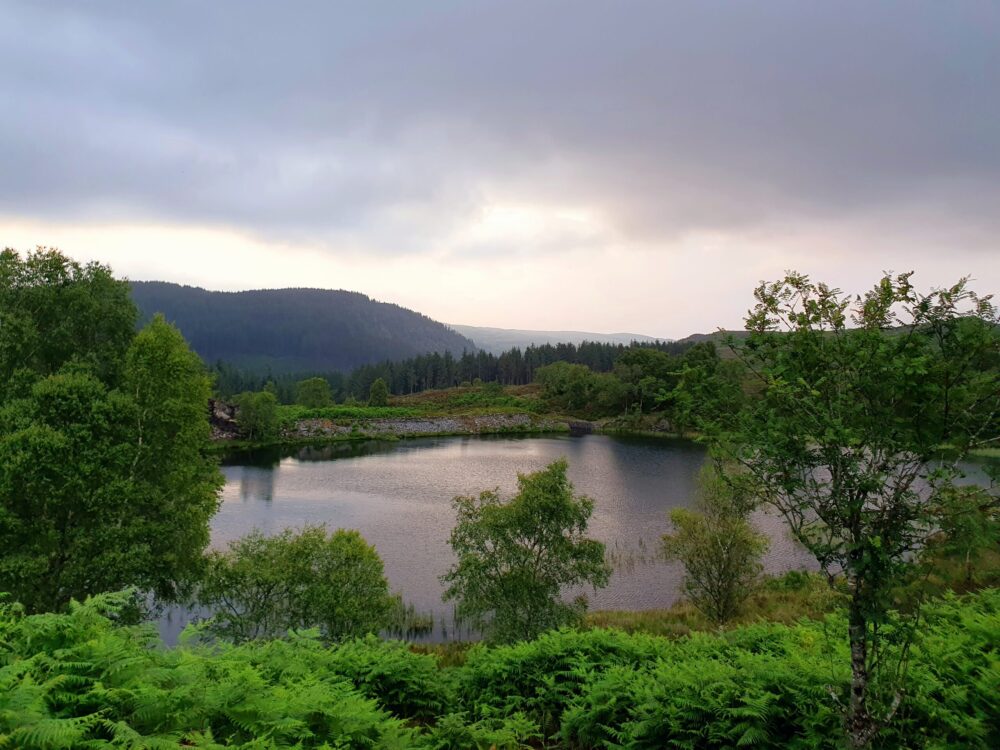
Warned about the possibility of midges and after offers to share repellent, we walked to the nearby Cors Bodgynydd Nature Reserve. This naturally acid wetland is an oasis of nature surrounded by the monoculture of the commercial forestry estate managed by Natural Resources Wales. Every year volunteer groups clear the latest wave of invading conifer seedlings on the reserve.
As we walked across the wetland we were introduced to its carnivorous plants that suck additional nutrients out of unfortunate invertebrates.
On crusty cushions of Sphagnum moss, the sticky red sundew leaves formed a galaxy of fading stars around our feet. Existing on dribbles of water from cracks in the rock, a scattering of vivid green butterwort rosettes looked like misplaced starfish on a reef.
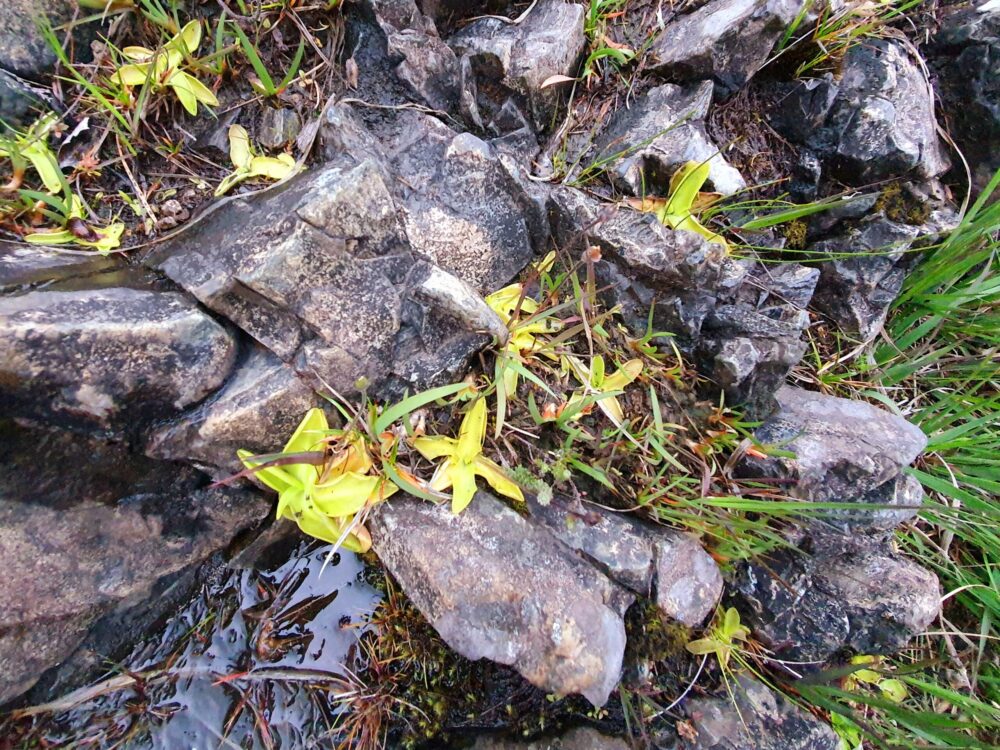
My attempts to fish out some snapping capsules of bladderwort from the shallow surface pools failed – another day.
The two hardy ponies used to graze the coarse grasses and scrub throughout the year put on a display of cheeky bravado, encircling us with much exaggerated tossing of manes. What were people doing here after hours? We stood our ground, and the ponies took flight into the night.
Avian amphitheatre
On our way back most of us clambered up the huge bare central rock outcrop which had been sculpted and scratched by a passing ice sheet. Below us our guide acted as an acoustic antenna, and slowly rotated left, then right; and suddenly pointed in a particular direction.
The nightjar emits a focused pulsating, almost electronic, sound. At first it can be difficult to tune in but cupping your hands behind your ears has a magical and hugely amplifying effect.
A sharp wing clap; the churring stopped. The bird was moving to another location but there was more than one in this avian amphitheatre. In silence, the slow rotation of ears and eyes began again.
Mysterious birds
Nightjars are mysterious birds which can dissolve into a forest using bark-like camouflaged plumage. With a flat head, large black eyes and a wide gape, it feeds on insects, often moths caught at dusk.
They are summer visitors to Wales where they nest and typically brood two chicks. They usually arrive from Africa in mid-May, returning in August or September. Population levels have fluctuated in Wales and sensitive forestry management is critical for their survival.
Male nightjars have patches of white on their wings and tail, and just as one of our guides started to unfurl some large white handkerchiefs, a bird shot past behind him.
It was a Morris dance-like finale for our memorable evening.
Ghosts & good vibrations
On our drive home, the ghosts of Eryi’s botantists looked down on us from the pitch-black ridges of Tryfan and the Carneddau. With her feet barely able to reach her own car peddles, Eleanor Vachell and her botanical friends came this way at a time when the advent of the car gave women a new freedom to explore and dramatically increase the number of plant species they recorded.
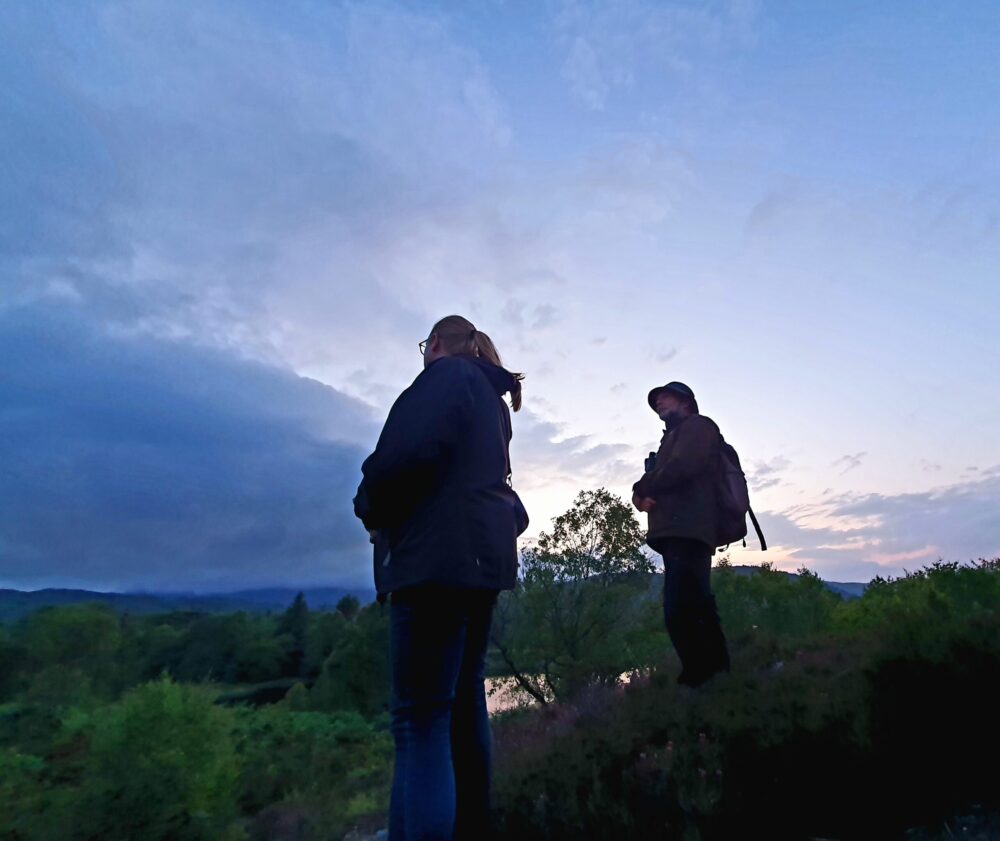
After all the darkness the bright lights of Bethesda dazzled our eyes. The crowd in the chip shop spilled out on to the busy main street as young people found their way home after the rock festival. But our ear drums were still reverberating from the haunting sound of the nightjars of Cors Bodgynydd.
Find out more about North Wales Wildlife Trust events on their website. Support nature by joining your local wildlife trust!
Support our Nation today
For the price of a cup of coffee a month you can help us create an independent, not-for-profit, national news service for the people of Wales, by the people of Wales.


