


Letter from Dolgarrog
Julie Brominicks
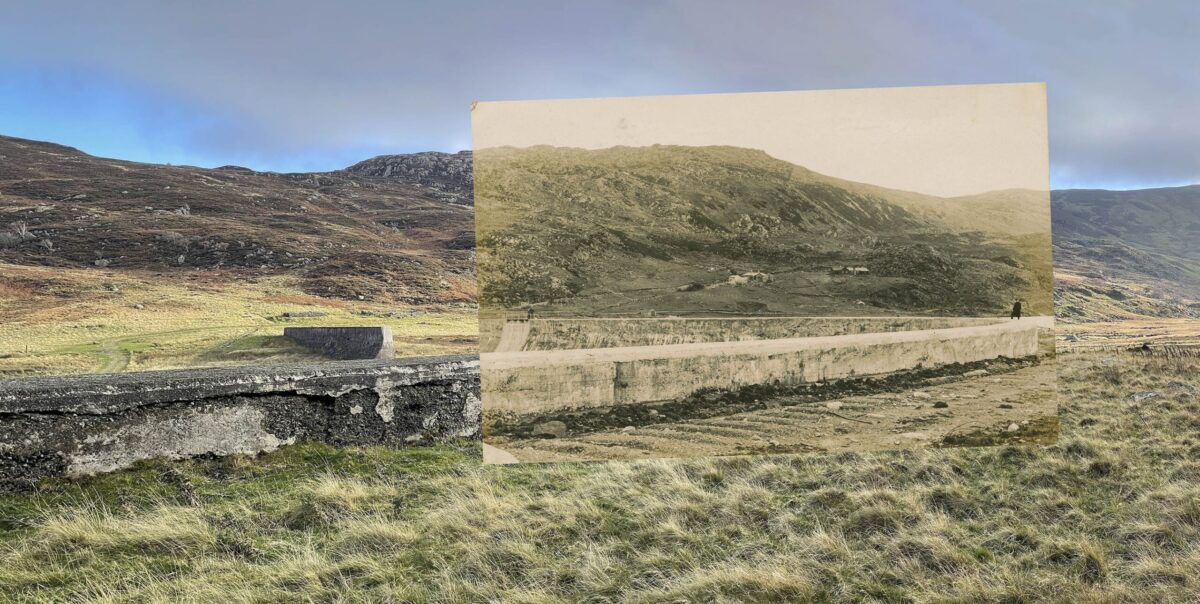
It’s a broken black marker-pen line scored across yellow grassland. Behind it is Craig Eigiau. Long before I reach it, the broken wall is visible from the tram road. I’ve seen choughs and ponies but no people for hours.
The wall has enthralled photographer Aled Rhys Hughes for forty years. Using a large-format camera, some of his compelling images collapse time by integrating old postcards. I knew nothing about the Dolgarrog disaster before seeing his exhibition in Machynlleth. Now I know that this wall, which once held back water, ruptured 100 years ago this weekend, releasing a torrent that burst Coedty Dam downstream, and swamped Dolgarrog village.
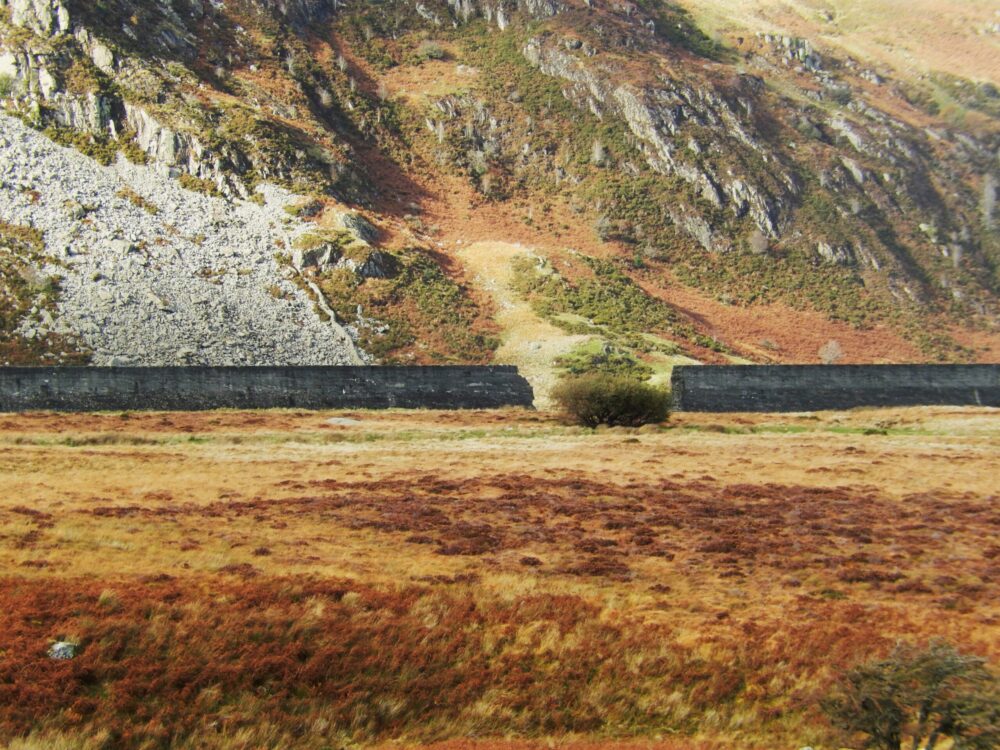
It’s a shoddy old wall. Air gaps, boulders and chunks of railway are still visible in the concrete, lumps of which still litter the blowout, a century on. I pick my way through, and over the bog to Llyn Eigiau. Unseen, Arctic char and brown trout. A buzzard scratches circles in the sky. I squint at a pebble shore and at the goosander whose wingtips beat zigzags across Craig Eigiau. That sound like road traffic? A waterfall jinking down the rock-face. This waterscape. It did not go unnoticed.
‘Aha!’ thought entrepreneurs, rubbing their hands at all the hydro-power. ‘Aluminium!’ (its production being electricity-hungry.) They constructed a factory in Dolgarrog. They dammed the lakes of Eigiau, Coedty, Cowlyd, Dulyn and Llugwy, and connected them by criss-crossing the mountains with tunnels and leats to supply the hydro-electric plant that powered the aluminium factory. They didn’t make contingency plans for closing sluice gates, should there ever be too much water.
During a protracted period of heavy rain, after 9pm on 2nd November 1925, the porous wall at Eigiau, ruptured.
Here now finally, are two people. Ffion, a teacher, and Ieuan, a greenkeeper. ‘Roedd hen boi o Trefriw’ says Ieuan, ‘there was an old boy claimed he saw this dam explode and the waves, but he couldn’t have because it happened in the dark and the real damage was down at Coedty.’
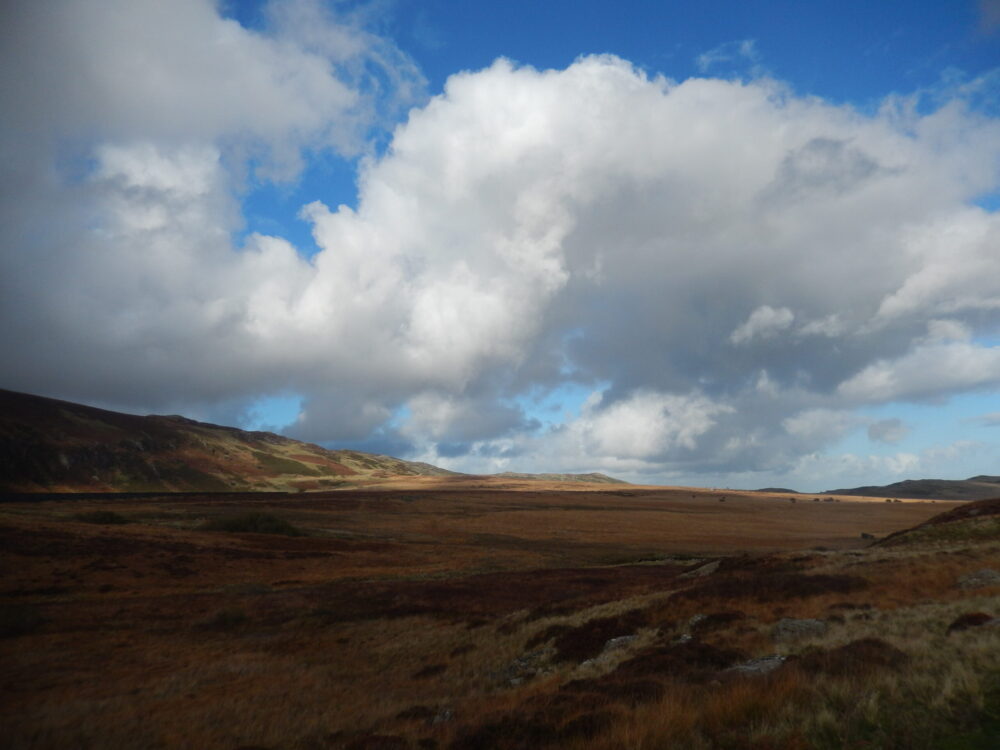
I follow the route of the deluge which joined Afon Porth-lloyd, and look back at the wall. A trick of distance fills the gap with a willow. A farmer is bringing a river of sheep down from the hills. They flood down the bank, are retrieved by the dog. Huge clouds bowl down the valley which, by the time I reach Coedty Reservoir, is awash with light.
For ten days before the disaster, Coedty Reservoir had been over-topping, eroding the earth bank shoring up the dam, and flooding the road. No repairs were ordered. Incoming water from Cowlyd Reservoir was not stopped. The Aluminium-Plant workforce were building a grand drive to the owner’s mansion.
At about 9.30pm, the deluge from Eigiau reached Coedty, the undercut concrete membrane collapsed with a bang, and a 50-foot-wide deluge of millions of gallons of water, mud, concrete and boulders washed downhill at 50mph.
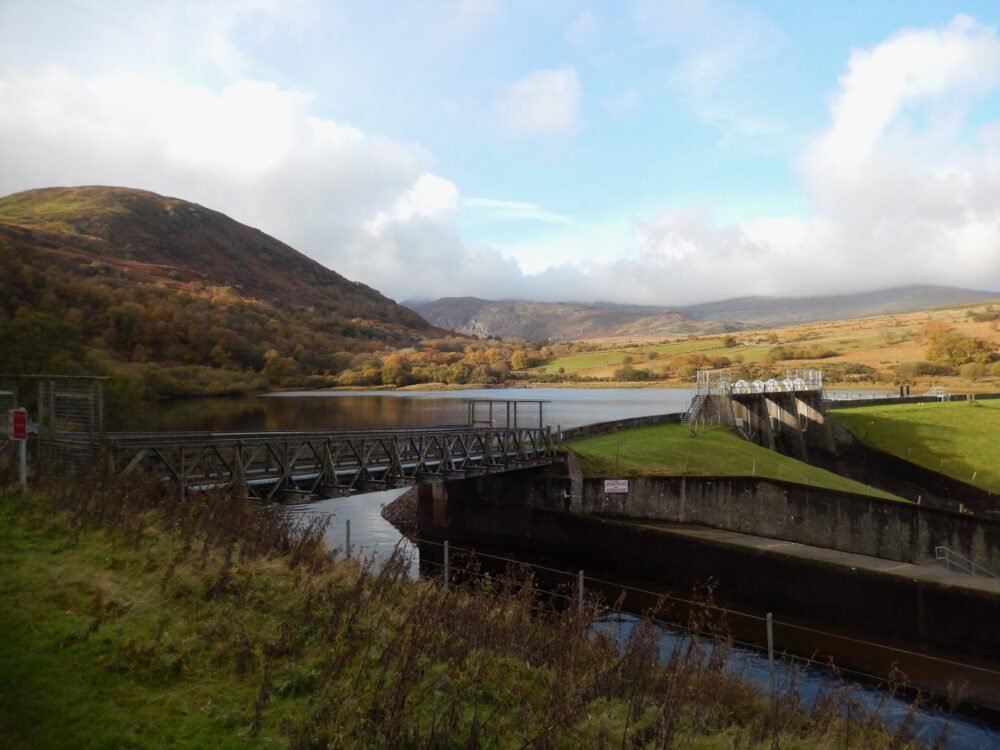
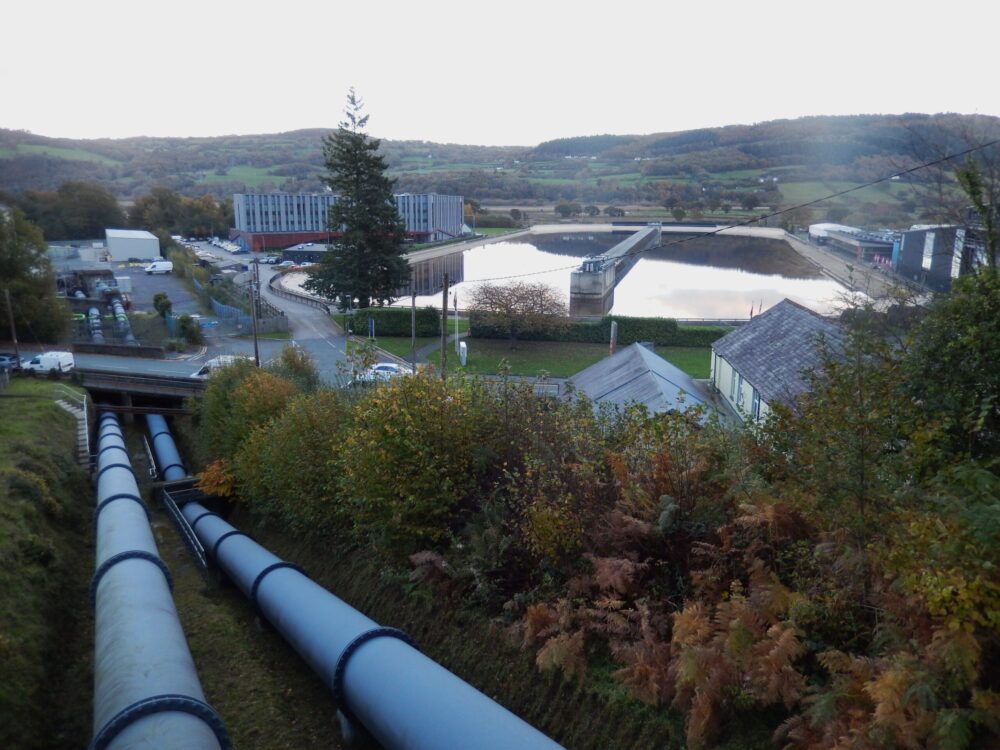
The 1930 Reservoirs (Safety Provision) Act was established as a result of the disaster. Coedty Dam was rebuilt and still feeds a hydro-power plant. Trees gather like mourners at the inlet, clad softly in autumn foliage.
I continue downhill. An angry mistle thrush guards a hawthorn busting with berries. The ffridd with its views over Afon Conwy gives to precipitous woodland in which the colour pop of beech is astonishing.
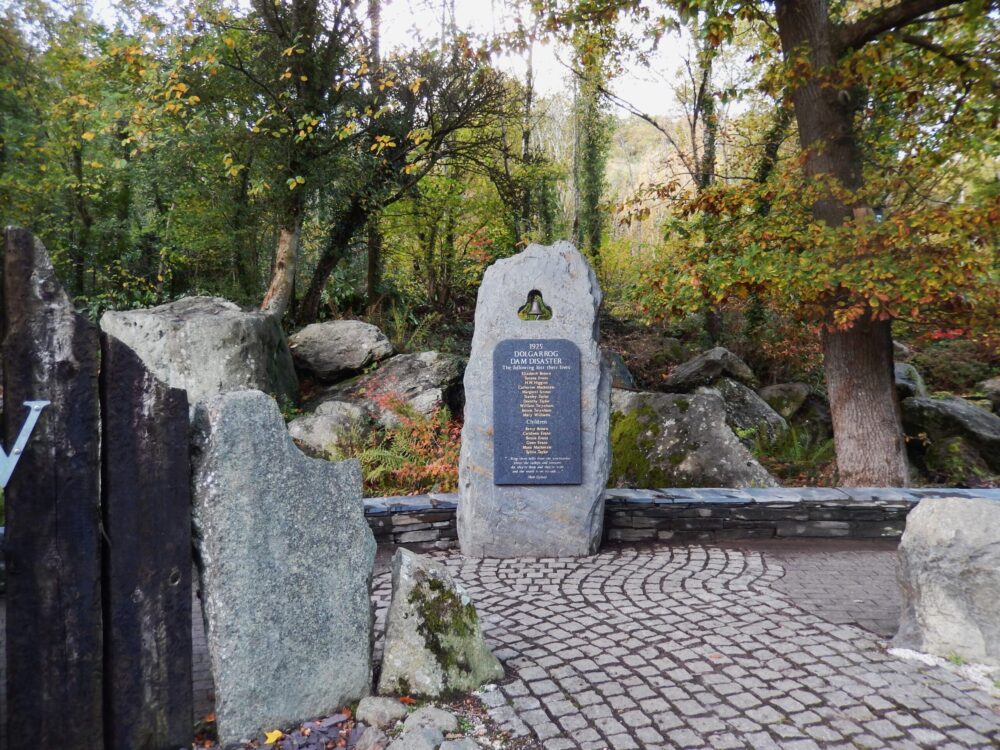
In Dolgarrog the river bed is still full of rocks. Recently, the reservoir of the defunct Aluminium Plant was fitted with an artificial wave and became Surf Snowdonia, which closed in 2023. People commute to work in the hospital or the council now, I am told by Les Parsons, who’s recycling his bottles. In the memorial garden landscaped around enormous boulders brought by the torrent, I meet Josh and young Eric, who is making a film about the flood.
In St Mary’s (built to replace the church that got washed away), the centenary is remembered with an exhibition curated by Bangor and Cardiff Universities and the Dolgarrog Art Group. Footage of the immediate aftermath, showing women in hard hats, men digging with picks and shovels, a wasteland of mud, and rocks, and water, and twisted metal, and hollowed-out homes, is playing on a screen above the altar on which lies the crucifix dug out of the mud.
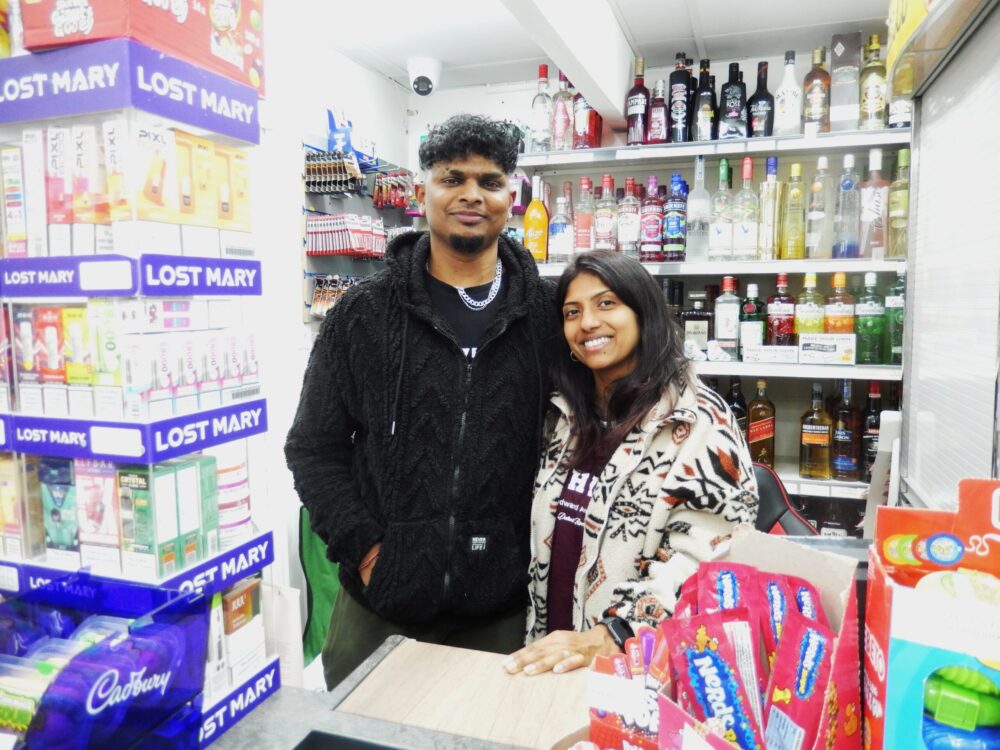
Shades Hair Studio is busy. In the convenience store, Prem and Jen add a dash of Tamil to the Cymraeg-English language mix. In the community centre, Adrian and Katy from North Wales Wildlife Trust are discussing dormice habitats and woodland access. Mums, and Roy Cross, who was born here, watch kids race around the playground. ‘They put me in the choir but I can’t even sing!’ laughs Roy. ‘Dwi’n hoffi chwarae yn y parc’ says his grandson Freddy, adding that he might carry a lantern on Sunday.
Everyone I speak to is planning to attend the commemorative lantern procession, except for Yogi who’ll be busy providing afternoon teas for the community, in Ixora Hotel.
Moments after Coedty Dam bust, the huge torrent of water and mud and rocks bore down on Dolgarrog. It obliterated Machno Terrace, the church and the bridge, flooded the power-plant and aluminium works, and swept cattle away. Sixteen people drowned. Many more would have been killed had they not been watching a film in the village hall.
I drink coffee in the hotel bar. Electric light pools in the garden overlooking the dormant surf lake. There are sofas and lots of gleaming glass. I think about the torrent that came in the dark, when people were unprepared.
A half-moon hangs in a black sky as I wait for the bus. A man switches on his head-torch as he sets off on a jog. Livestock trailers head towards Afon Conwy. A guy lets his small dog, whose name is Nancy, sniff around a bin. Two kids cross the road, one on a bike the other a scooter. Shades Hair Salon is still busy. Through misted windows I see a cloak placed gently around elderly shoulders. It’s enough to break your heart.
Find out more:
‘The Men who Drowned Dolgarrog’ by John Lawson-Reay (Carreg Gwalch)
‘Cwm Eigiau’ by Aled Rhys Hughes in Ffotogaleri y Gofeb, Machynlleth
Support our Nation today
For the price of a cup of coffee a month you can help us create an independent, not-for-profit, national news service for the people of Wales, by the people of Wales.



This land, Waun Gwynith up to Cwm Eigiau, is severely degraded and would benefit from conservation grazing by old breed cattle. The science behind this approach is proven at Nant Ffrancon up to Cwm Idwal. Unfortunately, the agricultural policy of the current Welsh Government makes it uneconomic due to the downgrading of upland pasture schemes that operate. Not helped by the land-banking title of the National Trust. The Carneddau is criss-crossed by ancient drovers tracks down to the Conwy valley which suggests prior use of this landscape was hardy upland cattle. A form of grazing that would have produced a… Read more »