

Letter from Llantilio Crossenny
Nigel Jarrett
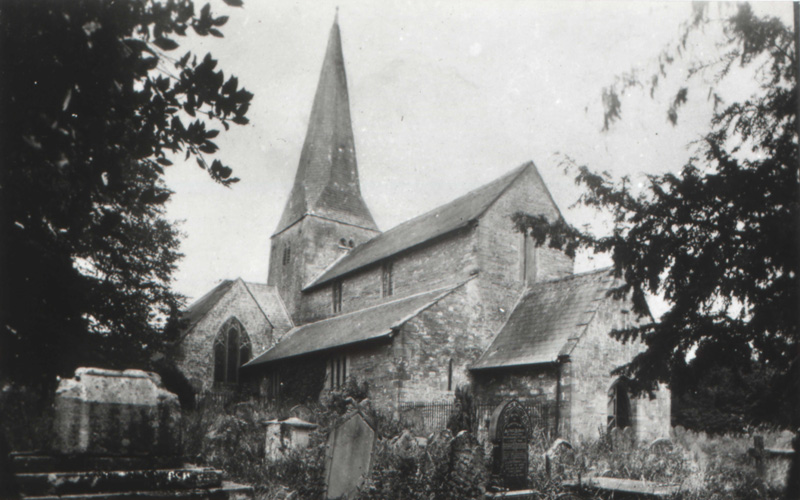
Summoned by the bells of St Teilo’s Church in deepest Monmouthshire, Llantilio Crossenny’s celebrated musicians and their friends might have made a noise more joyful than that ordained by nominal religious observance.
Once or twice, they would have been augmented by an illustrious outsider, if only to hear his music played – it would almost invariably have been a ‘he’ – and to be written up by a critic as distinguished among his own kin as they were among theirs.
Resident musicians included the concert pianist Geoffrey Buckley; the Handel specialist Charles Farncombe; the composer Mansel Thomas, who was also Head of Music at BBC Wales; Thomas’s wife, Megan, who played the cello; Dorothy Adams Jeremiah, Gwent senior schools music advisor; and the legendary singing teacher Jeanette Massocchi.
The scribe, of course, would have been none other than Kenneth Loveland, my predecessor as chief music critic at the South Wales Argus who had long reserved his burial plot in St Teilo’s churchyard. For many years, KL had been ‘looking after’ music in Wales for The Times and other publications here and abroad. How he became such a respected custodian is a story in itself.
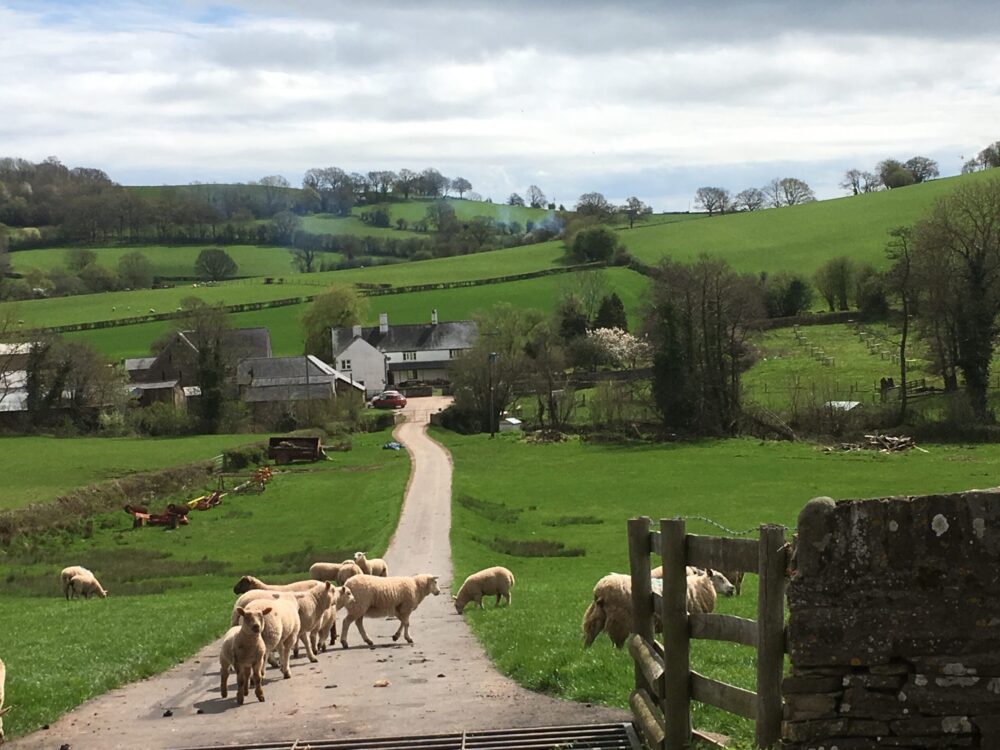
Farncombe’s original connection with Llantilio Crossenny was Treadam Farm, which he bought there before the festival was founded. His most important appointment outside Britain was that of chief conductor of the historic Royal Court Theatre at Drottningholm, Stockholm, from 1968 to 1979, where he helped to bring that preserved baroque edifice to working life. But Treadam was a constellation away from that, in a place so sleepy that all year it dozed on the cusp of hibernation. Why he, Mansel Thomas, and Adams Jeremiah thought its somnolence might profitably be disturbed each summer by a music festival based at the church is a mystery.
Where Llantilio Crossenny was involved, Farncombe led at least three lives: his Swedish connection; as conductor of the Handel Opera Society in London; and in his capacity as artistic director of a festival centred on a village so far-flung that it could have been grounded in mid-flight by mountains: in this case, the seven hills of Abergavenny, one of which, Ysgyryd Fawr, was rent by a bolt of lightning at the moment Christ was nailed to the cross. (I write that with tongue firmly planted in cheek after belatedly reading the book God Was Not Great, by Christopher Hitchens.)
Farncombe, who died in 2006 having outlived the Society by two decades, was a hoot as well as a serious and dedicated scholar and conductor. Each year, he would bring an assortment of what festival promoters accurately called ‘London professional musicians’ to form a small chamber grouping, which he named the Llantilio Festival Orchestra. For it’s only appearance of the year, it occupied one flank of the church while singers and solo instrumentalists performed on a makeshift wooden stage before a congregation re-classified for a week as ‘the audience’. The singers were denominated as the London Opera Players for the performance two nights running of music theatre, the festival’s pinnacle but not its coda, which was traditionally a symphony concert.
I once overheard Farncombe tell an importunate admirer that all he had to do was raise his baton or his baton-less hand and the orchestra would begin, stopping only when he lowered it at the end. There was a certain amount of arm-waving in between. One can never tell the difference between musicianly self-deprecation and barely-suppressed exasperation. The admirer, I think, saw the response as a joke, which it obviously was.
Outside the church during one sunny interval, Farncombe could be seen enjoying a cigarette and a chat (I’m almost certain he smoked) with his metropolitan charges. It was a sight that reminded me a few years later of something Alan Bennett wrote about musicians he’d just seen and heard playing in an orchestral concert at Leeds Town Hall: they were transformed on the bus home into middle-aged men in raincoats and often with cigarette tabs between their lips. Bennett described them in that post-spotlit, bathetic state as ‘unlikely agents of the sublime’. It’s taken a while for women to establish themselves in symphony orchestras.
Hitchens’s book places miracles in an age of fraud and conjuring. Some species of legerdemain must have been employed in Farncombe’s opera productions at the festival. They were pared to the bone, with frequent incursions into the marrow.
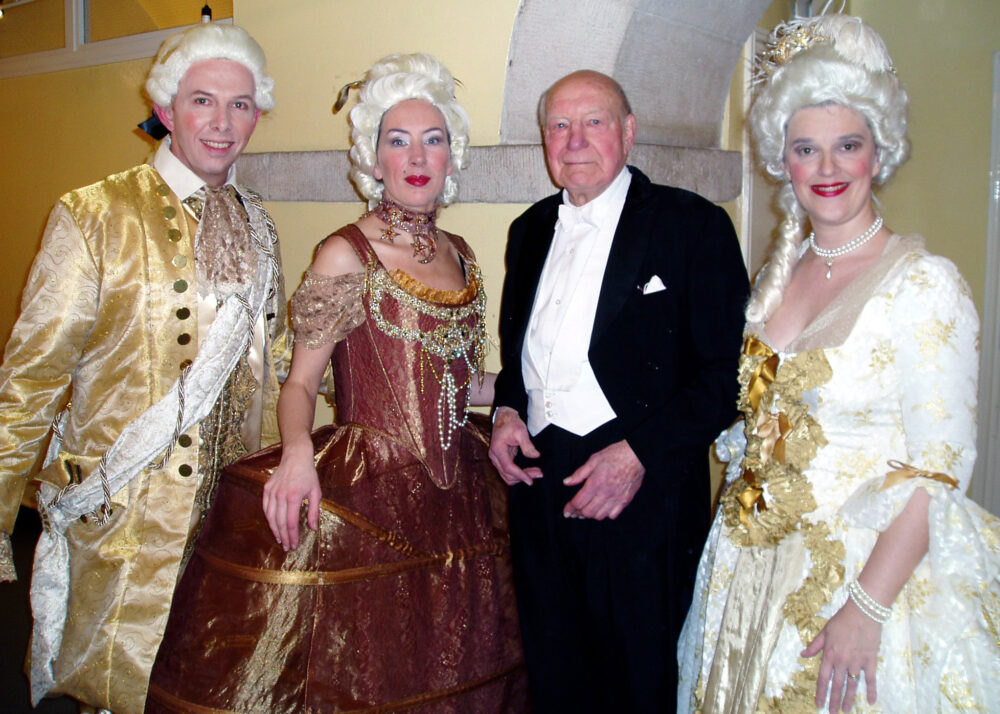
The festival sometimes attracted sufficient funds to commission work, the most notable example being William Mathias’s Oboe Concerto, with Sarah Francis as soloist and the Farncombe band in full support. Mathias attended. I was sitting one pew space away from him when I heard my intermediary neighbour ask him if he considered it OK to have a first performance if not in the back of beyond then in its far reaches. ‘Well, they’re all London pros,’ the maestro said, confirming the official description while consulting his programme.
(Interesting to see Elgar, played by Simon Russell Beale in Nicholas Hytner’s 2025 film The Choral, throwing a tantrum on discovering that an amateur performance of his oratorio The Dream of Gerontius had been reconstructed to incorporate Great War themes. The first performance of Gerontius at Birmingham in 1900 had been a travesty, due to under-rehearsal and the bemusement of some of its professional performers.)
Llantilio Crossenny’s Festival of Music & Drama, to give it its full title, was badly bruised by Farncombe’s death and the decision six years later to funnel monies intended for UK arts subvention into preparation for the London Olympic Games. Farncombe’s daughter, Eleanor, bravely carried on but would be the first to admit that the festival, pro tem, could not recover its glory days. It has, however, placed a premium on involving young people in opera – last year it was Rossini’s La Cenerentola – and turned the nearby Treadam into what those same festival promoters, somewhat hopefully and throwing jazz into the mix, called ‘Ronnie Scott’s’. In music provision, the still small voices of continuity and modest innovation are often as important as the drum beat and cymbal crash of the bigger occasion. Robyn Sevastos took over from Farncombe as conductor.
In June 2025 the festival was on for two days at Treadam, with jazz and workshops on the Saturday and two performances of the opera on the Sunday. The re-named London Opera Productions was again on hand to maintain links with the festival’s beginnings and its spectacular heydays.
When Ken Loveland, long associated with the festival, was buried at St Teilo’s in his earmarked plot, a trio of RAF jets whizzed overhead in what his many friends and colleagues amusingly chose to interpret as a fly-past that he and others had especially arranged, for the festival and its idyllic setting more than for himself. It may well have been.
Footnote
Those St Teilo bells were installed in 1709 but were silent for 30 years until a team of campanologists was established in 2012 for the festival’s 50th anniversary. Our Llantilio Crossenny musicians would have heard them before they entered on their Rumpelstiltskin slumber in the 1980s: the bells, that is, not the musicians. The latter were about to wake everyone each summer with long-to-be-established sounds of music.
Nigel Jarrett is the former chief music critic of the South Wales Argus. He was a newspaperman and is a double prizewinner: the Rhys Davies award and the inaugural Templar Shorts award, both for short fiction. He’s had eight books published, including in 2023 his fourth story collection, Five Go to Switzerland. Never Lost for Words: Selected Essays was published last year by Cockatrice Books, the Welsh independent. He lives in Abergavenny.
Support our Nation today
For the price of a cup of coffee a month you can help us create an independent, not-for-profit, national news service for the people of Wales, by the people of Wales.


