

Letter from Llanymddyfri / Llandovery
Julie Brominicks
Something about how the roads straggle into Llanymddyfri like spokes from the hills tells you that drovers were here. Or perhaps its location on a floodplain between Afonydd Tywi, Brân and Gwydderig hints at livestock.
Imagine them grazing. Imagine Welsh Blacks in these streets.
See that row of Harleys parked outside West End café? Drovers. They would have stopped here, like that man with whiskers wiping his mouth with a hanky. They’d have drunk in The Bear and The Castle and seventy other pubs that existed back then.
“Tafarn oedd bron pob tŷ,” says Christopher Jones, drinking tea in Tudors Cafe. “There is some romance about the drovers,” he agrees, while a window cleaner squeegees the glass. “We still have a weekly livestock sale, and the annual Welsh pony sale’s coming up.”
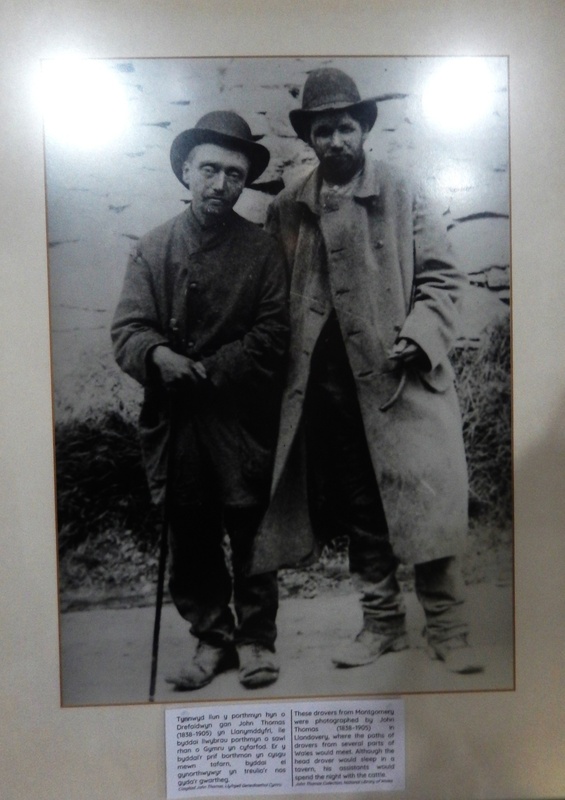
“For hundreds of years Welsh drovers took cattle to London,” beams volunteer museum guide Helen Grady. “The cattle had leather shoes, the geese had tarred feet and imagine the noise trying to get pigs to wear woollen socks with leather soles!” Helen whizzes between cabinets, pointing out artefacts like the drovers’ iron-soled boots.
“They were people of impeccable honesty, because they were trusted with livestock and money. They walked livestock twice a year to Smithfield in London. The head drover rode on horseback. The others maybe specialised in cattle, pigs or geese, and slept in the fields with the animals. The processions were half a mile long! It must have been a dynamic place.”
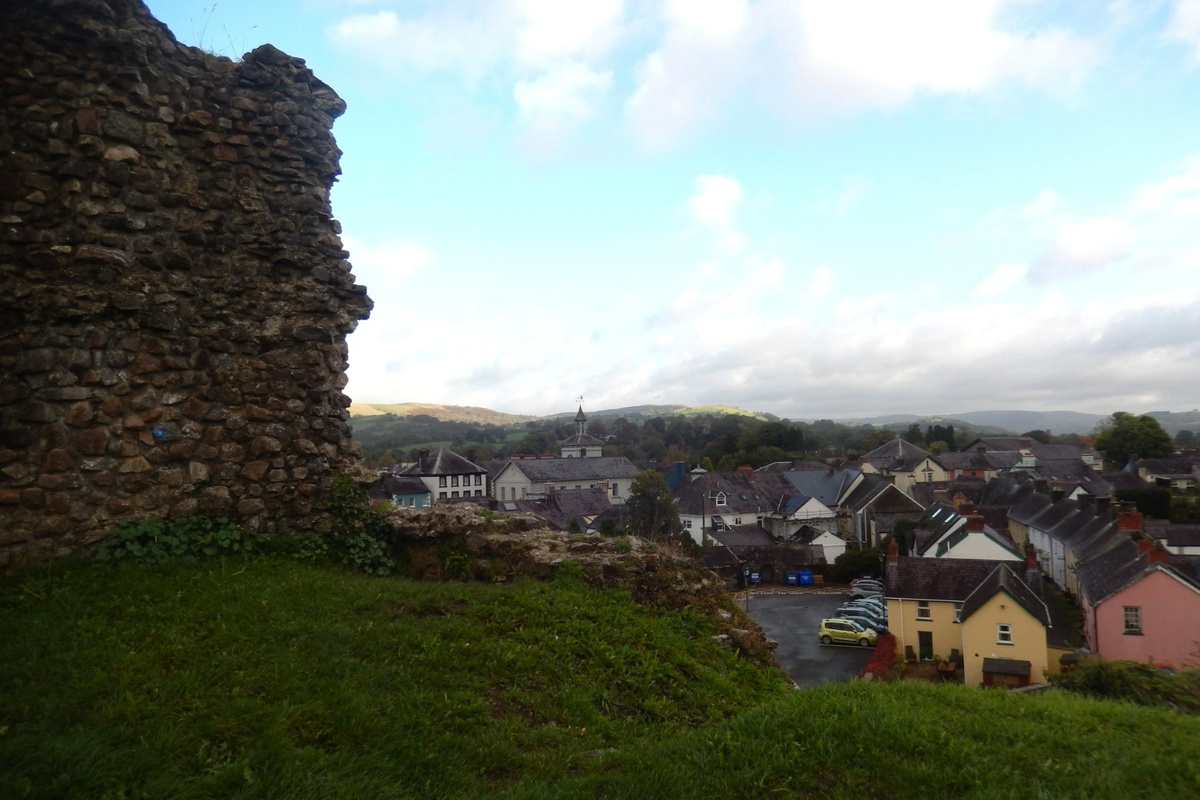
Streets full of warm cattle, and hay and piss and dung. Outside the museum window, rain sluices the castle.
Clee’s Estate Agents has a window frieze of sheep. Across the street in Clock Cafe, Anita from Porlock is making Welsh cakes. She’s learning Cymraeg, but it all comes out a bit wonky with her West Country accent. Up the road, a crew in Books at Dragon’s Garden are discussing the curious incident of Men’s Shed, the lead paint and the phone box. (Dragon’s Garden is why I’m here—bookseller Mandy Thomas has invited me to give a talk.)
Around the corner, the Youth and Community Centre radiates welcome. “It’s a drop-in centre every day,” explains founder Jill Tatman. “We’ve already sorted out someone’s tax this morning. A number of people who can’t read bring in their letters, and 80% of the kids we took on summer camp wouldn’t otherwise have had a holiday.”
Community
Llanymddyfri, Llandovery, is the kind of place where community matters and business is done with a chat. In the shoe shop, for example, Yorkshireman Philip “one L, we don’t waste them” .
Thomas is showing insoles to a woman called Anne, who is in her socks. “Don’t trim them yet. As my woodwork teacher used to say, keep your wood as long as you can for as long as you can. This is what all the farmers are buying. The woolly ones are £5.” “I think I’ll take the two of them,” says Anne.
In the butcher’s, Marcia fields enquiries about homemade faggots, while Dai advises someone about garlic. Livestock isn’t walked to London anymore: their beef comes from just up the road.
So too in West End, where owner Mark Vince pushes as much of his own beef and lamb through the café as he can.
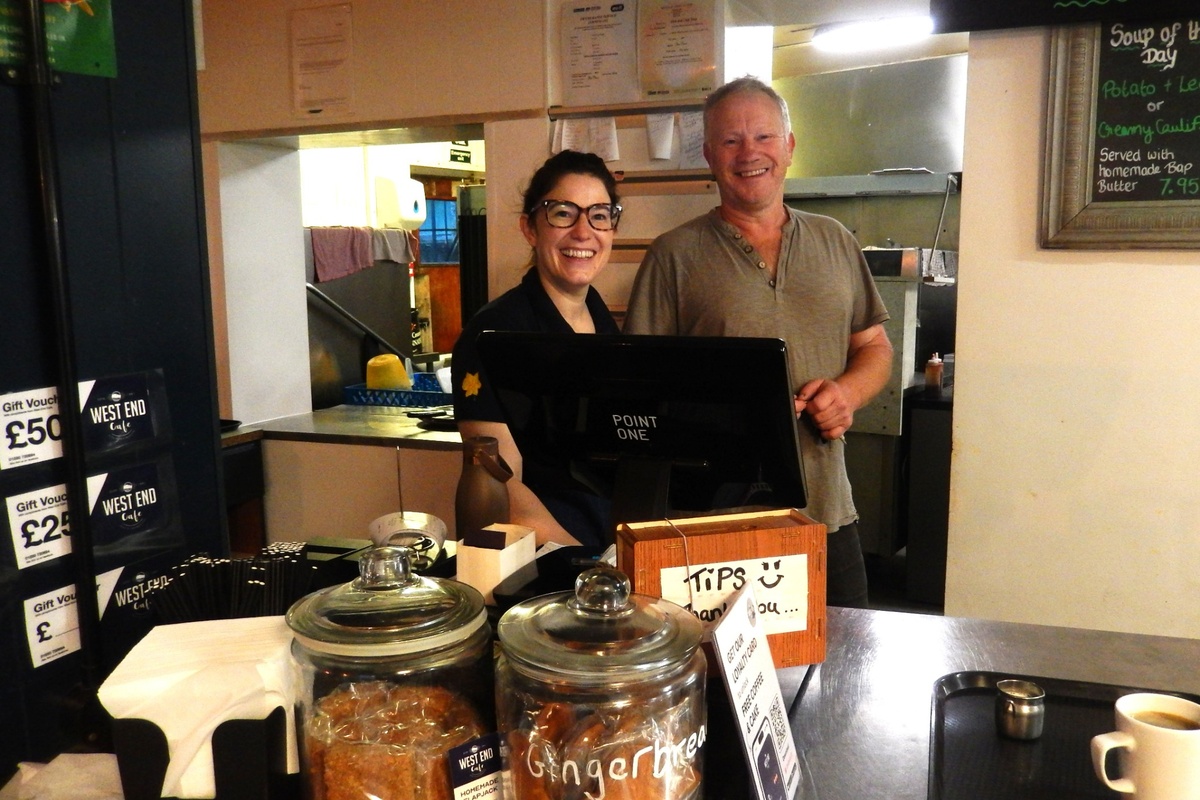
“Mi wnes i ffermio yn y cychwyn.” Mark started out farming, went into hospitality when it failed, and now does both. “Re-gen farming. Diversity is the main thing. You can’t have just one type of grass you need many, so the animals are self-medicating. The grasses have got long roots so they store carbon and you won’t have flooding.”
Good news, in a town surrounded by rivers. I’m staying just outside, in Llansadwrn, in Mandy’s former bookshop. Deer have pushed through the hedges. The wind rolls over the roof and her horses whicker. At first light, I step out.
Wheeeeep. Fewheeeeeeeep. Gauzy dawn. Ghost flocks of mist drifting around valleys and hills. Wheeeep. The whistling continues—out of sight, a farmer is directing dogs who are rounding up lambs and old sheep for market.
Metal gates
The ‘new’ mart was built in 1988, in the car park. Straw and dung on the floor and a clanging of metal gates.
“Wedi altro,” it’s changed, everyone tells me. The old mart was in town. They’d walk in the cattle and go for a pint after sales, explains Nerys, who farms Pantycelyn with her 90-year-old father Cecil. People would chat in the square. “Mwy cartrefol,” it was more homely then, remembers Doreen Lloyd, who received a long-service award at the Royal Welsh for her work in agriculture.
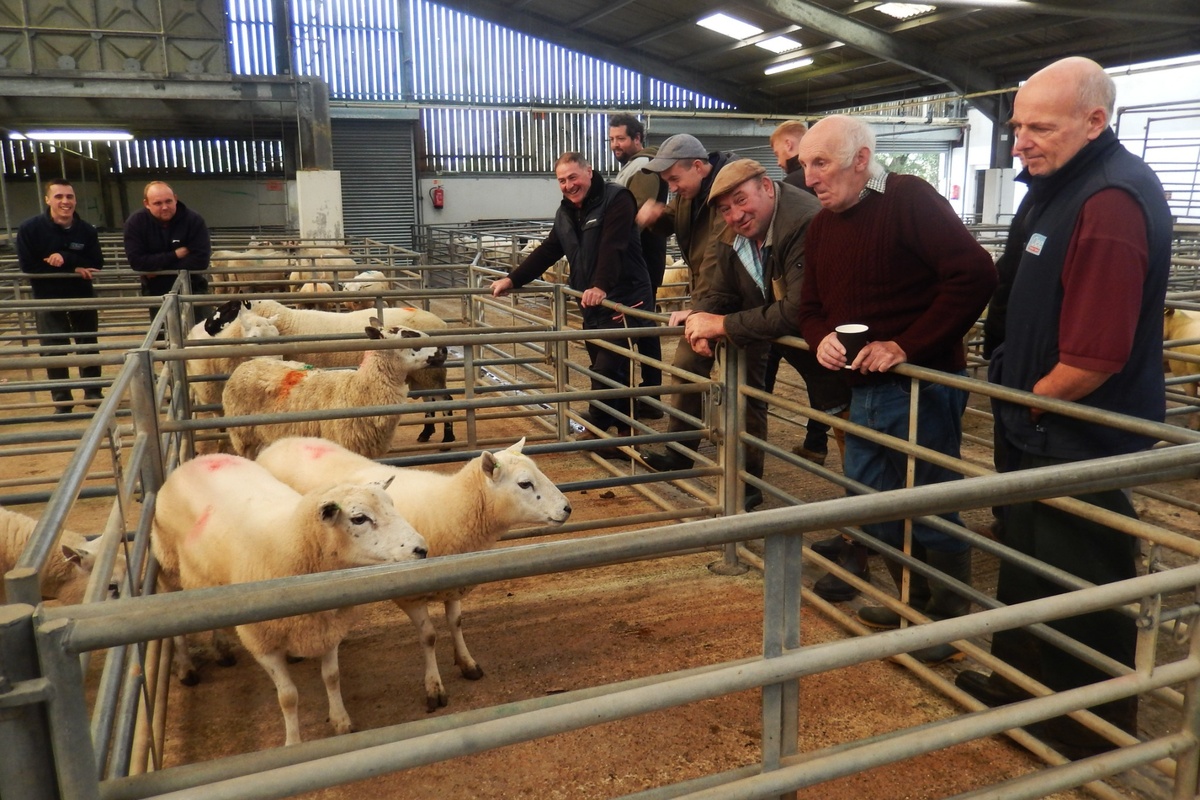
Still there is, there is, something. Up the concrete steps in the office at the back of the shed, where business is done over biscuits and a farmer awaiting paperwork reaches for a coconut ring. Have they not brought their sheep from the fields along straggly lanes for Geraint Powell to weigh and sort into pens? Something of the drovers lingers. Doreen thinks so, definitely. “Cysylltial. Odi, mae drovers yn dal yma.”
The drovers are still here. Out in the rain, queuing for burgers and tea. Auctioneer Derfel Harris, conducting sales from the gantry. “125, 130, 130, 128,” one hand floating up as the other, with clipboard, descends. “Texel Cross 123, got 20, never had nothing are you bidding or not.”
There is something of a tenor about him as he turns one way then the other, responding to buyers’ winks. “123, 29, 129…”
The small crowd move along the pens. Nerys says you need to scan the ears every time you move them now. Traceability.
Where do they go, now they’re not walked to London? “Abattoir in Craven Arms,” says Percy Jenkins, one of the main buyers.
“The abattoirs send them for export, it’s the only way the supermarkets can’t get control of it. If it wasn’t for the Pakistanis, and German Turks and French Arabs there wouldn’t be sheep farming here. Muslims eat 90% of our sheep meat,” he adds.
“A good strong ewe there, £130,” sings Derfel. Percy Jenkins scrunches up his eye.
Julie is the author of Cader Idris and The Edge of Cymru. If you’d like to buy a copy, order through your bookshop, or through Seren Books.
Support our Nation today
For the price of a cup of coffee a month you can help us create an independent, not-for-profit, national news service for the people of Wales, by the people of Wales.
Get more trusted Welsh news
Choose Nation.Cymru as a preferred source in Google News to see more of our journalism.


