

Letter from the Gavenny
Nigel Jarrett
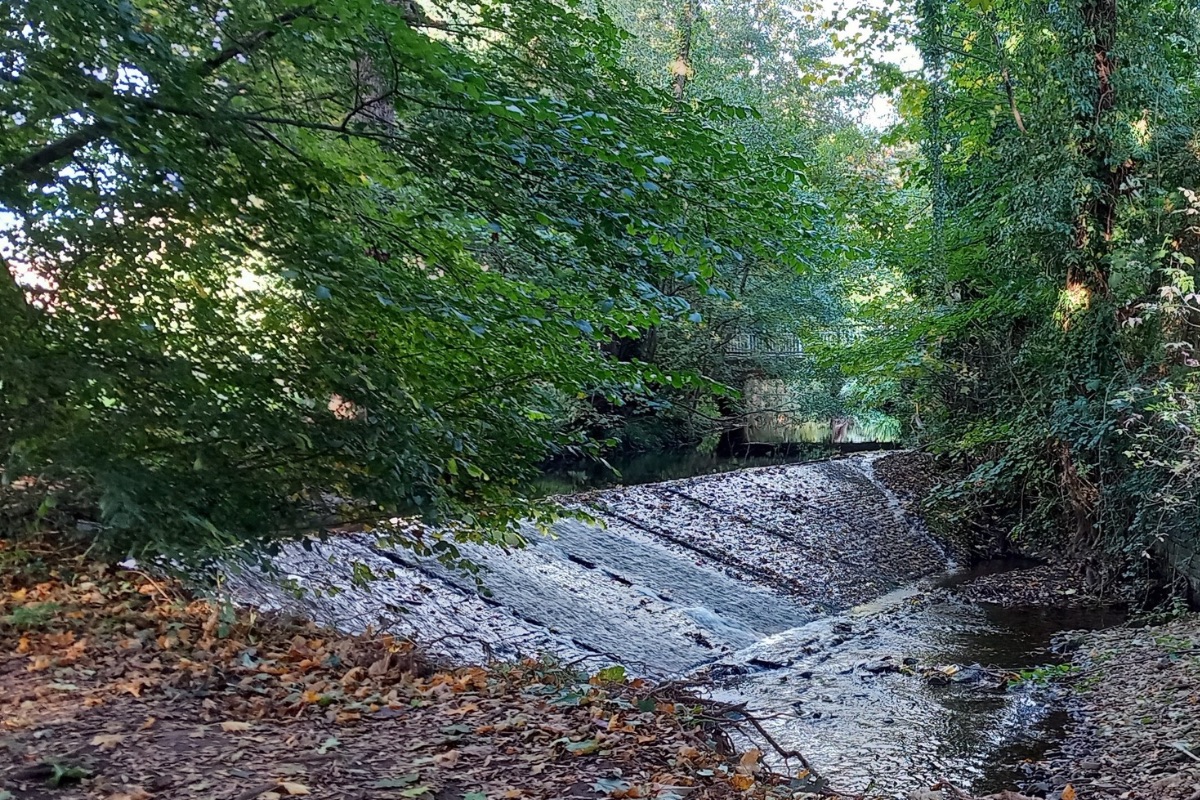
Last week, from the road bridge in Lower Monk Street, I spotted a foot-long eel in the River Gavenny. With that late smart-arsed zeal that’s replaced common sense, I posted my discovery on the Abergavenny town website, believing that an eel in the Gavenny was a proper source of amazement to be shared among the townsfolk.
Sundry anglers and nature-lovers replied wearily that a) there’d always been eels in the Gavenny; b) eels in the Gavenny were accompanied by otters, mink, trout, dippers, and kingfishers in a Disney-like tableau; c) eels were wily creatures that could climb out of water and slither along the land to anywhere aqueous; and d) if I were a real naturalist (I’d admitted to having fitfully studied zoology at university and dropped the name Anguillidae as the taxonomic family to which eels belonged), I’d have known most of the foregoing and curbed my enthusiasm. There’s always someone on social media waiting to put you right on everything, not a few of them relentlessly spitting venom.
I should have confessed to having once seen a trout in that river, and a dipper bobbing on an exposed boulder. I’d done some research, learning that the Gavenny was one of the shortest, if not the shortest, river in Wales, rising a few miles upstream at a point south-west of Llanvihangel Crocorney and emptying into the River Usk in Abergavenny’s Castle Meadows without putting up a fight. Even where it passes under the road bridge, it’s barely twelve feet wide and about to enter a region where ancient industries – tanning and the like – had turned it into a mill race. The way it now trickles into the Usk resembles a frothing no-hoper in the 3.45 at Chepstow.
I can’t remember what they were called but I also found out that foreign crayfish had invaded the Gavenny, more or less seen off the native ones, and begun burrowing into the banks, maybe to escape the pollution caused further up river by what’s officially described as ‘domestic pipework misconnections’. I didn’t mention it, fearing the arousal to anger and sarcasm of a posse of Monmouthshire plumbers surfing aimlessly after lights out and waiting to have a go at someone – anyone.
Cyberspace-wise, I should have learnt my lesson after the Bailey Park incident. On the railings of its bowls club had appeared a rash of adverts for local businesses. They’re still there. I posted about how it reminded me of the hoardings at a retail park and was out of place in one of the most handsome urban green spaces in the county. My online accusers came down like wolves on the fold, explaining that the ads were for companies sponsoring the club. The most unpleasant of the onliners suggested that the thing I should get was a life.
Following the demolition by protesters of any memorial trace in Bristol of the slave-trader and philanthropist Edward Colston, I had thought of wondering out loud online if Bailey Park’s attractions were not also under threat, considering the enslaved conditions in which many employees of the ironmaster Crawshay Bailey had endured their miserable existences. Bailey Park is properly Joseph and Crawshay Bailey Park. Dropping the ‘Joseph’ and ‘Crawshay’ – they were brothers – pushes history farther into the murky background. I didn’t post. There are limits to being public-spirited and controversial.
When I was staring into the Gavenny that time, and before the eel whip-lashed into view, I was looking for the crayfish and wondering how they’d got to an obscure Welsh watercourse from, say, a river-cum-stream in Veules-les-Roses, Normandy, or one in southern Holland passing through Leiden, Alphen aan den Rijn, and out to the coast at Katwijk aan Zee. (Impressive itinerary, eh? Maybe I should have studied geography rather than natural history.) Or perhaps they’d escaped, as importees, from a restaurant’s keep-them-alive tank and found a local brook. Any road, they got here and are hiding out, maybe eroding the river bank.
To be honest, I saw that eel when I was on a walk and thinking less about river fauna than whether or not I should try yet again to read George Eliot’s Middlemarch, and other brick-size books. It’s the sort of thing I do on walks – think, I mean. As Andrew Davies must have discovered when he was adapting the novel for TV in 1994, Eliot’s storyline is thin but seemingly endless, like yards of cotton thread making its way through fistfuls of snagging cotton wool, the latter representing Eliot’s dense philosophical and other observations and descriptions. All Davies did, it seemed to me, was remove the cotton wool from the thread. I’m a slow reader, often taking in a sentence or a paragraph twice to make sure I’ve understood it.
While dislodging Middlemarch, however, another novel had tumbled forth: Waterland, by Graham Swift. Believe that if you will. It had an eel on the cover about the size of the one I was to see an hour later in Lower Monk Street. A portent, then. Swift’s book is set in the east Anglian fens, where eels abound. In their juvenile form – three-inch-long elvers – I’d once fished a bowl of them out of the Wye at Brockweir, encouraged and accompanied in my illegal twilight quest by a Forest of Dean farmworker whom I was teaching to read on a government Adult Literacy scheme, now defunct. He knew that eels came from the Sargasso Sea because he’d been told, not because he’d read about it. My hope was that eventually he would read about it, and a lot more – if not Middlemarch then The Mill on the Floss, or a Rick Stein recipe for eel pie.
From next week, therefore, weather permitting, I may be seen camouflaged on the Gavenny’s bosky riverbank, awaiting the arrival of kingfisher, mink, and otter. Facebook told me they were there. And if you contradict Facebook, you’ll be digitally dealt with.
Nigel Jarrett is a regular contributor to Nation.Cymru. He’s a winner of the Rhys Davies and Templar prizes for short fiction and has had ten books published, the latest his fifth collection of stories, called Ways of the Flesh (Brimstone Press). Never Lost for Words: Selected Essays (Cockatrice Books) was published last year.
Support our Nation today
For the price of a cup of coffee a month you can help us create an independent, not-for-profit, national news service for the people of Wales, by the people of Wales.
Get more trusted Welsh news
Choose Nation.Cymru as a preferred source in Google News to see more of our journalism.


