

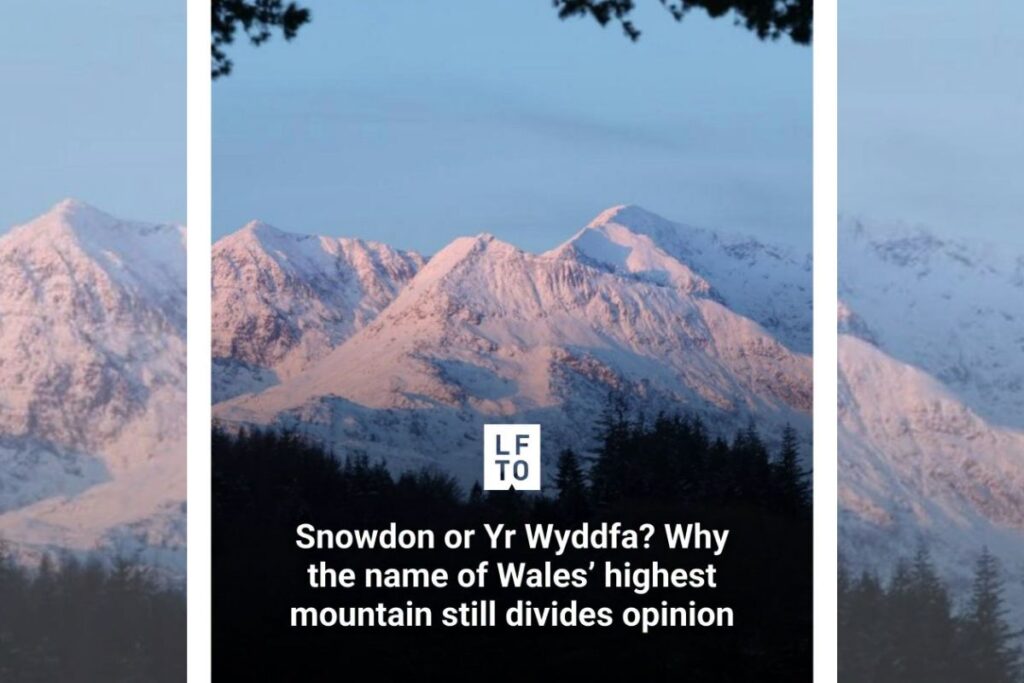
Live for the Outdoors explains ‘why it’s still OK to call Yr Wyddfa Snowdon‘
Nation Cymru staff
A website dedicated to outdoor adventure has been condemned for an article asking if you should ‘call Wales’ highest mountain Snowdon or Yr Wyddfa?’ with its English author claiming you “can’t really get it wrong”.
Live for The Outdoors say they are “the UK’s biggest and most trusted website dedicated to outdoor adventure, run by a team of passionate hikers and runners with decades of media experience”.
Live for the Outdoors (LFTO), whose registered office is on Hampstead Road, London, “provides in-depth gear reviews, route guides, and expert advice for hikers, backpackers, trail runners, and everyone who loves outdoor adventure”
In a new piece written by Ben Weeks published on 28 October, Live for the Outdoors’ article is titled Why it’s still OK to call Yr Wyddfa Snowdon – (but why you should probably call it Yr Wyddfa).
Its subhead reads simply: “What to call Wales’ highest mountain is cause of much debate – particularly on social media. But here’s why I think you can’t really get it wrong.”
Its corresponding Facebook post was less subtle, however, asking: “Should you call Wales’ highest mountain Snowdon or Yr Wyddfa?”
The English name of Snowdon for Wales’ highest mountain was replaced by the Welsh name of Yr Wyddfa, following a vote by the Park Authority’s committee members back in November 2022.
A five thousand-strong petition calling on the National Park Authority to formalise the authority’s use of the Welsh names Eryri and Yr Wyddfa boosted it to take decisive action.
The petition was instigated in response to a proposal by Councillor John Pughe Roberts for the authority to cease to use the English names Snowdon and Snowdonia.
The proposal was rejected at that time on the basis that a group had already been established to look at the use of place names.
Dr Dylan Foster Evans of Cardiff University was commissioned by the Place Names Task and Finish Group to compile a series of principles for use as guidance when referring to geographical names in the Eryri / Snowdonia National Park.
Naomi Jones, Head of Cultural Heritage at the Snowdonia National Park Authority said: “Many public bodies across Wales have moved to use both the Welsh and English names, or the Welsh name only, when referring to Yr Wyddfa and Eryri, as have many of the mainstream English-language press and filming companies.
‘Debate’
Discussing online discourse around the name change, Weeks writes: “But as the news spread across social media, there were arguments from both stubborn English speakers refusing to even consider the “new” name, and Welsh-language proponents who viewed the use of anything other than the Cymraeg names a crime punishable by something not far from flogging. Somewhere along the way, the purpose of the change became lost. Four years after Snowdonia National Park became Eryri National Park, we look at why the choice of names doesn’t have to be a binary one.”
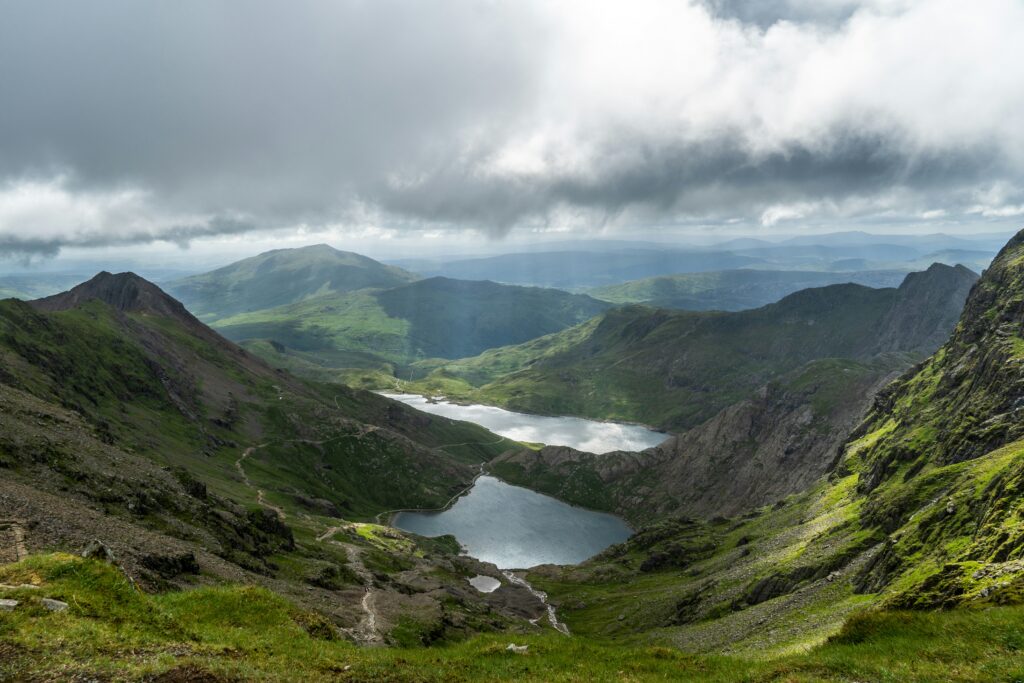
Under the heading, ‘why it’s ok to still say Snowdon’, Weeks shares: “The first written evidence of the name Snowdon being used comes from 1095, when it was recorded as Snawdune, coming from the Old English words snāw (snow) and dūn (hill or mountain). At the time, the Norman invasion had pushed into (and was being pushed back out of) Wales, and the Anglo-Saxon language was still the one in which most official records were being recorded. That’s not to say Yr Wyddfa wasn’t being used – orally, it’s probable that it predates Snowdon. But the point is that the name Snowdon has been in use for a very long time, nearly 1000 years.
“Thanks to the UK’s history of multiple invasions, the entire country is full of places named in different languages: Anglo-Saxon, Norman, Welsh, Gaelic, Norse, Latin, French and more. And these places probably all had names before they were given new ones by whichever language was dominant at the time. Snowdon is one such example, but there are hundreds more, and we don’t feel the need to unravel all of those in order to revert to whichever title they went by originally.
Referring to placenames that have changed back to their native originals such as Ayers Rock in Australia now being known as Uluru, Weeks writes that “the name Snowdon wasn’t a colonial imposition. It just happened to be the name that some people of the 11th century called that mountain in their language”.
After discussing the two names Tibet and Nepal share for Everest, he adds: ” There are countless countries that are called one thing in their native tongue – Deutschland, Nippon, Suomi, Zhongguo – and something else in English – Germany, Japan, Finland and China to name but four. And examples include mountains too.
“We may call the Matterhorn the Matterhorn, as do the Germans and German-speaking Swiss, but Italians call it Cervino, the French call it Cervin, and its name in the local Swiss Valaisian dialect is Horu. Same mountain, many names.
“In north Wales, where the Welsh language is much more widely spoken, you’re likely to hear Yr Wyddfa used far more often. And rightly so: it’s the name embedded in the language and culture of the communities around the mountain. But that doesn’t mean you have to.”
He does, however, concede that, “with all that said, there’s a very good reason you probably should…”
Weeks writes: “Languages are fascinating things. They’re one of the reasons travelling is so interesting and rewarding. Place names are part of that and often tell a story of how those places came to be. Yr Wyddfa (pronounced Ur WITH-va) is a perfect example.
After giving some information on the history of the name, he adds: “But a great origin story isn’t the only reason you should use the mountain’s native name.”
“Like its castles, its stone circles, and its traditions, the Welsh language is part of Welsh culture and history. And like any historically significant construction or artefact, it deserves preserving.”

He adds: “The pressures facing Welsh-speaking communities are complex. Outmigration, housing affordability, second-home ownership and changes in local populations have all featured in discussions about the future of the language in its traditional heartlands… as with any form of conservation and preservation, we can all play an important role. In the hills, that might mean sticking to paths, or avoiding certain areas during nesting seasons, or making sure that all litter is carried off the mountain. But in the case of a language, it means using its own words and names to help keep that language healthy.
“And is it really such a big ask? Nearly all the signage in Wales is in both English and Welsh, and you can go almost anywhere in the country, speak English and be understood. So being asked to try to use a Welsh name for a Welsh mountain in a Welsh national park doesn’t seem unreasonable.”
In conclusion he writes: “So don’t use Yr Wyddfa simply because it’s the original name of the mountain, because it has an intriguing origin story, or because someone on Facebook has accused you of being an ignorant monoglot. Use it because it’s a small, simple way to show respect for the culture that makes this corner of Wales so special, and to help preserve something precious.”
Weeks then goes on to quote Andy Welch, a Guardian journalist and co-author of Welsh Plural: Essays on the Future of Wales, grew up in North Wales who writes: “Of course you can still say Snowdon when you’re referring to Yr Wyddfa, if you want to, and you never have to say Eryri.
“But you simply cannot deny the change or the reasons for wanting to do so. I should add that for many Welsh people, there was no change – there are written references to Eryri as far back as the 9th century, with the name no doubt going back even further.
“As well as meaning, language is loaded with history, and it’s important that the people of a country get to decide which story is told – if that means a mountain and national park officially have Welsh names, then so be it. Call it reclamation, if you want, preservation of the Welsh language, or simple rebranding designed to stoke debate.
“There’s also what it means for visitors. Obviously, there would be less fuss about the naming if Cymraeg wasn’t such a tricky language for many visitors to get their tongues around. Consider Yr Wyddfa and Eryri insights into the beautiful Welsh tongue, or carry on calling them Snowdon and Snowdonia.
“It’s really up to you. Just visit, enjoy the scenery and, most importantly of all, take your litter home with you.”
“Non-story”
A Facebook post promoting the news item was widely condemned by social media users from across Wales and the world, with one poster sharing simply: “Do you go to Australia and call Uluru, Ayers Rock?”
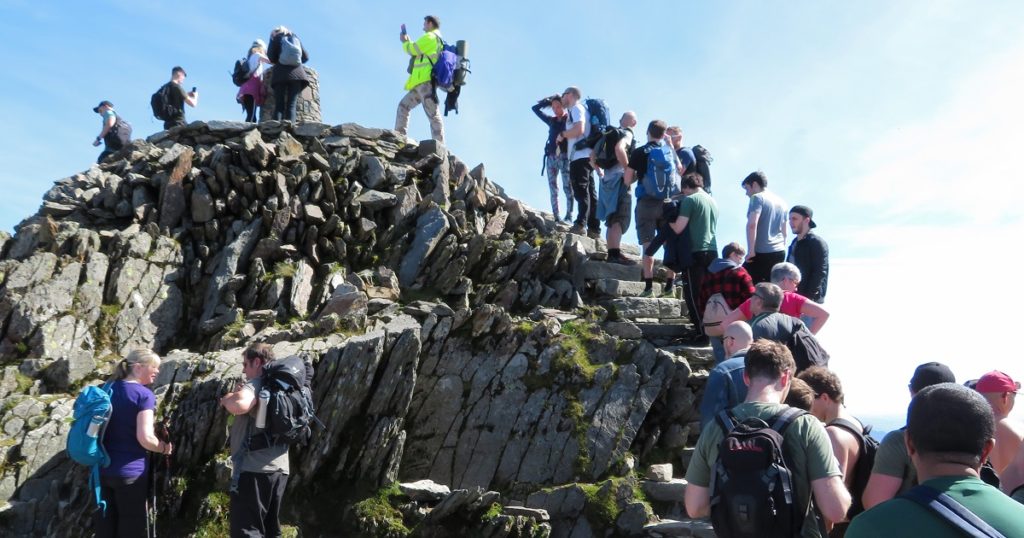
This was followed by another, writing: “Yr Wyddfa…. it’s what it’s actually always been called long before the English version existed.”
One commenter shared: “Let’s go to England and re name everything there in Welsh. See what the English have to say about that!”
Another added: “So you know how you go to a place like Spain and all the names are in Spanish?”
However, some were in favour of the use of Snowdon, with one poster adding: “Bit of a non-story. Wales/Cymru is officially bilingual so either name is fine. Worth noting also that Welsh speakers have many names for places which are in England e.g. Llundain Lerpwl, Amwythig etc.”
This was countered with a response saying: “I look forward to seeing those names on road signs in England.”
Read Why it’s still OK to call Yr Wyddfa Snowdon – (but why you should probably call it Yr Wyddfa) in full at Live for the Outdoors.
Support our Nation today
For the price of a cup of coffee a month you can help us create an independent, not-for-profit, national news service for the people of Wales, by the people of Wales.
Get more trusted Welsh news
Choose Nation.Cymru as a preferred source in Google News to see more of our journalism.


