


Making Tracks: Abergavenny
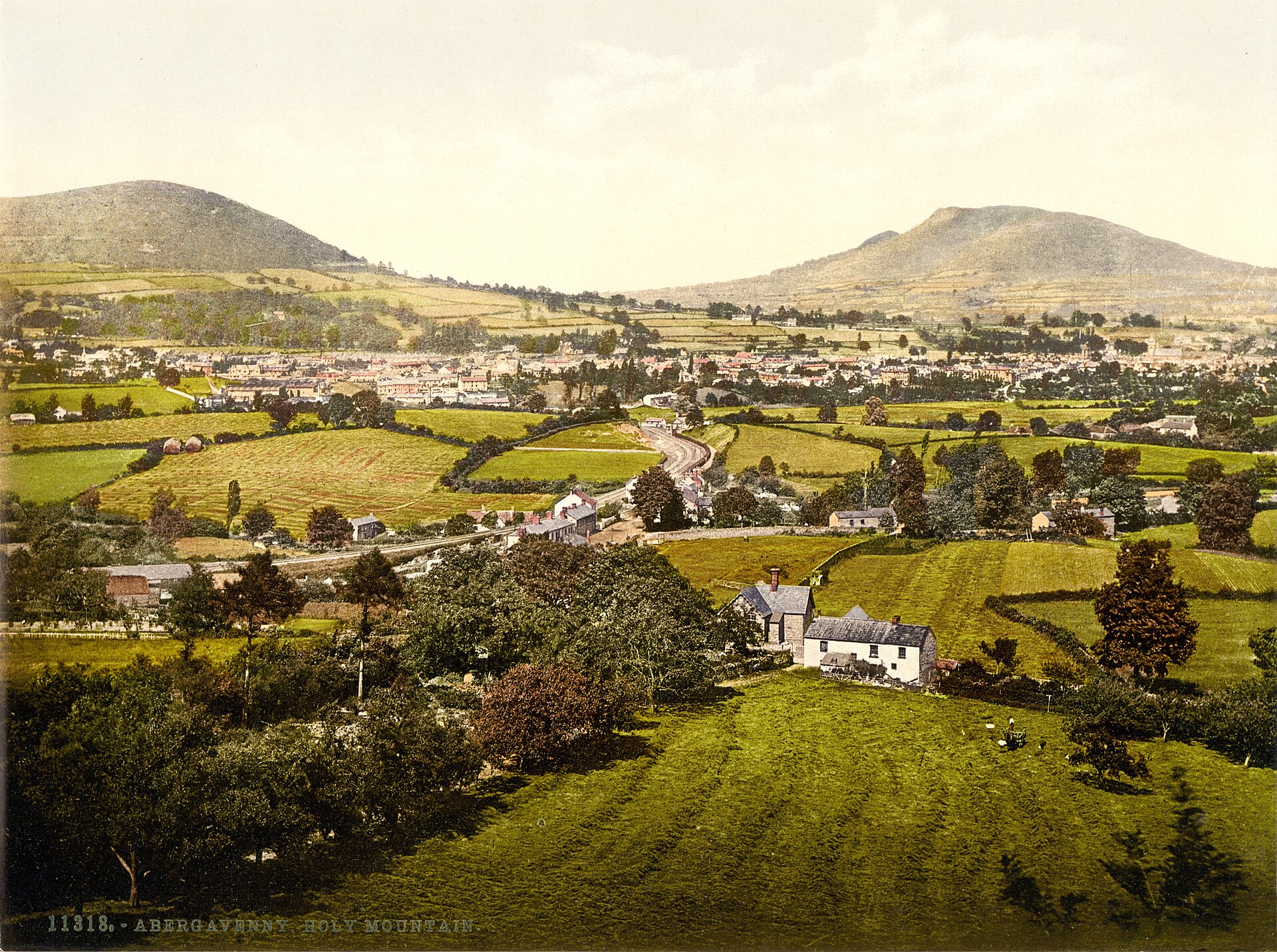
Jon Gower traces the historical importance of railways in this busy market town as well as the local roots of one of Wales’ finest novelists.
You can enjoyably slake your thirst for tea at one of Wales’ many station cafes – the Snowdonia Buffet at Bangor, Porters in Llandudno Junction, Platform One in Newtown and Buffers Cafe in Pwllheli, located in one of the few remaining wooden station buildings in Britain.
Abergavenny has the brightly named Whistle Stop café, where sisters-in-law Sarah Shaw and Nicola Shaw are busily making breakfast.
Their outright bestselling item is the bacon bap, each roll stuffed with lusciously thick slices, sourced from Bromfields Butchers in nearby Gilwern.
Nicola explains: “We ask him to cut it thick so it’s not your cheapy, supermarket bacon that turns to water. And the sausage isn’t one which costs 2p either. Basically, we pride ourselves on the bacon and sausage.”
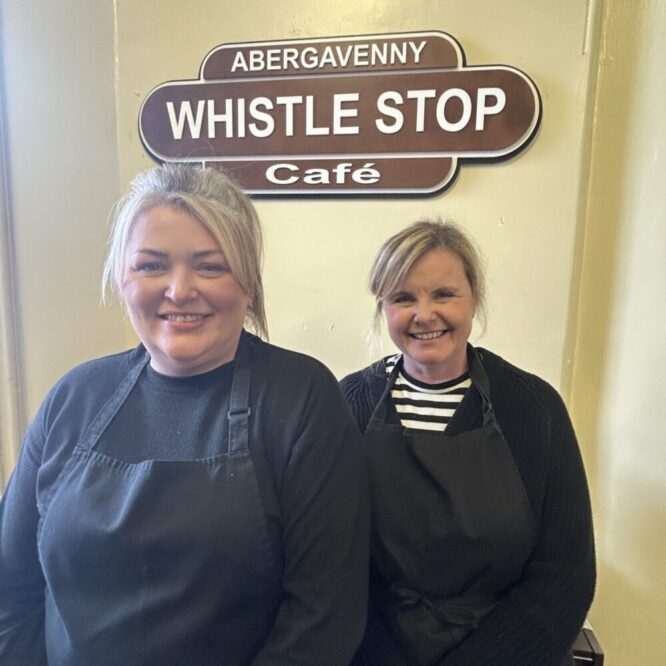
Nicola’s parents opened the Whistle Stop fifteen years ago, and when they decided to step back a little the two women were happy to step in. The café has its own rhythms which follow those of the train arrivals and departures.
A delay can lead to a rush of customers and key local events can produce hungry hordes. The attendees at the annual Green Man Festival near Crickhowell have Nicola and Sarah simply rushed off their feet. Sarah explains, “When they’re going home on the Monday it is crazy here.”
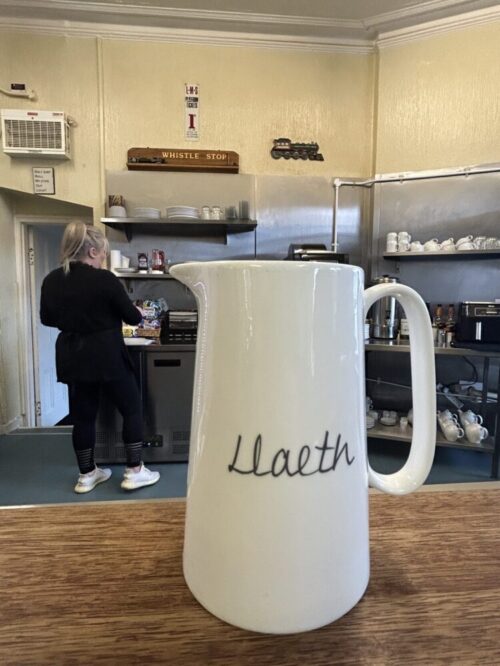
The Whistle Stop has many nice touches; – serving tea in china pots, proffering milk in proper jugs and “no cheap teabags.” As for the brew itself: “We always make it strong unless the customer asks otherwise. We actually have one who actually says ‘I’ll have a cup like piss.’ Those are her exact words, every time.”
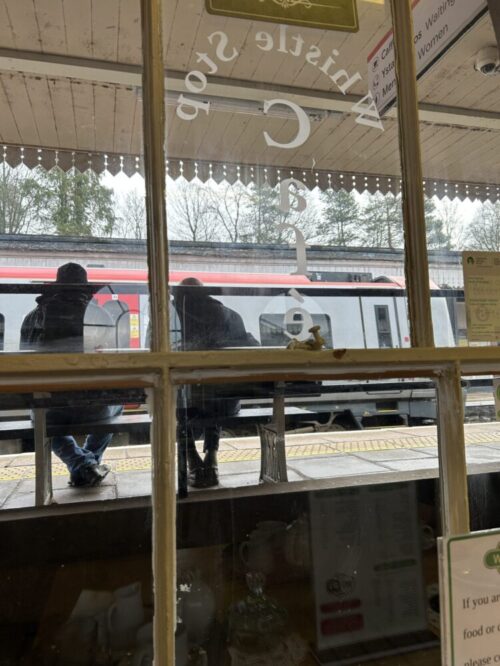
I tell them I hope my cuppa involved the use of a teabag and they both laugh out loud. Through the window the Cardiff to Manchester train slows down to a halt.
At one time the railways were a hugely important components of Abergavenny’s economy. In the early 1920s, when the population of the town was almost 12,000, over one thousand men were directly employed on the railways.
If you add the family members who depended on their wages then about a third of Abergavenny’s population relied on railway work for their bread and butter. Indeed, the town had three stations: the London and North Western Railway’s Junction station, run by Great Western Railways; the Brecon Road station as well as GWR’s Monmouth Road station.
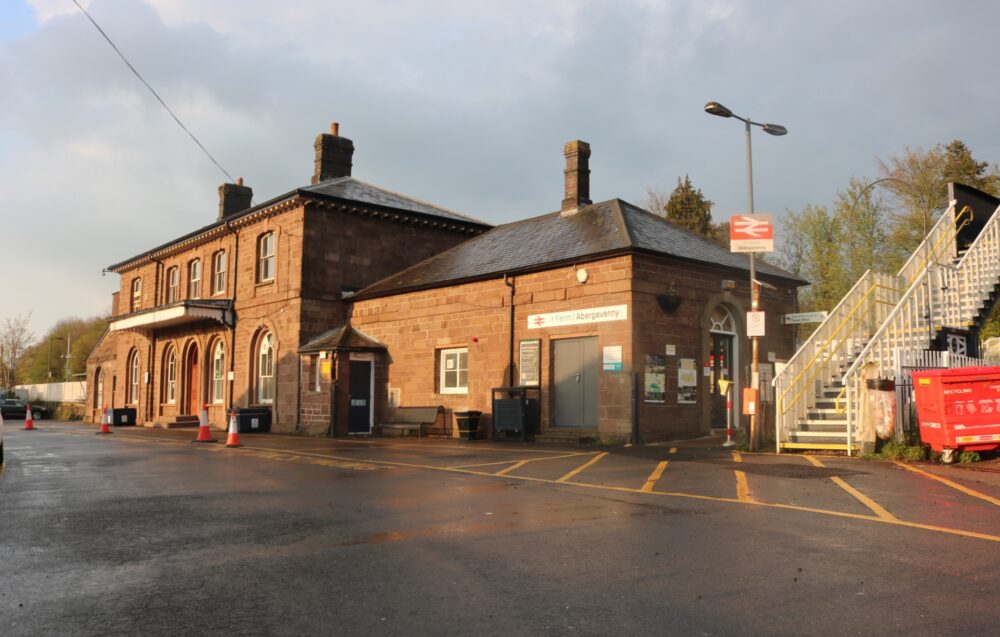
The latter’s warmly red sandstone buildings are the ones still being used today.
I enjoy my strong tea in the company of Dr. Louise Moon, Transport for Wales’s technical lead on heritage, legacy and sustainable impact, who underlines the centrality of the town’s railway past: “I think Abergavenny is always seen as a market town and people kind of expect a railway to be there, but I don’t think they realise just how ingrained the railway is in Abergavenny’s past.
“Not only were there three stations, but the majority of the population, particularly out of the main town centre, were employed on the railways. Abergavenny was the gateway to the valleys, with a direct line to Merthyr. It was a real pivotal intersection in moving coal and supplies down to the docks and the rise of the mineral trade went hand in hand with the rise of the railways.”
Life on those railways features in one of the very best novels about Wales in English. Border Country, by Raymond Williams is about a signalman, Harry Price, whose son Matthew returns to the village of Pandy, five miles north of Abergavenny, to visit him.
It’s beautifully written – sensitively detailing the father and son relationship, describing the social tension of the General Strike in 1926 whilst calibrating and colouring the landscape all around.
When two characters go “Walking the road in the October evening, they felt on their faces their own country: the huddled farmhouses, with their dirty yards; the dogs under the weed-growing walls; the cattle-marked crossing from the sloping field under the orchard; the long fields, in the line of the valley, where the cattle pastured; the turned red earth of the small, thickly-hedged ploughland…
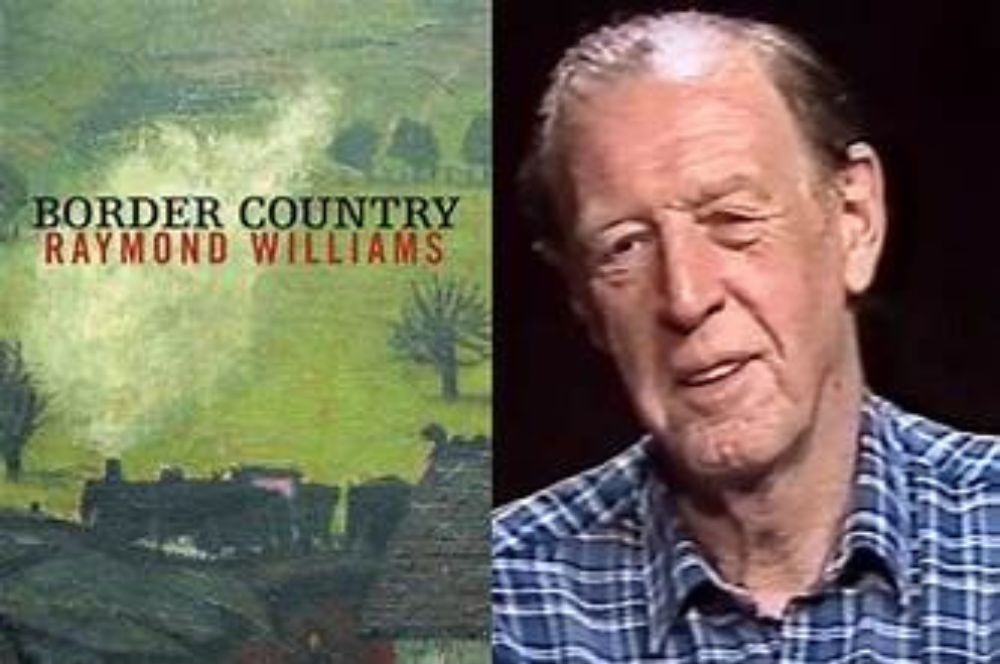
Williams himself recalled how “My father began work when he was a boy as a farm labourer. But through this valley had come the railway, and at fifteen he got a job as a boy porter on the railway, in which he remained until he went into the army during the First World War.
“When he came back he became an assistant signalman and then a signalman. So I grew up within a very particular situation – a distinctly rural social pattern of small farms, interlocked with another kind of social structure to which the railway workers belonged. They were unionised wage-workers, with a perception of a much wider social system beyond the village to which they were linked.
“Yet at the same time they were tied to the immediate locality, with its particular family farms.” Local farms where it seems two languages meld, such as Gellt Llwyd and Greig, Great Llwygy and Wern Gounsel, Cefn Clytha and Kathlea.”
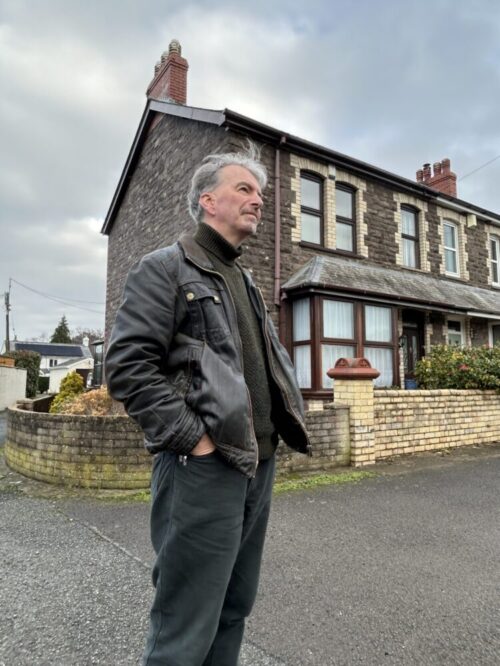
I visited Pandy in the company of writer and bookseller Gareth Howell-Jones, whose own family history intertwines with that of Williams, and indeed with the autobiographical elements of Border Country.
Appreciating the folds and rises of the land around us, Gareth agrees it has an ineffable beauty: “There absolutely is. I love it around here. To the north, you get the Black Mountains, which Raymond Williams describes as being like a hand, with the valleys running between the fingers and the ridges of the mountains being the fingers. And then towards the south, as you head down towards Grosmont, down towards Monmouth, it’s almost empty countryside, except for a few Elizabethan farmhouses dotted every mile or so, and the beautiful rich red earth, redder than it is here.
“When I was growing up I thought that this is what the countryside looked like and it was a bit of a shock to me when I found myself one day driving through the eastern half of the England. Iit was all just prairie farms and miles and miles of dullness.
“There’s so much variety here. You go up to the top of the Hatterall Hill up there, which is the start of the ridge and the Black Mountains that leads towards Hay Bluff, which is also part of the Offa’s Dyke Path. I remember sitting up there and looking down on this patchwork of fields, wrapping all the way around on the English side in particular, rather like that map lichen that grows on stones. You can see the fields all individually plotted out in different colours.
“Then, on the other side, it’s all the moorland and the mountains of Wales. That was a big influence as a kid, to see that kind of distinction between England and Wales. Particularly growing up in England then, it gave a huge emotional and romantic boost to the idea of Wales.”
Gareth’s family moved to Pandy from the nearby village of Cwmyoy sometime around the 1860s. “I think they were builders and carpenters, and they were instrumental in setting up one of the two chapels here, Hope Chapel. Gradually they built up a little patch of seven or eight houses, living in some while the others were rented out to various people, including the Williams family, that is Raymond Williams’ family.
“My grandmother taught him when he was a kid, before he went to school in Abergavenny and hopefully he displayed some early progress. People used to talk about Raymond Williams all the time because obviously he was a famous figure, a slightly remote figure. It was thought that he didn’t come and visit his mother quite as often as he might have done. I think people were both surprised and proud, but in a slightly suspicious way, of his renown.
“Possibly his communism was a bit suspect for people in a valley like this.” Just as suspect and Gareth and myself. After our visit to Pandy I was alerted by the BBC Wales newsroom that a post on a local Facebook site showed both our faces and announced, warningly, “Prowlers spotted in Pandy.” A sign of changing times in the Welsh countryside.
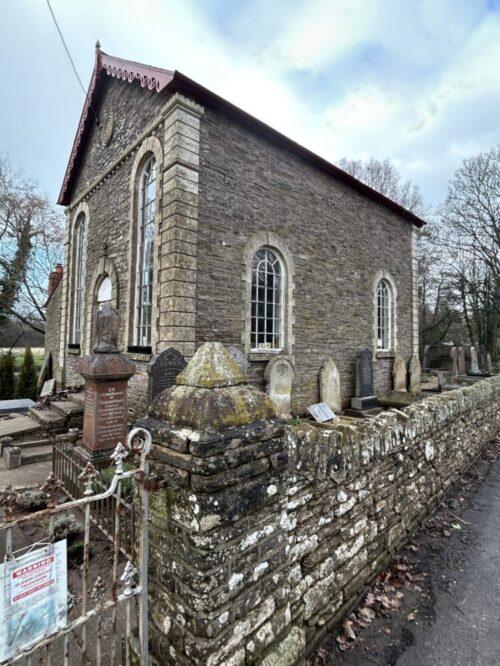
We visit Hope Methodist Chapel in the village, which closed down 25 years ago where Gareth informs me that “It was built in 1866 and my family, with a few other people were responsible. They got together the money and they went to get the permissions and they found a patch of land to build the chapel. They were regulars in the congregation and they’re all buried here.
“My parents actually met here. My dad started preaching when he was 14. He would go get the bus on a Sunday, up to the valleys, into Blaenavon and Brynmawr, and preach to the miners in their chapels in the morning. Then a local family would give him lunch, and then he’d preach to them again in the evening, and then he’d get the bus back.
“It’s unimaginable what he could have had to say to them, or what the miners must have thought of this clever boy preaching to them, who knows? But when he was 16 or 17, I think, he was preaching here, my mum was playing the organ and that was the first time they met. I was christened here and I was married here, and all my family are buried here.”
In one of Gareth’s books wonder-filled books, The Lowly Hedgehog Knows he visits another graveyard, Llanbadarn-y-garreg, ten miles away from his home in Clyro where he notes the lichen quietly spraying colour on the headstones“…Where the dead, weathering into anonymity, are graciously commemorated with living medallions, rosettes and epaulettes. Off-white, primrose and celadon are the muted tones of the honours here, but Ada Lloyd d.1910 has been granted a golden spray like a meteor shower – I wonder what singled her out.”
Gareth then singles out the stone in the graveyard of Hope Chapel which he placed there to commemorate his mother: “When she died, I fished the biggest stone I could pick out of the river just below and carved that for her.”
The village of Pandy is renamed Glynmawr in Raymond Wiliiams’ Border Country, while the Skirrid Mountain is the “Holy Mountain.”
The town of Abergavenny, meanwhile, is renamed Gwenton, where Williams situates the railway station half a mile out of town. As he announces early in the book: “For here was the station, by the asylum: both on the outskirts, where the Victorians thought they belonged.” Dr. Louise Moon agrees there was a Victorian tendency to place stations at a remove from the centre of things.
“We see that quite a lot in stations across the network. Shrewsbury Station is another prime example. They’ve got a random brick wall on Platform 7 where they used to bring prisoners in to take them to the prison and to keep them from Victorian eyes and keep them away from women, so that’s really common.
“For me, one of the really interesting things is how the station neighbourhood area changes. Stations were once at the centre of communities. And very often they held shops and post offices and all sorts of things.
“A lot of the work we’re doing at Transport for Wales and through our community rail partnerships is trying to connect communities back to the stations, but also give the stations back to communities. So opposite us here at Abergavenny station we’ve got Peak Cymru, who run art space projects, particularly for young people, and they’re able to utilise the station. It’s important that they’ve got an accessible place to come and that we’re able to provide that.”
I leave Abergavenny by following the Monmouthshire and Brecon Canal, having brought my bike on the train. It’s one of my all-time favourite rides, being not too taxing for a senior citizen with dodgy knees. Counter-intuitively, you have to first get above the town – crossing the Usk into Llanfoist and then climbing up to the canal’s route but afterwards it’s an idyllic, flat journey down to Pontypool, or you can press on to Newport.
You hug the wooded side of the Blorenge mountain, famously the only rhyme for “orange” in the English language and the Punchbowl nature reserve, with its two-hundred-year old beech pollards and man-made lake.
You also pass between Upper Llanover and Llanover, where Augusta Hall, Lady Llanover once lived. Deeply interested in Welsh culture she took the bardic name Gwenynen Gwent, and, true to her namesake, was as busy as a bee inventing Welsh national costume; establishing Y Gymraes, the first Welsh language periodical for women and both promoting and producing the triple harp.
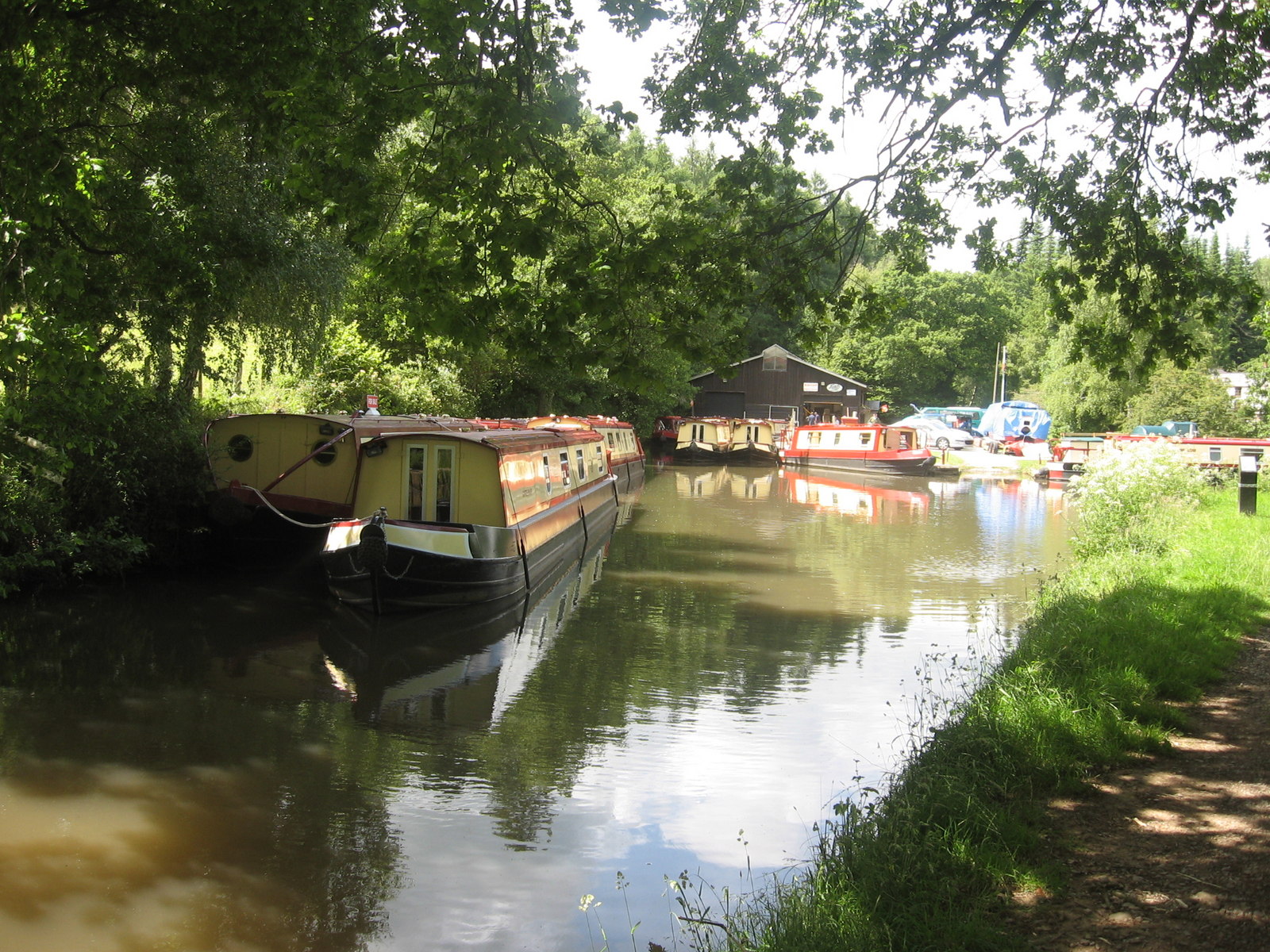
Life on the canal side is slow: the day unwinds before you like pizza dough. At Goytre Wharf, with its lime kilns dating back to 1810, you see just some of the 400 chirpily coloured canal boats on the Monmouthshire and Brecon at their moorings: their owners wave as they busy themselves with kettles. Mallards dabble among drifts of pondweed.
And there are many, many stands of alder trees, which always favour damp places. The Welsh name for the tree is Gwern and that for an alder swamp is “wern” and you’ll see both on many places on the map, always signifying wateriness. There are two places called Waun Fawr, for instance, on the stretch between Llanover and the village of Goetre while not that far away the name of the industrial village of Gilwern translates as ‘the nook near the alder-tree marsh.”
You can easily assess your progress on the tow path because each of the stone bridges are numbered, counting down as the water slowly flows seawards.
Each has a name as well, so you have bridges called Penyrheol, Highhouse, Birdspool and Croesypant. There’s also Pentre bridge, Panty-brain Higher and Pant-y-brain Lower, where you can pause at a Great Western Railway diamond-shaped weight restriction sign, dating back to when the company took over the running of the canal in 1880.
Or you can mark out your progress in kingfishers, bright cobalt blue flashes which comet past curtains of willow. Fittingly, the Newport poet W. H. Davies, who lived not far from where the Monmouthshire and Brecon canal reaches Newport, hymned the halcyon bird in an eponymous poem in which he suggests “It was the Rainbow gave thee birth/And left you all her lovely hues.”
The canal is a marvellous place to appreciate the quiet palette of countryside colours. The depth of alder greens. A grey flap of heron. The chartreuse depths of the canal, where, if you’re lucky, you might catch a red flash of fins from underwater shoals of perch.
There may be other dabs of colour such as the yellow iris, fresh squiggled out of the artist’s tube; the deep purple of loosestrife and skullcap when they flower, or the cream-coloured froth of meadowsweet blossom. To fully appreciate such pictures, it’s wise to slow down, to sit down and just appreciate. It’s something the poet W. H. Davies very much encouraged at the close of his meditative paean to the king of fishers:
I also love a quiet place
That’s green, away from all mankind;
A lonely pool, and let a tree
Sigh with her bosom over me.

Jon Gower is Transport for Wales’ writer-in-residence. He will be travelling the breadth and length of the country over the course of a year, reporting on his travels and gathering material for The Great Book of Wales, to be published by the H’mm Foundation in late 2026.
Support our Nation today
For the price of a cup of coffee a month you can help us create an independent, not-for-profit, national news service for the people of Wales, by the people of Wales.
Get more trusted Welsh news
Choose Nation.Cymru as a preferred source in Google News to see more of our journalism.



Hyfryd. My mother’s people were all railway workers in that area, Llanfoist, Govilon, one of them even became station master at Brynmawr according to family legend. The railways must have attracted in so many workers to that rural area. Must have changed from Welsh speaking to English a generation or two earlier than the coalfields to the West. But it’s a proud part of Wales still. A great rail-trip on that line from Newport up to Shrewsbury, well worth it just for the journey. Diolch Jon.