


Making Tracks: Aberystwyth
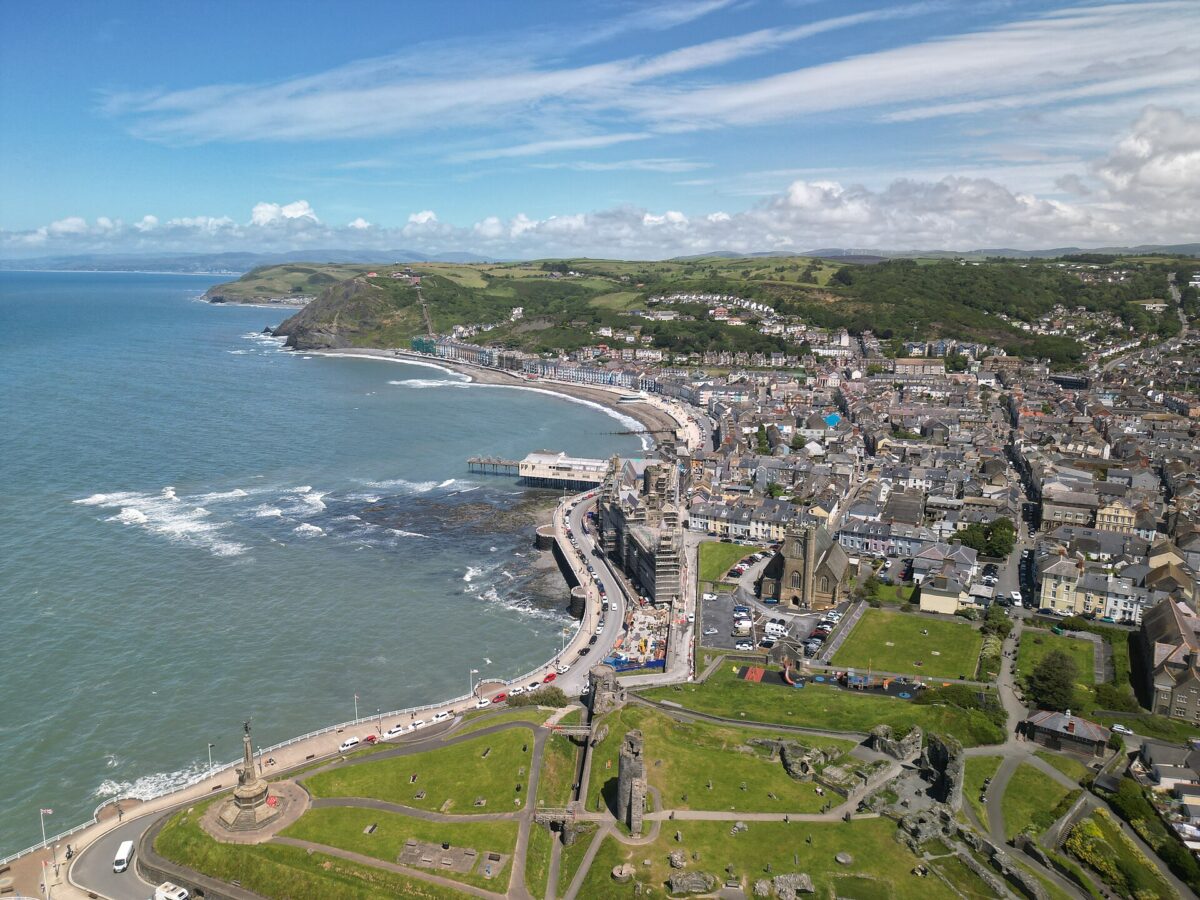
Jon Gower visits “The Athens of Wales” where its rich tradition of books and writing has recently been recognised by an international designation.
There’s one very special literary destination in Wales at the moment and that’s Aberystwyth. In October 2025, Aberystwyth/Ceredigion became Wales’ first UNESCO City of Literature, joining a global network of 350 Creative Cities that have been recognised for their excellence in creative fields across the world.
As Professor Mererid Hopwood, of the Department of Welsh and Celtic Studies at Aberystwyth University and a member of the Dinas Llên Partnership, told me, ‘It’s not just for Aberystwyth, it’s for Aberystwyth and Ceredigion. The most striking thing about the bid initially was the number of poets, 300 of them, who’ve lived here or studied in Aberystwyth while some are in the cemetery: we can claim connection to that many poets and writers.’
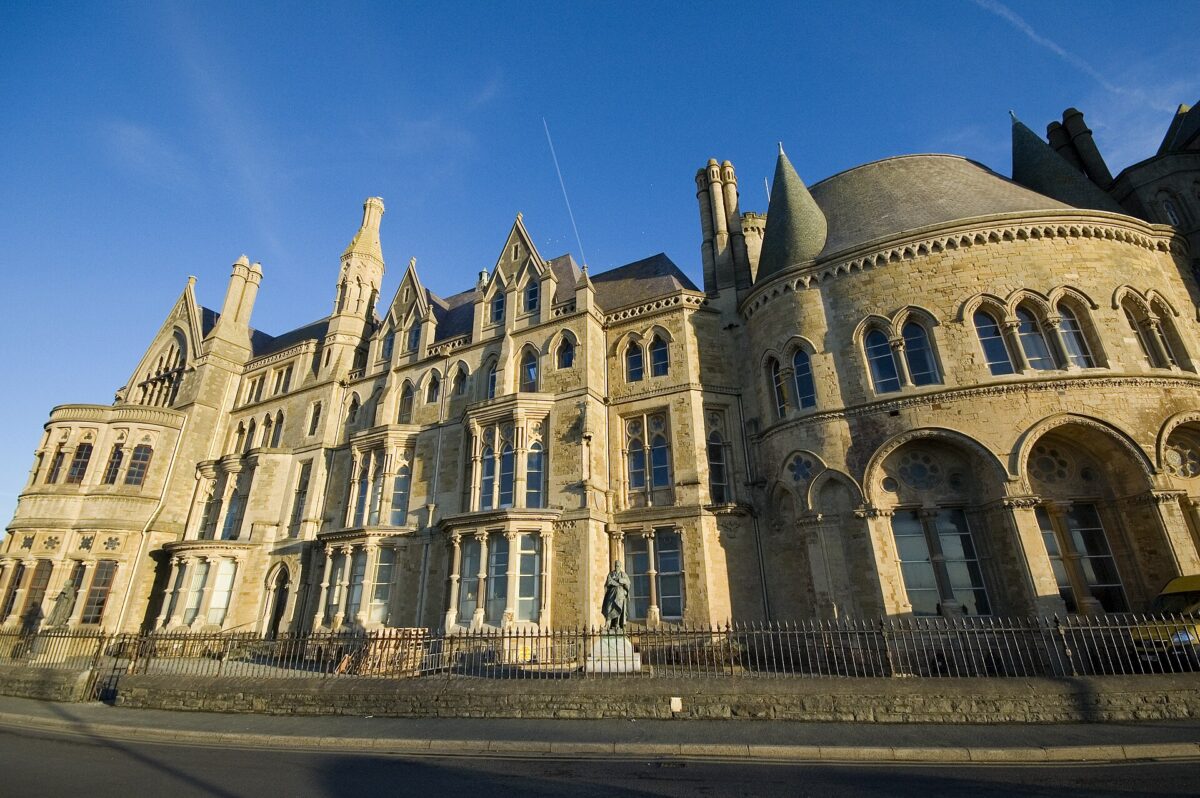
The university itself has been home to many, many writers as Hopwood attests. ‘When you think about it, our department alone has fostered so many great talents as students and as academics: Gwenallt, Myrddin ap Dafydd, Iwan Llwyd, Waldo Williams, T.H. Parry Williams and T. Gwynn Jones as well, so there is a great element of pride in that history, that legacy. But that’s not enough.
The designation has to also show potential, show how you would use this designation to improve life in the city. I say “city” in inverted commas because of course Aberystwyth isn’t a city, it’s a municipality. The bid went in in the name of Aberystwyth Town Council because it had to have a mayoral signature. But it’s a city in terms of UNESCO in the fact that we have a university. In fact, there are two in Aberystwyth.’
The town and its hinterland have certainly been home to a great many writers. The Marxist poet T.E. Nicholas, also known as Niclas y Glais, settled here in 1921, practising as a dentist. The prose writer and Viking scholar Gwyn Jones worked in what was then University College and, in his retirement, lived in Castle Cottage in Sea View Place.
And there was the most notorious of them all, Caradoc Evans, who revelled in his reputation as the most ‘hated man in Wales’ on account of his dark, splenetic short stories depicting rural life in west Wales and designed to shock.
And shock they did, leading to calls for collection such as My People to be banned and someone attacking his portrait with a knife.
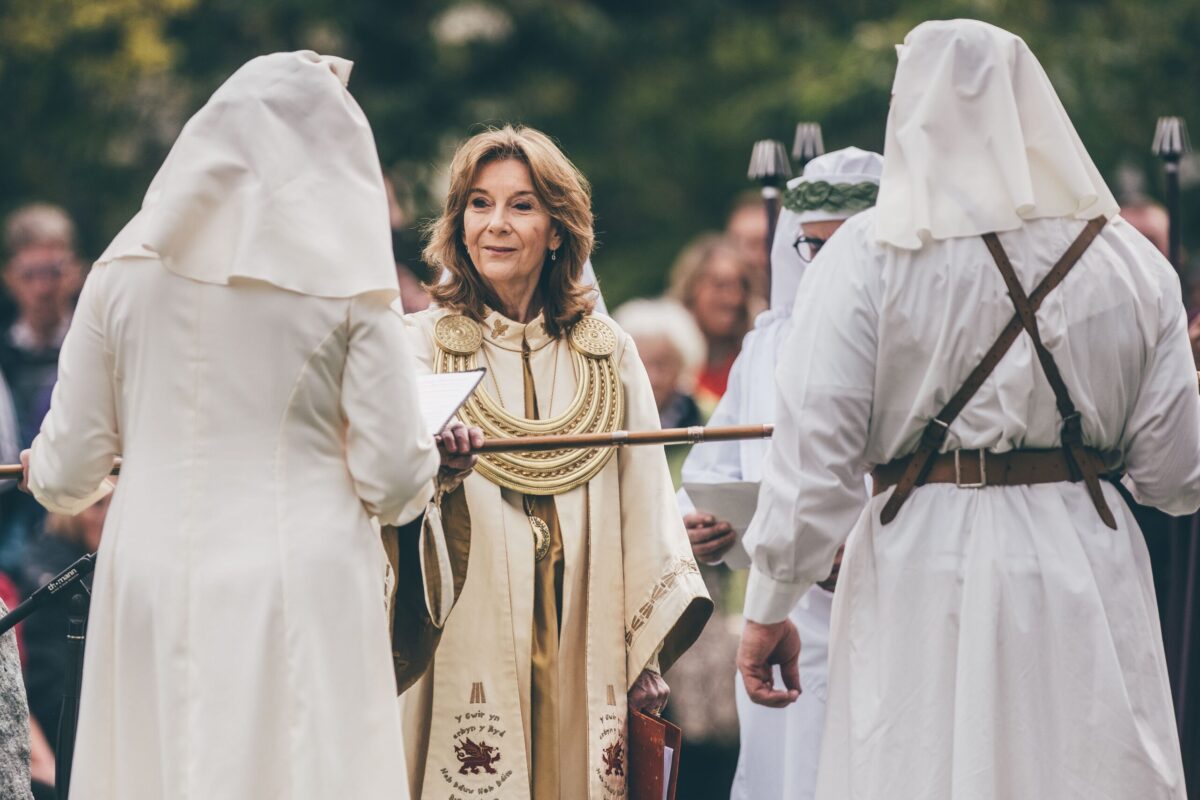
Hopwood, who is also the current Archdruid of Wales, delights in the fact that Ceredigion has such a remarkable preponderance of Welsh language poets.
One farming family alone, Teulu’r Cilie, would rack up the statistics for poet-to-square-mile ratio all by itself: almost every member – seven boys and five girls, wrote poetry – be it on barn walls, in books or as competition entries for local eisteddfodau.
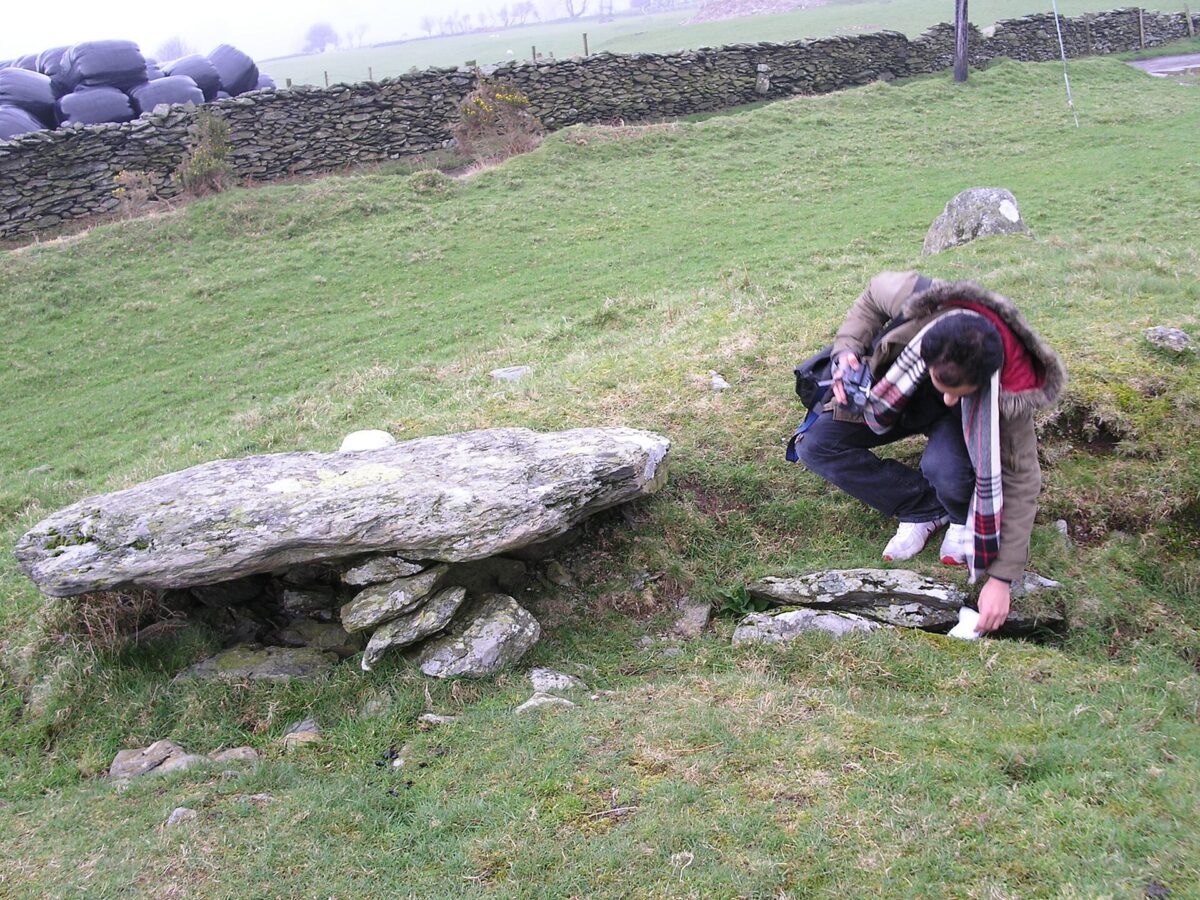
Mererid takes me on an imagined tour of this highly literary countryside. ‘When I tell people about the area, I invite them to imagine standing in Aberteifi and then reaching over to Llandudoch, to St Dogmaels where there is stone bearing Ogham writing, one of the first markers of literature on these isles. And then you go to the top of the county and you have Bedd Taliesin, just above Tre Taliesin, a sort of a cromlech, and of course we’re going to claim that that’s Taliesin, the poet – either the poet of the sixth century or Taliesin, the poet of Ceridwen and Gwydion and those tales and rhymes and poems of fabulous imagination.
Dic Jones, the farmer poet, was associated for the majority of his life with Yr Hendre, Blaenannerch, lower down in the county. And he claims a lineage to Teulu’r Cilie in the sense that he was taught by this family.’
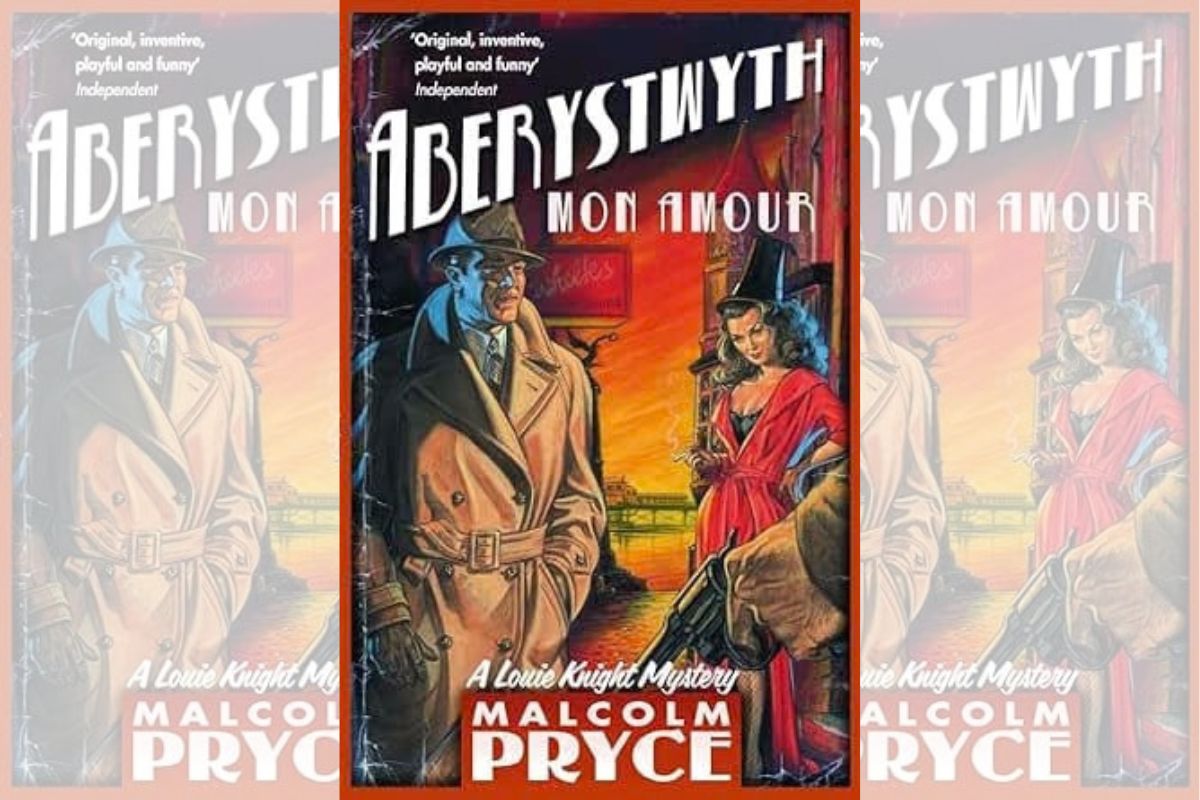
The area has also been home to some interesting writers in English. One of the quirkier is Malcolm Pryce who has set six comic detective novels such as Aberystwyth Mon Amour and Last Tango in Aberystwyth in the seaside town.
As the online Literary Atlas has it: ‘His “fabulous interpretation” mixes very British notions of seaside holidays – lost innocence, saucy postcards, and donkey rides – with more universally known characters from hard-boiled crime thrillers.’
It’s a town with plenty of appeal to comic writers such as Pryce, who said in an interview: ‘There is a quality of sort of left-of-field oddness about the town who anybody who’s been there somehow apprehends, but they’re not quite sure what it is. I get a lot of people who thank me for having written these books, as if they’re saying, finally someone understands. And you can capture it in poetry or metaphor or allusion: you can’t specify what it is.
‘And I think I’ve tried to capture that strange quality about the town. It’s like someone writes to me and says, oh, there’s a bus from my village to Aberystwyth every morning at ten o’ clock, but there’s not one back. And why is that funny? It just is. And it wouldn’t be funny about another town, but it’s almost what you expect from Aberystwyth.’
Fellow writer Byron Rogers enjoyed Pryce’s novels and knew that unexpected quality. Writing about Pryce’s series, Rogers states, ‘There is an Aberystwyth Mafia made up of Druids who, having tired of organising the Eisteddfod in white sheets, have taken to organising crime in “sharp Swansea suits”.
The fantasies get wilder and wilder: there is a 24-hour whelk stall, and a town museum with a Combinations and Corsetry section: ‘The only thing is, as I walked the streets I came on such a museum: it was holding an exhibition of women’s underwear. There is no need for fantasy in Aberystwyth…’
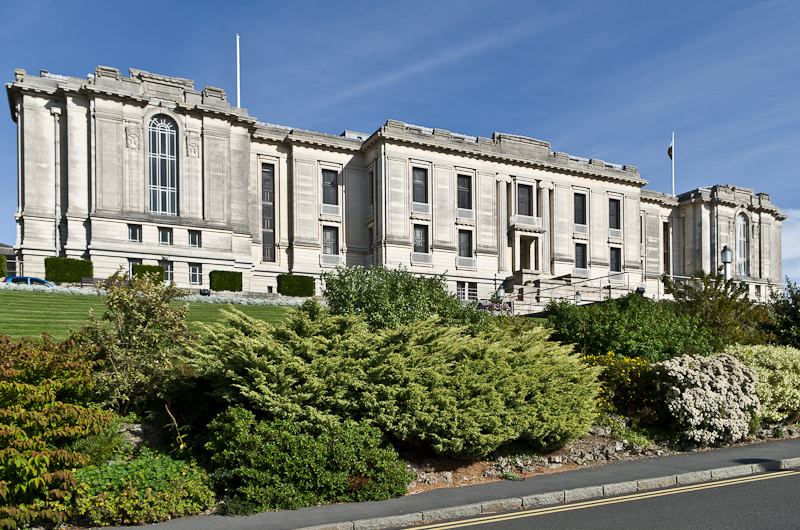
Aberystwyth has lots and lots of books. The National Library of Wales alone has ten million, give or take a million or two.
Mererid Hopwood outlines plans to use literature to make people think about the changing landscape, about climate change, which is an issue in this coastal town along with so many. They also aim to promote everyday books and stories, so that literature becomes even more prominent.
‘We’ve already got words on pavements, words on walls, poetry here, there and everywhere. We’d like more: using literature to attract people to come to Aberystwyth and Ceredigion to think about our beautiful patch of land.
‘Then there are literary bridges, using the designation to bring together other peoples across the world who write in minority languages.
‘And finally, we’ve got a project called Positive Peace. And the hope is that we can use the designation to make people think of us as a nation of peace.’ UNESCO’s constitution opens with the lines: ‘Since wars begin in the minds of women and men, it is in the minds of women and men that the defences of peace must be constructed.’ Hopwood avers, ‘It would be a missed opportunity if we didn’t bring that element into our bid.’
There will also, no doubt, be much UNESCO-related celebration of poetry in cynghanedd. Hopwood stresses that not only is it a uniquely complex form but part of a busy poetry scene, a tradition that keeps on attracting new voices. ‘Cynghanedd, if you look it up in the Welsh-English dictionary, you’ll find the word harmony, and that’s the key. So cynghanedd is a form of writing that pays great attention to the harmony of the line, to the sound of the line. This is why it is probably impossible to translate in words alone. Because to create a line in cynghanedd, it must make sense in words but it also has to sound in a particular way.’
By way of an example, Mererid selects one of her favourite poets and favourite poem. ‘Dewi Emrys, who is buried in Talgarreg, in Ceredigion again, has a famous englyn to the gorwel, the horizon which ends with the lines:
Hen linell bell nad yw’n bod,
Hen derfyn nad yw’n darfod.
‘An ending that is never ending, a never-ending ending. And that’s what coming to Aberystwyth is like. People think it’s the end of the line. It is really just the beginning.’
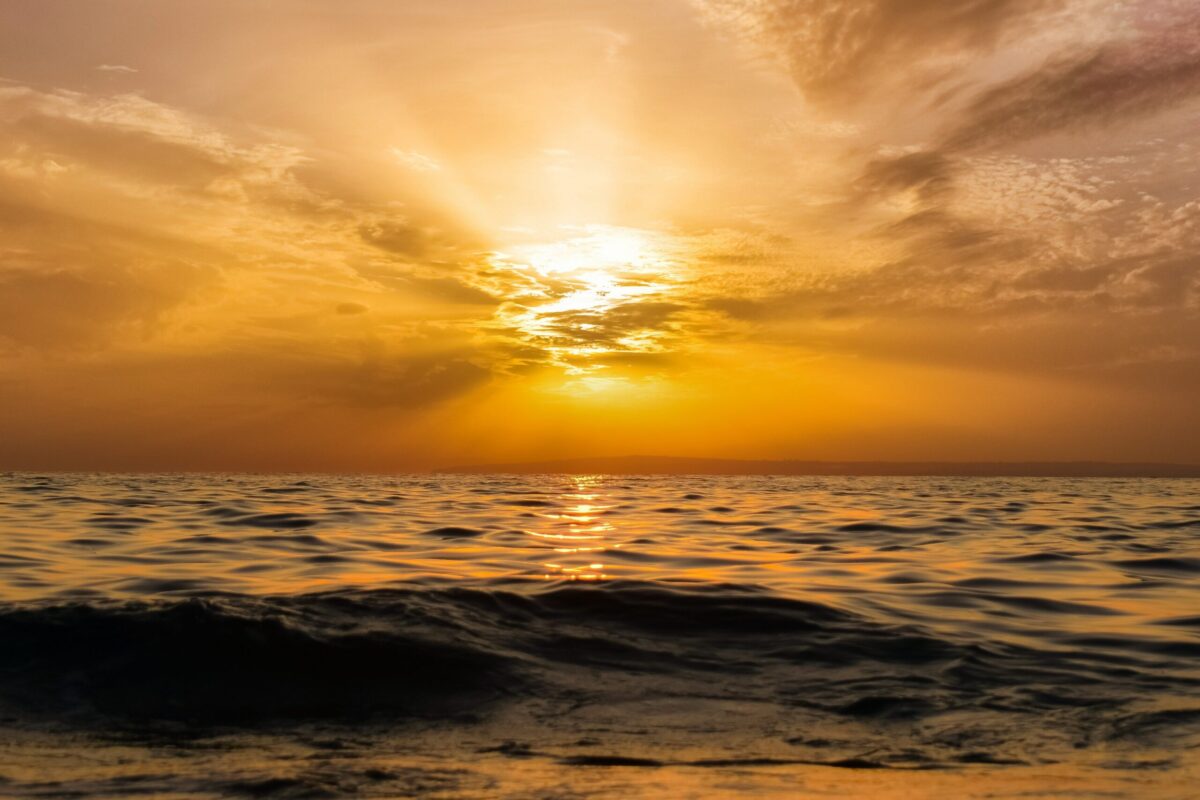
Novelist Niall Griffiths tried to sum up this imponderable quality in his book Real Aberystwyth: ‘There’s a strange draw to the place; get off the train and you can’t go any further. Stand on the promenade and the next landmass is Ireland and, after that, America.
‘Mountains pile up behind you and you feel that you can’t go back into their bulwark mass but the sea, there, in front of you, is a blue world of possibility. And between that and the giant rocks is this small, intriguing town, its lanes and alleys and doorways a jumbled alphabet waiting to be re-assembled.’

Jon Gower is Transport for Wales’ writer-in-residence. He will be travelling the breadth and length of the country over the course of a year, reporting on his travels and gathering material for The Great Book of Wales, to be published by the H’mm Foundation in late 2026.
Support our Nation today
For the price of a cup of coffee a month you can help us create an independent, not-for-profit, national news service for the people of Wales, by the people of Wales.
Get more trusted Welsh news
Choose Nation.Cymru as a preferred source in Google News to see more of our journalism.


