

Making Tracks: Betws-y-Coed
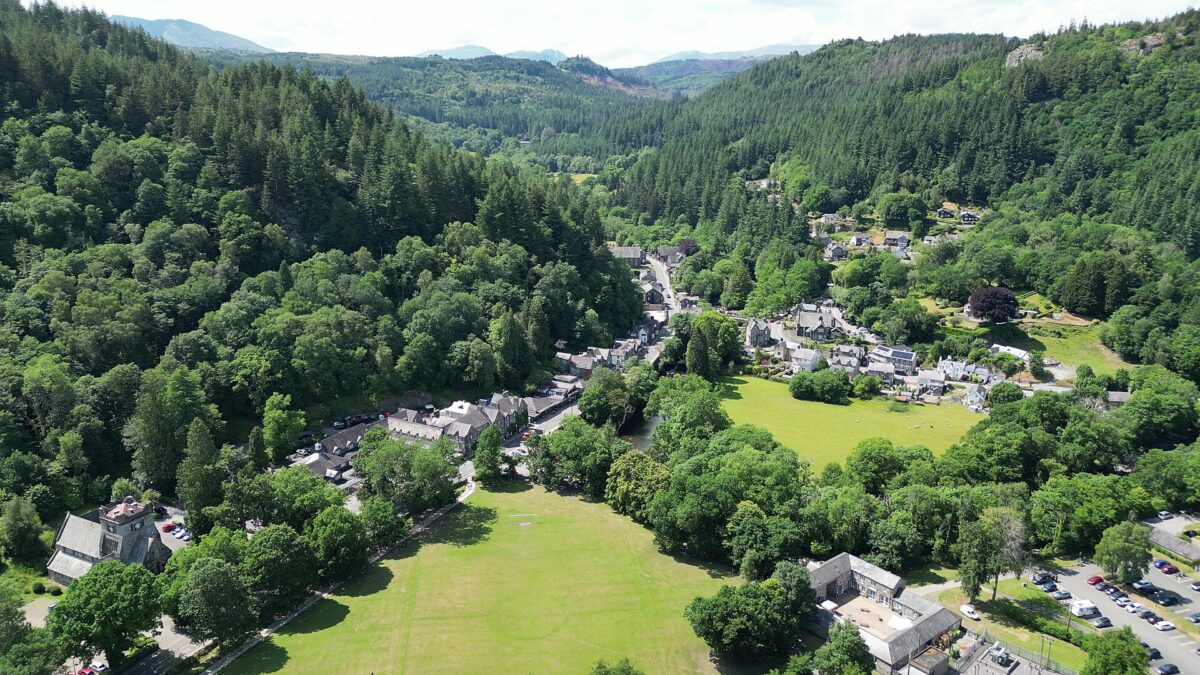
Jon Gower finds unexpectedly exotic animals in this famously scenic Welsh village.
The river Conwy is a slow moving anaconda, Chartreuse in colour, muscling and pulsing green between sides of glinting rock.
A dipper stands sentinel on a round stone in mid-channel, plumping out a breast as white as river spume, before plopping underwater to pick at insect tidbits on the river bed.
Sunlight strafes through the trees, lancing rods of white light among variegated leaf-dapple. There are dark greens brushed on in dabs from the artist’s palette – Hooker’s green for the sitka trees of Gwydir forest; spreading oaks in olive green, filigrees of Rowney Emerald where young leaves unfurl.
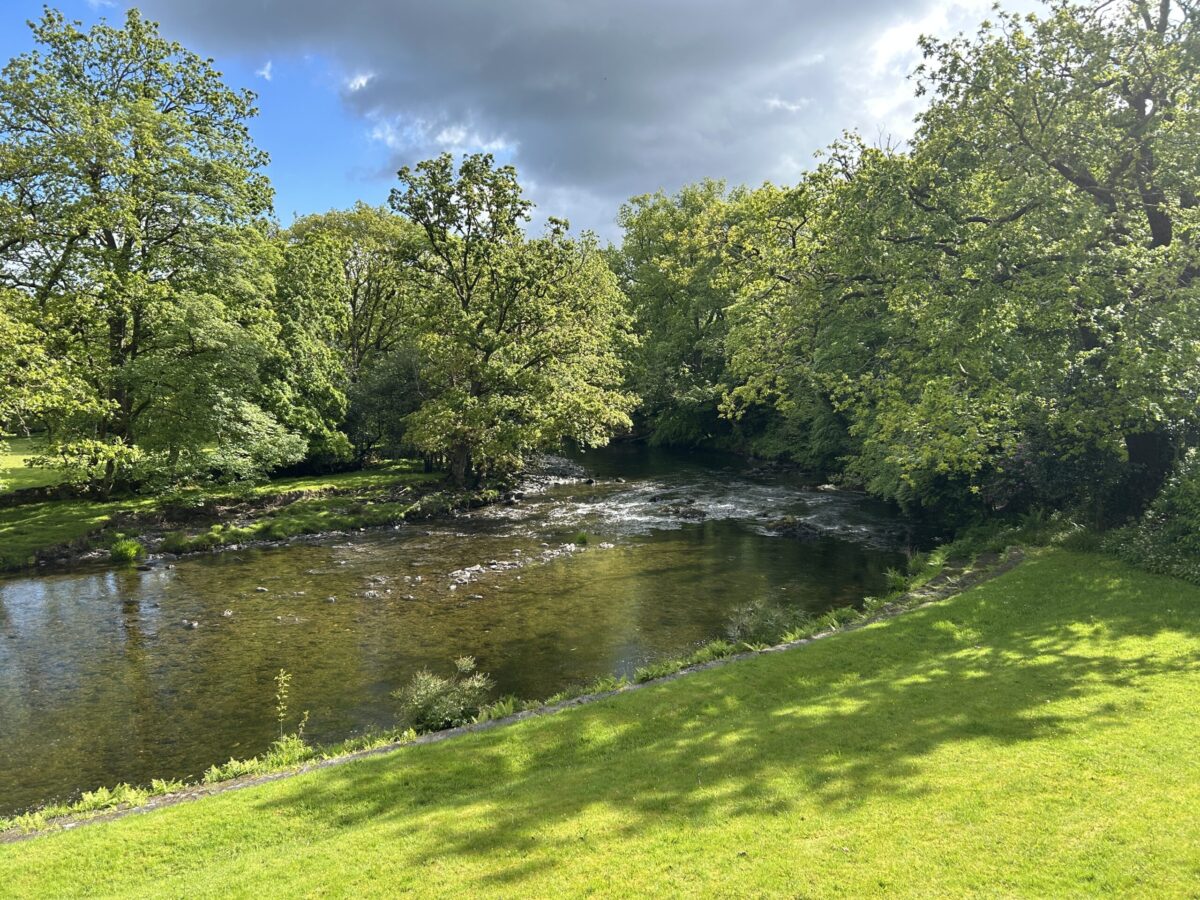
The riverine scenery around Betws-y-Coed, which translates beatifically as Sanctuary in the Woods in the Conwy valley, has long appealed to artists and blessed them with its beauty.
Indeed sufficient numbers settled here in the 1840s that it became the earliest artists’ colony in Britain.
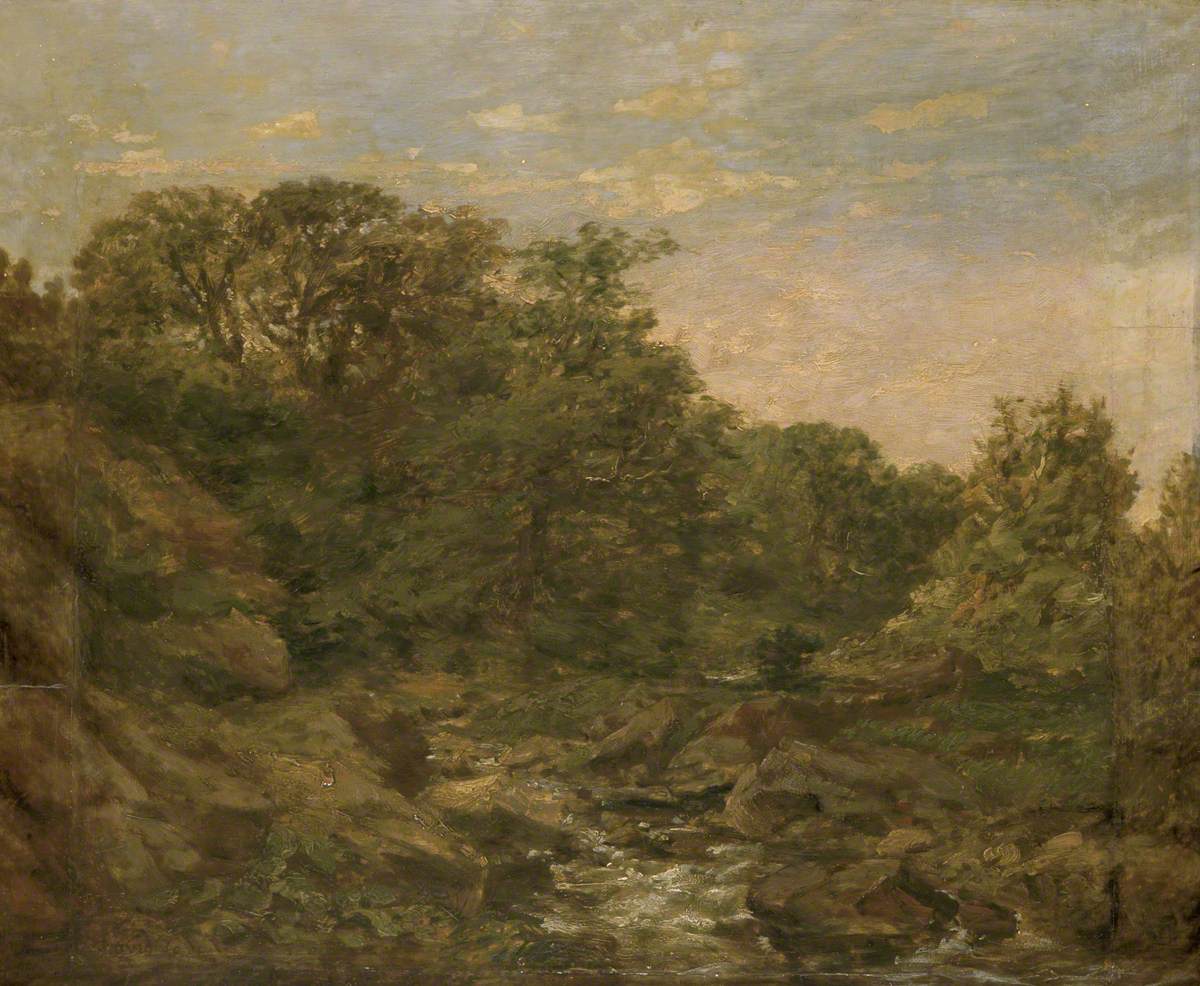
Many artists, such as the Mancunian Clarence Whaite, were drawn here by the presence of David Cox, a painter from Birmingham who was almost as well known as Turner in his day.
He visited each and every summer and eventually moved to the village, painting the ruins of Pandy Mill, the Swallow Falls, the old bridge called Pont-y-Pair and even the pub sign of the Royal Oak Hotel, where many artists convened of an evening for a pint or three, as artists do.
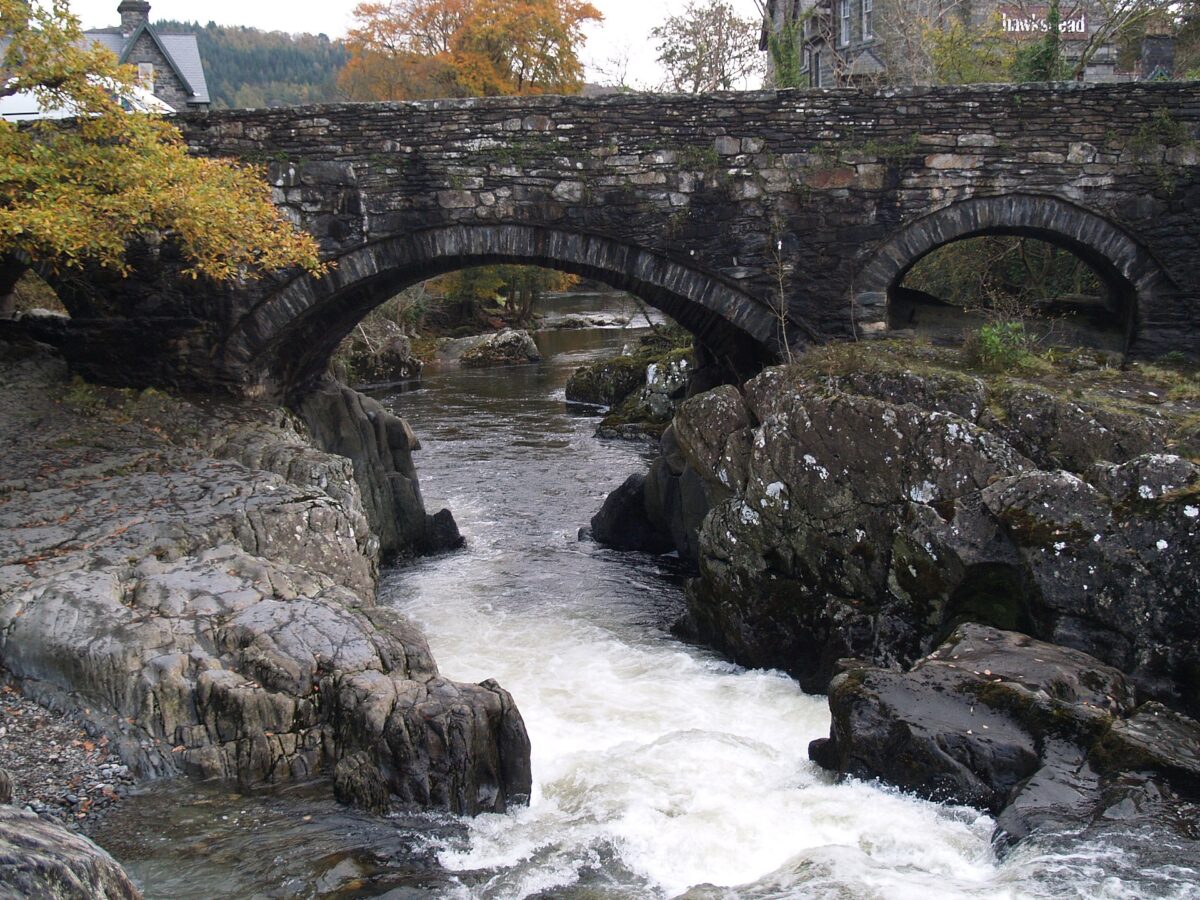
Cox’s illustrations for a very successful guide book, ‘Wanderings and Excursions in North Wales’ by Thomas Roscoe sparked more interest.
A place with no resident artists at all in 1841 had a substantial group of them just a decade later, sufficient in number to constitute the ‘brethren of the brush,’ who gathered there as thick as bees on honeysuckle.
Indeed a beech wood near the Swallow Falls was dubbed ‘Artists’ Wood’ and keeps the name today.
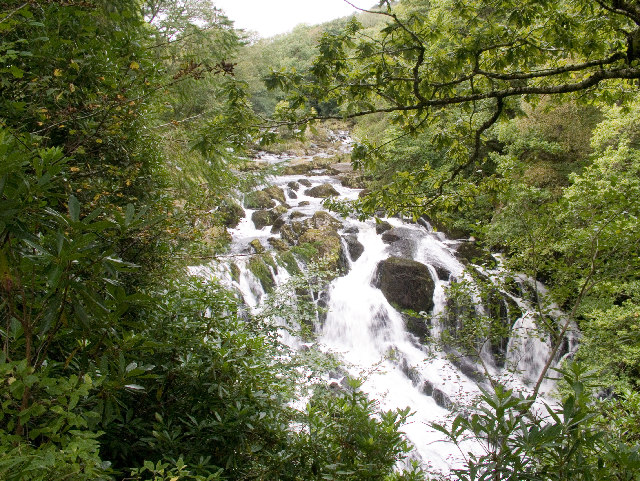
By the 1840s the so-called sketching season had become a bit of a spectacle, as places such as the Conwy Falls and Fairy Glen fair overflowed with working artists and enthusiastic amateurs, their white tents resembling the encampment of a visiting, if benign army.
One commentator, William Hall, averred that ‘In every road or lane, in every eminence or river-bank, the artist was encountered, bearing his paraphernalia to or from the sketching ground, or beheld busily at work transferring to canvas the beautiful objects before him; whilst in the evenings, after the labours of the day, he was seen chatting with his fellows at the inn door, smoking pipe or cigar, and enjoying the delicious calm of the closing day.’
Such artists painted in the open air – at least when it wasn’t bucketing down – capturing cottages, bridges and mountains; detailing driftwood swept downstream by raging torrents and sketching bent-backed local women hard at work as they sheared sheep.
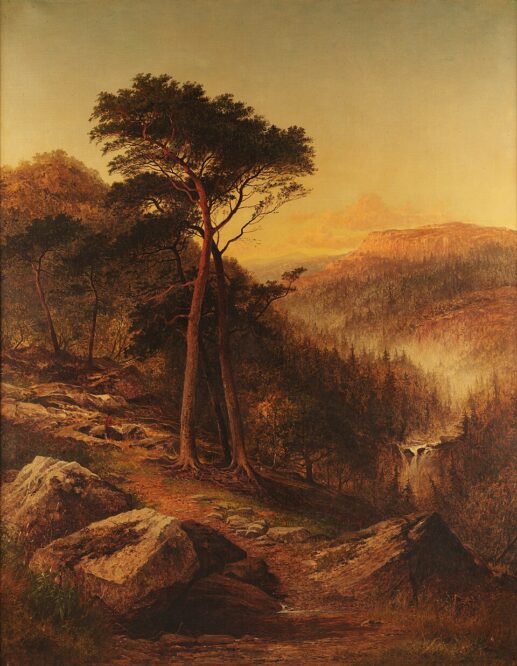
Another prominent subject was the gushing whitewater of Rhaeadr y Wennol, the Swallow Falls which still attracts visitors by the thousands today.
It was, according to Edward Pugh, in his guide book for foreign artists ‘Cambria Depicta,’ ‘a mighty torrent rushing down a precipice about eighty or a hundred feet high, between two wood-covered rocks; exhibiting, in my estimation, subject for a noble picture.’
In his drawing of the waterfalls he makes them seem as enormous as Niagara, totally dwarfing a man and woman standing in the foreground.
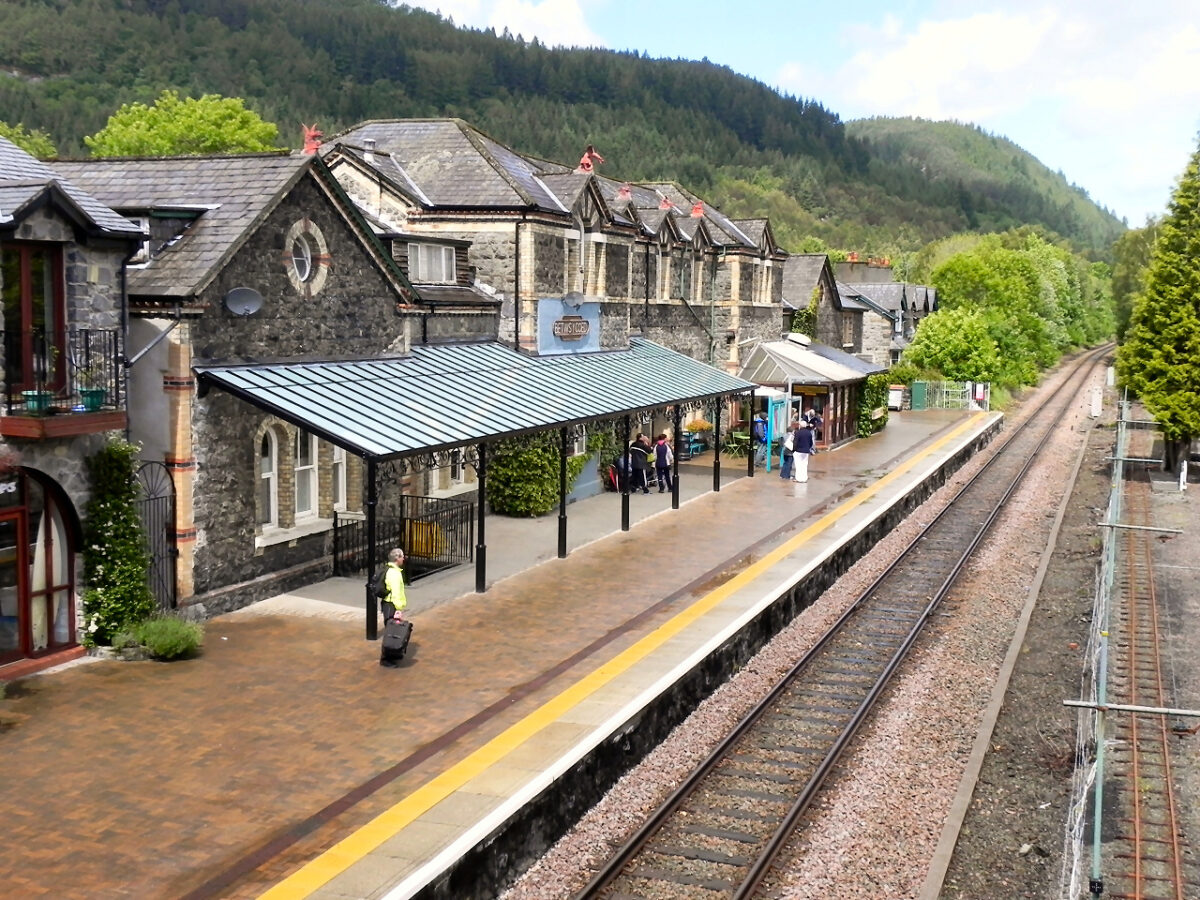
The arrival of the railway up the Conwy valley in the 1860s made it even easier for artists to visit. One resident responded to talk of the railway’s arrival by suggesting it would quite spoil the place.
But arrive it did, along with a railway station and its attendant bustle. William Hall described how it ‘with its shrieking engines and multitudinous noises, almost abuts the wall of the old churchyard, with its venerable yews, once sacred to quiet, and sweet with the repose of its secluded position amid the mountains that screened it from the world.’
Betws-y-Coed continues to exert its magnetism for artists today even if some of the work produced here breaks with any local tradition, or, indeed any tradition as art often should.
The life of an artist can be more than a bit complicated as I find out when I meet Jacha Potgieter, a South African artist and conservationist who has a gallery in Betws-y-Coed railway station.
He’d just been trying to source two pairs of artificial pelican eyes and work out how to deliver 3D Printed, Plant based polymer tapirs to Copenhagen Zoo and a work called The Last Supper to Chester Cathedral.
Not to mention finishing work on a hare and arranging a trip to photograph brown bears in Transylvania.
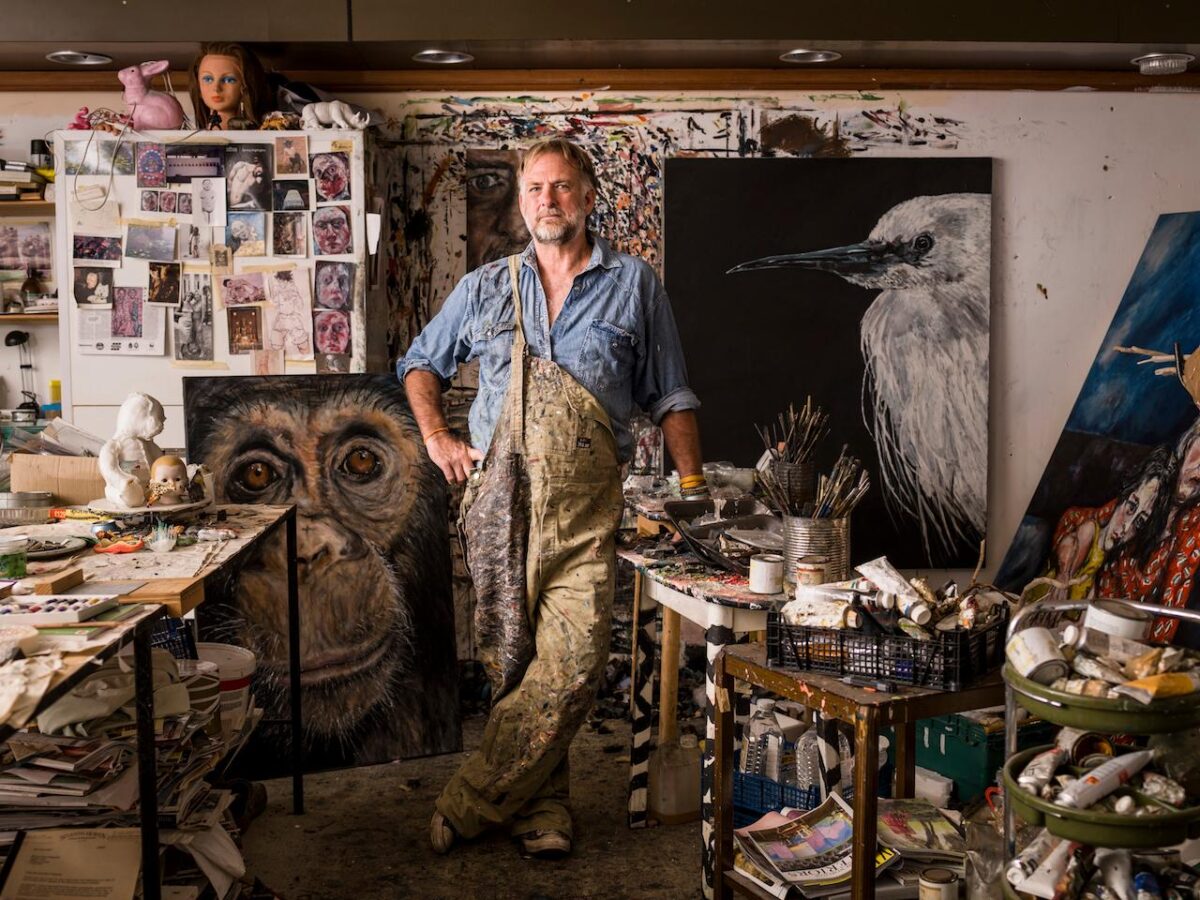
Jacha’s wife Gwynneth accompanies him on many of the trips and they share a passionate concern for the conservation of apes and monkeys.
Jacha’s interest was fomented in 2010 when he saw work being done in the Ape Action Africa sanctuary in the forests of Cameroon. A meeting with a young chimp called Kazie proved to be ‘love at first sight’ and led to Gwynneth and Jacha’s joint decision to use their businesses in Betws-y-Coed to highlight conservation concerns about apes and raise money to help.
Which explains the plethora of ape images along with African grey parrots and pelicans in the Oriel Ospie and the fact that in the pizzeria above you can sip Conwy Brewery’s specially produced menagerie of beers including Chimpanzee IPA, Pangolin Cider and Gorilla ‘Zero’ which all raise money and awareness for Orangutan Appeal UK and Ape Action Africa.
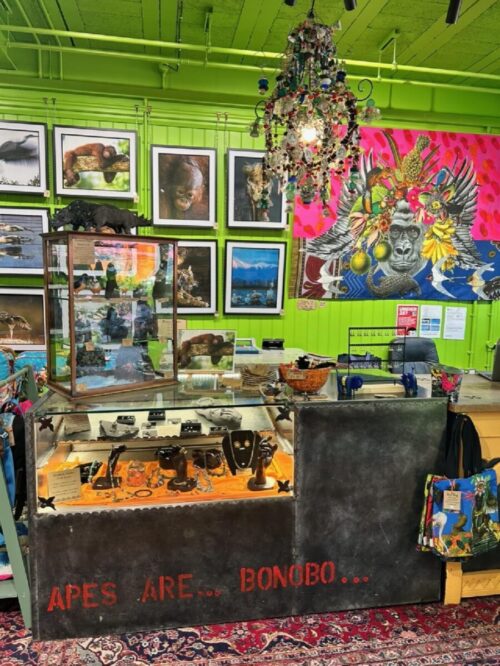
The whole station belongs to Gwynneth, whose late husband Bob acquired it through hard work. ‘Bob was known locally as Bob 17, ‘she tells me, ‘because he was brought up in a house which was number 17. At the age of fifteen then went to work at the lead mines above Llanrwst where he worked on the crusher.
He found out that the chaps running Betws-Y-Coed railway station were looking for somebody to run it. This was in 1963. He realised the potential of the place, got them together and said give me three years. If I can make a success of this I’m going to buy you all out.
They all said yes, thinking he would never do it. He was a big drinker. And they can often be dreamers. But he did it and bought them out after three years.’
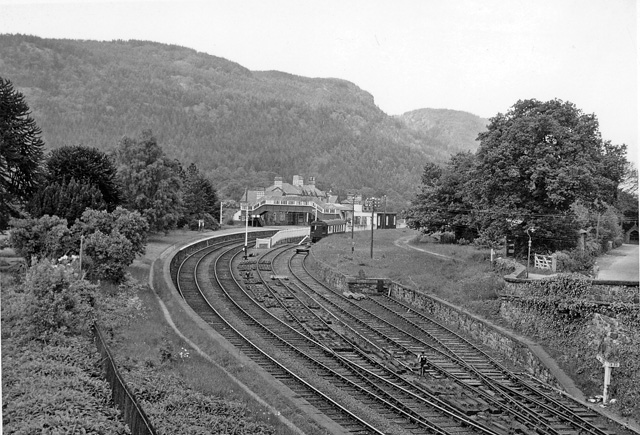
The station was originally opened in 1868. ‘Geographically it was very well placed for Birmingham, Manchester and Liverpool,’ as Gwynneth explains. ‘A lot of doctors used to send their patients to the hills for clean air. And that’s why you’ve got all these big houses throughout the village. They were built as hotels so people could come and recuperate. The joke is, I’ve been told that Betws-y-Coed is actually only 50 feet above sea level even though everybody comes here for the mountains.’
The railways themselves were a huge part of Gwynneth’s family history. Her maternal grandfather was the foreman of the enormous Crewe Works, which at its peak employed 8000 men and was so big it had its own internal tramway system. All four of Gwynneth’s uncles were railway coach-builders in the sprawling works.
Gwynneth’s father, meanwhile, was an engine driver. ‘He drove all sorts of engines, including the Flying Scotsman. His name was David James Evans but they used to call him Dai Dolgell as he came from Dolgellau.
When he was of an age to leave home, he went and joined the railway, starting off as a fireman at Llandudno Junction. He progressed to Crewe from there and that’s where he met my mother. He was a fireman in those days, and then he upgraded to a driver.’
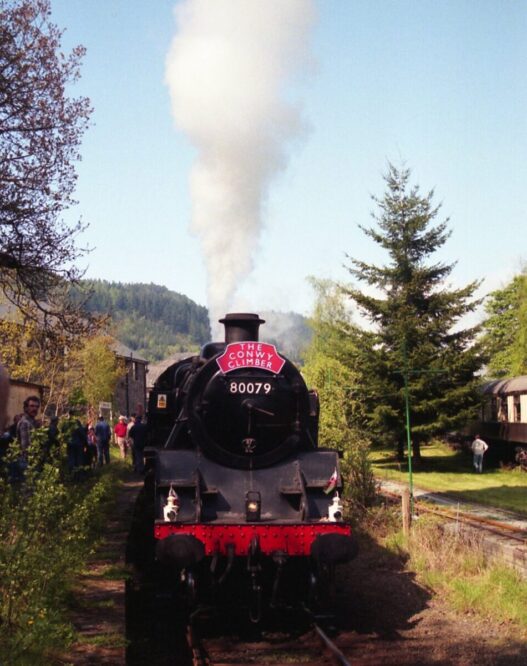
In the days of steam young Gwynneth had special privileges. If she happened to be late coming home to Deganwy from school in Llandudno, her father would slow down the train so she could catch it.
In addition to local commuter services Dai Dolgell drove all manner of trains including famous ones such as the Flying Scotsman and the Princess Margaret. ‘Then diesel trains came in to replace steam and dad would drive those from Llandudno Junction all the way up to Holyhead.’
The station in Betws-y-Coed has become one of the focal point in the village as Gwynneth tells me, busy with all manner of businesses, from clothing to Cornish pastries. ‘The Conwy Valley line is very important for tourism in the summer months, with local people then using it in the winter. Gwynneth suggests ‘We’re very fortunate because in the 60s, Dr Beecham closed a lot of stations down. Well, you couldn’t close this one because it was taking the nuclear waste from Trawsfynydd power station to Sellafield. My dad used to drive some of the trains.’
Gwen and Jacha’s association with railways extends to their home, two miles outside of the village. ‘We’re only the third family to live in our house, dedicated in 1870. The family that built it as a holiday home was the family of Sir Nigel Gresley who built Betws-y-Coed station as well as the church. Their coat of arms is above our front door.’
Gresley was one of the most famous and successful British locomotive designers, whose work included the Flying Scotsman, the first steam locomotive officially recorded over 100 mph in passenger service as well as the A4, No. 4468 Mallard, which still holds the record for being the fastest steam locomotive in the world, powering along at a real lick, reaching speeds of 126 mph.
While Gwynneth’s childhood was very much about trains Jacha’s was all about animals. When he was a child in the Free State in South Africa, his family had, at various times, a baboon, a cheetah and a crocodile. It started a journey which would lead to the man his is now, a conservation artist, balancing human responsibility for the planet with personal artistic expression.
It’s a journey Gwynneth has been happy to share with him, particularly after one seminal experience, as Jacha recollects: ‘We were in the Congo, not an easy country to travel in. We had to look after chimpanzees, you know little babies. This one night we were lying in bed and Gwyn didn’t say one word. She was crying, saying it was the first time in her life that she felt maternal. It’s like with an orangutan. When he looks into your eyes, he looks into your soul.’
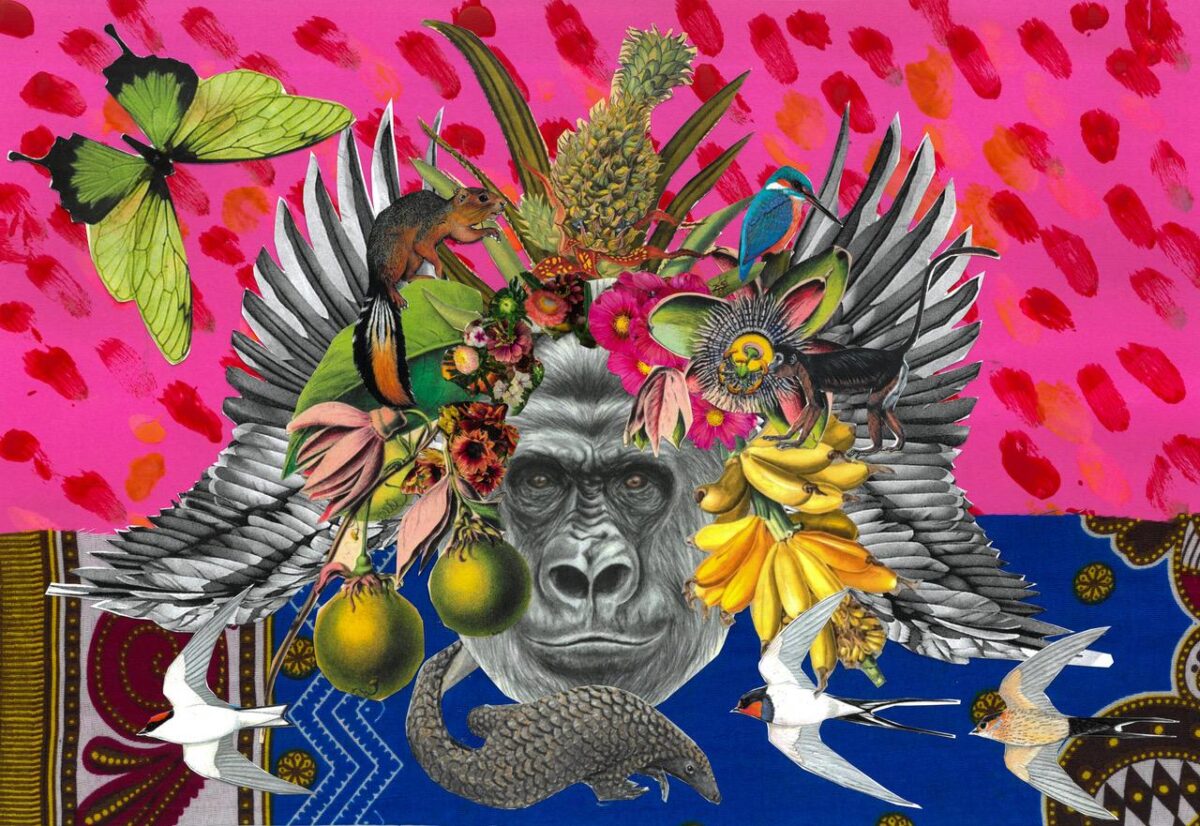
Jacha’s soul-searching work about animals involves a wide range of media. His photographs of pangolins – armour plated African mammals – recently won an award from Kenya Airways.
He makes sculptures of apes and monkeys out of discarded plastic, to hammer home points about human profligacy. He also designs fabrics, which are kaleidoscopes of colours often connected with his own life. ‘I collect things because I like to look at things, especially textiles. So everything in there, I have a connection with. I’m a vegetarian, I don’t kill anything, especially fish. All these fishes I saw when I was snorkelling, or I work with pangolins and they find their way in to the prints.’
Jacha is a one-off. ‘I am somebody that’s playing my own guitar while I’m dancing. But that’s how art is made isn’t it? You try not to be like the other people. I can only be myself and I promise you that I love animals.’
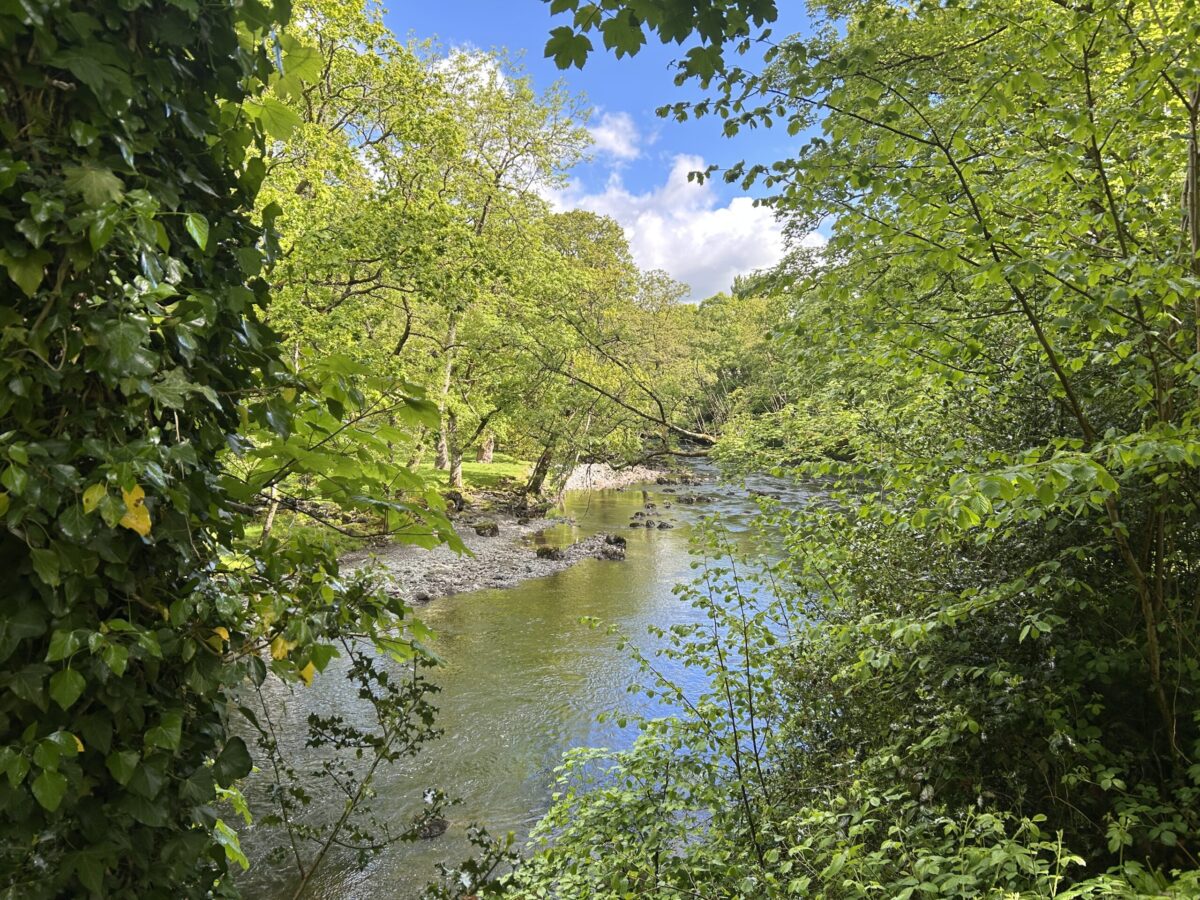
The natural setting of Betws-y-Coed easily explains its fascination for other kinds of artists.
The village, set at the confluence of two rivers which are lovely in themselves – the Conwy and the Llugwy – still draws dozens of painters which explains the number of galleries in a relatively small place.
In one of them, Oriel Betws-y-Coed Annie Owens ponders the significance of the place for painters today. ‘It is still definitely a destination for artists, Welsh and otherwise, because it’s considered a gateway to the surrounding valleys and mountains of Eryri. Many people come here as tourists and often they want a piece of art to take away as a souvenir, as mementos of, say, the Swallow Falls and other places which are sort of iconic.’
Such waterfalls and fast flowing watercourses are a constant source of inspiration for artist Ann Lewis, whose work is always on show at Oriel Betws-y-Coed. Lewis was born in St. Asaph, Denbighshire and now lives in a small village with far-reaching views down the Conwy Valley and the rise of the Carneddau mountains to the west.
In Lewis’ work water rills, runs and spills and seemingly cuts through hard rock as white ruffles and cream-coloured streams.
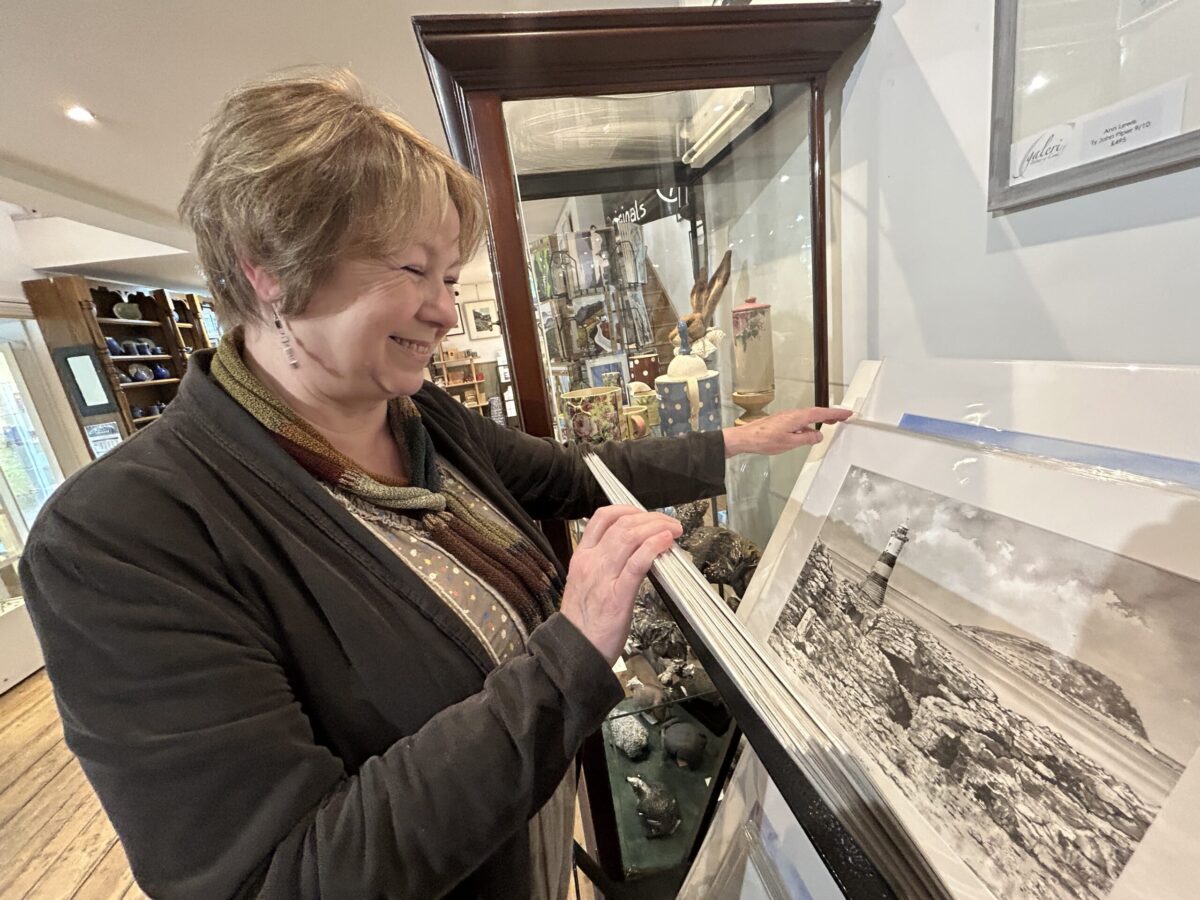
Annie Owens, who works at Oriel Betws-y-Coed in the village suggests that part of the appeal of the area’s rivers and streams is the way they change character, colour and force depending on the weather.
‘When it’s been constantly raining the river can be so full it bursts its banks. It washed away the Miners’ Bridge, and done that twice over the years. The whole village can get cut off, so Capel Curig gets cut off, the Waterloo Bridge down at the bottom end of the village is cut off. We are stranded sometimes, but that’s only in the worst of the bad weather. It has happened quite regularly. By the summer, though, the rivers have changed entirely, completely altered. It can be quite placid and hardly moving. The difference in the river’s summer height and winter height is amazing.’
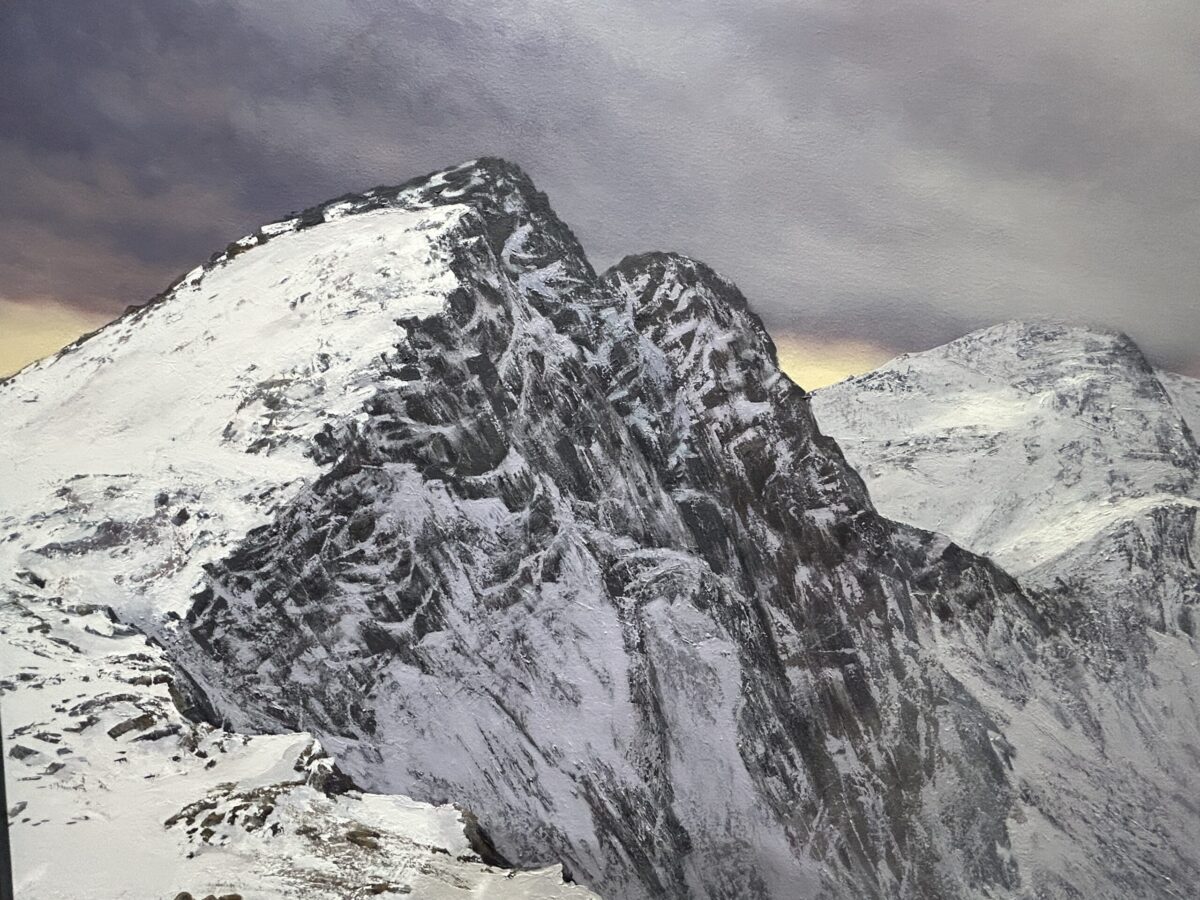
Of all the work on show in the gallery, the ones taking mountains as their subject matter are perhaps the most popular.
Annie shows me Dave Johnson’s arresting oil on canvas of Y Lliwedd, the highest cliff in England and Wales, which was shortlisted for the Wales Contemporary Art prize. It fully captures the geological sweep and drama of its grey, north -facing slopes and the snow-dusted rhyolite crags which connect this mountain with Yr Wyddfa, Wales’s highest peak.
It’s a mountain of no little renown. The first British climbing guide, for the Climbing Club was written about it, namely The Climbs on Lliwedd by J.M.A Thomson and A.W. Andrews.
The noted British climber George Mallory undertook many of his early climbs here while it was also the site of considerable training activity for the 1953 British Everest Expedition.
The artist Dave Johnson keeps that tradition going as he too is a climber, painting en plein air – where that plain air must often be very chill, venturing very high to capture his sublime inspiration.

Jon Gower is Transport for Wales’ writer-in-residence. He will be travelling the breadth and length of the country over the course of a year, reporting on his travels and gathering material for The Great Book of Wales, to be published by the H’mm Foundation in late 2026.
Support our Nation today
For the price of a cup of coffee a month you can help us create an independent, not-for-profit, national news service for the people of Wales, by the people of Wales.
Get more trusted Welsh news
Choose Nation.Cymru as a preferred source in Google News to see more of our journalism.


