


Making Tracks: Borth
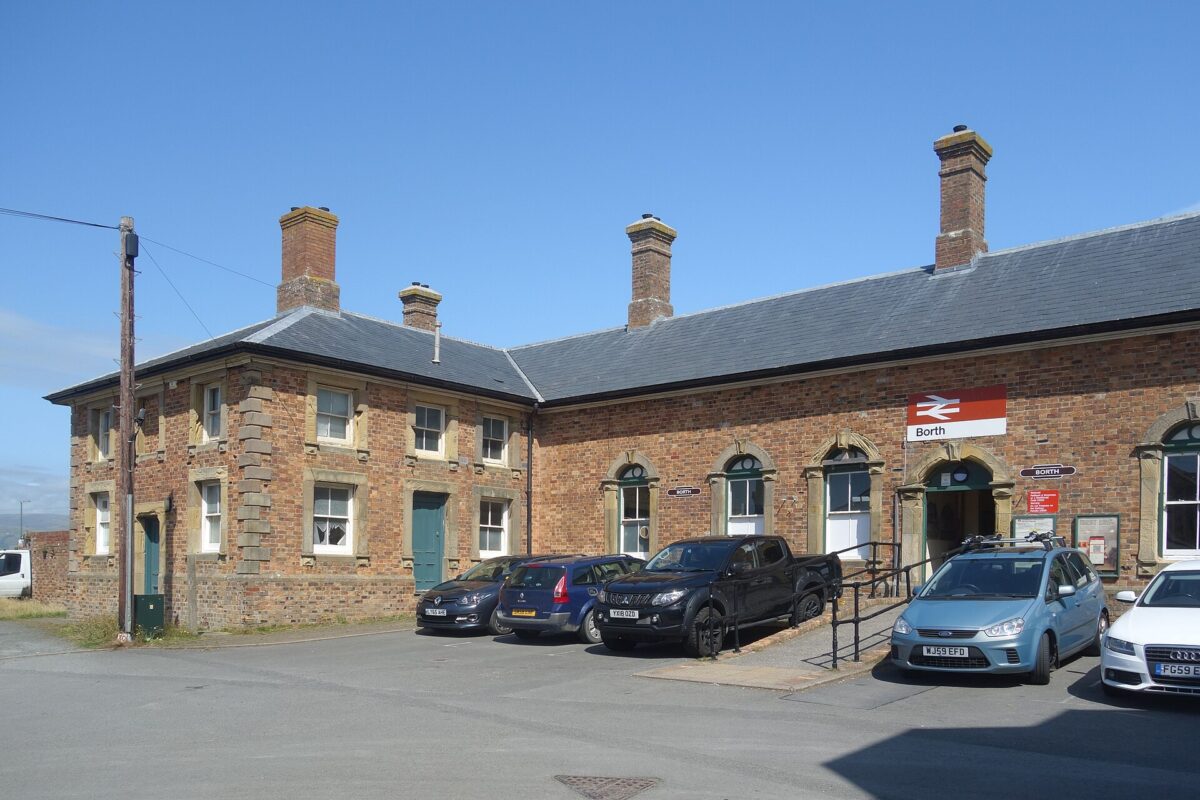
Jon Gower travels back in time courtesy of a delightful station museum in Ceredigion.
When George Romary entered the derelict station buildings at Borth in the 1990s he was reminded of explorer Howard Carter as he ventured into the Pharaoh’s tomb in Egypt.
‘There’s a beautiful bit of the story when he goes into the chamber where he sees Tutankhamun’s sepulchre and there’s a bunch of flowers laid on top of it. He touches them and they turns to dust and he says it’s as if 3000 years had passed in a second. I thought 30 years had passed in a second when I walked in here. It was just something about the place.’
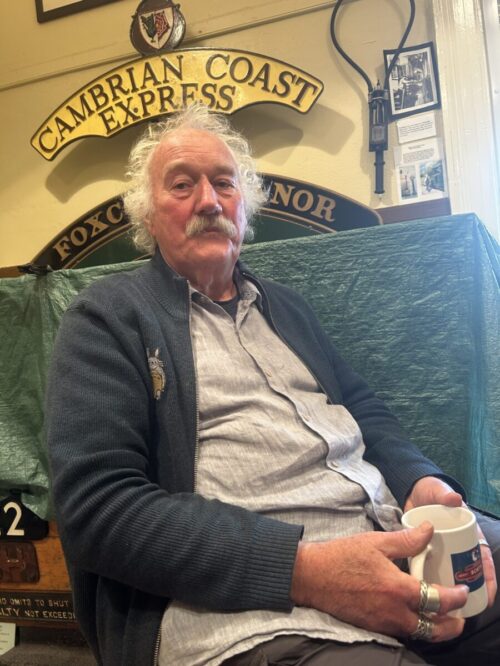
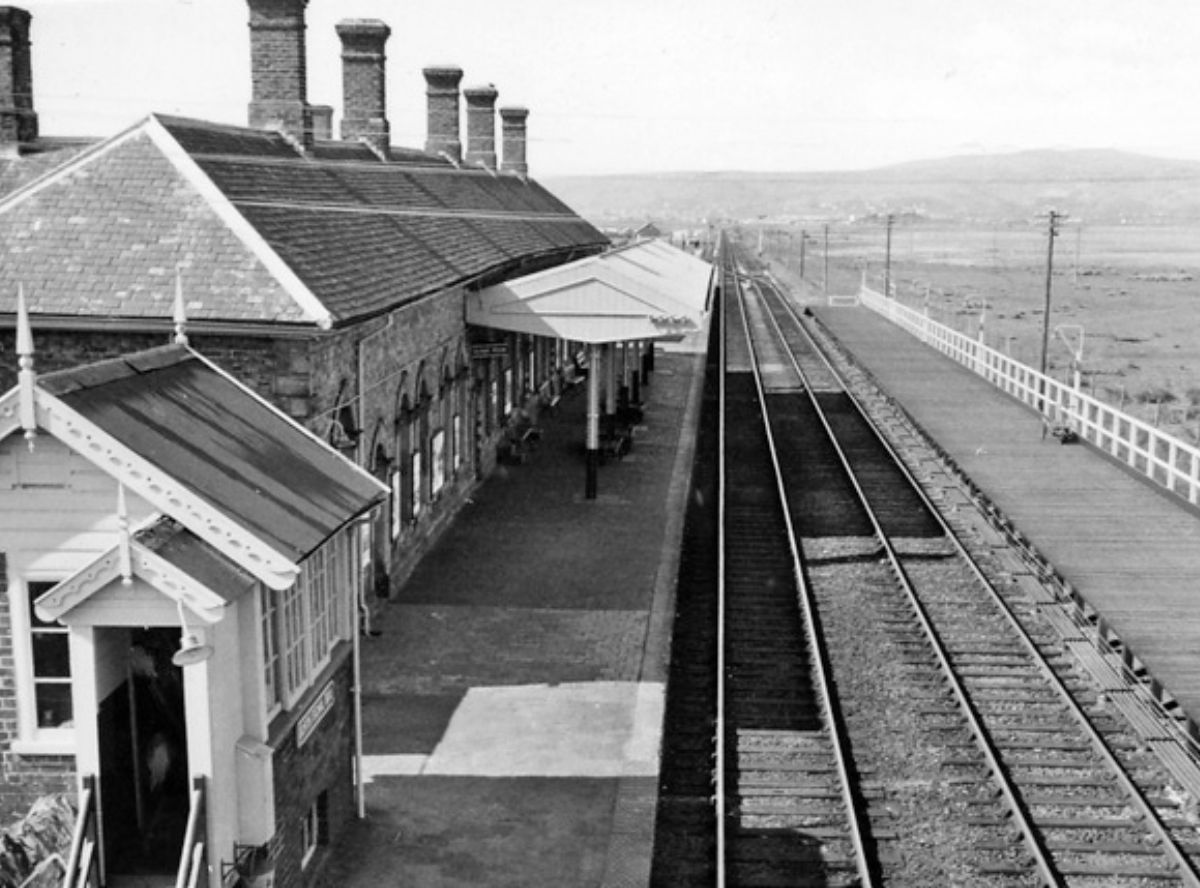
George’s first encounter with Borth station was in the early 1960s when he was about nine and would arrive from Wolverhampton Low-Level Station on the steam train which ran the regular service. ‘I would get off on the other platform, cross over the bridge in a cloud of steam. All the staff were here, the fires were lit and it kind of etched itself into my brain.
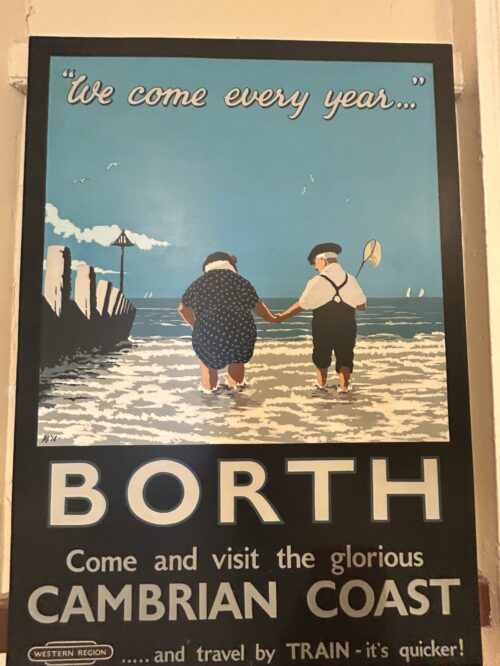
My mother was a single parent – five kids, no money. And she managed to buy a caravan out on Borth Bog for £35. So we had this caravan where we could all pile in and have holidays.’
Curiously, there are some archaeological artefacts from the Borth area that actually date back to the time of the Pharoahs.
When the tide retreats fully a fossilised forest is revealed: blackened stumps of oak, ash and birch. And animals. ‘At the end of the street here, at low tide, somebody found a red deer skull with some antlers attached to it, sticking up out of the sand.
They realised it was something important, it was very old, and they called Martin Bates, the Professor of Archaeology at what was then Lampeter, now Trinity St Davids. And he shot over here, because his specialism is the submerged forest at Borth.
‘The tide was coming in and he managed to get it out in one piece. Not only are the antlers bloody huge – because red deer in those days were bigger – it’s perfectly preserved, a genuine find. It was carbon-dated to 4,500 years ago. It had been out there in the sand, going back to the time of the Pharaohs, while the rest of our tumultuous history in Wales and England and everywhere else carried on.’
George briskly sketches the station museum’s history. ‘My wife Jo and I bought a house in Borth in ’92 when the station was in a parlous state. I became a station adopter, for my sins. We started growing flowers, and making it look lovely. I was inspired to a certain extent by the renovation of Great Malvern railway station with its beautiful ironwork.
“I called a public meeting in the village, about 30 people attended and we started what would be four years’ work – obtaining planning permission, applying for funds and so on. Jo is the curator of the museum. She’s the person responsible for all of this.’
George then shows me some treasured items, including a small collection of hats that belonged to the same man. ‘Wil Owen was the last full stationmaster here. He would have been here when I came here as a kid. His was an eminent position in the village and when we had a town council in Borth, he’d been the mayor. The hats cover a period from just after the Second World War to about 1966.’
George pensively suggests some people don’t actually know how to use railways. ‘They’ve never used them before because they drive everywhere. People turn up here three minutes after the train’s gone, and they’re cross, because it wasn’t there waiting for them.’
That sort of confusion certainly applied on the day the station was opened by the Aberystwyth and Welsh Coast railway company in July 1863. Five hundred passengers were taken on the new stretch of line from Borth to Machynlleth. Some of them had never travelled that far in their entire lives: doing so by train was an additional novelty. The day trippers certainly knew nothing about departure times because when it was time for the return leg, railway employees had to scour the town, rounding folk up.
Confusion can still reign, George avers. ‘There are visitors who arrive at the station and ask where can I get to from here? I usually say, if you travel that way, you can get to Aberystwyth. And if you go that way, you can get to Vladivostok, if you’ve got the tickets. I’ve a friend from here that actually went to Siberia on the train.’
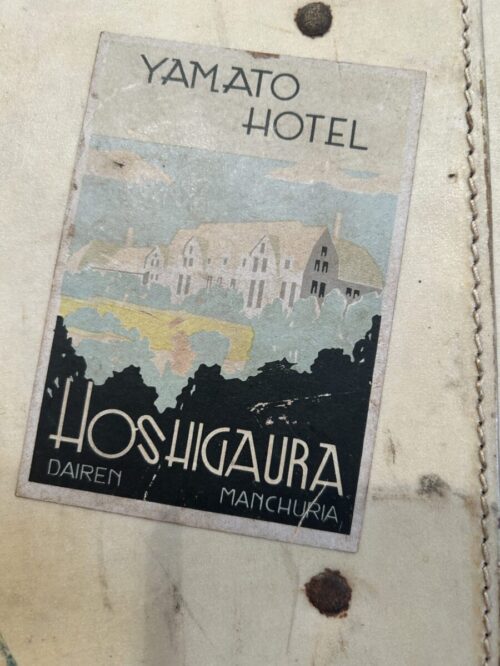
George then points out some very fancy looking luggage. ‘That suitcase went from Aberystwyth to Manchuria in China in the 1930s, when it was occupied by Japan. There’s a sticker on it from a hotel there. Somebody, maybe a diplomat from Aberystwyth, went to this place that was being horrifically oppressed by the Japanese, travelling there on a Canadian Pacific steamship with an expensive set of pigskin luggage. This particular case was just for shoes, eighteen pairs of them. They took, you know, full kit.’
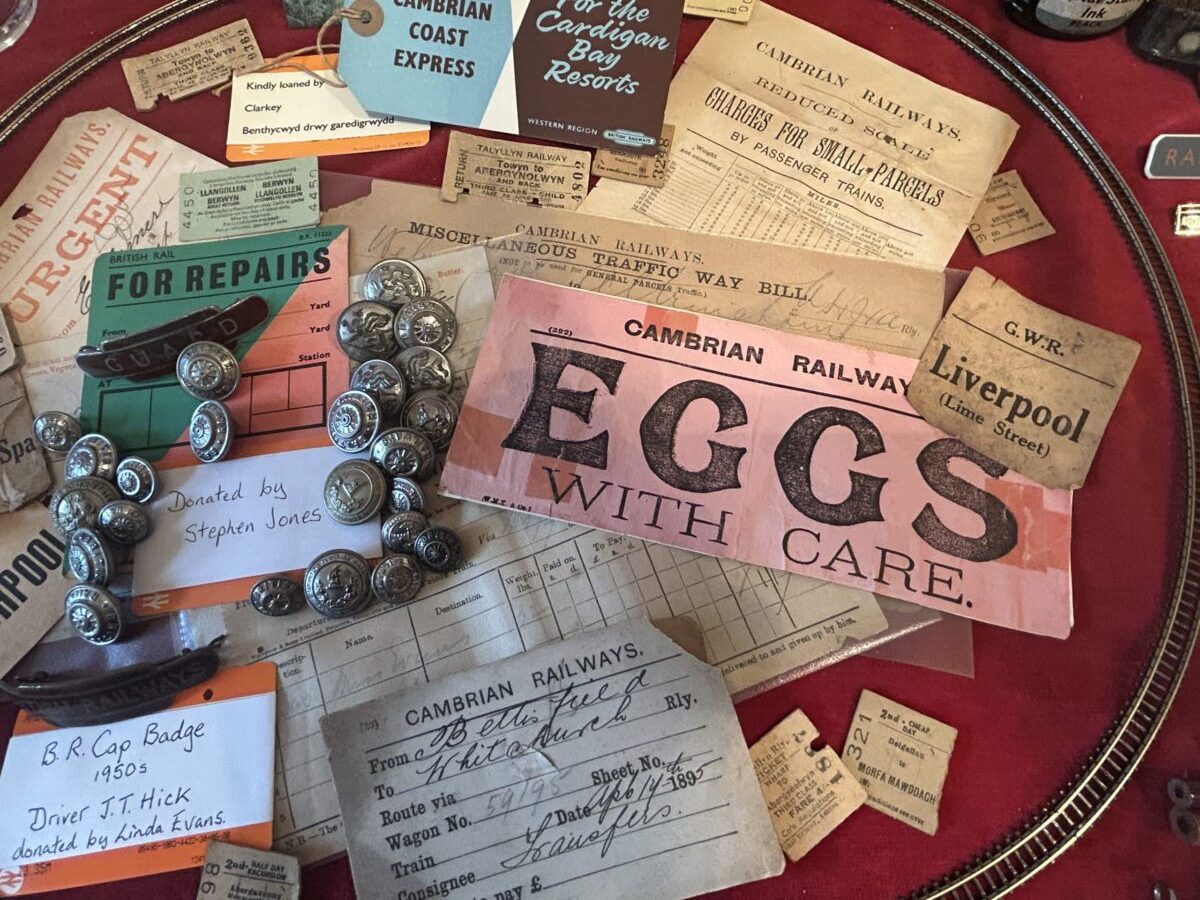
The museum is a veritable cornucopia of railway collectibles, with cabinets stuffed full with fascinating memorabilia, from tickets to train whistles, advertising posters to uniform buttons. A bright sign declares ‘Eggs with care.’ ‘It was a classic one. If you travelled in those days, back in the ‘50s, you’d see crates of little day-old chicks and eggs on the station.’
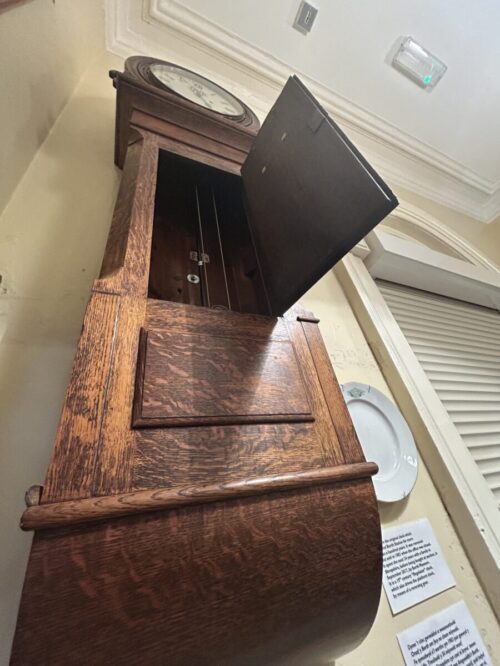
George’s finest acquisition is the station clock. ‘It was sold by British Rail to a British Transport policeman who got first dibs on it and paid quite a lot of money.
“After he died an antique dealer contacted us and said, do you know the Borth clock is coming up for sale? Now, Great Western Railway stamped clocks, they’re worth about £ 3000, it was on the front page of the catalogue of the auction and there were about 20 collectors interested.
‘I went along with a mandate from the committee to spend up to £3,000. Once I’d seen it though, I thought this has got to come back. At one stage a couple of old Shropshire guys got their torches out and started looking at the mechanism inside and saying, oh, we love this bugger, we’ll take this, this is lovely. And I said, no, gentlemen, it’s coming back to Borth Station.
‘I thought, I’ve got my own personal credit card with me as well as the museum’s card. The clock’s price ticked up to £3,000. Then there was just myself bidding against a guy on the telephone. He went ‘three-one.’ I went ‘three-two’. The auctioneer looked at the phone, brought the hammer down and smiled, then announced the clock was going back to Borth station. Everybody cheered and the staff hugged me and Jo.
‘We got it back, fixed the mechanism. The unusual thing about it, it’s two clocks. One of them goes on the platform while the big clock – what they call the master clock – goes inside and it runs the one on the outside with a spindle. It’s got an ebony pendulum which doesn’t expand or contract and it’s accurate.’ It’s a fascinating chronometer for sure. Or, rather, two chronometers, working in tandem.
George suggests that the volunteer-run Borth Station Museum is like a portal of human information. ‘I think it inspires people. They realize that there’s a story behind everything.’
George knows all about stories: he’s written a novel called The Train to Else, which features The Seagull, the only train left in the world, which finds its way from London via the Black Country to Borth, renamed Amorth in the book.
When it arrives at the station the excitement is palpable: ‘The Seagull began to pull again, the cylinders beating out a new and confident rhythm. Out across the broadening estuary we flew, the narrow strip of buildings that slumbered out on the coast grew closer, our destination, Amorth.’
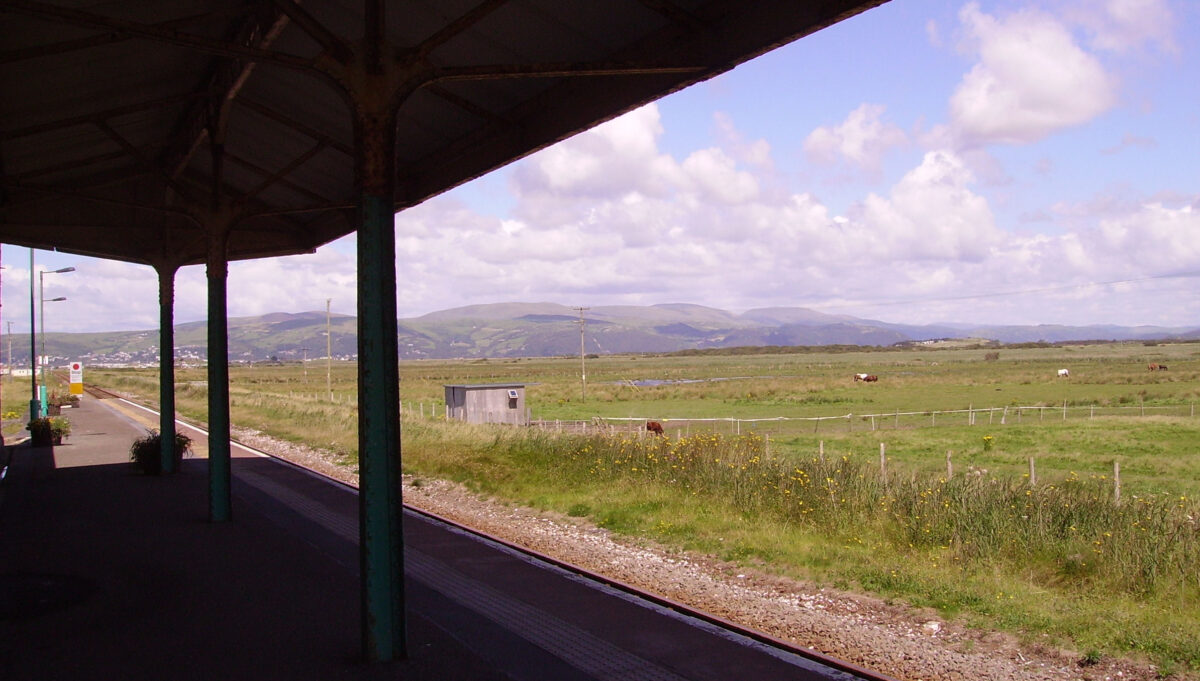
It’s time for me to leave Borth a.k.a Amorth, and the blustery wind outside is strong enough to blow a 16 stone man sideways.
The train is right on time and as it departs I seek out some refreshments for the journey. Tom Murch is happy to oblige.
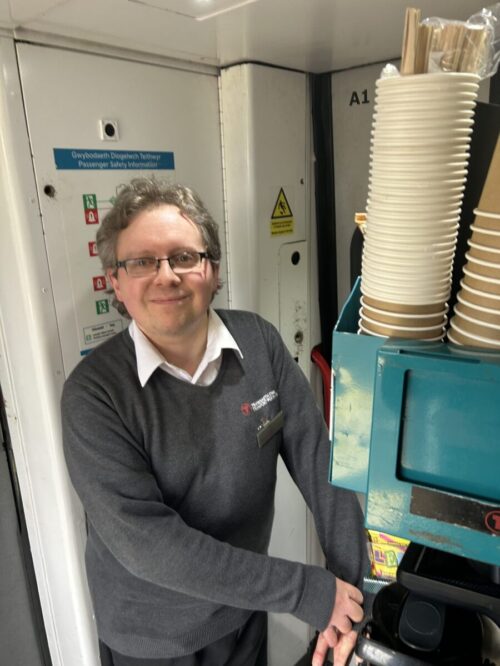
Tom started working on trains almost 20 years ago, therefore since 2007 he has served the equivalent to a small rivulet of tea to thousands and thousands of travellers. He enjoys the job simply because of the customers he meets and cheerily converses with. ‘A lot of people, they’re often off to nice places, so they’re feeling chatty.’
Tom lived most of his life in Shrewsbury before attending university in Aberystwyth, where he studied medieval history.
He still lives in the seaside town. ‘I’ve never really been one for big cities. Whenever I go to one on holiday it’s always a bit daunting. So, Shrewsbury was a decent-sized town for me, and Aberystwyth, even smaller – about a third the size – felt about right. It’s got lots of bookshops, so that’s me happy, that’s one of my hobbies catered to perfectly. I have simple needs, really, and Aber accommodates.’
For a book lover such as Tom, Aberystwyth and Ceredigion’s recent designation as Wales’ first UNESCO City of Literature is a valuable recognition of the town’s cultural offering, although he admits that grand literature isn’t necessarily his bag. ‘My nerdery extends more to sci-fi and fiction.’
Bestsellers
When it comes to on-board catering Tom suggest there are some stand-out items: ‘The hot drinks are always your best sellers. My teas are always fairly weak. I know a lot of people look down on me for my pale beverages so I’ve got to restrain the urge to drown them in milk and let the customer have as much as they need.’
There is also the logistical challenge of ensuring a ready supply of hot water. ‘Every depot’s got a different system, but in Aberystwyth we come in before our shift, or before the train departs: that’s accounted for in the shift. We’ve got big water boilers in the office so we just fill up. Some people fill four pots but I normally fill up six, just in case anything goes wrong and you’re stuck in the middle of nowhere. And those pots are pretty good, they last for hours, when you need them to.’
Cuppas galore
I can personally attest the system works. On my own recent travels around Wales I’ve racked up over 10,000 rail miles and have enjoyed 116 cups of tea (yes, I’ve been nerdily keeping count in my big, black book.)
Tom’s shifts usually take him from Aberystwyth to Shrewsbury, where he might change for Birmingham before coming back. Alternatively, he will travel on a train to Birmingham and work the other way. ‘Sometimes we’ll have an hour’s break in the middle at Shrewsbury just to resupply.’
By working the same routes consistently, Tom gets to know many customers, especially those with regular travel patterns. ‘On the morning train, there’s a lady who, four of five times a week, starts her morning in Aberystwyth, jumps on the train to Welshpool, works at the Tesco there, then jumps on the train every evening. She did say they offered her a job in Aberystwyth but she gets on with everyone where she works and she’s happy there.’
Some commutes can be substantially longer, Tom informs me. ‘There was a lady years ago when I first started who’d go on from Aberystwyth to Wolverhampton for a commute. Two and a half hours twice a day is pretty intense.’
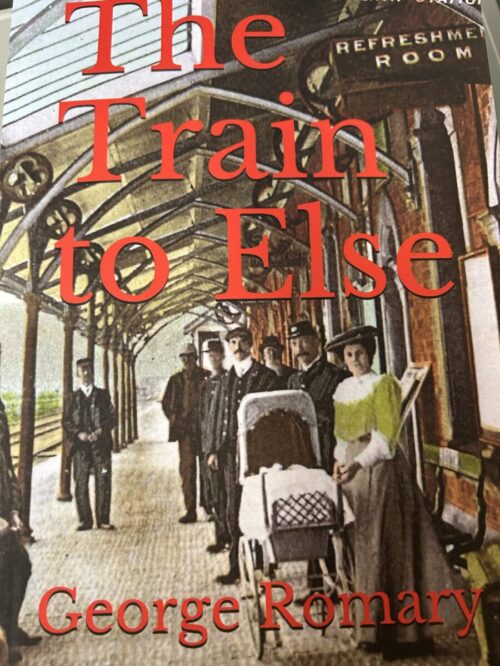
My own journey is far from intense. I watch the slow green film of the scenery unroll through the window, read George’s book and meditatively sip Tom’s tea, made strong by long steeping in the cup.
The sun comes out, having long been a stranger, illuminating the undulating hills of mid Wales and making the Dyfi river-waters sparkle. After the pelting rain it resolves into a fine day, one fit for a Pharoah.

Jon Gower is Transport for Wales’ writer-in-residence. He will be travelling the breadth and length of the country over the course of a year, reporting on his travels and gathering material for The Great Book of Wales, to be published by the H’mm Foundation in late 2026.
Support our Nation today
For the price of a cup of coffee a month you can help us create an independent, not-for-profit, national news service for the people of Wales, by the people of Wales.
Get more trusted Welsh news
Choose Nation.Cymru as a preferred source in Google News to see more of our journalism.


