

Making Tracks: Cathays
Jon Gower
Of the million or so rail passengers who use Cathays station each year many will be students as it pretty much abuts the main Cardiff University campus. Others will be visiting cultural attractions such as the National Museum of Wales and the nearby Sherman Theatre.
Cathays Park has been recognised as one the finest civic centres in Britain, almost 60 acres’ worth of monumental buildings, which include the University of Wales Registry, the Welsh Government Offices and Cardiff City Hall and Law Courts.
One of the other ‘noble pieces of architecture,’ as expert John Newman puts it, is the Temple of Peace and Health, built in the late 1930s to plans by architect Percy Thomas.
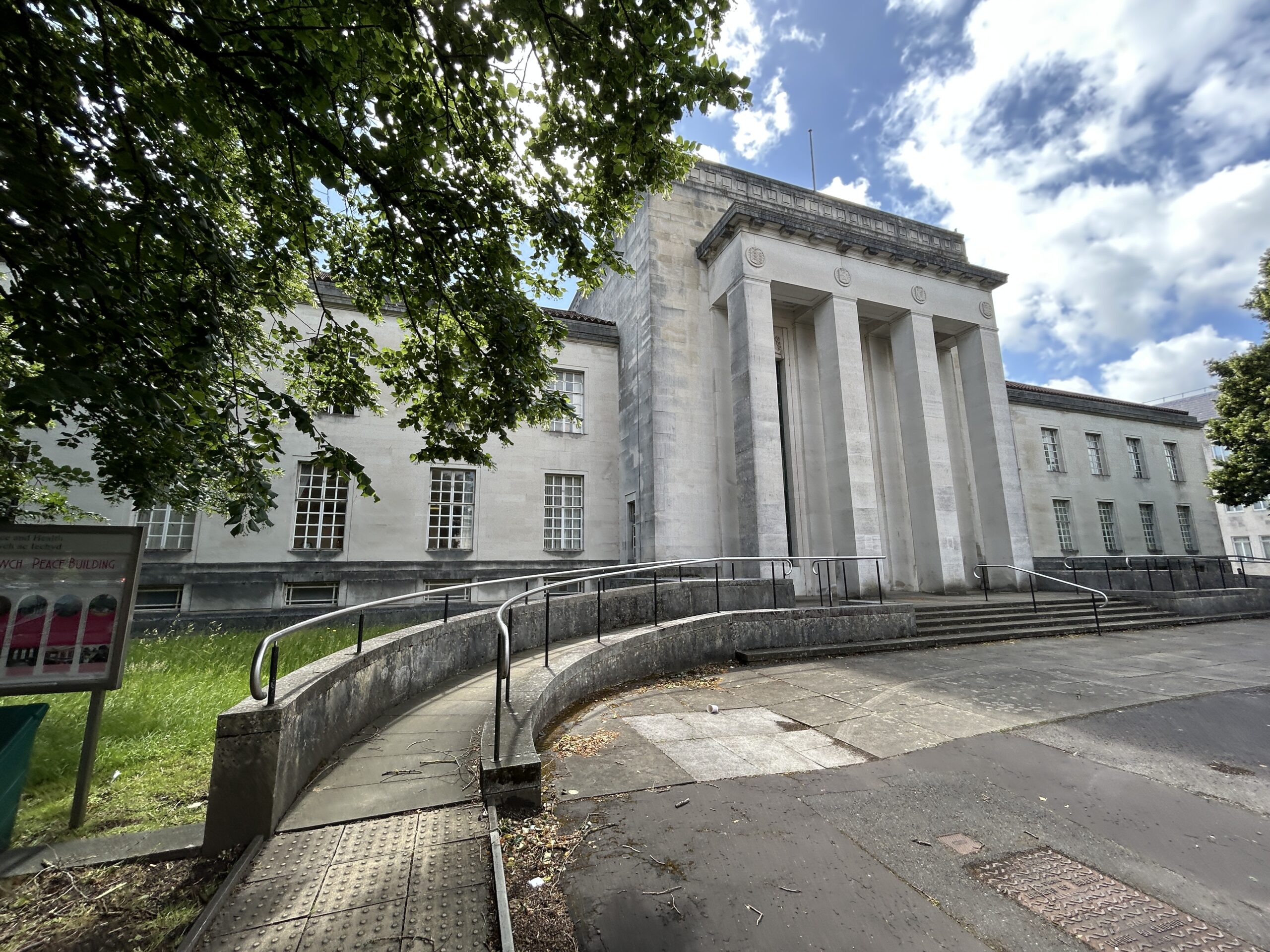
One of the interesting paradoxes about the Temple of Peace is that it was funded by a former soldier as Hayley Richards, Head of Programme Development and Policy for Cymru Global explained: ‘David Davies, Lord Davies of Llandinam wasn’t a pacifist but he had experienced the trenches of the First World War and was so horrified by that experience he wanted to make sure it never happened again.’
Architectural historian and heritage campaigner Dr Elaine Davey from Cardiff Civic Society told me how David Davies came from a very wealthy family, owners of the Ocean Coal Company which, among so much else, created Barry Docks. ‘In order to move the coal from their collieries in the south Wales Valleys to export from Barry Docks they had to have an Act of Parliament because of the rival Bute family’s cartel, its monopoly on Cardiff docks.’
Unlike the situation in Cardiff the company in Barry owned both the railways and the docks, giving them an advantage that became absolutely apparent by 1901 when Barry overtook Cardiff to become the busiest coal port in the world.
This produced the sort of wealth that could easily allow you to build a temple in the heart of Cardiff.
David Davies, Llandinam wanted to remember his fellow soldiers killed in the trenches, so the temple was designed around a crypt which houses the Book of Remembrance. But, as Hayley Richards explains: ‘He didn’t want it to be a mausoleum: he wanted it to be a living, active building, working every day towards peace and international cooperation. That’s what his legacy is to us today.’
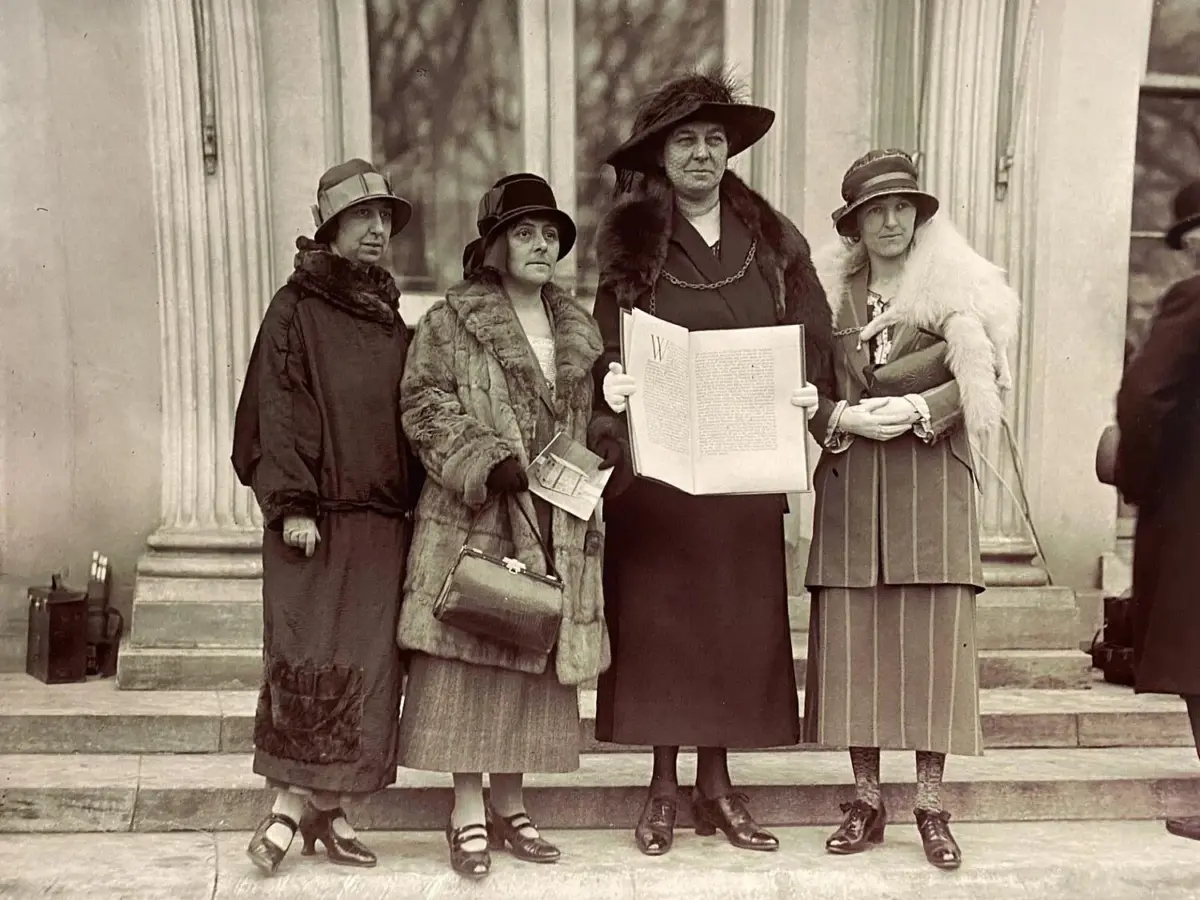
Promoting the League of Nations was a key aim and the women of Wales proved to be tremendously effective in advancing this cause, as Hayley told me: ‘There was an appeal from the women of Wales to the women of America in 1923 -24, asking them to encourage President Calvin Coolidge to join and lead the League of Nations.
In the aftermath of the First World War, every household in Wales would have lost someone. A group of women, 400 organisers, went door-to-door gathering signatures.’
They went collecting from Caerau to Colwinston, from Tonypandy to Penarth. Hayley Richards underlines the scale and success of the endeavour. ‘In fewer than 18 months, without the digital technology we have today, they managed to gather 390,296 signatures. A deputation from Wales then went by liner to America, where they presented the petition at the White House, carried over the ocean in a large oak chest.’
The Temple of Peace is a very popular filming location. Elaine Davey reminds me, ‘It’s on TV enough, in Torchwood and Doctor Who.’
The temple therefore features prominently in the two-hour long Doctor Who walking tour around Cardiff. New Zealander Isaac Quirke is a devoted fan. ‘I’ve seen most of them all and have been watching Doctor Who since I was about six. My dad got me into it when I was young.’
Visiting Cardiff for the first time the walk was the very top of Isaac’s to-do list. He found the Temple of Peace notably striking: ‘Very big, imposing and grey. They shot a lot inside because it has some very interesting interiors and then the outside represents a building in Nazi Germany. As a Doctor Who fan it’s very exciting. I am a big nerd.’ The highlight of the tour? ‘Oh, you go to St John’s church that is featured in one of the Christmas specials with Catherine Tate, where she gets not married.’ Not married? ‘Yes, she disappears into the sky. while she’s walking down the aisle. So that was very cool and they have a kind of Easter egg there where there’s a cyberman dressed up as a swordsman and the people in the church keep it there, it’s very cool.’
Many of Cardiff’s statues also feature in the series, to disarming effect. ‘At the end of “Blink,” the first ‘Weeping Angels’ episode, there’s a montage of different statues around Cardiff and David Tennant’s voiceover warns that any statue could be a Weeping Angels. They’re very, very scary. They don’t move as long as you’re looking at them, but they’re very fast when you’re not looking at them, and if they touch you, you get sent back in time. They’re my biggest fear actually, even now. Nineteen years later, they feature in all my nightmares.’
Elaine Davey notes that the Temple of Peace is often cast on television. ‘Normally it’s a fascist building but in Philip Pullman’s His Dark Materials it was quite the opposite – with loads of East European, Russian, Stalinist types lodged in there.’ Initially people didn’t like the building, explains Elaine. ‘They said it’s too fascist. But what is fascist architecture, apart from your association with what Mussolini did? And amongst architects, most people feel that Mussolini was good for architecture in Italy. It’s a sort of stripped-down classicism.’
Hayley Richards knows that some people are confused by the Temple of Peace and don’t realise it’s a working building. ‘Some people think it’s a Masonic Hall. Some people think it’s a religious building. People think it’s owned by the university, that they’re not welcome inside. But it’s not just global issues that make it incredibly relevant today but local issues.
‘There are divided communities and conversations about difficult topics that have to happen somewhere and what better place than the Temple of Peace and Health? Our ambition moving forward is that it continues to be a working building for peace and reconciliation and international solidarity.’
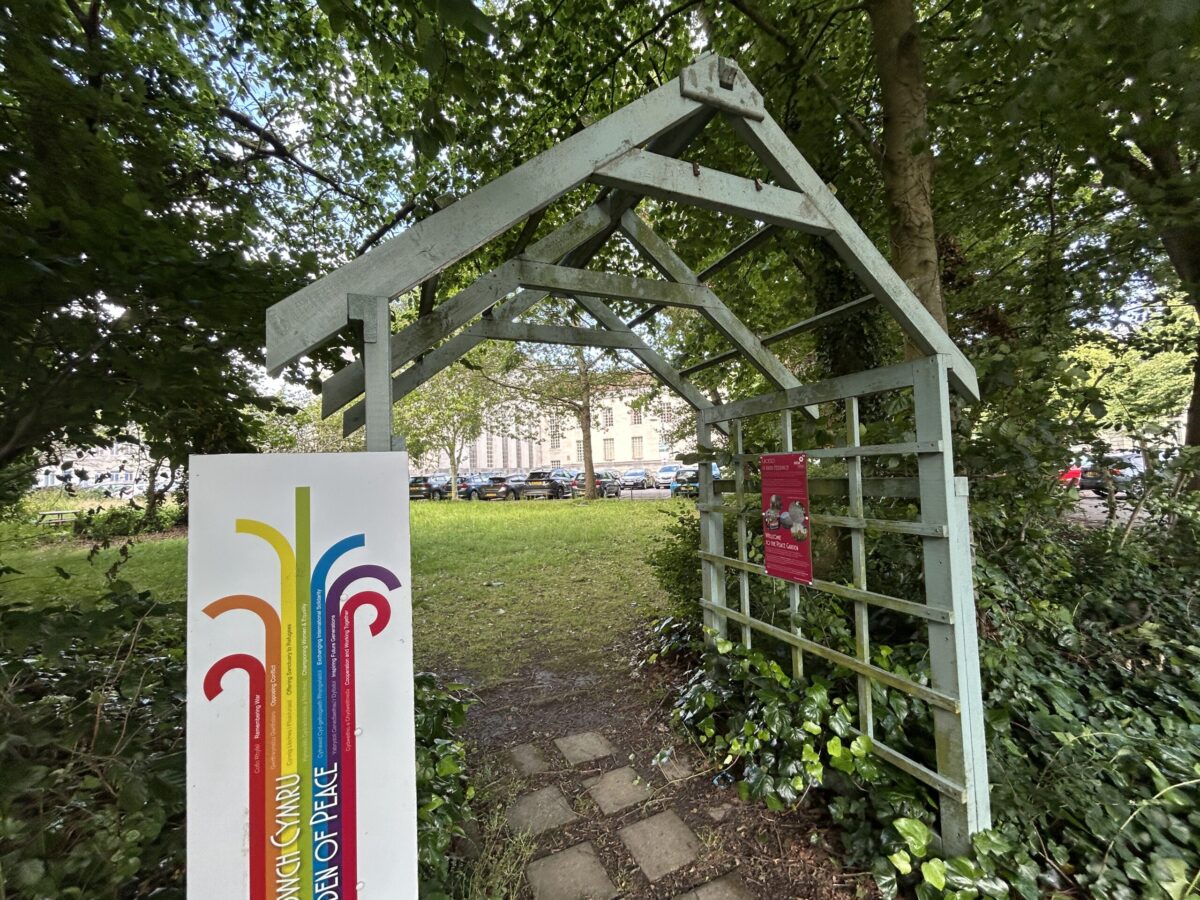
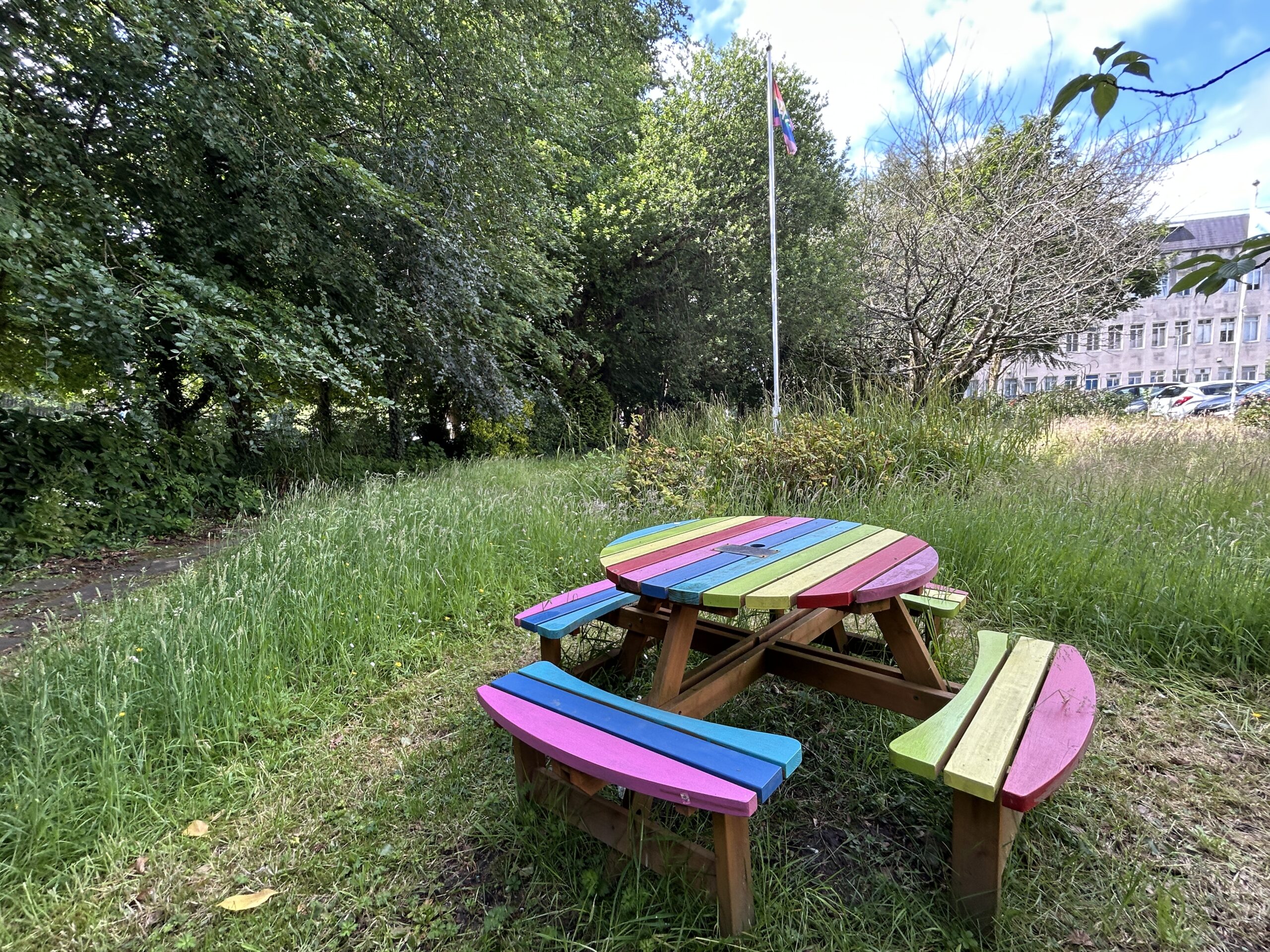
Behind the Temple of Peace is the National Garden of Peace, another proposition altogether: a quiet, overgrown grove of trees ringed by memorials to Welsh peacemakers in a city that has many interesting pacifist connections. On the Quaker Meeting House in Charles Street, the words ‘Peace’ and ‘Tangnefedd’ are literally carved into the stonework.
Or there’s the former BBC studios above the convenience store opposite the main entrance to Cardiff Castle. In the 1920s, above what was then Mr Kinshott’s Music Shop, they would broadcast programmes from a former cinema in small room soundproofed by hanging carpets on the walls. There was even sometimes a slimmed-down palm court orchestra to play live music on air.
It was here that the very first spoken words in Welsh were aired and shared by what would become the British Broadcasting Corporation, when the Reverend Gwilym R. Davies announced the couplet: ‘Segurdod yw clod y cledd/A rhwd yw ei anrhydedd.’ This roughly translates as ‘The sword’s idleness brings it praise/And rust bestows honour.’
Davies also broadcast the first-ever Message of Peace and Goodwill from the children of Wales to the children of the world, using wireless telegraphy. Unfortunately, that first message didn’t get very far, but it was picked up by the director of the Eiffel Tower radio station, who forwarded it on in French.
Despite the early disappointment, Gwilym Davies was not one for giving up easily. He persisted and within a decade 68 countries had responded, a number that has grown over the years.
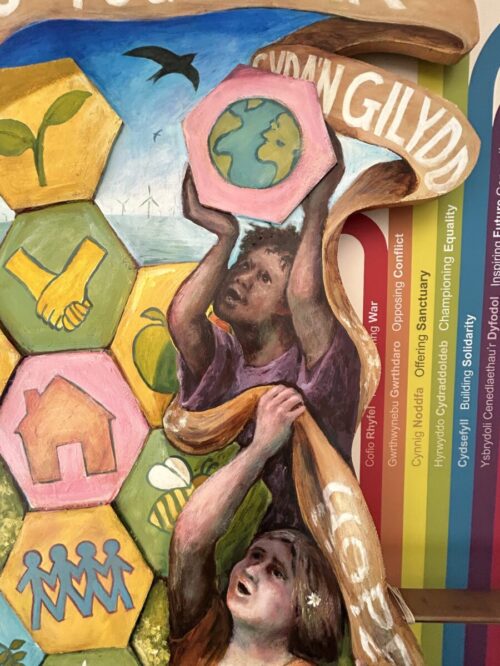
The National Garden of Peace was designed and built by camps of international volunteers, working alongside ones from south Wales. One of the memorials is to Helen Thomas, a peace activist from Newcastle Emlyn in Carmarthenshire.
Hayley sketches her brief life. ‘She worked for Cardiff Women’s Aid but went to protest against nuclear weapons at Greenham Common in Berkshire. In 1989, when she was just 22 years old, she was killed after being hit by a police vehicle and her death was controversially deemed an accident at the inquest.’
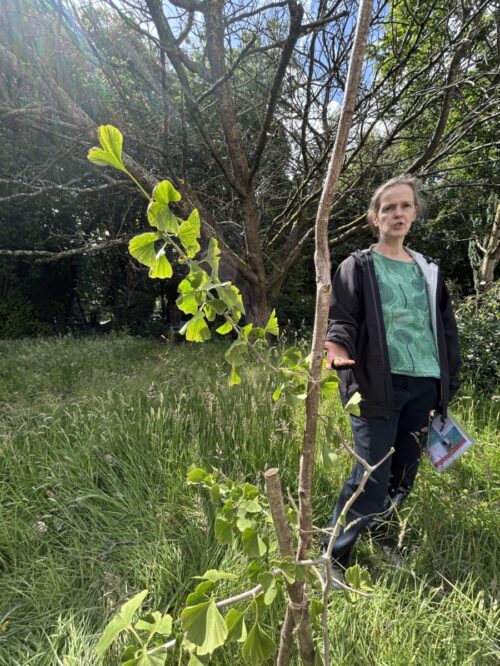
One of the most recent, green additions to the National Garden of Peace is a ginko, a prehistoric tree. It was gifted by Kyoko Gibson from Swansea, a second generation hibakusha, or bombing survivor, born in the city after the atomic explosion.
The ginko was grown from a seed from a tree that survived Hiroshima and commemorates the 80th anniversary of the nuclear bombing. It’s a peaceful planting.
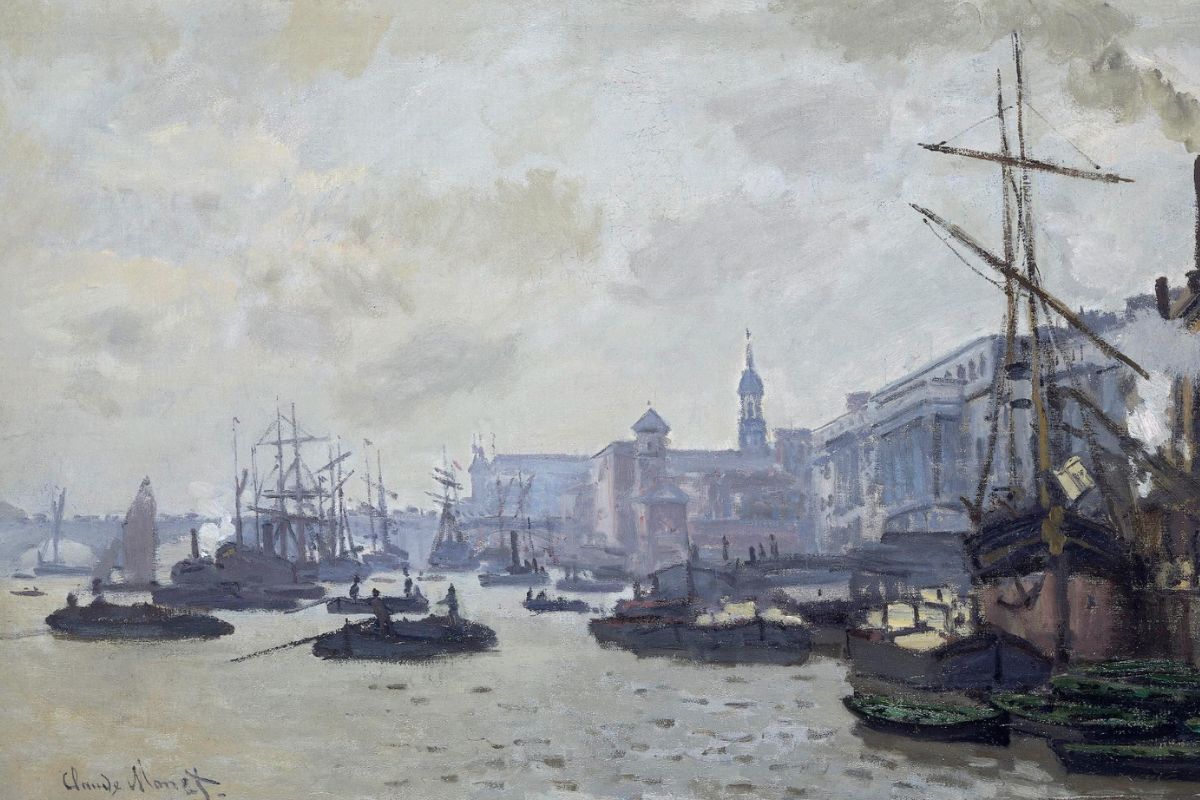
Peter Wakelin, the Director of Collections and Research at the National Museum met me to discuss art that connects with both war and peace, singling out Claude Monet’s painting of the Thames. ‘Monet and a significant bunch of other French artists left Paris in 1870 and 1871 because of the Franco-Prussian War’s bombardment of the city. It was a dangerous place to be and they thought they were going to be overrun. So they got out and London was one of the principal destinations. It was a really interesting creative period because they discovered new environments, new landscapes.’
Peter suggest that Thames title has a sense of respite about it. ‘It does have that sense of somebody being somewhere where they’re kind of anonymous. They’re able to sit on the riverbank or on a bridge and see the life of the city going on, which has nothing to do with them, but it is there to observe. And you’ve got the ships and bridges and you’ve got the movement of trade and commerce all around the city. And I think that experience was a kind of breath of fresh air for those artists.
‘They had left their old lives behind. ‘Pissarro left his paintings behind in his house in France when the German army took it over and destroyed almost everything. The pictures were just thrown down on the garden paths to stop the mud getting on their boots, and everything was destroyed, his life’s work up to that point. So, getting out was important.’
Having got out, many of these refugee artists found it very difficult to make ends meet. ‘Monet said several times that he would have starved if it hadn’t been for his dealer, Paul Durand-Ruel, who was also a refugee from the Franco-Prussian War, who set up shop in London and managed to sell a few pictures. Both Pissarro and Monet were both rejected when they went in for the Royal Academy exhibitions. They never got anything shown.’
Some of the other war-connected works at the National Museum are striking because of their scale: ‘We’ve got two pictures in the main hall donated by Frank Brangwyn. One of them shows British soldiers in front of a great tank that’s crushing everything before it, and they’re running before it in these little groups.
‘The other one shows gunners stripped to the waist and firing at the enemy. Brangwyn had a wonderful facility for drawing figures with great energy and muscularity and presence.’
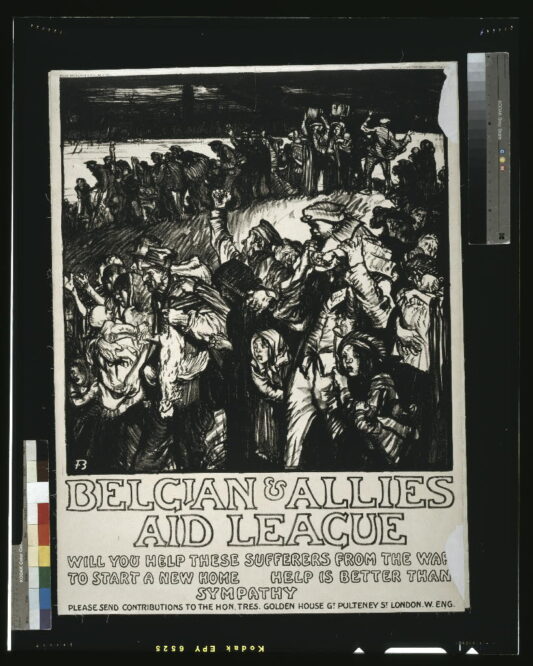
Peter Wakelin explains that Brangwyn’s images of war weren’t confined to such battlefield scenes. ‘Straight away at the beginning of the war he created a whole series of posters that were designed to raise awareness and money for Belgian refugees.
Brangwyn was himself of Welsh parents, but had been born in Bruges, and he was immediately sympathetic to the plight of the Belgians. Millions of people were made homeless very quickly, and it was the biggest refugee influx into the UK that’s ever happened. At the outbreak of the war, there were tales of terrible atrocities being visited on the Belgians, and they were fleeing before the German army.
One of his prints shows people climbing up ropes trying to get onto a ship to get out and across the channel. The result was that there was a huge support for Belgian refugees.’
It seems as if there’s a timely lesson here about art reflecting life even as it encourages compassion.

Jon Gower is Transport for Wales’ writer-in-residence. He will be travelling the breadth and length of the country over the course of a year, reporting on his travels and gathering material for The Great Book of Wales, to be published by the H’mm Foundation in late 2026.
Support our Nation today
For the price of a cup of coffee a month you can help us create an independent, not-for-profit, national news service for the people of Wales, by the people of Wales.
Get more trusted Welsh news
Choose Nation.Cymru as a preferred source in Google News to see more of our journalism.


