


Making Tracks: Cyffordd Llandudno
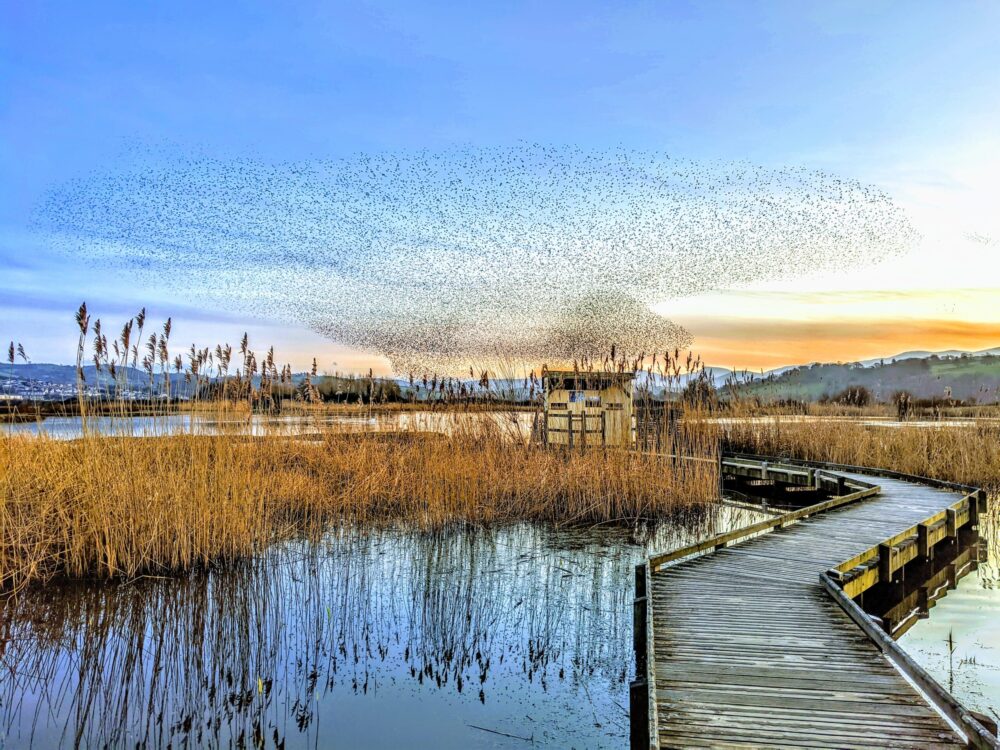
Jon Gower
Jon Gower encounters a wealth of birds just a herring gull’s hop from Llandudno Junction railway station.
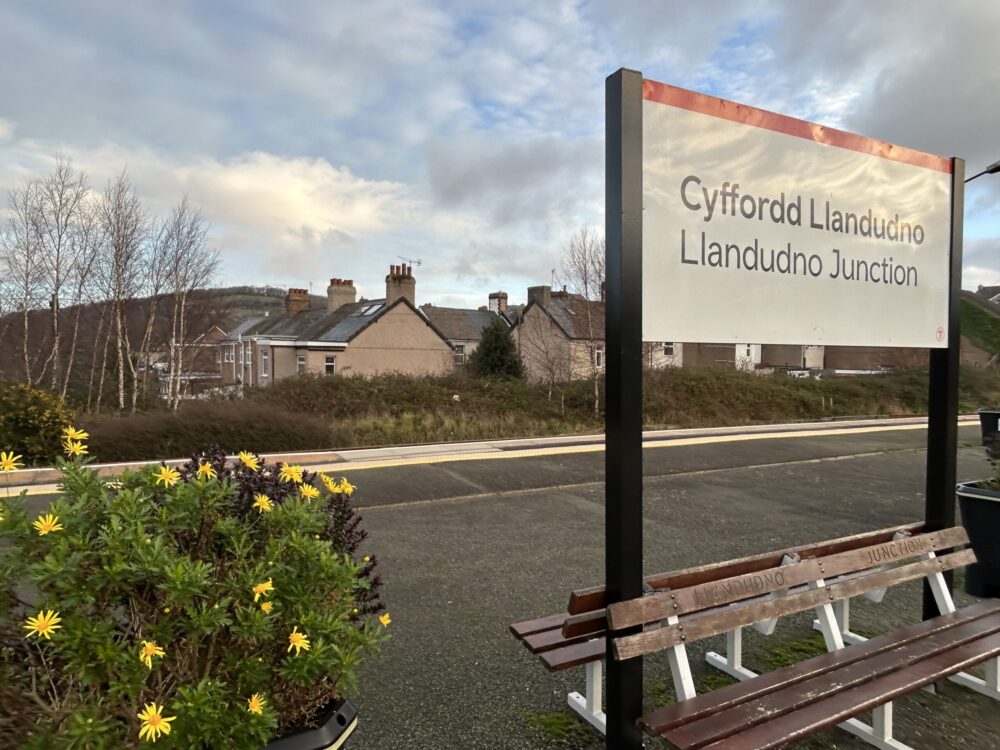
Llandudno Junction connects two railway lines, one linking Crewe to Holyhead and the other the seaside town of Llandudno to scenic Betws y Coed.
The station is a mere half mile walk from the RSPB Conwy reserve, which sits at another kind of junction, one where river and land meet and where thousands of birds wing in from all directions.
It has an intricate mixture of lagoon and woodland, saltmarsh edge, scrub and grassland, all with glorious views of the Carneddau range of mountains and Edward I’s castle at Conwy.
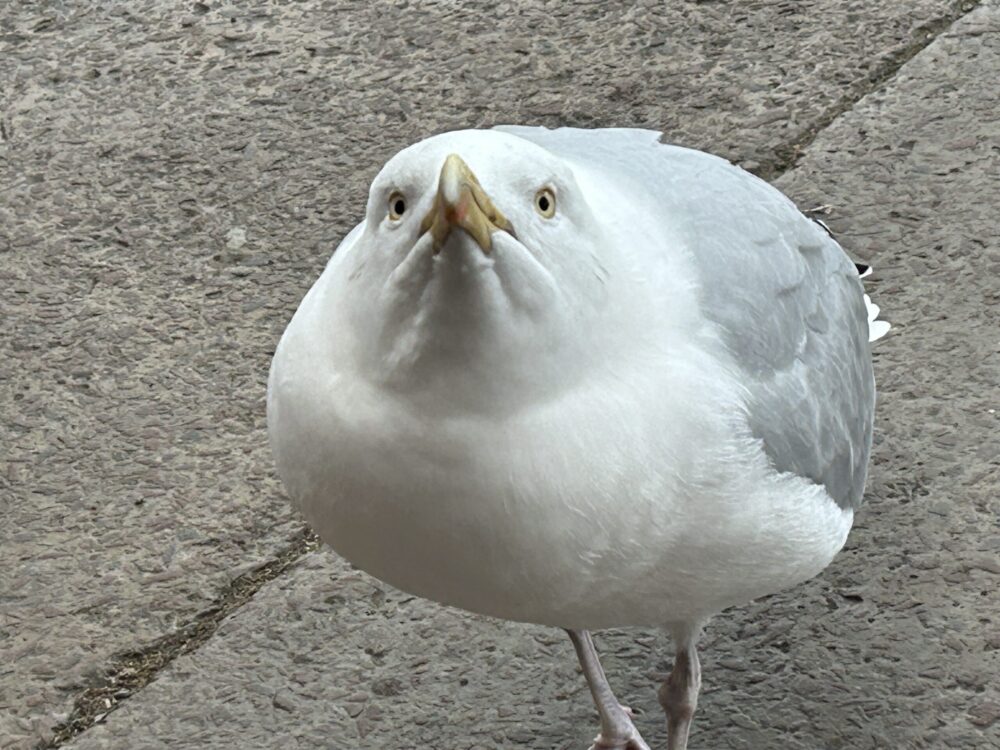
The birdwatching starts as soon as you alight on the railway platform, where herring gulls brazenly patrol to see what goodies people have bought in Porter’s cafe.
Indeed the lady behind the counter warns you about them as she serves you tea.
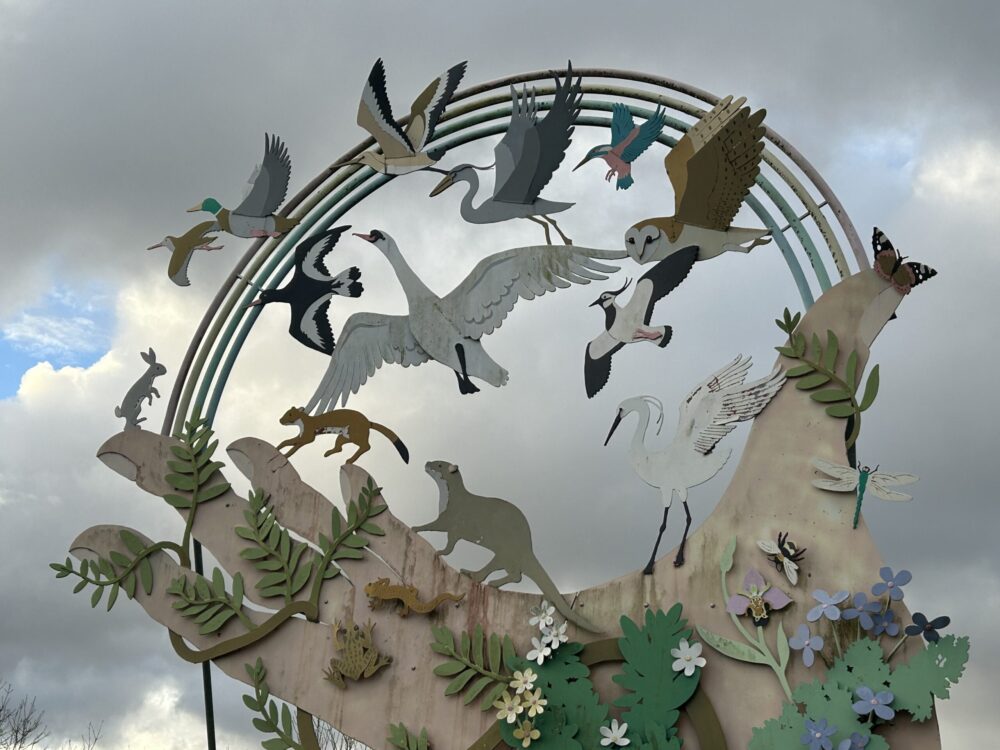
It’s then a short walk, blessed by a low January sun, to where a striking art work announces the entrance to the reserve and some of the wildlife ahead.
Matt Dowse is the RSPB warden at Conwy. Originally from the English South Downs, Matt worked for the Wildlife Trusts and has a particular interest in reptiles and amphibian, which is a very suitable specialism for this north Wales wetland reserve.
Matt and his family live nearby and he is consequently able to cycle in from home, a ride taking him about seven minutes.
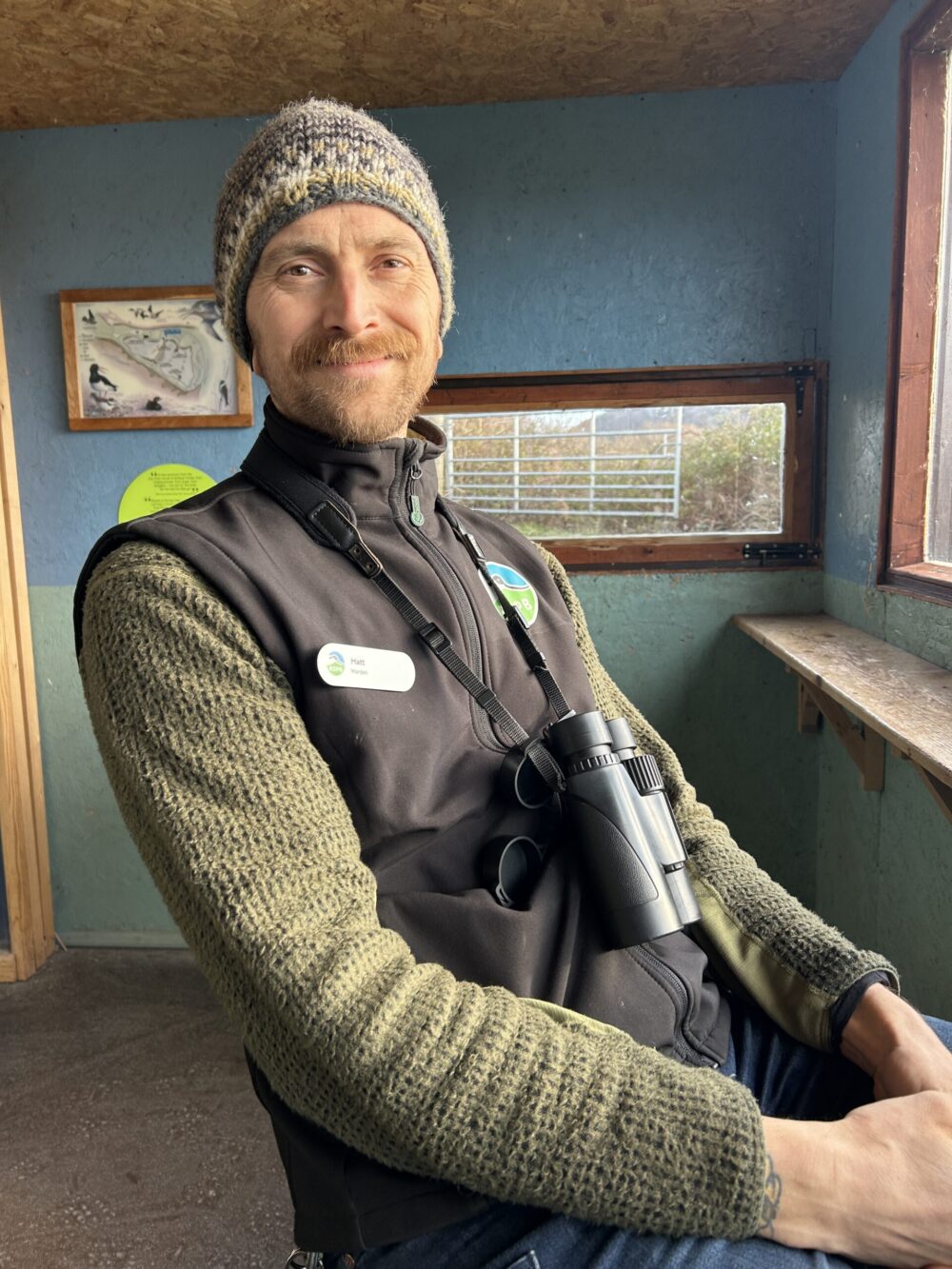
Matt’s day starts with opening up each of the hides around the reserve, when he gets a first chance to note down the birds on site.
He suggests that “The real strength of this reserve is its proximity and accessibility. Often the places to watch wildlife are remote or difficult to get to but this is just off the A55.”
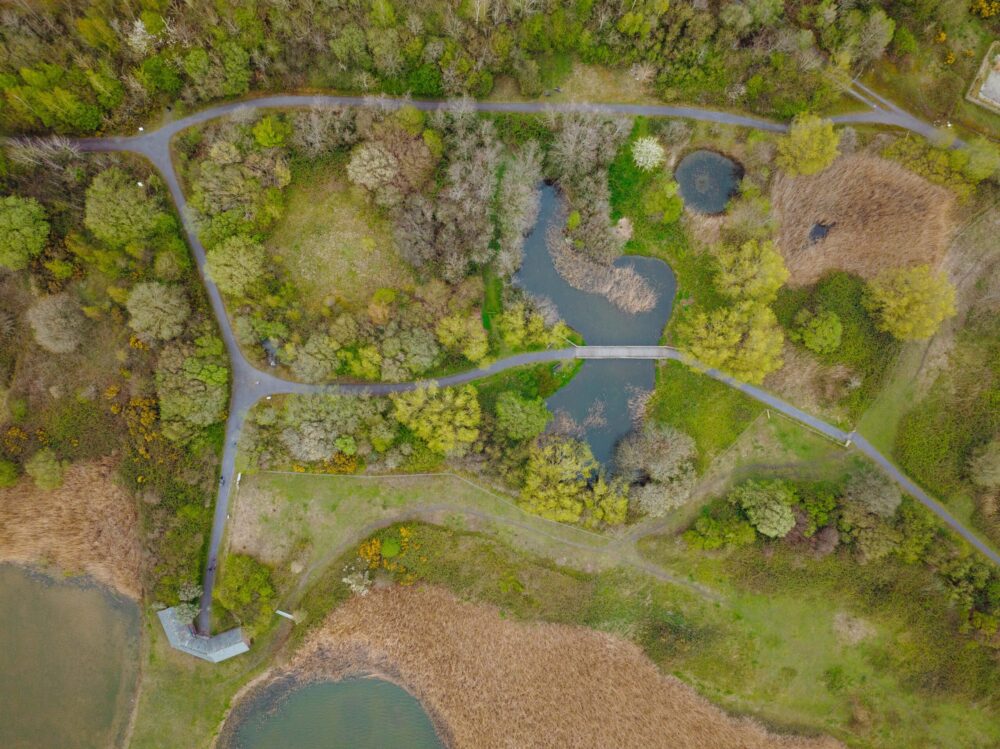
The reserve actually exists because of the A55 road. To ease car congestion and speed traffic flow, the UK Government planned a crossing over – or under – the tidal waters of Conwy estuary.
Controversially, this would involve the destruction of saltmarsh and mudflats near the old railway sheds as well as necessitating moving thousands of tons of limestone from Penmaenmawr quarries to create a new river wall. Valuable wildlife habitat would be lost.
The solution was to create the first immersed tube tunnel in the UK – partly to address conservation concerns and partly because a conventional bridge would have spoilt the view of Edward I’s Conwy Castle.
It was a remarkable feat of civil engineering. The prefabricated tunnel was built in a dry dock north of Conwy, a site used in 1944 to build part of the Mulberry Harbour deployed by the Allies for the D-Day landing.
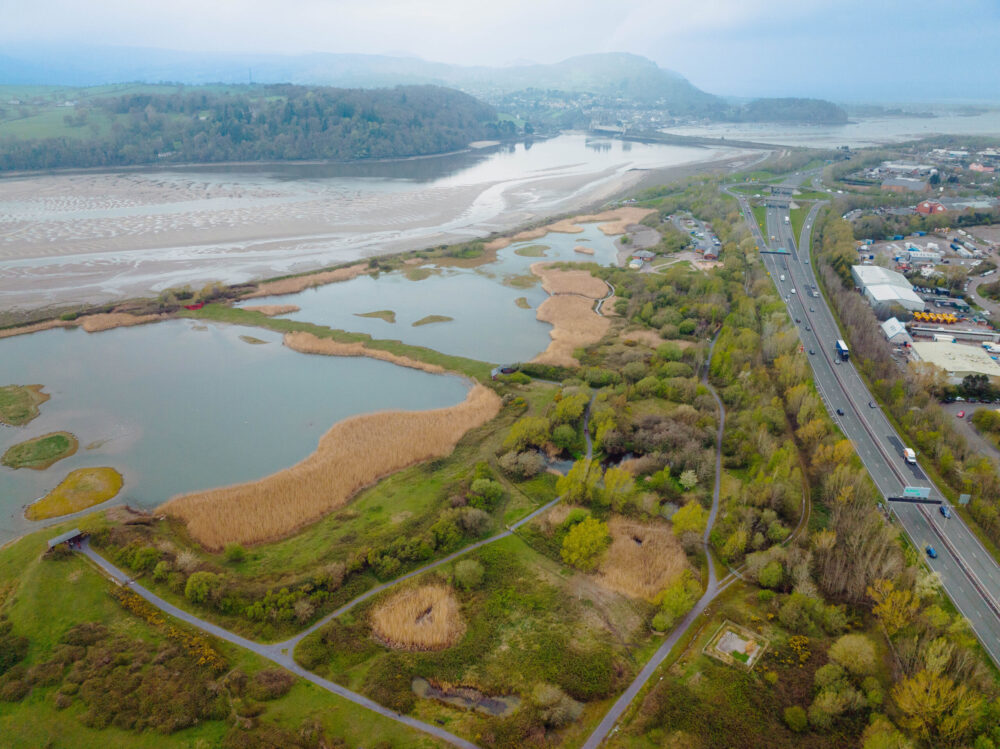
The main railway line had to be moved and railway sheds demolished. As a consequence the road between Llandudno Junction and the RSPB reserve, Ffordd G6 is probably the only road in the country named after a railway shed.
Using the huge suction dredger, Orion, three million tonnes of silt and mud from the estuary was sucked out to create a trench, into which each of six sections of tunnel, towed by Dutch barges, was lowered, thus creating a mile-long tunnel under the estuary.
Finally sixty divers then worked around the clock to seal the tunnel at the Morfa Conwy. Then that sludgy mixture of mud and silt was then landscaped to an RSPB design to create the lagoons and islands you see today.
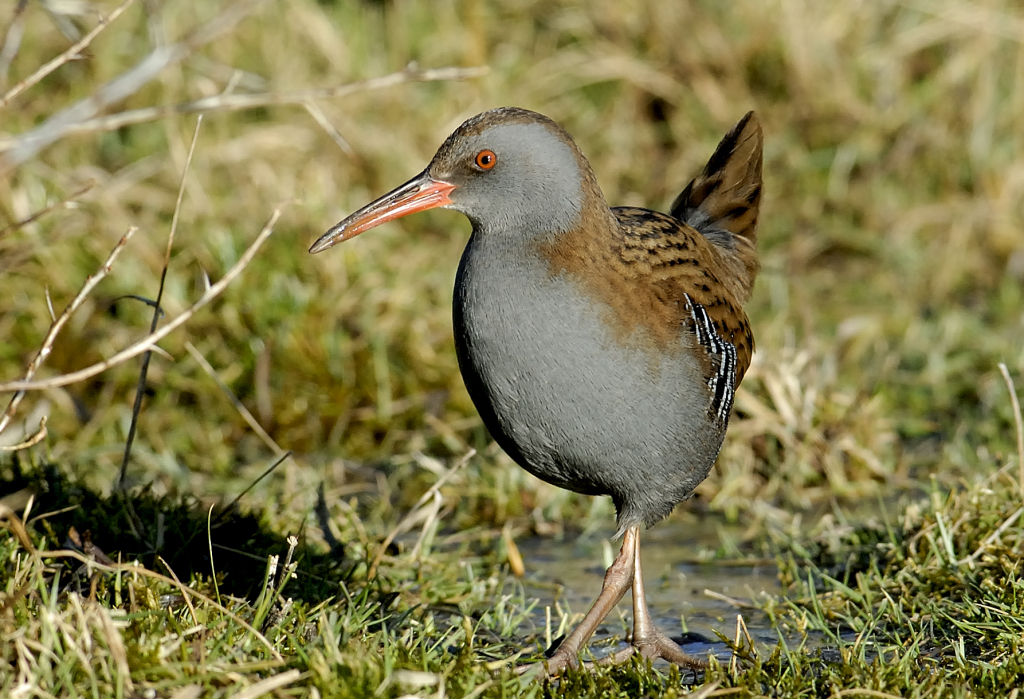
Some birdwatchers come here because it’s one of the most dependable places to see water rails, as Jonni Price, the reserve’s Visitor Experience Manager explains, just after we’ve spotted not just one but two birds of this notoriously secretive species moving across an area of recently cleared ground.
Even if you don’t see one the sound of a water rail is quite something else, often compared with a pig squealing. Which is not something you’d expect in the depths of a reedbed.
“We do get birders who come for things such as water rail but it’s also a place for people to make their first connections with nature. That proximity means people see things close up, to actually see it’s a tufted duck not just a duck.
“If that sparks a connection, whether it’s a child that’s just done the quiz sheet on the trail on the way round, or an elderly person whose never seen a pochard at such close range, for most of us here that’s the main goal really.”
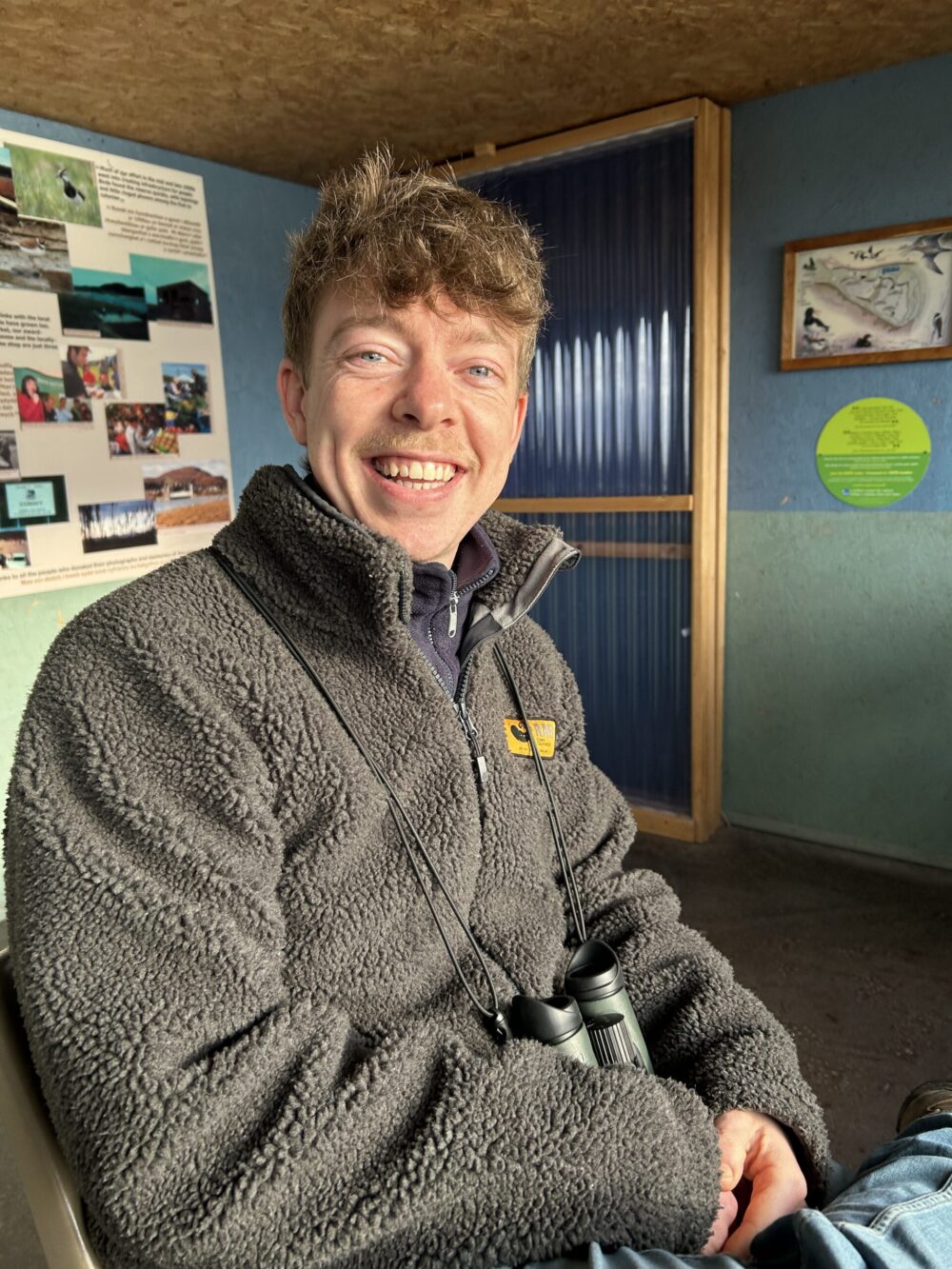
To this end the reserve hosts a range of activities throughout the year, including guided wildlife walks, tai chi workshops and a monthly farmers’ market.
On the 24th January they’ll be playing their part in the Big Garden Birdwatch, with guides on hand near the bird feeders to help people brush up on their garden bird identification.
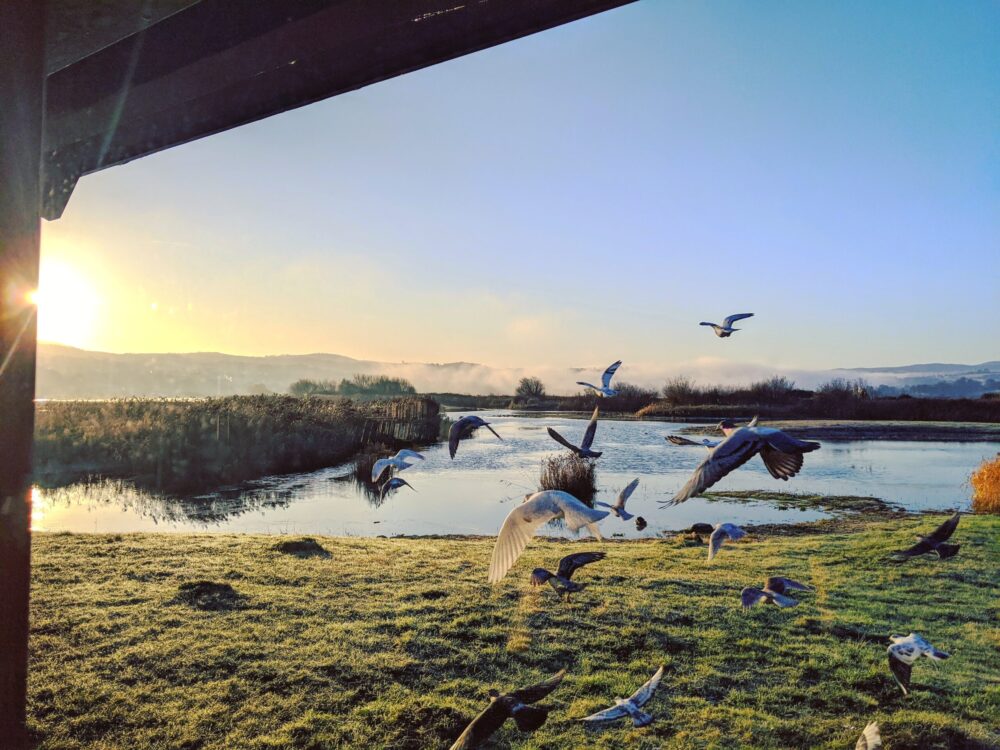
Jonni informs me that “The reserve is entirely accessible for wheelchair users, parents with kids in buggies and we hire mobility scooters at the cafe.
“We’ve had people who used to be into birdwatching but might have had an accident or their health has deteriorated and they can’t get out into the countryside as easily as they used to be able to. So all of the hides are designed with spaces for chairs and mobility scooters.”
All the activity at RSPB Conwy continues well over a century of the RSPB’s work protecting birds, wildlife and habitats in Wales. This started in 1911 with a Mr and Mrs Jones carrying out a small project to look after roseate terns on the island of Llanddwyn, off the coast of Anglesey in North Wales.
In 1948 the RSPB bought its first nature reserve – Grassholm Island in Pembrokeshire, to protect the third largest gannet colony in the UK.
Conwy is now one of eighteen RSPB reserves in Wales, from South Stack on Anglesey in the north west to the Newport Wetlands in the south east, collectively visited by some 350,000 people each year.
As we sit in the hide there’s a panoply of waterbirds right in front of us, with ducks such as shovelers, sifting the water with their wide, spatulate bills, and perky tufted ducks plopping under water every now and then.
They are joined by a pair of red-breasted mergansers, part of the sawbill family, so-named because their bills have rows of little serrations which help secure any wriggling fish they’ve caught.
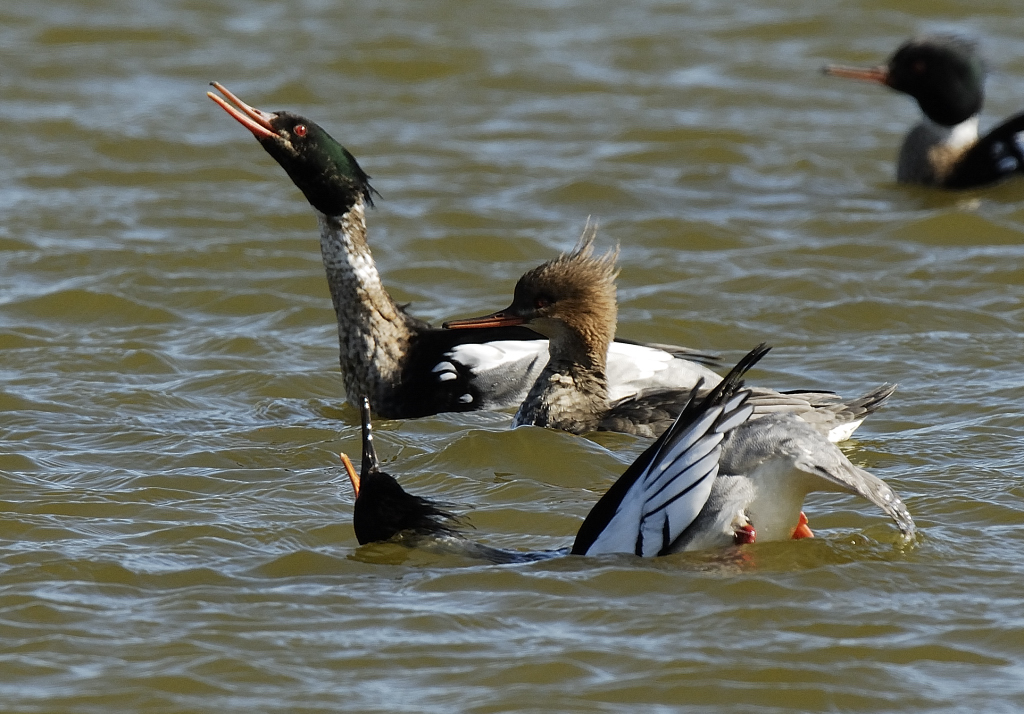
The male and female mergansers are notably different: the male has a Sex Pistols-era spiky punk double crest, coloured a deep bottle green, while the female’s head is brown
So not only can you identify a species but you can also sex them in the field, and currently they have fifteen individual birds on the reserve.
Jonni tells me about the way the mergansers display in the spring, which involves lots of bowing, with chins jutting foward and heads held up, forming a sort of V shape: “They seem to bend in half,” says Jonni, with a warm chuckle.
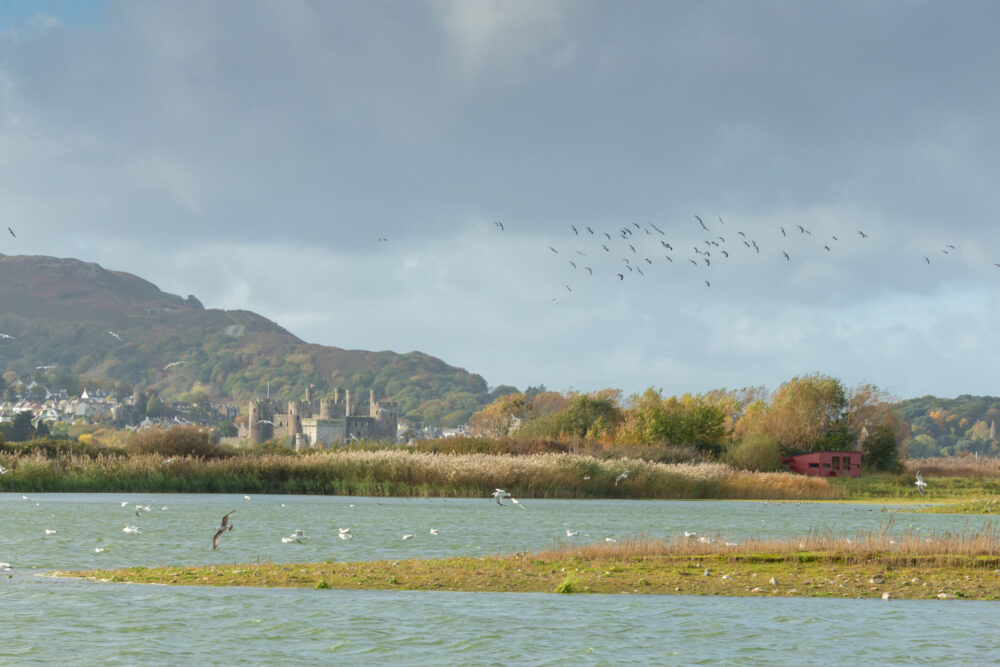
I am fortunate to have timed my visit to coincide with high tide, which means waders such as oystercatchers and curlews have flown in to the reserve, to settle on islands in the lagoons.
Matt explains that they have over 250 curlew wintering on the estuary; “They’ll come onto the islands here at high tide but we’re also engaged in projects to support their breeding in the upland habitat of Wales, where they’re not doing so well.
“In this hide you can tell the story of the species – point to the mountains and say that’s where they’re breeding and say here you can see them in winter and also explain about some of the problems they face.”
One of the joys of working on or visiting the reserve is charting the changes of the seasons. Matt very much enjoys the lengthening days as winter ends, anticipating: “The dawn chorus in spring, when we’re emerging from winter, when the resident species start singing then to be joined by migratory ones. We get loads of different warbler species in the scrub, grassland areas and reeds – whitethroats, lesser whitethroats, grasshopper warbler occasionally, sedge and reed warblers, blackcaps. Chiffchaffs are some of the commonest and when you hear them first you think great, they’ve come back.
“Summer then comes along and we have lots of breeding wildfowl and waders. We had lapwing breeding last year for the first time in about ten years: we have oystercatcher, little grebes, coots and various ducks.”
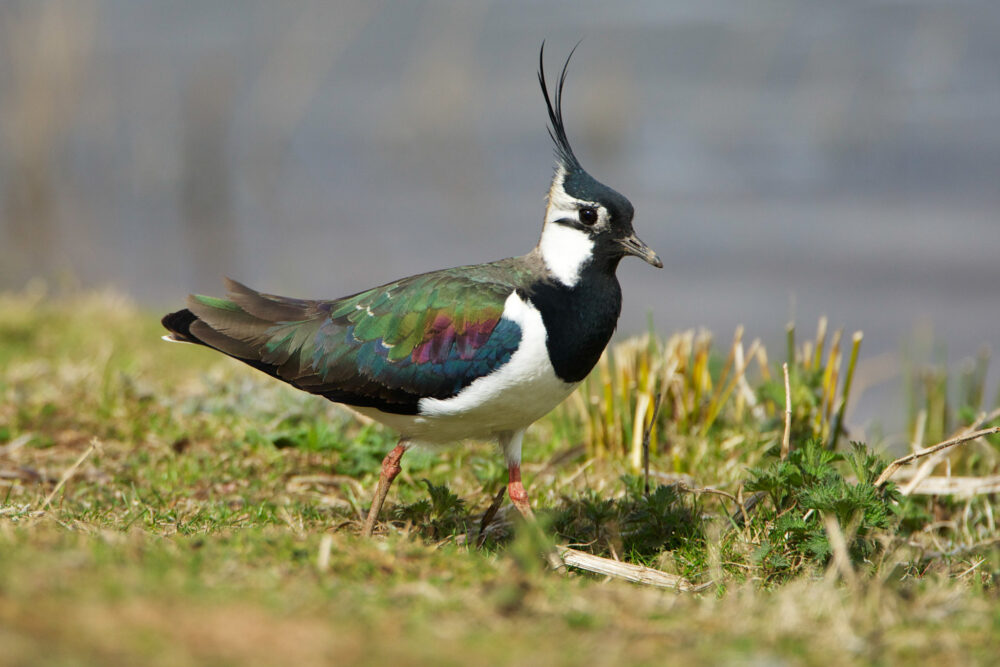
Jonny then explains what happens as summer yields to autumn. “At the end of the summer we see our summer migrants disappear and autumn’s quite good for waders.
“The levels of the lagoons drop naturally anyway, exposing mud for them. This year, because it was so dry we had an exceptional year for waders. We had five or six curlew sandpiper in this corner, really close. We had redshank and spotted redshank coming through. The people change too, fewer families and more birders.”
As RSPB Conwy is a wetland nature reserve it follows that managing the water levels is one of the pivotal management tasks.
Climate change affects this, as Matt explains, pointing out that last summer “Was exceptionally hot and dry, causing tons of evaporation. We’re able to pump water into the freshwater lagoons from Afon Ganol, which runs to east of the reserve. We’ve had some issues with the pump, so we haven’t been able to move as much water as we would have liked, which explains why the water levels are so low.”
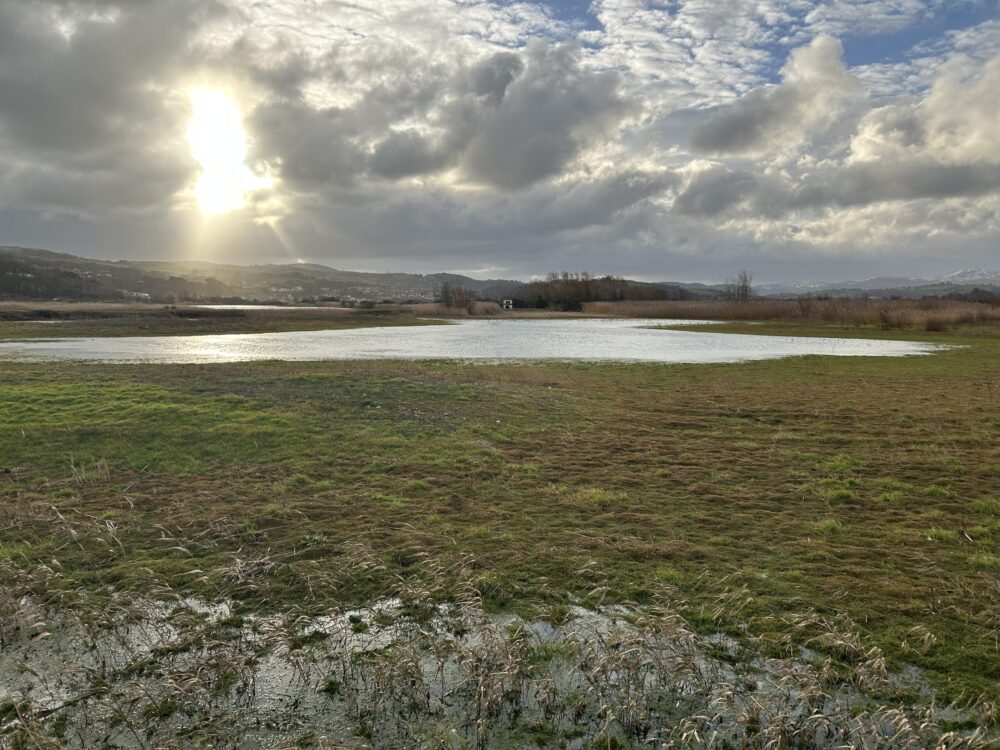
Another problem to cause a warden a headache is the aggressive presence of a non-native invasive plant species, namely Australian swamp stonecrop or New Zealand pigmyweed.
Matt points out a mossy, green carpet of growth on one of the islands, explaining how it was introduced in the UK in the 1920s as an ornamental plant in ponds, before escaping. It can completely colonises bare ground and can reproduce from tiny fragments, a bit like Japanese knotweed. “It’s now basically everywhere at the reserve, forming these dense mats which outcompete native flora and it also covers over bare mud where waders could be feeding.”
While herbicides can help defeat the plant, the RSPB has a policy to use these as little as possible, so a more effective way of managing it as Conwy might be mechanical removal.
Matt suggests that means, “basically getting in diggers at the optimal time and scraping back the topsoil. If you cover the plant with black plastic or something opaque it’ll kill the plant off and the soil will be safe to use again.”
The challenge is doing that at sufficient a scale to leave large muddy areas for wading birds to use. They’re therefore collaborating with an organisation called CABI, a world leader in nature-based solutions, including biological control solutions that minimize environmental harms.
Together they’re trialling a biological control mite which doesn’t kill the plant but forms a gall on the plant which interferes with its reproduction. So a combination of scraping and mechanical removal and introducing the mites might be a way of controlling things in the future.
As I walk around the two mile trail around the reserve there is plenty to see. A bulky buzzard settles heavily on a tree branch. I get close up views of a teal, our smallest native duck, sufficient to properly appreciate its fine colouration of grey, chestnut and green, which is often lost when the bird is just a spot in the distance.
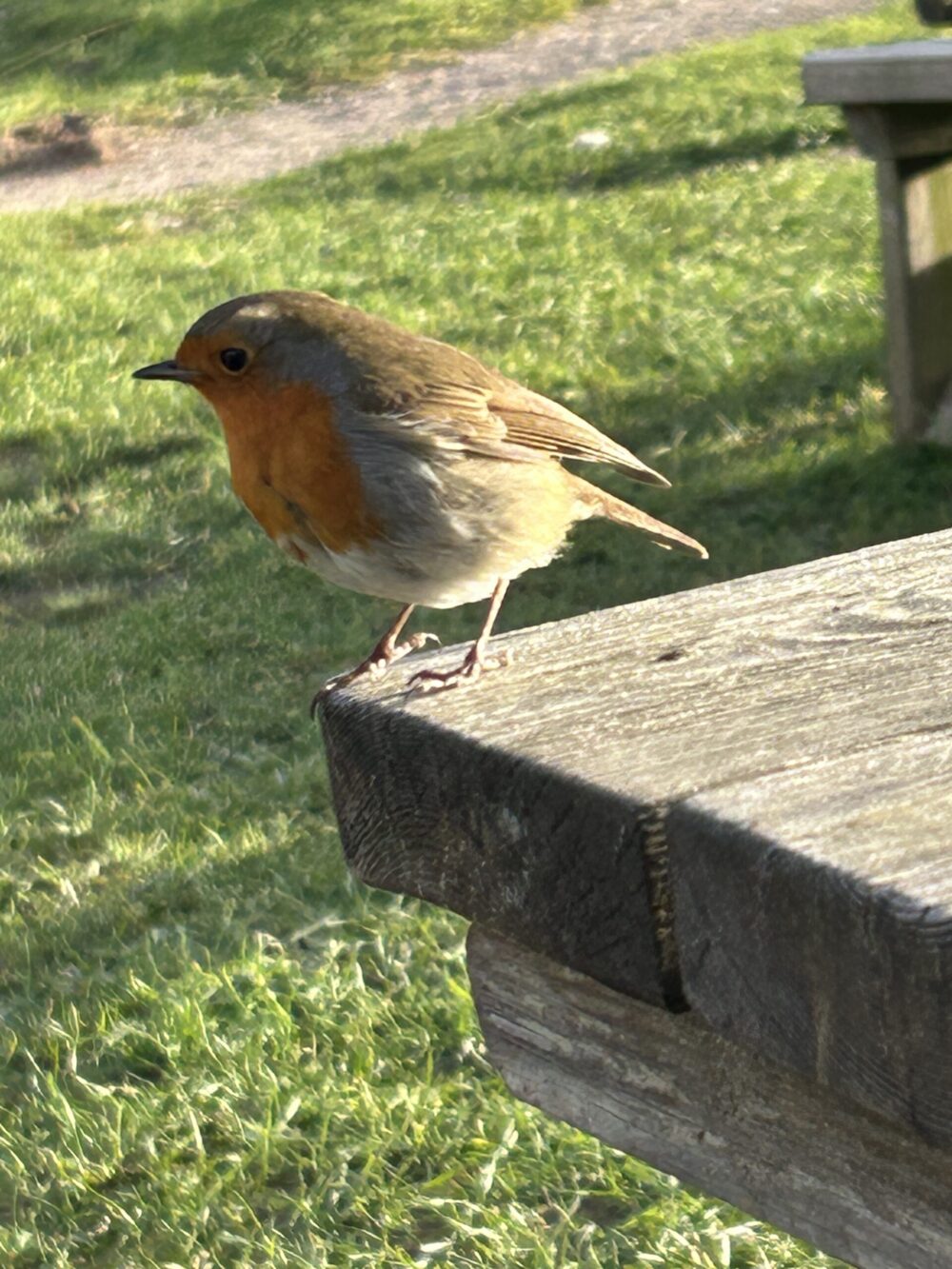
The walk is punctuated by brave and inquisitive robins, their red breasts puffed out against the cold.
Alice Cousins, visitor experience assistant at Conwy explained what she hopes people get out of visiting this special place. “We are a nature reserve, so hopefully people can see some wildlife but it’s also quite a people reserve, so connections are important. I’ve got to know locals, I’ve seen children growing up over the six years I’ve been here. It’s amazing to see – people finding themselves immersed in the reedbeds or coming to see the robins we have here and having little interactions with them. I feel the sensory experience is important and the mindfulness side of things as well as coming to birdwatch.”
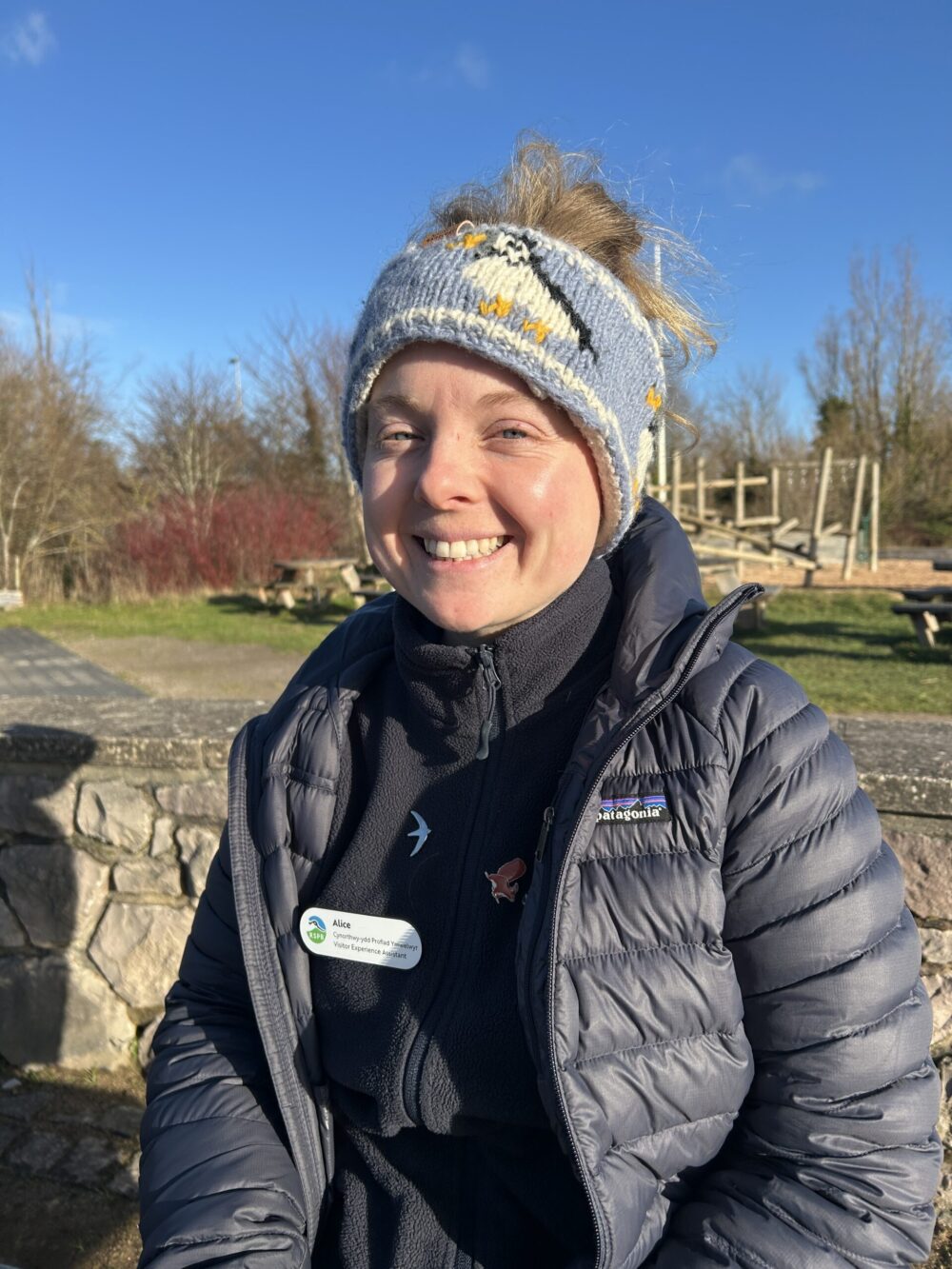
When Alice isn’t on the reserve she goes on a busman’s holiday, volunteering on Skomer island off the coast of Pembrokeshire. “When I’m not here at Conwy I still want to be surrounded by wildlife in the outdoors because that’s helped me, as I struggle with anxiety quite a lot.
“This is my happy place, it really calms my mind down. I do like sitting on the edge of the estuary, looking out over the saltmarsh, with views of the Carneddau range and Conwy castle. I can immerse myself in it, I can hear the call of the curlew, the wigeon whistling, the ducks, the waders – I like being immersed in this space with that salty smell of the marsh and all the estuary sounds and I can feel the mountains behind. It’s just beautiful.”
 Jon Gower is Transport for Wales’ writer-in-residence. He will be travelling the breadth and length of the country over the course of a year, reporting on his travels and gathering material for The Great Book of Wales, to be published by the H’mm Foundation in late 2026.
The nearest train station to RSPB Conwy is Llandudno Junction, half a mile from the reserve.
The quickest route to the reserve from here is to turn left from the station, take the first left down Conway Road and just before the road bridge (Ffordd 6G), take the footpath to the right, then turn left onto the bridge; cross the road to pavement and continue south past Tesco and Cineworld to the A55 roundabout. The reserve is on the south side of the roundabout and is signposted.
A more enjoyable, but slightly longer walk, takes just over a mile from the train station. Head left down Conway Road, go under the road bridge and continue until you reach the steps up to the flyover. Walk towards Conwy castle, taking the next steps down just before the bridge into Conwy town. Turn right at the bottom of the steps and go back on yourself under the bridge. This will take you over the railway bridge and on to the estuary path. Follow this until you reach the reserve and enter via the car park entrance.
Support our Nation today
For the price of a cup of coffee a month you can help us create an independent, not-for-profit, national news service for the people of Wales, by the people of Wales.



Diolch Jon – a lovely article. Your love of birds and your knowledge about them comes through strongly.
One minor blip – the railway line goes beyond Betwsycoed under the Crimea Pass, to Blaenau Ffestiniog!