

Making Tracks: Holyhead/Caergybi
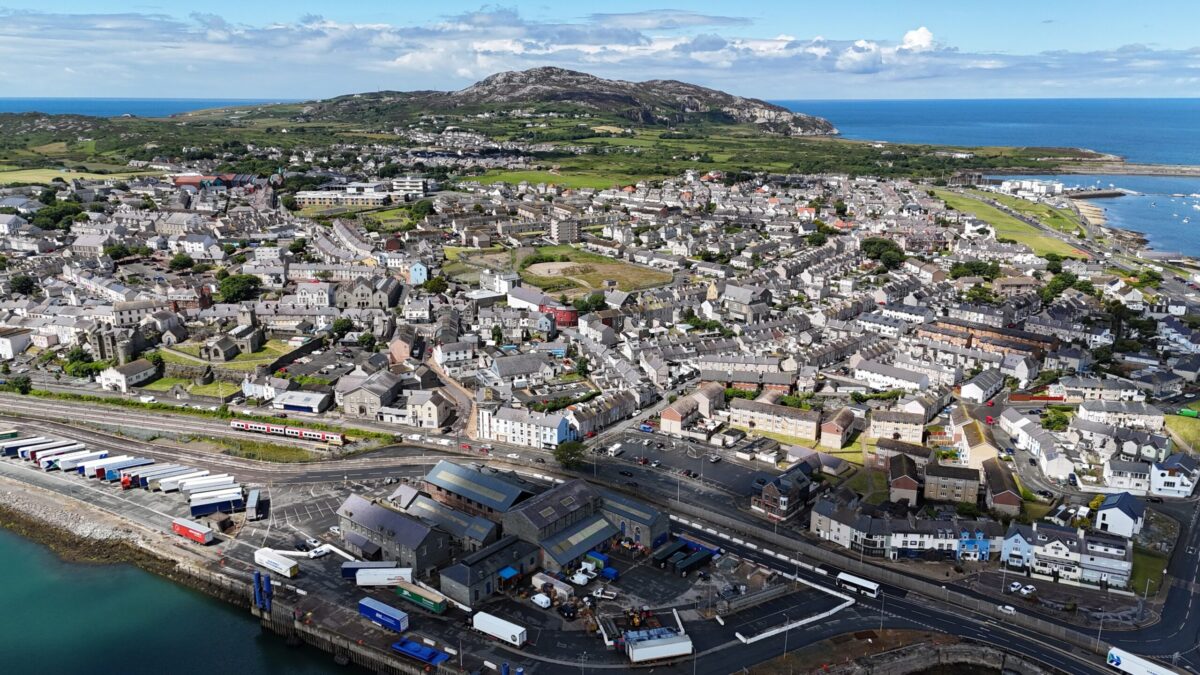
Jon Gower visits Holyhead, where ferries, railways and lifeboats remain woven into the fabric of everyday life.
Long before Doctor Who adventured through time in his trusty Tardis there was a fascinating version of time travel in Holyhead.
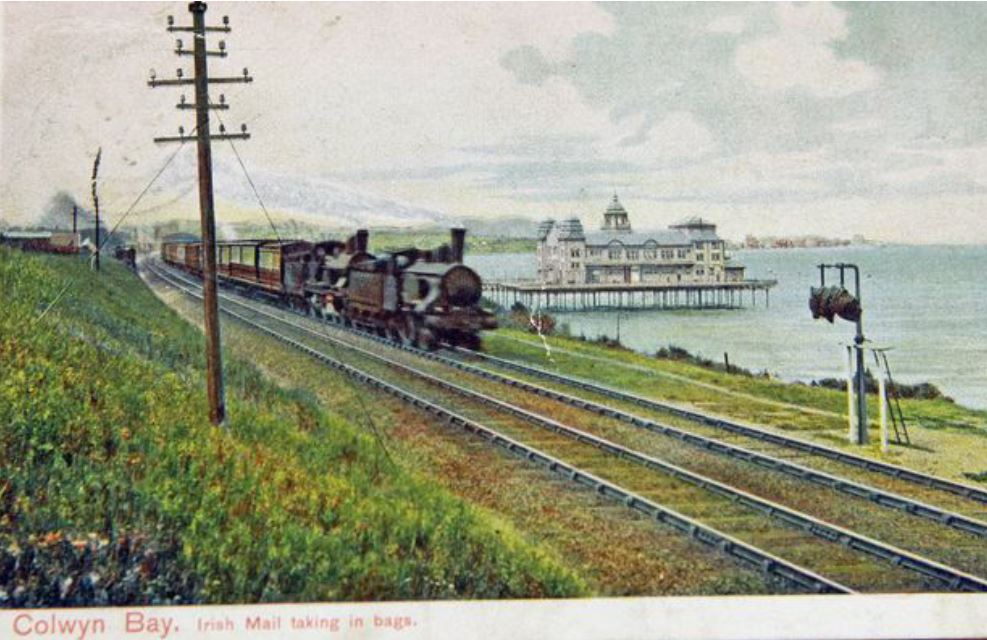
Indeed, time itself travelled here. From 1848 onward, when the Irish Mail train would leave London’s Euston station, the guard would be handed a watch in a leather case by a messenger from the Post Office.
The train’s arrivals, departures, and all relevant station clocks were re-set and strictly observed to Greenwich Mean Time, as shown on the watch.
When it arrived in Holyhead the guard would give it to an official representative crossing the Irish Sea to Dun Laoghaire, then known as Kingstown, which would then be returned on a boat coming back.
In this way the time would be carried, quite literally from Greenwich to Dublin to get it them both in synch.
Holyhead has long been an important port town, with much closer connections to Dublin, sixty miles away, than to London, sitting at a distance of three hundred.
There were times when people in Anglesey used to read Irish newspapers and get their fresh bread from Dublin bakeries. And there was a steady traffic in people and ideas, although in the early days the actual traffic could be frustratingly slow.
In 1785 a traveller on the Royal Mail coach from Charing Cross might expect to spend no fewer than 45 hours on the journey. Then there would be the testing journey across the sometimes treacherous patch of Irish Sea known ironically as St George’s Channel between Wales and Ireland.
Luckily developments in technology and boat building eventually made passage swifter. From the early 1800s steamships carried the mail, passengers and livestock and with the rise in marine traffic grew a concomitant need for facilities to repair the hard working vessels. So in 1810 John Rennie built a pier and graving dock in Holyhead where boats could berth safely and be repaired if need be.
There was plenty of work. By the end of the 1830s the City of Dublin Steam Packet Company alone had almost eighty vessels in its fleet.
Other developments, especially in engineering speeded up the travel times. Self-taught Scottish engineer Thomas Telford’s work to improve “The Great Holyhead Road” was the first major civil engineering project in Britain to be directly funded by Parliament.
It included another first, being the world’s first suspension bridge, spanning the Menai Strait. This opened in 1826 and soon thereafter various train companies were running services from London to Dublin via Holyhead: as a result the time it took shrank from four days to forty hours.
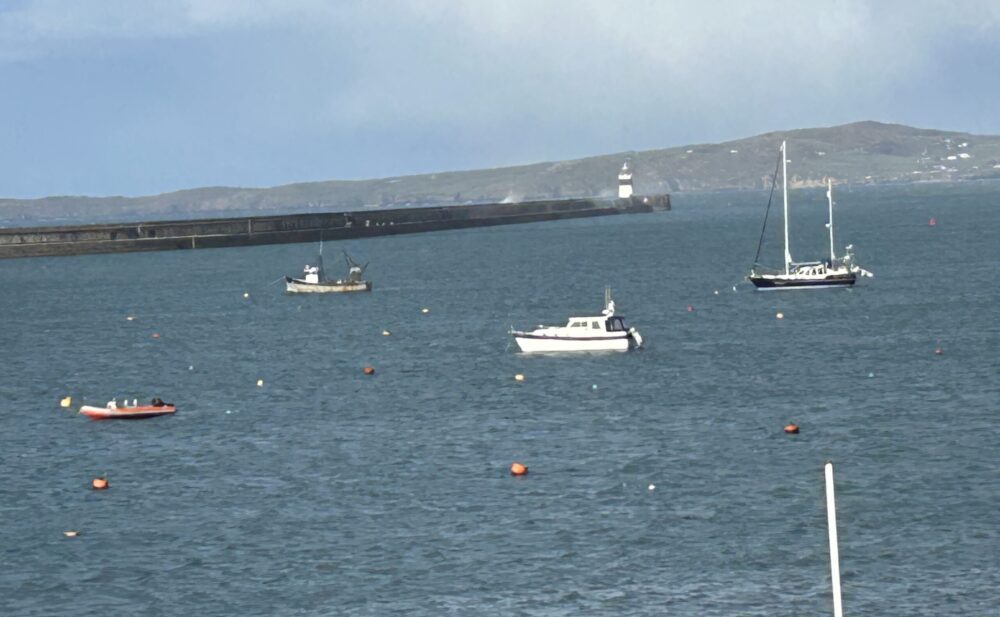
And to increase the shelterage at the port, work on a massive breakwater was started in 1848 and it became, at 1.7 miles long, the longest one in Britain.
It was little wonder that Thomas Jackson’s Visitor’s Guide to Holyhead confidently suggested that the port was ‘formed by Nature to become a great trading community…The bay provides a fine spacious opening, one half sheltered by eternal rocks, and on one side of its entrance, are brilliant lights to guide the mariner.’
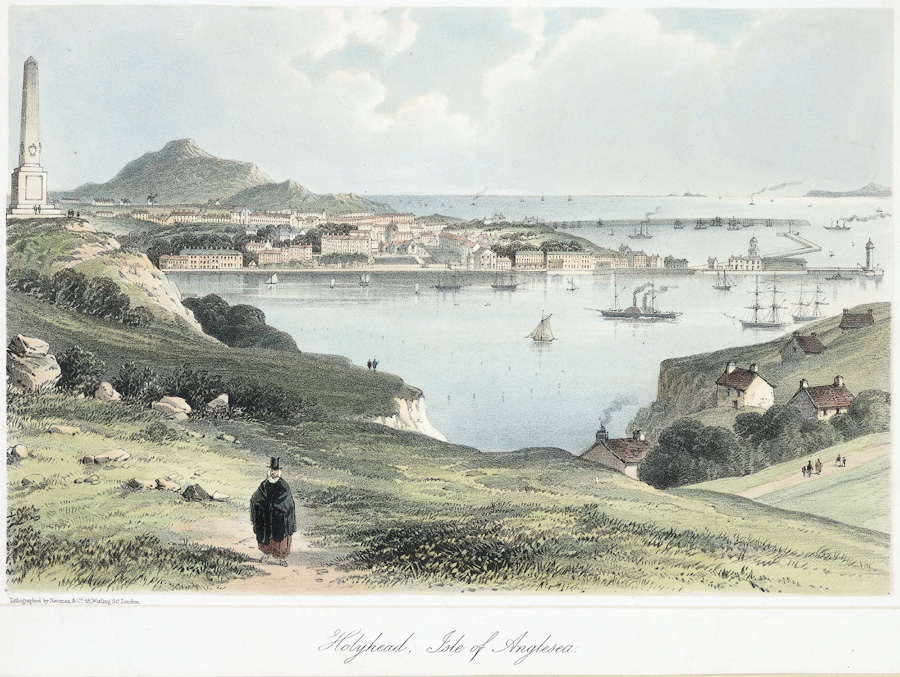
The workers in Holyhead’s Marine Yard long prided themselves on their ability to repair pretty much anything, from torn sails through wrecked rigging to broken boilers.
Gareth Rowland’s book No Problem’s Too Small lists the range of skills which were available on site: ‘Engineers & craftsmen of almost every trade were employed – fitters, boilermakers, shipwrights , electrical engineers, joiners, coppersmiths, blacksmiths, painters, French polishers, cabinet makers, upholsterers, riggers as well as seagoing staff.
The high level and range of skills of the workforce meant that the port and station were self-sufficient in any item that was likely to be needed.’
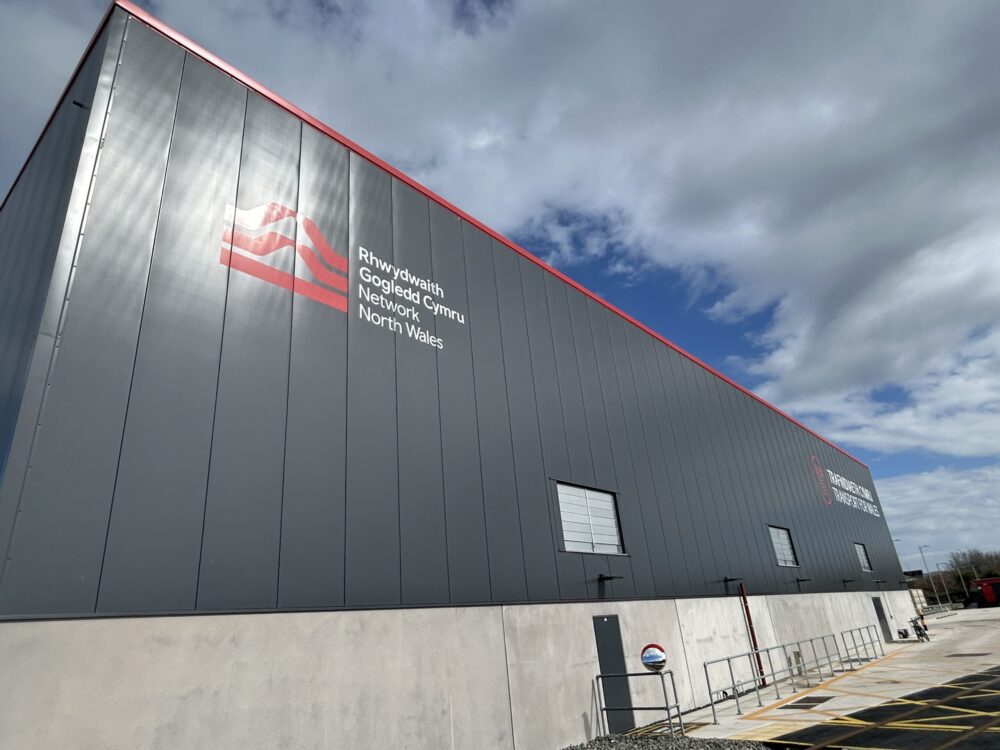
The latest manifestation of Holyhead’s long tradition of engineering and repair is Transport for Wales’ automatic wheel lathe, sited not far from the passenger station.
Arfon Jones, known to all as Tom, was involved in delivering the project and was a natural fit. ‘I’m the son of a fitter, my uncle owned a garage on Anglesey, you know, I’ve been around cars, trucks, tractors and machinery all my life really.’
He also spent his early years under the tutelage of men connected with both the sea and with steam. ‘We had a fitter here who used to be employed at the Marine Yard. He used to tell us stories about standing inside of a cylinder on top of a piston and not being able to climb out.’
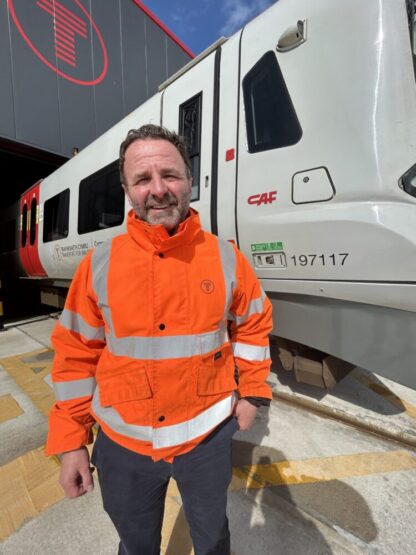
When Tom started work twenty-five years ago his boss was an old steam engine apprentice. ‘I had good schooling off him to be honest. He was a railway man through and through, and he said to me when I arrived here, I’m going to make a railway man out of you, which I think he managed to do.
When I started here we were told “that’s a sleeper, that’s a chair, this is a fish plate, how many chains there are in a mile” and all this type of stuff. It’s not just trains that you need to know about, you need to know about the actual railway, how it works.’
The railways and railwaymen helped transform Holyhead. The arrival of the first train on 31st March, 1848 was a highlight in its history: the account of it in Holyhead: The Story of a Port fair vibrates with excitement. ‘It had only travelled from Llanfair for the Tubular Bridge over the Straits (or the Britannia Bridge as it was called) had not been completed, but there must have been a feeling in many hearts that a new age was beginning – the old packet port had become a railway town.
The passengers on the first train were the engineers, managers, supervisors, engaged on the new railway project, and the gentry of the County. The V.I.Ps had the honour to do the first trip, but the public generally enjoyed several free trips on the following Saturday, no doubt full of a sense of adventure; the question “Have you been on the train?” would have been asked many times in the weeks following the first arrival.
To begin with the passengers were carried by omnibus to the pier but by 1856 the railway line had been extended to the pier. The Holyhead station itself was an ‘extensive and commodious one, connected with which are Refreshment Rooms, with Waiting and Dressing Rooms attached, a Telegraph Office and a well-furnished Book Room, the whole fitted up on a most splendid scale, well arranged and in excellent order, and plentifully supplied with luxurious food.’
There were other key development, too, with cattle sheds and engine sheds erected in the part of the town known as the Old Station while no fewer than 800 men were employed in deepening the harbour and constructing a new quay.
Since then there have developments on Anglesey involving not only land and sea but the sky as well. Some of the staff working at Holyhead for TfW, Tom Jones included, previously worked at RAF Valley.
He started there in 1997, first as a line mechanic and later a fitter, working on T1 Hawk jets for six years before moving to the Holyhead depot in 2002. Recently he’s been working on the team tasked with introducing new trains in Wales as well as working on the project to house the wheel lathe.
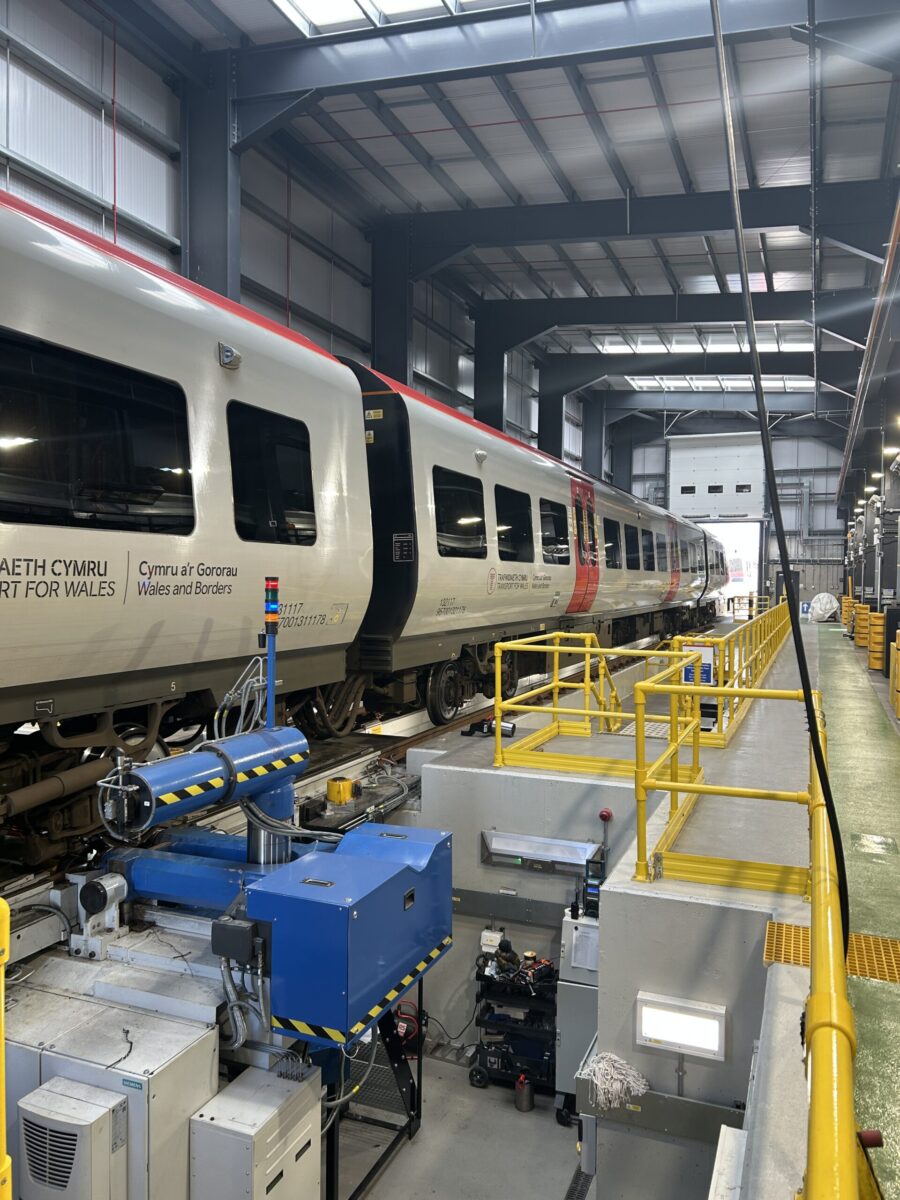
Tom explains that the automatic wheel-lathe reprofiles worn or damaged train wheels – ones that have cavities or have become a little elongated or flat. Additionally, they service trains overnight. ‘We fuel them, empty the effluent tanks, check the water and inspect the outside – the body sides, bogies, the primary and secondary suspension.
We’ll also go on the TCMS, a train management system, a computer on the train, which logs faults. The guys can see if there are any faults, then rectify them.’
By having this development in Holyhead, it obviates the need to send trains to places such as Canton in Cardiff for maintenance and repair. Costing £10.5 million, it’s part of the Welsh Government’s Network North Wales initiative and will operate seven days a week. This is intended to speed up turnaround times, improve the availability of trains, and help reduce service disruptions, which is particularly important during the autumn months when falling leaves can affect rail traction.
Tom Jones helped oversee the project and therefore derives a lot of personal pleasure in seeing the job successfully completed. ‘The investment that’s gone in is kind of amazing. You know, we’ve taken some old sidings out, put new sidings in. We’ve given people that have the skills, jobs in a very good industry.’
One of those people is Tom Innes, a maintenance technician from Llangefni. ‘I’m local to the island but I had to move away to work. But I’ve come back for this job. Getting the chance to come home was really important, working for a really good company.’
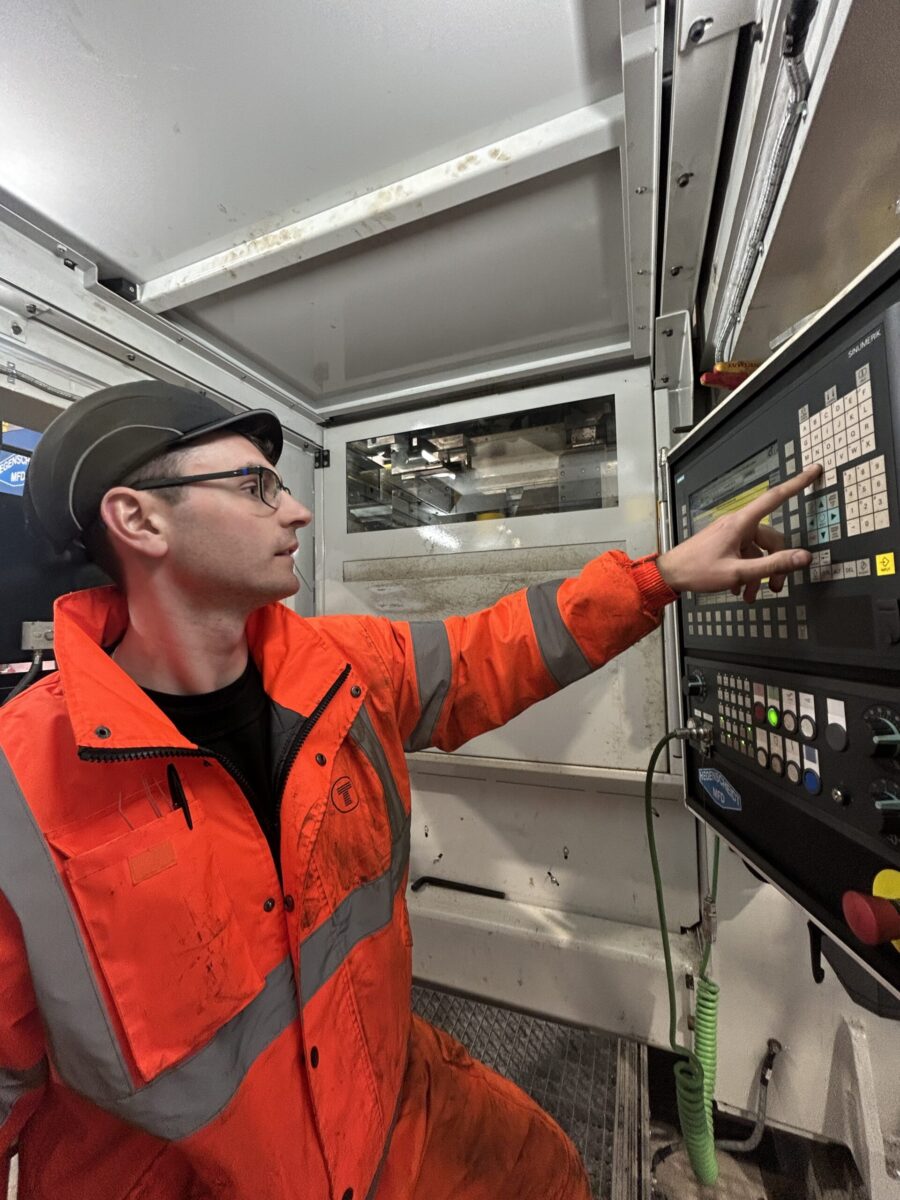
Tom returned to Wales to work some two years ago. ‘I went away to Australia, worked on aircraft over there for a year, just to make a bit of money, and then came back. I’ve always wanted to have a stable career at home. When I came back there were jobs here so I thought I’d give it a go, applied and I was one of the lucky ones who got the job. I’m a local boy, I love living in Wales, am proud to be Welsh and now have a well-rewarded job working with a good bunch of lads as well.’
Tom knows there’s also the pride of travelling on trains knowing they have played their part. ‘I just came back from Cardiff, two days ago, after going on a course. It’s quite smart going down on a train that you work on every day at work so there’s definitely a lot of pride in that.’
I remember a barman at the Boat House Hotel in Holyhead once telling me that everyone in the town was connected to the sea in some way. It seemed a bit far-fetched, that was until he told me he was related to coxswain William Owen, who was awarded the RNLI Gold Medal. Then each of the other customers detailed their own connections with the sea – crewing ships, working as fishermen or crossing the Irish Sea on the ferries.
That maritime connection is evident among the people working at the Transport for Wales wheel lathe, too. Both of maintenance technician Reece Jones’ grandfathers worked on the crossings from Holyhead to Dublin and Belfast, one a chief steward and the other a captain of the Hibernia.
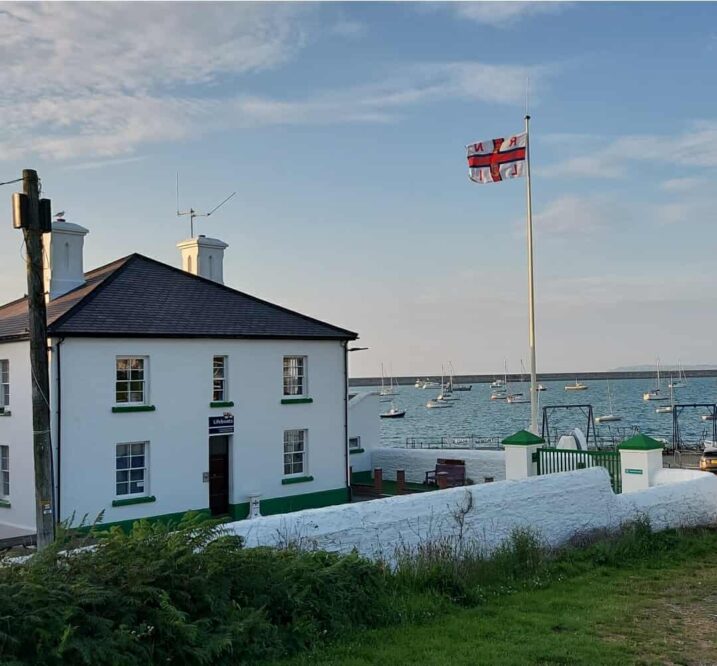
Reece himself has a very strong connection with the sea, one of three men who work at the wheel lathe who also volunteer with the Holyhead lifeboat – one the oldest RNLI stations in Wales, which has garnered over 70 awards for gallantry.
As a station it’s less busy than it used to be, this in great measure due to the success of messaging about sea safety. But they still get call outs from marine traffic, heavy fishing vessels, cruise ships and even, once a narrow boat trying to cross the Irish Sea in all weathers.
One of the most memorable days was only Reece’s second call out as a crew member. A lone sailor circumnavigating the UK became so seasick he had a near-fatal heart attack and had to be airlifted off his boat in the middle of the Irish Sea. Some months later he turned up at the station in the company of his very young daughter to thank the crew for saving his life.
Reece has to balance his workload at TfW with his commitments to volunteering on the RNLI lifeboat crew. He finds the same sort of camaraderie in work. ‘We are like a second family here. We spend so much time with each other, you know, doing night shifts and longer day shifts and there are a lot of families in the depot, friends and family really.
We spend just as much time outside of here as we do in and we all know people that use the railway coming in and out of Holyhead, so it’s our duty really to deliver the best possible service for them.’
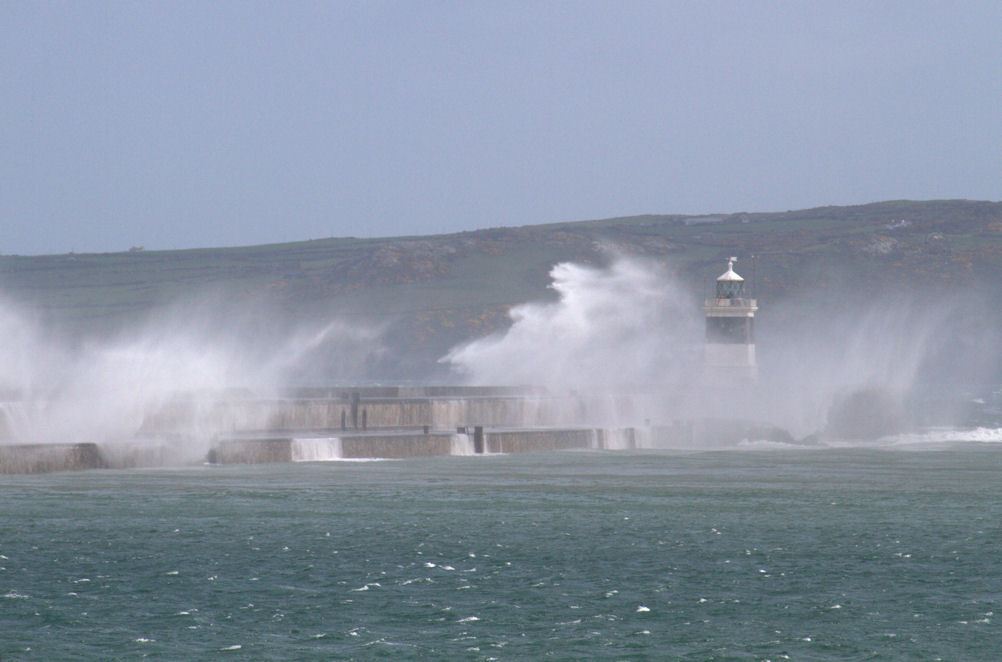
The lifeboat, meanwhile, provides a very different service, with no timetable at all. Reese recalls one very stormy evening most vividly. ‘The pagers went off about nine o ‘clock in the evening. Obviously, I knew the weather conditions but also that any weather, any time we’ve got to go and the call out was to save our own lifeboat, which luckily enough we did. It was a bit of a hairy one and we were only what, 20 metres out in force 10 winds gusting up to a force 12. It was a ride.’
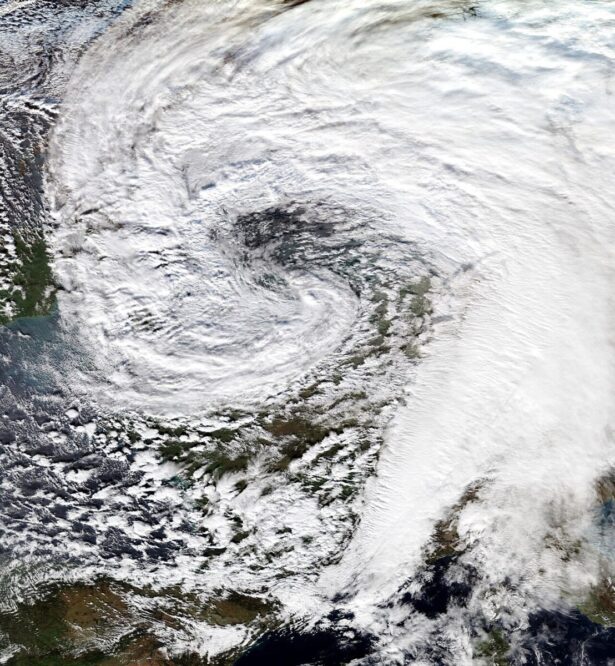
Such storms have recently left a trail of damage in their wake. Following rare red weather warnings in December 2024, the cyclonic winds of Storm Darragh shut both berthing terminals in Holyhead port.
Reece tells me ‘It had a big impact on the town but we try and get on with it the best we can and make a way forward for ourselves.
‘They’ve got the Freeport status here now. That’s only going to better the town isn’t it and better Anglesey as a whole, careers-wise? So, I think in the next five to ten years the future is looking quite bright for the island.’

Jon Gower is Transport for Wales’ writer-in-residence. He will be travelling the breadth and length of the country over the course of a year, reporting on his travels and gathering material for The Great Book of Wales, to be published by the H’mm Foundation in late 2026.
Support our Nation today
For the price of a cup of coffee a month you can help us create an independent, not-for-profit, national news service for the people of Wales, by the people of Wales.
Get more trusted Welsh news
Choose Nation.Cymru as a preferred source in Google News to see more of our journalism.



TfW need to market the train stations better.
Two years ago I travelled TfW Crewe to Rhyl, walked the Coastal path for 90 minutes, had a coffee, bought a pair of trainers and got back to Crewe mid-afternoon.
Rhyl train station should be renamed ‘Rhyl for the Wales Coastal Path.’
Port Talbot Parkway to cycle to Afan Argoed etc.