

Making Tracks: Llanbedr and Tywyn
Jon Gower reads the oldest inscription in the Welsh language and seeks out standing stones with an artist who celebrates them in paint.
The standing stones or meini hirion of Wales are some of the most evocative markers in the landscape with some individual menhirs standing up to 13 feet (4m) high.
Some stand alone and some as groups, such as the sixteen stones of Gors Fawr in the Preseli range or the circle of twenty stones called Cerrig Duon near the source of the river Tawe.
Singularly and collectively they offer evidence of Bronze Age settlement, along with suggestions of ritual on high land, especially where they coincide with burial cairns.
Their actual purpose is lost in the soupy mists of the Celtic past: they might have been astrological alignments, territorial boundaries, ritual posts or simply way markers, showing routes among the moor-grass.
The deteriorating climate of the late Bronze Age and early Iron Age forced the abandonment of regions that had once been fertile so while standing stones are evocative portals into the past, they also mark ghost settlements, where the earliest Welsh farmers and settlers of the land put down their axes and early tools and headed elsewhere.
For many travellers Tywyn is the departure point for the Talyllyn Railway, the first preserved railway in the world, taking passengers on a scenic journey to Nant Gwernol buried deep in the mountains above Abergynolwyn.
Tywyn is also home to one of the most interesting stones in Wales – a fascinating artefact of both the Welsh language as well as history – housed in St Cadfan’s church, half a mile away from the main train station.
Arriving there on a sunlit Saturday morning, there was all the happy, expectant bustle of wedding preparation, but despite the imminent arrival of the groom some of the kind ladies stationed outside the church door permitted a quick peek inside.
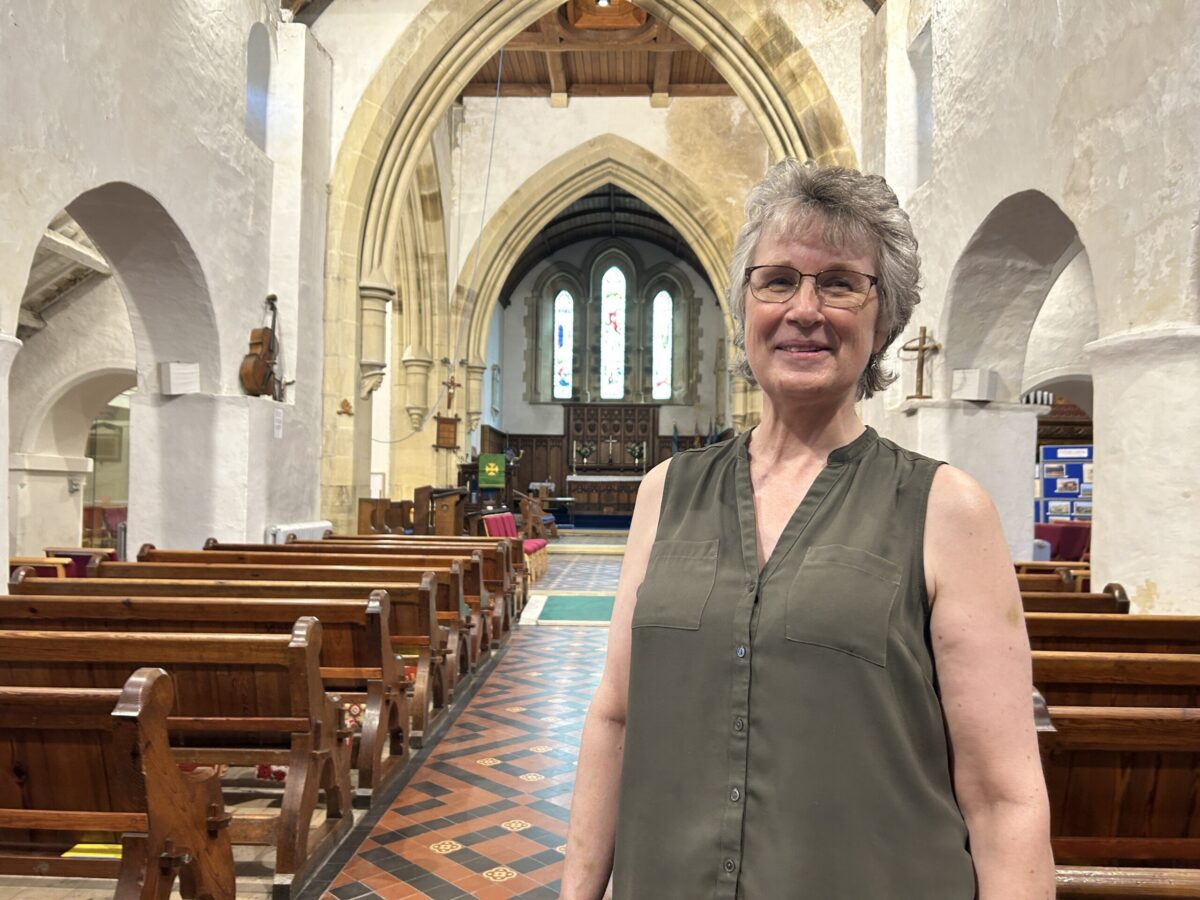
The vicar was making her last-minute preparations but was happy to discuss the church’s history. The Rev. Dr. Ruth Hansford started here February 2018, ‘So I’m still learning Welsh. As a church have we custody of The Cadfan Stone which is inscribed with what is thought to be the oldest Welsh inscription.
“It was obviously a gate post, so it’s had a bit of weathering. It’s unusual because at that time all memorials would have been in Latin. So it’s very unusual that it’s in Welsh. It’s Welsh on all four sides and it actually has an inscription to women, which is also unusual because you wouldn’t normally have a memorial for women at that time. And it is also an inscription that expresses feeling.’
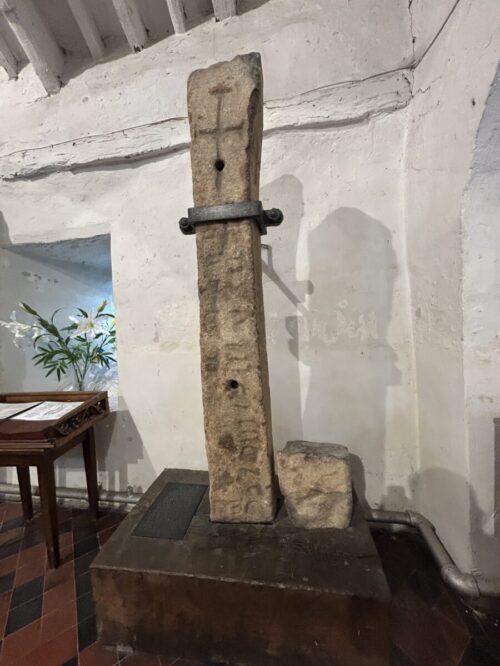
The four sides of the stone feature these words, where modern Welsh numbers are apparent:
Tengr(um)ui cimalted gu(reic) / Adgan // anterunc du But Marciau
‘Tengrumui wedded wife of Adgan (lies) fairly near (or very near) to Bud (and) Marciau (or But Marciau).’
m(ortci)c ar tr(i)
‘The mortal remains of the three’
Cun ben Celen // tricet nitanam
‘Cun woman (or wife of Celyn), a mortal wound remains.’
mort/cic pe/tuar
‘The mortal remains of four’
Saintly isle
Cadfan is a saint particularly associated with Ynys Enlli, Bardsey island, which sits like a gnarly apple just of reach of the rocky arm of the Llŷn peninsula. Rev.
Hansford provides the history. ‘We know that Cadfan established his monastery there but Cadfan came here first. It is thought he came from Brittany with a group of 12 or so. They tended to travel in that number, very biblical. And they set up a clas here, which was an outward-looking monastic community, but looking out to the community. Cadfan came here, we think, about 615 and he established a clas church here.
‘It would have been a wooden church to start with. We know it was burnt down by the Vikings so they then started building a stone church so the nave of the church is still the original 10th to 12th century medieval church. And Cadfan’s colleagues actually went out to different places and established churches in our area.’
Ynys Enlli is famous for being the burial site of 20,000 saints, reflecting its status as a pilgrimage destination: three visits to Enlli – across a stretch of dangerous, wild water called Y Swnt – were equivalent to one visit to Rome. It may be an inflated figure for the number of pilgrims buried on this sacred isle but Rev. Hanford suggests ‘Whether it’s 20,000 saints or not, I think there’s probably a few because everybody believed they would go straight to heaven if they were buried there. So their families would do everything they could to have them buried there.’
Ynys Enlli’s religious significance still shines brightly today, much as does the lighthouse at the southern end of the island. ‘I used to live in Devon before I moved here. When I was walking the dogs the first year I came, in the autumn, when it was dark at half six in the morning, I noticed a light flashing. And from Tywyn promenade, when it is dark, you can see Bardsey Lighthouse.’
Ancient sundial
Carreg Cadfan isn’t the only sacred stone in the church. The vicar points to another ancient artefact. ‘We’ve got the old sundial thought to be part of what the monastery had for timing the hours of day and night. In theory the sun would tell you when you were next meant to pray and worship. It was found in one of the outbuildings at Ynys Maengwyn, just up the road but previously it was a mile marker.
‘Clas communities used to be marked by stones in their boundaries and there’s one near the turning to Hendy, in the hedge. It’s thought that this one was up on Bryn Paderau, The Hill of Prayers. As people came from Aberdyfi, they’d crest the hill, where they would see the church and so say their prayers on reaching the church community.’ Bryn Paderau. Such a beautiful name. A sacred pause on the journey.
Standing in the nave, the very affable vicar of St Cadfan’s is convinced such buildings ‘Connect us with God, a living witness in that although they’re very solid stone, they actually have a life of their own. We know that so many people come into this church during the week to pray, to light a candle, just to be and it witnesses to them of God’s love and presence without any members of the church being here.’
The art of stones
Artist Francesca Jones, known as Sesga, often takes standing stones as the subjects of her paintings. She sets out from her home in Gellilydan, enjoying the challenges of finding them in often remote spots. We locate one near the main road out of Tywyn, lying supine on a field’s edge, close to its companion standing in a small grove of trees.
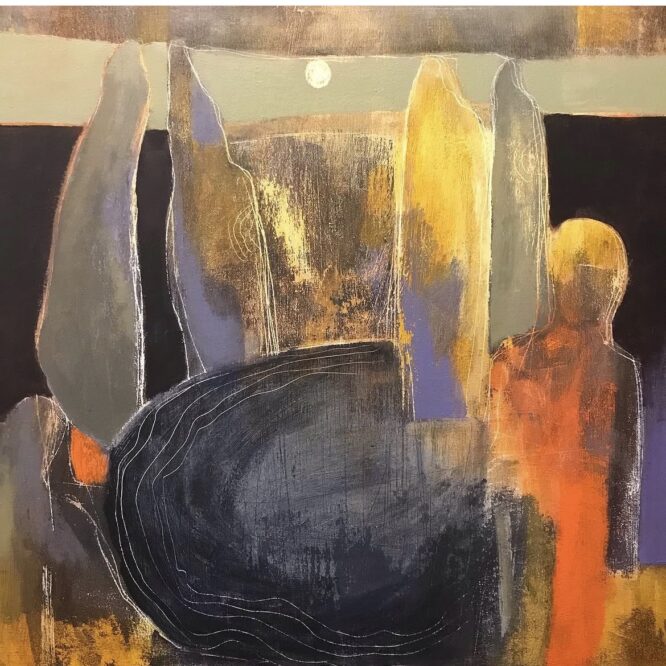
Sesga’s evocative paintings people these ancient sites with figures, as if to underline their possible roles in ritual. The human shapes themselves are elegant, sometimes elongated and she freely acknowledges the influence of the sculptor Giacometti, whom she adores.
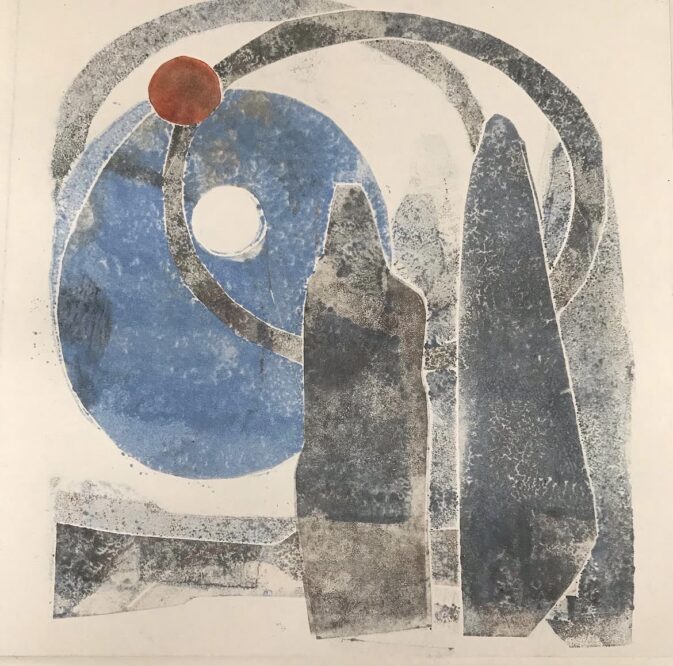
Most often standing stones are a wind-blasted grey with sometimes flecks of lichen green and yellow but Sesga’s paintings sometimes employ much more vibrant mixes of hue. ‘I’m using the colour to try to represent energy. So you’ll see yellows and reds to try and show there’s something really powerful here. These stones are in alignment with planets and stars so it gives that feeling of energy, suggest how it goes around.’
Fascinating stones
Sesga’s interest in standing stones was kindled about four years ago when she was encouraged to read Meini Meirionnydd, a fascinating gazetteer of local standing stones, stone circles and cromlechs written by Huw Dylan Owen along with photos by David Glyn Lewis. The two explored, photographed and wrote about an area which has a notably high preponderance of stones, with a dense cluster of over twenty sites around Harlech and Tywyn alone. It’s easily one of the most absorbing books I acquired on my travels.
Some of these stones stand in alignment with the holy island of Enlli, as if our ancestors set compass co-ordinates for Bardsey using needles of stone: Ardudwy, after all, means “On the land of God.” Sesga notes, ‘Some of the stones, such as a set of nine stones near Harlech, align with the rising sun of the summer solstice.’ There may be very old wisdom in play in the siting of some of the meini hirion.
Art from early on
Sesga Jones was brought up by hippie parents and surrounded by art. ‘Dad was born in Gellilydan and then mum came up for a day, met him in the pub and they got married three months later. They hung out with really cool people like the sculptor David Nash: there was a movement where interesting artists came to the Blaenau Ffestiniog because it was cheap to live. So I’ve always been interested in art. I had no choice. There was art on the walls and books about art everywhere.’
Sesga’s early ambitions had nothing to do with art, however. ‘I always wanted children. If you asked me when I was five, what do you want to be I would say a mum. I had three girls and then I got to a certain point when I thought right it’s something for me now.
‘I met an older lady who’d just finished the degree and I thought if she can do it I can do it, then after the degree I thought, I can’t stop here, so I did the Masters. I had also been extremely unwell for a very long period of time and I started making art and art saved me. It taught me to switch off from my illness for just 10 minutes at a time. It’s called mass cell activation syndrome. So I’m allergic to everything.’
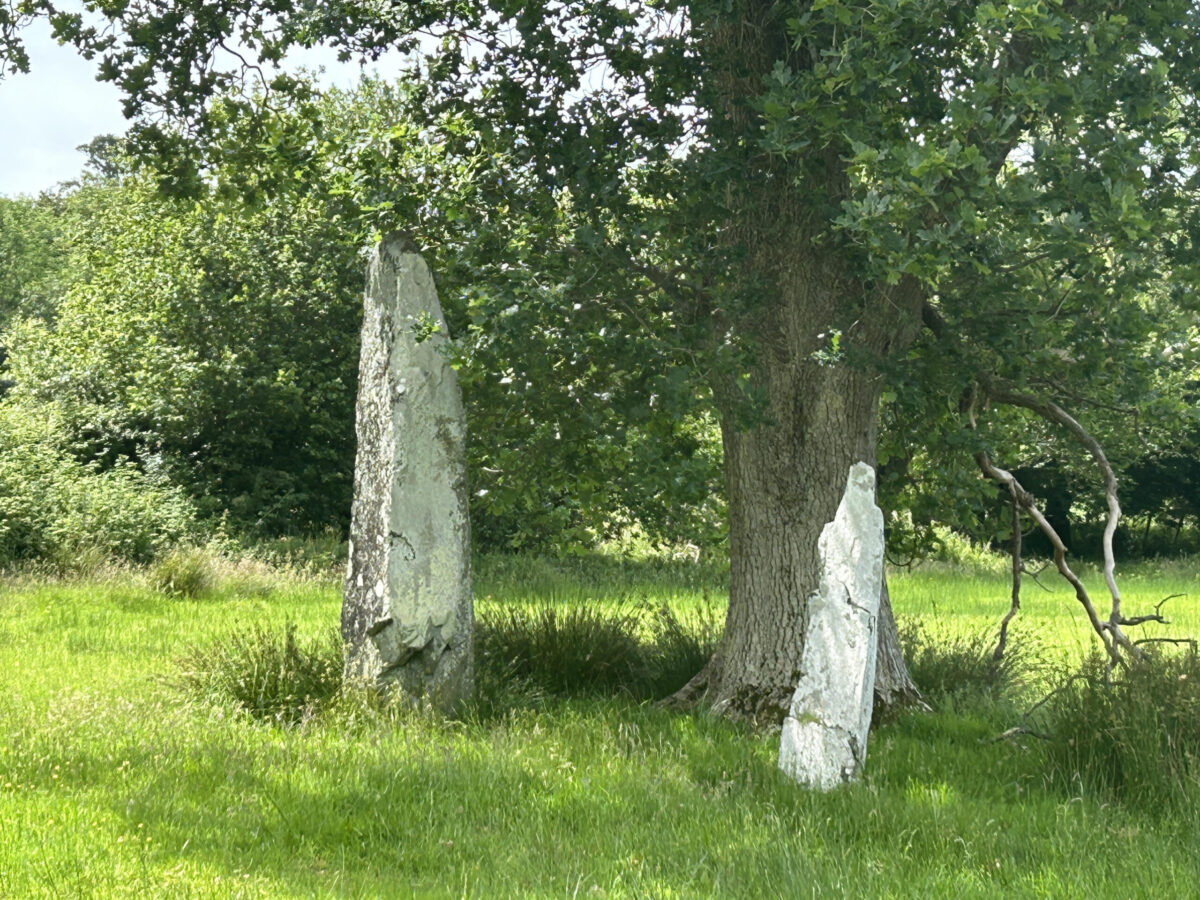
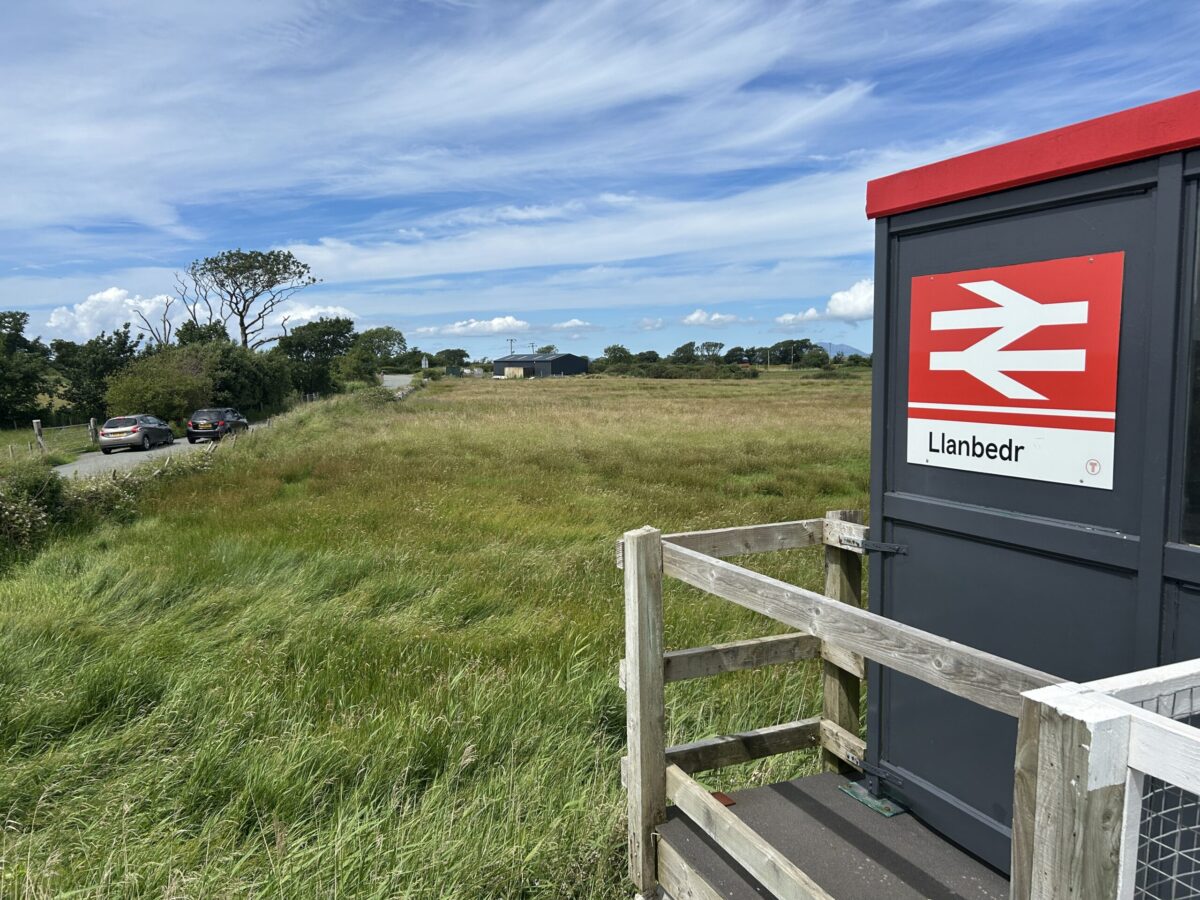
Sesga can often find standing stones by instinct, as if on auto-pilot. ‘It’s often about the finding because I don’t always know exactly where they’re going to be. There are seldom signs to them. If you spend enough time at these sites it gives you something or you feel something. I was on the edge of the village of Llanbedr where there are two large stones remaining of what was once a circle. One’s really massive, the other one’s broken and it almost looks like a figure of a person. I spent some time there and had a warm feeling within my chest and a sense of calmness came over me for at least an hour. It was a beautiful feeling, one that I had never experienced before.’
Stones selected to be standing stones were often flecked or shot through with quartz. In Pembrokeshire, white stones were specifically chosen as gate posts in order to keep bad spirits away.
The book, Meini Meirionnydd suggests the ones in Llanbedr, standing more or less in the mouth of the river Artro, might well have directed travellers, or the metal merchants of the Bronze Age as they headed inland. The volume further suggests that “quartz” was also believed to absorb starlight and thus create the sort of energy needed to fashion human souls.
Even in the noonday light the stones seem to glow in the shadows of the oak trees that shelter them.
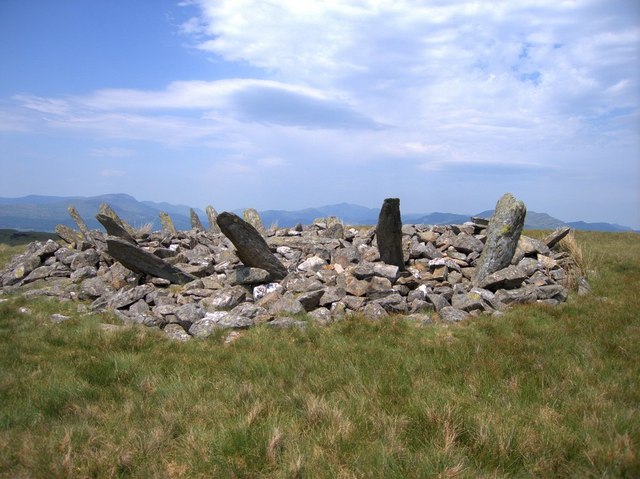
Not all stones elicit such a positive response. The fifteen stones at the cairn-circle of Bryn Cader Faner near Talsarnau splay outwards like a crown of thorns, or the open maw of a shark. Damaged by treasure hunters and later used as target practise by the army, it’s an atmospheric and jagged array of stones.
It’s a place that still gives Sesga the shivers: ‘My dad warned me if I went go to Bryn Cader Faner I should not stand in the centre. He said there’s a dark energy there, there’s something about the place. So he planted the seed.’
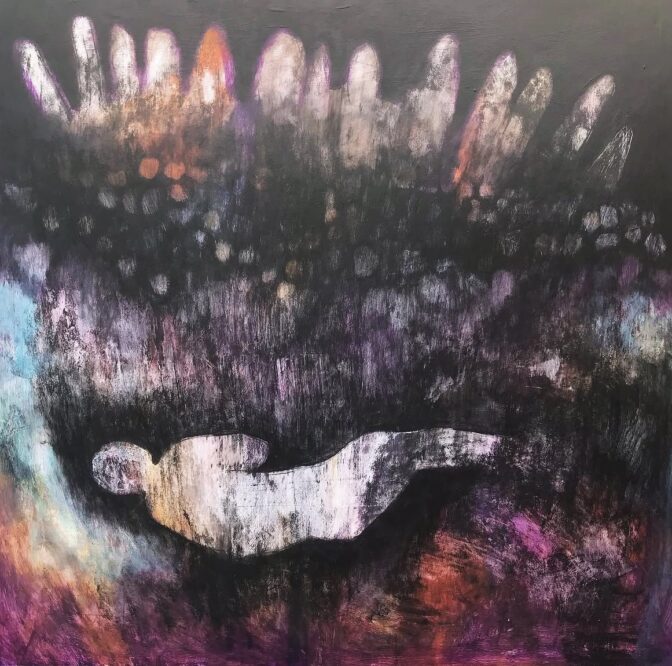
Sesga recalls the first time she went to Bryn Cader Faner has consequences. ‘Afterwards, I didn’t sleep properly for two nights. I was really agitated and it was horrible. But the last time I went, and probably will be the last time I ever go there, I took a quartz stone with me in my bag and I left it there. I think that was a bad move. That evening, I was unable to sleep. I was on the sofa, dropped off for a second. Then I woke up and there was a black entity above me. I swear I was awake. That was my experience, so I won’t ever go back there.’
But artist Sesga Jones will still continue to look for other Neolithic markers, often sited in remote places. ‘I think people who visit the stones are a certain type and they will seek them out. People who need to see them will find them.’

Support our Nation today
For the price of a cup of coffee a month you can help us create an independent, not-for-profit, national news service for the people of Wales, by the people of Wales.
Get more trusted Welsh news
Choose Nation.Cymru as a preferred source in Google News to see more of our journalism.



I wonder Sesga, did your folks meet the sculptor ‘Gypsy’ Dave Mills and Artist Tom Kinsey by chance, two old friends of mine…
The stones will be the only things left standing after the fire has gone, a new backdrop has been painted, your words turned to ash, a final will and testament to a vanishing world, with a ‘so what’ from its so called protector Welsh Gov/NRW. Not just Burnham who blew it today, who can turn down a chance to be cruel, the social contract suffered another blow today…
Where did Burnham go on his holidays as a kid…?