

Making Tracks: Llandrindod
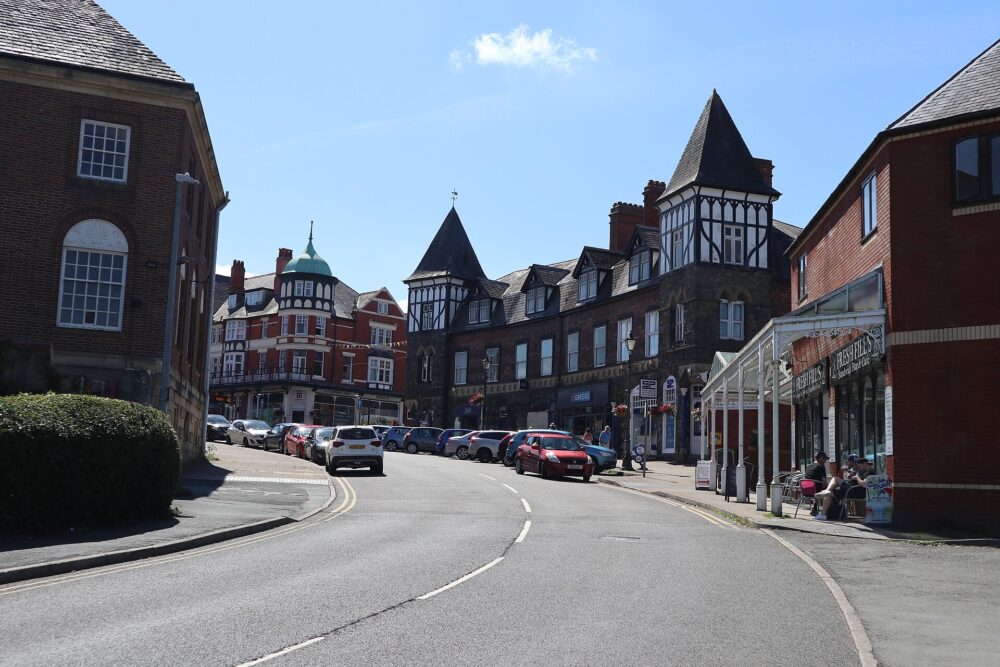
Jon Gower finds out about working in the signal boxes of mid Wales and the huge popularity of taking the waters in its spa towns and villages.
Robin Powell, now 92 year, started working as a junior porter on the Low Level at Builth Road station when he was a fifteen-year old. It was the junction of two lines, the Central Wales line, running from Swansea to Shrewsbury and the Mid Wales railway, which ran from Brecon to Moat Lane, serving Caersws.
The lines crossed immediately south of the Builth High Level station on a girder bridge and the two stations were connected by lift, as Robin explains. “It was quite easy to transfer luggage from one station to the other, because you put everything on your trucks, on four wheelers and then you’d use the lift.” It wasn’t just passengers to attend to: “The papers all came by train. A lot of mail came by train. And the other thing was Lyons Cakes every fortnight or so. You’d have a load of those from Greenford in west London.
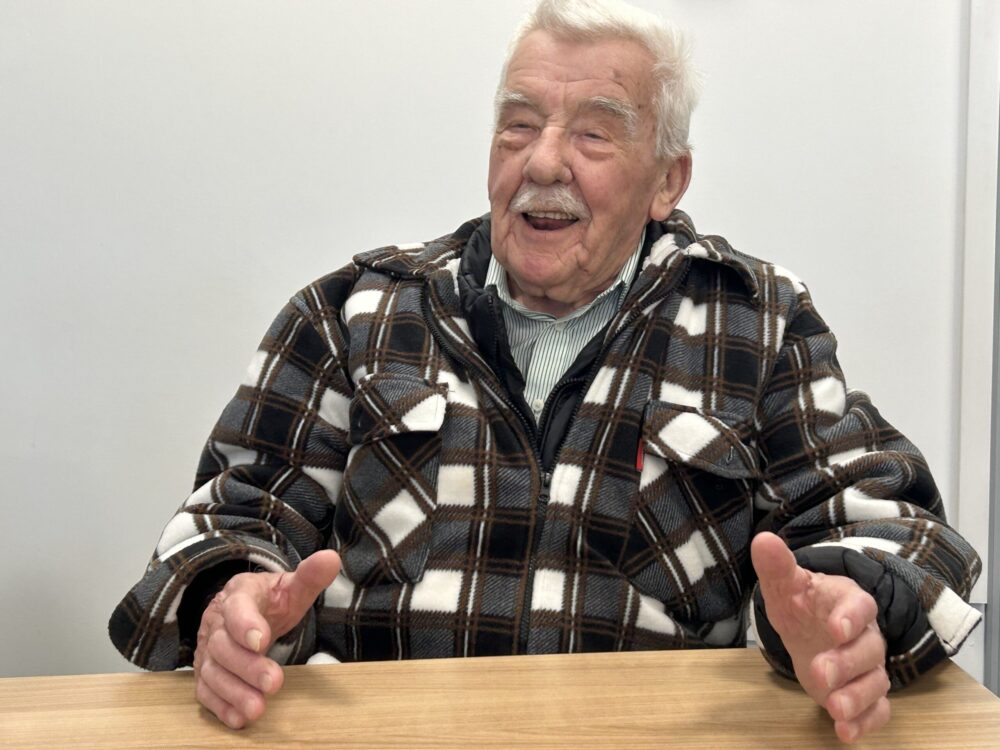
A junior porter’s work was never done, Robin recalls. “There were always a few parcels flying about, a bit of work cleaning up, and, of course, signal lamps to clean – it would keep you busy for a day and a half.”
Bryn Davies, now 91, also started as a railway porter, starting after he came out of the army in 1958. “I went down the Llanwrtyd Wells station which was pretty busy because they had sidings where you’d have the Radnorshire Coal Company and Spillers used to bring cattle cake, and everything used to come to the village, to the shops there, by rail. There were about 30 shops in Llanwrtyd many years ago. You can hardly believe it now, can you?”
The railway was an important employer in the area, Bryn tells me. “There was a station master, a booking clerk, three signalmen, and about five or six permanent-way workers. That was a lot because, there weren’t many local jobs. There was only the Cambrian factory and some forestry. I was in Llanwrtyd for a while, and then a vacancy came in the signal box in Sugarloaf, so I went up there to work.” Bryn lived in Llanwrtyd, so would travel to work on his motorbike, one of three men working shifts.
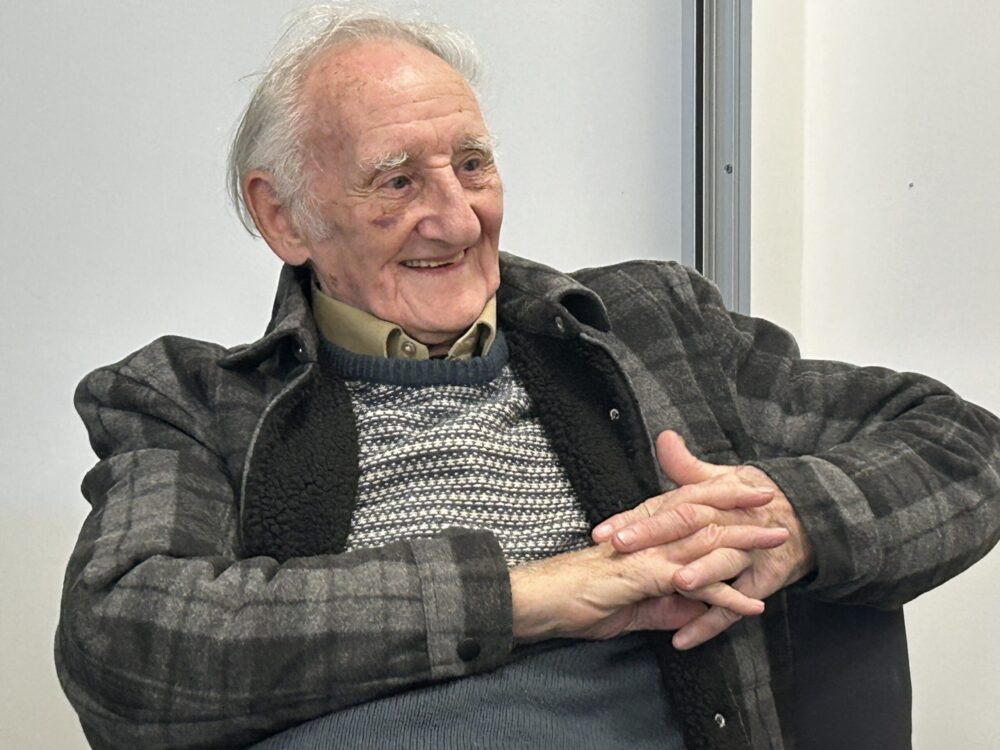
The signal box at Sugarloaf was erected in a remote spot, as Bryn explains: “If you have a chance to go to Sugarloaf, you’ll find it’s quite an isolated place. We were a law to ourselves up there, you know, nobody ever bothered us. There was a bridge there crossing the railway, and you’d get people coming and looking down at the box, you know.” Bryn, much to their surprise would invite them in for a cup of tea. “The stove was always going, night and day. The kettle was always on the stove.”
This said, visitors were few and far between. Firemen on the trains might stop by, sometimes replenishing the signal box’s coal supply from their stock on the trains.
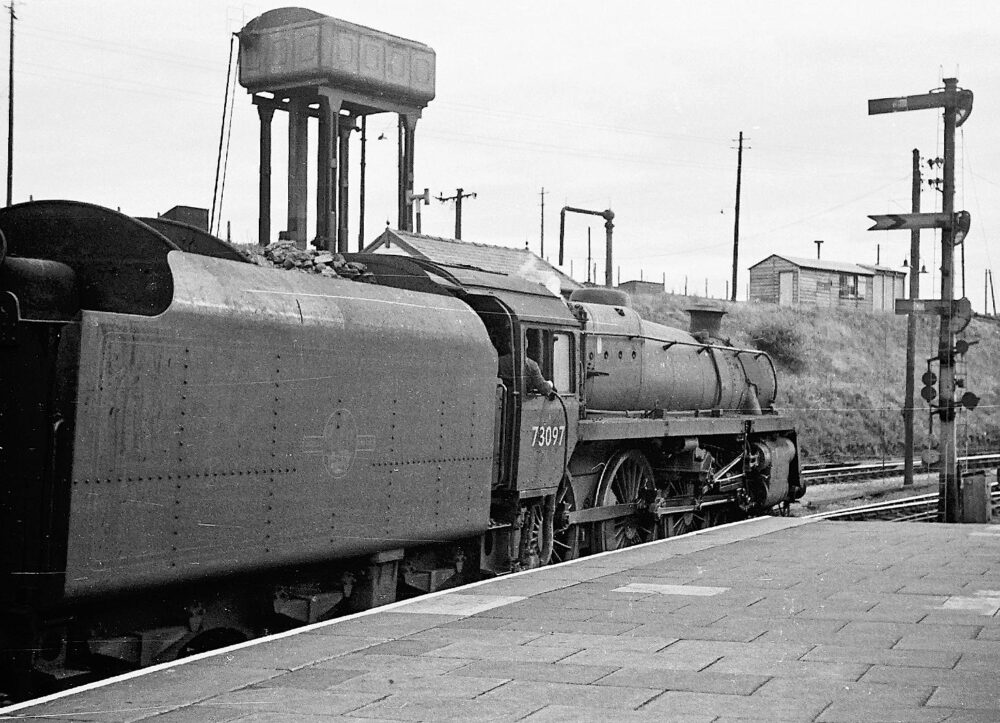
There were lots of trains including the regular passenger services and special excursions such as the ones to see the Blackpool Illuminations in October and November. There’d be others taking rugby fans to Murrayfield in Scotland, starting from places such as Pantyffynnon near Ammanford and Swansea Victoria station, sited at what is now the city’s leisure centre. Robin recalls how there’d be “Two on the Thursday, three on the Friday. All double-headed, so that was two engines pulling eight, ten coaches, all double-headed, no messing, no mistakes. All the big shots would be up on the Thursday because all the tables would be lit up and laid out lovely, and there’d be the silverware and everything, you know. And then they’d come all drifting back on Sunday, quietly.”
There was also the Sunday school trip by train: “Now, that was a big occasion,” Bryn explains. “I suppose it was the only time you would ever see the sea. We’d go to Swansea or Aberystwyth. Aberystwyth was a pretty favourite place, and of course it was the nearest – we all had to go there because it was probably the cheapest. We had the odd excursion to Barry Island. Porthcawl, that was another big place.”
The line past the Sugarloaf signal box also carried a lot of freight, considering it was only single-track. Bryn recalls “They all had names, you see. You had what we’d call the Llanellys, bringing coils of tinplate from Llanelly and Burtons carrying beer.” Burton-on-Trent, in the English Midlands, was famous for having its own internal rail network to serve the town’s many breweries. Bryn recollects that “There was fish as well. I think it probably came from Milford Haven or somewhere down there.” There’d also be a special from Pembrokeshire each spring carrying part of the crop of new potatoes.
Robin was fortunate enough to get a job as a relief signalman in Llandrindod “Which was a couple of jumps from junior porter. He started in October 1956, covering the boxes from Broome to Llandovery North. “It was often quite a long way on the back of a motorbike.” He would make these journeys whatever the weather, often choosing to sleep in the box. ‘If there was any doubt, I’d go the night before. I’d make sure I wouldn’t miss out. I’d rather be 12 hours early than an hour late.”
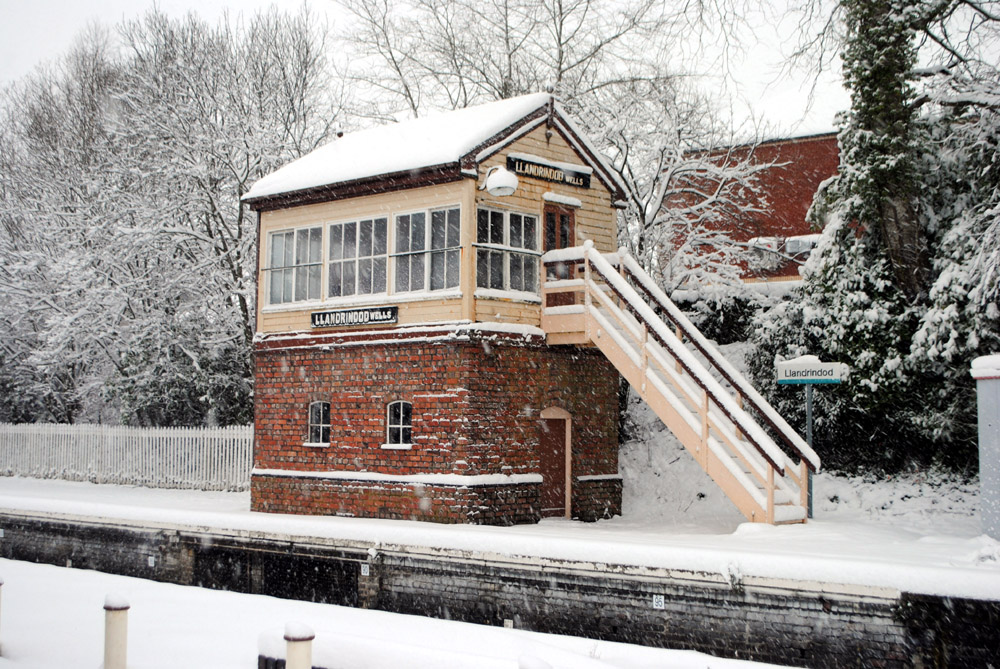
The weather could be atrocious. The winter of 1962/63 was a time of high snow drifts and thick plates of ice, when rail workers had to clear enormous icicles like substantial crystal stalactites from tunnels such as that drilled under the Sugarloaf.
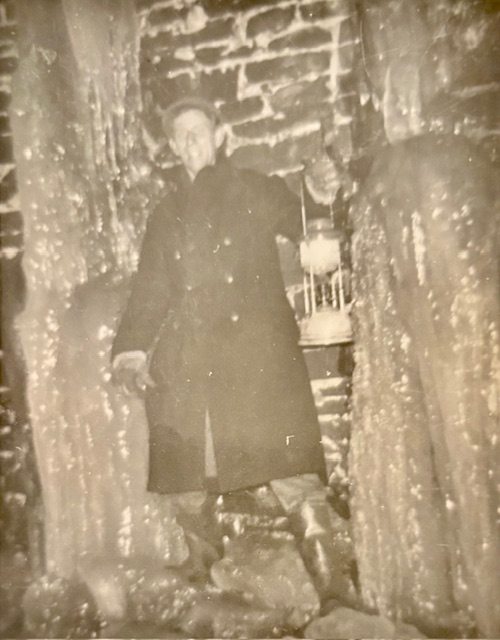
The bitter cold proved too much for one of Bryn’s colleagues. “A local farm lad had come to work there and there was something going wrong with his body and with his bones. He thought a job in the signal box in the dry and the warm would suit him better. The ’62 storm came, and we were iced up and frozen over. The Sugarloaf, you’re down in the hollow, you never get no sun, never get no warmth, and he found that the frame was too heavy for him – the frame is where you’ve actually got the levers.”
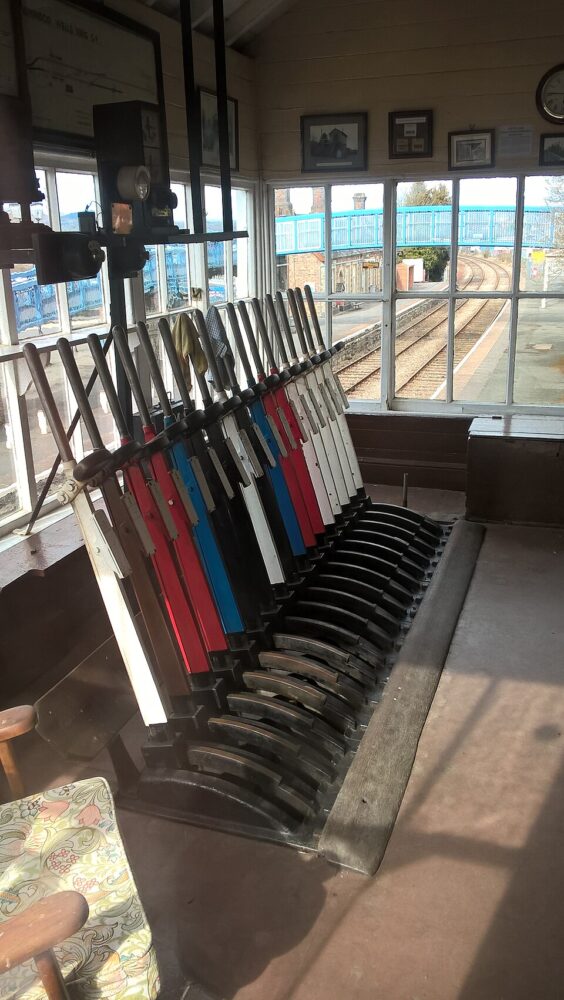
The number of levers in a frame varied from signal box to signal box, as Bryn explained. “There was a box at Penybont Junction: there were only half a dozen or seven levers there. Then for the bigger boxes like Llandrindod you might have 20. You had black levers, which were the points, blue levers, locking bars, and red would be the signals.
“Say now you had a train coming from Cynghordy. I would ring up Llanwrtyd and you’d just press a bell and it’d go “ding” and that would be called “attention.” There’d be a code then. If it was a passenger, you’d go “ding, ding, ding”… “ding.” And that would be code for a passenger train. You then used to “set the road”as you’d say. You’d set the up road, so you’d pull six eight nine, those are the points – twelve would be a locking bar. You’d have to set that. Once you’d done so, then you could pull your signals.”
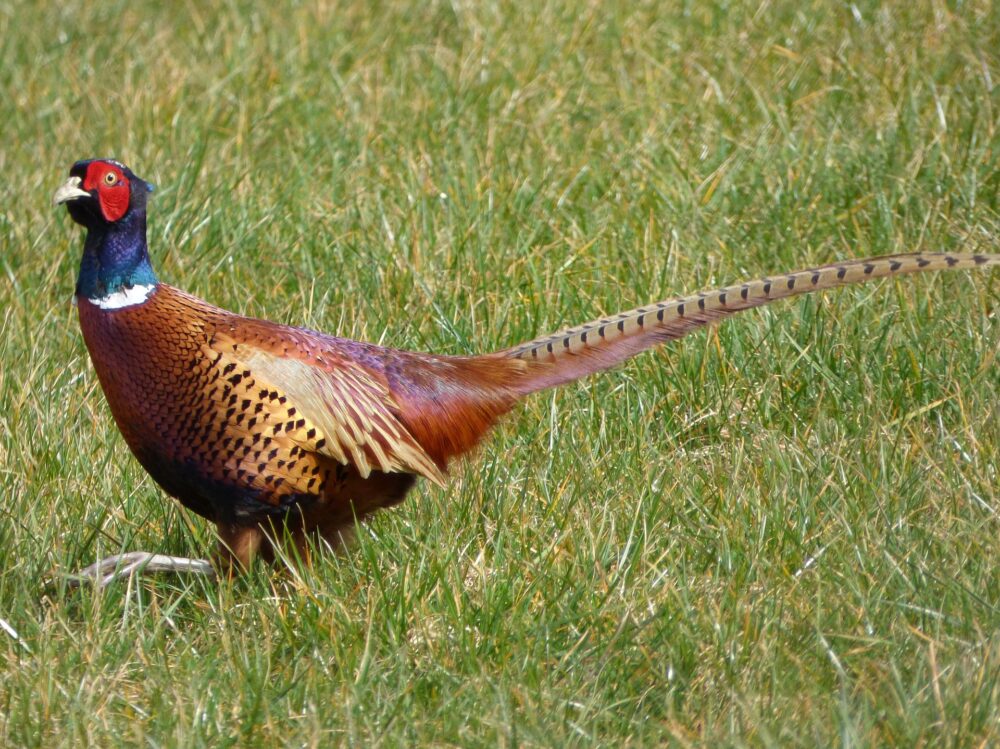
Trains didn’t always stop officially. Bryn recalls the day when someone brought him some tasty local news. “I’ve seen some mushrooms, down by Cynghordy. We’ll have to stop for those buggers. I’ve already told the missus I’ve seen them.” While a train might occasionally be used for a spot of mushroom picking it could also be used to bag some game – trackside rabbits or pheasants. “They reckon one boy, he had a bloody 12 bore shotgun, didn’t he? On the engine, he did. He had a bloody 12 bore.” Sometimes you didn’t need a gun as Jack Jones, from Builth Wells recalled in a letter to a newspaper. He had been travelling as the only passenger on the 6.15 mail train from Brecon, driven by a local man, Tommy Crimmings. The train stopped abruptly and when Jones lowered the window he saw “Tommy running back down the track. About a minute later he returned carrying a cock pheasant in his hand. ‘I got him Jack,’ he said. ‘I’ve been after him all this week.’”
It wasn’t just pheasants: there were fish to catch as well. Jack Jones recalled another occasion when “Sam Sommers, Tommy’s friend was fishing in Llanfaredd Pool, just below Builth Wells, and I was rowing the boat for him when suddenly Sam hooked a good fish. Now both of us were lame so Sam decided to get to the bank to land the fish…and Sam steeped out and began to fight the fish. During the time I was tying the boat up the midday train came into sight and of course Tommy could see his mate Sam fighting the salmon. Tommy pulled up the train and jumped down from the engine…It took about a quarter of an hour to finally land the salmon, all this time we were all getting shouts of encouragement from the passengers, and Tommy received a great cheer when he climbed back aboard the train, which, incidentally, arrived in Brecon on time.”
Robin and Bryn recall many such great bunch of characters amongst the railway workforce, many of whom had nicknames. “One inspector had not one but two nicknames – ‘Dai Paraffin’ as he was “allergic to buying paraffin” and ‘Dai Sabbath,’ because the tight-fisted Dai was reluctant to allow men to work on a Sunday, when they’d be paid more. “There was a guard who was always shouting, we called him Tommy Topknot.” “Remember the chap called Finney? The Flying Finn. He was one of the best drivers. Another driver was called “Johnny Spanners and we had two birds in Llandovery – both drivers. Harry Partridge and Harry Crane. “Bert Steadman, Bertie Bantam they called him because he kept Bantam chickens. Then there was Dai Cockles, because he came from cockle country and also Morgan Twice. His name was Morgan Morgan, but he always went by Morgan Twice.”
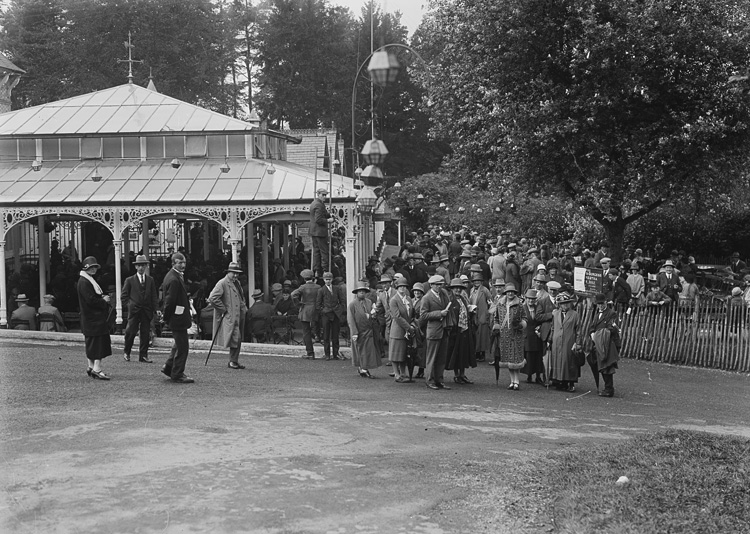
One of the other prominent features of the line was the number of visitors who came to mid Wales for health reasons, coming to take the waters of the various spas in Builth, Llandrindod, Llanwrtyd, Llangammarch and Llandegley.
The saline, sulphur and chalybeate springs of such places long been famous and not just in Wales. Encyclopedia Brittanica notes that “According to an influential treatise published by a German physician, Dr Wessel Linden, in 1754, the saline springs at Ffynon-llwyn-y-gog (“the well in the cuckoos’ grove”) in the present parish of Llandrindod had acquired more than a local reputation as early as the year 1696.” A dedicated advocate for the medicinal value of mineral waters, Dr Linden would publish several further studies, including his Treatise on the Three Medicinal Mineral Waters at Llandrindod, in Radnorshire, South Wales (1754), the first account of what was an infant spa culture developing in rural Wales at the time. Based on the impressive list of subscribers to this particular volume, Linden had clearly recognised the economic potential for Welsh towns to gain by reinventing themselves as modern spas.
It was a Mrs Jenkins of Lower Bach y Graig farm who rediscovered the health-enhancing springs of a well in Llandrindod and, in 1736 attested to their efficacy in treating ailments such as scurvy, ulcers and eye-troubles. A poem in the Gentleman’s Magazine and a book called A Journey to Llandrindod Wells in Radnorshire both acted as effecetive marketing tools for the local water. Encouraged by the interest, a Shrewsbury man called Grosvenor built a hotel and over four decades or so it attracted customers: “Here were accommodation for the invalid of whatever rank and distinction, field amusements for the healthy …balls, billiards and regular assemblies varied the pastimes of the gay and fashionable.” Not all of the Grosvenor’s clientele were desirable, however. Lewis’s Topographical Dictionary described it as a “Rendez-vous for fashionable gamesters and libertines.” But when the railway arrived in 1864 the Grosvenor wasn’t the only game in town as other hotels were erected and fine town houses sprouted to accommodate the visitors who flowed in to take the waters. At its peak there were 80,000 of them a year.
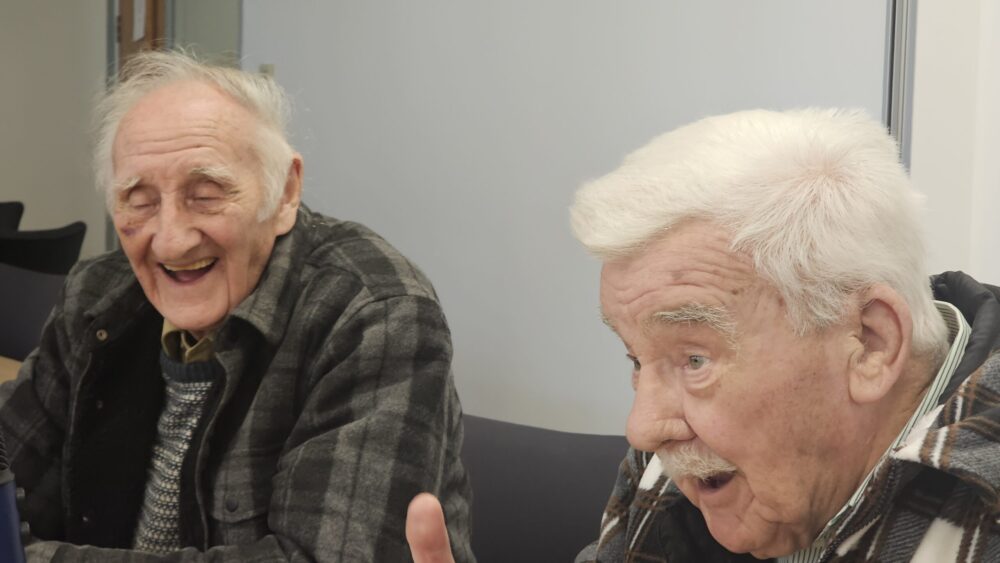
Bryn Davies remember the visitors who would come for the waters very clearly. “Good gosh, yes, I remember very well. Miners used to come to Llanwrtyd, because they had this paid holiday in August.” An important centre for entertainment in Llanwrtyd was Victoria Hall, the town hall opened in 1897 after being built by public subscriptions of a pound. “It’s still there today and there was a big pavilion where they’d have concerts and competitions for the miners. They’d come the first week of August and it was a very popular time.”
Robin Powell and Bryn Davies weren’t themselves too keen on the taste of the sulphurous spa water. Bryn spits out his opinion: “Bloody awful the water was! You’ve got to remember, though, they reckon a lot of people believed in it, they really did. And that it was good for rheumatic, and, well, perhaps it was, you know, for some people.”

Jon Gower is Transport for Wales’ writer-in-residence. He will be travelling the breadth and length of the country over the course of a year, reporting on his travels and gathering material for The Great Book of Wales, to be published by the H’mm Foundation in late 2026.
Support our Nation today
For the price of a cup of coffee a month you can help us create an independent, not-for-profit, national news service for the people of Wales, by the people of Wales.


