

Making Tracks: Llandudno
Jon Gower visits Llandudno Museum and Gallery to learn about repatriated skeletons, rare train tickets and The Beatles.
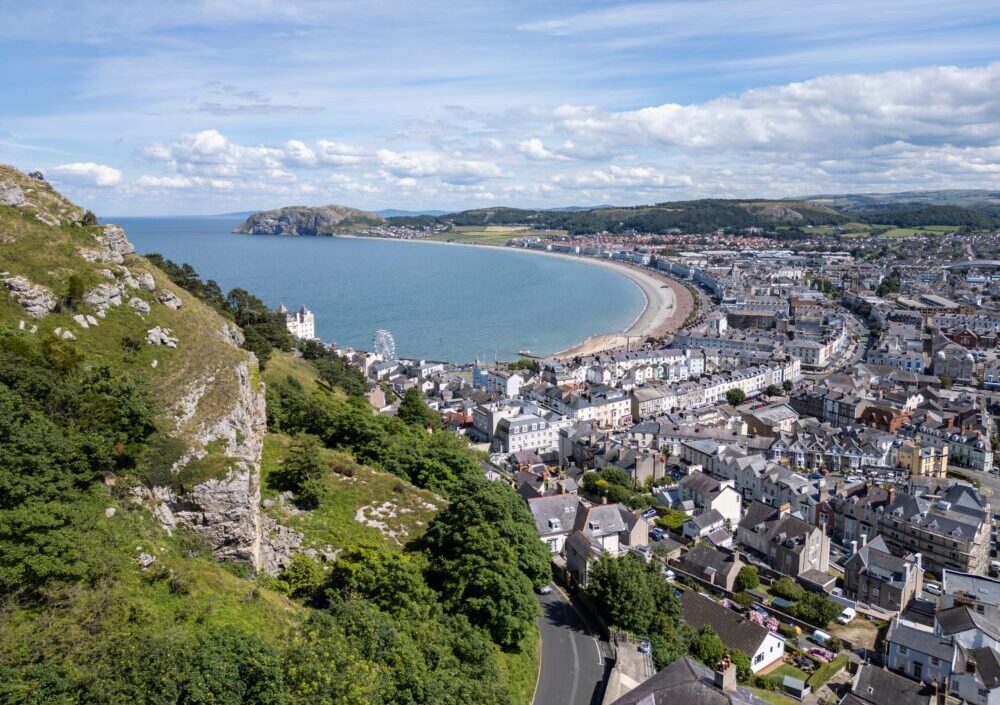
The gently curving line of Victorian hotels along Llandudno’s seafront has been described as Wales’ ‘most enduring archetype of the genteel seaside resort.’
So much so that it was once crowned with the slogan “The Queen of the Welsh Watering Places” and been described as The Naples of the North.
It’s in a dramatic setting, that’s for sure, with the serpentine hump of the Great Orme, Pen-y-Gogarth, rising above the town, bookended by the daintier headland of the Little Orme, Trwyn y Fuwch, where the first printed book in Wales was produced in a cave in 1587 by persecuted Catholics.
The rocky dentition of the Carneddau mountains acts as a backdrop to the town to the south-west and out to sea the vanes of windfarms turn like slow fans.
The limestone and dolomite mass of rock – Orme means sea serpent in Old Norse – is home to semi-wild Kashmiri goats and is the only site in the world where wild cotoneaster, or the Orme berry grows.
It has substantial areas of exposed limestone pavements, which consist of limestone slabs called clints, which are divided by deep channels known as grykes, long sculpted by rain trickling over the soft rock.
In summer this is dotted with wild flowers such as spiked speedwell, bloody cranesbill and dark red helleborine which have all capitalised on the thin layers of moist soil and the sustenance of limestone.
It’s wild, exposed terrain not that far from the promenade and pier of Llandudno.
When Askew Roberts published his “Gossiping Guide to Wales” in 1882 he declared: “A scene more gloriously wild and solitary can scarcely be gained at so small expense of trouble. Before you is the sea, beneath you the grand cliffs against which the sea is swelling, and moaning and foaming, and lashing, everlastingly.”
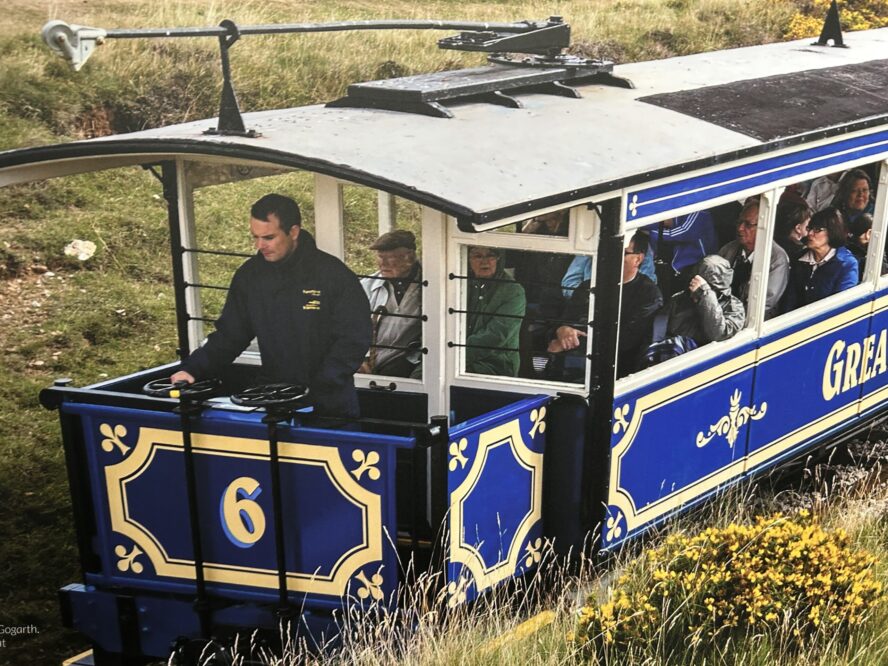
The journey up was made even easier with the opening of the Great Orme Tramway, which carried its first passengers in 1902 and still cuts through the contours today.
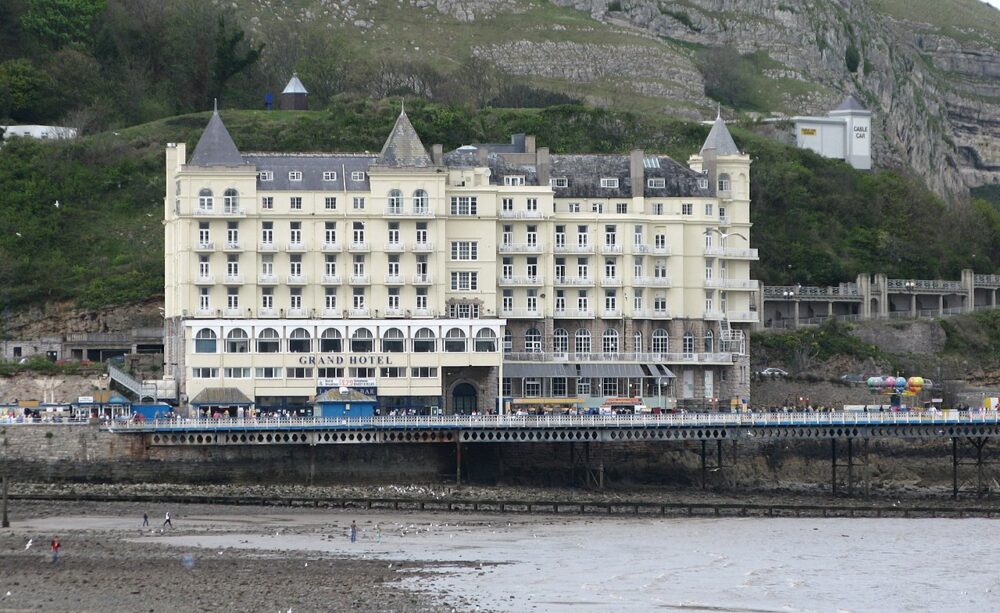
The older hotel names of the elegant town down below seem to connect directly with the time they were built. The Grand was described as The Welsh Ritz and was the largest hotel in Wales in its day.
The Imperial threw open its doors to famous guests such as Queen Victoria’s son, Prince Leopold, who stayed here incognito as well as serving as a long term residence for exiled Queen Rambai Barni of Siam.
The Empire Hotel was housed in what was originally the town’s first department store, selling anything from gunpowder to fresh German leeches.
Edward Mostyn, the local MP and landowner sought to exploit the craze for sea bathing by creating a resort expressly to magnetize the upper middle classes. They came for the waters.
An advert for the Llandudno Hydropathic Establishment and Winter Residence declared the availability of “Hot and Cold Salt and Fresh Water Baths, Turkish Baths and Seaweed Baths” and underlined its most notable feature, being “the profusion of salt water employed. It is pumped in directly from the Bay.”
It took little time before the blandishments of sea air and salt water started a slow pageant of famous visitors such as Bismarck, Napoleon III and both Disraeli and Gladstone.
One royal sojourner, Queen Elizabeth of Romania loved it so much that she stayed here for five weeks and apparently helped devise the town’s motto “Hardd, hafan, hedd” which translates as beautiful haven of peace, which must have helped the marketeers of the day as they tried to woo well-heeled visitors away from rival resorts.
The history of Llandudno tourism and much more is told in the town’s splendid little museum.
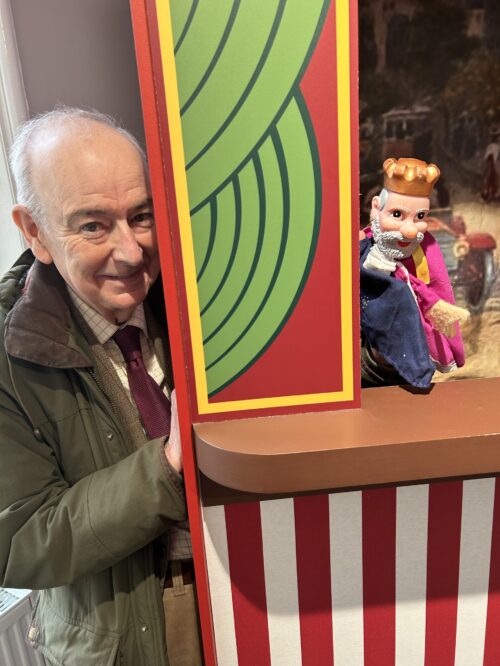
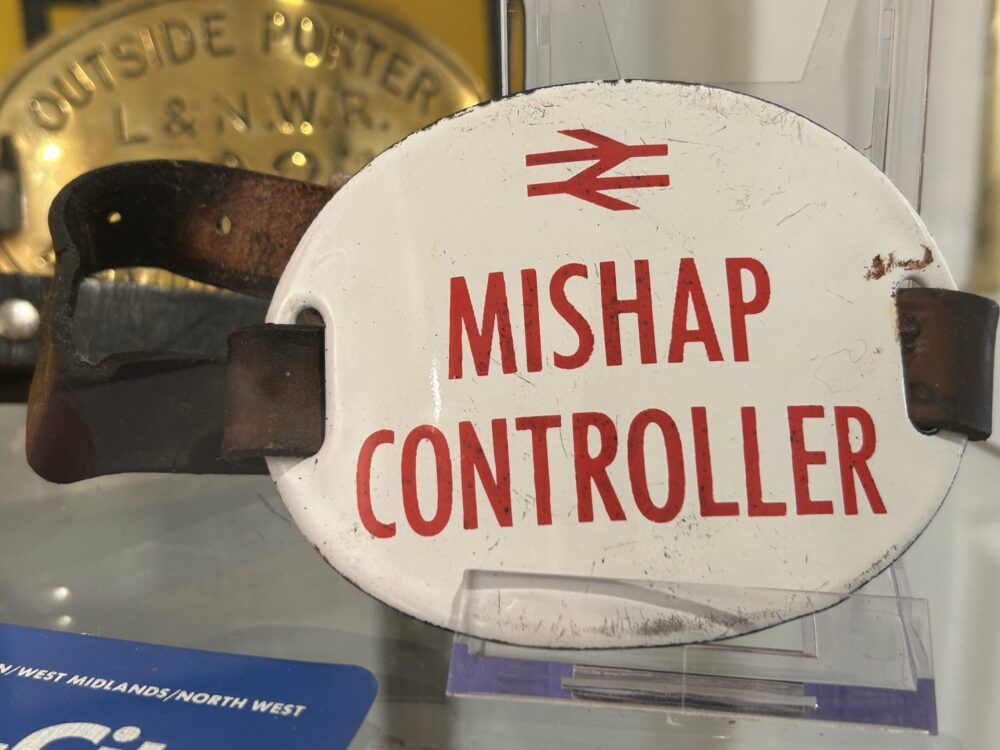
Here Philip Evans was my enthusiastic guide to its six-room array of displays and exhibits. Philip has a particular interest in railways, which started as a boy growing up in nearby Glan Conwy. His home was almost on the tracks and at the impressionable age of eight his locomotive-driving uncle,Tom Gill invited him to join him for a ride.
Having joined the London North Western as a junior cleaner at Llandudno Junction at the age of 14, Philip’s Uncle Tom eventually became a fireman and later on a driver.
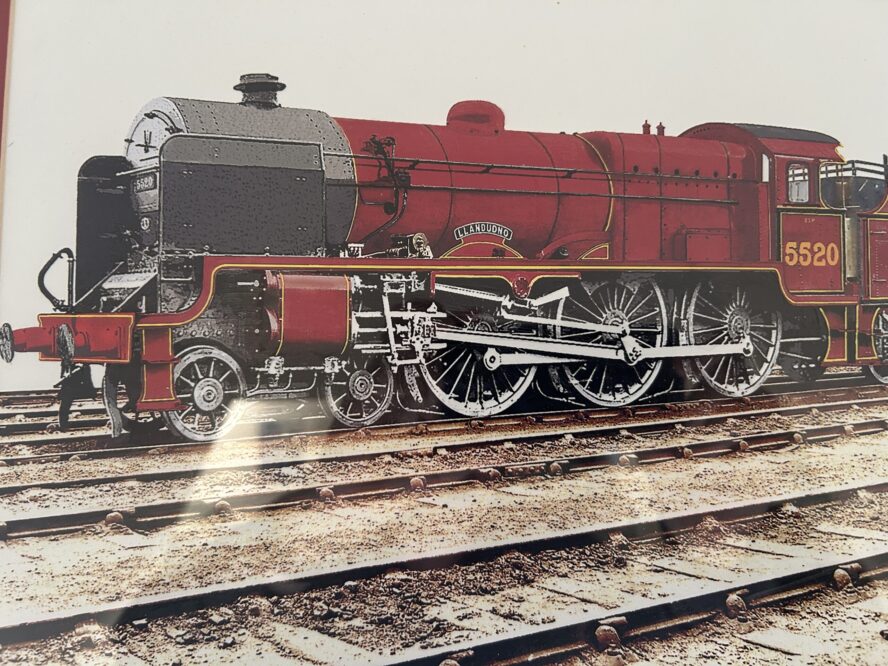
By the 1950s Tom Gill was driving express trains from Crewe to Llandudno at speeds of up to 98 m.p.h., “which was reallly going some in those days, he was the equivalent of a boy racer,”
Philip suggests.“The London Midland Scottish Railway were keen on naming these express passenger trains that were coming into service after the towns and resorts they served and Colwyn Bay and Llandudno were two of those.”
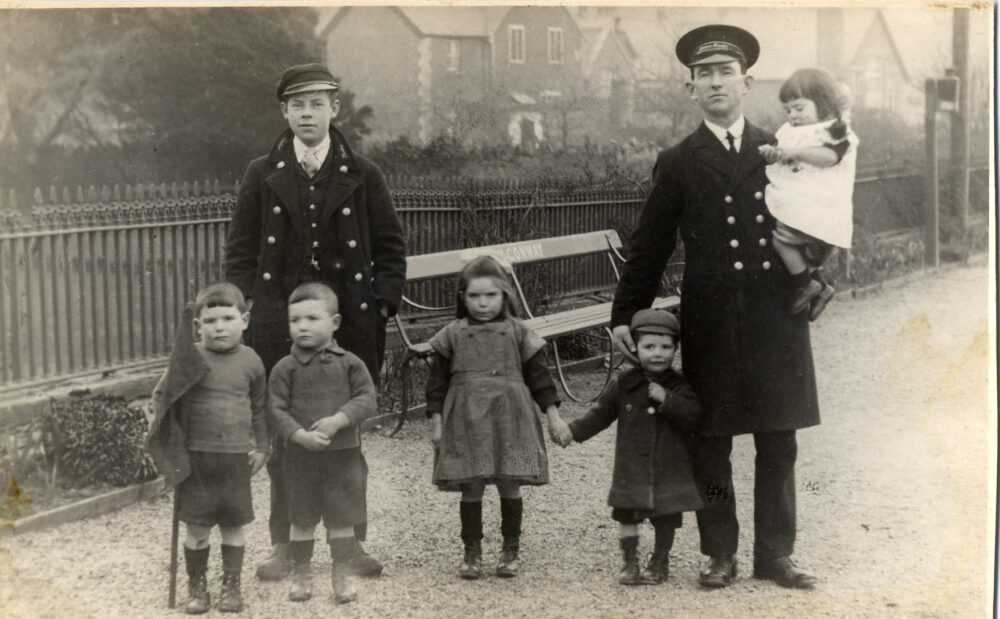
Philip has researched the lives of such drivers and also the station masters who worked at local stations. Station masters such as Anglesey born William Lewis who was appointed to take charge of Glan Conwy station on 1st January 1916 at a salary of £70 per year.
He married Ellen Grace Owen who had been born in New York, USA, during her parents’ short emigration before they returned to Ynys Môn.
William and Ellen had twelve children and eventually needed larger accommodation than that afforded by the comparative small station house.
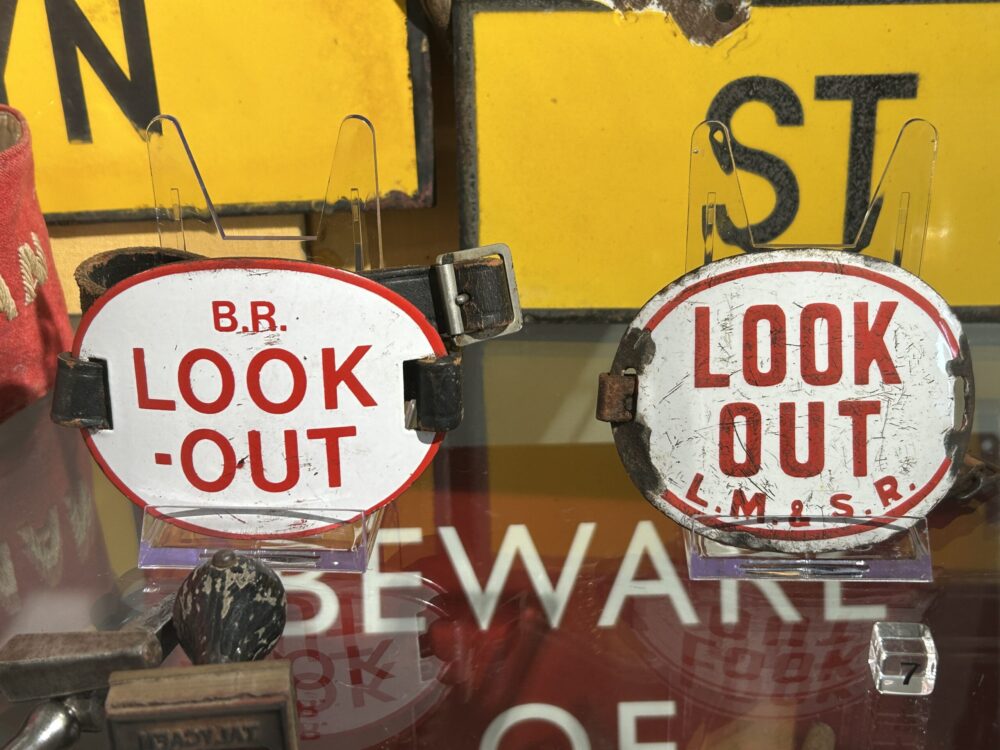
Station masters were held in some regard by society, Philip explains. “By dint of their role, they were particularly numerate. and literate. Anyone who wanted a secretary for an organization in the village, be it the chapel, the church council or a society, they’d go to the post master or station master who could do the job.
Philip tells me a story about an accident at the turn of the last century which explains how things worked back then.
“A station master at Glan Conwy tripped over some fishing tackle on the platform and fell under a moving train, causing severe damage to one of his legs. The porter got in touch with Llandudno Junction, where the station master got an engine and guards and took them up to Glan Conwy with two of his first aiders. And then this engine and coach went through to Llandudno, where the Glan Conwy station master was put on one of the trolleys from the station and wheeled round to the Cottage Hospital for treatment.
“You hear a lot about companies in those days and how harsh they were but he was given six months on full pay while he recovered, which is quite unusual, actually.”
Apart from researching railway staff Philip has a particular interest in tickets. “When I was about twelve, an aunt of mine had been on the Ffestiniog Railway and had bought me a little packet of their tickets. I then bought child tickets from our local station in Glan Conwy to the next ones on the line, and it just went from there. People would buy me ones, then I just collected them under my own steam.”
That first packet has now grown into a collection of several hundred tickets, mainly from north Wales. Philip is particularly keen to collect those issued by small rail companies: “Unfortunately, many of them didn’t issue their own tickets, because although they were independent companies they tended to have a contract with one of the bigger companies.”
So what is the ticket collector’s equivalent to the philatelist’s Penny Black stamp in terms of rarity value? “I have a Chester and Holyhead Railway ticket from Conway to Denbigh, probably from the 1860s. It’s the only one I’ve ever seen because very shortly afterwards the London and North Western took it over.”
Philip explains that railway ticket, as most people think of it was invented by a station master called Thomas Edmondson when he was working as a station master on the Newcastle and Carlisle railway.
He devised a new type of railway ticket: a small piece of cardboard, pre-printed with journey details – as opposed to the then current hand-written paper bill.
“He designed these tickets and in effect created a whole accounting system for them,” says Philip. “And that system was used by all the mainline companies in Britain, carrying on until the mid 60s.”
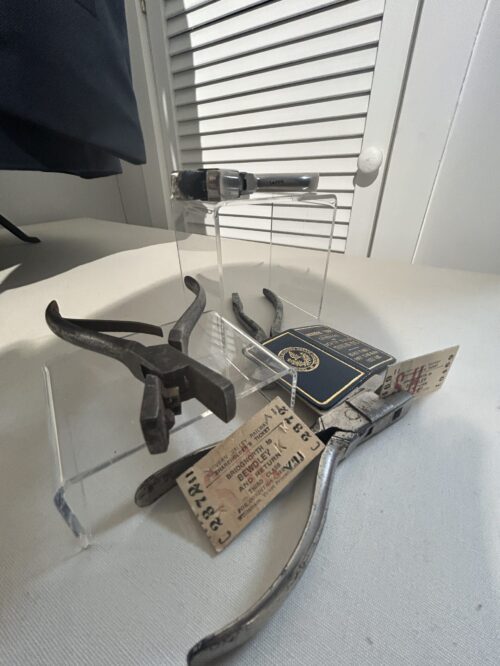
The invention which really made Edmondson’s fortune was his final development: a machine which would print tickets in batches complete with the serial numbers.
He patented the machine and was able to charge a royalty to railway companies amounting to ten shillings per annum per mile of a company’s routes.
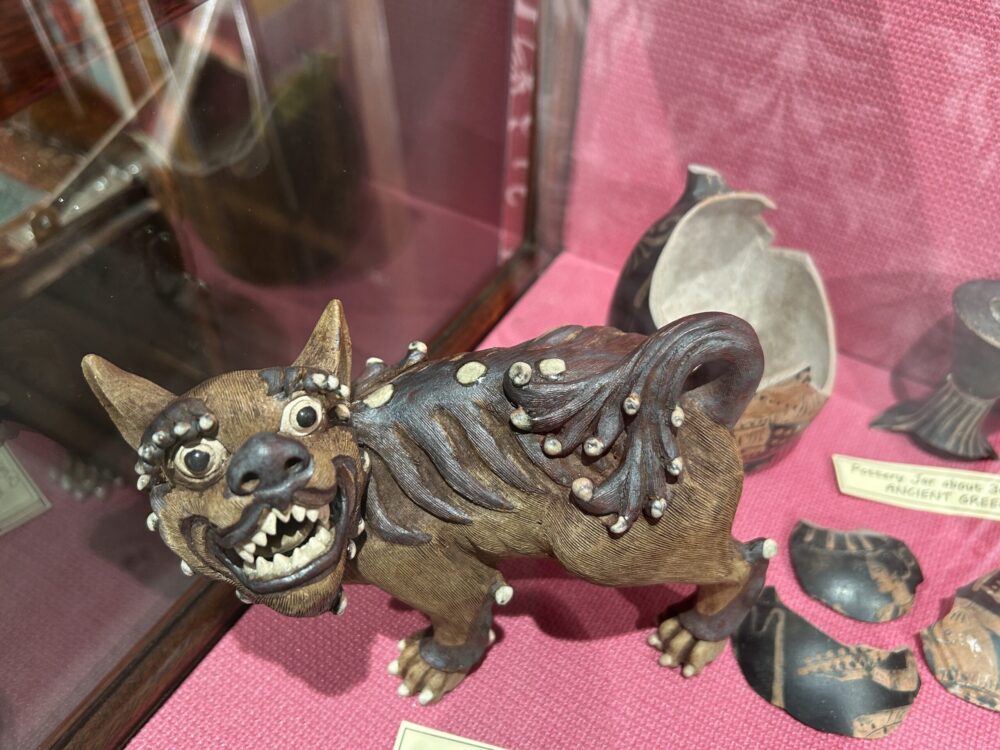
The next port of call is a room dedicated to the Llandudno and District Field Club which met twice a week, starting in 1906. It collected and catalogued local plants, wildlife, geology and history whilst rambling across the Creuddyn peninsula.
“Collecting” ravens and peregrine falcons on the Orme presumably meant the birds would be shot and stuffed. Club members would also collect specimens and curios on their travels which explains the mythical Chinese dogs and turtles which sit in the cases alongside pinned local butterflies and desiccated beetles.
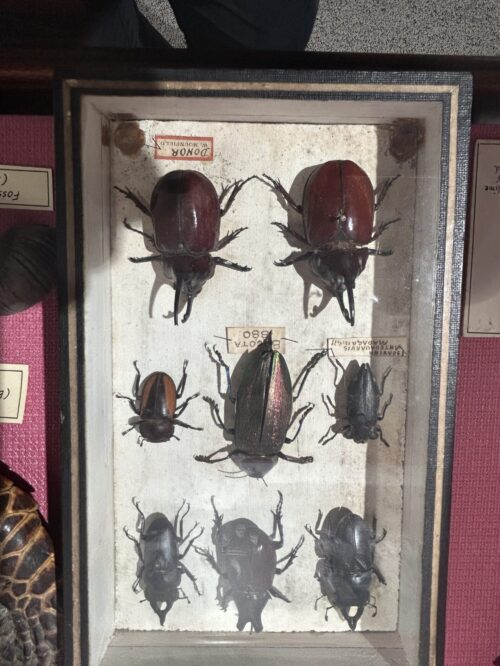
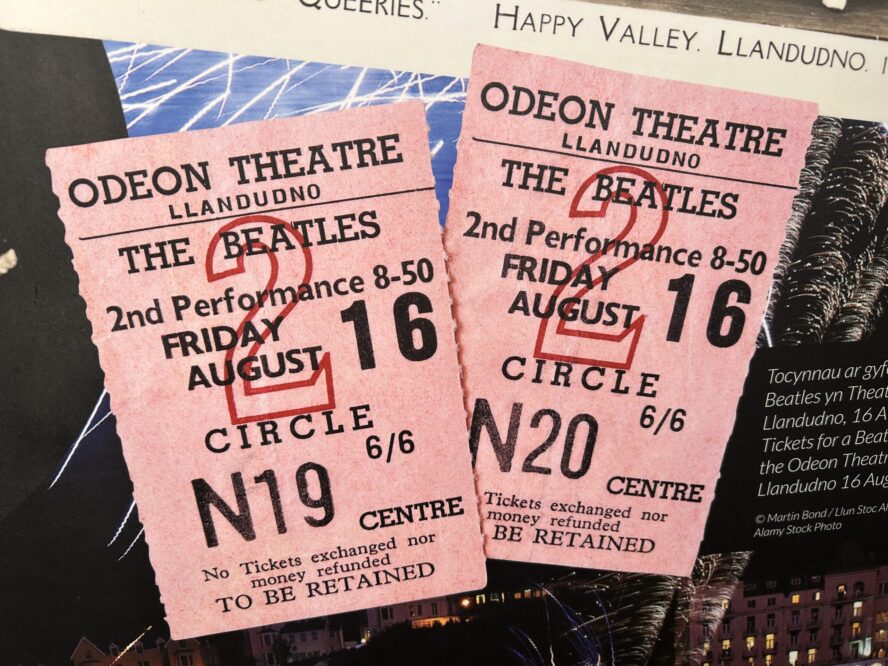
There are beetles and then you have The Beatles. Their visit to Bangor in August 1967 to spend time with Maharishi Mahesh Yogi is famous but their time in Llandudno is less well known. But at the cusp of their fame the Fab Four played a series of shows in the town’s Odeon.
They were top of the bill featuring six acts in total including Billy J. Kramer and The Dakotas because the recently released single “Love Me Do” was doing really well in the charts.
“The Beatles did two performances of twenty minutes duration a day for six days,” explains museum trustee Judith Phillips, who was working as a local journalist at the time. “I thought, well, I want to interview the Beatles. So I phoned their management office in Liverpool, Brian Epstein’s office And I told them that I was from the North Wales Weekly News. The person I spoke to said in a Scouse accent, sorry love, but they’re not doing interviews for local newspapers now.”
When Judith got home that night she expressed her disappointment to her father who luckily knew a friend of Brian Epstein, who duly agreed to the band being interviewed.
The Fab Four were late arriving the next day as their van had broken down outside Abergele so Judith interviewed the band after their slot: “And there were the Beatles, crammed into a small room. It had a wash basin and a sort of chintz curtain on a rail in one corner. I took in the view and I thought, hang on a minute where is Paul? All of a sudden, this curtain is pulled back and Paul McCartney emerges wearing a hand towel. And he says, oh sorry, love, but me kecks were killing me.
He was wearing this mohair suit, and I think his trousers had actually shrunk. He was in great discomfort. He said, is it OK if I sit myself down? Well, I had to avert my eyes, didn’t I because he was only wearing a handcloth and I was a very well brought up young lady? So I got to interview them and it was published a couple of days later in the Weekly News.”
Judith Phillips has some fascinating local historical connections within her family: “My husband’s great-grandfather was one of the people who lived in a cave on the Great Orme for a time. When the copper mines there were reopened by the Victorians, people came from other parts of Wales to work in them, from Amlwch on Anglesey and quite a few quarrymen from Blaenau Ffestiniog and Bethesda and my husband’s great-grandfather was one of the ones that came from Blaenau. When they arrived here to work, there was no accommodation for them, so they inhabited the caves until some was built.”
A much, much earlier inhabitant of the area is the favourite museum item of Alicia Enston, the volunteer learning and community engagement officer.
It’s a Neolithic skeleton, nicknamed Blodwen. “I’m a bit biased because I did my university dissertation on Blodwen 10 years ago. I did history with archaeology for my undergrad and archaeology for my masters. I’m a big fan of her. Not many know that there were people living here long before the age of tourism.”
Blodwen is the skeleton of a woman who lived on the Little Orme some 5,500 years ago. Discovered in a fissure in the rocks in 1891, researchers found that she was a woman in her late fifties or early sixties, who lived here around 3510 BC.
The caves also had bones from animals such as the hyena, rhinoceros and bear.The presence of pig bones near her body suggests she was alive in the period when nomadic hunters started to settle in one place and turned to farming for subsistence.
The Lancastrian manager of the quarry took the bones to Bacup Museum. Unfortunately, being an amateur society and museum, one of their volunteers one day decided they’d clean the bones and put them in a domestic washing machine for a spin.
Part of the skeleton’s recent history was the campaign to have it repatriated to Wales. Alicia Enston explains: “There was a lot of work to get her back here. There was an amateur historian, a local expert called Kenneth Dibble who was a thorn in the side of the authorities. And there was a big push through him and then through Llandudno Museum to have her back here. It shows how a bit of persistence and like-minded people working together can help get our history back.”
Llandudno Museum and Gallery is open February to December, Monday to Saturday between 10.00 and 17.00, with last admission at 16.00.

Jon Gower is Transport for Wales’ writer-in-residence. He will be travelling the breadth and length of the country over the course of a year, reporting on his travels and gathering material for The Great Book of Wales, to be published by the H’mm Foundation in late 2026.
Support our Nation today
For the price of a cup of coffee a month you can help us create an independent, not-for-profit, national news service for the people of Wales, by the people of Wales.


