

Making Tracks: Llantwit Major
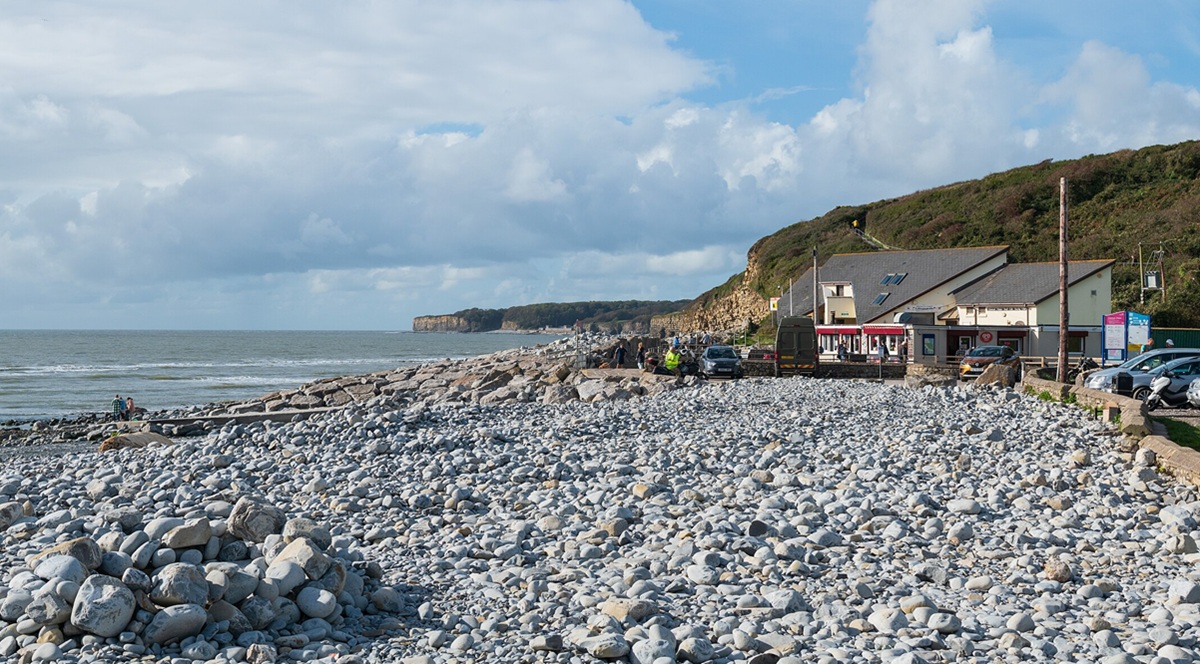
Jon Gower visits one of the most esteemed centres of early Christian culture in the Celtic world.
Guiding me through Llantwit Major’s tight labyrinth of streets, film director and playwright Jonah Jones comments on the seeming timelessness of the place. ‘It does seem to be removed from the world. Even though you can come here by train, it does seem to be as if in another time.
You only have to walk for three minutes from the station before you’re stepping into the long-ago past.’ Or, as local writer Ellie Rees puts it: ‘It’s impossible to stay in the present, to think horizontally in this area. The past keeps pushing to the surface.’
Jonah thinks the place evolved pretty much organically. ‘I have this contention that until you get to modern times, there isn’t a single crossroads in Llantwit Major.
It’s sort of evolved like a tree or a river in a way. It flows from one place to another. I find it delightful that I’m always walking on something very old.’
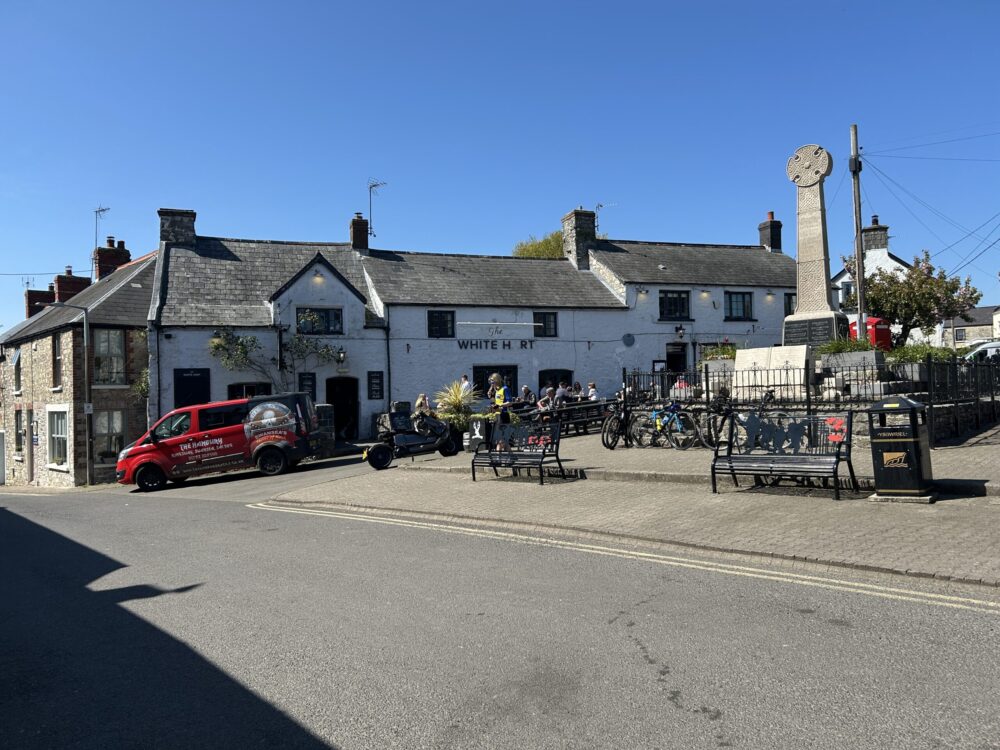
Described by architectural expert John Newman as ‘a large and open-textured village’ its growth was conditioned by factors such as the siting of the grange of Tewkesbury Abbey on high ground west of the church – which prevented growth in that direction – and then a boost of prosperity in the 16th and 17th centuries. From the middle of the 20th century RAF St Athan and a relaxing of planning policies allowed a great deal of new housing, swallowing up the hamlet of Boverton to boot.
Jonah explains how the new estates surrounds the much, much older centre. ‘As soon as you leave the station precincts, you start to get these roads that twist and turn and suddenly narrow. Watching pantechnicons trying to get through Llantwit is always one of life’s great entertaining moments.’
The religious significance of Llantwit Major is enormous. From the late 5th century onwards it was the seat of the clas or Celtic monastery founded by St Illtud, who lends his name to the Welsh name, Llanilltud Fawr. It became one of the most esteemed centres of Christian culture in the Celtic world.
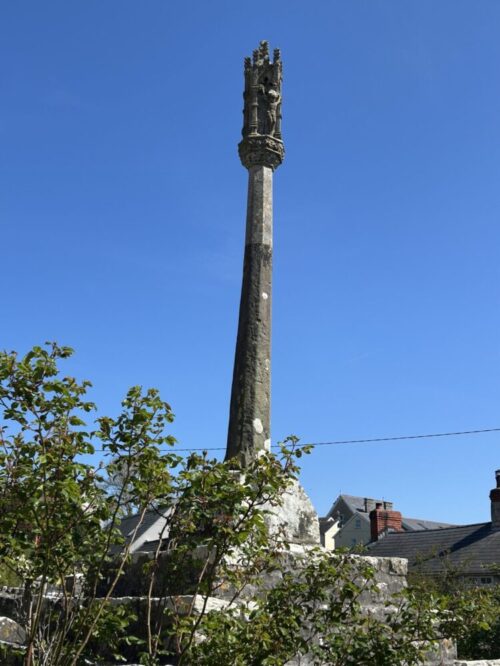
At its peak it this early Christian university had hundreds of students, including princes, eminent clergymen, and revered saints. It’s a long tradition which offers the church’s priest today a sense of long, long lineage. Rector Edwin Counsell recalls his first Holy Week in 2017.
‘We’d done all the churchy stuff, and I’m walking back through here. It must have been about 10 o ‘clock at night. What we do on Maundy Thursdays, we symbolise the Last Supper, the washing of feet, and then the watch, as we say, in the Garden of Gethsemane, where Jesus is arrested. And carrying the sacrament through this bit of the church where we’re sitting now, I thought, blimey, I wonder who’s done this over the years, and tonight it’s me.’
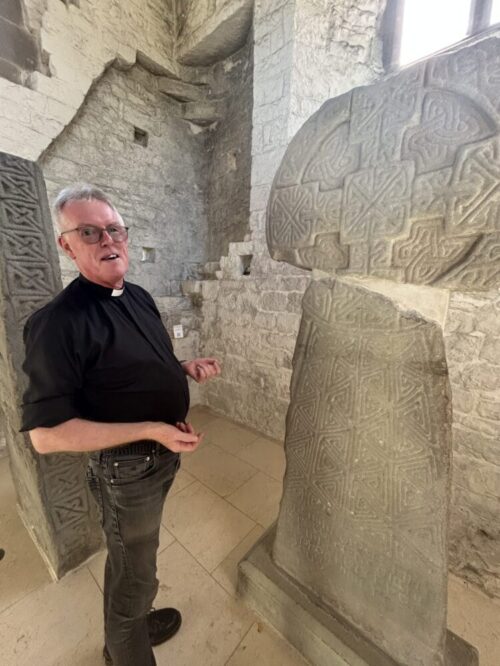
Edwin sometimes stands on the beach at Llantwit, making connections both geographical and historical. ‘Jesus, whenever he did things in Galilee, he immediately gets into a boat and goes across the Sea of Galilee to the other side. And the distance from Capernaum on the Sea of Galilee coast across to the Decapolis, what we call the Golan Heights today, is about the same as the distance across the Bristol Channel just down the road here.
And I often stand on Llantwit Beach and look across and think it’s got about a 30 foot tidal range here, and the Sea of Galilee, if they had a storm, would rise 30 feet in an instant. That’s why the disciples got terrified when their boat was in a storm. They were professional fishermen, for goodness’ sake.’
When he’s not enthusiastically attending to church and flock Edwin is a great fan of reggae and punk rock. He used to sing in a band but he keeps the name to himself. ‘I’ve always been an absolute fan of the music. And I live with those songs in my head and my heart. Top of the list would be two songs by Stiff Little Fingers. One is called “Suspect Device,” the other is “Got To Get Away.” Both of which will be played at my funeral.’
Edwin sees a good deal of punk in the New Testament. ‘It’s a mindset, it’s a way of seeing the world and it’s not far from where the New Testament is. You know, the New Testament is gritting the oyster of our lives in so many ways. Anybody who thinks it’s comfort and comforting, it isn’t. It’s immensely challenging. Somebody once said if you preach the gospel, you comfort the disturbed and you disturb the comfortable. It ought to make us really challenge how we see the world and how we see one another and how we live our lives.’
The life of St Illtud’s is a fecund source of stories, although you have to allow for the zeal of very early public relations: a scribe selling the importance of the saint and his settlement.
An encapsulation of Illtud’s life would include his Breton upbringing, being a cousin of King Arthur’s and acting as a youthful commander of the forces of Glamorgan. Illtud later in life founded an oratory in the Hodnant Valley where he would pass long periods up to his neck in the river’s chill waters. Those early saints were made of tough stuff.
The Vita Samsonis, written at Dol in Brittany in the 7th century describes Illtud in the most exalted terms, describing him as ‘the most learned of all the Britons in the knowledge of the Scripture, both the Old Testament and the New Testament, and in very branch of philosophy – poetry and rhetoric, grammar and arithmetic; and he was most sagacious and gifted with the power of foretelling future events.’
One of those events was his own death, when he predicted being received ‘by the hands of angels, about midnight, in the presence of you all,’ and his soul would ‘be carried away under the appearance of an eagle having two golden wings.’
As if that wasn’t enough, Illtud could also drive back the sea. When the waves were threatening to break through dykes Illtud had himself built, an angel told him to drive the sea back with his crozier. It duly retreated before him and when the shore was dry he plunged the pastoral staff into the earth, where it became a fountain of fresh water.
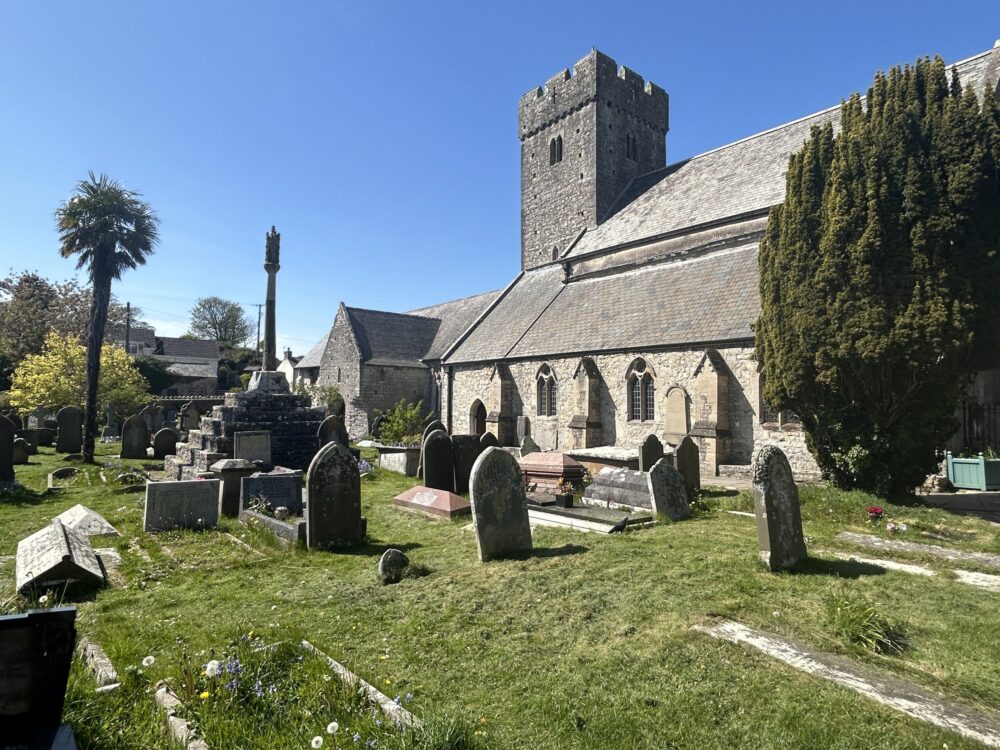
The current church is, according to John Newman’s The Buildings of Glamorgan ‘the largest parish church in Glamorgan, complex in its history and puzzlingly complex in appearance. Elderly palm trees in the churchyard add to the initial bewilderment.’
It contains a collection of 9th and 10th century inscribed stones, including a memorial to Hywel ap Rhys, the king of Glywysing, an old Welsh realm that extended between the rivers Tawe and Usk. Edwin Counsell points out the intricate, scrolling carvings on one of the stones and avers ‘It’s the intersection of God and humanity.
And it’s just enveloped in the love of God. In the middle, this is my favourite bit of it. It’s all this knottiness – you know, Cardiff City’s inability to win a game for about 10 weeks, it’s work and life and stuff, and it’s all knotted up – but yet it’s held in tension within an encounter with God, and it’s so powerful.’
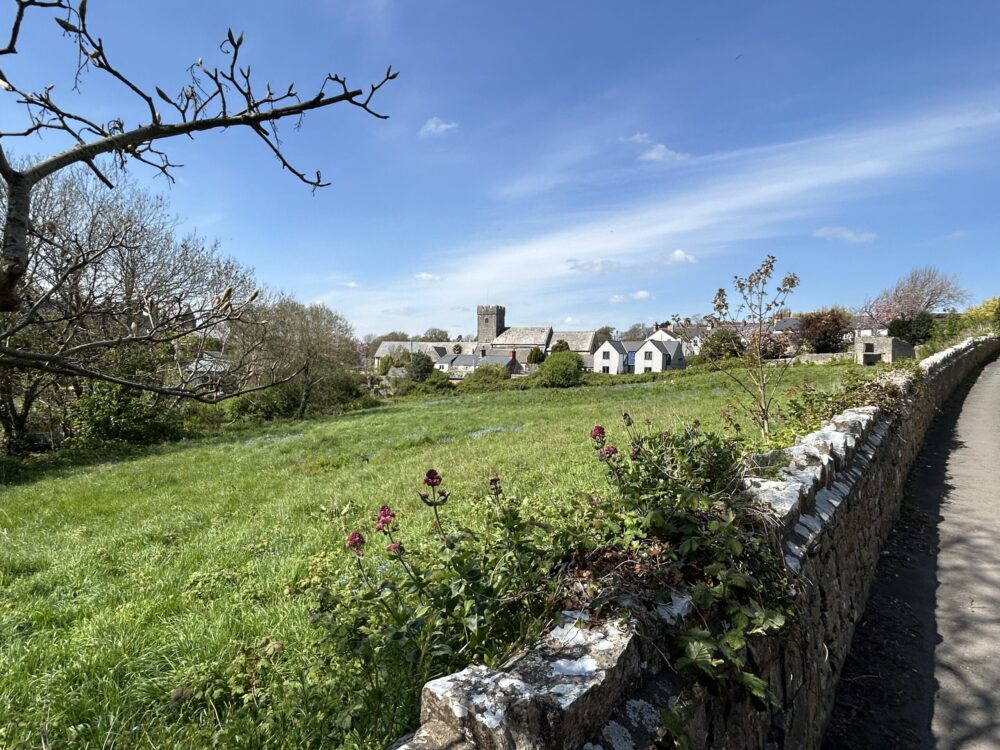
Steve George was born in Llantwit Major, which makes him a proud Llantonian. ‘Anybody who comes in, they’re called Comeashores.
It takes at least 90 years here before you become a local.’ Steve lives not far from the Globe field where archaeologists from Cardiff University, under the direction of Dr Tim Young, recently completed their third dig. ‘We found skeletons and a medieval belt. The leather had rotted away. The skeletons go back to between 600 and 800 AD.’
It was the digging and burrowing of badgers that first churned up bones, one of which was given to Steve by the land’s owner.
It turned out to be an adult skull, which piqued his interest. ‘So we think that the whole area was a graveyard going back to Illtud’s time. There were children’s skeletons and one or two of them had stones from the beach set around them in their graves, some sort of ritual element.’
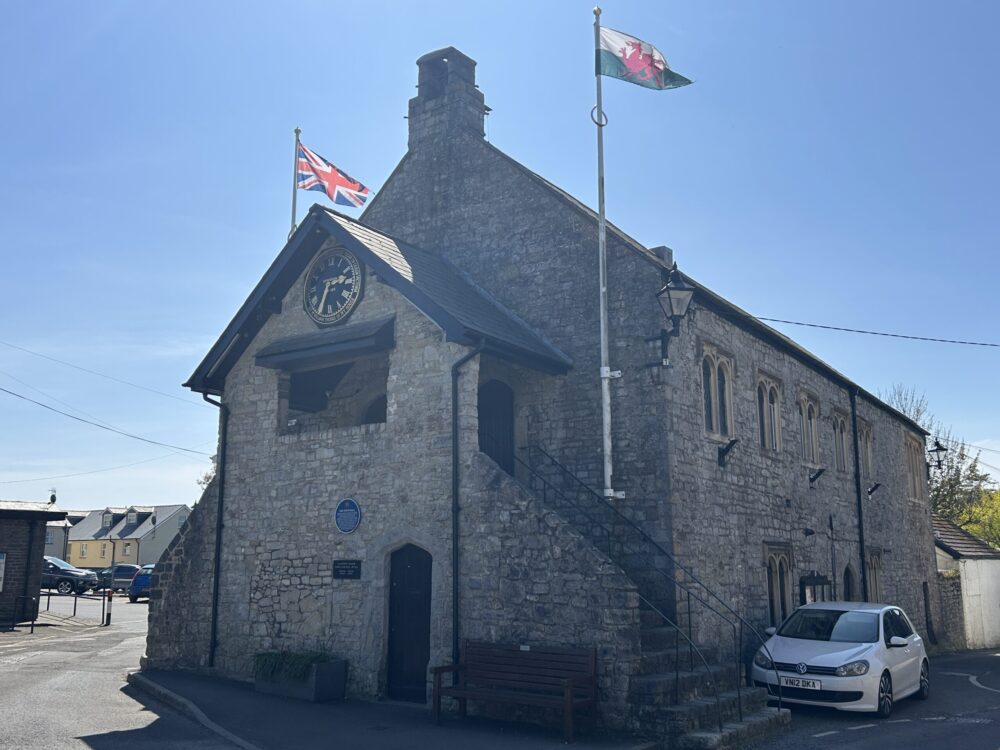
The Church is crucially central to the town while, among the secular buildings, the Town Hall also dates back to medieval times. Market fairs were held outside. These were known as glove courts as trade couldn’t start until a glove was hoisted up a flag pole, like the Vale’s equivalent to the Wall Street Bell perhaps.
In the more recent past small cattle markets were held near the railway station and behind the White Lion. As a boy, Steve George would enjoy all the agricultural busyness: ‘There was the Farmers Co-op, and just across the road, Norris and Griffin, and they both sold agricultural equipment. As a boy, I imagined it as a part of a cowboy town because they had creaking floorboards and big wooden counters.
They sold shotgun cartridges, halters, scythes, sharpening stones and agricultural feed. The farmers would reverse the tractor and trailer up underneath the Co-op, where they’d hoist a hundred weight sack of grain out on a pulley.’
Old Llantwit is veritably steeped in history, much of it enshrined in local names. Flanders Road and Flanders Farm commemorate the arrival of Protestant weavers, escaping religious persecution on the continent to set up their looms.
On Wine Street there’s the Blue Lias Farm shop, a name which refers to a geological formation made of limestone and shale and famous for its fossils. Meanwhile The Drangway means a narrow lane or pathway and is a dialect name from places such as Somerset in the English south-west.
A nearby hillfort fort called Caer Caradog marks a place where Caradog or Caractacus put up resistance to the Romans in company with tribes called the Ordovices and the Silures. Storyteller Angharad Wynne told me his story and that of his daughter Eurgain. ‘He was taken in chains with his family to Rome and in AD 53 they were paraded through Rome to the Senate and he made an impassioned speech. Instead of being crucified they were given a house and told to stay as guests of the Emperor in Rome.
‘They gradually walk out of history but the story is told that Eurgain heard St Paul preach and she was converted to Christianity. A few years later she made it back on the boat that was also carrying Joseph of Arimathea, who famously went and planted his staff and a thorn tree grew from it.
‘We’ve got a sprig of that thorn tree out here in the graveyard and she came here and she started preaching Christianity and gathered a small gathering of people, 12 people, and they kind of formed a clas together and it was known as Côr Eurgain and that that was the foundation of Christianity in Britain. It’s possible that this place was already holy and known for Christianity before Illtud came here about 400 years later.’
Then there’s the intriguingly-named Dimlands Road, half a mile out of the town centre. Local writer Ellie Rees wrote about it thus: ‘Dimlands – it sounds like a place from legend – the Dim Lands where the barque carrying the dying Arthur moves through the shades towards the Isle of Avalon. On a day of magically weird weather, I did indeed glimpse Glastonbury Tor from here, even though it is forty miles away.
The origin of the name is suitably dimmed by time. Elwyn Gibbs, writing in Volume 4 of Llantwit Major, Aspects of its History, confidently asserts that the name is ‘derived from Deme, a Yeoman.’
Ellie imagines the now demolished Dimlands House, with its noble entrance and renowned garden, must have been truly impressive. By the 1920s it had become a holiday camp for unemployed miners and their families and remained so until 1956, when it was demolished, the land sold off as building plots.
Here, each spring, things appear in her garden that Ellie hasn’t planted. ‘As I push my fingers into the soil I can almost hear David Rees and William Mordecai, gardeners from 150 years ago, reciting the names of their strawberries: “Adair,” “La Reine,” “Nimrod,” “Sir Harry,” “Penllyn Castle,” “Elton Pine” and “British Queen.” What a lovely bouquet of fruity names.

There are other flowerings, too, not least in March as poet Sarah Persson attests. She and her husband often hear the wind deflowering the trees. ‘In March, the cherry tree blossoms on Church Street, those days where the sky is a pondering grey and smears of sunlight brighten the stone walls of St Illtud’s church.
The pink blossoms then are sumptuous and inviting. But anyone who lives on the square knows that these flowers mean a storm is coming. Always. And the cherry tree knows it too. We’ll both wake up in the night when the wind arrives here to tear the petals away, and throw them all over Church Street in a wedding of violence and soft pink petals.’
Enthusiastic walker Marie Davies told me that almost every field, pasture, meadow and the odd farmyard in the area holds ancient, well-tramped routes. These are punctuated by many stiles, built with old skills and practiced hands.
Getting over some of them can be quite a performance as Marie explained, a mixture of ballet and gymnastics. ‘Under the guise of appreciation, we swiftly risk-assess each hurdle on approach. Some require Becher’s Brook-like jumps to successfully clear – low on the approach and significantly deeper on descent. Others demand a semi- graceful pirouette in order to correctly position the landing foot, while simultaneously clearing the crest.’
Meanwhile, walking is a gentle source of inspiration for Daphne King, who penned a poem about perambulating around the place:
My feet traverse ley lines along Llantwit Major’s ancient paths.
The magic grounds my feet as I stand in awe of the Celtic stones in the Galilee Chapel.
It covers me with healing rays as I watch the setting sun filling the sky with a dark orange blanket.
It comforts me as I lie in bed, my head nestled in the shadow of St Illtud’s, my feet pointing toward Glastonbury.
It sparks my pen and my words flow in Bardic tradition.
One field much walked by locals is the Great Lay which, from time immemorial, has been church land and given over to animal pasturage. It was bought two years ago by Imogen Clout and David Body. ‘We went up to the field to look for what was left of the tithe barn and the top of the field was completely overgrown with brambles, shrubs and small trees.
Plainly, if there was a tithe barn, it was hidden there. We looked out and of course there’s this amazing view.’ When it came on the market they put in a successful bid, with the intention of keeping it for the people of Llantwit in perpetuity.
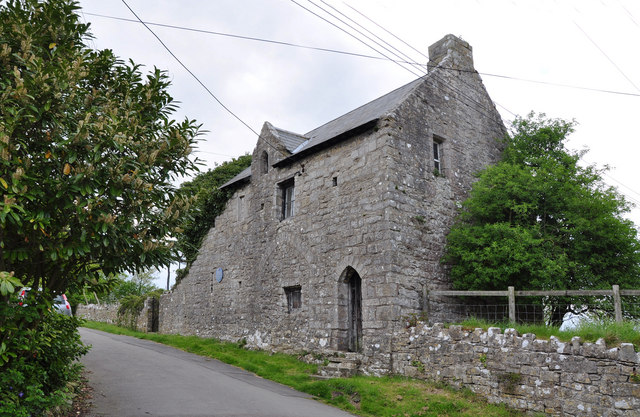
The land originally belonged to the Abbey of Tewkesbury and as we saunter up to the ancient field, with its sections called Abbotsleys, Culverhey, Wylleshey and Kyttesayreshey, we pass the gatehouse of the abbey, still remarkably intact.
On a bench installed by David and Imogen some schoolgirls are plaiting each other’s hair as the Bristol Channel glints silver behind them. A parade of walkers lead their dogs around the field’s perimeter as if it’s an outside version of Crufts although one notably frisky mongrel clearly has more energy than pedigree.
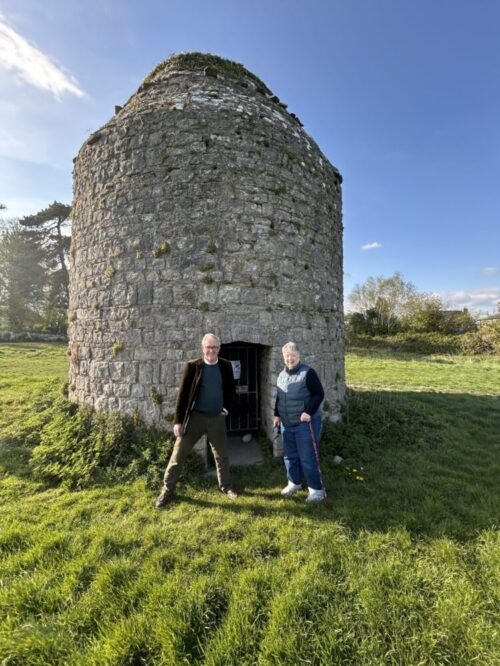
After the view, the most striking thing about the field is the dovecote, dating from the 13th century. Imogen thinks it’s probably one of the earliest in England and Wales. ‘It’s certainly one of the best preserved. The walls are about a metre thick. There’s a little run at the back so that the pigeons presumably could go and pay calls on each other.
It housed hundreds of birds, supplying three things – eggs, pigeon meat, and guano. They’d have dug the bird poo out and used it on the fields for fertilizer.’
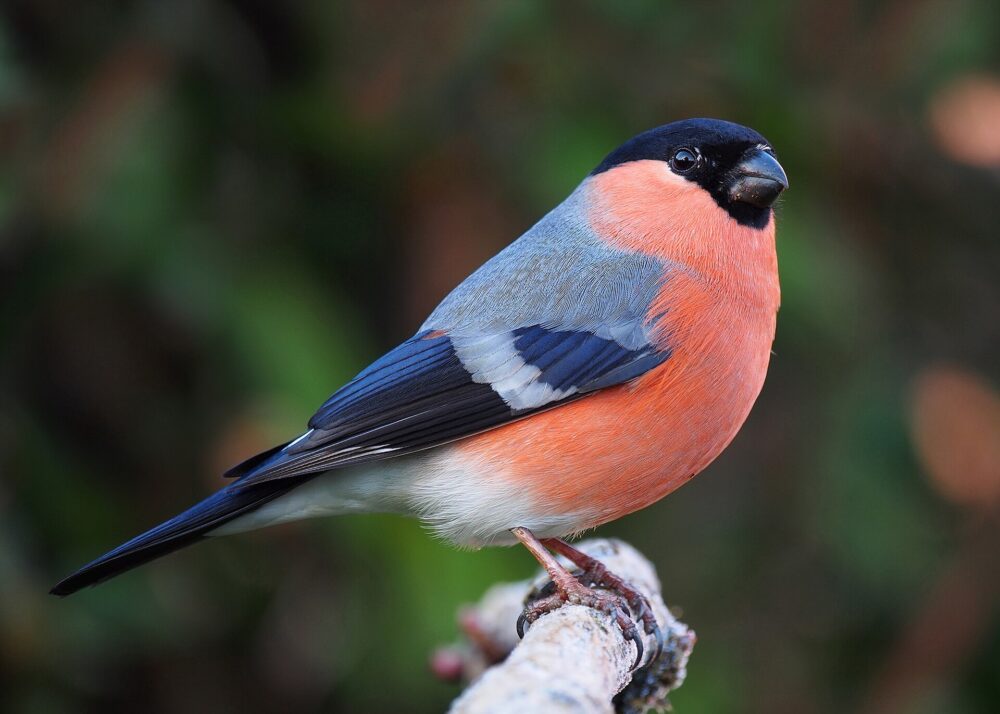
There are wild birds too. The nearby Cwm Colhuw nature reserve has uncommon yellowhammers and hovering kestrels, apple pink bullfinches and grasshopper warblers, the latter mechanically reeling in their songs. Helen Cook lived for several years in River Walk, in the west end of town, a time she associates with the caw and flap of jackdaws. ‘The back of my house looked out over Old Plas which is often mistakenly called Llantwit Castle, where the only inhabitants were jackdaws.’ Jackdaws, of course, love old walls.
It’s worth paying some attention to some of those walls as Andrew Holden found out. He was walking his rescue dog Cerys, a Lurcher/Whippet cross rescue when he came across a large ammonite in a grey stone on High Street. ‘We’d never seen one so big. Taking in the aging grandeur of The Great House we found another large ammonite in the street-facing wall.
It got me thinking about what the builders at the time thought they might be. Over the next few weeks we discovered what could be an ammonite walking trail, spiralling around this ancient town.’
Poet and artist Gilli-Ann Prevett looks for different things as she walks around, searching the gutters for rusty iron objects she can use when making her ‘eco-prints.’
The latest, her sixth one so far, involves using iron water. Gilli-Ann finds the epochal journey of iron simply astonishing. ‘What a journey, over billions of years. From a nuclear supernova explosion to a reserved space on the page, unrecognisable here in its last resting place, a ghost print finished with iron water, mixed with tea, coffee and salt.’ Llantwit is certainly somewhere where you ponder time a lot.
I leave the town on the early morning train when there is only one other passenger waiting on the platform. I ask him if he’s going far. ‘Only the Falklands,’ he informs me, ‘via RAF Brize Norton near Oxford and then Ascension Island.’ Learning about his impending journey over the south Atlantic makes my trip to Cardiff Central seem even shorter.

Jon Gower is Transport for Wales’ writer-in-residence. He will be travelling the breadth and length of the country over the course of a year, reporting on his travels and gathering material for The Great Book of Wales, to be published by the H’mm Foundation in late 2026.
Support our Nation today
For the price of a cup of coffee a month you can help us create an independent, not-for-profit, national news service for the people of Wales, by the people of Wales.
Get more trusted Welsh news
Choose Nation.Cymru as a preferred source in Google News to see more of our journalism.



Nice informative article
Who was ‘Twit’?