


Making Tracks: Llwyngwril
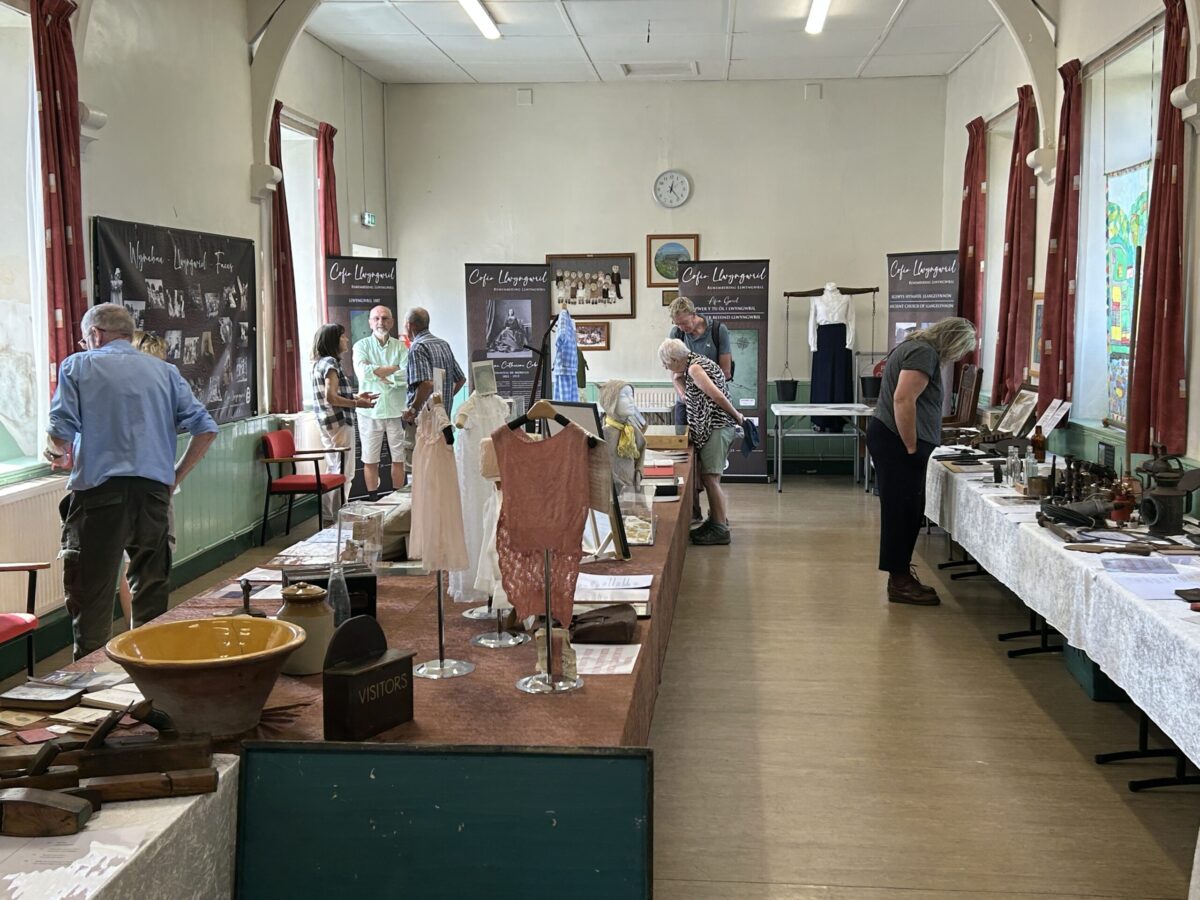
Jon Gower finds a community that literally knits together when Y Ganolfan, the village hall stages a busy celebration of local history.
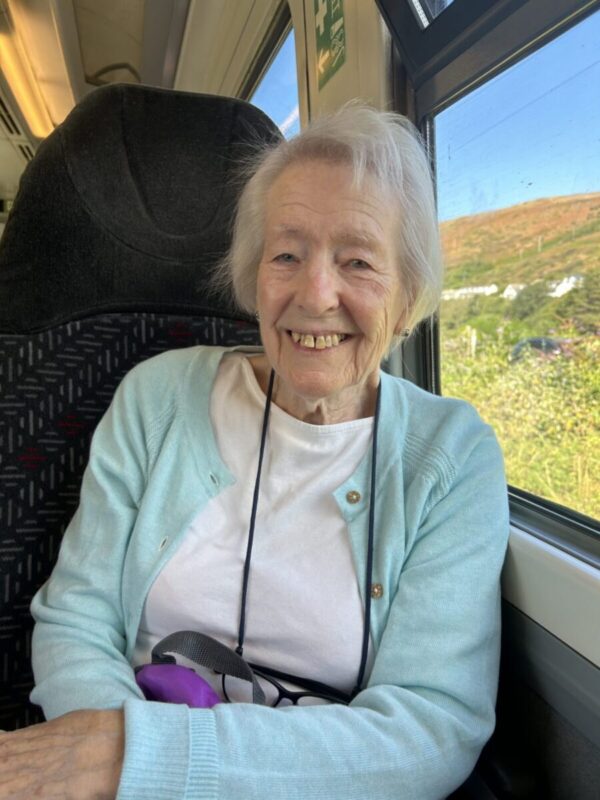
It’s a small world. I am travelling on the Cambrian Line to the small village of Llangwril in Meirionnydd when I strike up a conversation with Mary Price, who, it transpires, used to teach at Llwyngwril School.
Mary started there in the 1960s, when the place had just opened. Some of her abiding memories are euphonious: ‘When I arrived in the mornings I would hear music. The pupils enjoyed making music even when they were waiting for the school day to begin.
‘They’d use any instruments to hand, including the piano. Some of them went on to become musicians, such as Dafydd and Gwyndaf Roberts, two brothers who have been part of the folk group Ar Log, this year celebrating their 50th anniversary.’
Gwyndaf used to have lessons with Nansi Richards, Telynores Maldwyn, the Queen of the Harp, one of the best known harpists in Wales.’
A possibly apocryphal story about Richards involves one of her overseas trips. She visited the home of cornflakes manufacturer Will Kellogg who was at the time searching for a marketing idea for his product. Richards came up with the iconic cockerel which would find its way onto millions of packets when she played around with the similarity of the name Kellogg and the Welsh word ceiliog, meaning cockerel.
The origins of the name of the village are unknown but a person called Gwril possibly gave his name both to the village – ‘the grove of Gwril’ and to the Afon Gwril which flows under the Arthog-to-Tywyn bridge in the heart of the place. Its first recorded use, ‘Longoril’ dates back to 1292–93.
Historical features abound hereabouts. The village has strong links with the early days of the Quakers – the Society of Friends’ burial ground is dated 1646.
Standing above Llwyngwril is Castell-y-Gaer, a prehistoric hill fort, and there are many standing stones in the area, such as Meini Parth y Gwyddwch, set above the village, and Meini Bryn Seward which sit on the old, high route between Cregennan and Llwyngwril.
There is a local legend these stones originate from the time when the lowland giant Gwril and his cousin – the mountain giant Idris, sitting on nearby Cadair Idris – used to throw huge stones at each other but the slower movements of geology might have more of a part to play. Similar stories exist elsewhere in Wales, suggesting it was a giant pastime.
There are other names associated with the village that are a little more dependable, factually speaking.
One was Marianne Catherine Cabrera, the Countess de Morella. Her father bought the Llwyn Du Estate and after his death the Countess inherited some 21 properties including farms, the blacksmith and carpenter’s shop and even a reservoir and some sheep walks.
Another Llwyngwril connection is Abram Wood, the ‘King of Welsh Gypsies’ who died in 1799, aged 100. Wood is buried in the old church in the village.
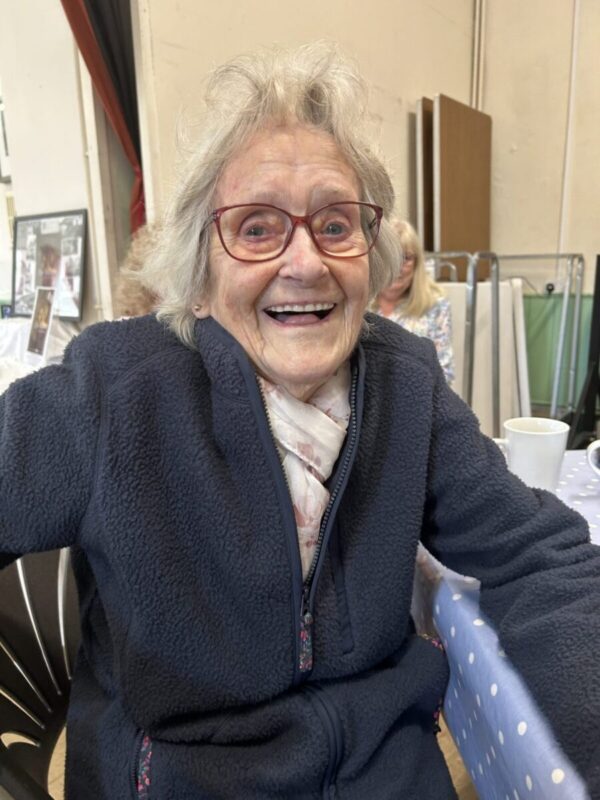
Enid Owen is Llwyngwril born and bred. The smiling 93-year-old remembers there being five chapels in Llwyngwril along with three butchers’ shops and six grocery shops where there is only one today.
‘There was a cobblers’ shop; we’d go there to help as children, pulling the nails out of the leather. There were three banks.’
Enid’s son Stephen grew up here in the ’60s when the village was ‘a busy place with some 450 people living here. There were by then two shops, and milk would be bottled at a farm called Ty-Du. Half the population then were Welsh and half had come from England. By now only some 10 per cent are Welsh, perhaps even less than that’.
At 92, Arthur Williams is a year younger than Enid Owen but his eyes are equally sprightly.
He remembers a time when the village could host a Cymanfa Ganu, a meeting of spirited singing with two choirs competing against each other. Arthur left school at the age of 15 and in 1949 started a job as a lad porter at Llwyngwril Station, when the stationmaster, Arthur Williams somewhar confusingly had the same name, before moving to work in Machynlleth ‘on the footplate as a fireman’.
He stoked the train boilers for 15 years, moving from Wales after a year to work in Stratford-upon-Avon.
Interestingly, the name of the river that flows through the Heart of England and Shakespeare’s birthplace derives from the Welsh ‘afon,’ for river. What’s in a name, eh?
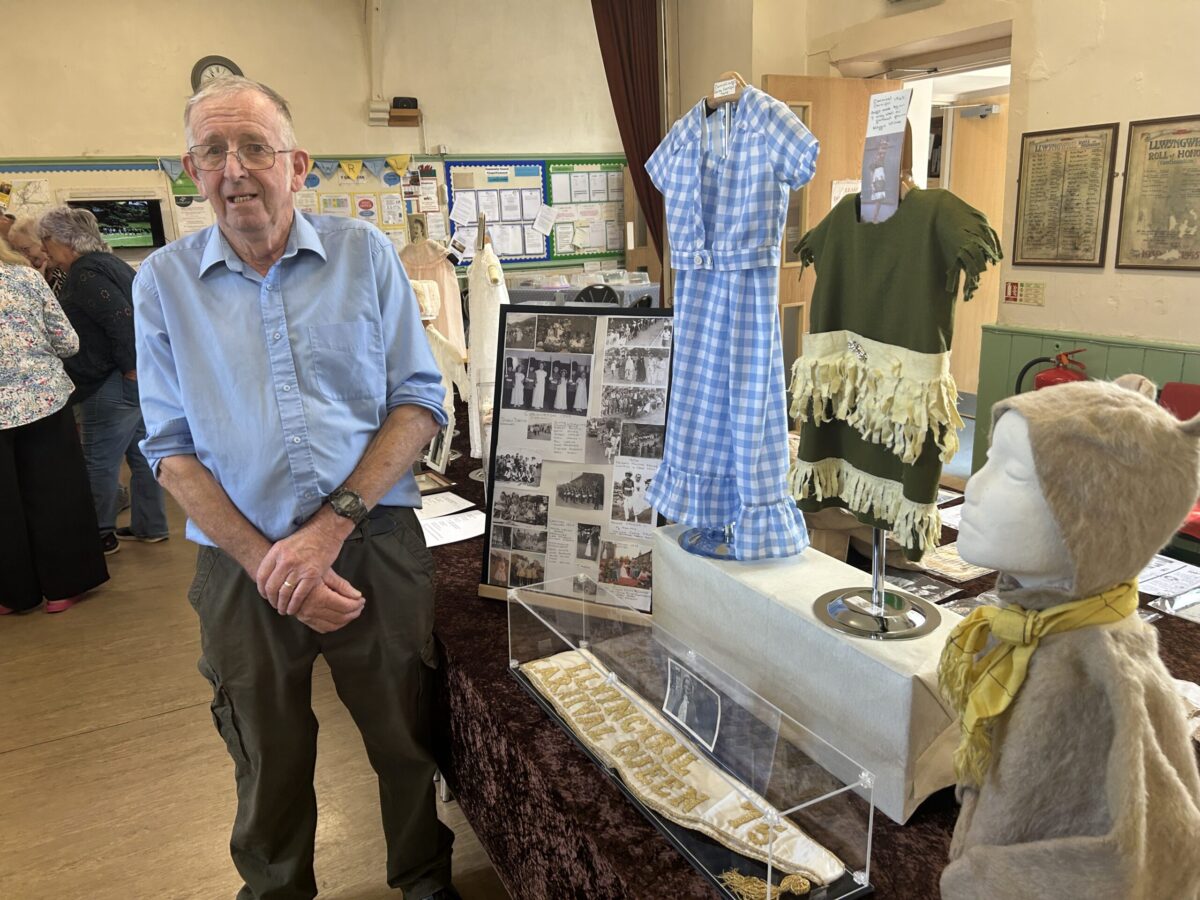
Garth Jones shows me an intriguing collection of clothes assembled in Y Ganolfan, including items knitted to bought patterns, and also his wife Linda’s baptism gown, complete with a photograph of her as a baby.
Both Linda’s mother and her grandmother sewed. ‘There’s Linda’s mother Betty Wilkes’ wedding dress which then supplied the material for the baptism gown which has subsequently been used for four or five other christenings.’ It’s a lovely, familial example of clothes recycling.
Garth then shows me a two-pronged toasting fork, but it is no ordinary fork. In 1933 a railway engine went off the line in Friog and the fork is allegedly made from a part of that wounded locomotive.
He also shows me outsize callipers used by carpenters for measuring wood used in repairing Barmouth Railway Bridge. ‘This was used to measure lengths being replaced and the new pieces to ensure they were the same size.’
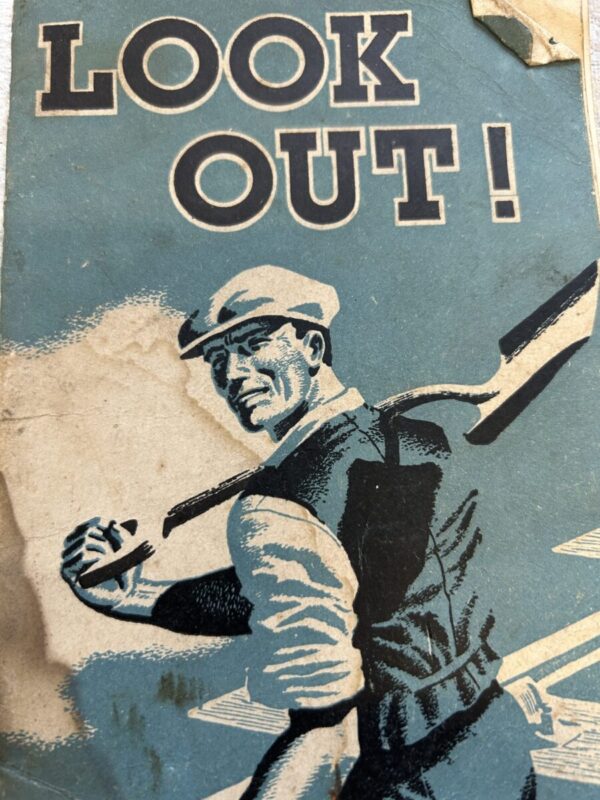
Garth himself worked on the railway, labouring on the tracks between 1980 and 2010 as part of a four-man gang. ‘We looked after a stretch between Tywyn and Fairbourne, mainly doing maintenance, although if there was a big job to do we’d be joined by gangs from Aberdovey and Barmouth.
‘We would walk the whole line once a week, checking one part from Tywyn to Llwyngwril and then, at the end of the week, from Llwyngwril to Fairbourne, taking notes about any weaknesses in the rails. We would then report these back to the office in Machynlleth so they could plan our work.
‘There is a stretch of line outside Tywyn which we called Cerrig Mawr, Big Rocks, where it runs parallel to the sea. You had to be careful walking there because of the waves and wear a hard hat in case of falling rocks and small stones.
‘It was interesting work which could be a bit monotonous but there was great friendship in the gang: we were like brothers. There was the ganger, who was a sort of foreman, the trackman and the sub ganger. In the ’80s they changed to gangs of eight, bringing Aberdovey and Llwyngwril together and uniting Barmouth and Harlech as well. They were also developing trains which could check the state of the rails automatically, which was very handy.
‘They would come down for a week to identify the bits that needing repairing. Later we would weld the rails, which were 60 foot long, producing what was known as continuous welded rail, running for a mile or a mile and a half. At each end there’d be what you’d call a “breather” which were gaps in the rails. If they became tight – especially in warm weather like we’ve been having now – it was easy for the rails to bend or go out of alignment.
‘If that was spotted we would slacken the fishplates to get things back on track, as it were, using bars to move a rail that weighed 95 pounds for every foot of length.’ It was heavy, testing work.
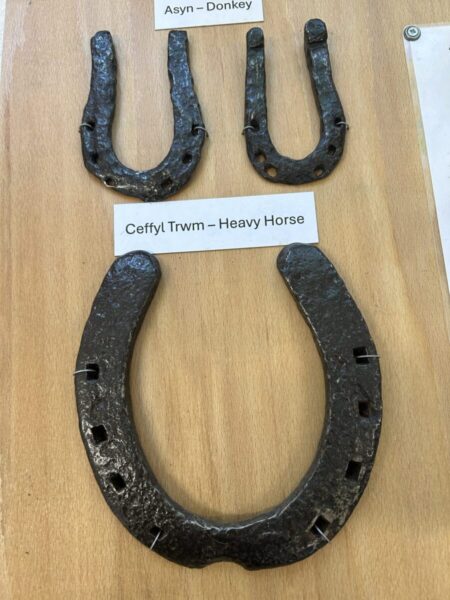
Huw Davies grew up in the village, where both his father Richard and grandfather Meredith were blacksmiths. ‘The business tailed off before the Second World War when my father joined the Army. When he came back the work had gone, as tractors had come in.’
Huw shows me horseshoes made for a sturdy horse and more unusual ones made to fit the hooves of donkeys. Huw also explains the key role of water in the development of the village, showing me features on a map he produced that reflects this, such as mills and a pandy, a water-driven mill for ‘fulling’ or thickening cloth.
There was even a hydro-electric powerhouse which provided electricity for the village between the 1930s and the 1960s.
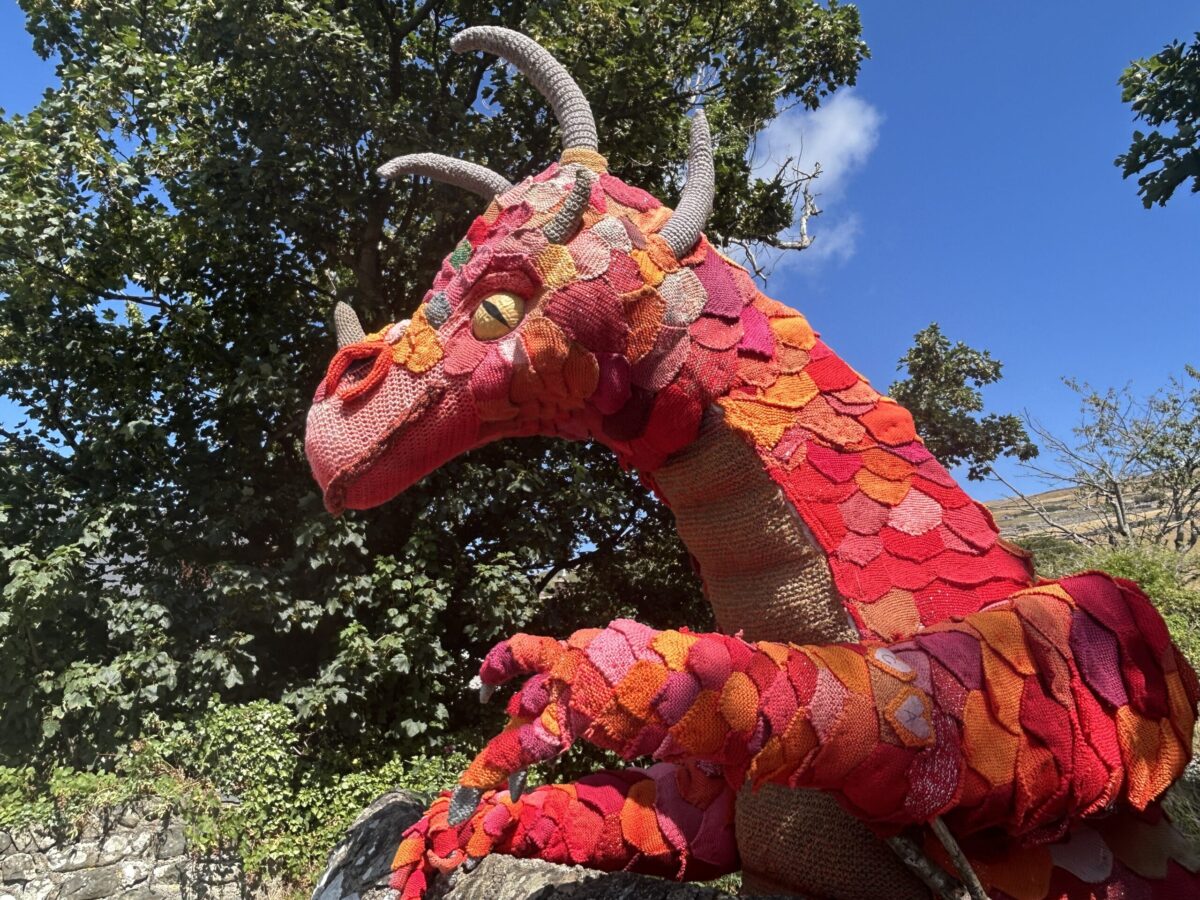
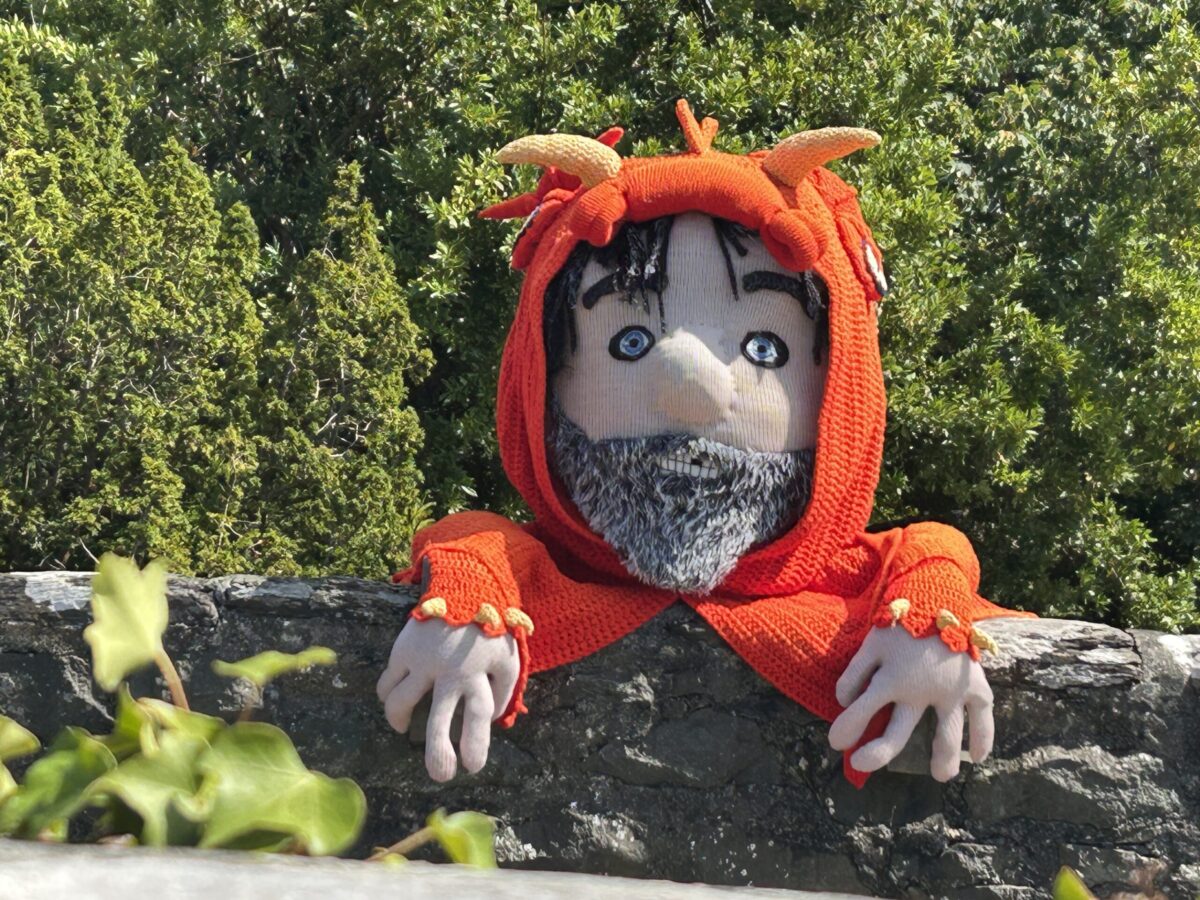
One of the features of the village nowadays is knitted objects: Llwyngwril is a yarn-bombing extravaganza or a long-running yarn-bombing campaign, even.
A giant head of Gwril peers over the rim of the river bridge and dragons, big and small, stand in quiet corners or scamper up drainpipes.
Knitting enthusiast Pam Osborne proudly shows me some of the village’s bright creatures and features, all made of coloured wool. She loves the way this communal endeavour brings people together, telling me it is a very friendly village in the first place.
‘Anybody will help anybody out. I lost my husband, Roy, recently and without the support of the village I don’t think I’d have survived.’
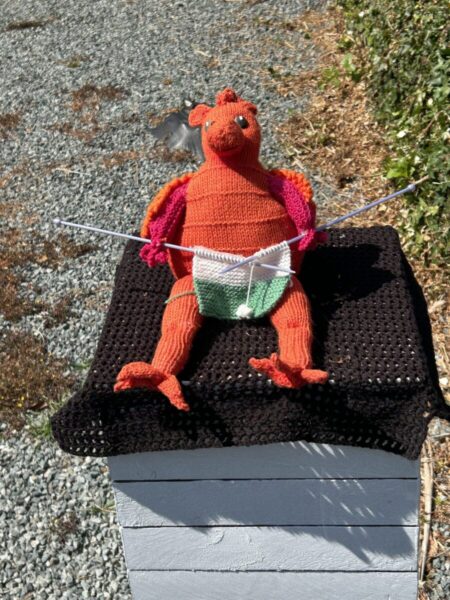
Fellow knitter Pat Griffiths recalls how the whole thing started in 2014 to raise money for Y Ganolfan, the community hall. ‘It was a eureka moment for me, and it was a eureka moment for the committee. I’d been on holiday and visited Sellafield Power Station.
‘Bizarrely enough I was walking along a promenade there and saw all this bunting. I came back and said we could have a bit of knitting in the village.’
The seed of an idea soon grew. ‘All of the elderly people, we’d ask them to knit triangles for us so we could make bunting and we used to take them a ball of wool and two knitting needles. The number of people that joined in was unbelievable. Unfortunately, a lot of those people are no longer with us. And this is why we do things like this as a community, because if you don’t carry it on, nothing carries on forever, does it?’
Word spread and soon people were putting in requests. Says Pat, ‘I was approached by a lady who did the international sheep dog trials and she said I’d like you to do something for us as well. It was mental, absolutely mental – shepherds, sheep and dogs. Sheep were everywhere. Dogs were everywhere.’ As ideas go, it was all a bit barking.
Lesley Thomas moved here ten years ago and was soon drawn into the knitting circle. ‘I had moved to a new place, so wanted to make new friends. I’m a crafty doer person so I thought it would be a nice way to start, basically. Entry-level bunting making is something you can pick up quite easily. I’ve knitted before, but not for a long time.
‘So I started doing that, and that was when we were doing myths and legends. And I said you could make a Merlin or a small wizard out of a triangle and showed them how to do it. So we made lots of little magicians and Merlins and what have you.’
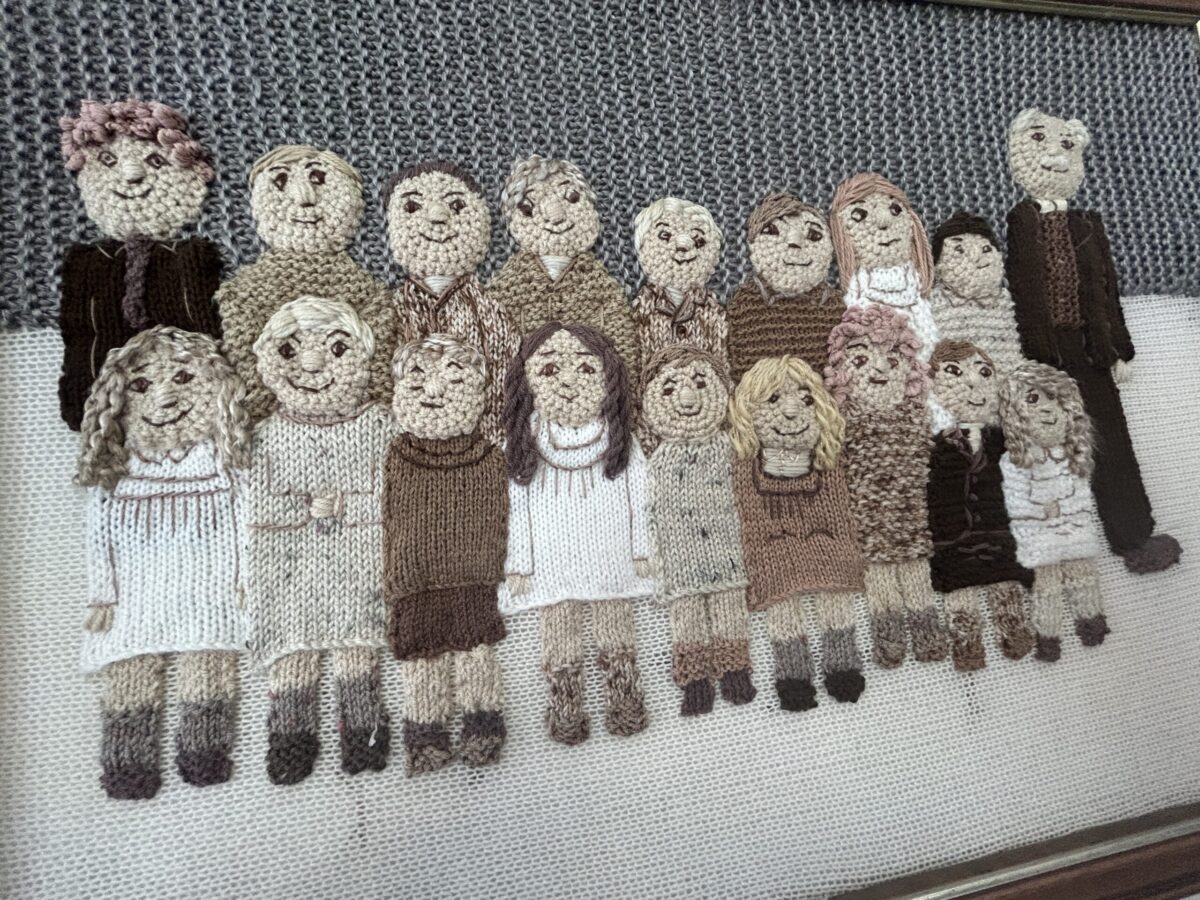
Lesley also made a beautiful, sepia-coloured version of a photograph of pupils and teachers at the village school which is touching in its slightly fuzzy detail, as if she’s captured lost youth and the way in which memories fade.
Village life has its darker days, of course, such as the day their woollen giant Gwril was stolen even though he was physically attached to the bridge. He was sadly never found and nobody confessed.
I explain that nothing surprises me. I was living in mid Wales one winter when someone stole a lorry emblazoned with ‘Powys County Council’ on the front, back and sides. Which was pushing a snow plough.
The knitters of Llwyngwril have by now made friends with fellow enthusiasts elsewhere. One year a group came over from Newtown, some dozen in number, and they enjoyed the visit as well as the tea and cakes.
The following year a coachload arrived, a real case of communities knitting together and adding colour to a place.

Jon Gower is Transport for Wales’ writer-in-residence. He will be travelling the breadth and length of the country over the course of a year, reporting on his travels and gathering material for The Great Book of Wales, to be published by the H’mm Foundation in late 2026.
Support our Nation today
For the price of a cup of coffee a month you can help us create an independent, not-for-profit, national news service for the people of Wales, by the people of Wales.
Get more trusted Welsh news
Choose Nation.Cymru as a preferred source in Google News to see more of our journalism.



Abram introduced the fiddle to Wales and started the legendary line of Harpists in his family…
I hope Jon publishes this series of articles as a book when he has finished. I can imagine myself reading it curled up in front of a fire during the long winter nights.