

Making Tracks: Manorbier
Jon Gower visits a charming Pembrokeshire castle and popular wedding venue once home to Wales’ first travel writer.
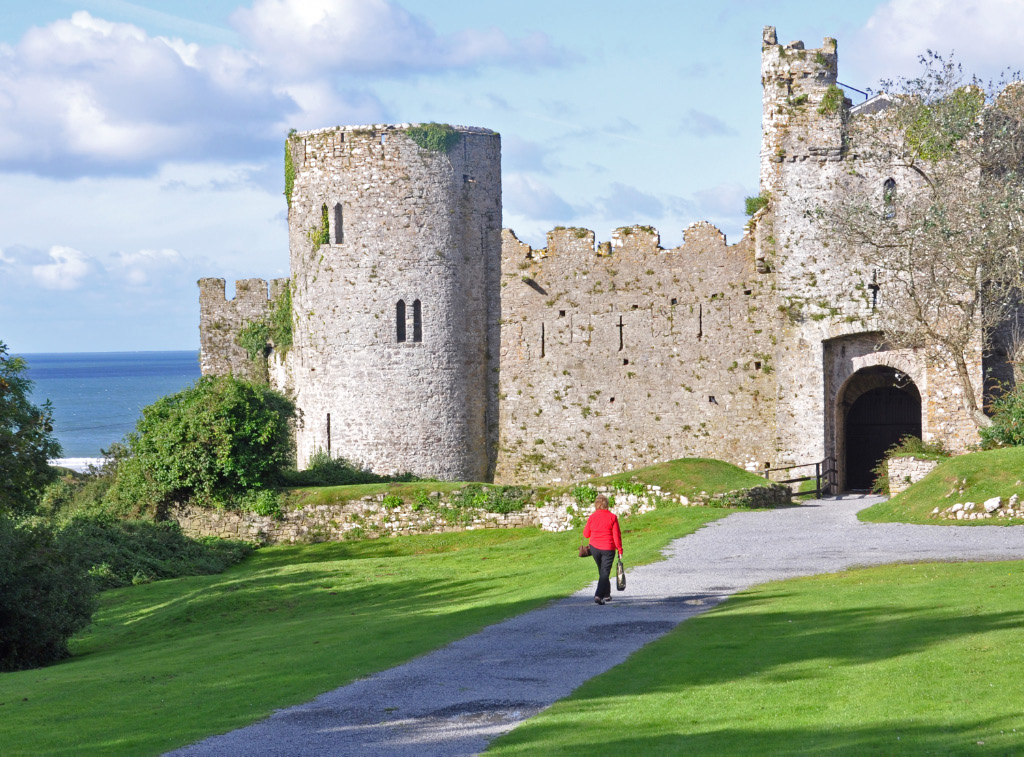
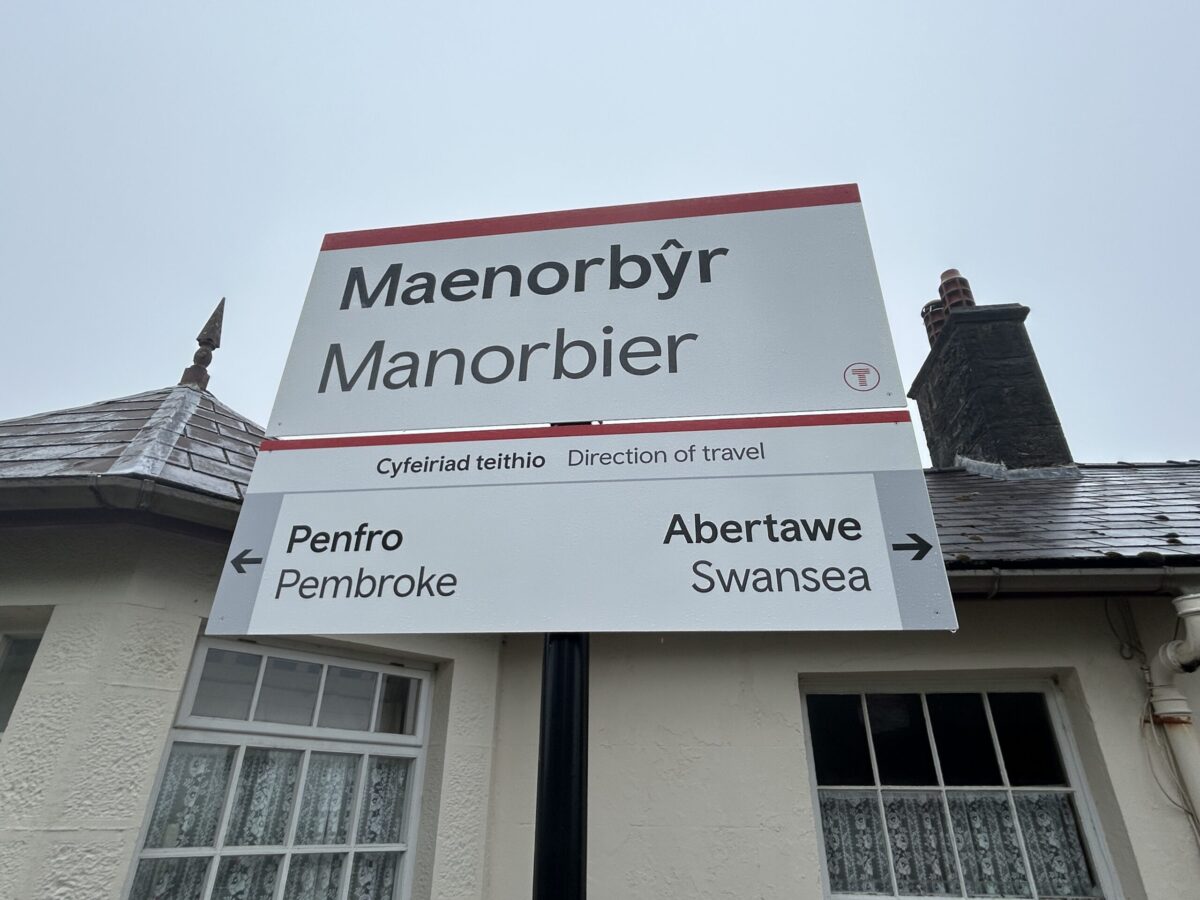
Manorbier castle is a brisk bike ride along verdant Pembrokeshire lanes from the train station. The road verges are exuberant jungles of cow parsley and meadowsweet while swallows twitter electrically over the open fields, trawling for insects, their tiny beaks agape.
The castle was home to Gerald of Wales, one of the most fascinating characters of the Middle Ages. He was a scholar, diplomat, theologian, churchman and writer of material that can read like very early advertising copy.
Here he is extolling the virtues of his home: ‘Of all the lands of Wales, Dyfed, with seven cantrefs, is the most beautiful and desirable; and of Dyfed, Pembroke; and of Pembroke the land described above Manorbier. It follows, therefore, that this spot is the most delightful in all of Wales.’ And it is delightful – a compact castle set in well manicured grounds and perched on a rim of land with waves coruscating in the near distance and a yacht’s sails, plumped by the wind, tacking across the seascape.
Gerald also addressed the nature of the Welsh people, who are ‘very sharp and intelligent. When they apply their minds to anything they are quick to make progress, for they have great ability. They are quicker-witted and more shrewd than any other Western people.’ He also states categorically that ‘for the Welsh generosity and hospitality are the greatest of all virtues.’
Katie Sore knows all about hospitality as the manager of Manorbier castle, where she’s worked for 14 years.
She tells me the place is privately owned by ‘two fascinating ladies, one called Dame Emily Napper and her aunt, Lady Beatrice Plunkett. They’ve had Manorbier castle since about the 1950s.’
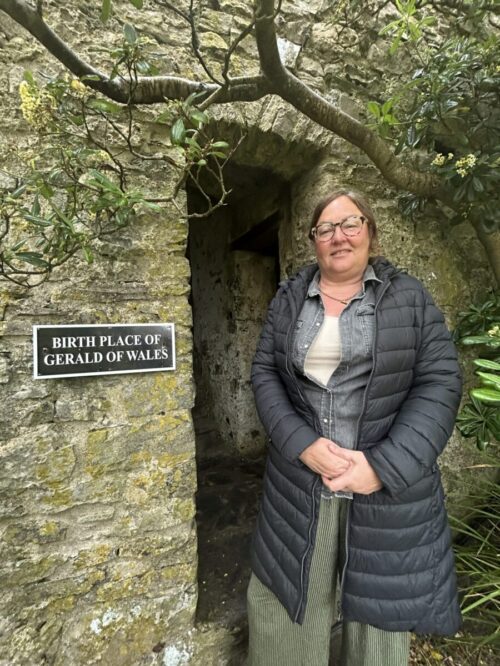
Katie continues, ‘The house within the castle was built in Victorian times by a tenant called Joseph Richard Cobb, who was fascinated with renovating old castles like this one and also Caldicot castle. He put floors in the towers and built the house within what were then old barns. In the 1980s Lady Beatrice lived here by herself. If you wanted to come into the castle, there was a big old bell and you’d ring it and she’d just let you in. It was all very casual. And then in the ‘90s they started looking at the castle as a business, charging for entry. It’s got such a special place in my heart, although we are a little bit forgotten. But that’s part of our charm, that we’re a lovely secret spot that people do eventually discover.’
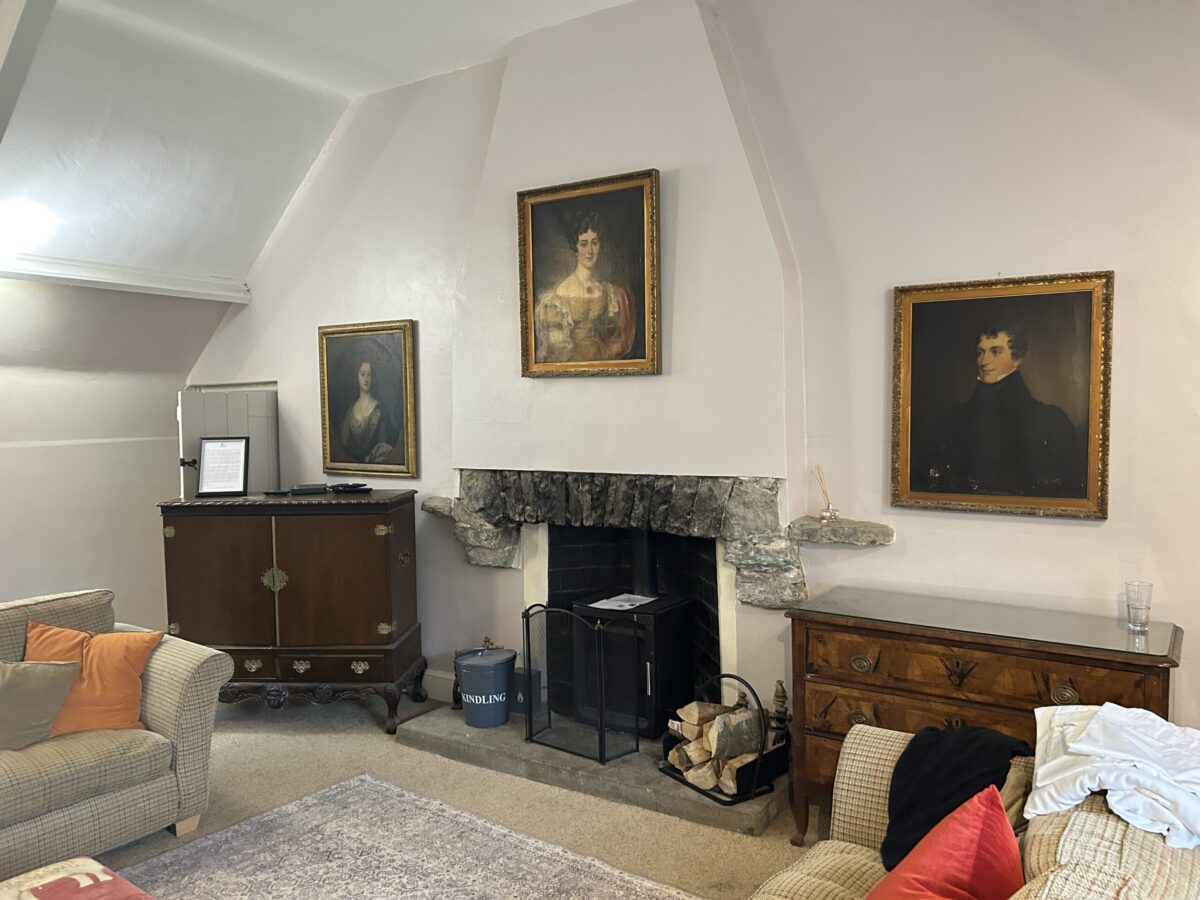
Gerald of Wales breaks down the castle’s charm into component parts, describing his fortified mansion home which is ‘visible from afar because of its turrets and crenellations,’ situated on top of a hill near the sea which on the western side reaches as far as the harbour.
He describes the excellent fishpond with its deep waters; a ‘stream that never fails’ and ‘most attractive orchard’ together with ‘a great crag of rock and hazel-nut trees which grow to a great height.’
His lyricism then flows like the breeze. ‘Boats on their way to Ireland from almost any part of Britain scud by before the east wind…This is a region rich in wheat, with fish from the sea and plenty of wine for sale. What is more important than all the rest is that, from its nearness to Ireland, heaven’s breath smells so wooingly there.’
One of the other attractions is a small beach, where Gerald’s brothers, destined to be soldiers, would duly build sand castles. Gerald, on the other hand, who had ambitions to one day be an archbishop, built sand churches!
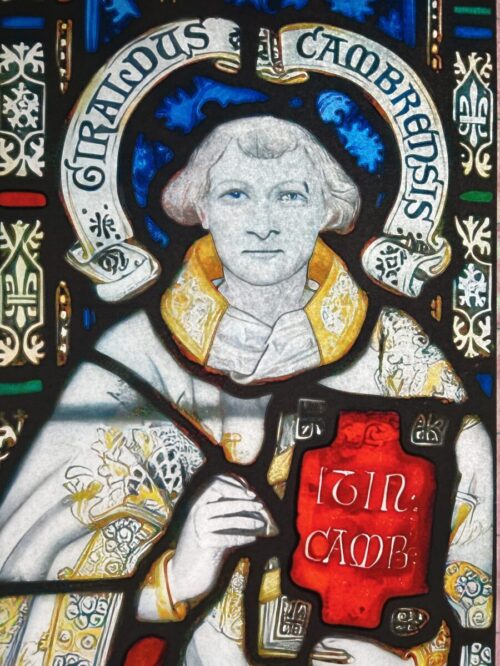
The Victorian historian Edward A. Freeman thought Gerald ‘One of the most learned of men in a learned age…He mastered more languages than most of the men of his age, and examined them in a scientific way that was typical of even fewer men of his time.’
A.H.Williams, writing in 1948, suggested Gerald’s ‘observant eye, his retentive memory, his ability to note interesting and relevant features, as well as his fluent prose, has given us books incomparable in their descriptive power and priceless as historical documents.’ With digressions about the habits of beavers and the prevalence of harps, it’s also entertaining stuff.
Those incomparable books include The Journey Through Wales, a very early travel book and account of his eventful tour as a missionary in 1188.
A companion volume, The Description of Wales tells us about the social and economic conditions of the country in the last years of Henry II’s reign. It’s full to the brim with facts about the Welsh, such as the gleaming state of their smiles: ‘Both sexes take great care of their teeth, more than I have seen in any country. They are constantly cleaning them with green hazel-shoots and then rubbing them with woollen cloths until they shine like ivory.’
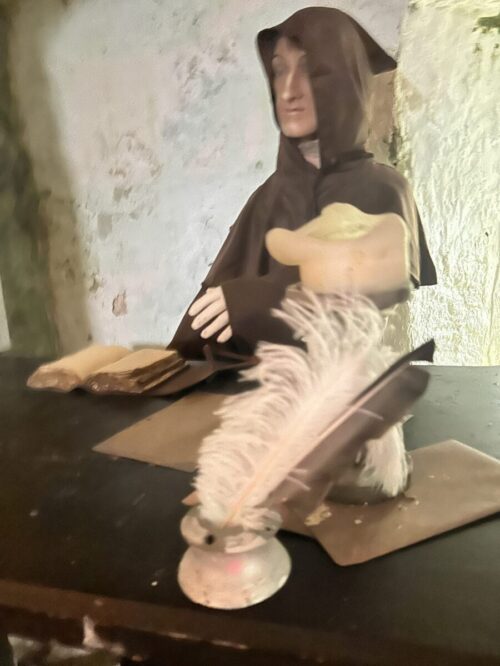
Gerald wasn’t actually called Gerald in his day. He was christened Sylvester Giraldus de Barri and his family included Norman landowners and knights and had connections with a Welsh Royal Family.
His father, William de Barri, was a knight while his mother Angharad was the daughter of the Constable of Pembroke Castle, Gerald de Windsor and Nest, the daughter of the King of Deheubarth, Rhys ap Tewdwr, this at a time when most of Wales was divided into a number of independent kingdoms.
So the names we now know him by, Geraldus Cambrensis and Gerald of Wales came much later. Curiously, I once met a man in Gorslas in Carmarthenshire whose parents had woven it into the name of their son, whose full sobriquet was David Geraldus Cambrensis Morgan! Think of the taking of the school register.
Gerald would be thwarted in his ambitions to become Bishop of St David’s but he did become one of the earliest and most successful travel writers in Wales.
He’s long fascinated the writer Des Clifford: ‘He was the very first person to write a book about Wales – two in fact – so all of us are following his footsteps. He was a compelling character, something of a Shoni-Bob-Ochr (all things to all people). He had strong Norman roots and was well connected to the Crown; he understood power and it was like a magnet to him. But he was also related to Lord Rhys and his life’s ambition, though unfulfilled was to be Archbishop of St David’s and independent of the Archbishop of Canterbury.
‘He toured Wales with the Archbishop of Canterbury recruiting for the Third Crusade – they preached a few hundred yards away from my house in Llandaff in Cardiff and I guess some of my neighbours 800 years ago dropped what they were doing and went to fight for Jerusalem, something I find strangely moving.’
The seven-week journey Gerald undertook in 1188 with Baldwin, the Archbishop of Canterbury, resulted in the recruitment of 3000 men to fight in the Third Crusade, a military effort to free Palestine, the ancient homeland of Jesus Christ from the Turks.
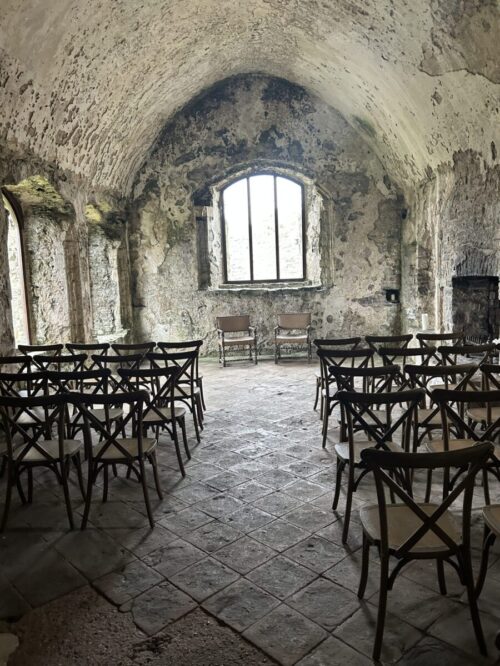
Manorbier castle, with its small, intimate chapel and well-appointed grounds is a suitably romantic place to get married.
Debbie Lunt is the castellated venue’s wedding coordinator, who has organised no fewer than 125 weddings since she started the job five years ago. It’s an extremely popular venue for locals but couples also travel here from as far afield as America, Australia and New Zealand. Debbie loves getting things right. ‘You work hard to make sure it’s a very happy day and some of that happiness rubs off.’
That can involve accommodating some unusual requests: ‘Only a fortnight ago we had a Vikings versus Knights wedding here and had actual jousting on the front drive with actual horses.’ That memorable marriage was complete with chicken leg canapés to add to the flavour of the day.
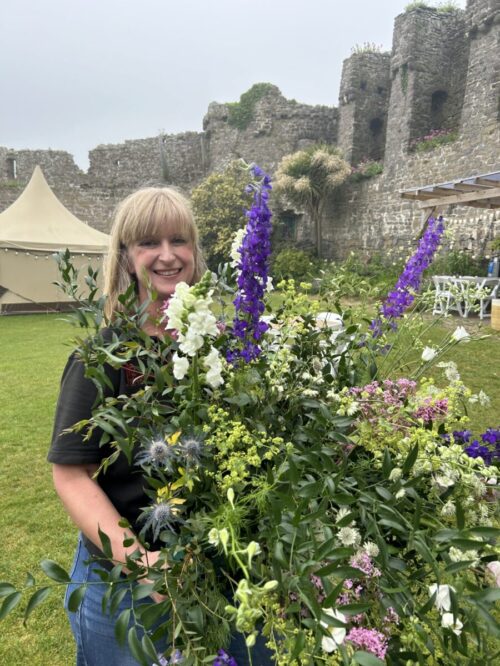
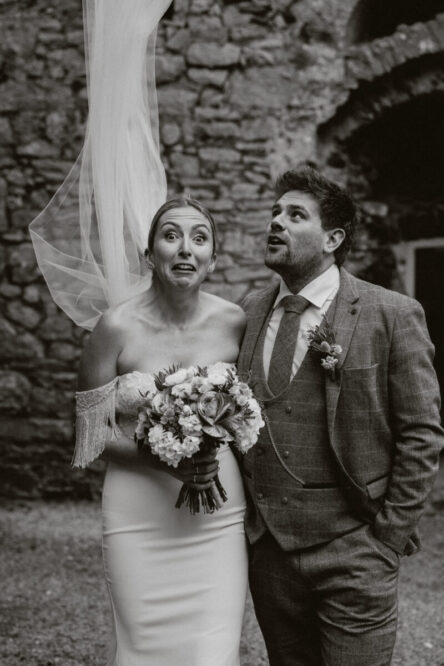
Welsh weather is one of the great imponderables of organising the Big Day as Debbie confirms. ‘We conducted one wedding during a big storm, Storm Darragh, on the 7th of December 2024 and were unsure whether or not that wedding would go ahead. It was a legal ceremony so the registrars wouldn’t travel during a red weather warning: we had to rearrange the day on the day and put all the timings back. The bride had quite a long veil and in photos it’s straight up in the air! The weather is something that’s so unpredictable and we’ve always got a plan A, B, C, D and E but on that one I think we were probably on plan Z by the time we actually got to the wedding day!’
Debbie tells me about one wedding that teaches me a new word into the bargain, namely molluscophobia. ‘A couple of years ago we had a wedding breakfast take place in the crypt but the bride had a real hatred of snails. We’ve got one particular window in the crypt that the snails gather on so we had to make sure that window was snail-free. I’ve had a bride in advance ask me where the nearest hospital was – I’m not quite sure what she was expecting on her wedding day. Then we’ve had alpacas in the grounds, flying owls and fire spinners. The beauty of castle being privately owned is that we can facilitate most things.’

Jon Gower is Transport for Wales’ writer-in-residence. He will be travelling the breadth and length of the country over the course of a year, reporting on his travels and gathering material for The Great Book of Wales, to be published by the H’mm Foundation in late 2026.
Support our Nation today
For the price of a cup of coffee a month you can help us create an independent, not-for-profit, national news service for the people of Wales, by the people of Wales.
Get more trusted Welsh news
Choose Nation.Cymru as a preferred source in Google News to see more of our journalism.


