


Making Tracks: Newport
Jon Gower
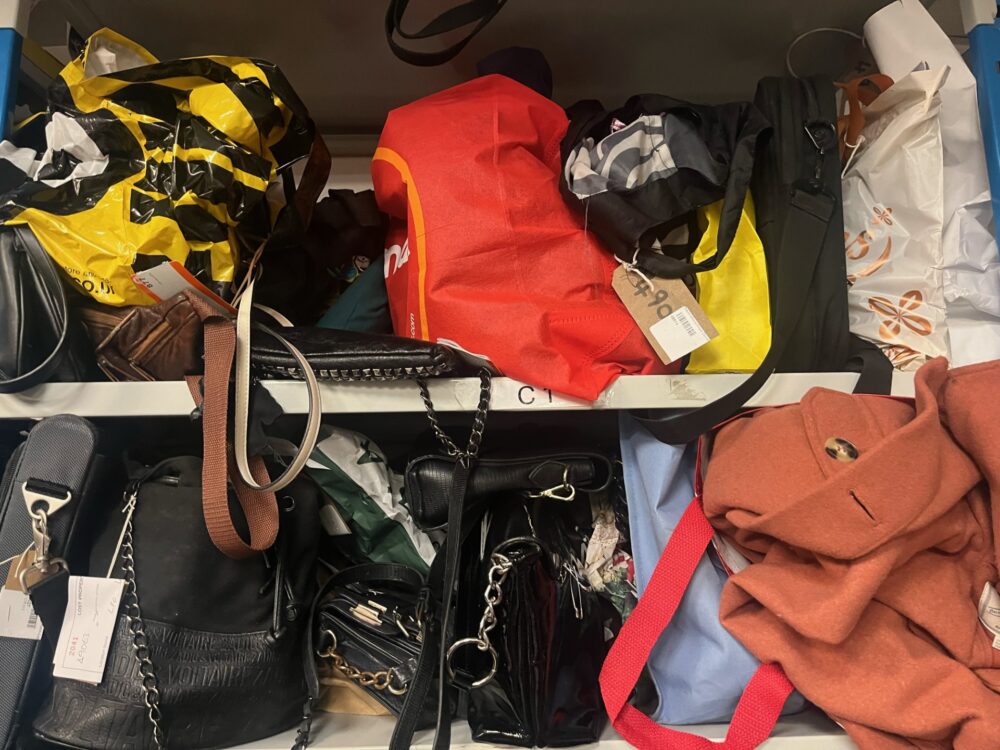
Despite the mantric announcement made on pretty much every train journey asking passengers to please ensure they take all their belongings with them, an awful lot of people fail to do so. Clothes, computers, bags and suitcases. Small items and sometimes stuff so big it’s hard to work out how it got on the train in the first place. There was even the lady carrying her wedding dress on the train, who picked up an identical case which belonged to an entertainer and contained a clown costume. Folk are forgetful, or in a rush, or keen to make a connection so stuff simply gets left behind.
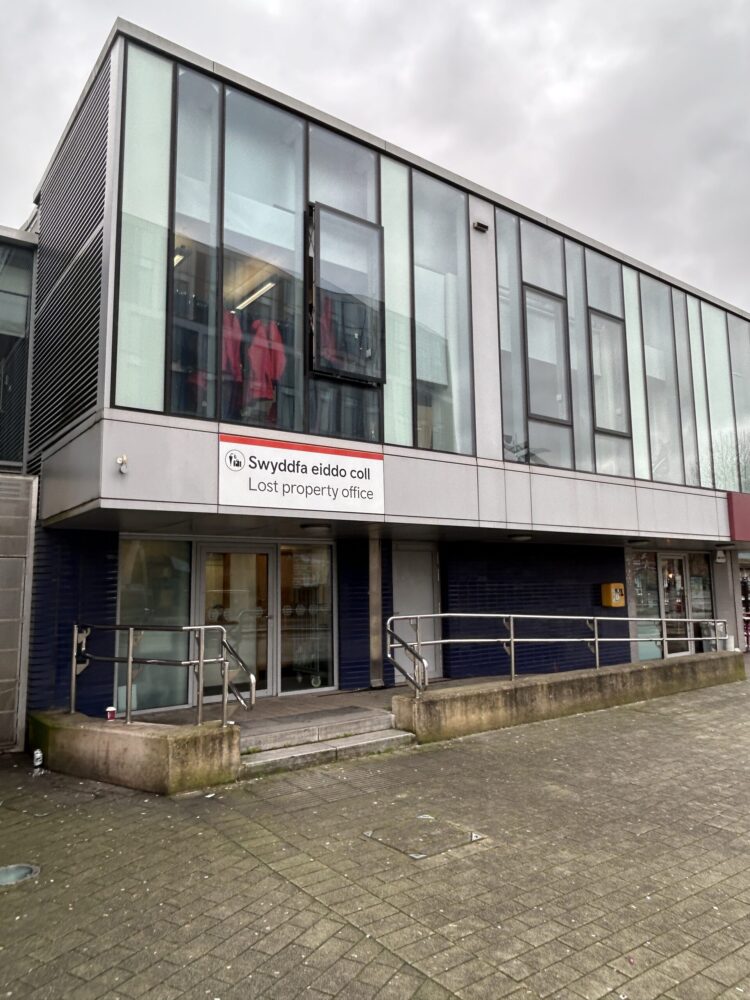
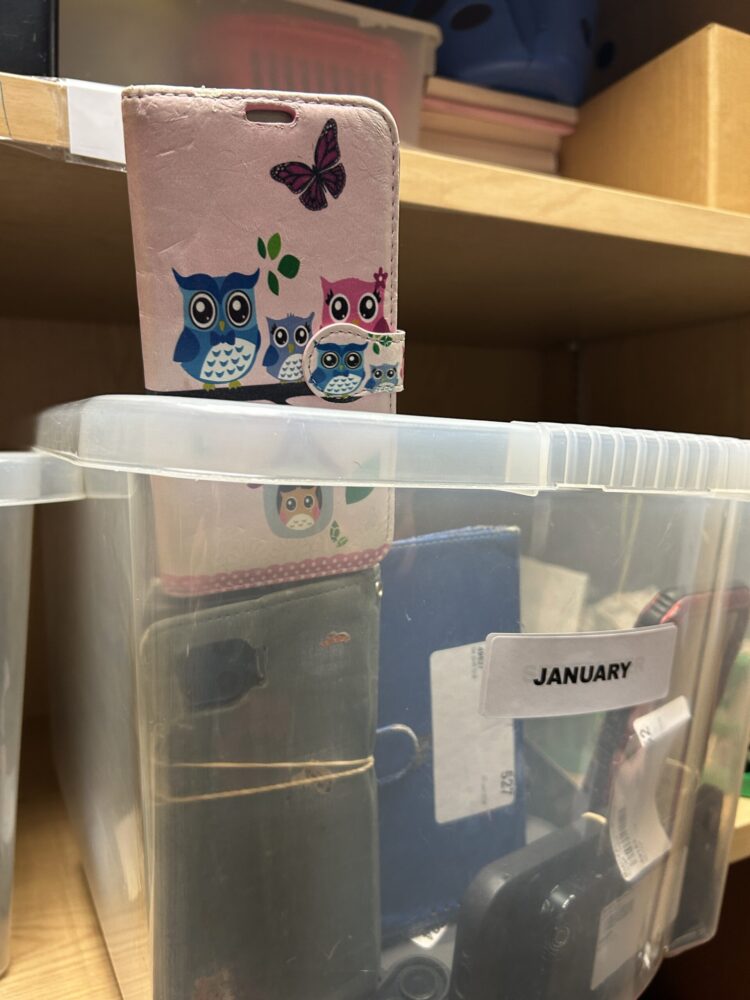
Which explains the steady stream of items flowing into Transport for Wales’ lost property office in Newport. Here the shelves are seemingly filled to capacity. There are cases lined up in the little walkway behind the customer counter, then bric a brac arrayed on the top shelves – things such as lunch boxes, water bottles and cuddly toys. Underneath those are squeezed a concertina of carrier bags, lots and lots of black bags, coats and rucksacks, then bigger holdalls and suitcases stored on the bottom shelves. Each item is assigned a number and location so they can be easily found if necessary.
One of the stories I’d heard about a lost item, in this case a prosthetic limb, sounded somewhat apocryphal but Dave Branfield, the Lost Property Supervisor at Newport, was working on the station when someone lost his artificial leg. “He’d gone for a night out in Cardiff, ended up on the train where he took his leg off. His mates carried him off the train and he managed to get home without it.”
It’s just one of the unusual items that have been handed in, from decorated ostrich eggs to a bag full of sex toys, as Dave recalls. “We had a six-man dinghy with no oars. They managed to take the oars with them! We also had a twelve-foot long surfboard which someone had managed to leave on a train. It was impressive to get it on the train in the first place and just as impressive to forget about it.”
Some items were more about remembrance than forgetting: “When I started the job we received two funeral urns with ashes in them. It turned out they had been deliberately put on the train so they could ride the rails in the afterlife. I believe the railway chaplain duly took care of the remains.”
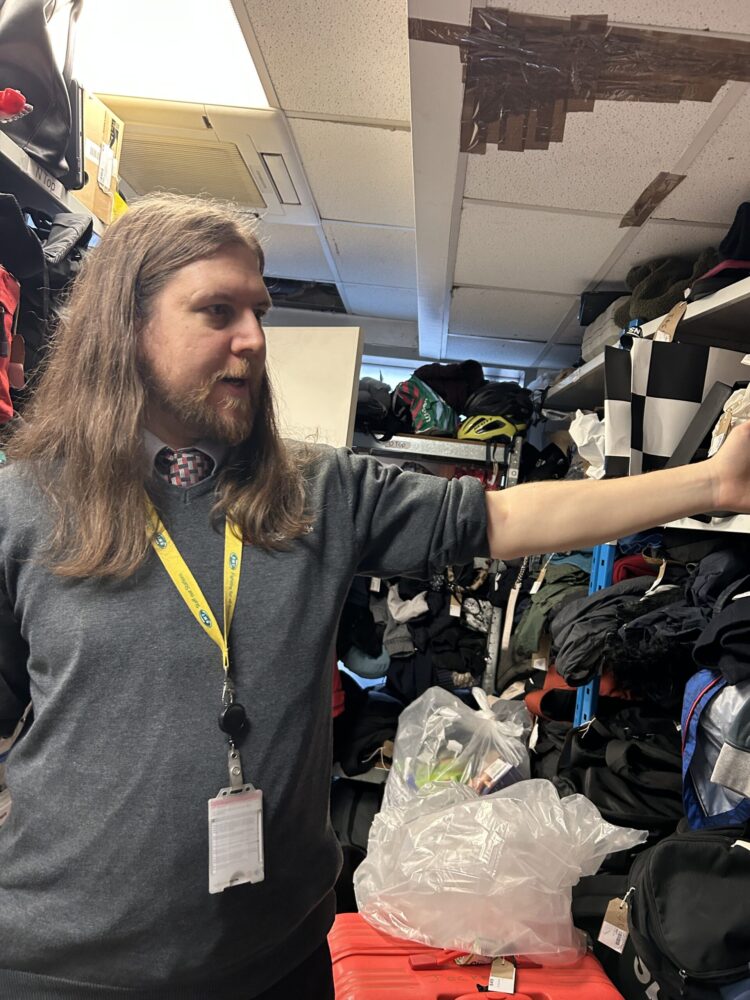
Dave has been in lost property since 2023 but has worked on the railway for 13 years. He’s just the man to explain what happens if you lose your diary in Dyffryn Ardudwy or a precious possession is handed in in Penarth.
“The conductor would take it to a hub station where they take them in from guards and cleaners, then register the item and hold on to it for a few days in case it’s claimed. Otherwise it gets sent on to us in Newport, by train or by courier. Unless we can match it up with people’s claims, we’ll assign it a shelf in our office. We keep stuff for twelve weeks to give people a chance to collect it. After that a company takes it for sale or disposal, donation or recycling. It’s zero waste our end.”
This didn’t help the unfortunate customer who turned up years too late to collect his wallet, having been in prison betweentimes.
Busyness in the office is seasonal, with its own peaks and troughs. Dave explains the calendar: “The summer’s busy because people take a lot of stuff with them on holiday and they also buy presents. They take buckets and spades to the beach but then realise they don’t want to take them home again. Then in November and December, when people are having Christmas parties, they’ll have more drinks than usual and there are also the Black Friday shopping events. You’d think that match days and big events would be busy but people don’t tend to carry that much with them. Just the odd scarf or hat that someone’s bought but the game hasn’t gone their way so they don’t want to be reminded of it.”
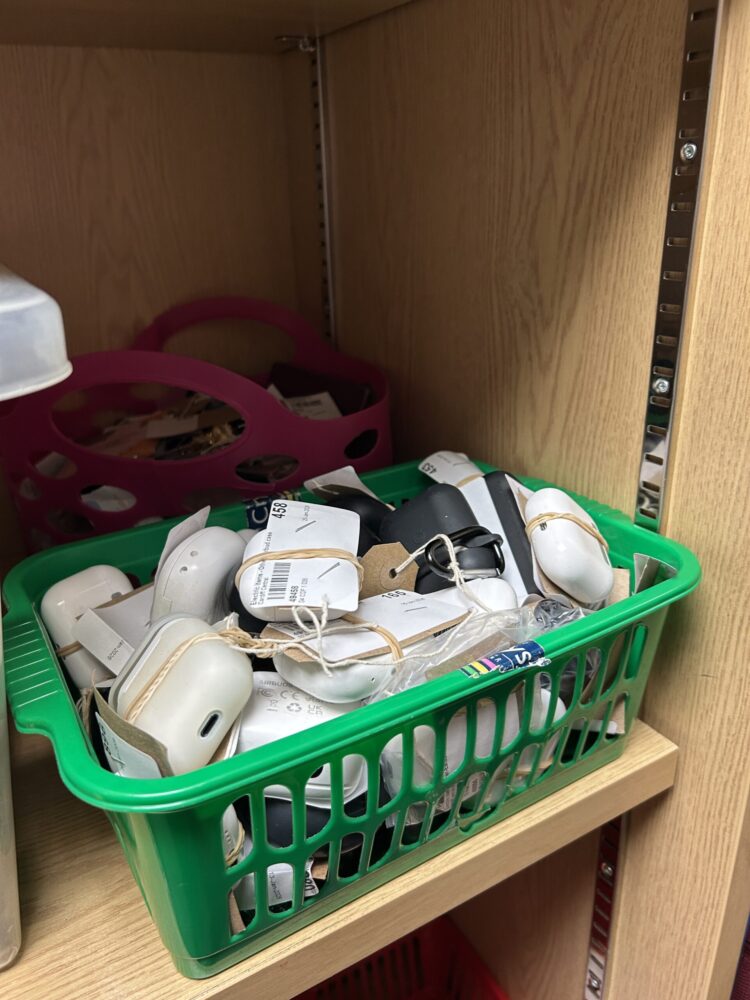
The most common lost item, Dave tells me, is earbud cases and the earbuds themselves, “Then umbrellas, glasses and cases. We don’t get many false teeth but hearing aides – we get more of those than you’d think. We’ve also had a couple of wheelchairs – which makes you ask if there was a miracle on the train – as well as loads of prams and pushchairs for babies.”
There are also sometimes dangerous or illegal materials. “British Transport Police are based upstairs so that’s handy. I’ve had a bag full shotgun cartridges after someone had visited a country estate in Scotland and we got the firearm squad in to take them. Little bags of drugs are disposed of and any large quantity or something that looks suspicious I give the Transport Police a call.”
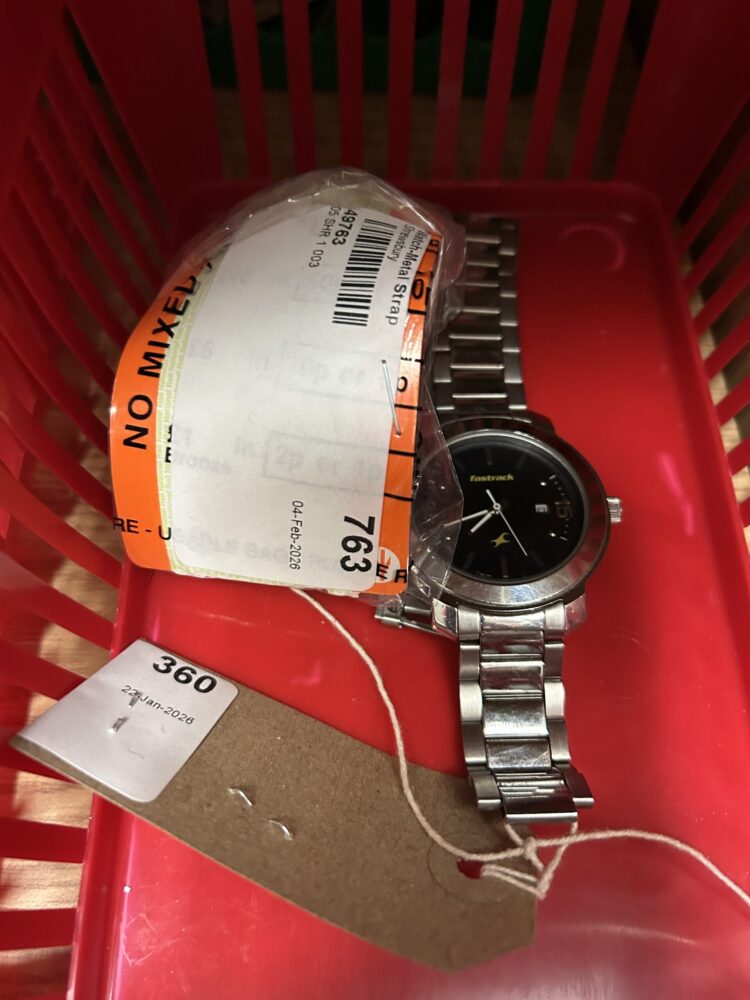
Keith Doe works alongside Dave in the busy office. He checks his computer screen to enumerate the items they currently have in store: “We currently have 1842 items. That’ll be anything from headphones and keys all the way up to large suitcases and other things too big to store.” Every month they receive between 1100 and 1800 items of which about a third are eventually reclaimed. As you can imagine there are umpteen phone chargers – which they hold on to, to give to people who have lost their own – not to mention lots of keys, watches and even passports.
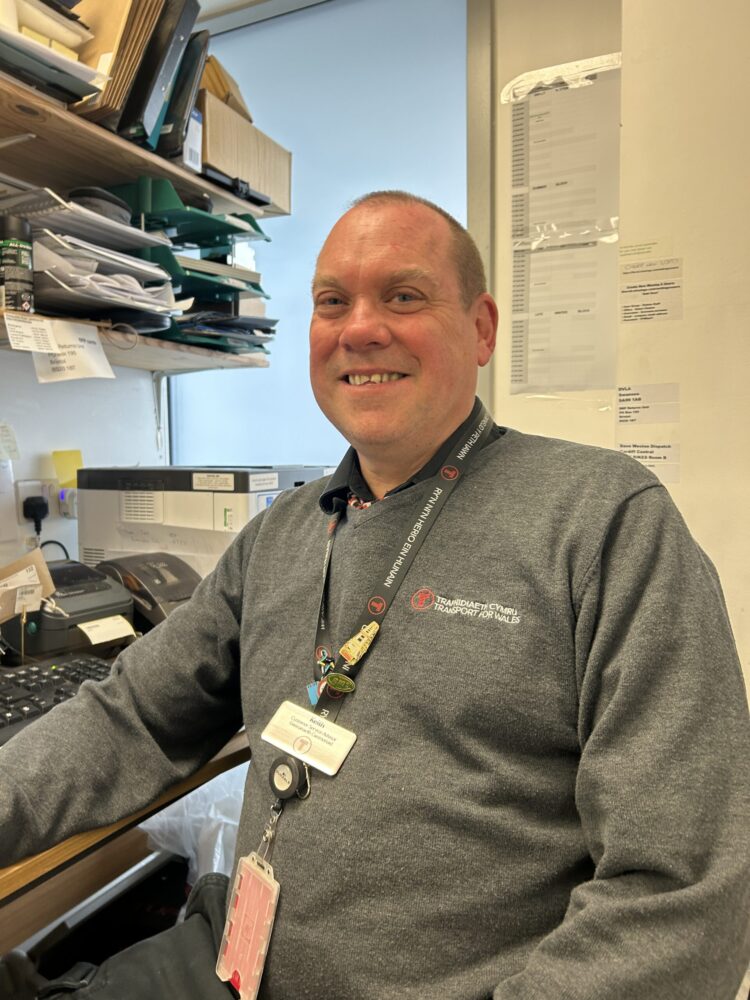
Keith tells me how one added complexity is the fact that other train companies operate in Wales such as Avanti, Cross Country and GWR. “In connurbations such as Birmingham or Manchester there are many more operators. Much of the time people don’t actually know where they’ve lost something. They just know they were on a train that day but they can’t remember if they leave their iPods or phones by the side of the seat, in the toilet, on a bench or in a taxi when they were going to their hotel: they haven’t got a clue where it is. We do our best but some things are very difficult to identify, such as little earbud cases – every one of them looks exactly the same.”
Reuniting items with their owners is its own reward, as Keith Doe underlines: “I love giving stuff back to the customers. I worked for 24 years for Royal Mail before I started here and I was the guy you went to see to get your parcels back if you’d missed the delivery. Getting things back to their owners or people who actually want the stuff has been my life. It’s a nice feeling. People show their relief when they get their items back – things they’d otherwise have to replace or stuff that’s got sentimental value. I love that part of it.”

Jon Gower is Transport for Wales’ writer-in-residence. He will be travelling the breadth and length of the country over the course of a year, reporting on his travels and gathering material for The Great Book of Wales, to be published by the H’mm Foundation in late 2026.
Support our Nation today
For the price of a cup of coffee a month you can help us create an independent, not-for-profit, national news service for the people of Wales, by the people of Wales.


