

Making Tracks: Pembroke Dock
Jon Gower visits the West Wales Maritime Museum, where he finds that repairing boats and fixing harps have a good deal in common.
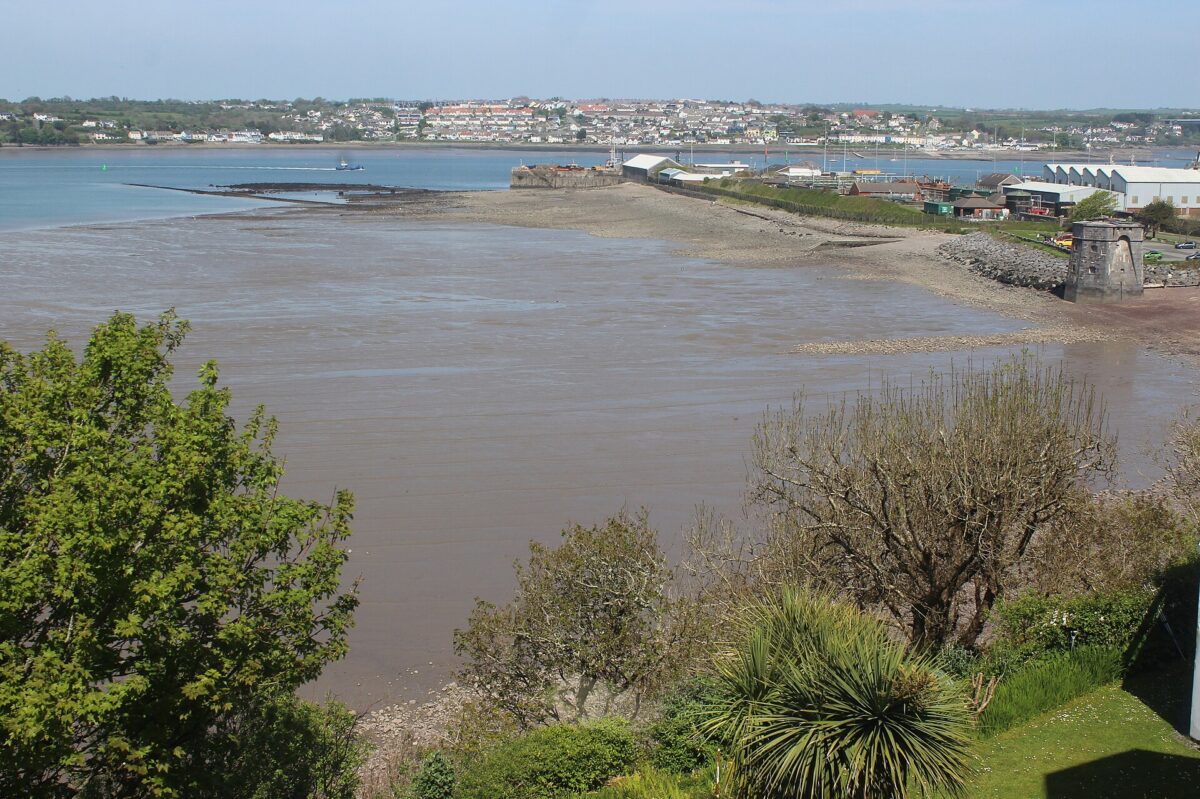
The most notable part of Pembroke Dock’s history was a long, hyper-productive period of shipbuilding.
Phil Carradice, author of many books about his hometown, proudly told me that the only Royal Naval dockyard in Wales ‘built some of the most famous ships in the navy. The Duke of Wellington, the largest wooden battleship ever built: they actually had to cut her in half and extend her. They built nearly 300 ships in all.
‘There was the Iris and the Mercury, the first steel-hulled ships; four Royal Yachts; and the Alberta, the Queen’s Passage boat, which carried Victoria’s body from the Isle of Wight back to Portsmouth after she died.’ The list of dreadnoughts and warships, gunboats and sloops has an air of classical poetry about it: the Agamemnon, Cyclops, Caesar, Cleopatra, Helen, the Gorgon and the Andromache.
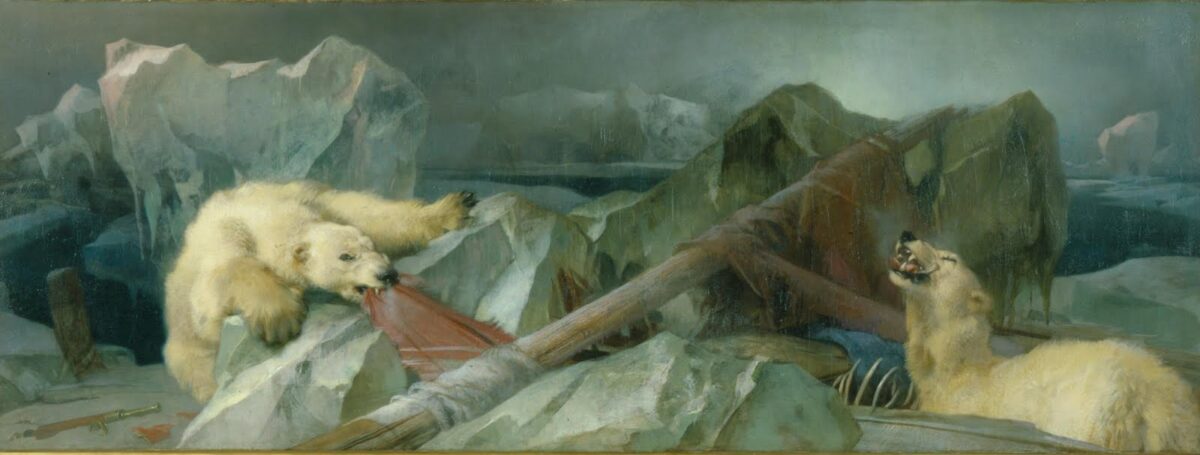
‘Then there were ships fitted out for polar exploration, such as the twins, the Erebus and Terror, both smithereened by ice during the race to find the Northwest Passage.’
With so many shipbuilders working up a thirst there were plenty of pubs, as many as 200 hostelries: The Steam Hammer, Navy Inn and Navy Tavern and ones named after ships such as the Royal Windsor and the Windsor Castle.
The Alma Inn commemorated the Crimea War while there were right royal hostelries such as the Three Crowns, the Albert Inn and the Victoria. And just as there was plenty of beer, so too were there tons and tons of tobacco: favourite brands of baccy included Edward Jacques Wrights’ Cut Cavendish, Copes Golden Cloud, Westward Ho, Leathery Fox, Irish Twist and Bird’s Eye, Ringers’ Shagg and Archer’s Golden Returns. All long gone up in smoke.
The original dockyard was in Milford, founded in the wake of the French landings in Fishguard in 1797, the last time mainland Britain was ever invaded. ‘The Navy rented the dockyard at Milford, but the people who owned the land started to up the prices for rent and the Navy Board decided they would move. They slowly built up Pembroke Dockyard. The town was built, was created to build ships. It did it very successfully but in 1926 it closed causing massive unemployment.’
The dockyard was founded on the manufacture of wooden warships, and in the 1870s and 1880s the navy moved from wooden to iron ships which changed everything. The dockyard was duly rendered obsolete.
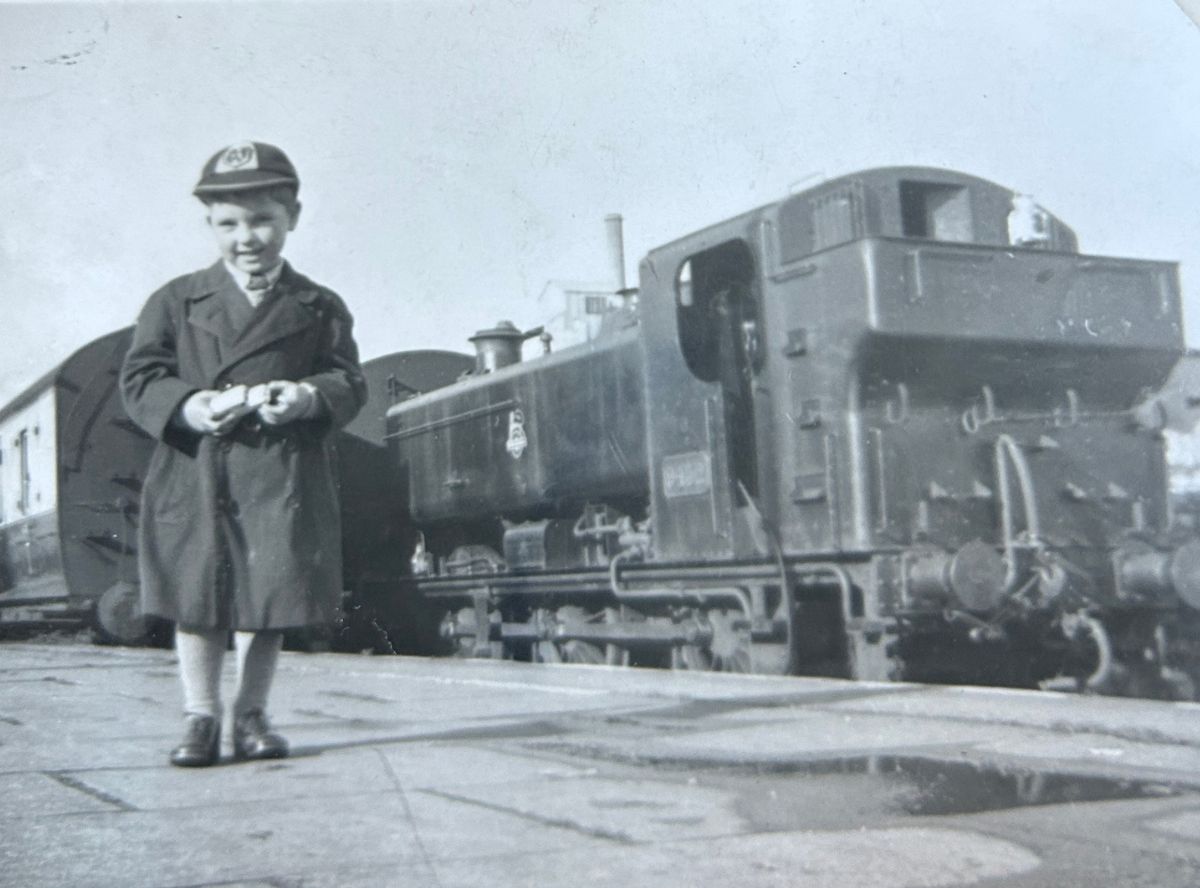
Trains played their part in the town’s development, of course. Phil Carradice happily peers into his personal past. ‘That’s a photograph of me, aged about eight years old, standing alongside the Pembrokeshire Coast Express, the express train which used to come down to Pembroke Dock from London where they would find holiday accommodation cheaper than anywhere else. It was a lovely station, part of the Pembroke and Tenby Railway, developed by David Davies, the first Welsh millionaire.’
Phil’s father was obsessed by trains. ‘Sometimes we’d get on the train and would go as far as Whitland or sometimes to Carmarthen and then catch the mid Wales line.
‘A trip on the train was a real romance. Nothing competed with the sound of that train when it got its steam up, with steam just rolling down the platform. There’s a one in forty drop in Pembroke Dock to get down into the dockyard. Trains coming back up would be panting!’
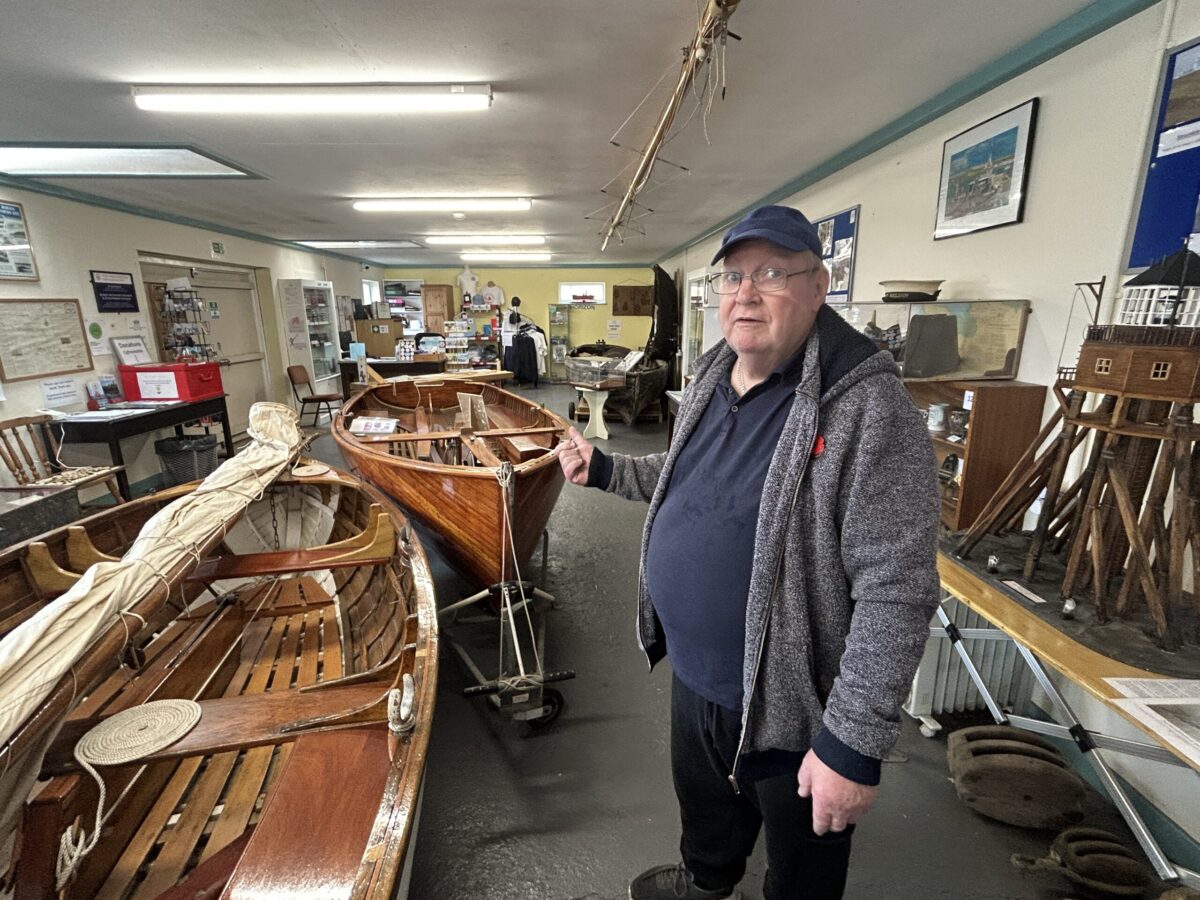
Part of Pembroke Dock’s history is enshrined in the West Wales Maritime Museum, where David Millard is the curator. ‘We only do wooden boats in here, keeping tradition alive through restoring them. I’ve done lots of repairs. One person showed me how to do the rivets and then I learned myself how to do the steaming where you take a straight plank and bend it into the rib which actually holds the boat together.
‘When you perform a repair you join two bits of wood together with a tingle, a length of wood that holds the two planks together. Then you put your cork in between so it’s watertight. You use softwood on the dinghies. But the ones in the old days were in teak and oak. They’re difficult and very expensive to get nowadays days, when they use fibreglass.’
Pleasure boat
Rob Phillips shows me the Undine, a Pembrokeshire family motor-sailer, built in the 1930s by local gentlemen. ‘The name “Undine” comes from the Greek myth about a water nymph who married a human to gain a soul,’ Rob says, ‘It wasn’t a work boat, it was purely a pleasure boat, used to race each other. But this one went through various owners. The Undine ended up being badly damaged.’
‘The repair process thus began. ‘You can see where we put some newer oak ribs in, they all had to be steamed. In some ways it’s harder to repair an old boat than it is to build one from scratch. Because everything is steamed and fitted to get the shape back: it was a bit like a beer can that had a thumb in it, a bit of a concave dent.’
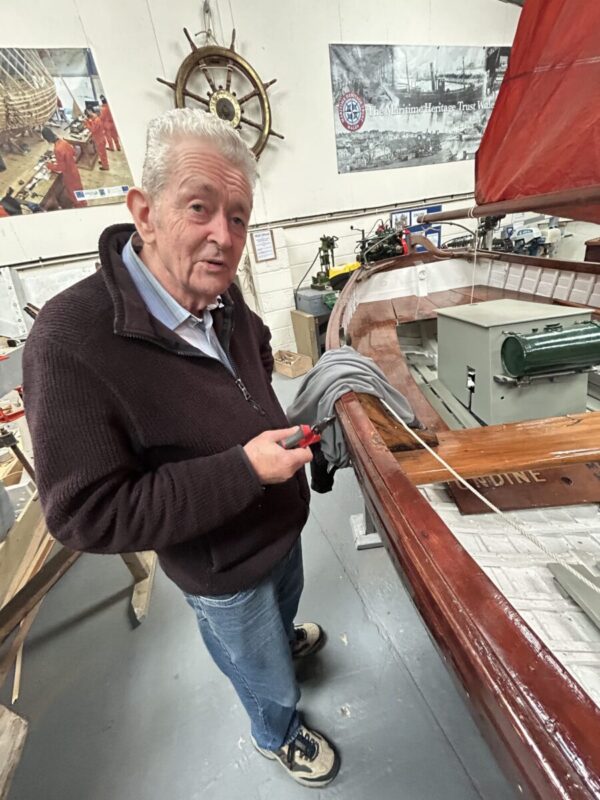
When he talks about the Undine, there’s love in Rob’s voice. ‘Definitely. I was asked to bring her back to a semblance of what she used to look like. I’ve been involved with her for about five or six years now, with all of this lovely gleaming teak and mahogany which you wouldn’t be able to get hold of nowadays.’
Ron tells me that the elements can have a deleterious effect on old craft. ‘The two big enemies of wooden boats are sunshine – the ultraviolet rays destroy the fabric of the boat – and also fresh water. If you’re running a boat in seawater, that’s a preservative: it kills the bugs that eat the wood. Fresh water feeds them.’
One of the other volunteers is Peter Krauss, who works to keep the place in the public eye. ‘I’m very, very fortunate to have been the Mayor of Pembroke Dock twice, once in 2012–13, once in 2015–16.’ Peter is now in charge of events at the centre, including a popular pirates’ day when black eye patches are de rigueur.
‘When I first came here in 2012, I saw the gate was closed. I found out the museum was only open on a Monday morning from ten to one. And I thought, what the hell, with all these boats that were built here, the Royal Yachts, you’ve got the ferries, submarines, you name it. It explains why Pembroke Dock exists, doesn’t it? My aim is to make sure this heritage, our maritime heritage, never dies.’
One significant piece of that heritage is the Charterhouse lifeboat, once located in Fishguard and now proudly restored by Chris Barlow. ‘Charterhouse School in Surrey started raising money, in the 1870s. When it left service in 1930, the lifeboat had been converted into a private cabin cruiser. It stayed like that and was sailed regularly up until 2009, mostly in Welsh waters.
‘In 2009 it lost its certificate of seaworthiness, so it was basically condemned. We’ve had to strip it, repaint it, varnish it, repair the deck that had been removed. There was nothing inside. It was a completely empty hull.’
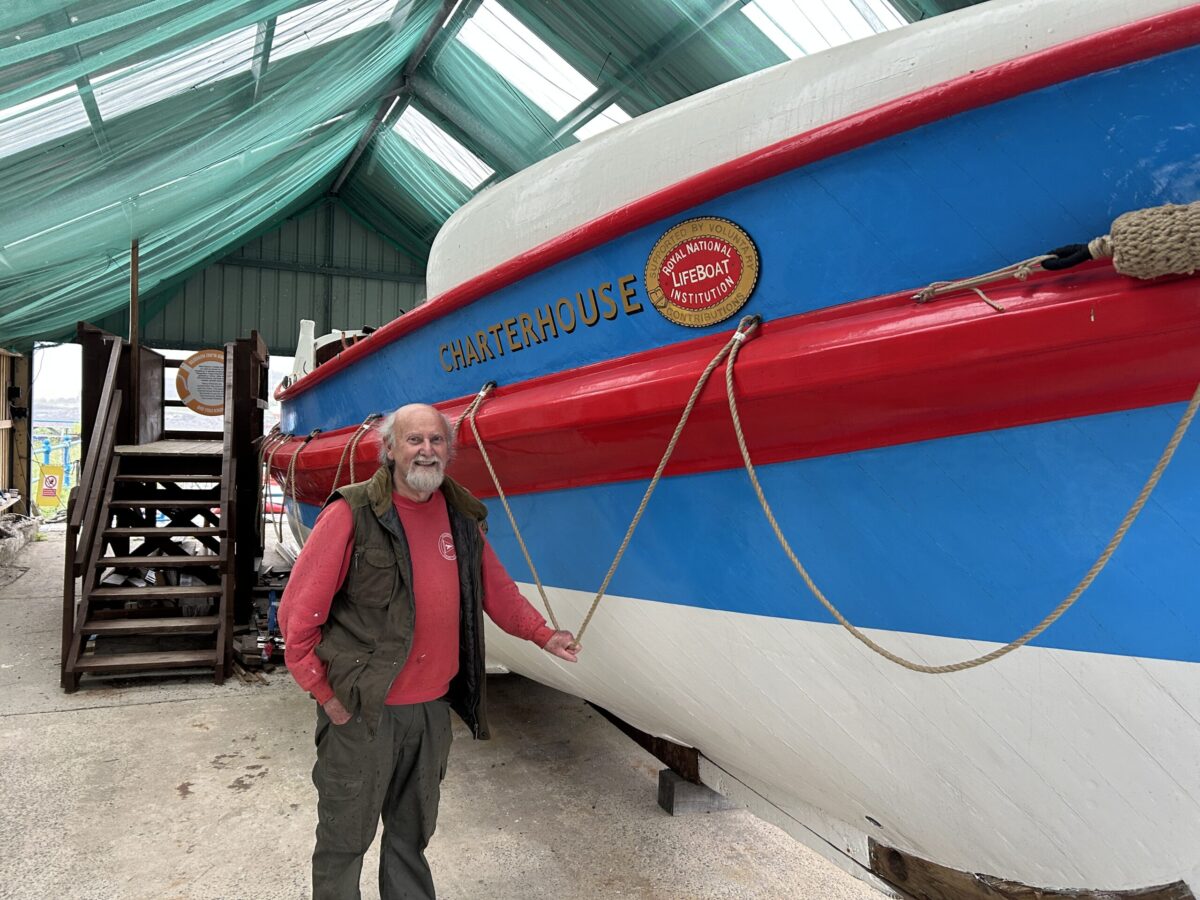
Somewhat surprisingly, Chris has no formal training in boat repair. ‘I’ve spent 40 years making and restoring historic musical instruments, harpsichords, very early pianos, a few Welsh harps even.’ That said, he thinks the skills of repairing boats and making musical instruments are comparable.
‘A musical instrument has to take a lot of tension with the strings, whether it’s a guitar or, say, a grand piano that takes about 20 tonnes of tension. The structure has to be up to the job. Welsh triple harps, for instance, they’re built just like a canoe with ribs and slats of wood, so the structure of the harp’s back is just like a boat, actually. And if it doesn’t cope with the tension, it’s never going to be a musical instrument.’
The lifeboat is full of innovative refinements, not least ones that help keep her upright. ‘Underneath the deck of the Charterhouse, it had about 80 little boxes, sealed up completely watertight. If you gashed the side of the boat you would still float. It’s unsinkable, more unsinkable than the Titanic, because that flooded over the top of things. If it had enclosed boxes, you would probably have to break half of them to make it unseaworthy. In truth the Charterhouse is unsinkable. It’s self-righting, it’s self-draining. If a wave floods it, it’ll drain itself within a few seconds actually. If it needs to self-right, if it capsizes, it takes 40 seconds to right itself. Forty.’
The Charterhouse is basically a simple, open boat with two sails, an engine and no shelter for anybody, be it the crew or the people rescued. Chris says, ‘The only sustenance, I can tell you, were in boxes on board: one was labelled “Biscuits”, the next was labelled “Spirits”, which was probably brandy and rum, but it might also have been spirits for the oil lamps or spirit lamps. No electricity, just tools and ropes and things.’
Dark and stormy night
One of the most famous of all rescues near Fishguard involved the Charterhouse. It happened in December 1920 on a clear, dark night with heavy seas running.
Chris detailed the location of the wreck. ‘Outside Fishguard Bay there’s a rock called Needle Rock, a great pointed thing. A three-masted Dutch motor schooner was on its way to Rotterdam when a storm blew up. It came back into Fishguard Bay to shelter and anchored itself, but the anchors dragged and the boat was in danger of hitting the rocks. Capt. Vooitgedacht ordered a flare to be fired. It was already dark when the lifeboat crew ventured out into seas lashed by a raging north westerly gale.’
Coxswain John Howells, nearing 66 years of age, was in charge of the rescue. The Charterhouse anchored windward of the schooner and veered alongside. Gargantuan waves meant they couldn’t secure a line to the stricken vessel while wild seas lifted the lifeboat right into the ship’s rigging. It took an hour of desperate effort to get seven of the ten men off.
The captain, chief officer and second mate refused to leave the stricken vessel despite the pleading of the elderly coxswain. During the rescue the lifeboat had been utterly drenched; consequently, the engine refused to start. Problems and dangers multiplied. In a storm. In the dark.
The Charterhouse was manoeuvred using the port oars so it could tack away from the cliffs. Rob details the dangerous situation. ‘You couldn’t get away from the cliffs, because you needed the sails to sort of suck you out from a tight corner. But 12 men rowed that boat, weighing 12 tonnes, for three hours, for two miles into the head of the storm, just to get back into the Bay of Fishguard. It was a very dangerous and amazing rescue.’
No sooner had they got to the harbour than more flares were sent up from the Hermina. The rescue of the three men aboard her now lay with the cliff rescue team. As the schooner broke up, the third mate was washed away. The two remaining men succeeded in reaching the base of the cliffs where they were rescued by local farmer William Morgan, bravely lowered by rope, 160 feet down the cliff to save the survivors.
A boat can be a vessel to carry its own story, and, in the case of the Charterhouse, it’s a most dramatic one, a tale of sheer nerve and bravery set among a churning, roiling and very perilous sea.

Jon Gower is Transport for Wales’ writer-in-residence. He will be travelling the breadth and length of the country over the course of a year, reporting on his travels and gathering material for The Great Book of Wales, to be published by the H’mm Foundation in late 2026.
Support our Nation today
For the price of a cup of coffee a month you can help us create an independent, not-for-profit, national news service for the people of Wales, by the people of Wales.
Get more trusted Welsh news
Choose Nation.Cymru as a preferred source in Google News to see more of our journalism.



A good read, enjoyed that one, I’ve lived in Pembroke Dock, briefly, and in Milford Haven…always nice to see local info.
A key to a good classical education and many other subjects is via the study of Royal Navy Ship names…The Flying Boat museum is a very good venue too…