


Making Tracks: Penally
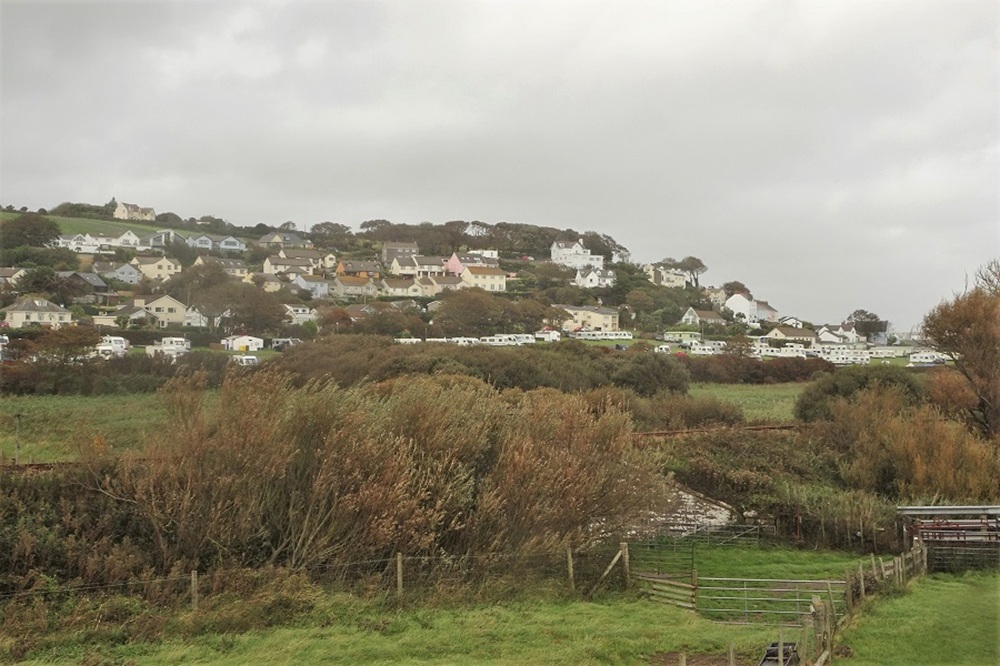
Jon Gower visits Penally, where you can visit the only practise trenches for the First World War visible anywhere in the UK.
Penally is a tranquil Pembrokeshire village, located a couple of miles west of Tenby, which became even more peaceful after they built a bypass in the 1960s. Built on a slight promontory it commands fine sea-views over Giltar Point, Tenby and Caldey island.
People have lived in these parts going way, way back. A local cave called Hoyle’s Mouth was explored by archaeologists from the 1840s onwards, when tools dating back to the Upper Palaeolithic era were discovered, along with bones of the now-extinct cave bear dating from before 15,000 B.C.
As a village, Penally grew partly because of the church, as David Glennerster from the Penally History Group explains: ‘Because there was a pilgrimage route down the river Ritec and across the Caldey Island, pilgrims would come from Ireland, cross to St David’s, then travel down the river to the village of Gumfreston where you even could catch your boat further to France.’ In keeping with such evidence of Christian antiquity, there are 10th century Celtic crosses in the transept of the parish church.
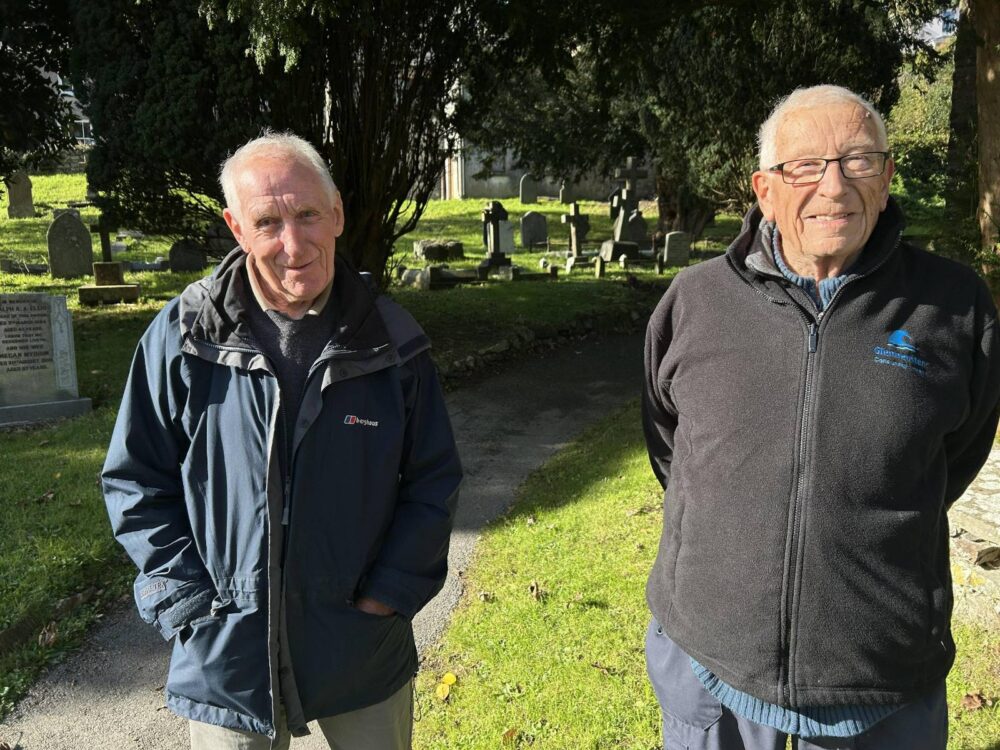
Local historian John Cliff explains: ‘Penally was tied in with the manor of Manorbier. And that’s where the Normans were, at the castle there, where Gerald of Wales used to live.’ Musing on the long-ago past he suggests ‘There must have been a building here in Penally before the church was built in 1200 because there are large stones suggesting something else originally.
“And there’s an old chapel that is probably older than the church. It was tied in with an abbey near Hereford. We had about seven nuns at one time. There’s a well opposite to it, which they call the St Deiniol’s well, which must be very old.’
Drovers
In addition to the pilgrims passing through Penally there were also drovers, determined men moving groups of animals to Tenby and far beyond. A prominent tree on a road called the Ridgeway north of the village was a very visible waypost for the drovers to use. It follows, rather, that there used to be a pub called The Drovers, to slake the thirsts of these Welsh overlanders, set at the top of the sweetly-named Strawberry Lane.
There was also a public house called the Crown and another called the Wheelabout, where soldiers marching out of Tenby would turn, or wheel about. Today there is only one pub still serving, namely the Cross Inn.
Military connections
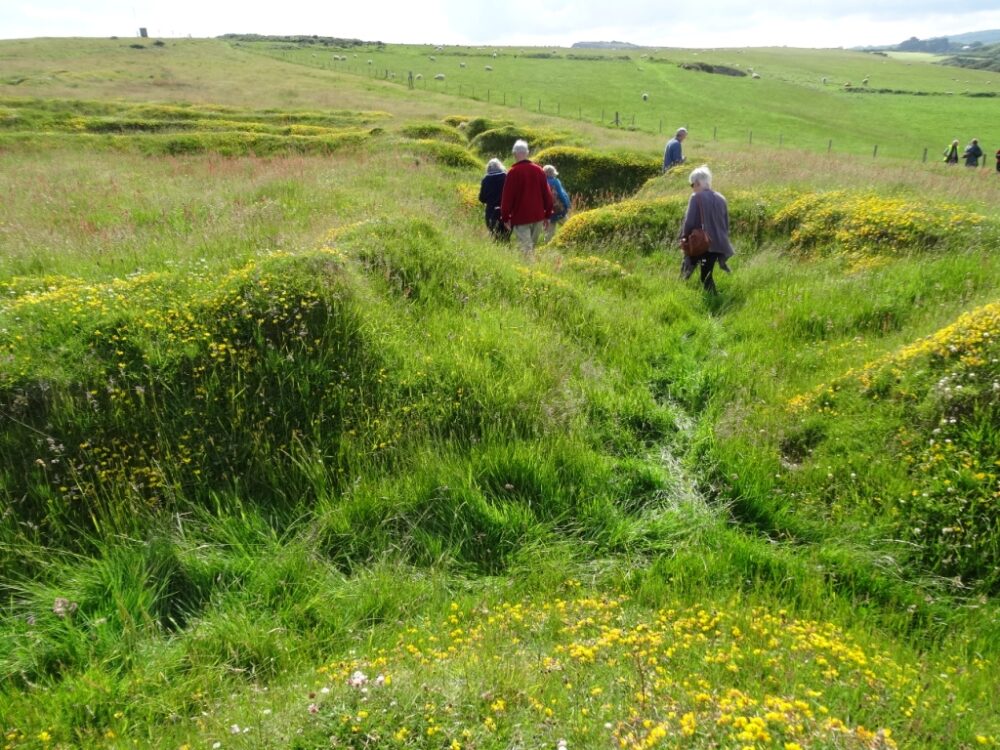
But despite its everyday tranquillity the village has a long association with the military. From the railway station you can easily walk to the only remaining examples of trenches dug to prepare soldiers for the First World War and the horrors of the Western Front.
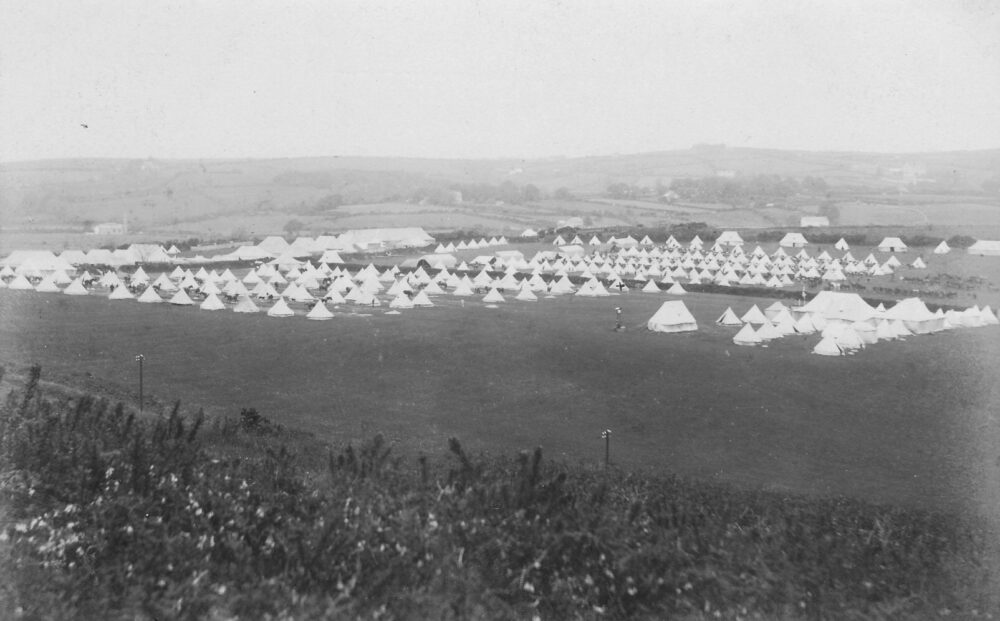
Penally’s connection with the Army goes back to Napoleonic times. In 1859 land was leased by the War Office from the Picton Castle Estate to establish Penally Camp. The land was initially used for rifle practise, later adding tents and stables to house the horses of the cavalry and house up to 6000 troops.
During the Second World War many allied troops passed through the gates and the Royal Marines established their Sniper School here in 1942.
After the outbreak of war in 1914 a complex network of trenches was rapidly prepared in Penally to acclimatize men to those of the Somme and elsewhere. The elaborate system of foxholes and dugouts is the only remaining example of such trenches in the UK.
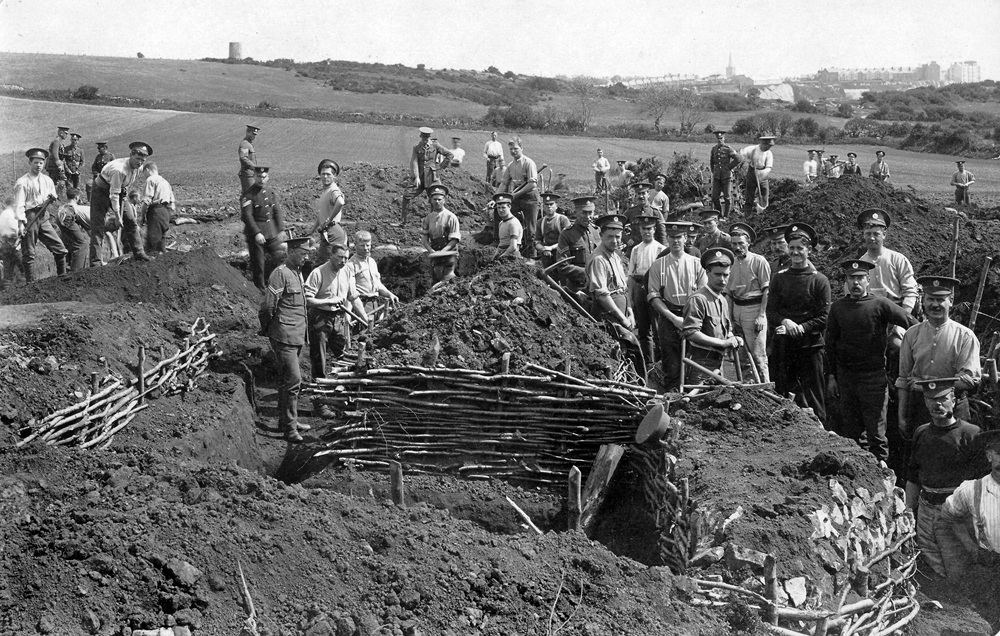
Conditions in the actual trenches of WWI were testing and often terrible. One of the first Welsh soldiers to arrive in France after the declaration of war in 1914 was Frank Richards. A former coal miner from Blaina in Gwent, he joined the Royal Welsh Fusiliers. He would write about his experiences in a book called `Old Soldiers Never Die.’
Richards saw battle at Fromelle, in the first Battle of Ypres and was soon at work digging trenches: ‘Little did we think that we were digging out future homes; but they were the beginnings of the long stretch that soon went from the North Sea to Switzerland and they were to be our homes for the next four years.’ Richards writes unflinchingly about the horrors of the war but also tellingly about the day-to-day routines of the trenches. Trying on the ill-fitting gas masks. The miseries of developing trench foot from being in the cold and wet for so long. Newspaper boys bringing yesterday’s papers to the edge of the front line. The British officers taking on their own soldiers in a game of tug-of-war. Melting snow to make tea.
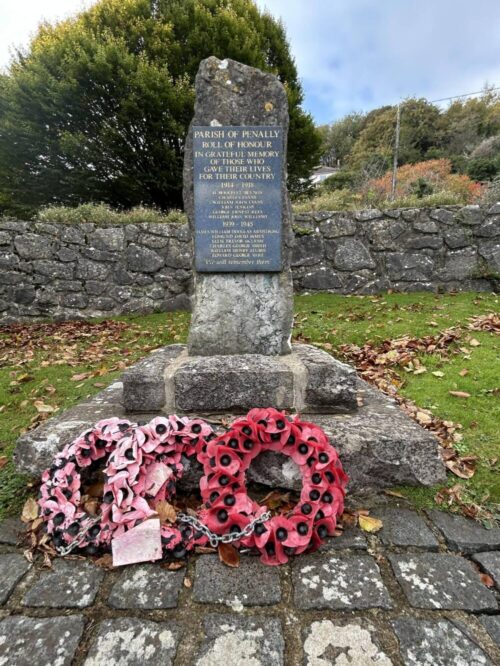
Every hamlet, village, town and city made its wartime sacrifices and Penally was not exempt, with no fewer than 100 men and three women serving in the so-called Great War.
A memorial in the church names six men who lost their lives: Private H. Berkeley-Beynon of the 10th Hampshire Regiment; Private William J. Evans of the South Wales Borderers; Sergeant Charles L. Evans of the Royal Welch Fusiliers; Gunner John Jenkins, Pembroke Royal Garrison Artillery; Private George E. Rees, Royal Welch Fusiliers and 2nd Class Stoker W. John Williams of the Royal Navy. Another memorial is dedicated to Captain Colwyn Philipps of the Royal Horse Guards and his brother Captain Roland Philipps of the Royal Fusiliers, who died in 1915 and 1916 respectively.
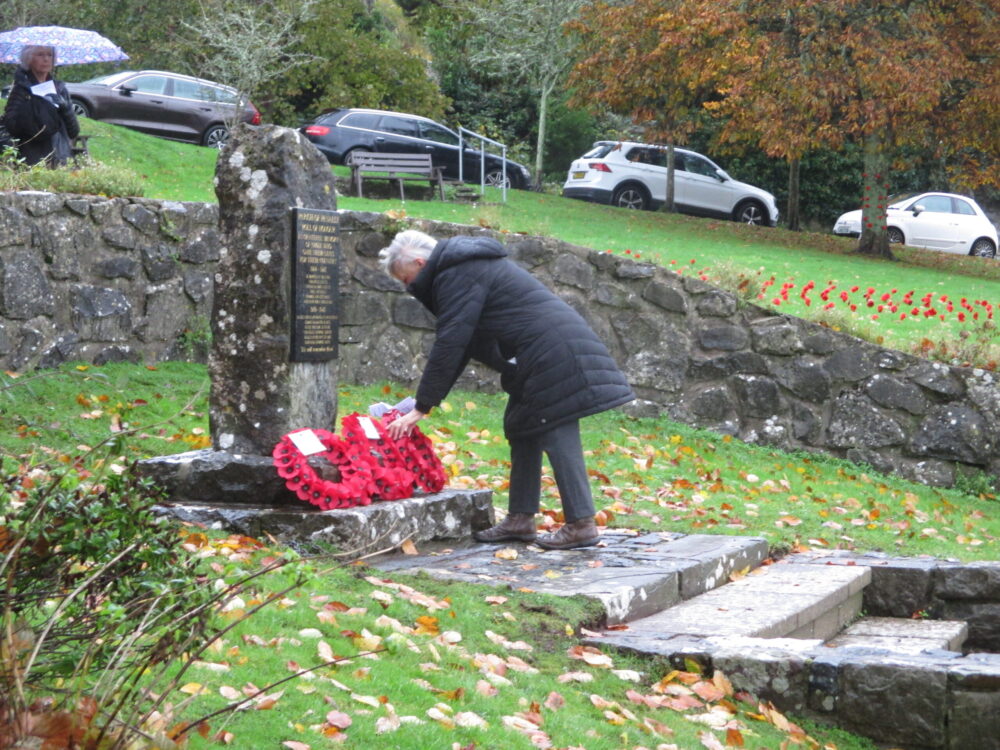
The war memorial outside the church was created in October 1957 by moving a stone found behind a house on top of the village. Three farmers, including one called Joe Joseph, accomplished the task of setting it in place. Eventually a standing area was created where people could pay their respects and offer their wreaths and thoughts of remembrance.
Penally is thus a village which quietly connects with both war and peace. A plaque located near the Penally trenches bears the optimistic sentiments of Captain H. S. Giffard of the Royal Field Artillery: ‘There is a healing magic in the night, the breeze blows cleaner than it did by day: Forget the fever of the fuller night. And sorrow sinks insensibly away.’
Information for your visit.
Penally sits on the branch railway line to Pembroke Dock.
You can easily view the First World War trenches by taking the path that runs south from Penally station then aiming for to the top of a hill on your left, in so doing connecting with the Wales Coastal Path.
In summer you can encounter a range of birds including the rare chough and seabirds such as razorbills, fulmars and gulls while the dunes hereabouts are full of orchids and other flowers. A circular trail allows you to loop back to the village where the only remaining pub in the village, the Cross Inn serves meals.
For more on the village’s history you can visit Penally History Group’s very informative site.

Jon Gower is Transport for Wales’ writer-in-residence. He will be travelling the breadth and length of the country over the course of a year, gathering material for The Great Book of Wales which will be published by the H’mm Foundation in late 2026.
Support our Nation today
For the price of a cup of coffee a month you can help us create an independent, not-for-profit, national news service for the people of Wales, by the people of Wales.


