


Making Tracks: Rhymney
Jon Gower listens to a wide range of poems and songs connected with a town built on iron.
Oh what will you give me?
Say the sad bells of Rhymney.
Is there hope for the future?
Cry the brown bells of Merthyr.
(From “The Bells of Rhymney” by Idris Davies)
The Rhymney born poet Idris Davies’s poetry is celebrated for its unflinching honesty as it captures the changes and hardships in Rhymney and surrounding south Wales valleys during the 1920s and the period between the wars.
Davies left school at 14 to follow his father into the pits, working first as a coal miner’s assistant at the Mardy Pit in Rhymney. He lost his finger in an accident and shortly thereafter lost his job, leading to four years of languishing on the dole. Local Rhymney historian Kevyn Price – who works hard to keep the town’s history alive – likes the sentiment in Idris Davies’ work. ‘He tells us what he thought about. He describes the walks he’d done and Waun Fair, between Rhymney and Dowlais, with its sales of geese, horses and donkeys. He’s a pretty sad poet, really, because I don’t think he had anything cheerful to write about.’
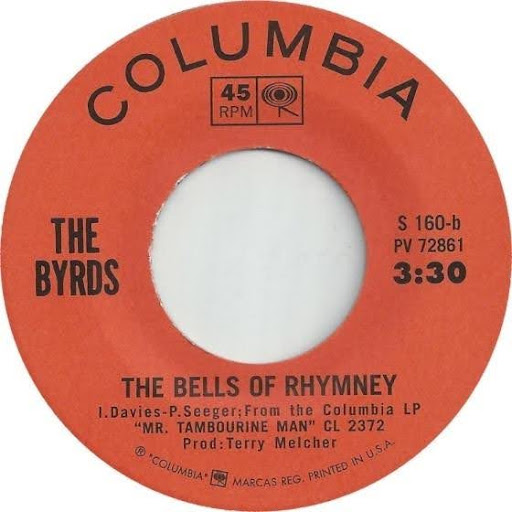
Idris Davies’ work came to prominence after his long poem “Gwalia Deserta” (Wasteland of Wales) was first published in 1938 by TS Eliot. In January 1946 Dylan Thomas, in a radio broadcast on the BBC, read Davies’ “The Bells of Rhymney” in a programme entitled “Welsh Poets.” Then, in 1957, American folk singer Pete Seeger used some verses from ‘Gwalia Deserta” for a recording with blues musician Sonny Terry. The resulting song, “The Bells of Rhymney” is patterned, as is the poem like the nursery rhyme “Oranges and Lemons” which, of course connects the bells of London churches such as St Leonard’s in Shoreditch, St Mary-le-Bow and St Dunstan’s in Stepney.
“The Bells of Rhymney,” meanwhile, would be covered by a long succession of artists such as The Byrds, Bob Dylan, Cher, Judy Collins, John Denver and, most recently, the Rhyl band The Alarm, who even performed it with the BBC National Orchestra of Wales. At that concert in 2014 lead singer Mike Peters introduced “The Bells of Rhymney” as a song which belied the folk roots of the band, recalling the effort they had to make to purchase folk recordings in the early part of the 1980s, after the punk rock explosion. ‘You had to go to places such as Cob Records in Porthmadog. And to get there you had to get the train from Rhyl to Llandudno Junction and then a little bus up to Blaenau Ffestiniog, wait there for a couple of hours and then get another bus to Porthmadog. And there, at the far end of town, was Cob Records where, among the smell of patchouli oil and the bootleg discs we found a Miners’ Union record, folk protest music which was very dear to our hearts in the Alarm.’
That album, “Talking Union and Other Union Songs” was released on the Smithsonian Folkways label in 1955 and helped confirm Seeger’s status as the so-called ‘Conscience of America.’ Seeger once introduced “The Bells of Rhymney” on stage as a series of questions whilst reminding people that Einstein said that 90 % of all research is knowing how to ask the right question. So what are the poem’s questions about? Local historian Kevyn Price suggests ‘It’s about “What can you give me?” Rhymney was so poor during the general strike in 1926, that there was a company from Harrogate that came to give away food and vegetables. There were no ironworks and they were closing pits left, right and centre. There was no employment here.’
The failure of the general strike and the catastrophic accident at the Universal pit in Senghennydd, lower down the Rhymney valley in 1913, when 439 men and boys lost their lives are two influences Idris Davies himself cites in the writing of ‘Gwalia Deserta.’ The poems all interconnect, although Pete Seeger, by repeating the first line of the ‘Bells of Rhymney’ as the last makes it a self-standing poem but in doing so cuts off that connection to the other themes of the longer work.
The actual bells Idris Davies would have heard in Rhymney in the 1920s would have been those of St David’s church. It was built in 1839, to a design by London architect Philip Hardwicke, with iron company money, an industry which helped transform the town.
A local man, Thomas Williams joined businessmen from Bristol to open the first works in Rhymney in 1801, which became the Union Iron Works Company, followed two decades later by the Bute Ironworks, curiously designed to resemble the Egyptian ruins at Dandyra and consequently known as the Egyptian furnaces.
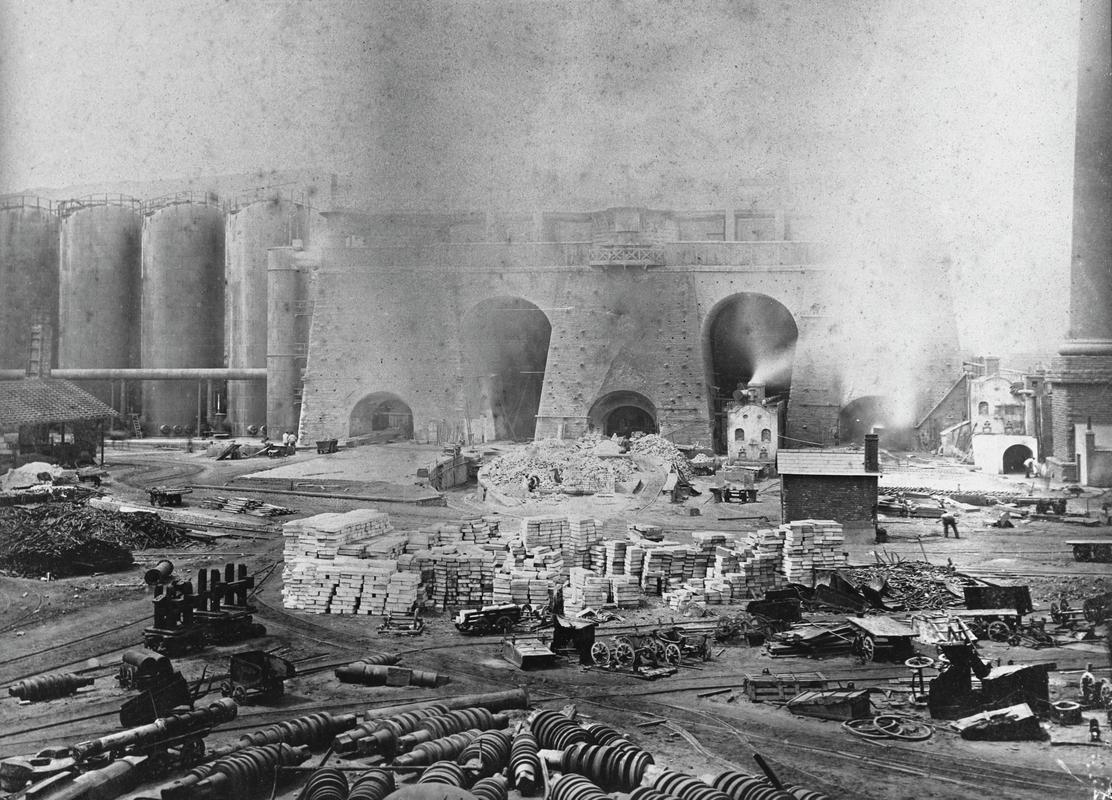
In 1868 the works started to produce rails for the burgeoning railway systems of the wolrd, exporting them to all corners of the globe and thus creating employment for 5000 workers in the Rhymney furnaces and attendant industries such as the extraction of coal and iron.
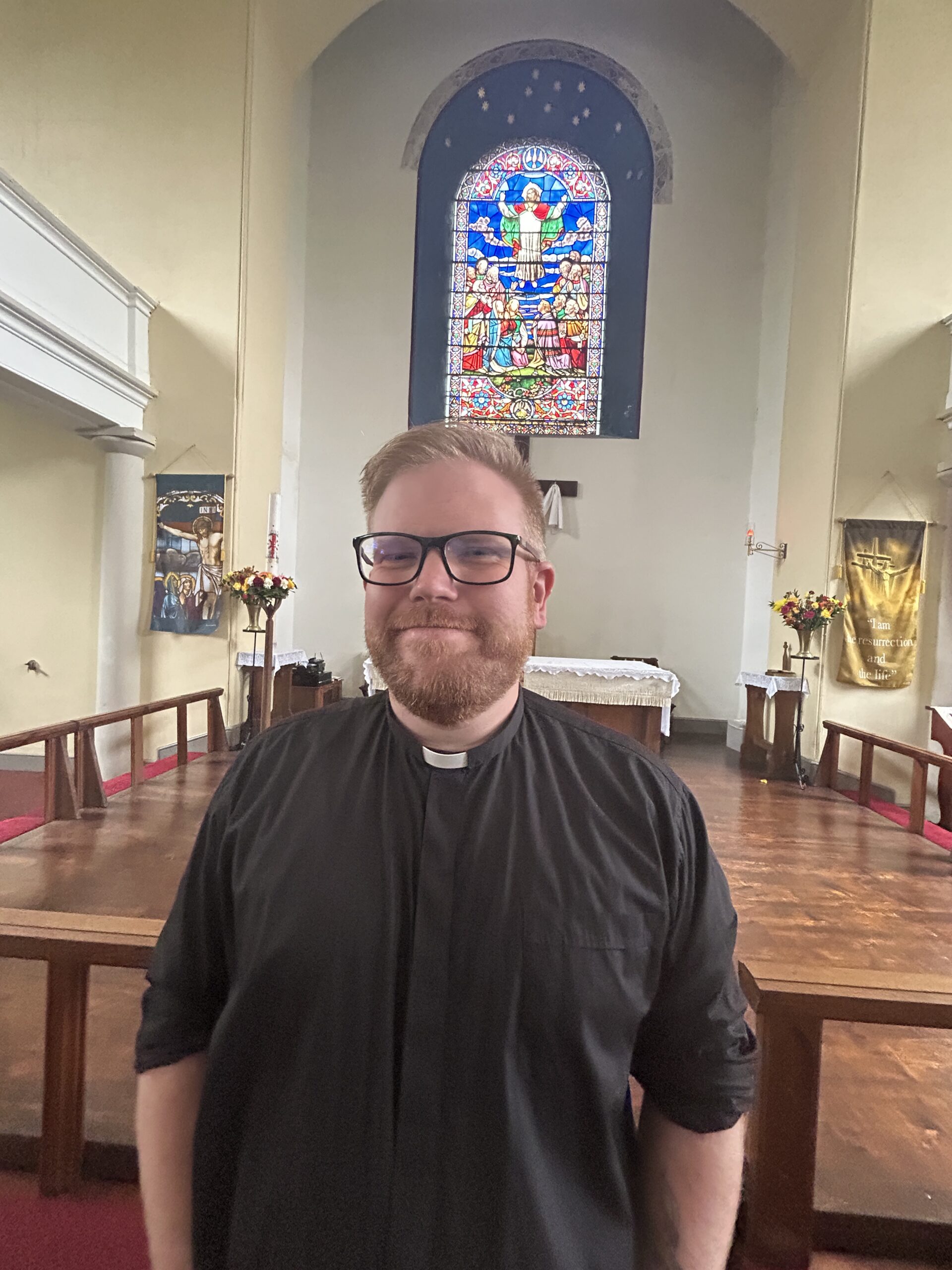
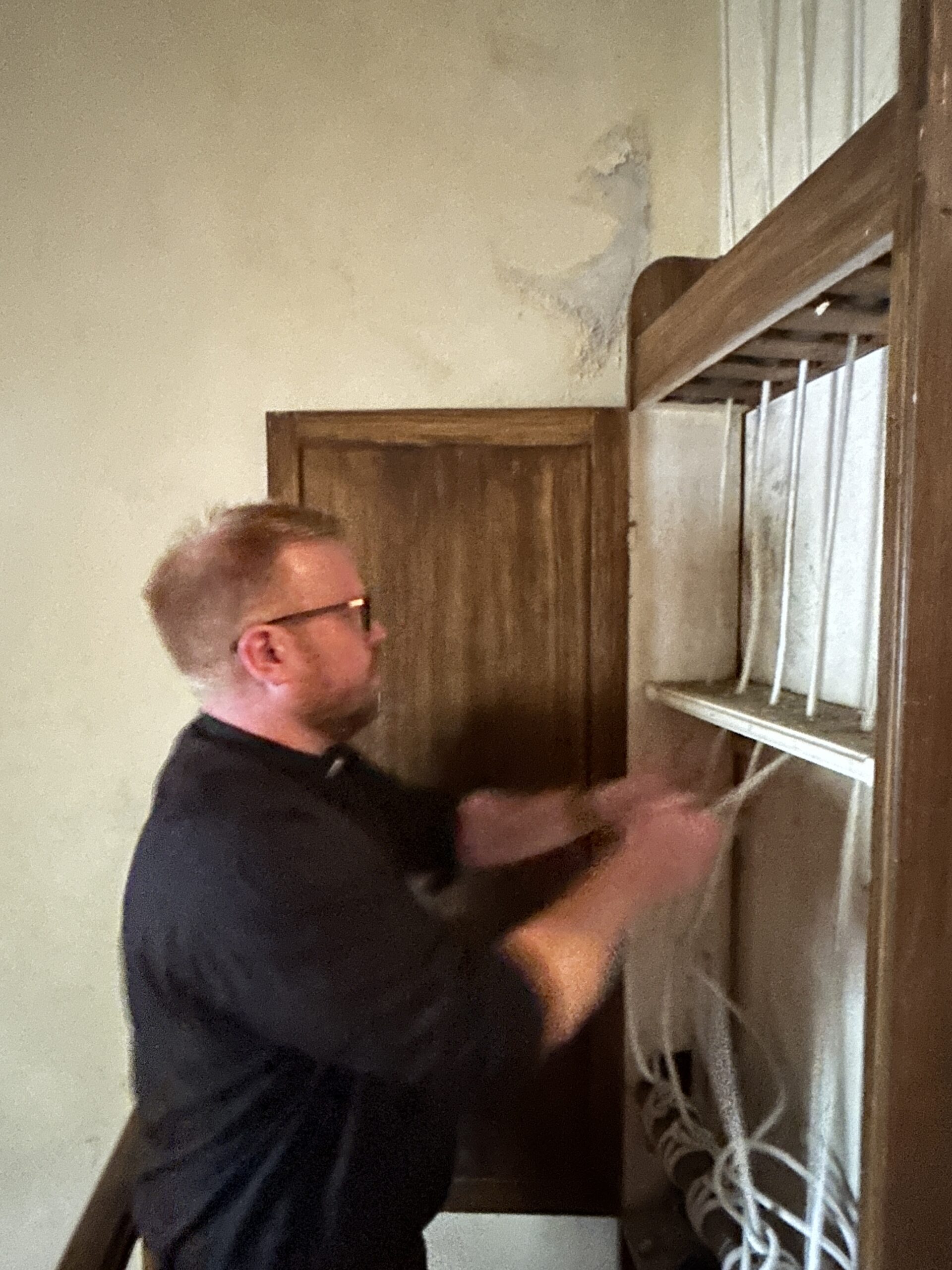
St David’s church looks a lot like a chapel, not least because of the loft gallery running around inside. The bells no longer ring fully – and the cost of renovation is prohibitive – but they can chime as campanologists put it. Matthew Davis is the vicar of St David’s and explains, ‘The bells have a couple of functions. First of all, we use them on special occasions like coronations, jubilees and they obviously mark services. When we’ve got the Mass, when we do the Eucharist, the bells ring out, to let everybody who can’t be in church know that people are praying for them. We also have the kids here on a Thursday afternoon: one of the treats sometimes is going up to ring the bells and try to get a tune, because you can easily do “Twinkle Twinkle Little Star.” It’s a very easy tune to play.’
Songs are an integral part of Matt Davis’ work. He explains,‘Part of my job is things to listen to what the community is saying, to listen to how the community is loving, how the community is hurting, what the community needs, what the community’s feelings are. And song is an important part of that, and you can see that in how people choose things.’
The songs chosen to be played at weddings are often personally significant. ‘We get a lot of Christina Perry, Goo Goo Dolls, Ed Sheeran. There’s also this song called “Dancing in the Sky” by American duo Dani and Lizzy which talks about being received up into heaven. But mostly they’re about love.’
Songs are increasingly a part of funerals too. Even though Matt might be a tad young to have considered such matters, he has thought about songs to play at his own funeral service. He’s a great fan of punk and so ‘God Willing” by the Irish-American Dropkick Murphys from Massachusetts is one of his choices: ‘Basically it’s a goodbye song, the lyrics suggest all I know is that I don’t know. So that’s a bit of a life lesson. The other one is “Knowledge” by Operation Ivy from California. And then it’ll be Johnny Cash’s “Ring of Fire” in the crematorium!’
Like many popular songs Idris Davies’ poems gain much of their appeal from the craftsmanship and clear honesty in play, to the extent that writer Jim Perrin claimed that Davies is ‘the most significant and original Welsh poet to have written in English during the twentieth century.’ He was also witness to an incredibly testing time in the south Wales valleys, namely the General Strike which happened a century ago in 1926.
Former First Minister of Wales Mark Drakeford is very interested in the General Strike and the literature it generated, including Davies’ long and beautiful poem “The Angry Summer,” which Mr Drakeford admires for its craft as well as substance. ‘The way the poem is put together speaks very directly to you. He gives you characters and you can hear them in your head, can’t you? It’s the opposite of Dylan Thomas in that way: the meaning is on the surface, not in the obscurity. But if you’re not careful, the apparent simplicity of it distracts you from the craft, the hard work that lies behind a magnificently constructed poem.’
The General Strike occurred against a background of significant world events, as Mark Drakeford reminded me. ‘Labour wins the largest number of seats for the first time in 1922, this poem is only four years later. This is less than ten years after the Russian Revolution. It’s as close to the end of the First World War as we are now to Boris Johnson becoming Prime Minister of the United Kingdom. The poem helps you to capture the immediacy of such events. Because in 1917, South Wales was alive with meetings welcoming the Russian Revolution. It’s a moment in which working people thought that they might assert control over the things that hitherto had controlled them.’
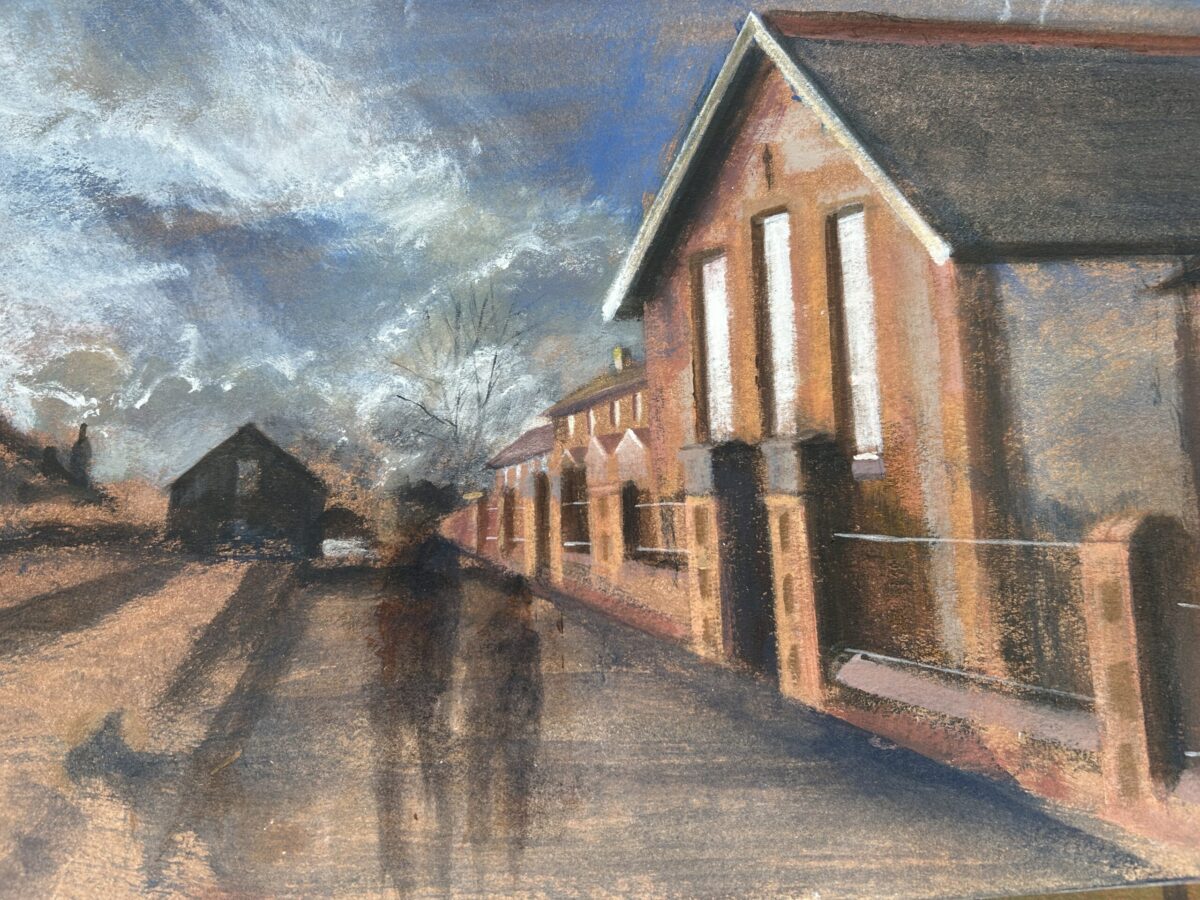
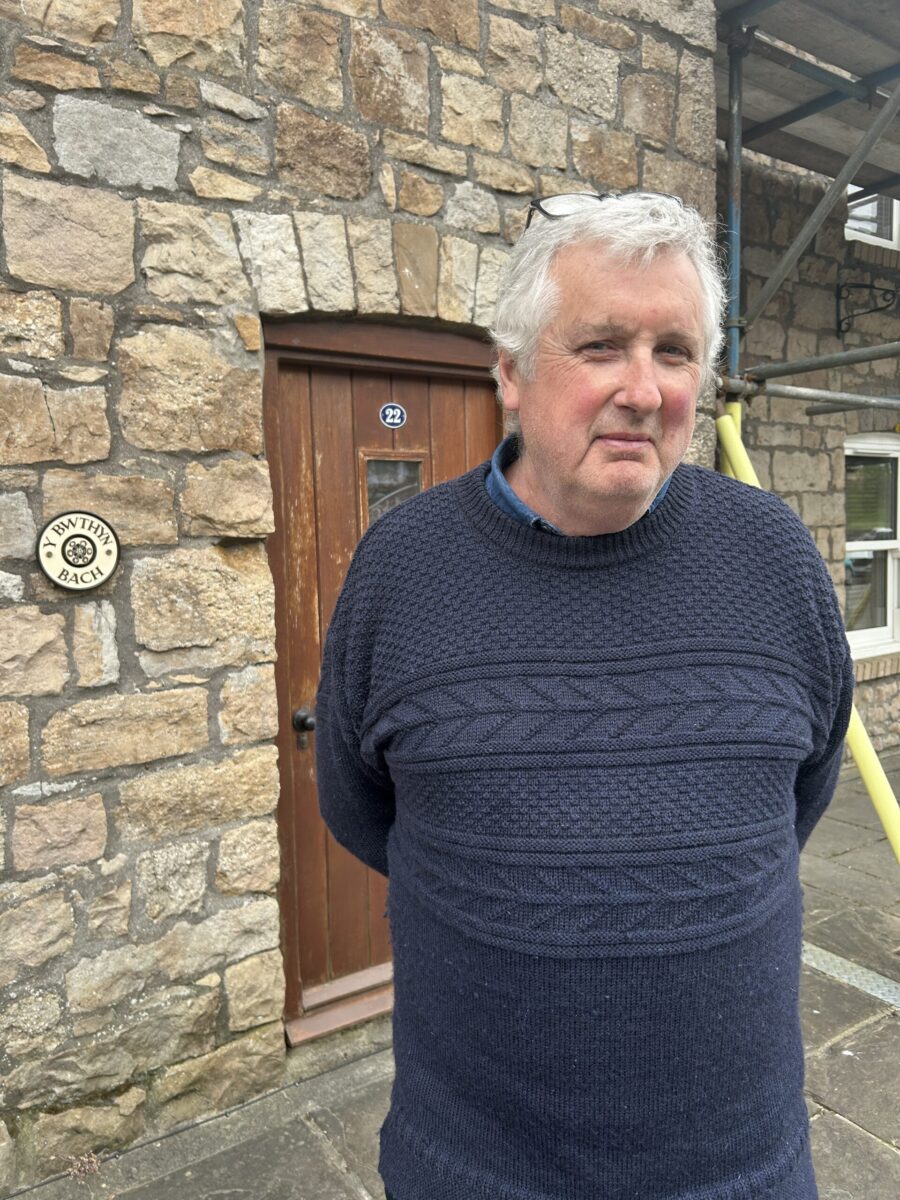
If you go right to the top end of the Rhymney valley, less than a mile north west of the town of Rhymney, you’ll come to Butetown, part of a proposed model village created by the Marquess of Bute to house his workers. It has sweeping views of Dowlais Top and the cleft of the Rhymney river valley and was the childhood home of artist Neil Carroll.
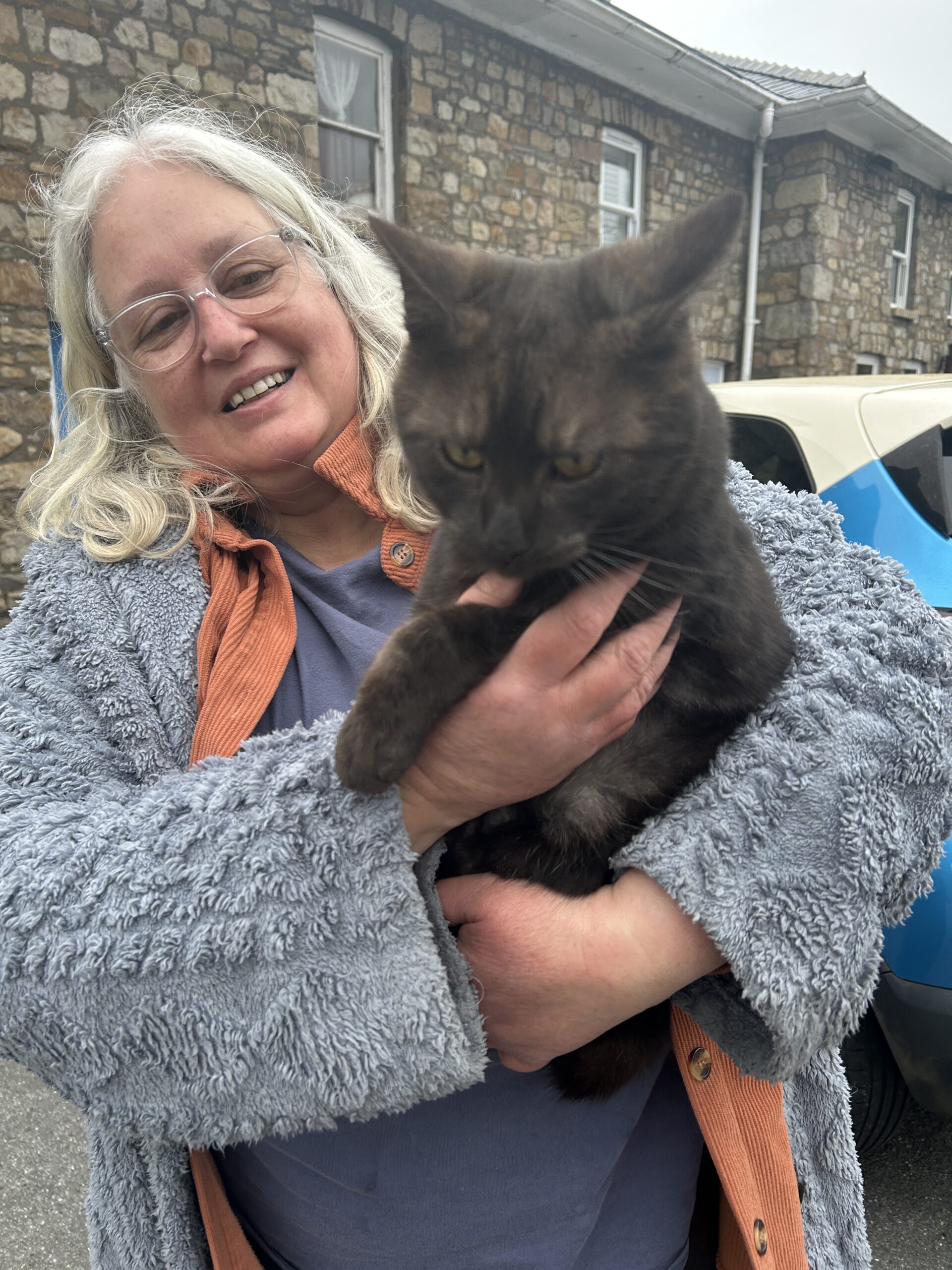
The model village was built on the initiative of R. Johnson, the works manager of the Union Iron Company. Standing outside No. 22 Neil tells me how he went to school here. ‘There are three rows of houses, a pub and a church and within the community you’d know everybody and everybody would know you, which was lovely really.’ As if on cue, a tremendously friendly cat crosses the road and rolls over at my feet to have her belly rubbed. Her owner, retired postwoman Elaine Rundle tells us her name is Smudge. From inside the house, a dog called Fudge barks for attention, proving that, like Idris Davies you can find rhyme and chime everywhere. Fudge and Smudge. Best of friends apparently.
Neil Carroll is a fan of Pete Seeger’s version of “The Bells of Rhymney.” ‘Ever since a young child, I always enjoyed Idris Davies’s poems and the fact that there was a kind of singing lilt to the language… it’s the way that people speak in the valley.’
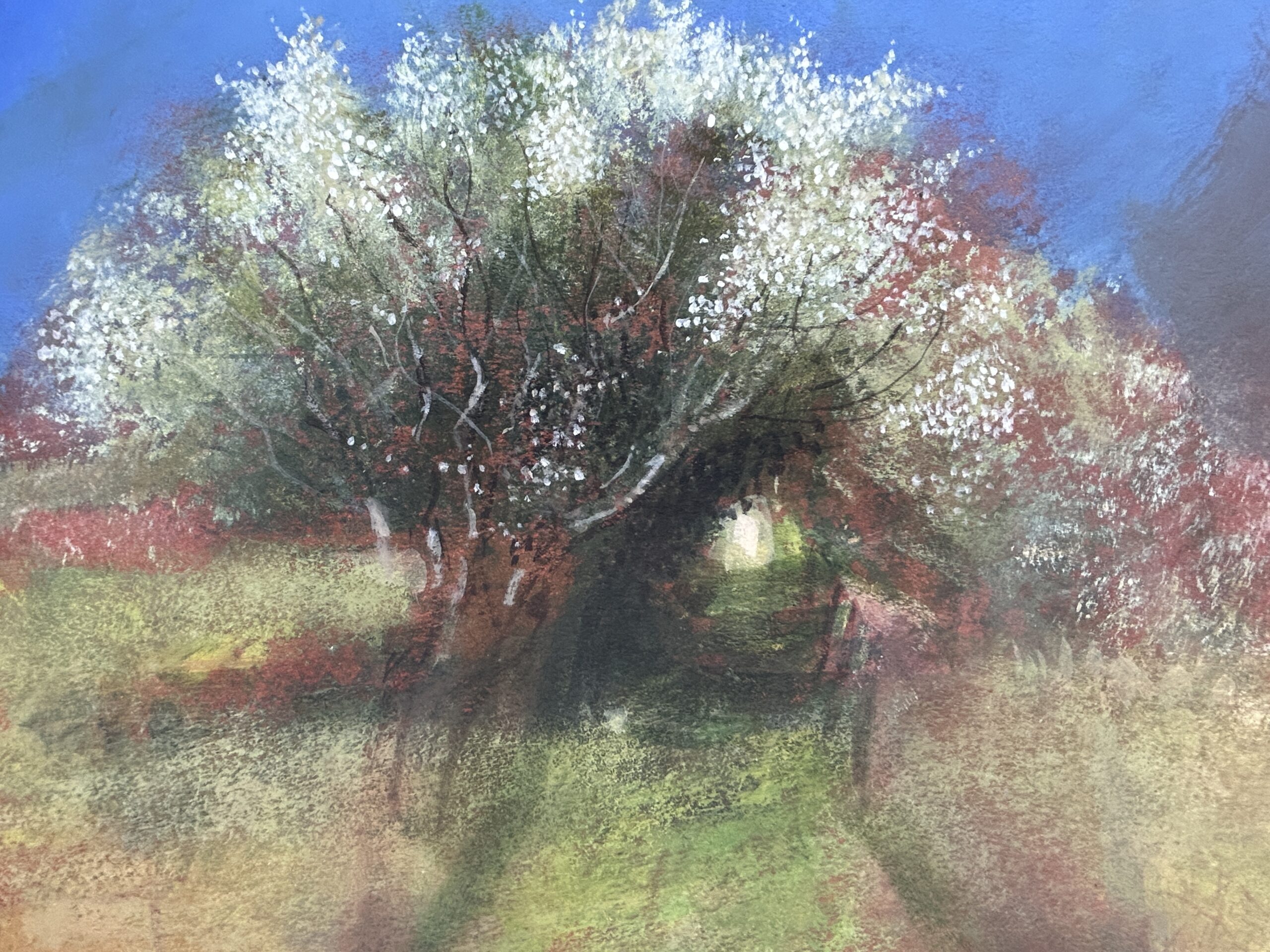
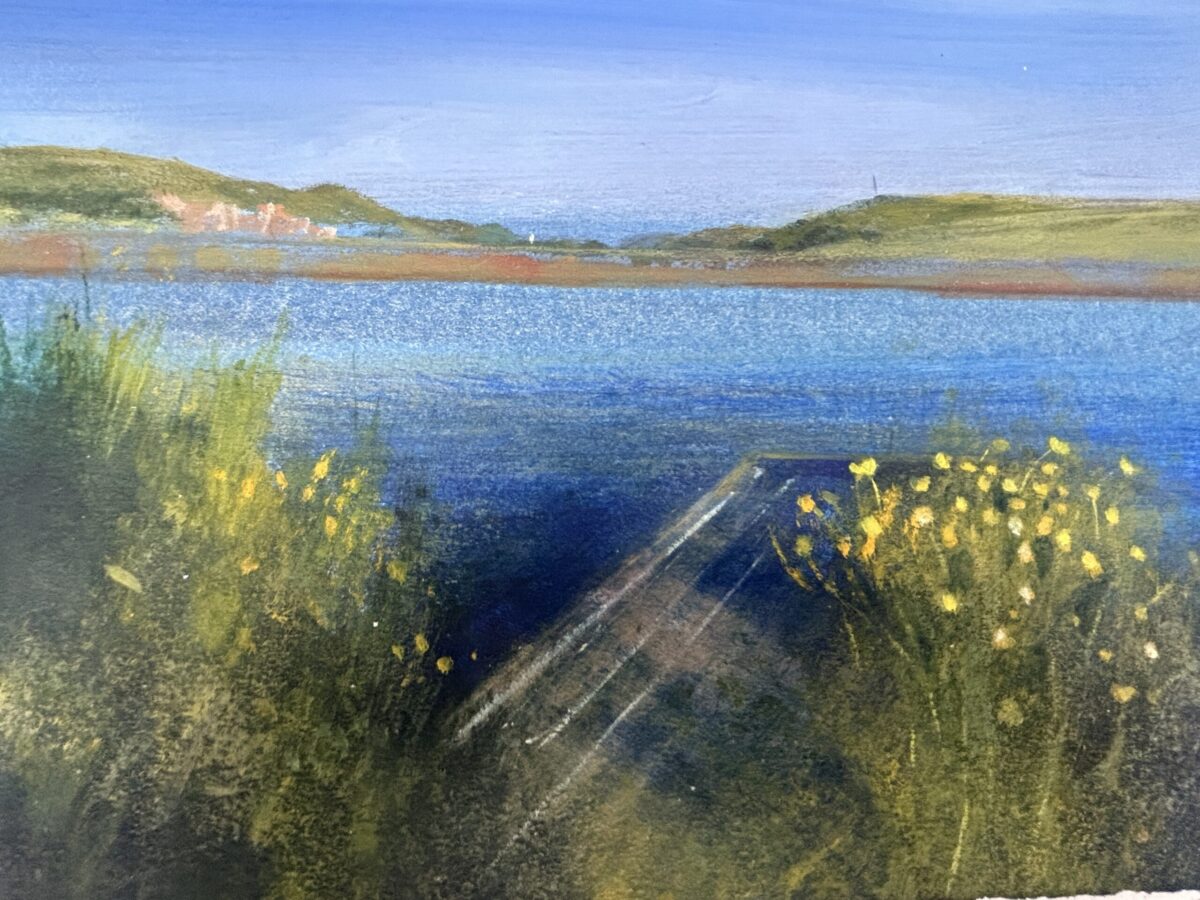
Many of Carroll’s works – full of invigorating, confident and zesty colours – use popular songs as their titles. There’s “Summer Breeze” and “Summer Nights,” with echoes of Seals and Crofts and John Travolta paired with Olivia Newton-John. Neil explains, ‘I said to my wife the other day that I’ve got to the stage now – I just turned 68 – that I wonder whether I’m living in a kind of Dennis Potter-type world – because things trigger off certain songs in my head.’ His paintings certainly sing with colour – brackeny browns, marigold yellows and cerulean blues. ‘You get the big sky here, like the American West. And you get this huge expanse of ochre grass. The blossom coming out on the trees is always a bit later up here, because it’s higher up. You know, we’re quite close to the Brecon Beacons. It’s what they used to call an overcoat colder up here.’
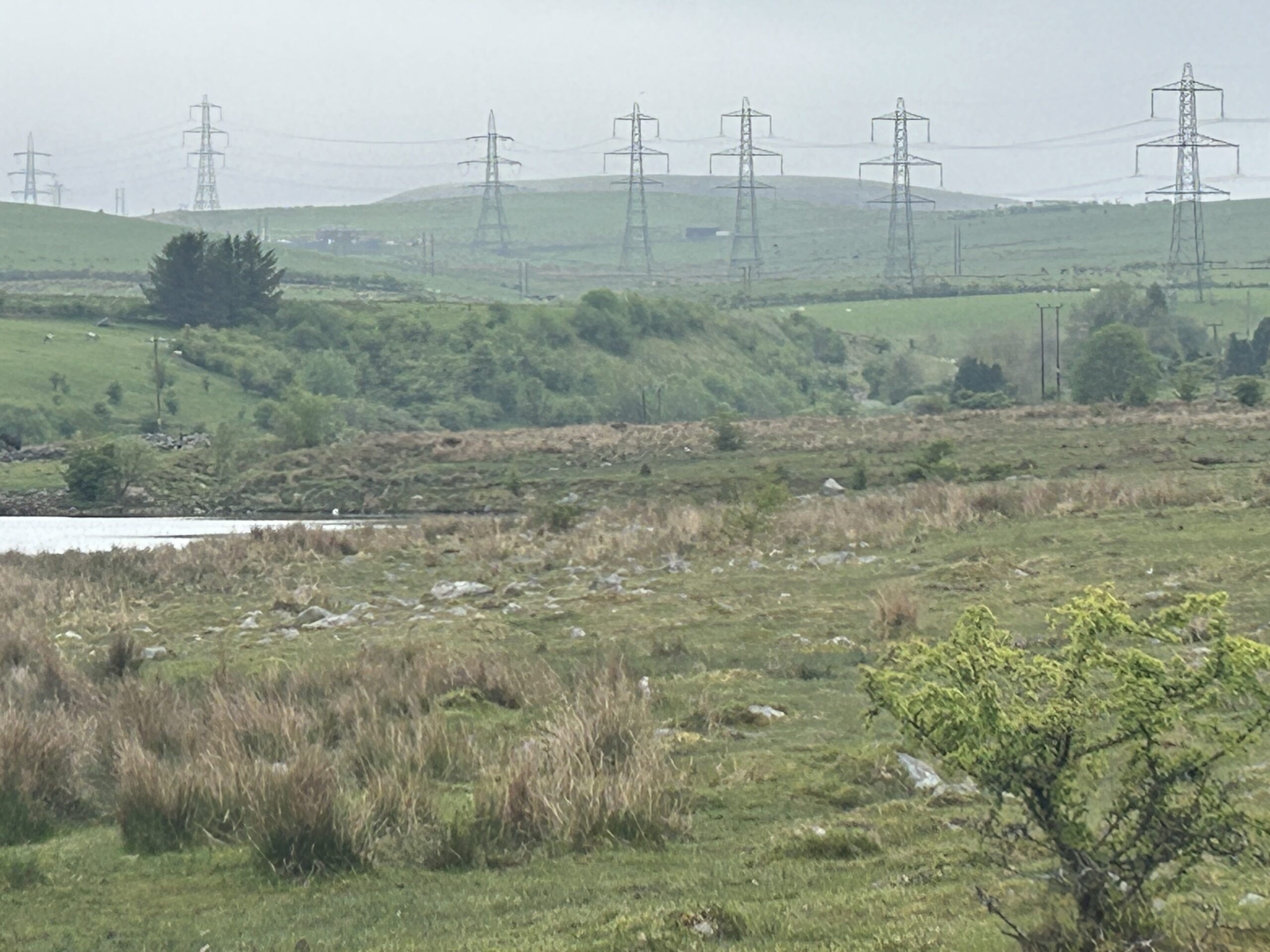
We cross the main road to visit the substantial pond opposite Butetown, which used to be a water reservoir for Ebbw Vale steel works. As a child, Neil thought it ‘a fantastic, adventurous playground. We’d spend many hours fishing there though we didn’t catch one very often. We were drowning worms most of the time. At the watercourse further up, we used to catch things like sticklebacks and minnows with a bottle or a jam jar on a string.’ As we stroll around the water’s edge we meet a fisherman using more sophisticated equipment, his three rods set up with an angler’s usual spirit of optimism. This particular optimist tells us about what’s under the grey waters. ‘There are carp weighing up to 20 pounds, then bream, pike, roach, gudgeon, all the freshwater fish pretty much.’
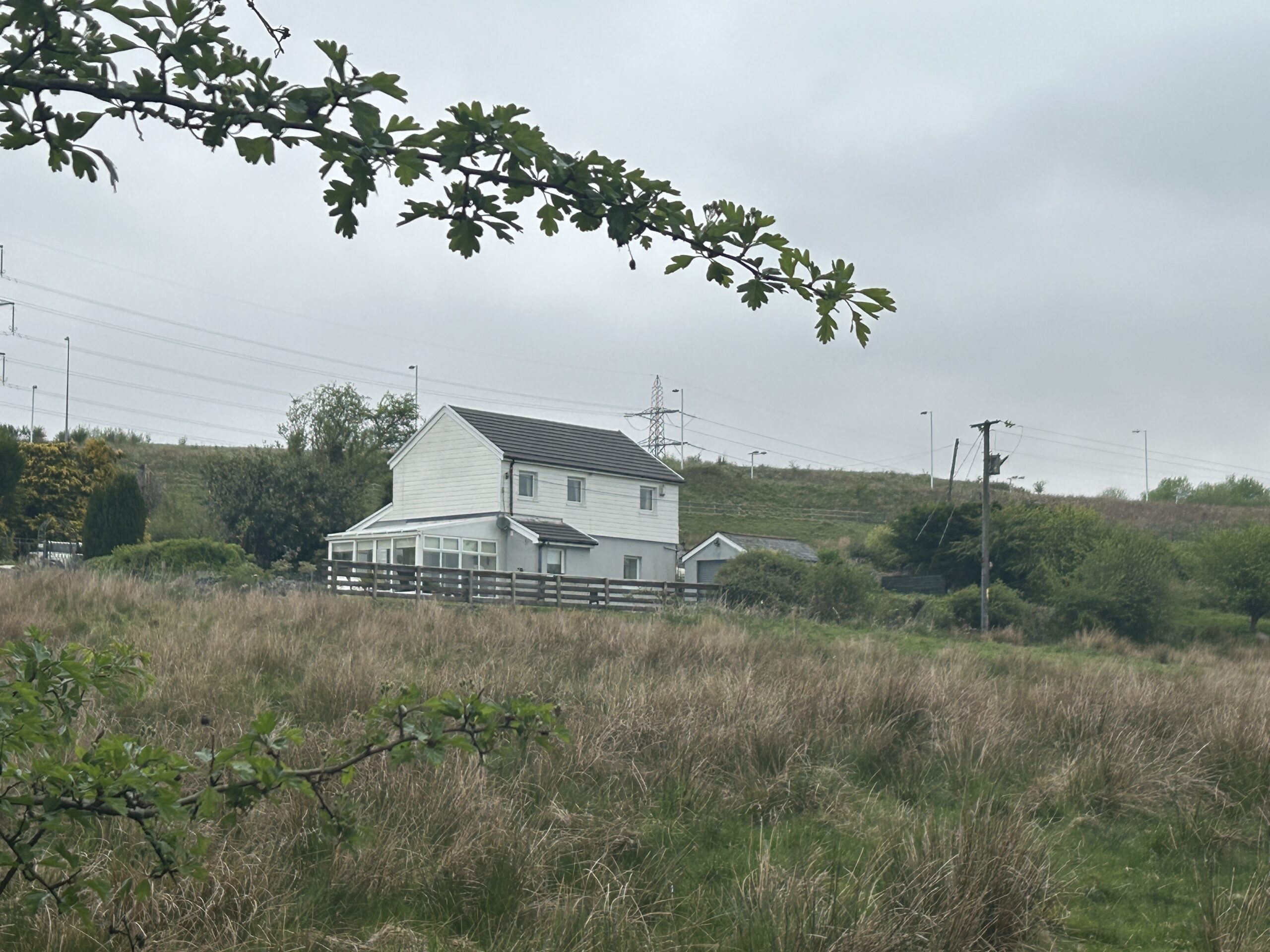
Neil and I then pass Nant yr Helyg farm, appropriately set in stands of willow, where Neil’s grandparents used to live. His grandfather, Garfield Moseley would walk six miles each day to the local colliery, work a shift and then walk home again. ‘Unfortunately, he only lived until he was 52 because he had pneumoconiosis. and he ended his days working in Ebbw Vale Steelworks. He wasn’t a well man by that time.’ Yet, for all its personal resonances, painting scenes of Rhymney isn’t a sentimental business, Neil maintains. ‘I think if you draw and paint what has meaning for you then that’s what’s important. You’re not necessarily painting for anybody else.’
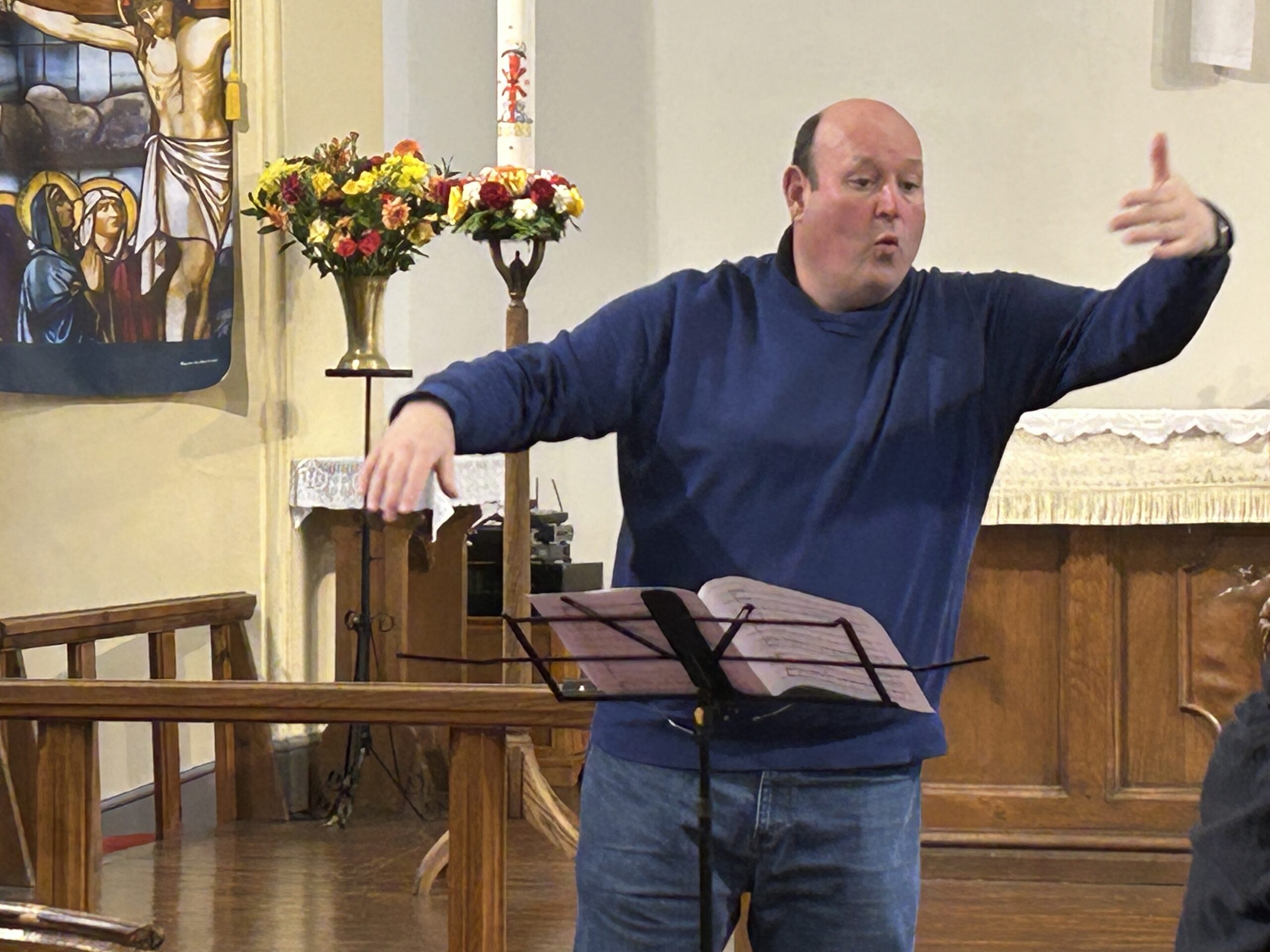
One of the great singing traditions of Wales, that of male voice choirs, is kept alive locally by the Rhymney Silurian Male Choir, which celebrates its 75th anniversary this November. When I sit in on rehearsals they are briskly assembling their four-part array of voices to sing a tender version of “Ave Maria” for a forthcoming concert in the Anglican cathedral in Liverpool in June. Here they will join muster with the musical forces of 13 other choirs from Wales. Tonight, in St David’s, the velvety, sonorous voices resonate as if inside you, making the dust motes in the church duly shiver and vibrate.
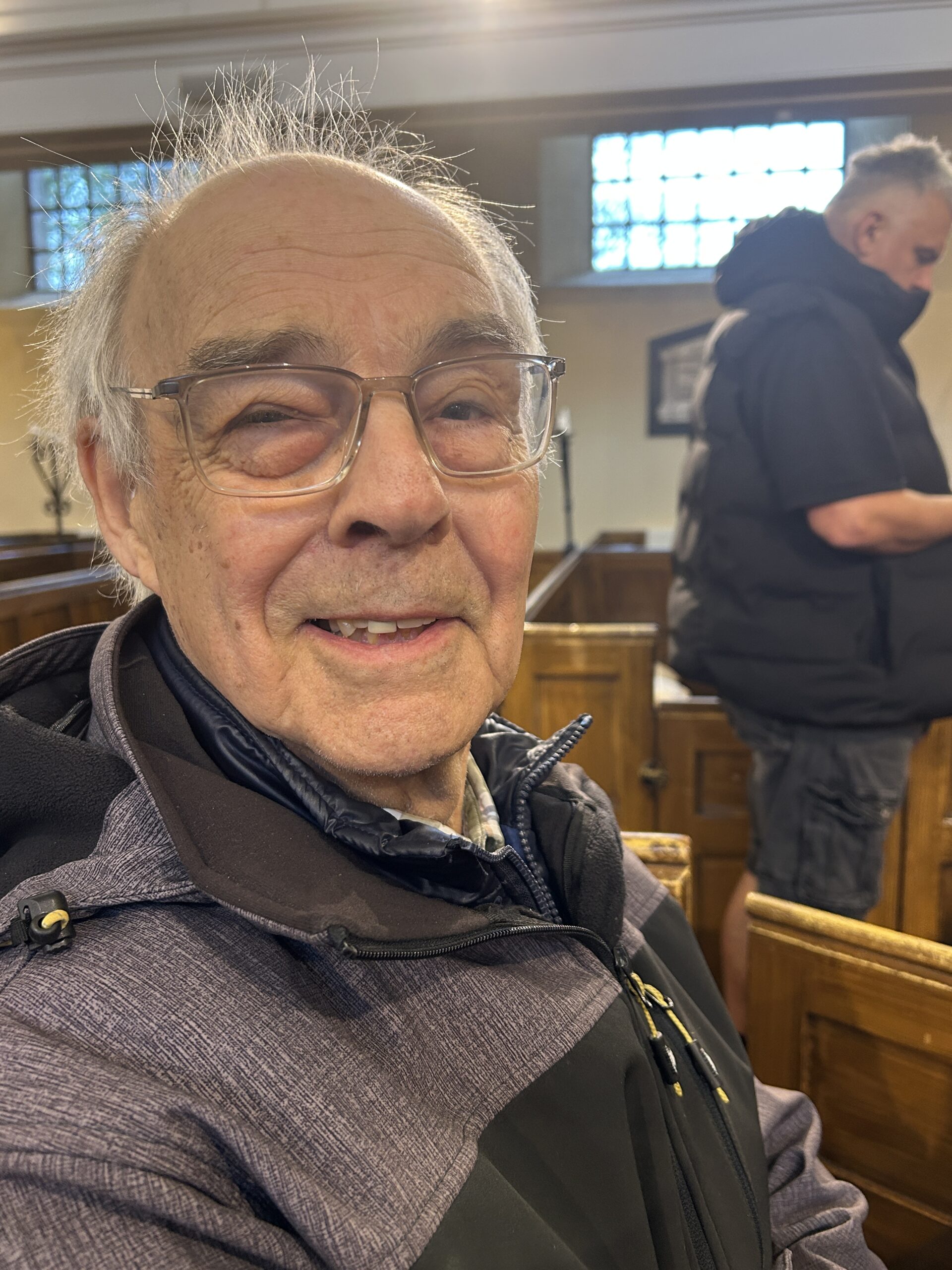
Eighty-five-year-old Ralph Williams was the choir’s musical director for many a moon. When he handed over the baton he went back to adding his baritone voice as a member. His job wasn’t just to maintain standards but also ensure that standard was higher than other choirs when it came to competitions. Asked if there was any rivalry between the Rhymney Silurian and other choirs Ralph smiles and quietly lists Bargoed, Dowlais and Tredegar, suggesting local derbies historically conducted through song. In terms of such history Ralph Williams feels they’ve been going long enough to be an integral part of the community. ‘What I feel is if you have a good choir, it’s something that the community can be proud of, isn’t it?
Brian Roberts has been chairman of the choir for no fewer than 56 years. ‘I joined in ‘64. The choir was set up in 1951 and grew to 96 members at one time. When it was established they wanted a name. But they didn’t want to be known as the Rhymney Male Voice Choir, a name like everyone else. So at the top end of the Rhymney valley, not far from the source of the river, there’s Llechryd, with a system of caves which the Silures, a tribe of nomadic warriors used to frequent. So the choir took their name from them.’
Bernard Jenkins has been the secretary of the choir for many decades and considers some of the highlights to be winning at the National Eisteddfod. ‘We won twice, most recently in 1988. We also won in Ebbw Vale in 1958.’ Recruitment has been a growing issue, as Bernard laments. ‘The problem is the choir’s getting older, but the audience is getting older as well, so they’re dying off. And it’s a job to get youngsters to join the choir and come to the concerts. It’s never been a young man’s game, of course, because instead of men joining in their 20s and 30s, they would have done other things. They played rugby perhaps.’
The current musical director, Iestyn Harding, was a bandsman before becoming a choir member and now conductor. ‘As a trombonist I never realised how the physicality of singing, of making the music this way made you feel. When you sing you don’t have anything other than yourself to do it, and that’s something I’ve really enjoyed. I try to be aware of that when I conduct the choir: I want them to enjoy through expressing themselves through the music.’
Sitting in the pews of the church is a privilege, listening to the voices meld and the harmonies gel. Men’s voices in concert – top tenors and second tenors, baritones and bass – each man’s voice adding to the overall resonance.
In his diaries the poet Idris Davies wrote ‘Any subject which has not man at its core is anathema to me. The meanest tramp on the road is ten times more interesting than the loveliest garden in the world.’ But man wasn’t Davies’ only subject. In “The Angry Summer” he conjures up the Rhymney countryside with its ‘days of the cuckoo and the hawthorn’ and warm days for simply ‘splashing in the mountain ponds.’ In “The Curlews of Blaen Rhymni” he recalls nights when he would ‘walk alone, and listen, along the mountain way/To curlew calling curlew in hollows far away.’ He captures the sleeping town at midnight, ‘so still, so strangely fair.’ And in the poem called simply “Rhymney” he captures the captivating moment when, as hawthorn flowered white near the pithead in the rain even ‘the drabbest streets of evening,/They had their magic hour.’

Jon Gower is Transport for Wales’ writer-in-residence. He will be travelling the breadth and length of the country over the course of a year, reporting on his travels and gathering material for The Great Book of Wales, to be published by the H’mm Foundation in late 2026.
Support our Nation today
For the price of a cup of coffee a month you can help us create an independent, not-for-profit, national news service for the people of Wales, by the people of Wales.
Get more trusted Welsh news
Choose Nation.Cymru as a preferred source in Google News to see more of our journalism.



Great series, I love these reports from your travels. I feel I should be getting out on the rails myself!