


Making Tracks: Shotton

Jon Gower does some industrial birdwatching when he visits the largest colony of common terns in Wales.
They say one good tern deserves another and that is certainly the case at the Shotton Works on Deeside.
It’s a veritable tern factory and the place’s proximity to the Dee estuary helps explain its success, as does the fact that the colony is well protected behind security fences.
Here the numbers of common tern chicks fledging on rafts and specially constructed islands have increased from 17 in 1970 to almost 400 fledglings a year.
Emma Wright is a management systems officer at Tata Steel UK and has responsibility for biodiversity. She is very proud of the fact that in December 2024 the Shotton Works site achieved The Wildlife Trusts’ Biodiversity Benchmark: this recognises continual nature enhancement and protection on a business landholding. ‘It’s credit to the positive changes and processes we have implemented, all with the aim of maximising the biodiversity that we live side by side with.
‘We’re the only site in Wales to earn the benchmark and the first and only Tata Steel UK site to have it.’
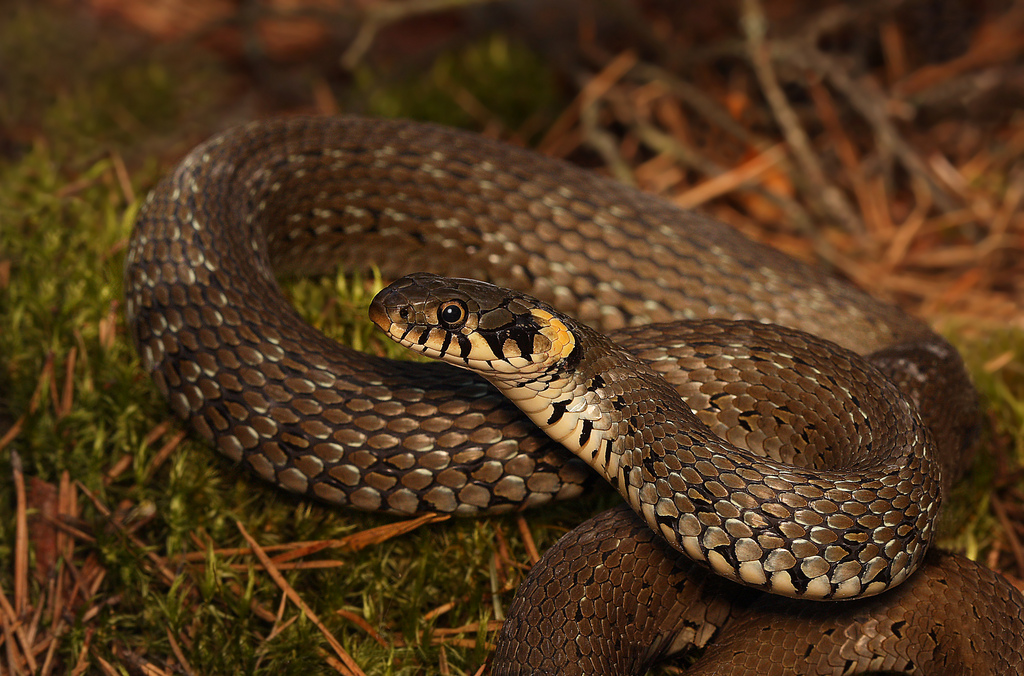
The Deeside site is a rich mosaic of habitats, including grassland, woodland, reedbeds and other kinds of wetland. Grass snakes, badgers, dragonflies and over 80 species of birds – including raptors such as barn owls, buzzards and kestrel – are at home here.
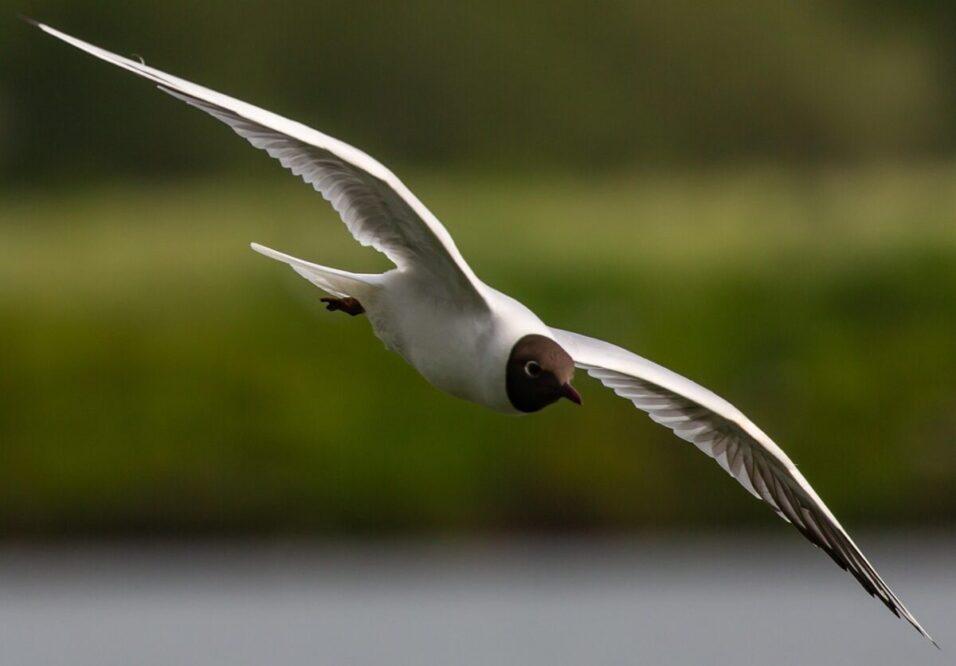
Key among these birds are common terns, which make their own racket among the shrieking of black-headed gulls. These noisily wheel and turn above the lagoons like outsize grey and white butterflies.
The common tern is an amber-listed bird, which suggests concern about its future survival. The Shotton Works site has designated Ramsar Site status, recognising its value as a wetland habitat of international importance.
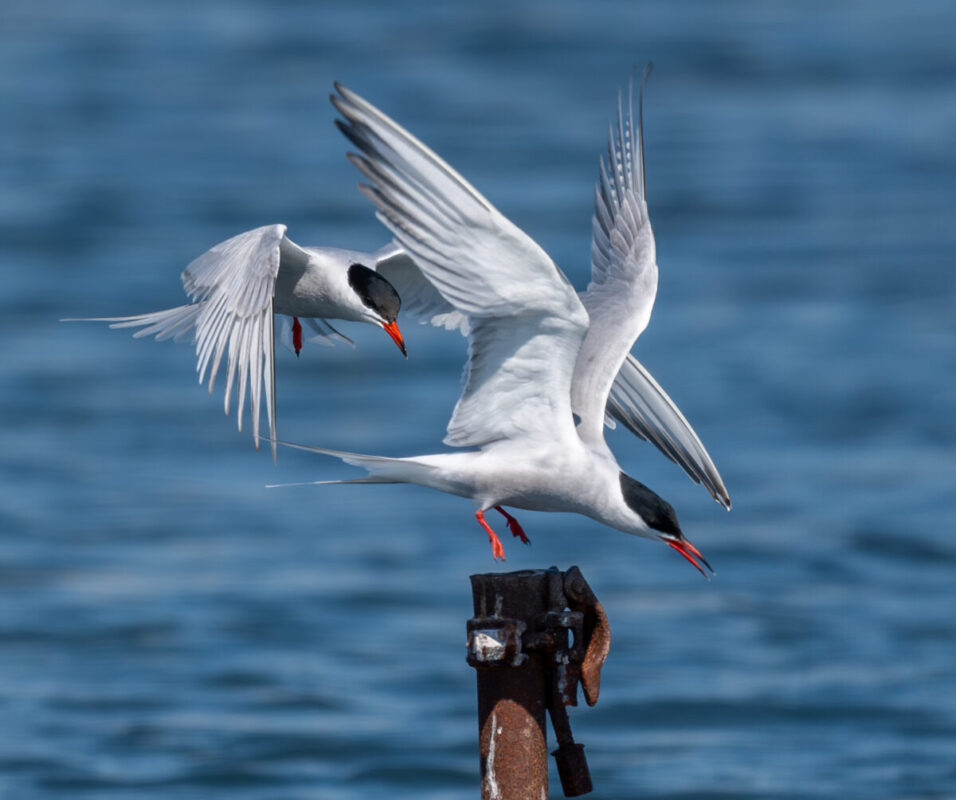
Emma enthuses. ‘It’s the biggest ternery in North Wales and the fifth biggest in the UK. Everyone on site gets excited when the birds return in the spring. People you’d think wouldn’t be remotely interested ask about the terns and spot them when they’re back.
‘You can tell the difference between the birds when they’re flying above you, between the tails of the black-headed gulls and the terns, so you’re always looking for the forked tail.’
That fork explains the tag ‘sea-swallow,’ one of the bird’s alternative names.
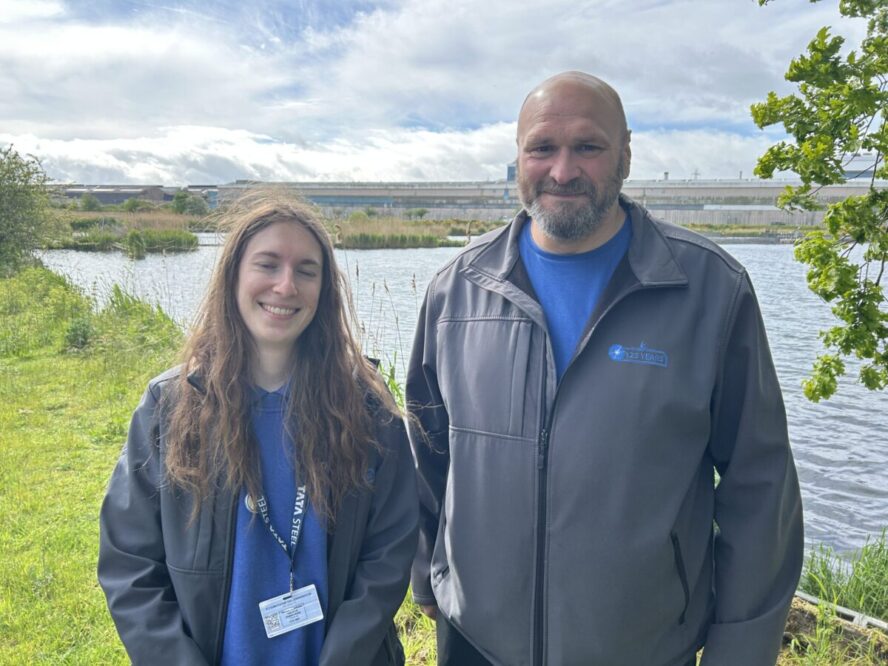
David Smith is the Environment Officer at the Tata Steel site. ‘I used to work in building systems, stacking up steel. I then studied through the Open University and got a degree in Earth Sciences. I’ve always been interested in the earth. To be honest I wanted to be a geologist, but I sort of fell into this but I’ve always had an avid interest in nature.
‘The world amazes me, it’s a wondrous place. Just 40 or 50 years ago this was a barren place but you look at it now – there’s trees, greenery, wildlife thriving and it’s the same across all of the site where there used to be an active steelworks.
‘I love the fact nature always wins. That sense of wonder, if you forget about that, you’re so dead.’
Emma, as if on cue, points out a relatively compact area set within a loop of paths. ‘We did a botanical survey here last year and found no fewer than 141 different plant species, including dune helleborine, broad-leaved helleborine, green-flowered helleborine and white mullein.’ An orchidaceous array, for certain.
With the assistance of volunteers, Emma and David help the terns each year. David explains, ‘These nets you see behind you, they were put on the islands because the gulls, geese and ducks all nest earlier than the terns. We take the nets off when the terns are arriving. I was fixing some of the fence last week and found 12 tern eggs, so already it’s a good start.’
Emma finds satisfaction in hands-on conservation. ‘You’ve got all the chaos of doing work on the islands, making sure you don’t stand on any eggs when you’re counting them, picking up the chicks which are a bit smelly. But then you’ve got a sense of accomplishment, when they’re all sat back down on their nests.’
Dave readily agrees. ‘I often tell people this is the best part of my job. I’m not that keen on spreadsheet days, unless it’s pouring down outside. We’re lucky to be able to come down here in all seasons.’
It’s uplifting to find space for nature in an industrial setting. Local historian Gareth Jones moved to the area as a young man in 1976, as an apprentice with the British Steel Corporation. ‘It was a very large employer with about 11,000 employees. I didn’t expect to get to the higher echelons, but I joined senior management and retired after 43 years’ service.’

Gareth chronicles the works’ history: ‘Shotton Steelworks was opened in 1896 by John Summers, a clog maker from Stalybridge in north Cheshire who wanted to make iron parts for boots for people in the mills. It wasn’t a fully blown steelworks until after the Second World War, when they built blast furnaces and made steel. British Steel eventually became Corus which in turn became Tata.’
Tata Steel’s Shotton works now produces around 500,000 tonnes of metallic and pre-finished steel annually, along with some seabirds! Emma Wright says, ‘We can’t underestimate the value of volunteers that come and help us. We’ve got The Merseyside Ringers. Peter Coffey is our resident bird expert and very much advises on what we need and want to do.’
Peter shared tern history with me. ‘Common terns were first reported breeding in the Dee estuary in 1918 on rapidly-growing saltmarsh off Burton Point. By 1934, fifty pairs were present and a small colony, varying between ten and eighty pairs, maintained a tenuous foothold up to 1970.
‘Members of MRG noticed that pairs of common terns had occasionally attempted nesting on bunds in the cooling lagoons. In 1970, at the request of the group, British Steel Corporation declared the lagoons a nature reserve. They also granted permission to anchor a hastily-constructed raft in one of the pools to see if common terns would nest there. It was an instant success. The group received the Prince of Wales Award in 1971 in recognition of their efforts.’
Success begat success. ‘By 2000, three islands had been created and the colony peaked in 2006 with 722 apparently occupied nests and a minimum of 967 fledged young. Initially this development occurred within 150m of an active blast furnace! It continues today just 100m from active steelworks buildings and roads.’ The Merseyside Ringing Group has therefore been involved with the colony from its inception 56 years ago.
During that period many birds have been ringed. The Merseyside Ringing Group’s Peter Coffey got the calculator out.
‘More than 21,000 Common Terns have been ringed at Shotton. Of those, 129 have been reported from 21 countries, 14 of them African. Most common terns spend their winters off the coast of west Africa, fishing in the upwelling waters of the Gulf of Guinea. Birds have been reported from all countries on the west African coast from Morocco down to Liberia and then eastwards as far as Togo. These include 42 sightings from Senegal and 21 from Ghana. Occasionally birds will migrate further than west Africa, with two Shotton birds reported from Namibia and one from east of the Cape of Good Hope, South Africa.’
They return to the Dee because there is ample food for the birds, which particularly favour sand eels.
Peter says how ‘The terns feed relatively close to their nesting area with lots of activity in the estuary around the Flint area but birds seldom flew more than 10km down the estuary. Adults with fledglings can also be seen in the quieter waters leading up towards Chester.
‘The birds will leave the colony by the end of August and move down the Dee estuary to feed and roost in Liverpool Bay before starting their migration.’
To further underline the biological importance of the estuary, Wales’ only colony of little tern nests on shingle at Gronant, near Prestatyn; daintily dipping into the Dee for their own sustenance of small fish.
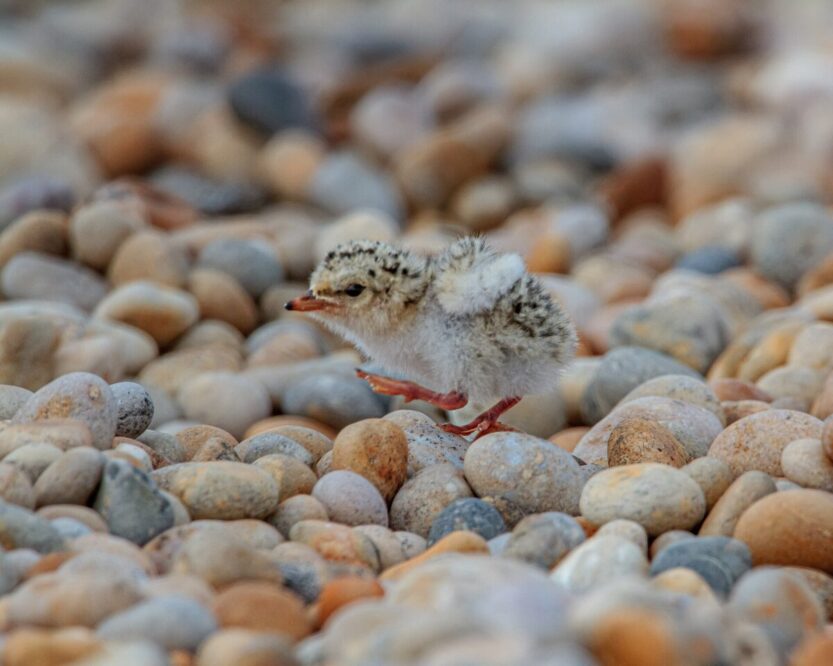
Flocks of feeding terns are an animated sight: grey, black and white whirlwinds of wings and splayed tails cleaving, slicing and slashing the air.
The Anglesey painter Charles Tunnicliffe captured the kinetic quality of feeding terns on Cob Lake near his Malltraeth home in Shorelands Summer Diary where he described how ‘Tonight, it was a real fairy ballet, elegant performance of dipping, soaring, flickering dancers, with the hissing waves as their stage and a scurrying wind-torn sky as backcloth.’
The Welsh poet Roland Mathias, meanwhile, thought that flocks of terns ensure ‘The air itself has bravado.’
In addition to the bird ringers, local wildfowlers also help out at Shotton. Chris Anyon is the Conservation Officer for the Dee Wildfowlers & Wetland Management Club while Geoff Swaffer works alongside him.
Chris helped out with the tern rafts right from the off. ‘We previously used to shoot on that area. We had a small wildfowling club.’ Over years the attitude of wildfowlers to conservation has changed perceptibly, if necessarily. Chris avers, ‘If there aren’t healthy populations of birds, wildfowlers don’t have anything to shoot at, while conservationists don’t have anything to appreciate. I used to personally rear and release 600 mallard every year. It’s not just the shooting, the shooting is the end product.’
The wildfowlers are happy to lend a hand in active conservation work on the Tata Steel site, including litter picking, guiding visitors on walks for approved visitors and removing tree saplings from the reedbeds to stop them turning into wet woodlands.
Away from the steelworks they shoot on the Dee marshes in a controlled way to aid wetland conservation and habitat management.
‘Our club started in 1952 and originally our main area for shooting was John Summers and Sons, who owned the steelworks back then. We shot mallard, pintail, wigeon and teal. There weren’t any Canada geese back then but they’re everywhere now.’ The art and sport of wildfowling, Chris explains, ‘Depends on the weather, the winds and the tides, so this is what you’ve got to know.’
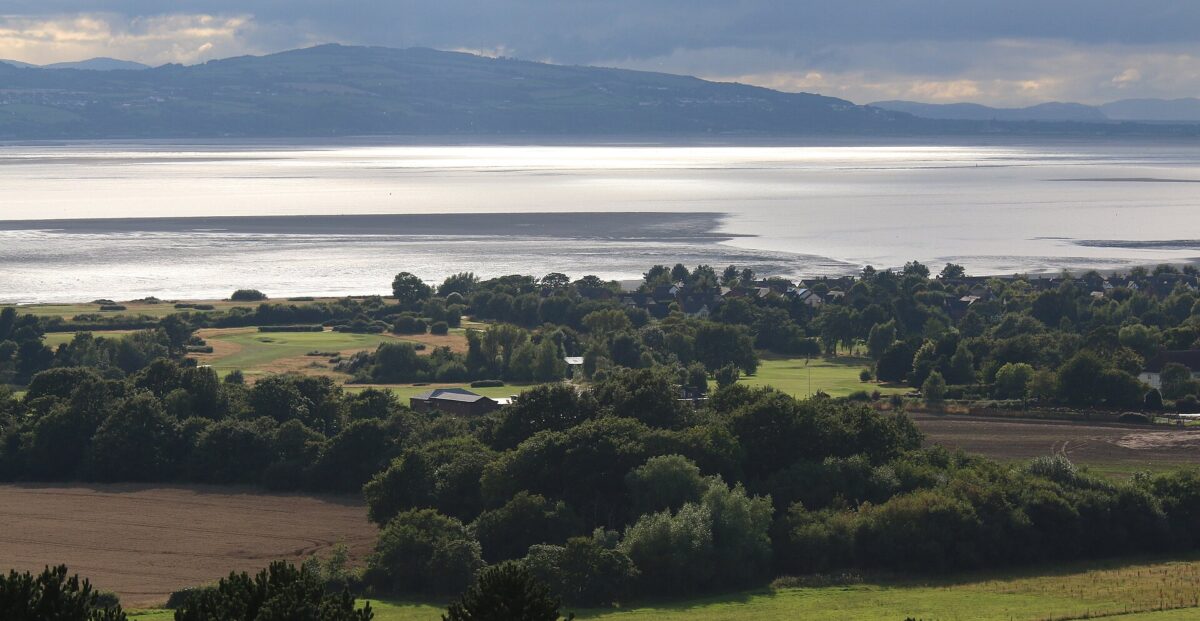
Chris knows the estuary most intimately well. “I learned to swim out there. My mother used to set me down as a baby, just months old, in one of the creeks or gutters. I learned to swim in one that was 50 or 60 yards in width. I later learned to sail here, I fished, I was a coast guard. for 25 years. So, my whole life has been devoted to the marsh and I absolutely love it.’
The Dee becomes very special in the dark hours, according to Geoff Swaffer. ‘It’s just a fantastic place at night, there’s just so much going on: you hear birds whistling out of nowhere and there’s all the lights and it’s just an incredibly atmospheric place.’
Geoff delights in the night-time cries of curlew, wigeon ducks whistling and sometime mute swans going over, their strong wings generating a rhythmic “whoompa, whoompa” sound.
Chris concurs, ‘When they go past, you know they’re swans, you can hear them like a creak on the wind. The swan population just seem to have dipped over the years. But the main increase on the Dee now is pink-footed geese: it’s a great sight and sound. Honestly, I sit and watch them as much as anything because we’ve got a bag limit of two. That’s all we shoot. Their numbers start to climb around about 1980. We used to see about 250 but by now the largest count we’ve had is about 25,000. And when you hear and see a flock of those, it’s, oh, just wonderful.’
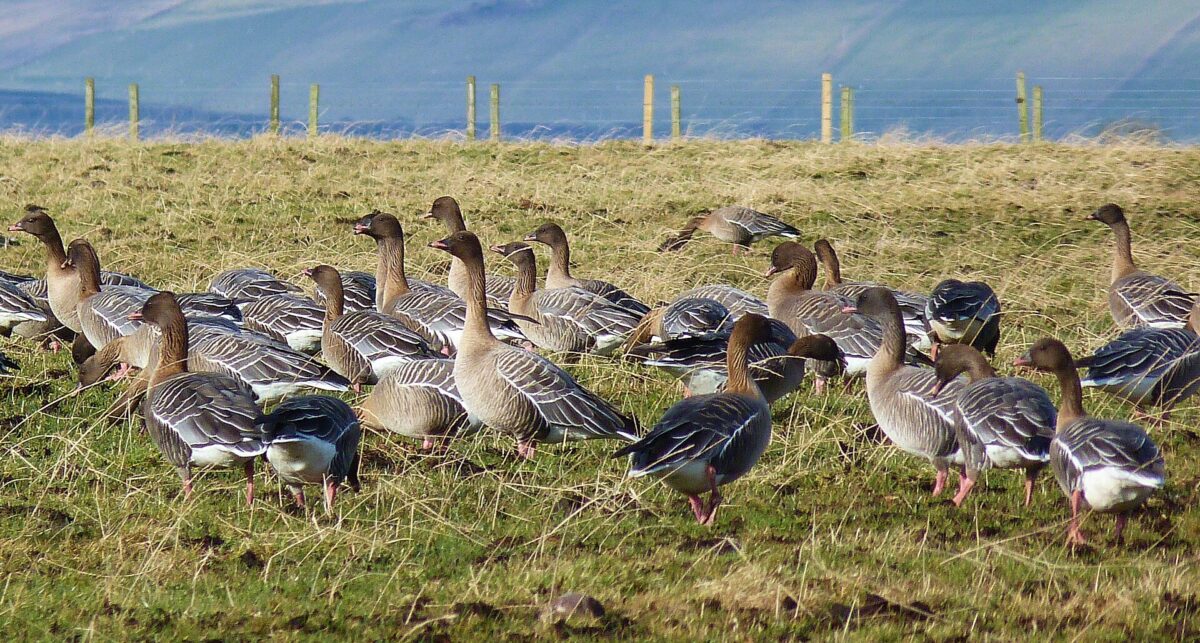
So, two Deeside avian specialities – common terns and pink-footed geese. Birds of summer and birds of winter, each a harbinger of its particular season.
Each living in such proximity to us and to industry and, by their animated presence, gracing our lives.

Jon Gower is Transport for Wales’ writer-in-residence. He will be travelling the breadth and length of the country over the course of a year, reporting on his travels and gathering material for The Great Book of Wales, to be published by the H’mm Foundation in late 2026.
Support our Nation today
For the price of a cup of coffee a month you can help us create an independent, not-for-profit, national news service for the people of Wales, by the people of Wales.
Get more trusted Welsh news
Choose Nation.Cymru as a preferred source in Google News to see more of our journalism.


