

Making Tracks: Swansea (Part 1)
Jon Gower explores the many connections between poet Dylan Thomas and trains.
Swansea is forever connected with the poet Dylan Marlais Thomas, the great Welsh poet of euphonious, singing lyrics and reelingly roistering behaviour.
Indeed, in 2004, a Class 153 train unit, operated by the Wales and West Trains Operating Company was named in his honour and duly unveiled at Swansea High Street station by his daughter Aeronwy.
This unit has long gone to the great sidings in the sky much as the poet, who gradually turned from ink to drink, finally hung up his pen after a hard night’s drinking in New York city in November 1959.
In a radio talk, Reminiscences of Childhood, Dylan Thomas recalled Swansea in a typical ticker-tape sequence of words as ‘an ugly lovely town…crawling, sprawling, slummed, unplanned, jerry villa’d, and smug-suburbed by the side of a long and splendid-curving shore where truant boys and sandfield boys and old anonymous men, in the tatters and hangovers of a hundred charity suits, beachcombed, idled and paddled…’
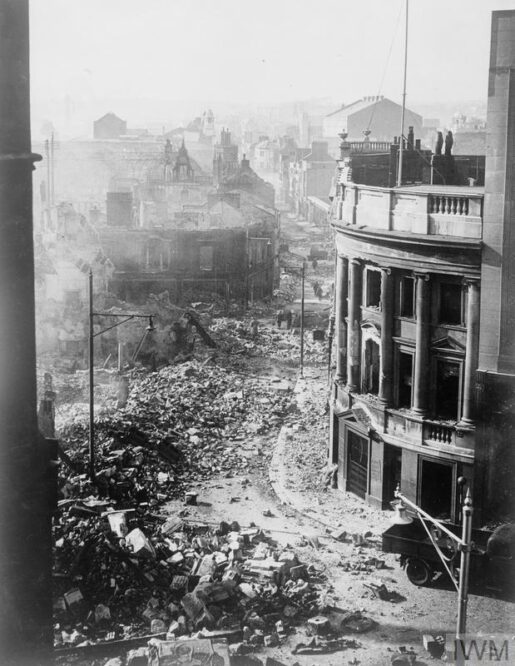
That sprawling, shorelining town was to be destroyed during a German bombing campaign over three nights in February 1941 when 230 people were killed and 409 injured. The Luftwaffe flattened hundreds of buildings and left many others as damaged hulks.
The Buenos Aires-born poet Lynette Roberts watched Swansea burn from miles away, from her home in the Carmarthenshire hillside village of Llanybri, where she lived with her husband Kiedrich Rhys.
Her description of the conflagration, in a short piece titled ‘Swansea Raid,’ published in ‘Village Dialect: Seven Stories’ in 1944, is exceptionally vivid, her words acting like flares:
‘From our high village overlooking the Towy we can see straight down the South Wales Coast. Every searchlight goes up. A glade of magnesium waning to a distant hill which we know to be Swansea.
Swansea’s sure to be bad. Look at those flares like a swarm of orange bees.
‘They fade and others return. A collyrium sky, chemically washed Cu.DH2. A blasting flash impels Swansea to riot! Higher, absurdly high, the sulphuric clouds roll with their stench or ore, we breath naphthalene air, the pillars of smoke writhe, and the astringent sky lies pale at her sides.’
Dylan Thomas was to write his own piece about the Blitz, not as an eyewitness but as an explorer of the aftermath.
Completed and broadcast in 1947, Dylan Thomas’ radio piece ‘Return Journey’ was conceived following Thomas’ experience of seeing the terrible devastation at first hand.
Walking through the remains of the town centre he knew so well, its architecture turned into rubble, he bumped into his old friend Bert Trick, and told him, categorically, ‘Our Swansea has died’.
Dylan Thomas had set off on foot from the train station to witness the Luftwaffe’s terrible nightwork, and was soon evoking the sort of images of death and destruction which would so often feature in his future verse.
‘It was a cold white day in High Street, and nothing to stop the wind slicing up from the Docks, for where the squat and tall shops had shielded the town from the sea lay their blitzed flat graves marbled with snow and headstoned with fences. Dogs, delicate as cats on water, as though they had gloves on their paws, padded over the vanished buildings.’
Wandering past gaps that once were buildings, he intended to visit the Kardomah café, where Dylan and his cultural chums used to convene to exchange gossip and ideas such as how ‘Dan Jones was going to compose the most prodigious symphony, Fred Janes paint the most miraculously meticulous picture, Charlie Fisher catch the poshest trout, Vernon Watkins and Young Thomas write the most boiling poems…’
But Thomas finds the Kardomah Café ‘razed to the snow,’ the voices ‘lost in the willy nilly flying of the years’, and the boys themselves scattered like ghosts, dematerialized.’
Swansea has always been a creatively energetic and energetically creative place but the inter-war years, when the so-called ‘Kardomah boys’ met as Welsh Bohemians, was a fecund phase in its history.
But after the razing of his hometown during the bombings Dylan no longer felt that Swansea or London, for that matter, were safe places to live so he decamped to New Quay on the rim of Cardigan Bay.
Dylan Thomas’ travels were very much facilitated by trains. As a boy he would visit Fernhill and Llangain on the Llanstephan peninsula and listen, ‘over the hill’ to the distant clanks and rumbles of the Fishguard service, the night mails and milk trains running along the line at Ferryside, the other side of the river Towy.
Dylan took the train to London for the first time in August 1933, in the days when there was an overnight sleeper service available. During the war some of his journeys could be uncomfortably long, enduring ‘a horribly slow journey, crowded with troops’ as he recorded.
After the war Dylan was a frequent traveller on trains that offered a full dining service east of Swansea. The poet was well known to the travelling service crews who would often invite him to join them as they played rounds of cards and he contentedly sipped warm, slightly flat bottled ales.
Disorientating
The ten years between 1938 and 1948 saw Dylan and his wife Caitlin living disorientating, peripatetic lives, with two spells in Laugharne, as well as periods in Talsarn, which had a halt on the Newquay to Aberaeron line and also at New Quay, which some maintain was the background to his famous radio play Under Milk Wood.
While that remains the matter of heated dispute it is certainly the case that his time in Cardiganshire in 1942 made him very much aware of the very deep connection between milk and the economy of west Wales, even to the point of the branch line to Pont Llanio – which closed in 1973 – being known as the ‘milk branch’ as the only thing that travelled along its rails was bulk tankers of the white stuff bound for the dairies of London, which were often run by Welsh people.
The broadcaster Wynford Vaughan-Thomas was taught English by Dylan Thomas’ father to whom he owed ‘any appreciation I might possess of the odd corners of the English literary world, but the oddest corner of all was undoubtedly Dylan himself.
Dylan died young and I still think of him as the companionable drinker I knew, as the young poet who would unroll a crumpled poem out of his pocket over a pint and not as the Wild Welsh Wizard of the American tours.’
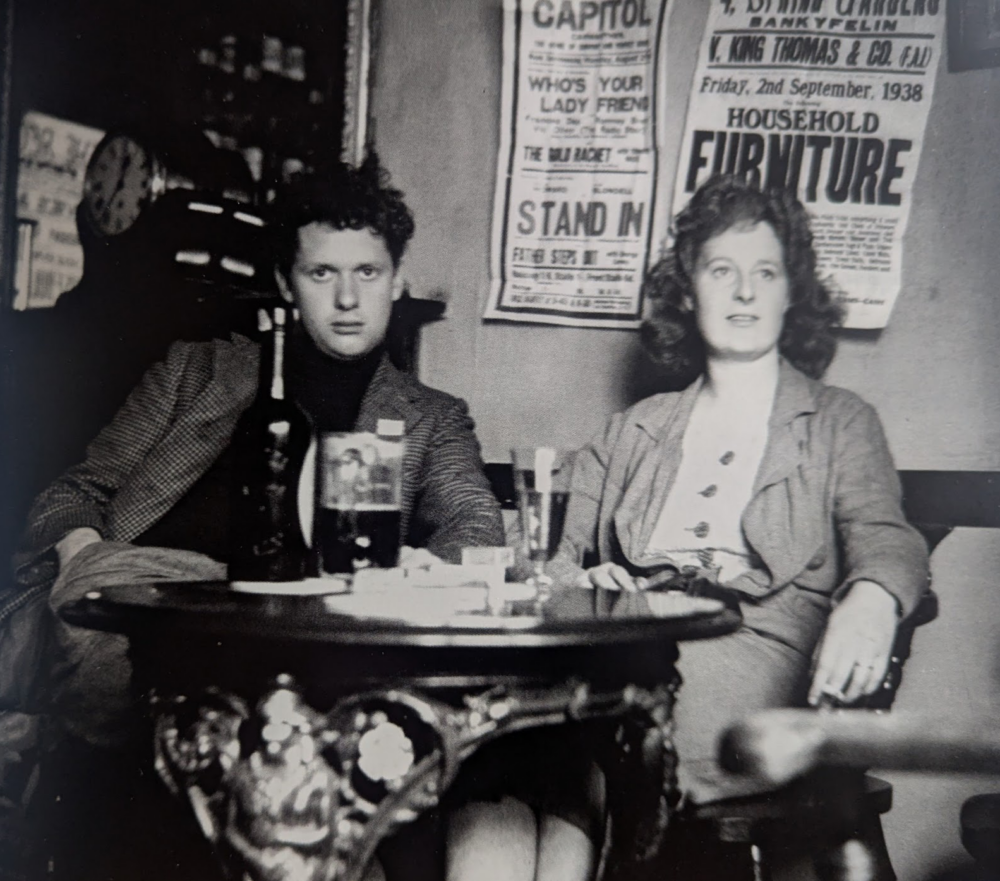
Dylan and drink were forever companions and much of his life was spent propping up bars, sloshing back pints and downing shorts.
As his wife Caitlin said in the opening of her book Double Drink Story, `I first met Dylan, inevitably, in a pub, since pubs were our natural habitat. From that day onwards, we became dedicated to pubs and to each other.
‘Pubs were our primary dedication; each other our secondary. But one fit so snugly into the other that they were perfectly complementary. Ours was not only a love story, it was a drink story, because without alcohol, it would never have got onto its rocking feet.’
Like Caitlin, the broadcaster Wynford Vaughan-Thomas also knew the wilder side of Thomas. On Dylan’s last night in Swansea he received a late-night, panicky call from some people who’d been hosting a dinner, with Thomas as their famous, albeit famously bibulous guest.
The Swansea bard had done something to disgrace himself, an act very much in keeping with his wayward character and disorderly lifestyle. The formerly genial hosts had pleaded with Vaughan-Thomas to promptly remove the sot from their home.
As Vaughan-Thomas’s recalled, ‘This was about ten-thirty at night! There I had this poet – and Dylan, when he was drunk, wasn’t easy to cart around. It was all very well people taking great romantic views about it. I thought, what in God’s name do I do? As I drove around Swansea, I thought I’d get him into a hotel. So I went to the Mackworth, which was still open then, but they said, ‘No bloody fear!’
Luckily Vaughan-Thomas had a car which he used to ferry the drunken poet from one hotel door to another, desperately seeking lodgings for the night. But Dylan’s reputation had very much preceded him and so his last night in his hometown might have seen him homeless.
Light bulb
But then a light bulb lit up and Vaughan-Thomas had his Eureka moment: ‘A brilliant idea struck me, so I drove to the station. I said to the stationmaster, ‘Have you got a warm train?’ And he said, ‘Well, Mr Thomas, there’s a train that goes off and wanders all over the bloody place, but I think it ends up in Darlington.’ I said, ‘I’ve got a man who wants to go there.’ So I bought a ticket, with another on to London, and I put some money in his pocket. I carried him past the stationmaster at the barrier and I said, ‘My friend’s very ill’. And he knew Dylan, so he said, ‘As always.’ So we put him in a corner of this train which disappeared off into the dark…I posted him to Darlington!”
At least it was a ticket to somewhere, with a slumped poet unwittingly setting out on a journey in a warm carriage to County Durham.
Businessman and publisher Ali Anwar, from Iraq, had a similar experience to Dylan Thomas. He recalls perfectly the first time he arrived at Swansea station. ‘When I came from Baghdad to visit old school friends from Iraq on the 29th of January 1977 I didn’t know where Wales was.’
He had precious little idea of what was waiting for him, having only seen postcards of ‘beautiful people eating ice-cream in Caswell Bay. I came out of the train in Swansea on a foggy night and I was expecting what you see when you step out of Grand Central Station in New York but there was nobody there apart from two taxis outside with the windows steamed up because the drivers were having a kip.’
Duly roused, one of those drivers took Anwar along the road to Mumbles where he ended up knocking on many doors. ‘He kept saying, no room at the inn. He eventually took me back to the Dragon Hotel and that’s where I spent my first period in Swansea.
Spitfire
A week later, at the station, the same taxi driver introduced me to a very close friend of his. He was a retired taxi driver who had a green Spitfire, a car I loved. His name was Harry Stratton.’
Harry Stratton was so much more than the owner of a smart car. He had been a taxi driver ever since he bought his first vehicle in 1929.
A Christian, whose political beliefs were shaped by seeing poverty and obvious inequality in Swansea, Stratton questioned the political orthodoxy and become a socialist.
He was a powerful man who worked 80 hours a week, swam 19 lengths in the mornings and still had time for political activity.
Which led to his eventually becoming a communist and using his taxi to deliver food and clothing that had been collected during the Spanish Civil War, making many journeys to the docks, including two trips to Spanish ships calling at Southampton and Port Talbot.
Stratton then volunteered to join one the International Brigades to fight against General Franco in Spain. On the 15 February 1937, Harry was sent to the Jarama front line, and came immediately under fire. He remembered loosening a piece of rock from a shallow trench and as he pushed it onto the beginnings of a parapet, it was immediately struck by a bullet.
Harry was one of the fortunate ones. The heaviest losses and casualties – 450 out of 600 men – had happened over the previous three days. All this and more is detailed in Harry’s appropriately entitled autobiography To Anti-Fascism by Taxi, a book written by a man who fully deserved being at the wheel of his own Spitfire car.
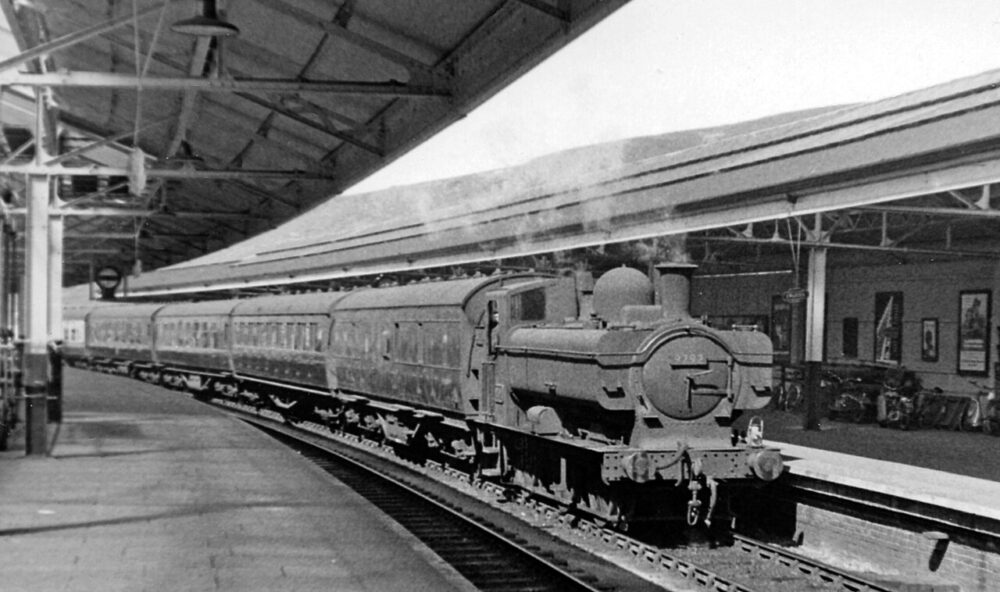
The station on Swansea High Street first opened in 1850, having been built by the South Wales Railway as the terminus of the line that ran from Gloucester, engineered by Isambard Kingdom Brunel. For the opening ceremony some 700 guests gathered to celebrate the line’s opening at what was then a two-platform wooden station with a galvanised iron roof.
The station wasn’t originally on the line planned to connect London with Fishguard to the west. Swansea passengers had to change at Landore, two miles to the north until at least 1879.
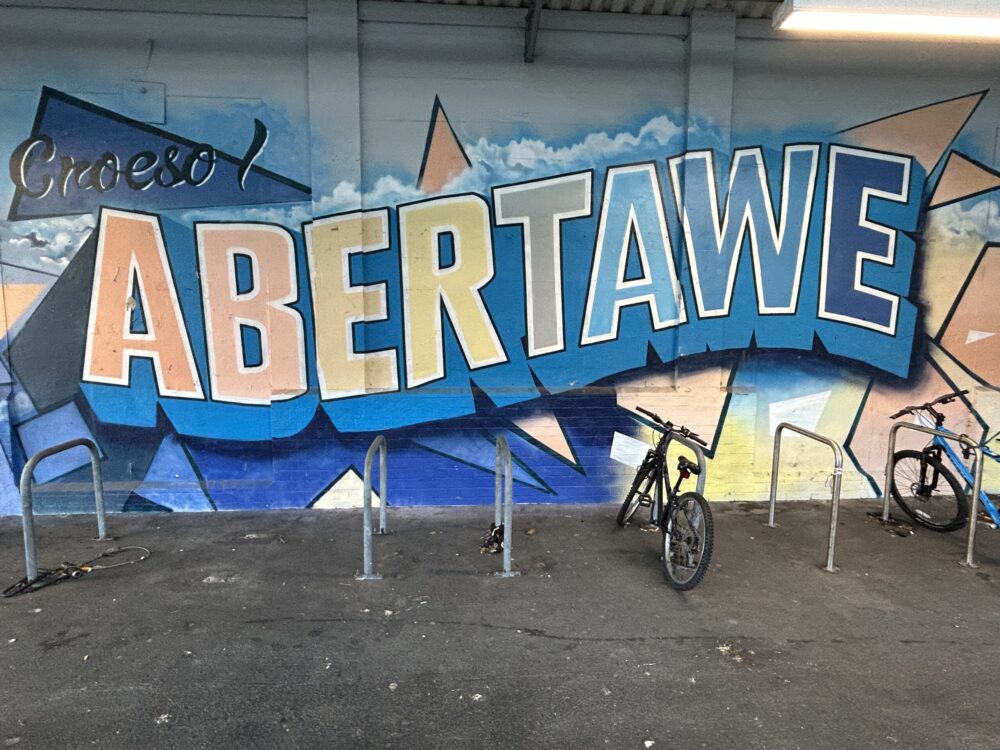
One of the most colourful features of Swansea station is a mural running along the wall of Platform 4. Proclaiming “Croeso i Abertawe,” the long artwork was painted by artists David Long and Twm Williams on behalf of the South West Wales Connected community rail partnership.
It took Long and Williams five days to complete and measures 90 feet by 10 feet. This arresting piece of wall-art has a historical narrative and moves gently from left to right, from night to day, depicting Swansea’s past in muted, nocturnal colours and gradually moving to bright, confident daytime hues as it depicts Swansea’s present and future.
Coal and copper
East of this wall used to be a branch line, opened by the South Wales Railway in 1852, which ran down to North Dock, opened to cater for the booming exports of coal and copper. In 1863 this length of track was extended to the South Dock, in what is now the Swansea Marina, while east of the station was the Swansea Canal, owned and operated by the GWR from 1860. Morfa Road hugs the canal’s course past the station and rail yard to the north. Interestingly, platform one used to have its own fish dock, a fact that is in no way a red herring.
Towards the close of the 19th century Swansea used to have no fewer than seven stations, owned by five different railway companies. There was High Street, run by the Great Western Railway; St Thomas in the charge of the Midland Railway; East Dock (GWR) and Riverside, operated by the Rhondda & Swansea Bay Railway – which simply called it Swansea, before it was renamed Swansea Docks by the GWR in 1924 and Swansea Riverside two years later.
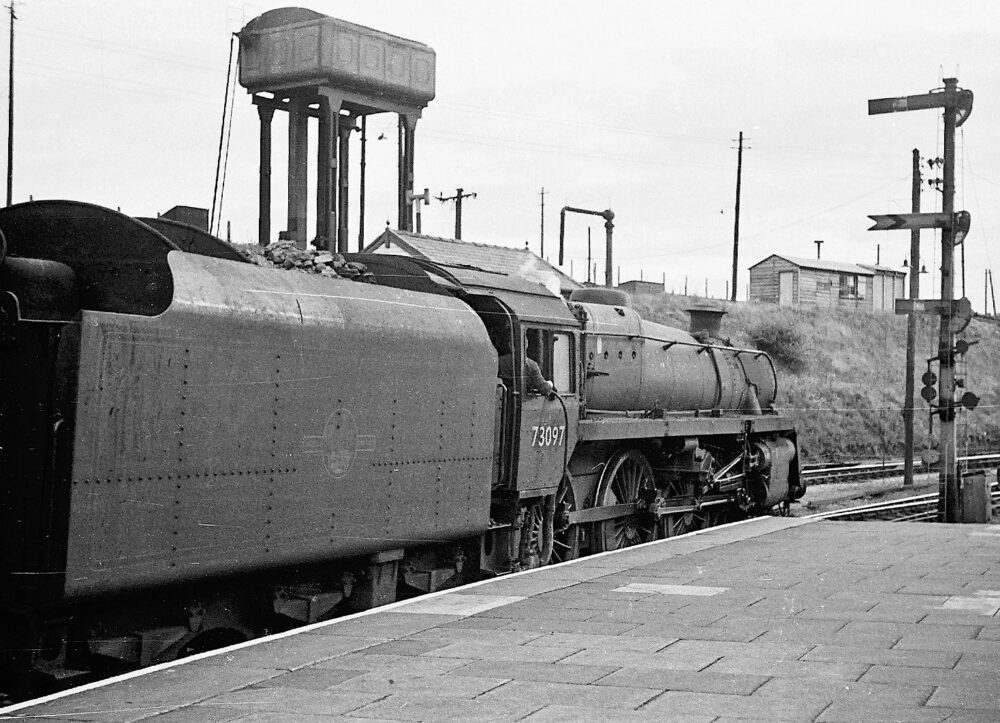
There was also Swansea Victoria, where the city’s leisure centre stands today. No rival, perhaps, to London’s busy Victoria, the station yard here was home to Trumans, Allsops and Worthing brewers, the latter housed in small caverns at the rear of the station.
Then there was Swansea Bay (operated by the London & North Western Railway) and Rutland Street (the town terminus of the Mumbles Railway.)
The latter, which started off hauling limestone, carried the world’s first fare-paying railway passengers on the 25th March 1807.
A system of stone arches linked High Street with some of its sister and satellite stations and some of these can still be seen to this day at the top end of the Strand.
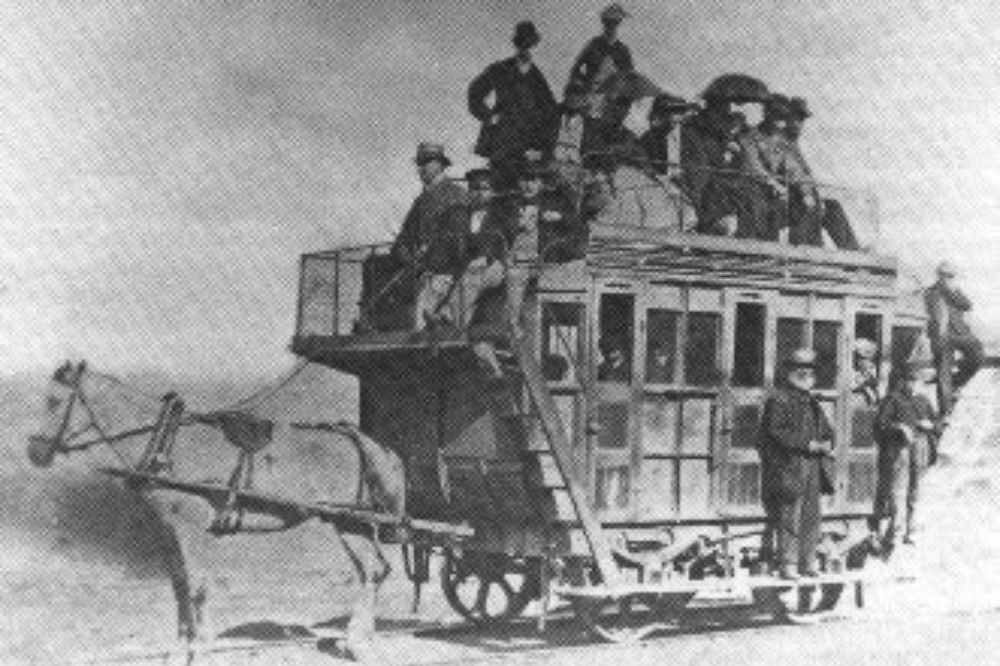
Nowadays well over two million passengers use the current station on High Street each year, which equates to over six thousand a day, making it the third busiest station in Wales, after Cardiff and Newport.
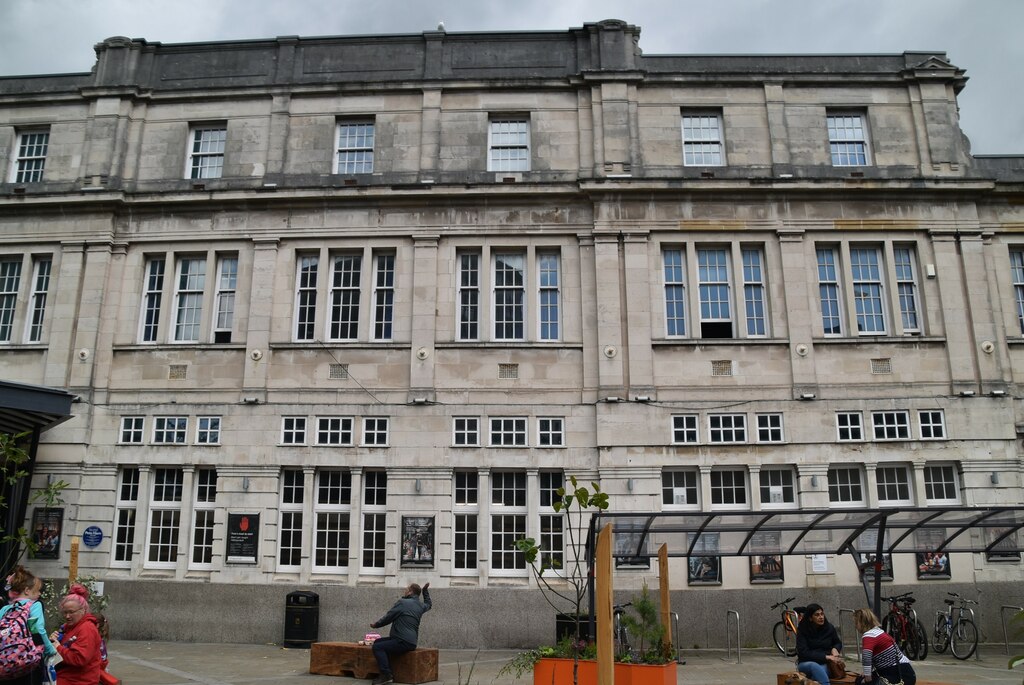
The stone-built office block, facing High Street, was added in 1880, while the platforms were lengthened in 1925 and the present-day frontage block, made of Portland Stone, was finished in the 1930s.
In the days of steam the platforms at Swansea were quite a sight as this description from on the Royal Institution of South Wales Institute website attests.
‘The hissing noise of expelled steam and belching smoke from the high steam engines, which unlike their modern rivals, bore their own name. Passengers had a choice of first, second or third-class compartments, which you chose depending on what you were prepared to pay.
‘The station platform hummed with activity, porters carrying luggage, push along trolleys going clank and wheel tappers sounding out the under carriages for possible faults. When the main line trains were about to set off on their journey there would be the station master, complete with his yards of gold braid, and sometimes his top hat.
‘There were chocolate machines in long rows, and attendants visited the coaches, plying their soft drinks or light snacks from trays, while newspaper boys scurried about selling the Evening Post or daily papers. Looking out of the cab would be the engine driver and fireman, the latter with muscular arms. Through the shovelling of tons of coal, his face would be stained with sweat and dust.’
This busy and evocative passage full of coal stains and billows of smoke, suggests how much cleaner travel is today, when travelling by train is a much greener way to proceed.

Jon Gower is Transport for Wales’ writer-in-residence. He will be travelling the breadth and length of the country over the course of a year, reporting on his travels and gathering material for The Great Book of Wales, to be published by the H’mm Foundation in late 2026.
Support our Nation today
For the price of a cup of coffee a month you can help us create an independent, not-for-profit, national news service for the people of Wales, by the people of Wales.
Get more trusted Welsh news
Choose Nation.Cymru as a preferred source in Google News to see more of our journalism.



Another excellent piece of writing!