


Making tracks: The longest memory in mid Wales
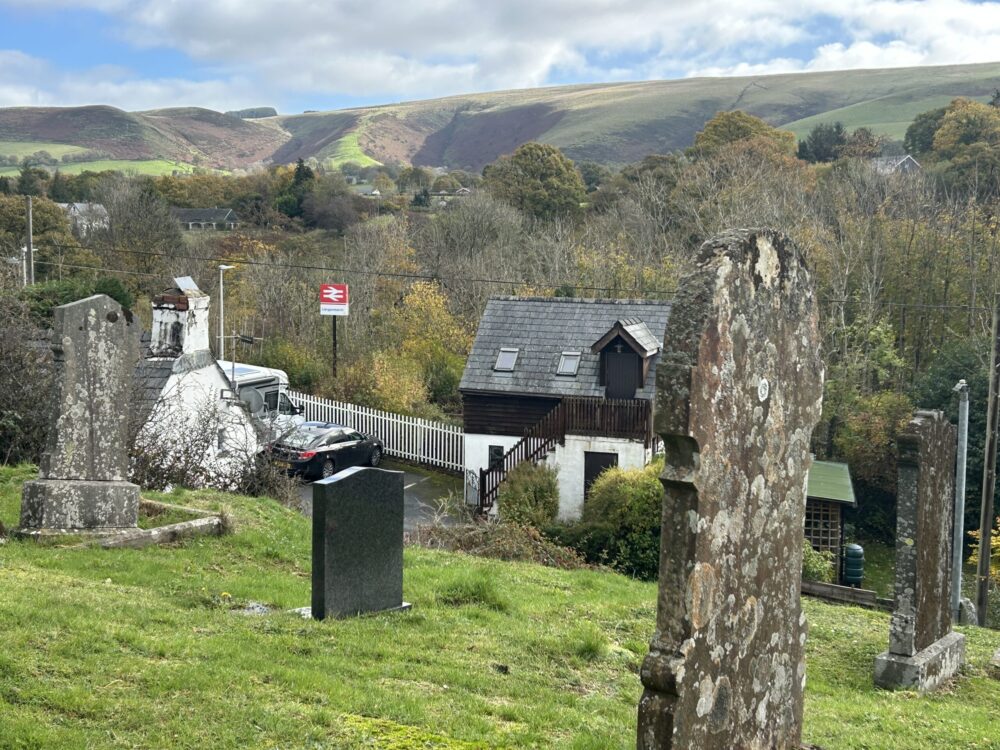
Jon Gower visits Llangammarch to meet a 103-year old who remembers the biggest horse fair in Wales.
The 08.58 from Swansea to Llangammarch doesn’t have a dining car but that doesn’t bother the three women sitting opposite, who have brought their own six-course meal. As the train pulls out of the station they set up tulip glasses for prosecco and cocktail ones for espresso martinis.
Janice Williams, Denise Thomson and Joan Taylor are going to Welshpool for the night, then on to Shrewsbury, and they are travelling in style.
Joan enthuses about the first course: ‘So this is our starters, a beautiful red, organic salmon and there’s an egg cooked to perfection. All done fresh this morning.’
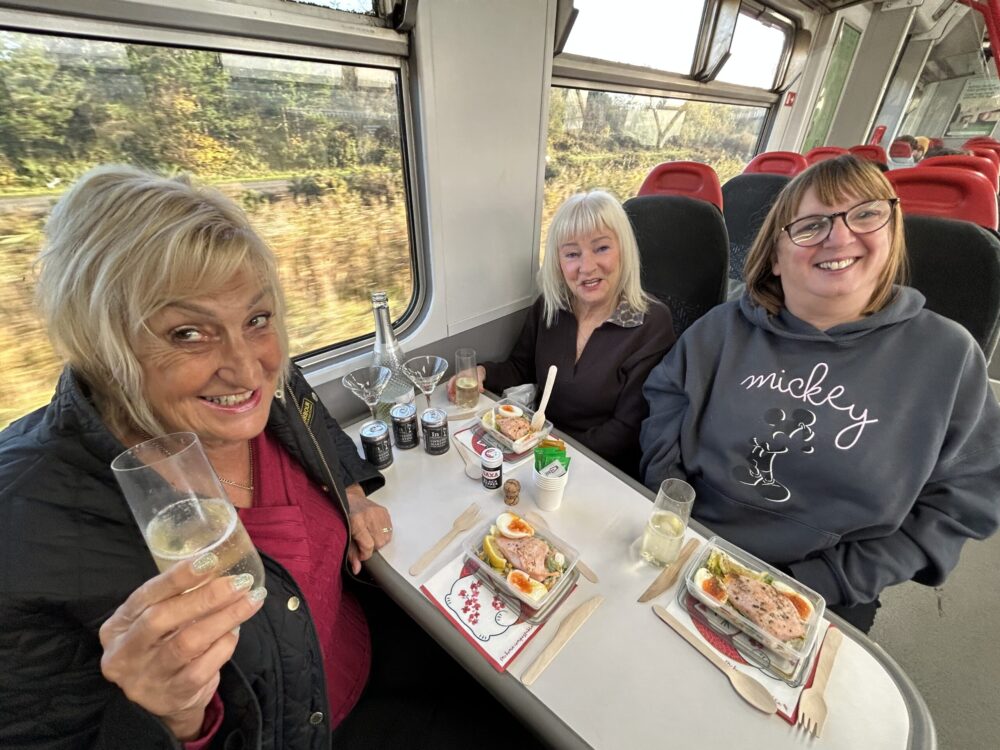
The trio of ladies from Port Talbot positively exude joie de vivre. Joan explains that zest for life by explaining she has a sister who lives in Canada who attends a church called The Joy of Life. ‘And when I went out there, I started to look into positivity and our attitudes towards life in general.
We like to have a little read every now and again of Buddhism, or Rhoda Byrne’s book Laws of Attraction or whatever comes our way. We just do what’s in our path,’ she tells me. I reasonably predict that might include martinis by the time we get to Cynghordy.
This isn’t their first time together on the Heart of Wales line. Celebrating a 60th birthday together they only went half way, to stay at the Metropole Hotel in Llandrindod. It snowed on that occasion and they remember it being ‘fabulous, with beautiful views.’
This particular trip celebrates Joan’s recent birthday: ‘Celebrating life as well, celebrating life as a group. We’re all over 60, some over 70. Not that we’re cheap, but the train is free with our bus pass, isn’t it? Only from October to March, mind.’
They cheerfully explain how it will only cost them £ 4 each to get from Port Talbot to Welshpool and back. Denise is the one who busily scans the internet, looking for deals while Janice sorts out the logistics of the trip.
Janice has been on other, longer railway adventures, such as visiting Neuschwanstein Castle in Bavaria, where ‘Chitty Chitty Bang Bang’ was filmed. ‘But for me it’s not about the journey, it’s all about who you’re with.’
So what are the three ladies going to do with all the money they’ve saved on this rail trip? ‘Eat like kings,’ comes the ready response. I leave them to finish their salmon course, as the river Tywi flashes silver in the distance.
Knitting
Sitting opposite me is a traveller who often takes this train and has brought her knitting to accompany the clacking of the train wheels over the tracks. She has her own railway connection. Ferryside-based artist Diane Cuff is currently trying to ensure the Grade II listed signal box in the village is converted into a museum: as she explains ‘It’s the only one of its kind in the UK.’
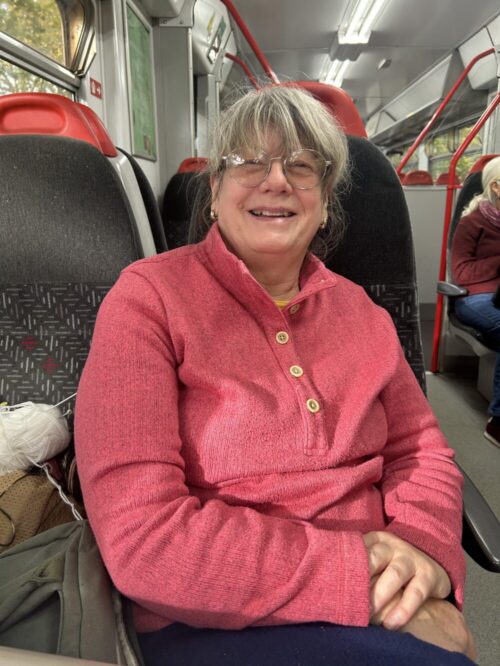
Diane has been on the Heart of Wales line many times – four times this year already. ‘It’s a lovely line, the Heart of Wales and it’s a really enjoyable journey – the rivers and the hills, it’s just glorious. It just reminds me how beautiful the world is really.’
Next year she is planning to travel all around the coast of Wales using her bus pass: ‘I’ve been planning that for a while. I’ve been unable to travel for any length of time because I had a very elderly cat but she passed recently. I always said that was one thing I was going to do, go at a nice pace and be able to stop when I fancy it.’
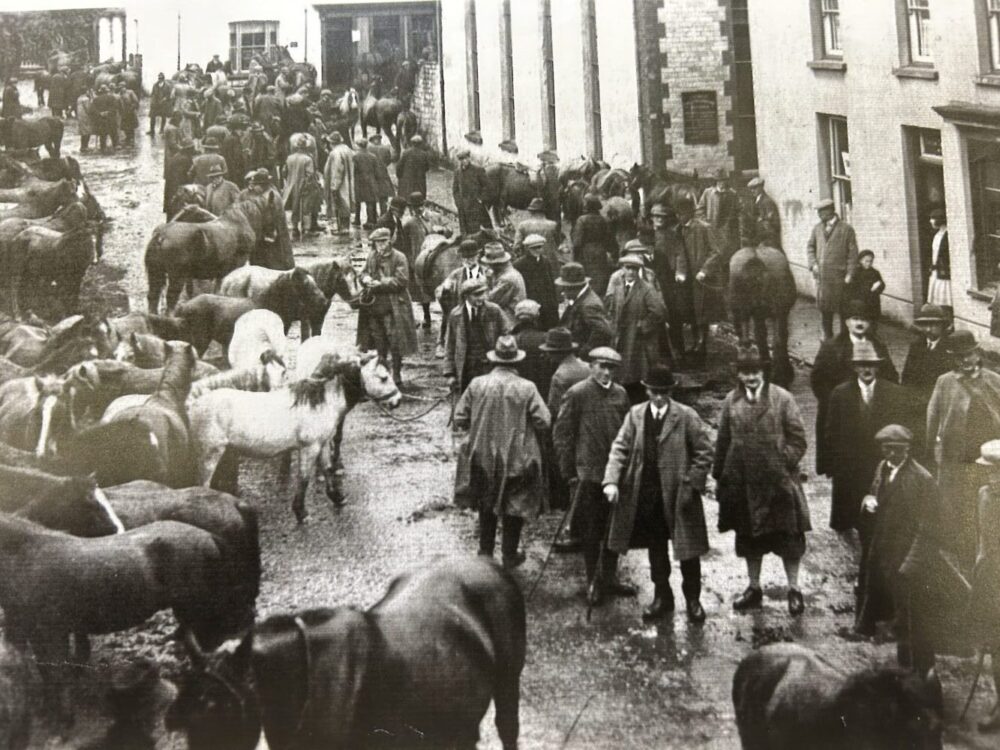
The pony fair in Llangammarch used to be the biggest in Wales. Held on the 15th October each year, buyers would come from Anglesey and all parts of England – from counties such as Northampton, Bedford and Stafford. But men from Anglesey were the principal buyers of mountain ponies, which they would sell on in turn to people in Ireland. Ponies from Epynt were also sold as far afield as Denmark, the Netherlands, Germany, Canada and America ,while some were sold to work in the coal pits of south Wales or Derbyshire.
Dealers would come from all over, many arriving on the mail train which reached Llangammarch station at six in the morning and then making for the Cammarch Hotel for breakfast. Bowler hats and trilbies were all the rage.
One person who remembers the horse fair very clearly is 103 year old Annabelle Thomas from Cefn Gorwydd, a delightful lady with twinkling eyes a tinkling laugh.
She prefers speaking in Welsh, which comes as some surprise as there are precious few older speakers in this part of Wales.
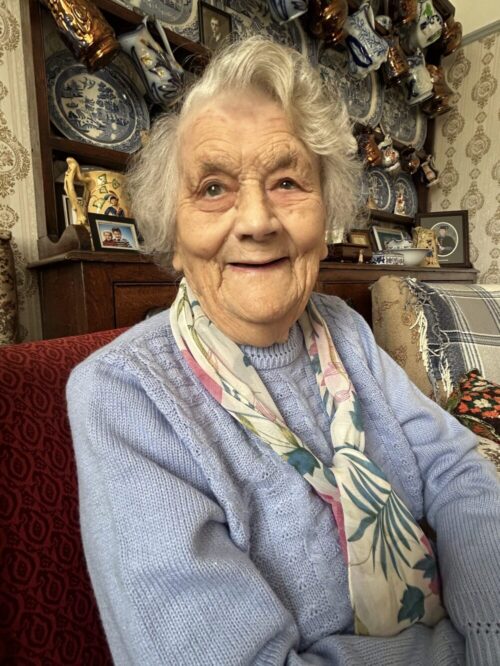
Mrs Thomas remembers groups of ponies coming down from the Epynt, ‘wild, pretty and every size and colour. The mares would come as well and after the fair the ones which were sold were taken to Garth station, with groups of local children running in front and behind them, all excited.’ The young animals, separated from their mothers, would struggle to get back to them.
Garth had sufficient sidings to marshal the special trains which were equipped with different boxes for ponies and heavy horses to take them to their various destinations, so there’d be some going from, say Garth to Reading.
Bustle
In Ceinwen Davies’ book Social History in Powys: Life on the Epynt she recalls the bustle and busyness of the occasion: ‘The road was full of horses, all the way from Glasfryn down to the Camarch, up to Neuadd, down to the lake and up to Aberceiros. Hundreds of horses!’
Horses and ponies were very much a part of life in the area. Many of the isolated chapels on Epynt had a stable under the vestry to cater for people arriving on horseback, the women riding side-saddle as they made their faithful way to Babell chapel, the main place of worship in the hills.
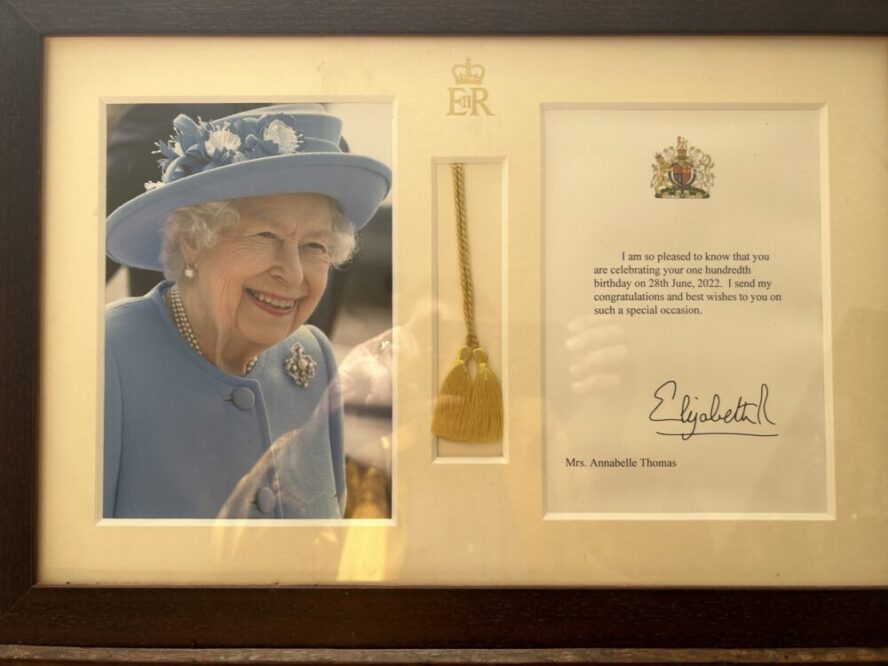
Annabelle Thomas recalls travelling on the back of a pony to nearby Llanwrtyd Wells to sell butter. ‘On Tuesdays I would make butter with my mother. I would then take some 15 pounds of butter in a basket and go round the houses. People would bring out their thruppenny pieces and taste the butter before buying.’
The use of horses declined as motorised vehicles became the norm but locally the horse fair was also affected by the takeover of the Epynt as a firing range by the Army, displacing 200 people in 1940. As one old lady advised Iorwerth Peate from the National Museum, who was documenting the dispossession, ‘You should go back to Cardiff. It’s the end of the world up here.’
Annabelle remembers how: ‘It was a very sad time. I knew a lot of people who lost their homes and they were only given three months’ warning that they had to leave.’
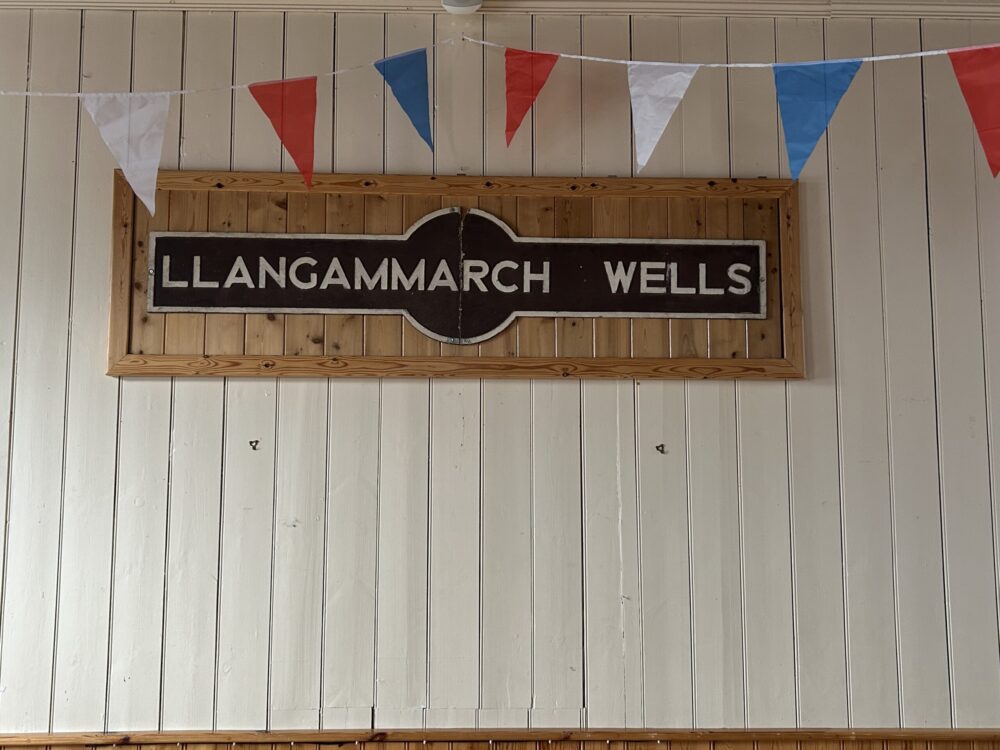
The village of Llangammarch came into being in part as a direct result of the railway. The line reached the village in 1867 and the through route was opened from Craven Arms to Swansea a year later. The dizzying growth of rail made moving both goods and passengers not only easy but profitable leading to a mushrooming of small companies opening up new lines.
As the writer Jan Morris pointed out: ‘The Wrexham, Mold and Connah’s Quay railway never got to Mold, the Manchester and Milford never got either to Manchester or to Milford, the Lampeter, Aberayron and New Quay, whose seal depicted a powerful 4-4-0 tender engine, never owned an engine at all.’
On the more positive side the Central Wales Extension Company actually managed to build the line through Llangammarch, complete with a simple red brick station building and a house for the Station Master.
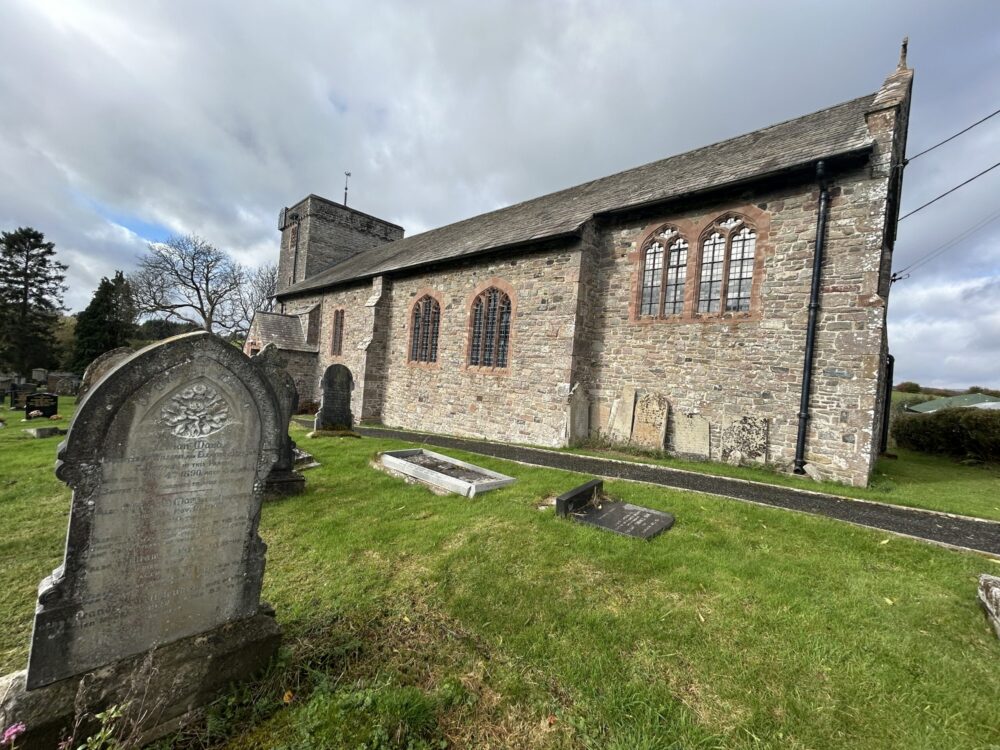
By 1870, the London and North Western Railway (LNWR), one of the largest railway companies of the time, acquired the line. The company began to promote the whole area as a place where waters with healing properties could be sampled and the fresh air of mid Wales would restore health and vigour.
Nearby Llandrindod and Llanwrtyd quickly grew as spa towns. Llangammarch, similarly, was promoted for its unique barium water and it was the railway that added the suffix “Wells” to these place names in the 1880s.
It was the railway that carried regular consignments of the precious barium water to many parts of Britain and also carried in the many visitors to take the waters, helping to treat such ailments as rheumatism and gout. Pinching their noses, local people remember the water smelling like rotten eggs.
Sulphurous
Undeterred by the sulphurous overtones, health-seeking visitors flocked to hotels and guest houses, which promptly filled up as the baths and pump houses drew people in. Llangammarch was, by now, well and truly on the map. As one hotel advertised: “Two through-trains daily from Euston to Llangammarch”.
Mairwen Price, now 81 years old, was born in Cefn Llan farm in Llangammarch, where her father was a farmhand. She’s been very happily married to forestry engineer husband Brian for over sixty years, having met in the village itself: ‘He was living on a farm just outside Llangammarch, and he used to have a motorbike, and I thought that was great. I wouldn’t go on it, mind.’
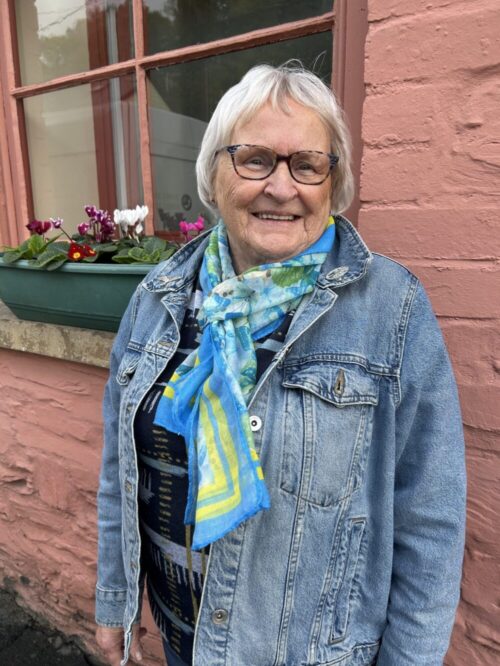
Mairwen Price has seen many things disappear from village: ‘There used to be eight shops including a saddler’s shop, a grocery shop and ones selling papers or sweets. Then there was one that sold ice cream and wellies and fishing nets and things like that.’
The Post Office in Llangammarch closed in July this year so the village hall is now a main focus of village life, hosting activities right throughout the week. As Mairwen explains: ‘Monday’s free. Tuesday, they have Tai Chi in the morning. They have craft work in the afternoon and keep fit at night. That’s during the winter. But when there’s no keep fit, they go walking, which I can’t do. And then Wednesday we have coffee morning. for two hours. Thursday, we have indoor bowls, which I was here last night doing. Friday is usually something to do with young farmers. They have a church coffee morning here on a Saturday every so many months and funeral teas are held here too.’
Standing on the platform at Llangammarch , a lone blackbird flutes its song from a holly tree unseasonably full of scarlet berries. A man in a Day-Glo jacket walks alongside the track to take photographs of leaves on the line.
The Epynt lowers in the background under pewter clouds. It’s a quiet picture of an autumn day in mid Wales and it’s little wonder the Lonely Planet guide plumped for the Heart of Wales line as one of the best railway journeys in Europe.
This being a request stop, I signal to the beaming driver. I’m reminded that every journey can be the start of an adventure.

Janice, Denise and Joan were taking advantage of one of Transport for Wales’ deals for the over 60s.
Jon Gower is Transport for Wales’ writer-in-residence. He will be travelling the breadth and length of the country over the course of a year, reporting on his travels and gathering material for The Great Book of Wales, to be published by the H’mm Foundation in late 2026.
Support our Nation today
For the price of a cup of coffee a month you can help us create an independent, not-for-profit, national news service for the people of Wales, by the people of Wales.



Lovely, informative, and warm article. Diolch