


Melangell: The female saint with a message for the ages
Amelia Jones
Today marks the feast day of Melangell. The day celebrates the 6th-century Welsh patron saint of hares, small animals, and the natural environment.
Born an Irish princess, Melangell fled an arranged marriage to dedicate her life to God, eventually living as a hermit in the wilderness of the Tanat Valley in Powys. She lived on the lands near Pennant Melangell for fifteen years without being discovered.
However in 604AD a Brochfael Ysgithrog, Prince of Powys and owner of the lands, was hunting nearby when he followed the path of a hare and found Melangell in the brambles. With her was the hare he had been chasing, sheltering under her gown, but staring back at him, unafraid of his dogs.
Brochfael was shocked to see Melangell so devoutly at prayer and living on his estate by herself, and even more shocked when his dogs refused to snatch the animal from her. They talked, and Melangell told him all about her story and why she had chosen to live in the countryside in secret, to escape her fate.
The prince, sympathetic to her, granted her some property of her own and instructed her to build an abbey, so that others could find sanctuary in the same way that she had. She founded the nearby church, and the village was named Pennant Melangell in her honour.
After her death her memory continued to be honoured, and Pennant Melangell has been a place of pilgrimage for many centuries.
Historia Divae Monacella
Her story is told in the Historia Divae Monacella. The Historia’s authorship is subject to debate, but it was probably composed at some point in the late Middle Ages in or near Pennant Melangell, and was based on previous literature and local folklore.
Several manuscripts survive, three of which are complete. The Historia was first printed in 1848. Various interpretations of the Historia have been put forth, such as it being written to defend Pennant Melangell’s sanctuary rights in a time when Welsh churches were being threatened by local rulers.
Following this, scholars have continued to debate both the purpose and origins of the text. Cardiff University medievalist Dr David Callander, in ‘Introduction to the Story of Melangell’, argues that although the surviving text dates from the late fifteenth or early sixteenth century, it likely preserves much older oral traditions and local material associated with the cult of Melangell at Pennant.
Callander emphasises how the text blends Welsh tradition, Latin hagiography, genealogy, and folklore, demonstrating the layered nature of medieval Welsh literary culture.
He says: “The focus on Pennant Melangell, the only church dedicated to Melangell, and the surrounding area, suggests the possibility that the Historia was composed somewhere in the vicinity of that church.
“Pennant Melangell was a significant site of pilgrimage by the late Middle Ages, but the focus in the Historia is on rights of sanctuary rather than pilgrimage, and sanctuary is key to all the episodes of the text .
“…Certain churches in Wales continued to affirm their sanctuary rights in the fifteenth century in response to violations, and it is possible that the Historia was composed in response to similar violations of sanctuary at Pennant Melangell. As certain laymen definitely could compose Latin texts in Wales in this period, it is a distinct possibility that, rather than being written by a cleric, the text was produced by ‘the local laymen known as abbots who considered themselves to be the heirs of the saint’s lands and privileges'”
The story today
The meaning of Melangell’s story has evolved over time, with later generations increasingly interpreting her as a protector of hares and wildlife, rather than focusing primarily on the sanctuary rights that dominate her story.
While the Historia is structured around the idea of sanctuary and the legal protection offered by sacred space, later tradition increasingly puts a more striking image at its centre: the hunted hare taking refuge beneath the saint’s cloak.
In modern interpretations, this association has increasingly been extended into the language of environmental concern. Melangell is now often remembered as a figure connected to the protection of animals and the sanctity of the natural world.
This has made her story particularly resonant in discussions about ecology and environmental change.
Writer and journalist Sophie Yeo wrote about this in a chapter of her book called Nature’s Ghosts. She looks at the protests against the increase in pheasant shooting at the Llechweddygarth Estate near the Pennant Melangell.
In 2018, some of those opposing the shooting argued that it was particularly inappropriate given Melangell’s story, especially the legend of the hare that fled to her from King Brochwel’s hunters.
But Yeo argues that this is really a way of using Melangell’s story to support a modern cause, even though the main reasons people objected were the same as with other shooting estates, such as concerns about noise and cruelty.
She also points out that in the original tradition, Melangell is not described as giving sanctuary to animals, and suggests this reflects a wider trend of “green” Christianity, where saints from the past are used to give weight to present-day environmental beliefs.
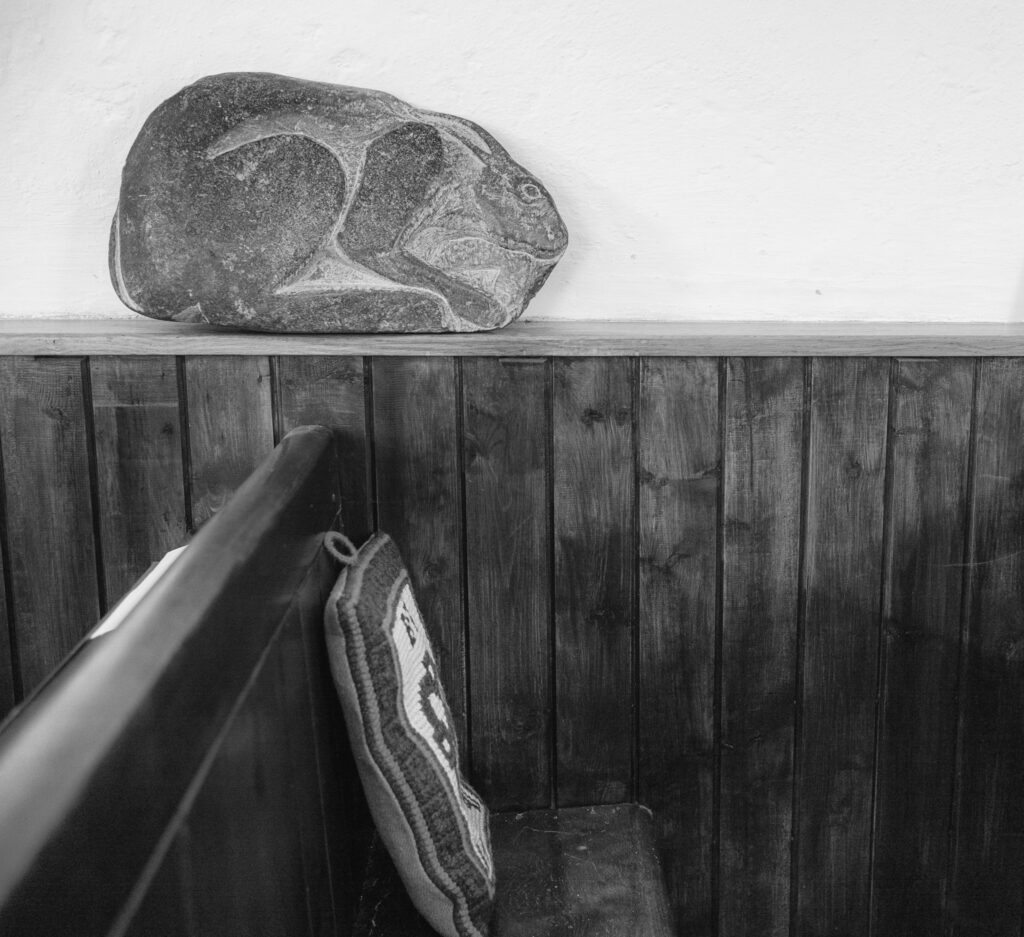
Despite these modern reinterpretations, historians note that Melangell’s story continues to resonate for many different reasons. Professor Huw Pryce, a medieval Welsh historian at Bangor University said: “The story of St Melangell has been told over many generations since the Middle Ages.
“It still appeals to people today for a number of reasons. Melangell is a rare example of a female Welsh saint remembered for founding a community of holy women.
“Her church of Pennant Melangell is situated in a beautiful remote location in the Tanat Valley, and become a destination on pilgrim walks – in a modern-day reinvention of its role as a medieval place of pilgrimage.
“And her reputation as the patron saint of hares has taken on a new significance in the context of contemporary ecological concerns”
You can visit the church of Pennant Melangell here.
Support our Nation today
For the price of a cup of coffee a month you can help us create an independent, not-for-profit, national news service for the people of Wales, by the people of Wales.
Get more trusted Welsh news
Choose Nation.Cymru as a preferred source in Google News to see more of our journalism.



Brochfael Ysgithrog ydy’r ffurf gywir enw’r brenin.
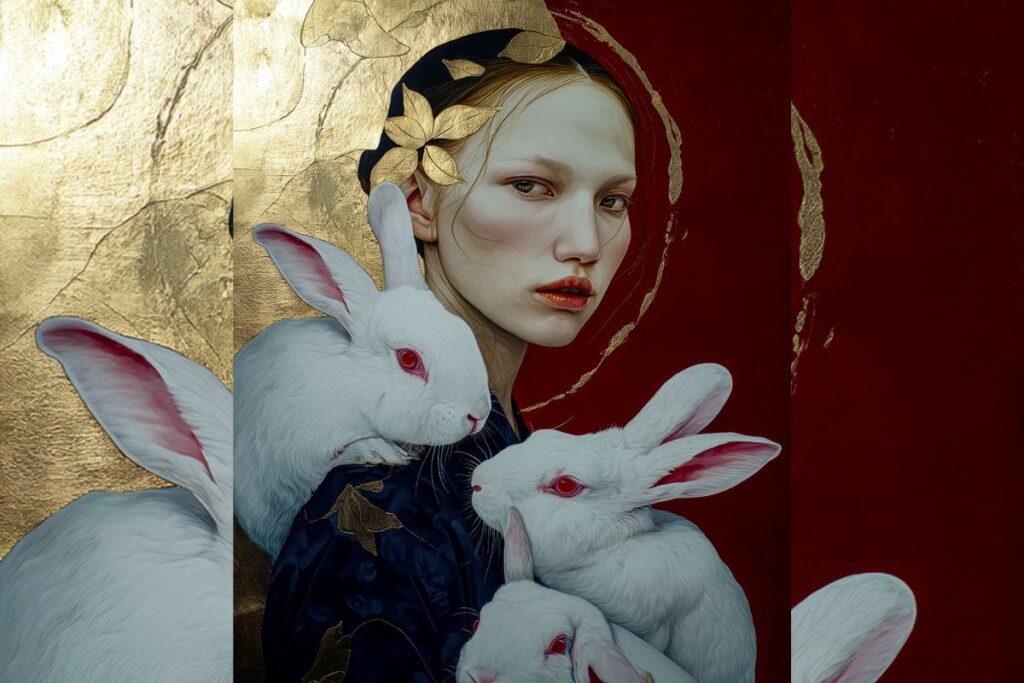
The Melangell and the hare legend certainly carries deep relevance today as a powerful symbol of environmental conservation, female autonomy and mental health sanctuary. But looking at this digital image “Melangell Patron Saint of Bunnies” by American Artist Jeff Stanford, I wonder how long before Melangell gets a Hollywood makeover? Is the woman surrounded by cute white rabbits English supermodel Kate Moss early 1990s. Hares not rabbits were the lagomorphs which appear in traditional celtic art and rescued from Brochfael Ysgithrog ap Cyngen’s hunt? Wasn’t the wild population of rabbits on this island introduced by the Normans?
Yes why have rabbits in the picture?