


Mererid Hopwood contemplates 850 years of Eisteddfod symbolism
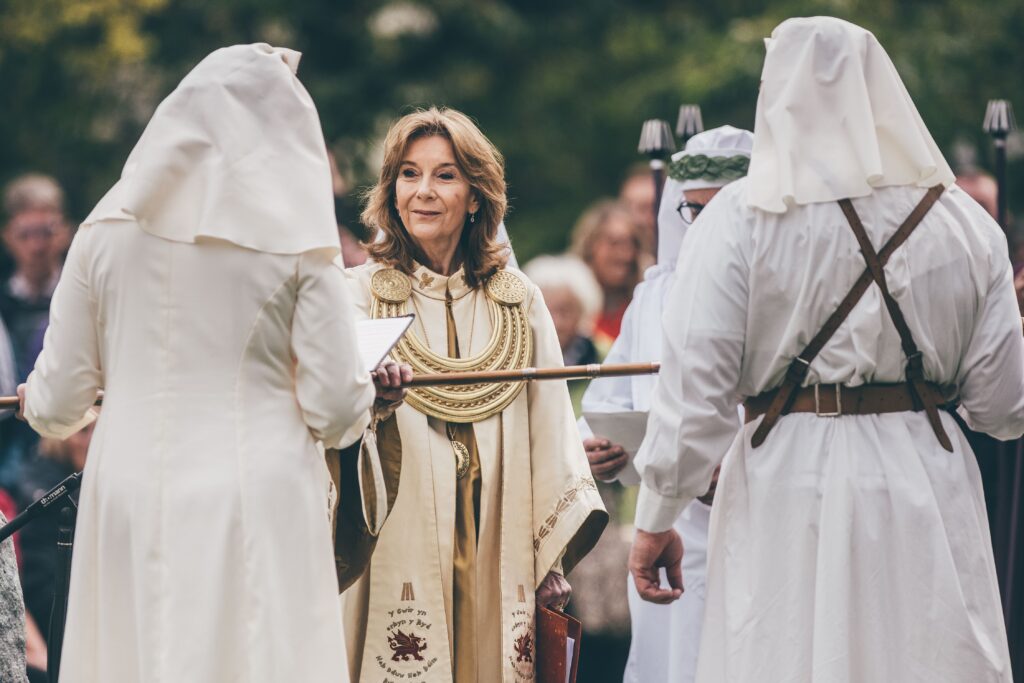
Mererid Hopwood
Much has been made this year of the 850th anniversary of our Eisteddfod tradition, culminating in a giant Arglwydd Rhys striding out of St David’s cathedral and marching on to Castell Aberteifi where a flotilla carrying poets, and thousands of spectators on dry ground, waited eagerly to welcome him home.
It was in this castle, Christmas 1176, that Rhys, keen to show off his new-build all-stone home, summoned the poets and musicians from all corners to compete against one another. We’ve been at it ever since, even enshrining in our national anthem a special place for ‘beirdd a chantorion’.
Some ask how has it been possible to keep the tradition alive through the centuries. Perhaps it helps that the Welsh word for ‘tradition’, ‘traddodiad’, makes clear the movement that lies at the root of the word, ‘traddodi’.
Tradition, from the Latin ‘tradere’, means ‘to hand down’, ‘to give across for safekeeping’.
If a tradition is to live on, then in the handing down there must be mutual respect between the giver and the receiver, an understanding that when the safekeeping calls for adaptation, this will be done in keeping with the tradition’s integral principles, tweaking on the extremities, according to the needs of survival.
This year’s National Eisteddfod will therefore, as ever, be the same but slightly different. It’s the first time in a long while that its boundaries ignore those of the legally defined counties, defined instead more by cultural affinities.
This is ‘Eisteddfod y Garreg Las’, named after the Blue Stones of the Preseli mountains that form the backdrop for the Maes. The area spans Pembrokeshire, north Carmarthenshire and south Ceredigion.
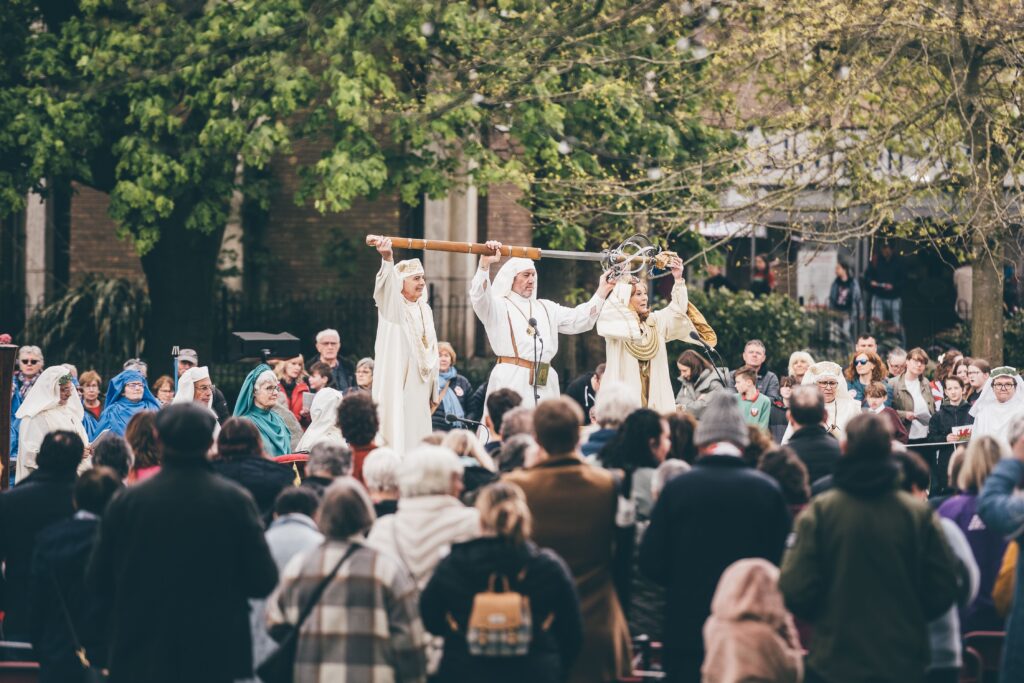
This year is also the 150th year of the title of the ‘archdderwydd’ who has the privilege of leading the Gorsedd ceremonies – those colourful white, blue and green pageants which include the rituals of the Chairing and Crowning of the bard and the awarding of the Prose Medal.
You will notice that I did not use the term ‘archdruid’. This, like much Eisteddfod-related terminology simply does not translate. This is a vocabulary that needs its context to make any sense at all.
Ngũgĩ wa Thiong’o was right when he said that ‘language as culture is the collective memory bank of a people’s experience in history’.
Since coming into office, from curious questions that I have been asked beyond the borders of Wales, I have concluded that the experience of ‘archdruid’ is very different from ‘archdderwydd’. As with ‘hwyl’ and ‘cromlech’ and … ‘eisteddfod’, I think it best in this instance to stick with the Welsh.
As part of adapting the tradition, early on the archdderwydd’s term of office was set at three years, unlike in the days of Hwfa Môn and Dyfed who presided in the role for as long as they lived.
So, this year, I shall be officiating for the last time in the ceremonies, though I continue in the role until the proclamation of the 2028 Eisteddfod, sometime in late Spring next year. And once again, I shall be contemplating the symbolism associated with the role.
The Gorsedd circle: not a triangle or pyramid, not a shape that suggests a hierarchy where the few are on top and the very many on the bottom, but rather an open circle that represents equality.
The archdderwydd’s crown: a circle of leaves worn temporarily before being placed on another’s head, chosen by nomination which is open to all Gorsedd members and election if necessary.
Dwyfronneg Gwirionedd: the breastplate of truth, reminding us that seeking the truth is our best shield.
Teyrnwialen Cyfiawnder: the sceptre of justice, urging us to be faithful to the principles of fair play.
Nod Cyfrin: the three rays of sunshine displayed on all the Gorsedd regalia and awards, reminding us that ours are broad-daylight meetings where we respect the Awen, the muse, that gives our proceeding its richness.
Finally, Cleddyf yr Orsedd, the sword that is never drawn from its sheath, symbolising that while we live in a world of violence, as Gorsedd members we seek peace.
Without doubt, this tradition is unique, peculiar some might say; but it’s a part of what we are, and I find it a source of pride that we, on this patch of earth, still insist on setting such store on the art and craft of composing poetry, making music and coming together in search of peace.
Long may it live. And if you haven’t been before – make this the 850th year your first. ‘Croeso’ is Welsh for ‘welcome’.
Find out more about the Eisteddfod and plan your visit from this weekend here.
Support our Nation today
For the price of a cup of coffee a month you can help us create an independent, not-for-profit, national news service for the people of Wales, by the people of Wales.
Get more trusted Welsh news
Choose Nation.Cymru as a preferred source in Google News to see more of our journalism.



Weren’t most of the traditions invented by Iolo Morgannwg in the eighteenth century?
All traditions were invented at some point. That doesn’t make them any less meaningful or valuable.
Thanks for this article, interesting and informative. On with the celebration!
I wonder why the writer avoided mentioning Iolo…
I remember a Iolo (Seren y Don), with a head for navigation and a nose for the seabed like the prow of his boat, he led or was followed like u-boats after the convoy by the international pack of despoilers who were to trash the nearby scallop beds…
It was a flash in a pan like the need for Manganese to harden steel swords and cannons for the old Queen’s battles. While Napoleon messed up the woollen exports, boom and bust Porth Abermaw…
Are all traditions invented or some ‘real’ ? Stonehenge the solstice !