


Moving 144-day Aberfan project launches today
Stephen Price
A moving album featuring 144 compositions for each of the victims of the Aberfan disaster begins its release from today to help commemorate the 60th anniversary of the tragic event – with one track shared every day for 144 days.
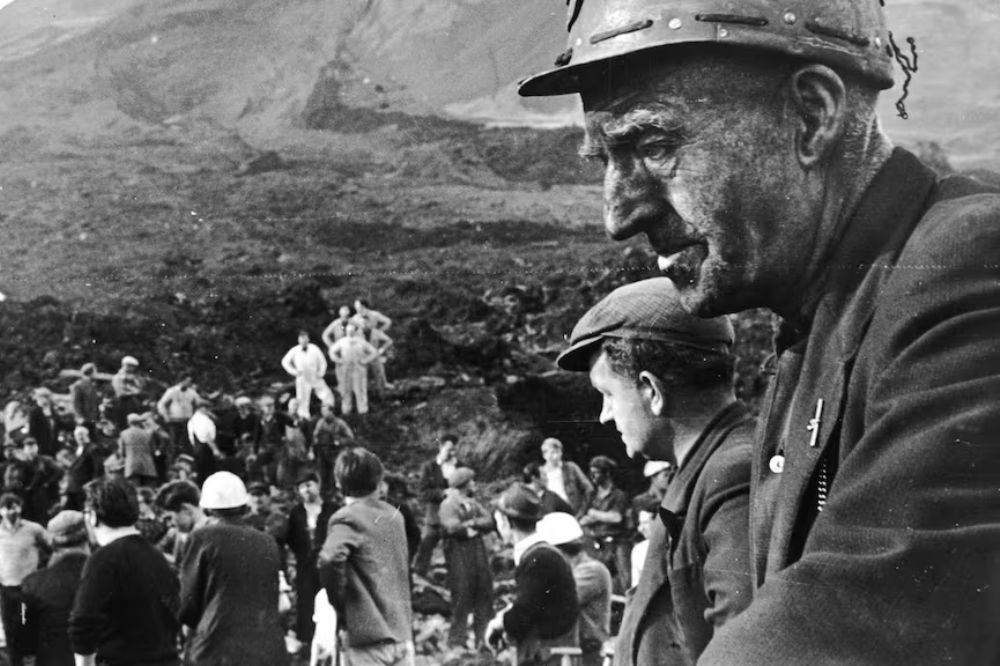
The project, from Aberystwyth University Professor, John Harvey, will see the release of two albums commemorating the 60th anniversary of the disaster at Aberfan, Wales, on October 21, 1966. At around 9.15 am that day, a coal tip collapsed onto Pantglas Junior School killing 144 children and adults.
John Harvey is a practitioner and historian of sound art and visual art, and Emeritus Professor of Art at the School of Art, Aberystwyth University, Wales.
His research field is the sonic and visual culture of religion, the working class, and the paranormal, with particular reference to Wales.
He engages visual, textual, and audible sources, theological and cultural ideas, and systemic and audio-visualogical processes.
The first release from the project will see a piece of music dedicated to the victims of the Aberfan disaster released as streamed content.
The first album consists of 144 compositions (one for each of the victims). They are based on a hymn tune by the Welsh composer Joseph Parry (1841-1903), entitled ‘Aberystwyth’ which was written in 1876, and first performed three years later in the Welsh town from which it takes its name.
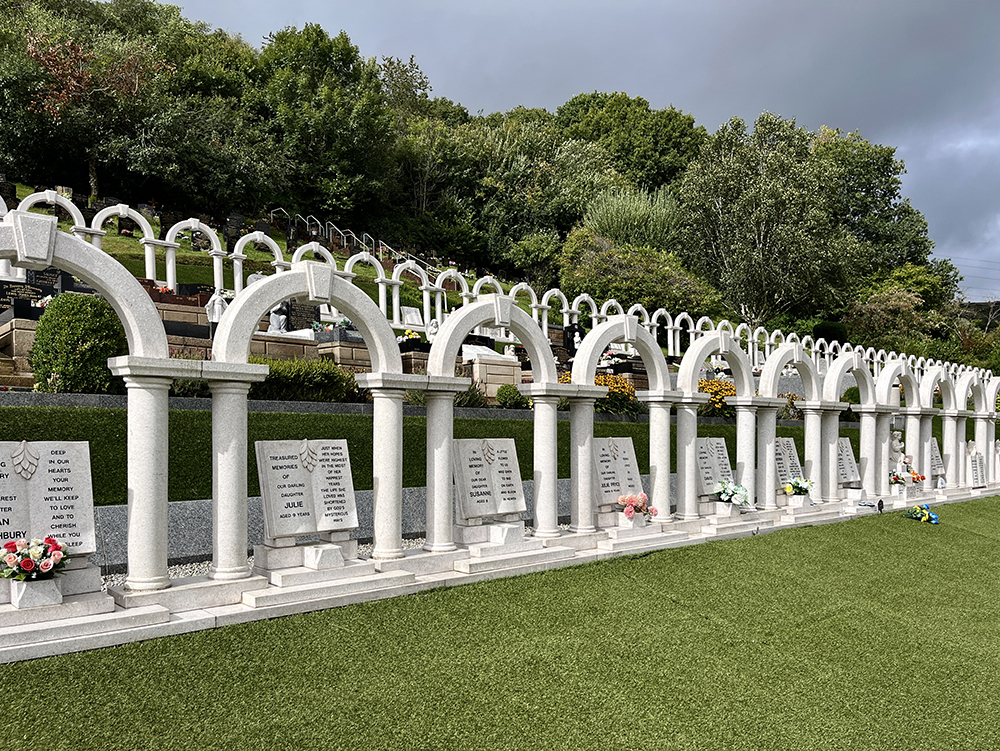
Parry composed the tune when he was Wales’s first Professor of Music at the, then, University College of Wales, Aberystwyth, and living in the house directly opposite Harvey’s own. The tune became a popular setting for Charles Wesley’s (1707-88) ‘Jesus, Lover of My Soul’ (1740). This was one of the two hymns sung at the mass funeral, held at Aberfan Cemetery on October 27.
In the context of the album, the 8 musical phrases that make up the tune are divided into four, three, two, and one note-clusters. 25 clusters in all.
John Harvey explained: “These are assigned to those letters of the Roman alphabet represented by the names of the victims on the official inventory of fatalities. Again, 25 in all. (Only ‘x’ is absent.). The cluster-letter sequences are paired in their respective orders. Thus: the 1st cluster = ‘A’; the 2nd cluster = ‘B’; and so forth, to the 25th cluster = ‘Z’. Letter-by-letter, the forename and surname of each victim is spelled out and sonified to create a new melodic line. In this way, the children and adults actively collaborate in the process of composition and memorialisation, through their names.
“The inventory includes the middle names of several victims. However, on the album, only their forenames and surnames are used. This principle ensures that all those listed receive equal representation in terms of the compositions’ duration.”
Repetition
144 Variations is a feat of repetition, in which the same system of conversion, from text to sound, produces musical outcomes with a pronounced stylistic and melodic kindredness but, nevertheless, unique characteristics. (Only two groups of children had the same name.)
Parry’s tune is played on an upright piano, like those used in schools to accompany hymn singing at morning assembly. The recording has been slowed down by 40%, dropped in pitch by 6-semitones, and reverberated, to sound more like a concert grand piano. The resultant sonority is suitability solemn and sedate.
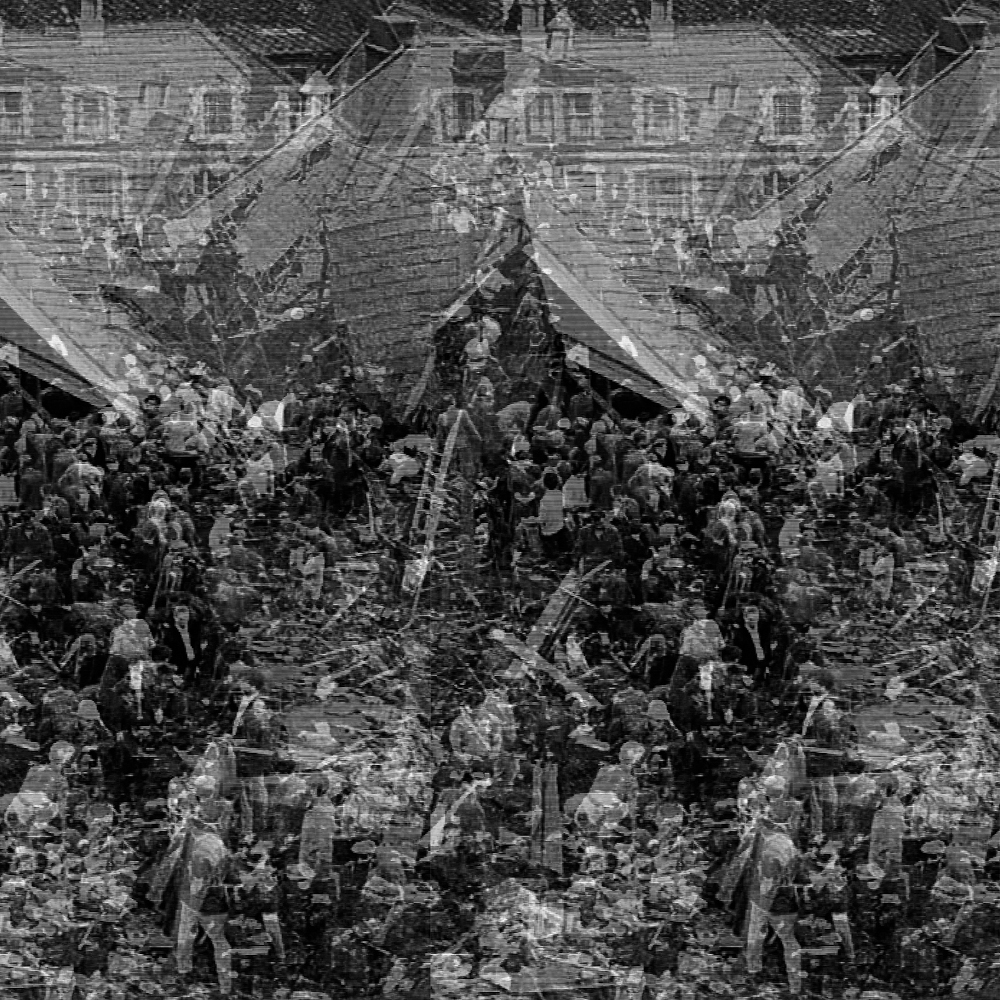
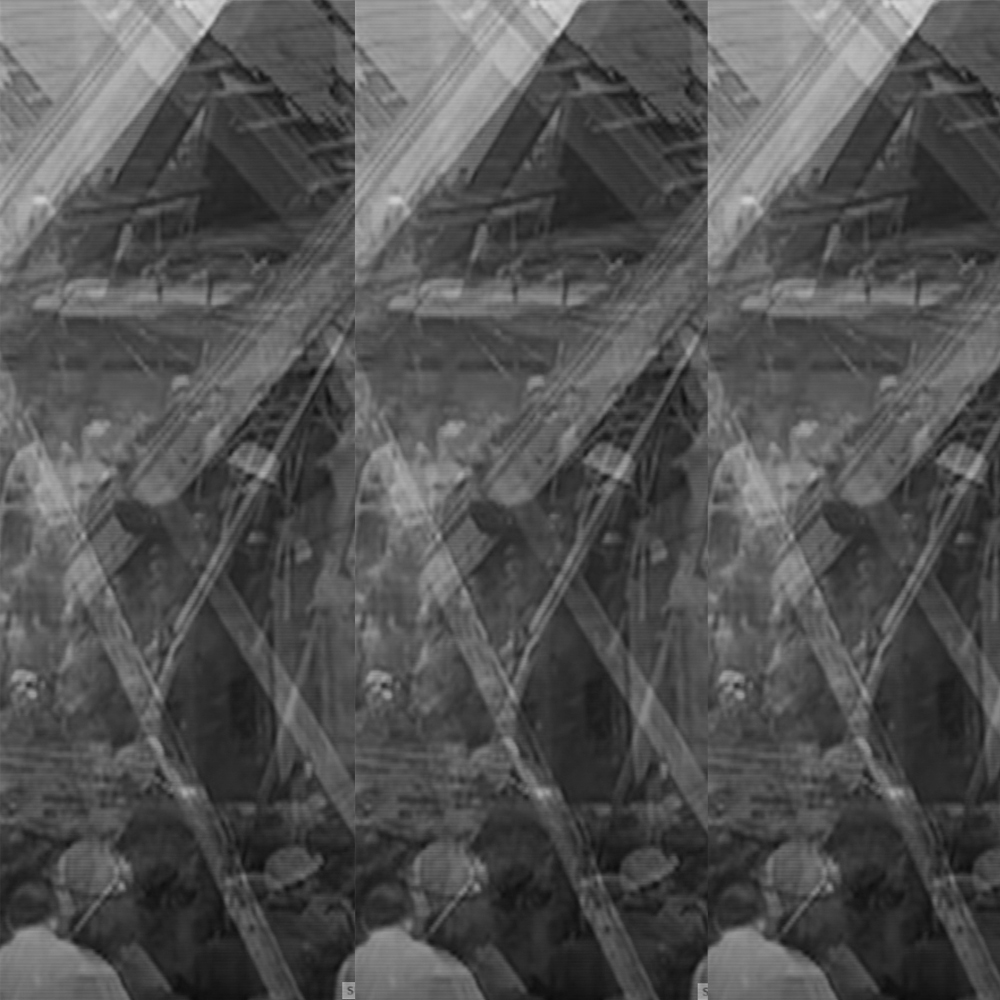
The album cover, and the illustrations accompanying each of the 144 sound compositions, are based upon screen-captures taken from documentary film-footage made during the period immediately following the disaster.
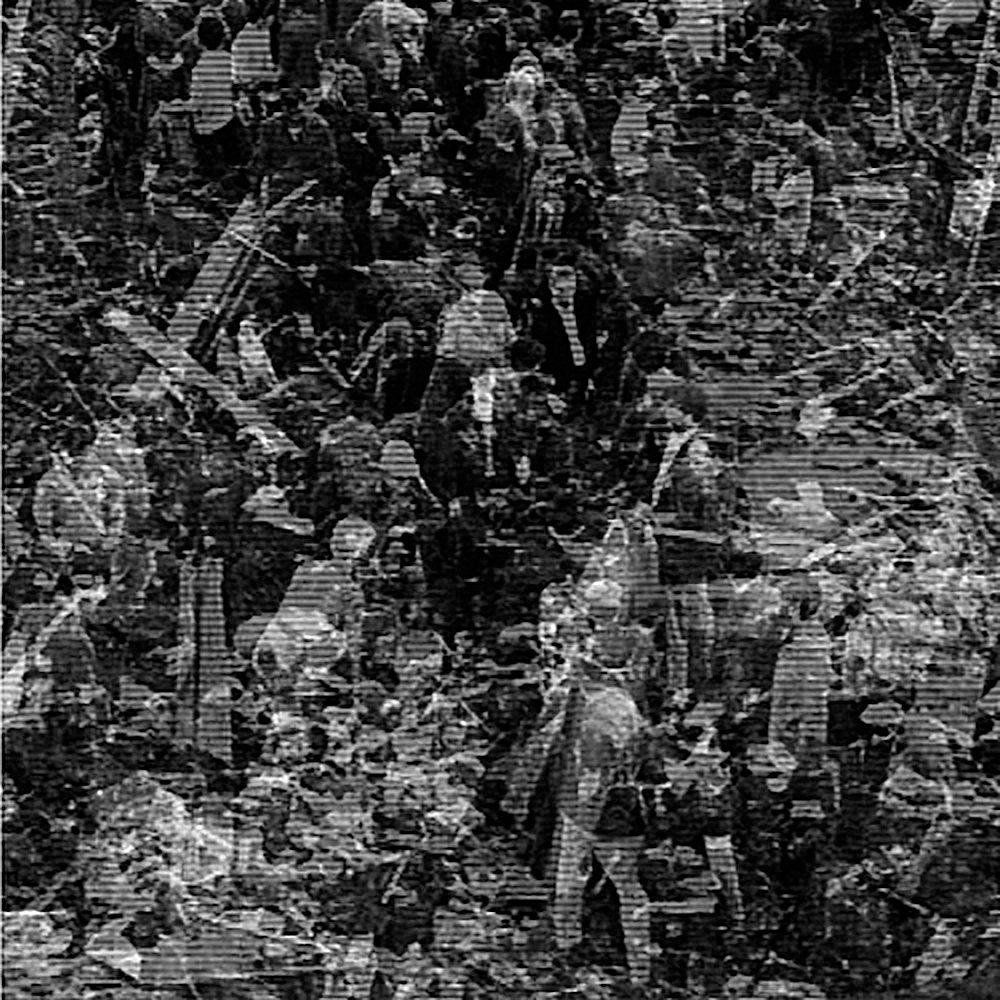
They include scenes of the recovery operation and the mass funeral, in particular. (The illustrations can be viewed by clicking on either each victim’s name or the ‘info’ link accompanying it.)
Harvey added: “The captures are processed using Adobe Photoshop Creative Cloud. I’ve exploited a failure in the software’s ability to convert a PNG file format into a RAW file format and, afterwards, convert the RAW file format into a JPEG file format, without significant loss and corruption of data. Consequently, the captures lose their original solidity, composition, coherence, legibility, and spatial depth, fold in on themselves, and stratify into hundreds of horizontal lines.
“TVs during that mid 1960s ran on a 405-line system. Appropriately, the photographic images that arise from the conversion process evoke the black and white, low-resolution, disrupted, and dissolving images of the scenes that were received on my parents’ cathode-ray television set — courtesy of the BBC’s outside broadcast provision – the following day. The process by which the images are produced serves as a metaphor for the destructive effect of the avalanche on the school and its environs.
Release
The 144 compositions will be released, one-each-day, for 144 days prior to the 60th anniversary. The second album, Darkness Covered the Whole Land: 16 Sound Postcards of Aberfan, will be released on October 21, 2026.
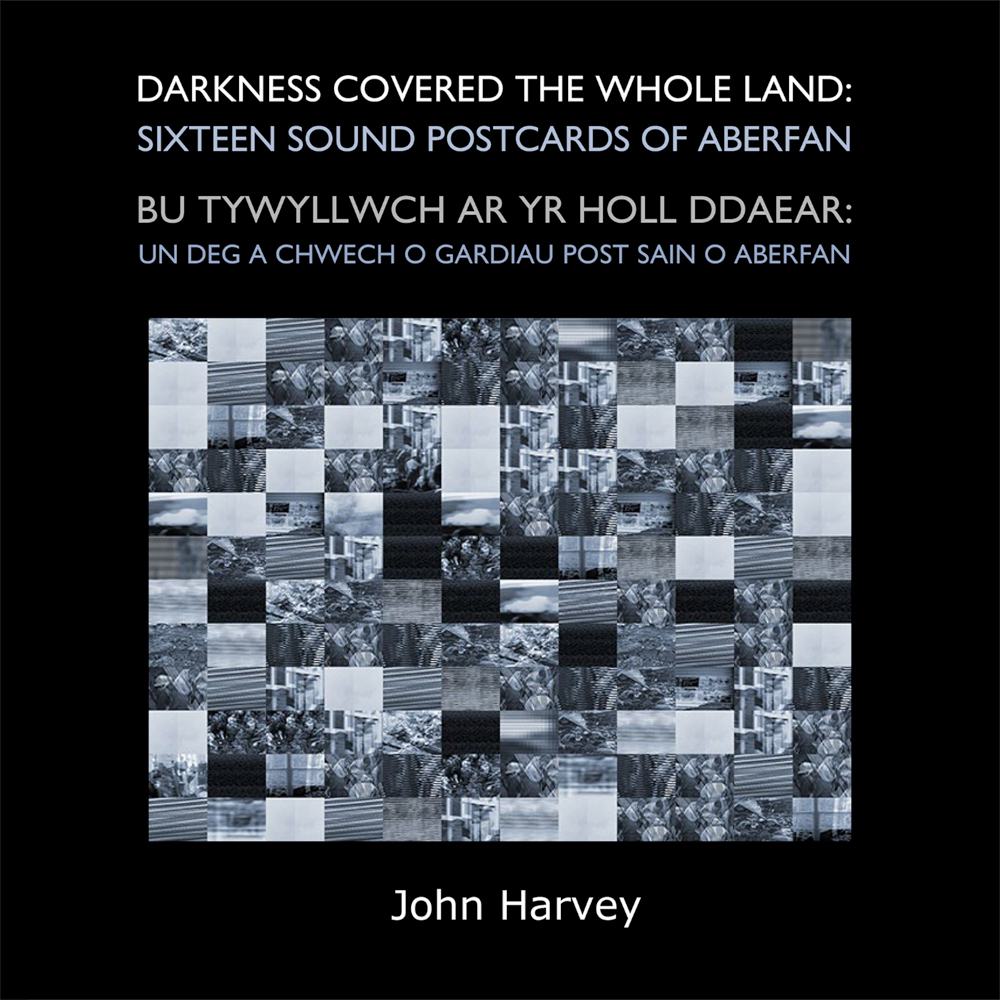
‘144 Variations’ is one of two albums that, together, form the ninth release in The Aural Bible series. The series deals with the Judaeo-Christian scriptures as the written, spoken, and heard word. It explores the cultural articulations and adaptations of the Bible within Judeo-Christian, supernaturalist, and working-class traditions, with a particular emphasis on Wales. The works on this album embark upon a critical, responsive, and interpretive intervention with the history of the Aberfan disaster, and its associated sound culture.
Nation Cymru spoke with Harvey ahead of the launch to gain an insight into the fascinating and groundbreaking musical project.
How did the project come about?
I was brought up in a coalmining community in the Ebbw Fach valley during the 1960s and early 1970s. Almost all my family worked in the colliery. I knew the people and the industry intimately. For me, it was lived experience.
The culture, society, history, tragedies, imagery, and sounds of coalmining have been a major source for my creative endeavour during the past 25 years. However, I hadn’t dealt with the disaster at Aberfan directly during that time. Perhaps the event had been too close to the bone, until now.
I’d seen the fallout of the disaster live on TV in the days that followed October 21, 1966. I was 7 years old at the time. The children who died were my generation. As someone who’d had the privilege of growing old, I wanted to honour those who would not grow old, publicly.
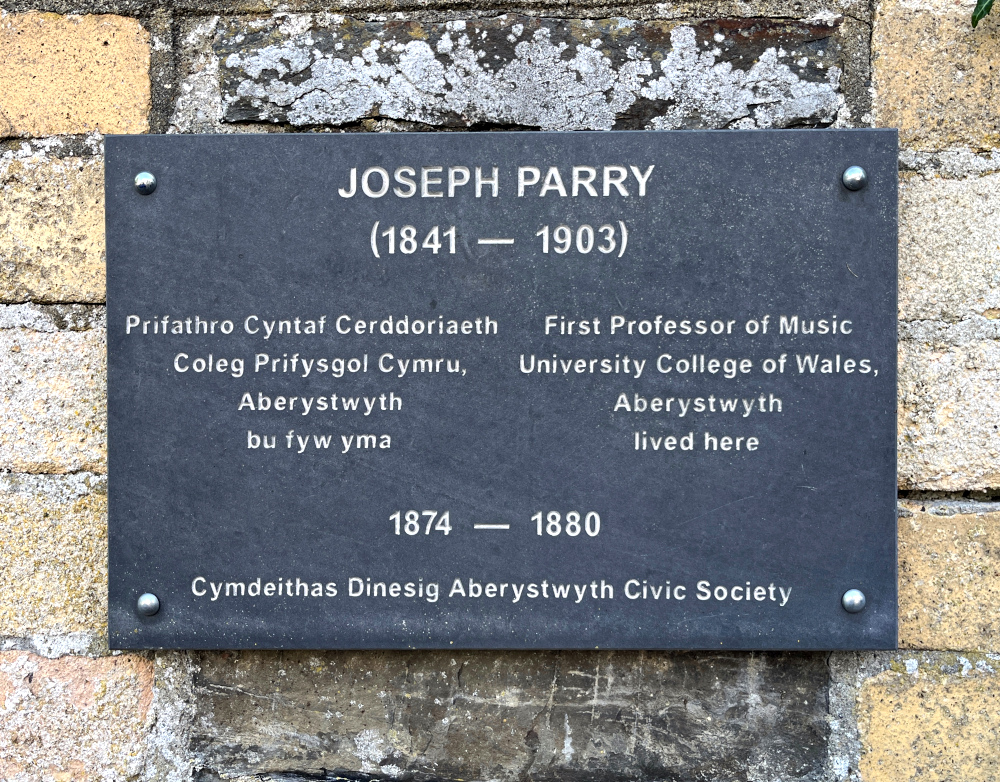
Presently, I live directly opposite the house where the Welsh composer Joseph Parry had lived when he was the first Professor of Music at the, then, University College of Wales, Aberystwyth.
During his residency, he composed the well-known hymn tune ‘Aberystwyth’, which is the basis of the 144 Variations. It was strange to think that here was I, less than 20 yards from Parry’s front door and 150 years later, recomposing his music.
How did it feel working with this material which is obviously so potent and emotive?
The themes of disasters, death, loss (both personal and collective), and the afterlife have been a staple of my research and creative endeavour. Nevertheless, working with the Aberfan material, even at a distance of 60 years after the event, required and inspired an attitude of high seriousness and resilience.
Melancholy was my constant companion. So too, a great sense of anger about the NCB’s and Labour government’s neglect and incompetence, which had been the prime cause of this avoidable horror.
The idea of one track released over 144 days is a huge undertaking – was there a reason you chose to release the project this way?
On memorials to wars and major public disasters are inscribed achingly-long lists of those who had perished in the collective loss. So many names, that we barely read them.
I wanted to individuate the children, staff, local residents, who had perished at Aberfan – and to, quite literally, let each of them have their day.
Given that their names form the basis of my compositions, the project also enabled the dead to collaborate in making their own memorial, and to re-enter into the world of the living on their own terms.
Support our Nation today
For the price of a cup of coffee a month you can help us create an independent, not-for-profit, national news service for the people of Wales, by the people of Wales.
Get more trusted Welsh news
Choose Nation.Cymru as a preferred source in Google News to see more of our journalism.



I’ve been looking forward to this artistic tribute for a long time, and it’s even more complex and considered in its creation – and therefore beautiful, elegiac and simple in its result, than I had anticipated.
Thanks so much for making us aware of it, Julie. What a poignant first taste today too
The Aberfan disaster was entirely avoidable, but Whitehall’s pursuit of Welsh resources was so insatiable that public safety was not even an afterthought. On 21 October, it will be the 60th anniversary of the tragedy in which 144 people perished, 116 of them children, whose lives were cut short in seconds. In addition to Prime Minister Harold Wilson’s Labour government insulting the memory of those who died, it refused steadfast to pay in full for the clear-up or to make dangerous tips safe even though they were responsible seeing the National Coal Board was a government control body, instead choosing… Read more »