

New book uncovers transatlantic Cold War spying links
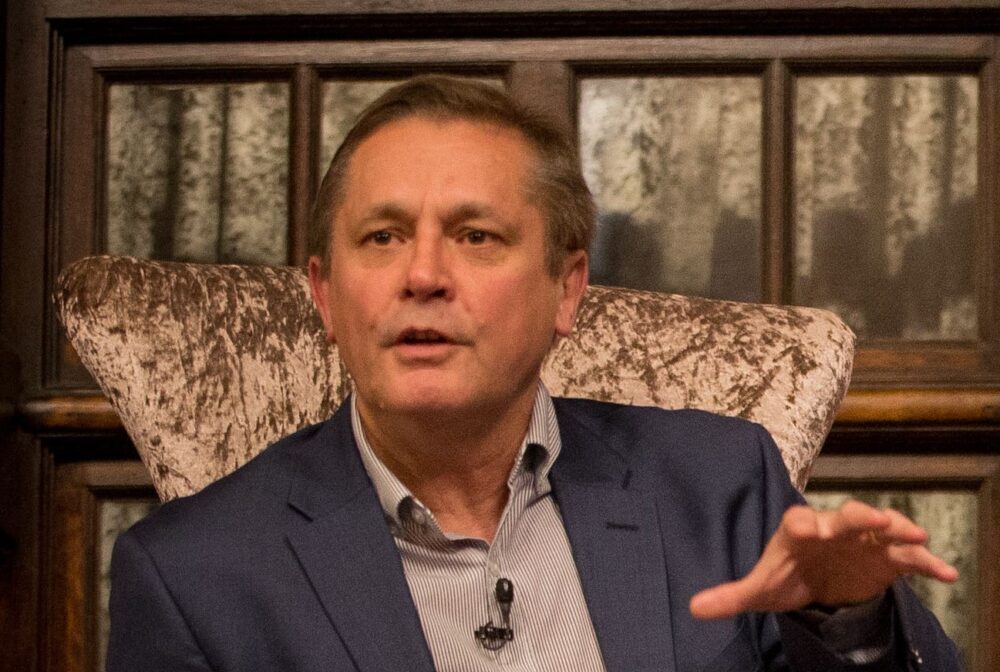
A Wales-based author has shed new light on Cold War surveillance stretching from the Caribbean to Britain, revealing how American intelligence agencies tracked political suspects across the Atlantic with the apparent cooperation of UK authorities.
In a new book, Cold War Puerto Rico, former BBC journalist Steve Howell explores a largely overlooked chapter of the Cold War, combining global geopolitics with a deeply personal family story.
The 260-page study, published next month, centres on Howell’s American-born father, Brandon Howell, whose life became entangled in the paranoia of the “red scare” that swept the United States in the mid-20th century.
But while the story begins in Puerto Rico – then and still a US territory – much of its impact is felt closer to home, in Liverpool, London and beyond.
Transatlantic surveillance
Drawing on newly uncovered documents and heavily redacted FBI files, Howell argues that US intelligence operations extended well beyond their borders, tracking suspected political radicals even after they had relocated to Britain.
His father, who worked in Puerto Rico in the 1940s, came under suspicion from the FBI for allegedly producing pro-independence cartoons under pseudonyms linked to union and communist publications.
As political tensions escalated, Brandon Howell moved to Britain in 1949 to take up a lecturing post at the University of Liverpool.
But the move did not end the scrutiny.
According to the book, then FBI director J. Edgar Hoover alerted both the CIA and intelligence contacts in London, triggering a period of surveillance that tracked Howell’s movements, relationships and professional life.
British agencies are believed to have played a role, with Howell suggesting that MI5 or Special Branch may have been involved in monitoring his father.
“The spying was very intrusive,” Howell said. “It tracked his career and family life closely, even as he became much less politically active.”
Collateral damage in Britain
The consequences of that surveillance extended beyond Howell’s family.
A prominent Liverpool academic, Professor Gordon Stephenson, who had appointed Brandon Howell, was also drawn into the web of suspicion.
Stephenson – who had helped shape post-war urban planning in Britain – was later denied a US visa in 1954, effectively blocking him from taking up a senior role at the Massachusetts Institute of Technology.
Despite support from MIT, the decision was never overturned.
He eventually moved to Australia, where his contributions to planning were recognised, but his career trajectory had already been altered.
Howell argues that Stephenson’s experience reflects a broader pattern of “guilt by association” that defined the era.
State surveillance
Now living near Welshpool, Howell says the story resonates with contemporary debates around state surveillance.
Britain’s long-running Undercover Policing Inquiry, which has been examining covert operations since 1968, has highlighted concerns about the extent to which authorities monitored activists and campaigners.
However, Howell’s research suggests that similar practices were already well established decades earlier – and remain partly hidden.
“Even all these years later, intelligence services are still using secrecy laws to obscure what happened,” he said.
Requests for further information about his father’s case were met with refusals, while many documents remain heavily censored.
Beyond its British dimension, Cold War Puerto Rico also explores how US authorities suppressed independence movements on the island, using surveillance, arrests and covert operations.
Historians have praised the book for filling a gap in the historical record, particularly around Puerto Rico’s role in Cold War politics.
For Howell, the story is both personal and political – a reminder of how global power struggles can shape individual lives in unexpected ways.
And from a Welsh perspective, it offers a striking insight into how international intelligence networks once operated quietly on British soil, leaving legacies that are only now coming fully into view.
Support our Nation today
For the price of a cup of coffee a month you can help us create an independent, not-for-profit, national news service for the people of Wales, by the people of Wales.



Intrusive surveillance? The spies were not doing their job properly.