


New semi-slug found in ‘Welsh Pyrenees’

A surprising number of flightless invertebrates with Pyrenean origins—or affinities—have been discovered in south Wales.
While the Pyrenees mountain range between Spain and France may seem worlds away from the south Wales Valleys, these two landscapes share more than just rugged terrain, a maritime climate, and high rainfall.
Among them are species of millipede, slug, harvestmen and woodlice, including species such as the Beddau Beast (Cranogona dalensi) and Welsh Two-tail (Cylindroiulus pyrenaicus) millipedes, Silurian Soil Slug (Arion cf. fagophilus), and Pyrenean Dusky Slug (Arion cf. iratii).
Their presence has led some local invertebrate specialists to nickname the region the ‘Welsh Pyrenees’. Now, yet another species has joined this remarkable list: the Pyrenean Semi-slug (Semilimax pyrenaicus).
Unfamiliars
In January 2025, Buglife Conservation Officers Liam Olds and Carys Romney were exploring reclaimed colliery spoil around the former Fforchwen Pit and Cwmaman Colliery near Aberdare in Rhondda Cynon Taf – they encountered several unusual semi-slugs unfamiliar to them.
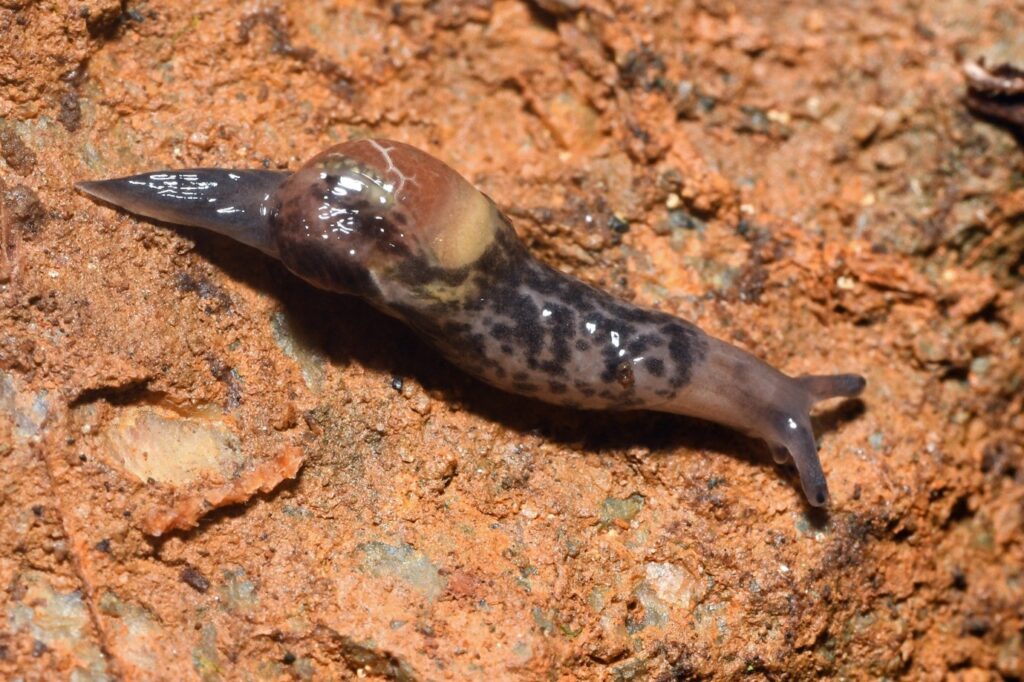
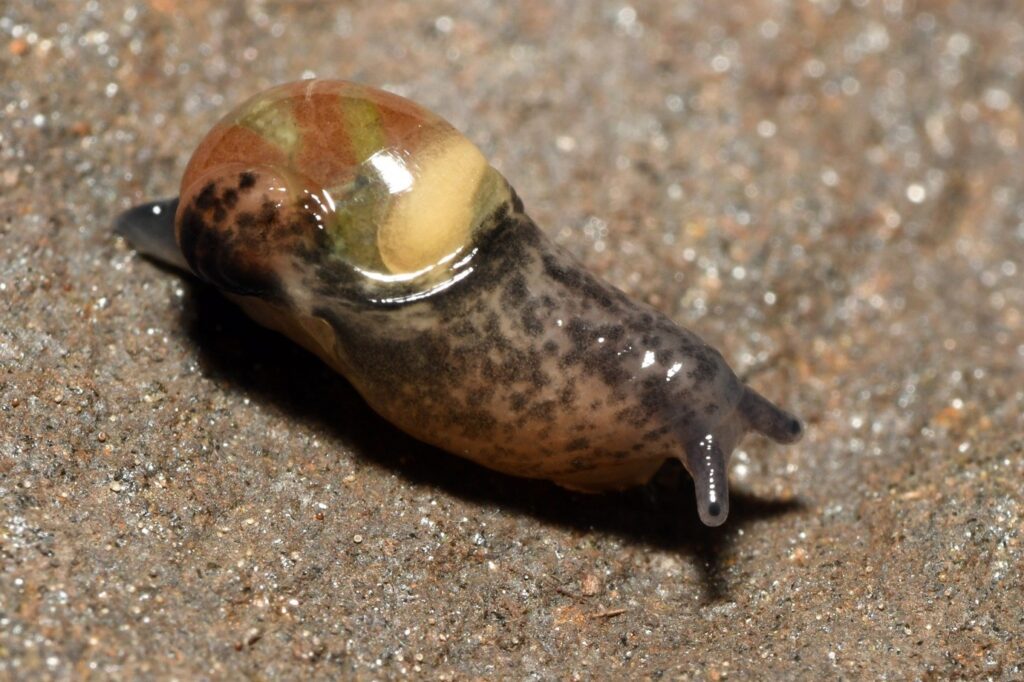
These semi-slugs were shown to malacologist Dr Ben Rowson of Amgueddfa Cymru – Museum Wales, who confirmed their identity as the Pyrenean Semi-slug, a species known in Ireland for over a century but never before recorded in Britain.
Since that initial discovery, the semi-slug has been found in several other locations in the Cynon Valley, in the Llwnfi Valley near Maesteg, and even as far north as Ceunant Cynfal in Eryri National Park.
How did it get here?
The origin of these semi-slug populations in Wales remains uncertain, but one plausible theory is that they were unintentionally introduced from continental Europe. One possible route relates to the historical importation of iron ore from the Basque Country, part of the western Pyrenees.
Between the late 19th and early 20th centuries, the UK—and especially South Wales—imported large quantities of iron ore from northern Spain. The Bilbao region, rich in high-quality hematite, became a major supplier. British steelmakers even invested directly in Spanish mining operations to secure a steady ore supply.
At that time, South Wales was a major centre for iron and steel production, thanks to its abundant coal reserves. However, local iron ore was of relatively low quality, so higher-grade ore from Spain was shipped in through Welsh ports, such as Cardiff and Newport. With this volume of maritime trade, it’s possible that organisms like the Pyrenean Semi-slug were accidentally transported alongside the ore.
While we may never know for sure how these Pyrenean invertebrates arrived in Wales, their presence – hidden among the legacies of our industrial past – makes for one fascinating story. Whether historic stowaways or overlooked newcomers, these elusive creatures remind us how deeply nature and history are intertwined.
A note on non-native and invasive non-native species
Over 2,000 plants and animals have been introduced to Britain from all over the world by people. These are known as non-native species. Most are harmless, but around 10-15% spread and become invasive non-native species which harm wildlife and the environment, are costly to the economy and can even impact on our health and way of life.
While the pathway for the Pyrenean Semi-slug may never be known it serves as a reminder that biosecurity measures must be improved to protect native species and prevent the risk of invasive species spreading. To find out more about Buglife’s work on INNS, visit our campaign pages.
Read more about the discovery of the Pyrenean Semi-Slug in Britain here.
Support our Nation today
For the price of a cup of coffee a month you can help us create an independent, not-for-profit, national news service for the people of Wales, by the people of Wales.



The concurrent populations of Pyrenean Semi-slug (Semilimax pyrenaicus) at Ceunant Cynfal in Eryri as well as Pwll Waun in the Cynon would suggest introduction via 20thC iron ore imports to be mistaken. This doubt is reenforced by the sites in Ireland. A more logical introduction theory would be via pre-Roman trading routes. Clandestine migration via damp vegetation in vessels or water cauldrons or timber boats. All sites both in Wales and Ireland are upstream from early ports and later religious sites and where Celtic rainforest gorges have provided habitat for it to survive the climatic variations over the centuries. We… Read more »
Yes, arrival via iron ore imports seems unlikely, for the reasons you state. Assuming populations in Ireland, Britany, SW France, Pyrenees and now Wales are not population remnants, then one possibility not involving humans is dispersal by birds (endozoochory), though there don’t seem to be molluscivore species that migrate across the whole range, but passage from Ireland to Wales might be a possibility. Founder effects might make genomic relationships between populations difficult to interpret. Interestingly, it is claimed that ~ 50% of slug species on this island are “non-native”, having hitched a lift on imports.
Fascinating to read that these Slug-Snail hybrids actually exist. For some reason both diverged at one point for varying reasons. Perhaps the Snail (Gastropoda) due to a change in climate, topical, so developed a protective shell to shield itself from harsh arrid conditions, threat from dehydration and predators alike. And the Slug (Limax) who effectively shed its exoskeleton because of its temperate moist conditions, so didn’t require a protective shell being shielded by forest and wooded canopies etc… and over the millennia both have crossed paths when once dry areas then became wet and so forth.
Interestingly, it is claimed there about twice the number of semi-slug species (~1000) as true slugs (~500), though there are undoubtedly many more species to be discovered!