


‘No barriers in the sea’: Marine heatwaves are changing the underwater world
Abby Neve
Triggerfish are typically found among coral reefs and are associated with more tropical waters. Affectionately known as a “grumpy” fish by divers because of their territorial nature, encounters would usually be expected on dive trips abroad.
But divers say they no longer have to travel so far to see them.
“Seeing a triggerfish in the UK used to feel like a once-in-a-decade moment. Now it might become a normal sight on a reef,” said Jake, or @JDScuba on Instagram, a diver and marine biologist who has built a following by documenting his dives in Wales.
Wales’ seas are warming, and as they do, the underwater world is changing.
The Met Office confirmed this year that the UK was experiencing “extreme” marine heatwaves, with temperatures in some locations reaching 4C to 5C above average.
Those who spend much of their time in the water have noticed unfamiliar visitors in Welsh waters – an exciting development for a diver like Jake, but one that raises serious questions about the impact of climate change on local marine ecosystems.
As temperatures soared this summer, Jake noticed changes in his dives, including better visibility after more settled weather and warmer water at depth.
“At 20 metres we were getting 19 degrees, which is a couple of degrees higher than what I’ve seen in previous years.”
New faces
Across the UK, there have been reports of increased sightings of octopus, tuna, sea turtles and some jellyfish species, including mauve stingers.
Diver Ellie Kirk said she has encountered more spider crabs than usual during her dives off Anglesey.
“I honestly wasn’t expecting to see so many, and seeing them in such numbers really stood out to me.”
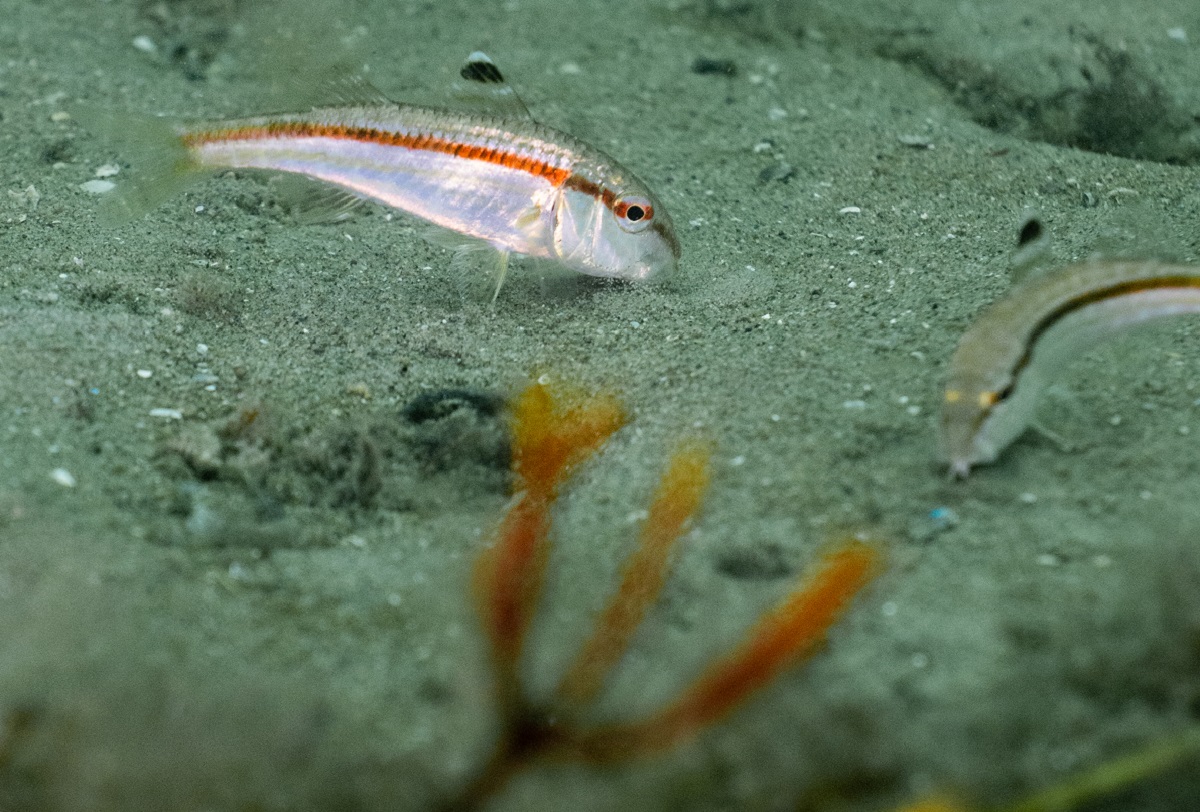
Alongside the triggerfish, Jake said he has spotted more red mullet and heard reports of other visitors to Wales.
“Even in shallow Welsh waters you’re seeing tuna species and warm-water bonito being caught – that’s a big change.”
Marine biologist Richard Unsworth explained why such changes may be happening.
He said: “Warming is gradually favouring more warm-water species while putting pressure on species adapted to cooler conditions.”
He said the consequences could extend beyond individual species.
“The concern is that this doesn’t just change individual species distributions – it can alter whole food webs and ecosystem functioning.
“Many species of fish we once knew to be abundant are heading further north (e.g. the Atlantic cod) whilst warmer water species are becoming more commonplace.”
Scientists have documented a broader trend of species extending their ranges as waters warm, while marine life adapted to cooler conditions can come under increasing pressure.
In Wales, this could also have consequences for species such as the Atlantic white-sided dolphin and northern bottlenose whale, which favour cooler waters.
Professor Peter Evans, director of the Sea Watch Foundation, said: “Several warmer water fish species such as sardine and anchovy have increased in UK shelf seas including coming into Welsh waters.
“And this may be influencing common dolphins that are more commonly seen now in coastal waters around Wales.”
Britain now records 31 cetacean species – whales, dolphins and porpoises – the highest number in Europe alongside France.
Professor Evans said that while the greater diversity of cetacean species was “good in some respects”, it also came alongside the pressures created by the heavy use of waters around the British Isles.
He said: “Many different human activities occur particularly in the coastal zone and those put multiple pressures on cetaceans – fishing leads to accidental drowning in nets and trawls, overexploitation of their prey, or damage to the seabed.
“Vessels produce underwater noise that causes disturbance and in some cases hearing damage, construction of wind turbines alter the habitat and during the construction phase, the pile driving activities produce a lot of noise; and there is always the pressure of disturbance.”
Seagrass
Richard Unsworth is a scientist who founded Project Seagrass, a charity that aims to restore some of the UK’s seagrass meadows – around 92% of which scientists estimate have been lost.
He said rising sea temperatures were also causing stress to these important marine habitats, which provide nurseries for fish and capture carbon.
“We are seeing reduced growth, dieback and, in extreme cases, major loss of newly established seagrass…
“Our work in North Wales has shown that very high temperatures, particularly in shallow intertidal sediments, can rapidly overwhelm recovering meadows.”
He said restoring seagrass meadows could also help marine ecosystems withstand rising temperatures.
“We have also recently observed that marine vegetation like seagrass can keep some intertidal sediments (marine soil) cooler during heat waves, reducing stress on abundant invertebrates like worms and snails that many fish and bird species depend on.”
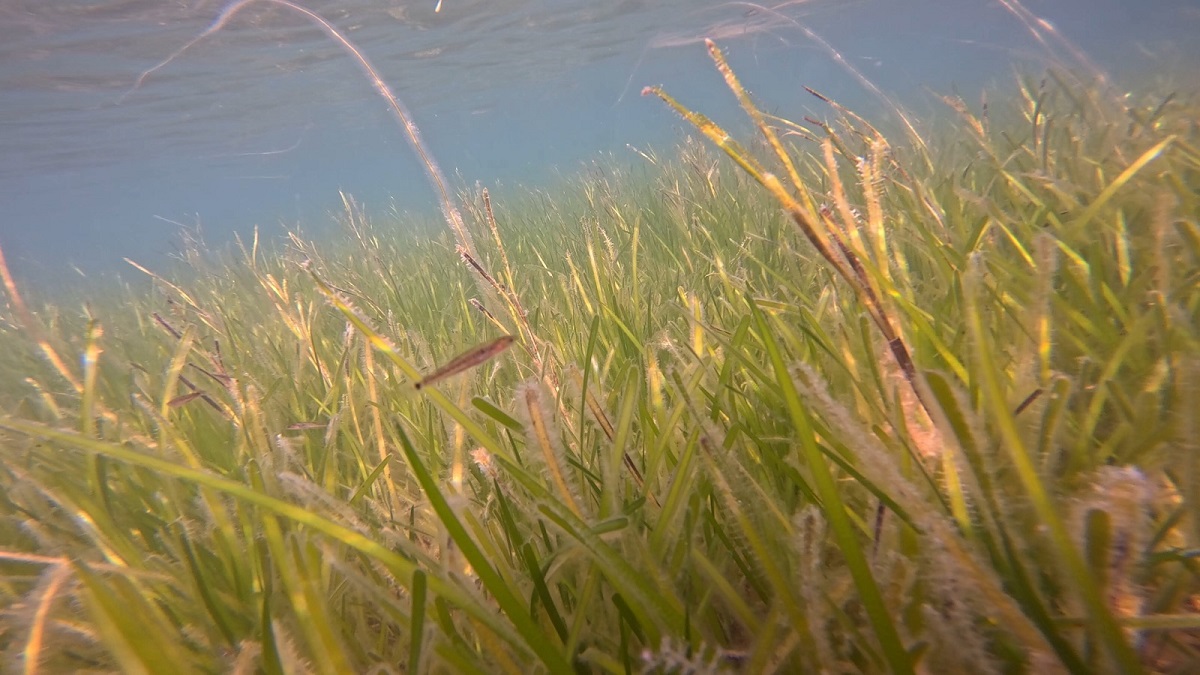
A fish swims through a seagrass meadow in Porthdinllaen
Threat multiplier
But the changes taking place in Welsh waters cannot be attributed to rising temperatures alone.
Mr Unsworth said marine habitats were facing multiple pressures, with heatwaves capable of exacerbating existing problems.
“Marine heatwaves act as a threat multiplier. Seagrass that is already stressed by poor water quality, nutrient pollution, sediment runoff or physical disturbance is far less able to withstand extreme temperatures, as it uses its energy reserves faster than it can produce them.”
He said tackling pressures that can be controlled could make Welsh marine ecosystems more resilient to rising temperatures.
“We cannot stop individual marine heatwaves, but we can make Welsh seas much more resilient to them.
“Reducing sewage, agricultural runoff, sediment pollution and physical disturbance, alongside better monitoring and protection of climate refuges, should be central to climate adaptation.
“We cannot control the temperature of the Irish Sea from Cardiff, but we can control many of the other pressures that determine whether an ecosystem survives a heatwave.”
‘No barriers in the sea’
Jake, however, warned against becoming alarmist about individual sightings.
“Every year you get the scare stories: warm waters, big sharks coming. But the UK already has iconic species – they’re just rarely seen.”
According to The Shark Trust, the UK already has 21 shark species that live here all year round, around half of which are threatened or near threatened.
There has also been recent speculation about the possibility of great white sharks living in UK waters, after a marine biologist claimed they were “already here”.
For Jake, there is little use in speculating.
“There are no barriers in the sea – things are always moving.”
With warmer waters and better visibility, Jake said it was also difficult to know whether sightings of some species were genuinely becoming more frequent.
“Chance sightings are always tricky because the numbers can look higher simply because more eyes are out there.
“More people are out on the water, so are there actually more animals – or just more phones capturing them?”
Even so, divers witnessing the changes first-hand can be left with mixed feelings.
“We’re at a point in time where we’re witnessing these changes first-hand, and at least we can document what’s happening below the surface.
“It’s exciting to see these new species, even if the reasons behind their arrival are complex.”
Support our Nation today
For the price of a cup of coffee a month you can help us create an independent, not-for-profit, national news service for the people of Wales, by the people of Wales.
Get more trusted Welsh news
Choose Nation.Cymru as a preferred source in Google News to see more of our journalism.



Bluefin Tuna or tunny as they were then known were plentiful in the north Atlantic up until WW11, it was the overfishing of their prey species herring and mackerel that led to their disappearance.
During the 1930’s sport fishing for tunny was a major attraction for the well to do out of the north Yorkshire ports Scarborough and Whitby, while anglers have been catching trigger fish from venues like Mumbles pier for at least 40 years possibly longer.