


One frozen lamb shank at a time
Jac Jones
In 2000, Anthony Bourdain peeled back the curtain on the restaurant business, giving us an unfiltered look at its less than stellar realities.
This article, attempts to do same using my years of experience in the tourism industry in Wales as a bedrock.
Wales, a product not a nation
Misty mountains and rolling hills in Gwynedd, candy-coloured facades and overpriced oat-milk flat whites in Tenby, and a neatly arranged array of sheep scattered fields in between. ‘Rugged, timeless and authentic’ would be on the brochure to this ever-apparent theme park, with locals cast as extras. The main event in this theatre is the pantomime that is front-of-house.
An 18-year-old part-time server juggling both a job and A-levels while hiding the stress of the lunchtime rush behind a warm smile, a barperson bobbing their head in an attempt at politeness as they are met with a ‘seasoned’ mountaineer whose apparent encyclopaedic knowledge of the area outshines that of even the most wilderness-loving local.
Although, light work compared to the table of six that snaps their fingers for service, the family too impatient to understand that ordering 3 well done steaks during the dinner rush at the height of August will not be as fast as McDonalds, or the customer unconvinced that people do in fact speak Welsh on a daily basis and it is not in fact a tool to exclude English people from conversation.
Apologies often go out for the weather, the fact that there is no phone signal, that unfortunately McDonalds has yet to open a franchise on the Llanberis path, and that a 200-year-old pub was not built with air conditioning in mind.
Party trick
Someone on holiday will hear your accent, and like a well-trained dog, you are to provide the party trick that every local working in the tourism industry is expected to do. The command, usually along the lines of ‘go on mate, say the long name’ is saying Llanfairpwllgwyngyll without rolling your eyes, which isn’t inherently difficult if it weren’t for being asked to do so at least ten times per day.
Ironically, the same crowd of customer expecting staff to deliver it on command like a well-trained dog rolling over for applause, are also the same people who dismiss the use of Welsh placenames.
Too quickly Yr Wyddfa becomes Snowdon and Eryri becomes Snowdonia, all because it’s ‘too complicated’ to say. Villages get their own pronunciation, with a notable butchering being the ear-splitting transformation of Llanberis to Lamb-berries. Yet, for those on the receiving end of this linguistic slapstick, its just another day at the office.
The kitchen truth
This, however, would be issues for the front of house to deal with. If you want authenticity, walk through the ‘staff only’ door. Somewhere in a café or restaurant in Snowdonia (or Eryri on the noticeboard outside for extra authenticity), an overworked and underpaid teenager is dunking precooked scampi into a fryer with oil old enough to undergo a mid-life crisis.
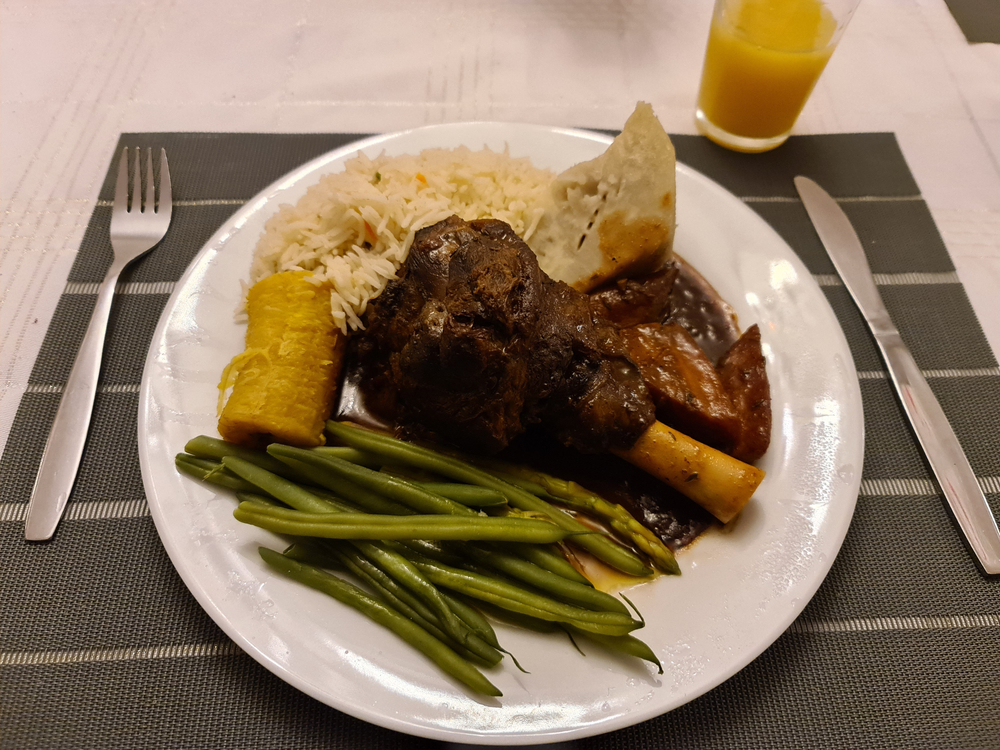
The fish isn’t the only victim of this; the same noticeboard promises ‘locally sourced’ ingredients written with a rustic font. In the kitchen, a box from a national wholesaler chain arrives with vacuum sealed lamb shanks and pre-made gravy straight from New Zealand.
The real workhorse of the establishment is the fryer; chips, scampi, goujons and ‘cod’ that may not actually come from off the coast of Aberystwyth.
It is the smell of summer as it clings to the clothes, hair and the tobacco-filled lungs of the kitchen staff whilst the ticket machine screams incessantly, punching out countless tickets for the holy trinity of protein, carbs and a purely ornamental side salad. In the backdrop of nonstop twelve-hour shifts, smoke breaks become a reprieve from the trenches.
It isn’t all food miles however, as local produce is sometimes a genuine occurrence, when cheap and convenient.
Diners lecturing staff about supporting our local farmers will also lecture staff when the pricing reflects the local sourcing. Therefore, the lamb shank arrives straight out of a packet and ‘traditional’ sticky toffee pudding is traditionally microwaved at 1000 watts before being served.
Upon the question of ‘is this sourced locally?’, an ‘of course’ will be provided by the server, owing to them being either unaware or not caring about the dubious origin of the pre-packaged steak and ale pie filling.
This act of deception can also be witnessed at the bar, where the server will almost without fail, entertain questions by a punter on the origins of their Manchester-brewed ‘local’ ale in the mere hope of an elusive tip.
In spite of these culinary crimes, the chalkboard will still guarantee authenticity, as the illusion of Wales is much sweeter than the truth.
Loving Wales to death
There is a love for Wales, from all those who take part in the industry. However, this love is smothering the nation. This industry is a tired and toxic mess that has done just as much damage to Wales as it has helped, young people leave for Cardiff or Swansea because stability beats scenery, and when the money is thin and hours thinner, financial opportunity beats out just about anything.
On the coast, communities go dark with the winter. Drawn curtains and empty driveways, though these dwellings are not abandoned, they are ‘investments.’ For someone unfortunate enough to grow up in a beauty spot, good luck. Grandmother’s home? An Airbnb providing a remote weekend escape.
Gone are the childhood memories, replaced by millennial grey furniture and commands to ‘live, laugh, love’.
Communities carved out, in their place a tasteful apocalypse of weekend adventurers seeking their ‘unspoilt’ paradise. An admiration of Wales with an eraser.
Dare to criticise the state of affairs of our second home economy, to suggest that hollowing out communities and pricing out locals is not a self-destructive practice, and you face accusations of naivete and economic illiteracy. ‘Wales needs second homes’ and ‘it is essential for economy’.
This sermon usually comes from the same people whose bank accounts swell with every home that’s turned into a holiday let, the same tourist bosses that insist no alternative can be done, whilst quietly benefiting from the status quo.
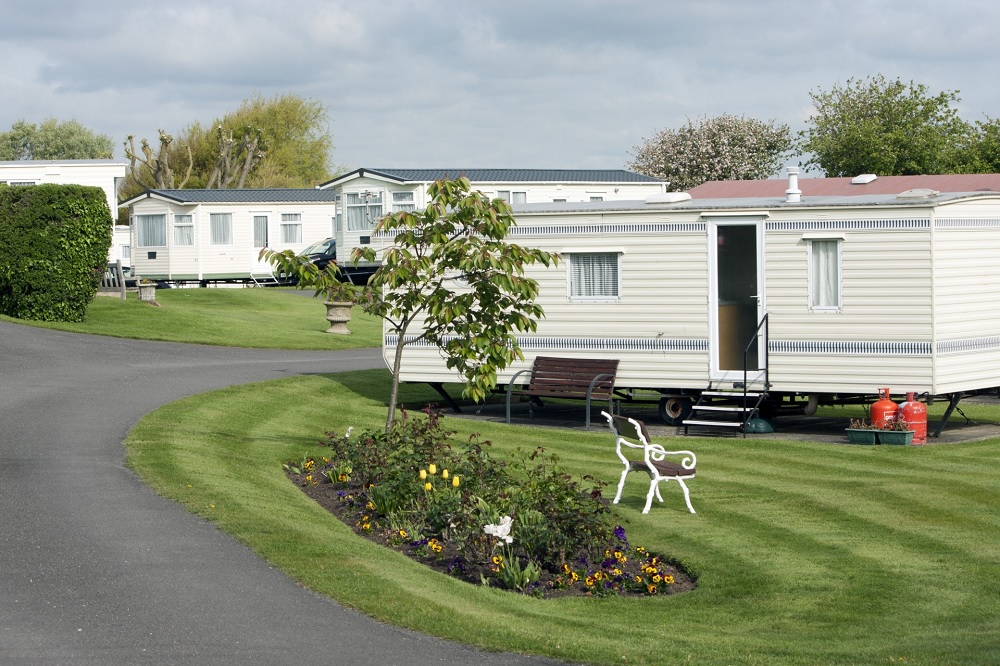
The caravan mafia does not face the same pushback as second homes, though they share the same theology as second homes in Wales, thou shalt survive Summer.
Convoys
From April to September, they multiply like bacteria, every B-road riddled with convoys of pilgrims committed to occupy the green pastures of Wales in their leisure coffins. Entire fields of Wales taken over and rebranded as holding pens for those ‘seeking the simple life’ whilst seeking the nearest 5G connection.
‘We are supporting the local economy’ gets said like a blessing before a meal, as if a fridge magnet and a tea towel offset the countless homes removed from the rental market.
Money does indeed circulate; however, it is often upward into the coffers of management agencies, holding companies and property portfolios. What’s left for the community is overtime in August and anxiety in January, a never-ending cycle.
The tourism board, or more appropriately those who financially benefit, will sell the industry as a wholesome celebration of authentic Welsh culture, championing sustainability.
For all this talk, the machine runs on something far less romantic, seasonal contracts and people who cannot afford to snap.
Extraction industry
The tourism trade behaves as an extraction industry putting on a polite face; The path to Yr Wyddfa nightmarishly resembling airport security, houses commodified, the language is a bar-side entertainment, identity is a tool to sell fridge magnets and those living in Wales are reduced to backdrop characters in a pastoral fantasy.
Through it all, the machine never stops because the mortgage does not care about Welshness, the booking list is full, bills need to be paid, and tips collected; so the orders are sent out, the pints are poured, the gargled pronunciations are (sometimes) gently corrected and the lamb shank is placed in front of an eager customer with a soft reheated thud.
Whilst this is happening, somewhere amongst the rustic furniture and black-and-white photos of Welsh yesteryear is a front-of-house worker smiling through clenched teeth, selling the idyllic dream of Wales, one frozen lamb shank at a time.
Support our Nation today
For the price of a cup of coffee a month you can help us create an independent, not-for-profit, national news service for the people of Wales, by the people of Wales.



Briliant but sad at the same time!
What a load of nonsense. Second home issue is real but is being dealt with really well by recent measures. Welsh hospitality is not awful, it has improved hugely over past decade and you can now get the top standard of food widely. Why talk our positives down and make it all appear worse than it is. Genuinely pathetic.
Clearly you need to make an appointment at Specsavers!
I think you will find yourself well out of kilter with most in Cymru, especially those of us who have done our time as a skivvy for the visitors. There should be no foreign owned second homes and the ‘recent measures’ are too little and too late, too late. Cymru needs a second home policy similar to that of Denmark. This piece presents the reality of what the hospitality industry is in Cymru, one where our young people are exploited and unable to find a home or year round job because of the way that the hospitality industry distorts local… Read more »
Second homes are just as damaging whether the owner is born in Swansea or Dublin. The current measures are effective because they disincentivise taking ordinary 3 bed homes out of use as main residences while still allowing successful American movie stars that can afford their taxes to have a cliff top mansion for occasional use that isn’t depriving ordinary families of ordinary family homes, all the while making a generous contribution towards funding more council homes.
Traethawd da iawn.
It was Brake Bros’ wot broke it.
A sobering picture of an unmanaged visitor economy. Sustainable tourism is possible but needs a visitor levy to fund its management. It’s no coincidence of course that the beneficiaries of extraction are vigorously opposed to that.
Such an amazing excellent read! A sad but truthful insight into how unsustainable tourism has become in Wales. Keep up the good work Jac!