


Railways of the future based in Wales
Professor Stuart Cole, CBE. Emeritus Professor of Transport Economics and Policy, Prifysgol de Cymru / University of South Wales
The UK Government said last week it wants the railways to ‘harness new technology and reduce the capability gap in emerging technologies’ (Great British Railways new technology agency GBRX). It will break the ‘pattern of slow adoption of such new technology’ (Lord Peter Hendy, UK rail minister) within trains and infrastructure testing and certification of rolling stock and infrastructure
To create that new technology requires a purpose-built facility for world class research, testing and certification of rolling stock, infrastructure and innovative new rail and mobility technologies.
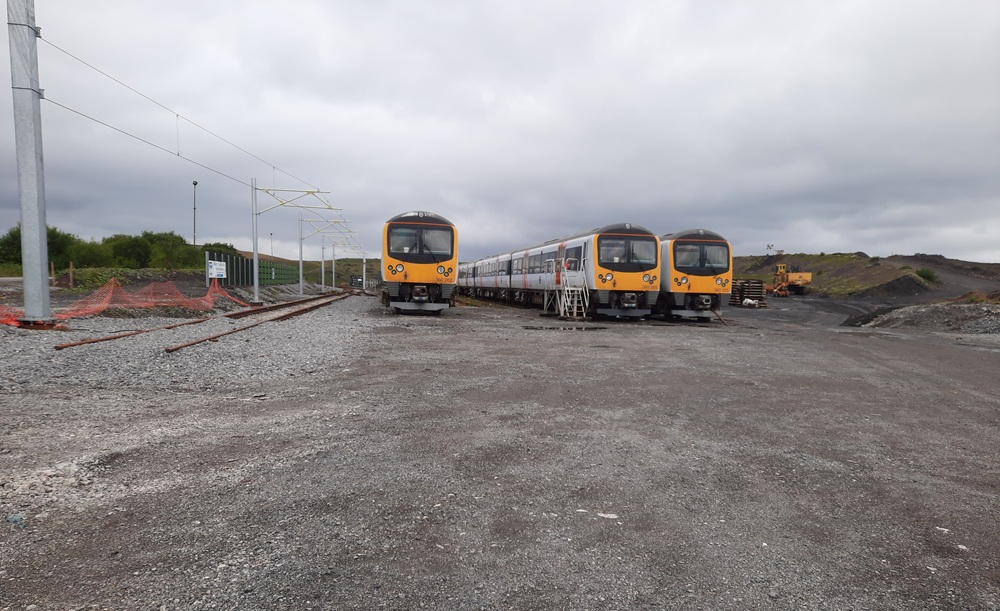
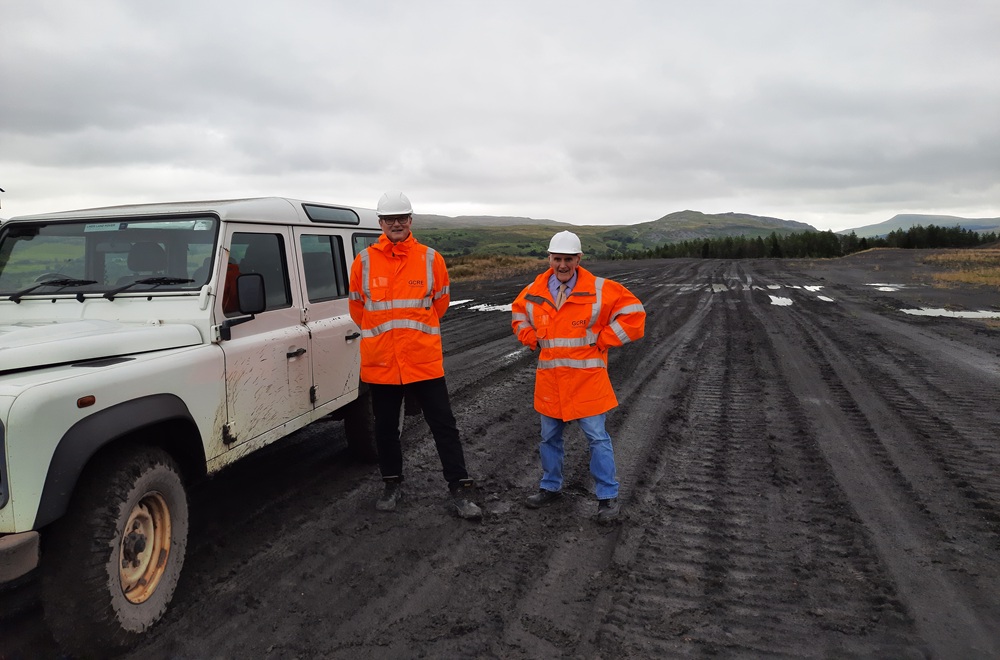
This week I visited the Global Centre of Rail Excellence (GCRE) – located between Onllwyn, Abercraf and Ystradgynlais bordering on Bannau Brycheiniog – so this column could understand its position relative to the government intentions, and to see at first hand progress and plans to put Wales ahead in railway technology services.
Selection criteria for the site
After looking at several sites in Wales this location was seen as the most appropriate and attractive to potential customers. Inward investor surveys over many years have shown the top four criteria used by them and their financial backers. These are the availability of quality workforce (for the expected 1100 employees), cost / availability / size of property, overheads (e.g. wages, local taxes) and transport links. This site reflects those criteria
A live railway linking the site to Network Rail lines is the most important criterion for a railway testing site. It has to be possible to test trains on a high technology site and operate directly onto the live railway. The old Neath and Brecon Railway (built 1867) until 2017 operated between the Onllwyn coal washeries (which are a part of the GCRE site) and the South Wales Main Line at Neath and Swansea. This line is maintained as an operational railway by Network Rail.
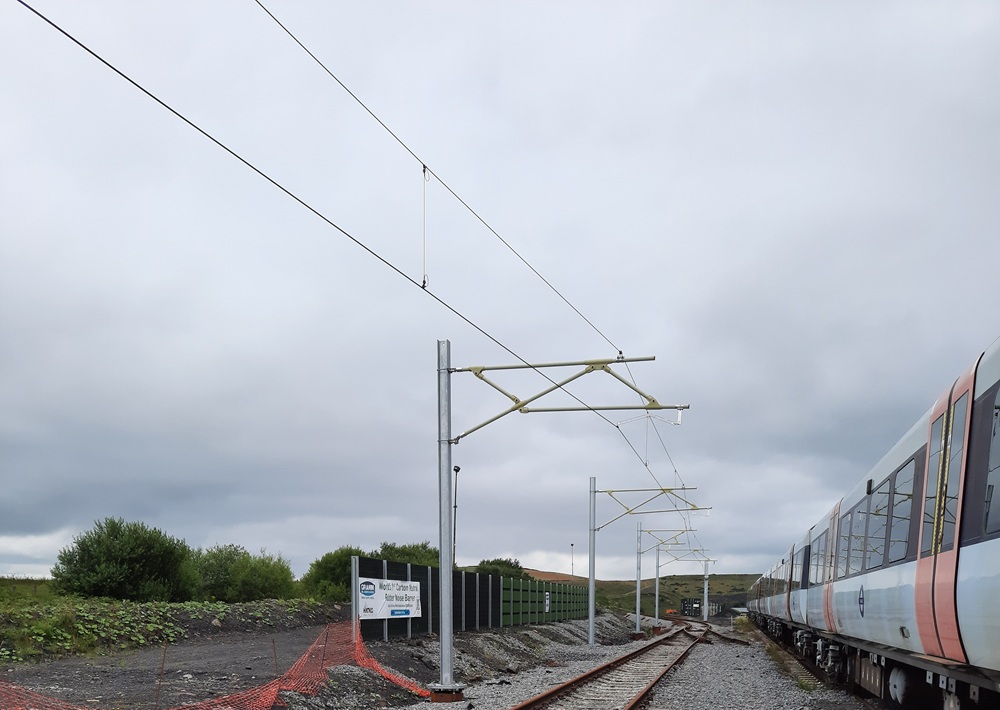
A large piece of land is necessary to accommodate the seven-kilometre, 25kv overhead powered line, with a twin track circuit and curves sufficient to operate at up to 110 mph / 177 kph. Track gauges to European and Network Rail measurements along with other test facilities with engineering research on innovative technologies are planned in order to achieve the centre’s full market potential.
Access to a high-output electricity supply is required to provide sufficient power for the electrified track. Electric operation is seen as the future for railways operating at higher speeds.
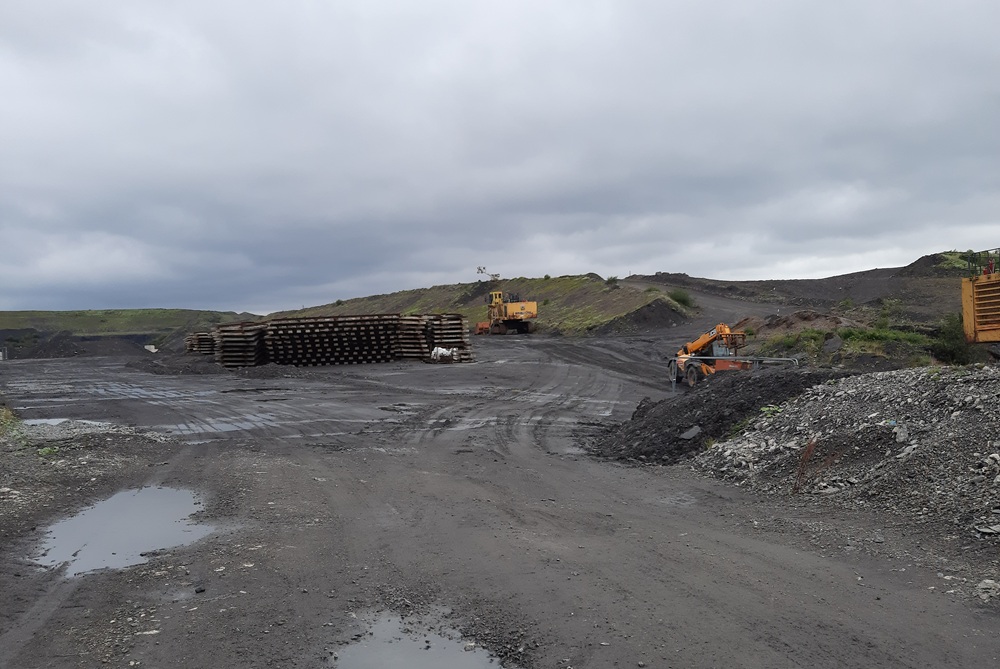
In any land development project acquisition costs have to be minimised to enable the available investment capital to be used for the technology facilities. Although site requires spreading 3 million tonnes of old coal waste to provide a flatter surface, overall an industrial site being put to another industrial use does not attract high prices per hectare.
That the local community would prefer a train testing track from an open cast mine and is supportive of the scheme; itself an important element in site location.
Reflecting the UK Government’s view of railway technology
The UK Government sees new technologies playing a key role in Britain’s railway future. The futuristic GCRE work-plan may not seem realistic at present but is needed as railway technology becomes more complex. Rolling stock is developing new technical forms continuously (e.g. Hitachi ICT trains compared with IC 125 trains on the GWR Swansea – London train service) which have to be tested.
With all new transport products there has to be fault-free running, proving to a third party such as train operating companies or the infrastructure owner (e.g. Network Rail, SNCF, Deutsche Bahn) that the product doesn’t break down when it begins its operational life.
Of course trains’ fault-free running can be on live tracks though the risk there is that if there is a breakdown trains are delayed and the public timetable can be affected.
Consequently manufacturers prefer a track off the main line on which they can prove their new idea actually works and that a control mechanism on the train or the whole train is safe for the public to use. They also need a means of proving that components in their product from different manufacturers are operationally compatible. All these have to satisfy the regulatory authorities
So, Europe needs a different form of rail innovation centre concentrating on research and development of new movement innovation and this is what GCRE is intending to provide.
Competition and markets
Most train testing is carried out at specific centres including:
- Newton Aycliffe (County Durham, owned by Hitachi)
- Vilim (Czech Republic)
- Wildenrath (Germany; owned by railway manufacturer Siemens)
It is expensive to take rolling stock from the UK to those locations in other countries and there have been capacity constraints which a new centre could overcome.
It may be said that train manufacturing facilities in Britain at Newport (CAF trains for TfW), Newton Aycliffe (Hitachi), Goole (Siemens), and Derby (Alstom) may currently have insufficient demand for the centre and all have a supply chain for parts manufactured elsewhere. However there is a European and UK market to serve and one might also argue that a highly sophisticated train technology centre in Wales could attract more design-to-build manufacturing back to Britain.
Any new supplier (which is what GCRE is) has to show its USP (unique selling proposition). Its plans indicate it to be at the forefront of technology so that it is up, running and ahead of its competitors when it opens, hopefully by 2029 (thei column’s estimate)
Funders objectives
A challenge always facing any investment project part funded by government which so far has invested £70m (Welsh Government £50; UK Department for Transport £20m) is the wide gap between public and private sector financial expectations and socio-economic objectives.
The ‘missions’ of the centre are to make transport better, renew an amazing place, rebuild local prosperity and establish a net zero railway. These are worthy aims for government justifying its investment when facing opposition party questioning in the Senedd or at Westminster. However they are less inviting to the investment market where profits and shareholder satisfaction hold sway.
The major challenge facing the GCRE is attracting an additional £300m (this column’s estimate) in financial market funding. The usual conditions for inward investors have been achieved but, as a higher risk new venture, the private sector will be concerned about not too certain future revenue streams. These investors will seek means of how they might mitigate risks particularly through government offers.
Public centre bodies have often been financially caught out through the agreements made in haste to progress a project and cannot politically afford for it to stop.
However if the UK is to become a leader in new rail technology and Wales becomes foremost in this market, the GCRE is the ‘vehicle’ to achieve that.
Support our Nation today
For the price of a cup of coffee a month you can help us create an independent, not-for-profit, national news service for the people of Wales, by the people of Wales.



Perhaps CAF will get behind this if they are eyeing a bigger share of the UK train and tram market.
What they are reluctant to tell everyone is that it was supposed to be finished this year . The Welsh government’s excuse is they didn’t realise how difficult it would be to obtain the private element of the investment, the naivety of these people is breathtaking they work hard on creating an anti business atmosphere and then wonder why there is a reluctance to come .
Far more important we tinker on the serious stuff , the well known Beacons and Snowdonia ……………
This proposal predates Boris Johnson’s oven ready deal. His pandering to the Brexit extremists led by Farage is the reason the UK is not attracting inward investment.
Good, positive article by someone witha high reputation in the field
not really . Inaccurate that £300 Million required. Needs 330 Million just for the test track which they are seeking from Debt funding. The technology park and hotel will be a few extra hundreds of millions to be provided by private investment later. Number of jobs for the test track alone is 1100. Forget that lets say max 50. . There is no market for the test track and he misses out the fact that network rail have a test track at melton mowbray capable of testing at higher speeds. Also neglects to mention the the French facility near Lille… Read more »
Newton Aycliffe is in County Durham