

Remembering the Cockle Women
Norena Shopland
A law in the Magna Carta (1215) permitted citizens to collect shellfish from the UK foreshore. Only a small amount was permitted, 8 pounds (3.6 kg, about the weight of a gallon of milk) for personal consumption, anything beyond that, even today, is considered commercial and requires a licence.
However, for most of the past this allowance has been ignored. Up and down the coast, people, particularly Cockle Women, would eke out extra money by cockle collecting, half a sack in the early 19th century being worth around sixpence (about £25 today). In Wales, several areas became famous, most notably Penclawdd on the Gower Peninsula, and Llangwm in Pembrokeshire.
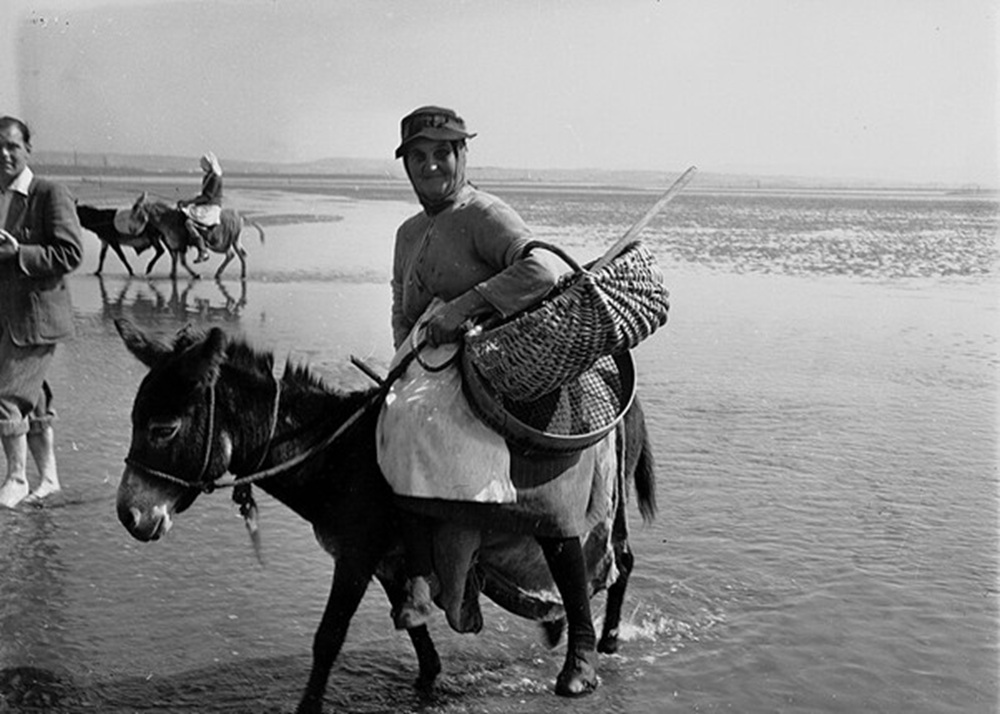
In the days before railways these women would walk miles, often bare footed to save spending money on shoes, with their donkeys or mokes, waiting in the early light for the tide to turn. They had their own beds to work, usually traditionally handed down and then it would be a case of back-breaking work.
Breathing holes
The women would bend double, searching for two small breathing holes which they would then rake to a couple of inches below the surface. The rake, often made from old reaping hooks or other equipment would draw the cockles up to be scooped into a sieve which would be shaken out to remove stones or other materials. The cockles would then be placed in wicker baskets which needed protecting from Oystercatcher birds, ‘rats with wings,’ the women called them as they stole their catch. Sometimes the women collected other seafood, such as mussels and oysters, or seaweed, turning it into laver bread to earn a few more pennies.
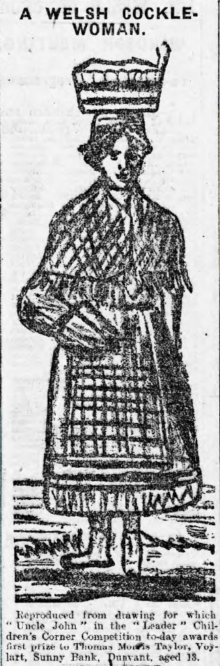
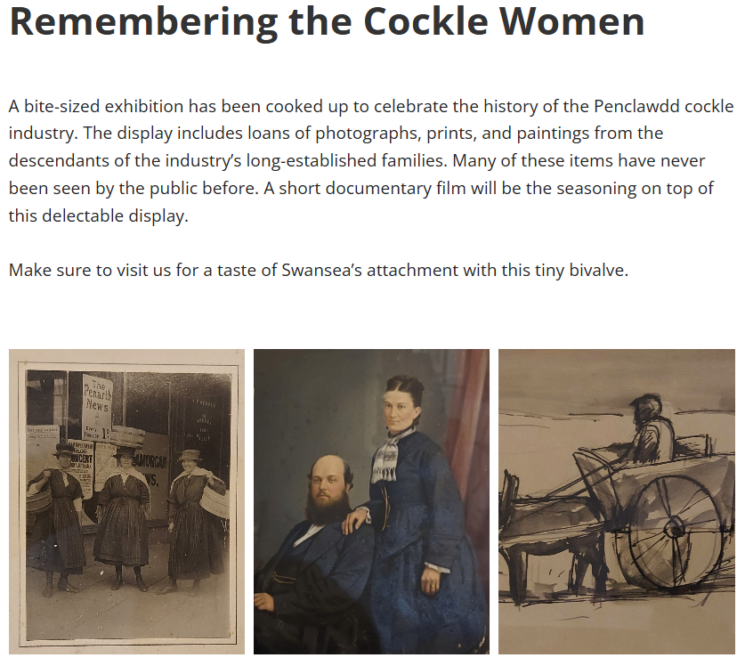
By necessity, they had to wear warm clothing, Welsh flannel in red and black for the dress with black, white or grey shawls, which would have been impregnated with sea water, and a special broad-brimmed, flat ‘cockle hat’ of black straw with a thick pad, known as a ‘dorch’, protecting the hat and the head. They were mostly barefooted.
When the tide began to return, the women would have to retreat on their mokes and woe betide anyone who lingered. Often, we only know women’s names when they appear in the papers, having been washed away by the tide.
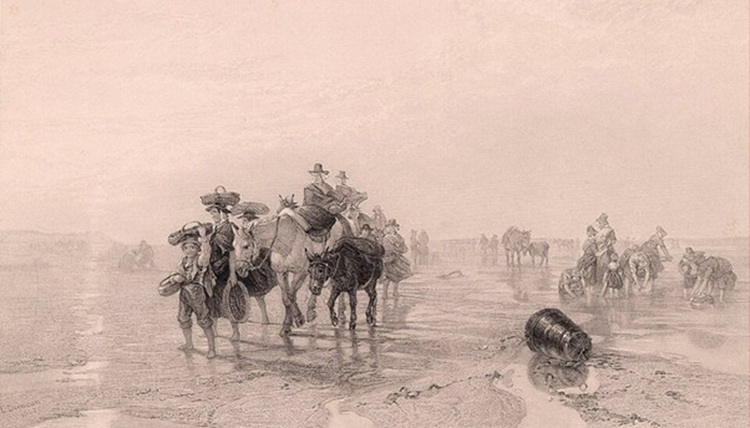
Most women would load panniers on their mokes, some had carts but poorer women carried their baskets on their heads and on both arms.
Friday was a popular day for collecting, as the women could then sell at the Saturday markets often walking miles to get there. Others would sell door-to-door. However, first they had to be treated. At home, the women would wash and boil the cockles, the empty shells forming middens in certain areas, some dating back to prehistoric times. During building works of the mid-twentieth century, they often had to be removed.
Cocs cregin
Cockles would be sold as cocs cregin, untreated and still in their shells, or cocs rhython, shelled and boiled. As Welsh cockles became delicacies and sent around the UK, women would be employed by businesses and in good times could earn three or four shillings a day. Then, the women became romanticised with numerous portraits, often in staged poses such as sitting on rocks, or postcards that can still be purchased on collectible internet selling sites.
Cockle women worked up to the mid-20th century. In 1932, In Search of Wales, Henry Morton wrote:
I saw them waiting for the low tide at Penclawdd. … There were, perhaps 200 of them mostly women, young and old. Nearly everyone rode a donkey. At first sight they looked like a Bedouin tribe. They wore their shawls over their heads, bound by a band round the temples. So they protect themselves from the wind … Nearly every woman and girl wore light shoes with rubber soles and black worsted stockings with the feet cut away.
Cockle collecting continues today, although the mokes, carts and women have been replaced largely by men sometimes illegally in 4×4 vehicles. This profitable trade has encouraged illegality with people being prosecuted, and even deaths, such as the 23 Chinese cockle pickers at Morecambe Bay in 2004, caught by an incoming tide and drowned.
But the cockle women are being remembered. Swansea Museum has a small exhibition (ends on 30 December 2025) on the Penclawdd women with photographs and artefacts.
In 2023, Lily Tiger Tonkin-Wells made a documentary Molysgiaid a Menywod y Môr (English title, ‘She Sells Shellfish), interviewing women who had worked in the industry, and a copy can be viewed online.
Support our Nation today
For the price of a cup of coffee a month you can help us create an independent, not-for-profit, national news service for the people of Wales, by the people of Wales.



There was no ‘UK’ in 1215.
Wales was not annexed until 1536 while the act of union with Scotland did not occur until 1706.
The Magna Carter applied to England only.