


Restoring Britain’s first language and forgotten identity
Thomas Steres, Founder, Linguistic Legacies Initiative
As historical revelations about the British past emerge, the most compelling seems to be the heavily British nature of the population. In short, the Ancient Britons who were thought to be Anglo-Saxons across the island instead survived and merely adopted the language of the newcomers.
The British language, Brittonic, only survived in forms of dislocated dialects known as Cumbric, Welsh, Cornish and Breton (in Brittany, France). There is already acceptance of this fact in the form of our national ethos and reverence for Ancient Brittonic heroes like Boudica as ”British” heroes.
The Brittonic Revival is here to take that vein of thought one step further by bringing a restoration of Brittonic, the old native language, to life once more.
We do this out of appreciation and reverence for the original civilisation of Britain, the original people for whom the name ”British” was meant. We don’t do this out of hatred for ‘England’, ‘English’ or what they constitute but out of love for ‘British’. On this point, we must be very clear. With emerging distinctions in the perceptions that make up ”Britishness”, we hope to see a Brittonic identity and legacy as equally valid forms of what makes up Britishness. As members of the Brittonic Revival, we say that this is our sole intent: reviving the Brittonic language, along with its cultural implications, as a newfound form of what it means to be British.
Legacy
There is growing interest amongst modern Britons and the British diaspora in the Celtic peoples whom modern genetics have revealed as their primary forms of ancestry. We toast to this legacy by bringing back to life the original tongue of the Britons, thanks to the work of transatlantic collaborations between Celtic movements in both the US and the UK. We insist on this shared love for Celtic culture and language as well as the shared past between all Celtic nations. This is all the more meaningful with the rising trend amongst academia for ”Celto-scepticism”, a Celtophobic discourse that attempts to discredit the notion of there being any unified historical ”Celtic” peoples.
Celtic is a modern term used to describe a group of peoples historically linked by culture, language and religion. It carries the same implications behind terms like Germanic, Nordic, Italic, Romance, Slavic, Turkic and others yet faces an opposition the others don’t. Examine this fact first before you attempt to deny the existence of a people who have consistently faced marginalisation and persecution from ruling establishments.
We also recognise that Britons represent the first victims of English-speaking colonialism and Brittonic was the first victim of its linguistic homicide/genocide. We have carefully studied what remnants exist of the Old Language in the form of place-names, personal names, inscriptions and other forms. Using comparative insight from Gaulish, Gallo-Brittonic and Old Welsh/Breton, we have reconstructed Brettica, Brittonic, in the form as it was spoken in South and Southeastern England, from Kent to Devon, a region often neglected in appreciation for Celtic links. This dialect forms the main basis of the now spoken language. Thanks to passionate and inspired linguistic studies, new information on other dialects like Northern, South-Western and Midlands emerge constantly.
Brictionary
Our website, LearnBrittonic.wordpress.com, represents the first resource of its kind. Excellent work has already begun to create widespread and accessible learning sources and we are partnered with 7000Languages and the Endangered Languages Project to revive the language and make it accessible to all.
Some of this work has already brought great results into the world, including the inmates of the Linguistic Legacies Initiative in Arizona who are focusing on Brittonic as one of the program’s major languages. They have successfully created audio tracks for learning the language and compiled the ‘Brictionary’, the language’s first dictionary.
What other possibilities does Brittonic hold for the future? As a cultural relic, we feel that it is unifying for one possible brightness. To the wider public we ask, ”What does the Brittonic past mean for you?” To ourselves and those interested in joining this movement, we look towards the future for inspiration of what the language can be today.
By connecting with Indigenous and African movements as well as Celtic, we are reaching out to worlds that rarely get connected with and doing so on equal footing. Through our work with 7000 Languages, for example, we are connected with Indigenous movements in the Americas such as the Taino Revival in Puerto Rico and the Nahuatl Revival in Mexico. Several of these find themselves in similar positions as ours, such as the Taino tribes who face the false myth of Taino extinction and their having to wholly reconstruct a language that left little remnants. This parallels the perception of the Britons here in the UK, often seen as an extinct race particularly within England. This international solidarity brings us international awareness to just how much damage that colonialism has done across the world.
The Brittonic Revival is here to stay and will be proudly open to any and all who wish to join in! Brittonic heritage or ancestry is not a requirement nor is an ability to speak Brittonic or another Celtic language. The only requirement is a belief that the Britons had something good to contribute to world history and still do. The belief that our British story is more complicated and beautiful than establishment narratives would have us think. A belief in the power of the past shaping a brighter future for all, a more inclusive Britain that includes all of its parts on equal footing instead of an England-centric and London-centric worldview.
This last belief is important because it is echoed in our official ‘Oath to Brettica’ that members take. Our oath ends with the line, ”In Bretannia is life and in life is unity and in unity, Bretannia is Victorious!” We believe this wholeheartedly, that our grassroots movement for a Brittonic Revival, respects the bottom-up perspective of British history that has for too long been hidden from us. The history of the Britons is the story of survival and freedom.
Thomas Steres works from within the US prison system as the founder and coordinator of the Linguistic Legacies Initiative (LLI) — an inmate-founded, volunteer-guided educational program devoted to the study and revival of endangered and ancestral languages, including Britain’s own lost mother tongue.
Support our Nation today
For the price of a cup of coffee a month you can help us create an independent, not-for-profit, national news service for the people of Wales, by the people of Wales.
Get more trusted Welsh news
Choose Nation.Cymru as a preferred source in Google News to see more of our journalism.



What a brilliant “justification” for Reform to deny any separate identity to Wales… Beware!
Exactly
Rome and Fiddle…while hate speech and lies fill every headline…
The language we need now is truth…
Talking of language, Plaid and Liz sort the next Senedd election out with a win and stop wasting your time giving Andrew a kick…
Get out on the campaign trail save Wales from Reform…
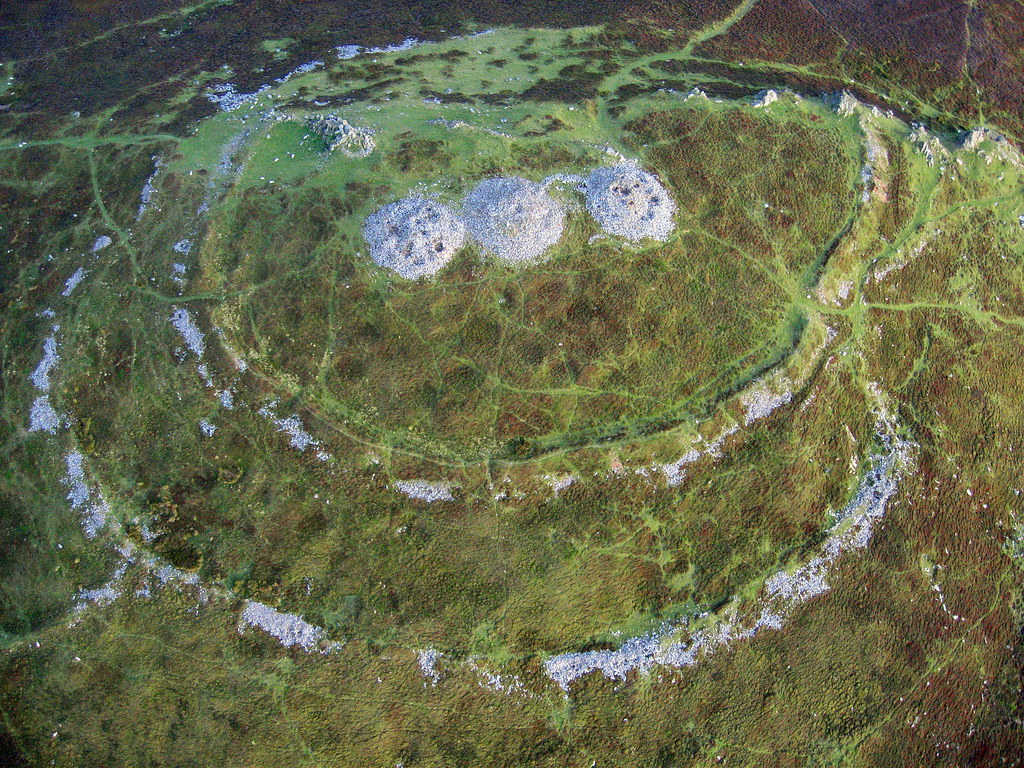
That fort looks like a Cornish Pastie or if one is in Blaenau, a Kurdish Pastie…
The tools of a theoretical archaeologist are a vivid imagination, a grant, a ball of string and a bag of salt…
Brettica ?
If that article isn’t largely generated by a Large Language Model (so-called AI), I’ll eat my hat.
“unifying for one possible brightness”, “We toast to this legacy ….”
You better get a knife and fork then.
As someone who has used LLMs a lot, I can tell that this isn’t largely generated by AI. GenAI rarely uses metaphorical phrases like the one mentioned.
Hey, I know the guy who wrote this article personally. In fact, he’s about to get out of prison in less than a year and I can assure you that the prison wouldn’t allow any AI to help write anything. So don’t just dismiss the contents of this eloquent writing just because you can’t write like him and to be able to tell his and his people’s truth with passion dedication to the craft!
Latest genetic studies in England, published in Nature magazine in 2022, show that samples taken from burials from the year 200 AD up to 1300, 76% of DNA was from populations that came here from northern Europe into what is now England, and show large scale migration and the displacement of the local population, their language and culture. This DNA differs greatly from that found in Cymru.
Sssh! They don’t want you to know that. They re-write history to justify their usurpery! Can’t face the fact that they are descendants of ‘immigrants’ and ‘boat people’.
That’s by no means uniform though. The highest percentage is in the east of England. By the time we get to Llanymynech I imagine there’s basically no difference between the English and Welsh DNA in the village, but probably more difference between the Welsh DNA there than that in Caernarfon or Amlwch.
No, they said that their DNA was up to 76% CNE, not 76% CNE. They also give their estimates for modern English DNA, with a split mix of DNA from “Germanic ethno-genetic” peoples and “Celtic ethno-genetic” peoples. Not to mention that a huge majority of English people don’t even live in North England nor the Middle Ages? Go back and read the publication properly and thoroughly. ‘We estimate that the ancestry of the present-day English ranges between 25% and 47% England EMA CNE-like, 11% and 57% England LIA-like and 14% and 43% France IA-like. There are substantial genetic differences between… Read more »
There are limits to what these DNA studies can ever tell us about the Germanic arrival, because it can never be proved that the intermixing resulted from voluntary integration rather than acts of aggression or war. What we do know is that the civilisation left behind by the Romans was abolished by the Germanic arrivals and five centuries of the Dark Ages followed. That makes voluntary integration seem less likely.
A little bit odd. Went to the website out of interest. Partially functioning, a bit light on usage, and using the WordPress url and basic theme – a little bit amateurish, like using hotmail or gmail as a business address. Looks like a passion project. Can’t see it getting much traction. Many of the Welsh cannot abide their own culture, heritage and language, so I can’t see them swallowing this one. The English are proud monoglots and like to anglowash the pre-Saxon history of the British Isles. No change there either.
If I read the article right, this has been done from the inside of a prison in Arizona, so I suppose they are working with the limitations on internet access etc. from there.
Apparently the author has been serving a lengthy prison sentence for attempted murder!
Not all the English. I worked with an Englishman who’d moved to Swansea after meeting a lady from there. He was very pro-British but an enthusiastic supporter of the Welsh language, learning it himself and supporting Welsh education for his daughter. He regarded it as a native language, indeed THE native language, to Britain his country and therefore part of his national identity.
Yes, I know a handful of English who’ve done the same. But, they are in a teeny weeny minority, so I stand by my statement.
Hiya, as much as I agree that this is a… poor article, I belive that we need to group together to fight people like this and spreading hate about the rest of the UK (as awful as we (English people) can be) will weaken us. The more divided we are the less we can fight against the real issue. Coming from an English person in Hereford who goes wasailing every year 🙂 (the whole ignoring pre-Saxon history is more prominent in the South and its becoming more commonly challenged)
Fascinating srticle!!!!!!!!!
Celebrating our linguistic heritage is wonderful. And yet there is a lot of ideological language in this article pushing a clear political agenda that is not needed to win folks over to celebrating language.
Oh dear, more us and them via a very dodgy hypothesis. Worthy of Monty Python.
I always thought Pictish was the true native language of this island.
I see a lot of typical Welsh bigotry (and false retelling of history) towards the English in the article and especially the comments section.
That ‘the world doesn’t exist beyond my valley’ mentality.
To be expected.
Sadly.
A strange article that seems to ignore that modern Brittonic is alive and well, and should be taught and celebrated as the true British language in every school on this island.
Confused by the talk of reviving a separate “British” language. Cymraeg was historically called “British” as well as “Welsh”– it already exists. It is the same language. I’m from the North of England (Hen Ogledd) and you see place names everywhere that are clearly from Cymraeg: Pen-y-Ghent, Penrith, etc. When I first went on holiday to Wales as a child– to Penrhyndeudraeth– it was strange seeing names that felt so familiar but not being able to say them. Children across England should be given the option of learning Cymraeg in schools. People learn French– a language spoken only overseas– but… Read more »
I think that this is beautiful, though I am not of British descent myself. I look forward to learning more about Brittonic.
Why not just learn a Welsh a living language related to Brythonic.
A lot of genuine academic research has already been done on Brittonic/Brythonic. One of the great published works is the book ‘Language and History in Early Britain’ by the late Professor Kenneth Jackson. This was published in the early 1950s, so I guess more accurate research has been done since then. I did a course called ‘Hanes yr Iaith Gymraeg’/The History of the Welsh Language on my Welsh and Linguistics degree in Bangor University. This was 35 years ago, and I’m now a bit rusty, but some of the main changes as Brythonic evolved into Welsh were 1) lenition of… Read more »