


Review: Wisdom for the ages amid Carwyn Graves’ ‘Cynefin’
Stephen Price
I only recently discovered that the oft-used ‘those who can’t, teach’ line many people like to throw at those who roll their sleeves up and impart wisdom, knowledge, care and kindness to our nation’s children day in day out, is part of a much longer quote from Marsha Hinds which backfires spectacularly in full: “On Critique – Those who can, do. Those who can’t, teach. Those who can’t do or teach, criticise.”
Which is why I shall firstly take the cowardly position of saying I’m no critic, nor reviewer.
In my time with Nation Cymru, I’ve cherry-picked only those works I know I’ll love, and when pushed into a corner (i.e. been asked very nicely) to review things that aren’t quite to my taste, I’ve given a leg up anyway.
Why wouldn’t I – I want my countrymen to thrive, and I don’t want negativity thrown at the art world on my CV thank you very much. Different strokes for different folks – and aren’t we all the richer for it.
In my completely unbiased review of Cynefin, then, you can quite correctly infer that the book had been in my wishlist for quite some time.
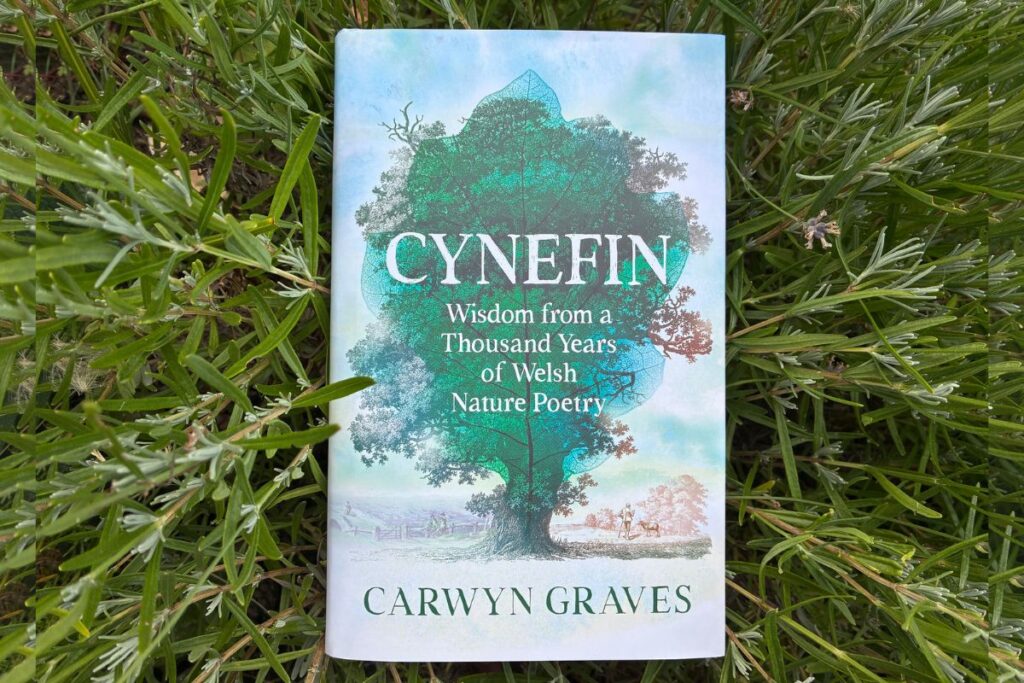
So before even picking up my now-well-worn copy, I’ll let you know what drew me in: Carwyn Graves’ assured writing for one, a gorgeous cover, a beautiful title formed by a singular, spectacular Welsh word, and a deep, deep love of Welsh poetry.
I was ‘gifted’ my love of Welsh poetry by Margaret Thomas, Brynmawr Comprehensive’s Welsh teacher extraordinaire – inappropriate, black humoured and steeped in a love of language and poetry. Pitifully, they don’t make them like that any more – boy could she teach.
For those of us that took Welsh to GCSE and A Level, our lessons were a glorious mix of gossip (staff and pupil), Welsh learning and then an abstract learning of Welsh (and indeed Wales) through poetry.
Y Llwynog, Clychau’r Gog and countless others – opening up, at first, from simple nature poems to entire worlds and ruminations on chapel, religion, land, love, loss and so much more.
One of my most treasured books (replete with many photocopies of poems from my school days), and one that is in great need of a reprint, is Joseph Clancy’s Twentieth Century Welsh Poetry. A must for any lover of Welsh poetry who hasn’t (yet) got the Welsh language skills.
On to my loaded take on this book, however and its weighty expectations.
Markers
To encapsulate my pages of indecipherable notes (I will try in a moment), Gwyneth Lewis writes on the back cover: “Carwyn Graves has mustered a surprising ally in the fight against nature degradation. His account of Welsh nature poetry shows what poets have always known: that we are part of nature, not aside from it. His emphasis on the social nature of Welsh poetry is joyful, a much-needed corrective in the age of extractive individualism”.
And there’s more high praise from some of Wales’ most esteemed authors within – Gillian Clarke, Jon Gower, Andy Bevan and Julie Brominicks. Words I’d willingly take.
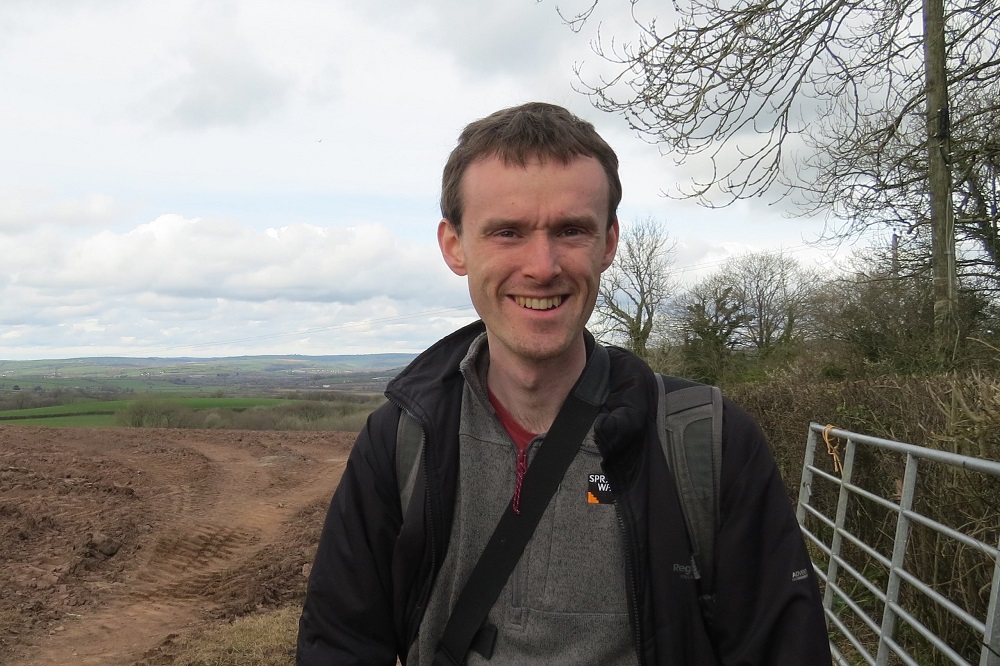
Dissecting just a handful of poems throughout Cynefin – leaving infinite more for us to discover and own and take to our hearts – Graves introduces the reader to Cynghanedd – perhaps a first taste for many English-only speakers, sneaking in some lessons or overviews of a sort to convey the oneness Wales’ poets and people once had with the world around us, and the ways in which we interact and interplay with it.
He talks about encounters with nature, and how they still have the power to still, silence and awe us, try as we might to live in a digital age of screens, artifice and disconnect. He asks us to continue this relationship, and highlights the joy of Welsh poetry in conveying this timeless, ageless experience.
Using poems hundreds of years old as ‘markers’ – such as those of Taliesin, and of today such as one about a farmer’s suicide, a sign of the times – he contrasts Welsh poetry with the work of Keats, Dante and others to illustrate an often-hard-to-define Welshness – our similarity to, and difference with others – all thanks to our land and the ‘deep power’ of our language.
For one, Wales’ poets reflect all sections of society in ways many other countries’ eternal poets haven’t until recently. Farmers, clerics, teachers – all given voice, and standing, through their gift with language and their take on the heavy stuff disguised as mere nature poetry.
As we face wildfires and water shortages in all corners of our nation, and our continent, with bird and plant and insect life in freefall, Graves opens his mind, and the mind of the reader, to use the ‘unspoken backdrop’ of Wales’ poetry as a way back in.
Cynefin calls for Wales’ places to meaningfully be themselves again, and for us to share in the joy of so many of our poets’ deep value in being connected to place – a place, at odds with modern life, of boundaries, of limits, where communities working the land together might provide an antidote to many of our ills – a recipe charged with humility that served Wales’ coal mining, quarry working and farming communities quite well in more than a few matters until the happy modern age told us to sit in front of screens and move away from all we knew for a better pay packet.
Thousands of years of connection, surviving against the odds, like Wales itself.
In Wales’ nature poetry is a cyclical way of viewing the world, unlike the borrowed arrow darting through time we’ve all been led to believe, and in this cycle is an opportunity for change, rebirth and reawakening.
In Welsh poetry, he writes, we see: “A profound reflection also on our mortality, on our dependence on the cycles of the natural world on this planet for our daily bread,” and can only conclude, as he does, that ‘we are nature’
‘Dependence and delight’
Among his conclusions, he writes: “We need boundaries. We need limits. We need them as individuals, and we desperately need them as a civilisation. The great fallacy of the last few centuries, if it can be summed up in a single sentence, lies in our jettisoning of limits in pursuit of the illusion that freedom means limitlessness.”
As he does within the book, I’ll let you read that one out loud again.
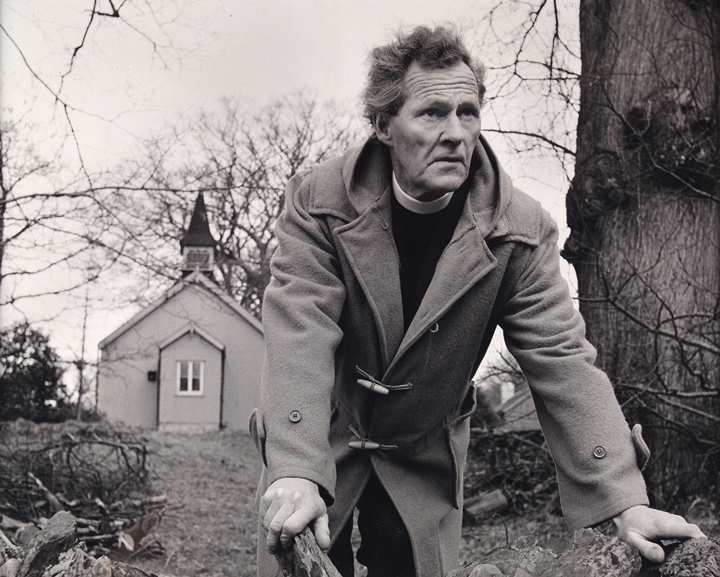
He ends with a focus on Lore by R S Thomas, which ends, beautifully with the lines:
What to do? Stay green.
Never mind the machine,
Whose fuel is human souls.
Live large, man, and dream small.
And to address my wide digression at the start:
If only everyone had been as lucky as I, and others who had a teacher such as Mrs Thomas, and dedicated time poring over Welsh poetry – and with it the key to the door of a whole world of Wales that so many of us are locked out of.
This book, perhaps, is a doorway for those who weren’t offered such a gift – one I fear most in the monoglot English speaking world will have been denied. The appendix alone is a treasure trove of pathways to turn and wind next and I intend to return to it often.
Poetry and song is, or has been, embedded in Welsh culture since its incarnation, and without it we are lesser. With it, perhaps, we are understood, we are whole. Our knotted minds unravelled on paper, for others or only ourselves to see. A primal urge we often deny – to create, to share, to be abstract.
So, to put a critics’ hat on for a moment, I imagine the book will find its home among those, like me, who chose or were gifted the wonder of Cymraeg or those who simply have a deep love of nature and poetry.
Graves’ call for stillness, unity, atonement and a return to the land – the land that shaped us and shaped our language, is a call we must all heed.
Is it a book for the everyman? Perhaps not. But its distilled message of ‘deep relationships of dependence, delight and knowledge of the living world’ around us, is perhaps the answer we’ve all been waiting for:
Collective experiences,
Connection,
Community,
Cynefin.
Live large, man, and dream small.
Read an extract of Cynefin here. Purchase from University of Wales Press, Waterstones and all good book shops (the bad ones too should such a thing exist)
Support our Nation today
For the price of a cup of coffee a month you can help us create an independent, not-for-profit, national news service for the people of Wales, by the people of Wales.
Get more trusted Welsh news
Choose Nation.Cymru as a preferred source in Google News to see more of our journalism.



Mae ‘Cynefin’ yn llyfr bendigedig – yn wir i chi! ~ ‘Cynefin’ is truly a wonderful book!