


Revisiting a forbidden life
Norena Shopland
When I wrote Forbidden Lives: LGBT stories from Wales (Seren Books, 2017), about people with diverse sexualities and gender identities, most were little known then – and still are today.
However, with some stories I felt there was more to tell, and over the years I have revisited several, adding new information and understanding of people’s lives and loves.
But one of the stories that nudged at me constantly during those years was that of Katherine Philips, a seventeenth century poet… many aspects of her story did not quite fit the accepted narrative.
Much of what had been written about her, research I relied on for Forbidden Lives, had been replicated in academia with little further development. But there were anomalies, the story of her husband James being some thirty years older than her is repeated ad nauseam and has rarely been challenged. Possibly because it provided a convenient prop to explain away her writing poetry to women.
The standard argument being that she was so lonely, ignored by a man who had little time for his sixteen-year-old bride, that she poured out her feelings to female friends.
This argument is destroyed when it is revealed that James was just seven years older than her and the couple had a companionate marriage that seemingly worked very well.
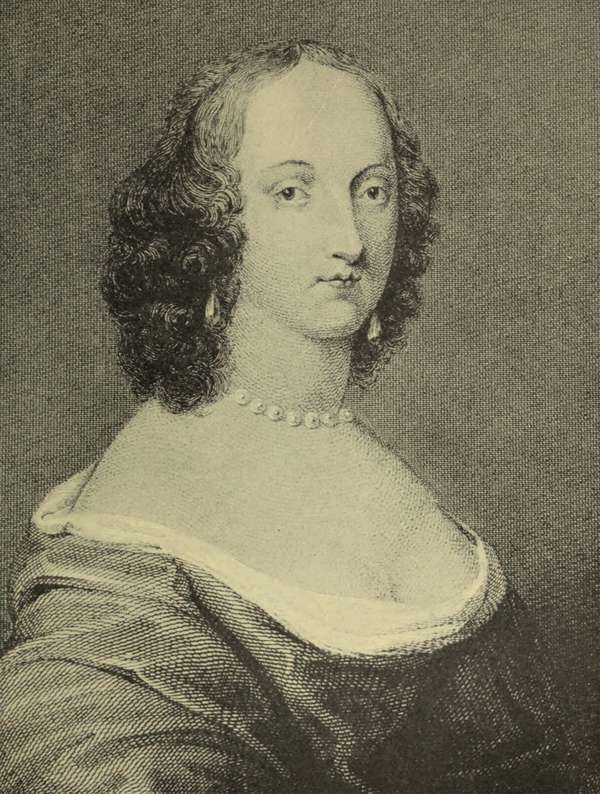
Indeed, when Charles II was restored to the throne in 1660 James, who had been a Parliamentarian and involved in executing a Royalist, was in deep trouble. Should Katherine leave him to his fate, making herself a single and wealthy woman, or should she save him?
An image of Katherine as the lonely woman isolated in a rural Welsh backwater she hated, was also perpetrated for decades after academics became interested in Katherine in the late twentieth century.
However, that too is false, with the truth much more prosaic, Katherine loved her place in Wales and had many friends whom she visited often. But why let a normal life get in the way of sensationalism.
My new biography on Katherine examines these repeated ‘facts’ about Katherine to repair her life story and place her firmly not just in her vaulted position of a remarkable woman, but to embed her comfortably in her Welsh surroundings.
She was indeed a remarkable lady — the first woman to have a play commercially produced, a seventeenth-century poet of distinction, one of the first notable female poets in the world, one of the first women to detail the art of translating, the list goes on.
A lesbian
However, studies of Katherine have concentrated mainly on two aspects, her value as a poet, which is favourably viewed earning her the moniker ‘The Welsh Sappho,’ and whether she is, or is not, someone we could today regard as a lesbian, a different ‘Welsh Sappho’ if you like.
Her poems to the two Welsh women who dominated her affections, Mary Aubrey and Anne Owen (whom she gave pastoral names of Rosania and Lucasia respectively) have been dissected for decades – with one side arguing they are nothing more than friendship poems, the other that they are love poems.
Indeed, everyone is so distracted with the poems, and her letters to a male friend, that few people have really examined Katherine’s life.
When I did so, it became clear that her interests were more than friendship. Why for example did she give pastoral names to many of her women friends taken from characters in plays where women cross-dress as men and are romantically involved with women?
Well-read
Katherine was incredible well-read and had thousands of female characters from classical literature to use, so why this concentration on gender-blending women involved with women?
Something else missing from other accounts of her life is the sex scandal. With her passionate love poems being widely circulated, someone at some point was going to point and yell, “Sapphist!” And a sex scandal placed Katherine in great danger of being ruined. Forget Gentleman Jack folks, Katherine’s life is film-worthy.
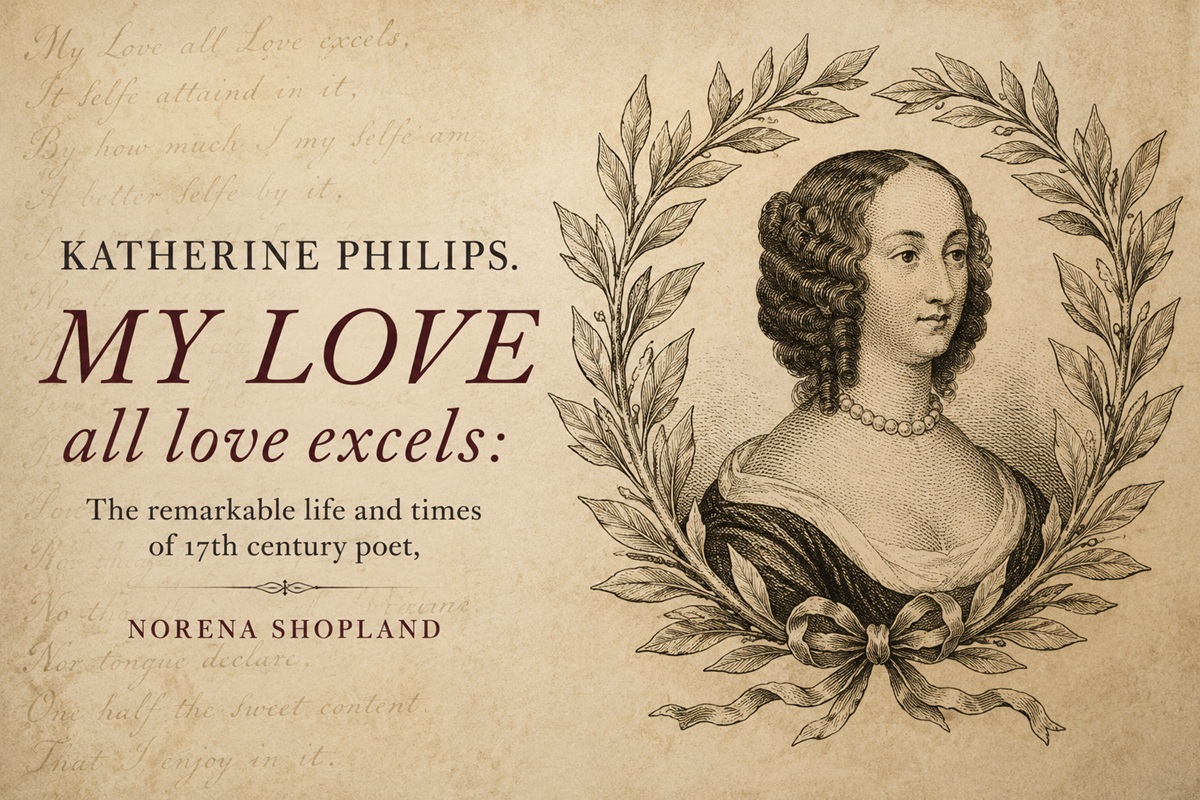
My Love all Love Excels (Parthian Books) is out on 4 June and a series of performance events have been planned.
Some of Katherine’s poems were set to music and one of the songs – Mutual Affection is being brought back to life. For the first time in 361 years, people in the UK can hear a love song from one woman to another.
The events include poetry readings, music and talks at Llyfrgell Genedlaethol Cymru|The National Library of Wales on 5 June and Picton Castle on 12 June in association with Aberration Cymru; Swansea University on 24 June and Moondance Studio, YMa, Pontypridd 4 July in association with RCT Pride.
Support our Nation today
For the price of a cup of coffee a month you can help us create an independent, not-for-profit, national news service for the people of Wales, by the people of Wales.
Get more trusted Welsh news
Choose Nation.Cymru as a preferred source in Google News to see more of our journalism.



