


Senedd election 2026 promises – how much and when?
Professor Stuart Cole, CBE, Emeritus Professor of Transport Economics and Policy, Prifysgol de Cymru / University of South Wales
With just eleven days until the Senedd election, the promises being made on transport are coming into sharp focus — but how many of them stand up to scrutiny?
Following my earlier analysis, this column examines the transport pledges of seven political parties, assessing how well they match Wales’ economic needs — and, crucially, whether they are deliverable in terms of cost, practicality and timescale.
Road congestion and road capacity
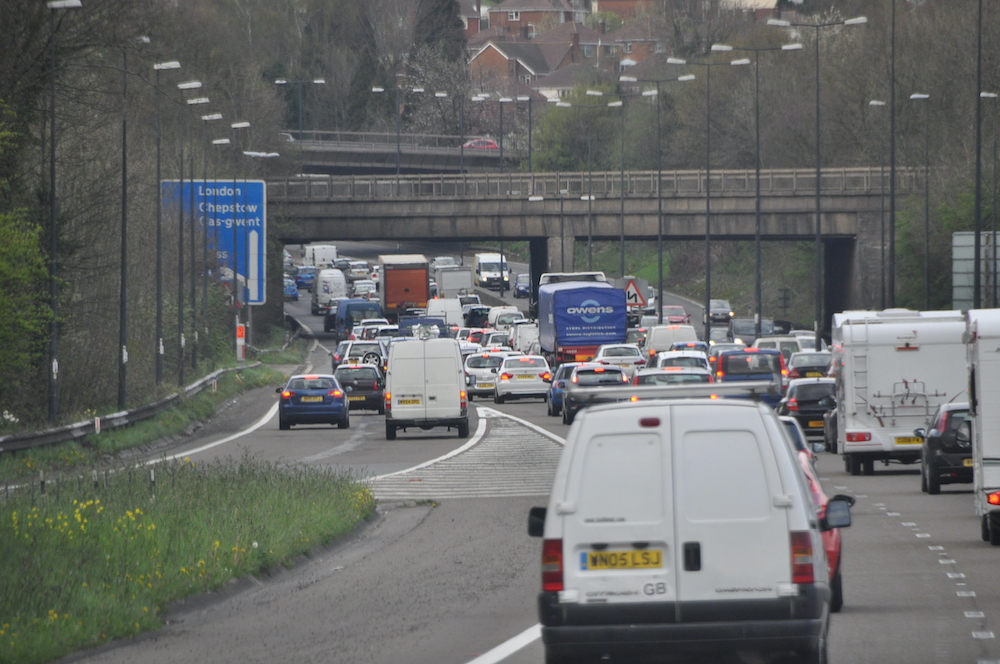
Roads remain the biggest-use transport mode so continued investment is essential for a robust Welsh economy. However, increased road capacity eases congestion in the short run but attracts more vehicles within a few years, negating the early effect.
Road congestion affects the economy and therefore wealth levels in Wales. There is insufficient capacity to meet the demands of the private car, freight movements and an efficient public transport system as a result of underinvestment.
Welsh Labour plans interventions at pinch (congestion) points, the Green Party puts improving existing roads rather than building new ones.
Gwlad and Plaid Cymru propose a new investment evaluation framework comparing relative costs and socio-economic benefits of proposed schemes.
Gwlad and Welsh Conservatives both see a need to improve the A470 / A483 (Gwlad’s ‘Powys Spine Road’) to reduce journey times.
In more congested urban areas public transport investment attracting more commuters can reduce the road space required. Left-of-centre parties Green, Gwlad, Liberal Democrats and Plaid Cymru give more emphasis to this solution while Welsh Conservatives and Reform would increase road space.
Indeed, Welsh Conservatives will designate the M4, A55 and the A40 as ‘Union Highways benefitting the UK as a whole’. One would have thought they should first benefit Wales.
In rural areas transport infrastructure must provide for Cymru’s two biggest industries – farming and tourism, where the traffic congestion peak period is May to September, particularly at weekends.
M4 ‘relief road’ at Newport
Plaid Cymru has pointed to the ‘blue route’ as the lower-cost Brynglas Tunnel by-pass using the A48 / A4810 submitted to the 2013 inquiry by this columnist as professor of transport. It is currently hindered by heavy flows on the Newport City Bridge.
Gwlad’s peak road pricing should heed the downside on inward investment from Severn Bridge tolls. Reform and Welsh Conservatives seem shackled to a higher-cost motorway (possibly the 2013 ‘black route’). It goes unmentioned by the Green and Liberal Democratic parties who presumably oppose a new motorway.
Road Maintenance (Potholes)
Removing potholes, (which this column has identified as annually costing £290m, including the backlog, over five years) is proposed by Greens, Liberal Democrats, Plaid Cymru, and Welsh Labour on a scheduled basis. Wesh Conservatives propose on-demand ‘fixing’ by under-funded national / local highway authorities. Liberal Democrat will ‘tackle the backlog’. Reform makes no mention of potholes – drivers’ greatest bugbear.
20-mph speed limit
The 20-mph road speed policy has reduced accidents but attracted considerable opposition. Reform and Welsh Conservatives would abolish the policy – at a similar cost to that of installation. Gwlad would replace it with selective sections of roadway. The other parties would retain it.
Active travel
Schemes and policies to enhance walking, cycling and bus / rail use are proposed by Liberal Democrats, Plaid Cymru and Labour. The Green Party, as expected, propose high-quality cycle lanes and storage and public transport hubs devoting at least 10% of the transport budget to active travel .
Rural Wales
The differences in transport needs between urban and rural areas is recognised by all parties except Reform.
Rail investment
There is far more support for rail investment in the left of centre manifestos (Plaid Cymru, Gwlad and Labour have detailed proposals; Liberal Democrat, Green more general) than the right-wing parties. Plaid Cymru propose specific schemes for reduced journey times and increased capacity on the north and south main railway lines (where electrification to Carmarthen and Holyhead is implied), line-speed investment on the Marches line and more stations with park and ride facilities in south east Wales.
Some of the west Wales rail re-openings (e.g. Green ‘s Carmarthen – Aberystwyth very long-term railway ) may attract voters but are unlikely to be built using fiscally reasonable Plaid Cymru investment evaluation principles.
Welsh Conservatives also intend to provide improved rail services between north Wales and north-west England including Manchester airport. Do they perhaps see north Wales railways as an extension of the ‘Union Highways’ concept (see above).
Reform unfairly criticises railway capacity planning as more carriages are currently on order. Reform sees bi-modal trains, and having different length trains, at peak and off-peak times as the solution to capacity issues. Neither make practical sense.
None of the parties promise to introduce trains from west Wales to Cardiff via the Swansea District Line and a new station at Felindre so reducing journey time by up to 22 minutes despite a relatively high benefit cost ratio. Plaid Cymru comes the nearest with non-specific rail commuting improvements in south west Wales.
Buses
All the parties promise some version of free bus fares or a cap on bus fares for certain age groups such as under 25’s or 60 and over. This is done currently through contracts between government and bus companies.
Bus franchising and a national bus / rail network is promised in Plaid Cymru, Welsh Labour, Gwlad and Green Party manifestos. This is the policy which exists in many European countries (e.g. The Netherlands) and has successfully transferred passengers from cars to bus and train.
Cardiff Airport
Welsh Conservatives would sell it off; the Green Party would transfer public subsidy to other more sustainable transport alternatives. Plaid would secure long-term sustainability and demand devolution of Air Passenger Duty (as would the Liberal Democrats). Reform would examine its viability but how would closure reflect Reform’s desire ‘for national cohesion’ enhanced by a national airport. Gwlad a nationalist party are less concerned with the airport’s future.
Funding promises – Costings, Revenue and Timespan
None of the parties have published costs but declare all policies have been fully costed. However the Institute for Fiscal Studies suggests that none of the parties manifestos stand up to financial examination when related to Welsh Government income. Labour claims a £14 bn commitment from the UK Government for Wales & Borders rail – unlikely to be achieved on past UK performance.
Wales will undoubtedly face a big financial challenge during the next Senedd. If these policies are to be achieved increased income is required from the two main sources – Barnett formula consequential payments from Westminster and Wales’ own income and land transfer taxes. Increase in the latter is bravely suggested by the Liberal Democrats.
Policy implementation timespans are way beyond the life of the next Senedd. Plaid Cymru’s first hundred days would begin negotiations with Whitehall on Barnett rail consequential payments and full devolution of all rail funding powers and money.
Overall conclusion on transport offers
Plaid Cymru and Gwlad have the most detailed, well-developed analysis of needs and provision of transport in Wales. Labour is clear on its intentions but so it should after forty years background knowledge. The Green Party concentrates on its core values. The Liberal Democrats, Reform and Welsh Conservatives are light on detailed transport plans.
One thing is clear. Any party which does not have in its manifesto, nor in previous statements, the continuance of the Senedd and a devolved government is living in a fiscal dream world.
Wales has been underfunded by successive Westminster governments of whatever hue.
The Senedd is the one way we have to achieve the funding levels needed to improve life in Wales by ‘kicking the London fence’ hard.
Support our Nation today
For the price of a cup of coffee a month you can help us create an independent, not-for-profit, national news service for the people of Wales, by the people of Wales.
Get more trusted Welsh news
Choose Nation.Cymru as a preferred source in Google News to see more of our journalism.


