


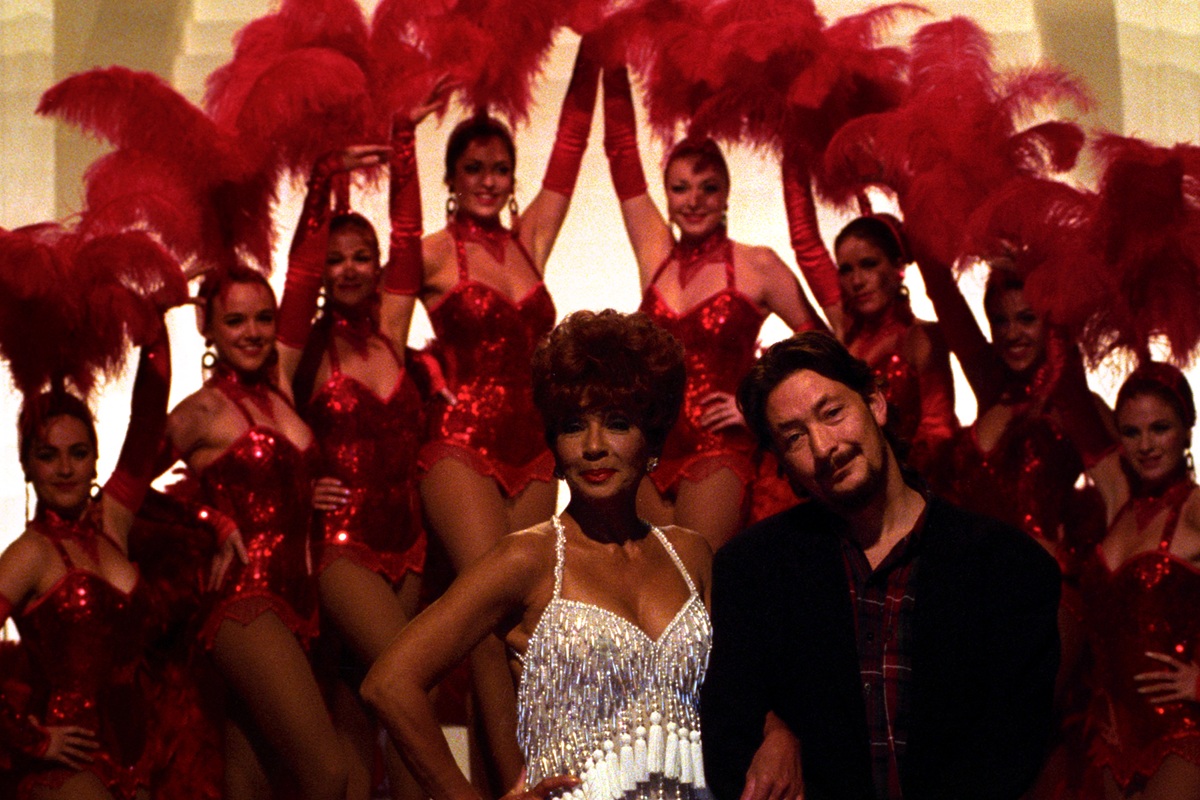
Shirley Bassey – Godmother of bling culture?
Leon Barton
A few years back, the Porthcawl-raised sociologist Dr. Dan Evans – while having one of his semi-regular rants about his adopted hometown of Cardiff – complained on social media that the Welsh capital has not produced any ‘seminal bands’.
My first instinct was to retort that this was patently untrue, and named Budgie – a major influence on metal giants such as Metallica and Iron Maiden – and Young Marble Giants, the post-punk trio so beloved by Kurt Cobain and Scottish indie darlings Belle and Sebastian, as evidence.
But then I thought of an even better one. I can’t remember exactly how I put it but it was something like, ‘also, a mixed-race girl from the Cardiff slums basically invented bling culture, roughly thirty years before hip-hop embraced it…’
Whether you love or loathe her, Shirley Bassey, as a cultural figure, was clearly way ahead of her time.
I (Who have nothing)
As Cardiffian blogger Dic Mortimer puts it, ‘the very qualities which made her seem uncool and ludicrous after her initial burst of success in the late 1950s now make her seem refreshing and relevant’ and went on to defend ‘her unapologetic enjoyment of the shiny fripperies of riches and fame’ as being ‘no surprise for a girl who had to nick another kid’s jam sandwich at Moorland Road Primary School or go hungry.’ Her attitude, ‘long condemned as shallow and vulgar’ in Mortimer’s words, ‘now appears classy and glamorous when set against the trashy conspicuous consumption of, say, Victoria Beckham’.
Perhaps, in that respect, Bassey has more in common with the aspirational culture of black America, particularly in relation to hip-hop, than the kind of culture which has come to typify British celebrity.
Journalist Simon Hattenstone wrote in a 2009 Guardian feature (based around an interview Bassey eventually walked out of) that ‘with songs such as ‘Big Spender’ and ‘Diamonds Are Forever’, she romanticised materialism… love couldn’t be relied upon, but jewels and money sure could’.
Big Spender
Bassey didn’t write her songs, but in her own words, she ‘became the songs… deep down inside, I must have wanted it… Big Spender was there lying dormant inside me, but I didn’t have the money to do it, to go on spending sprees. Big Spender was sung by Shirley MacLaine originally in Sweet Charity (it was actually Peggy Lee who first recorded it) and they did it really slowly. And it was my first husband who said, ‘You know, you should do Big Spender.’ And I said, ‘Don’t be daft, have you heard how slow they sing it?’ So he said, ‘Jazz it up.’ Hahahaha! He was so funny.’
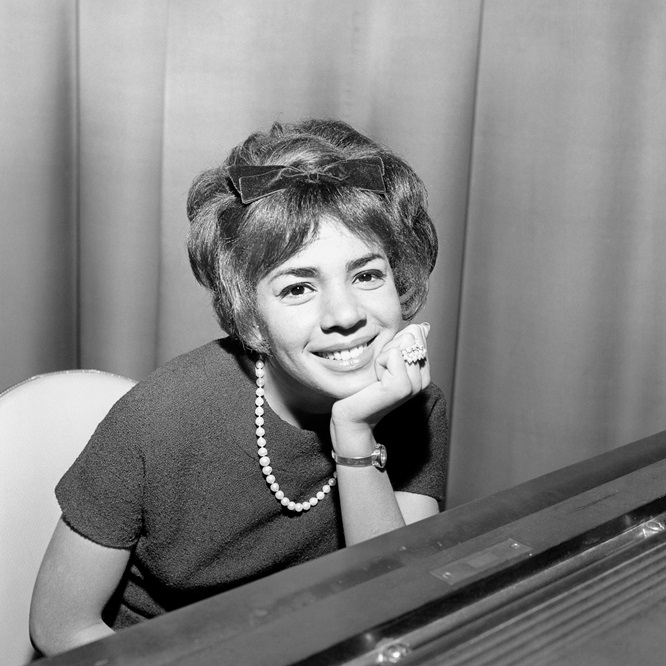
Around six years after the release of Bassey’s Big Spender in 1967, hip-hop was born in the streets and tower blocks of New York City, when the Jamaican-born DJ Kool Herc developed the technique of using a pair of turntables to isolate and repeat musical breaks.
It was music that brought black New Yorkers, particularly in the poverty-stricken South Bronx, together to dance and party; to enjoy a communal experience.
In 1982, Grandmaster Flash and the Furious Five’s ‘The Message’, in its depiction of inner-city hardship, added social commentary to heavy grooves. This was now music to make you dance and think at the same time; the birth of hip-hop as the CNN of the streets.
But, by 1992, Dr. Dre’s mega-selling solo debut ‘The Chronic’ ushered in what Roots drummer Questlove describes in his book Hip-Hop is History as ‘the money era… suddenly hip-hop wasn’t a type of folk music…it was high-end in every way, almost merciless’.
This mercilessness was taken to another level two years later by Christopher Wallace, aka the Notorious B.I.G., on his debut album ‘Ready to Die’. Helped along by singles ‘Juicy’ and ‘Big Poppa’ and their accompanying videos by Harold ‘Hype’ Williams, which featured lavish images of Wallace sipping champagne wearing gold chains, wads of cash floating through the air, swimming pools, hot tubs – the trappings of wealth, basically, ‘Ready to Die’ almost codified the birth of bling.
There were 27 years between ‘Big Spender’ and ‘Big Poppa’ but Black America was about to embrace the Bassey ethos. And then some.
The street poetry of Nas’s exceptional debut ‘Illmatic’ may have made that the most acclaimed hip-hop album of 1994, but Biggie’s success not only dwarfed Nas commercially, he also cleaned up when award season came around.
For Questlove, the prizes Wallace took home from the infamous Source magazine awards of August 1995 ‘marked the triumph of acquisition hip-hop; speedboats and mo’ money’ (although the evening is best remembered for its escalation of the West Coast/East Coast rivalry that would soon end up with two of the genre’s biggest stars – Tupac Shakur and Wallace – dead).
Nas obviously took note. Following his debut’s lack of commercial success, for follow-up ‘It Was Written’, released in 1996, he swapped street-level poetry for shiny suits and pop choruses. The message was clear – by the mid-Nineties, bling was the thing; the dominant aspirational culture for people of colour who grew up in poverty.
When Puff Daddy, as Sean Combs was known at the time, declared ‘It’s all about the Benjamins’ (as in Benjamin Franklins – $100 bills) in 1997, very few were arguing otherwise. So, had a genre once noted for its sense of community and social consciousness forgotten to look at the bigger picture? Perhaps not entirely…
In the concluding episode of 1999 Channel 4 documentary ‘The Hip Hop Years’, Rolling Stone journalist Joe Levy addressed the issue: ‘There’s a lot of focus in the songs on what you can get if you get paid. Is it crass? ..maybe.. on some level… but it also has a political dimension, y ‘know. It’s about power. Money is an expression of power. When rappers are saying they want money, they might as well be saying ‘I want power!… plain and simple. Pay me now!’
Diamonds are forever
Those who grew up in poverty and had experienced racism were by that point almost expected to flaunt their new-found wealth by wearing it on their bodies and referencing it in song. The spoils of success were to be paraded like trophies.
I can’t think of anyone who did it before Bassey. And, for a couple of decades, very few did it afterwards either.
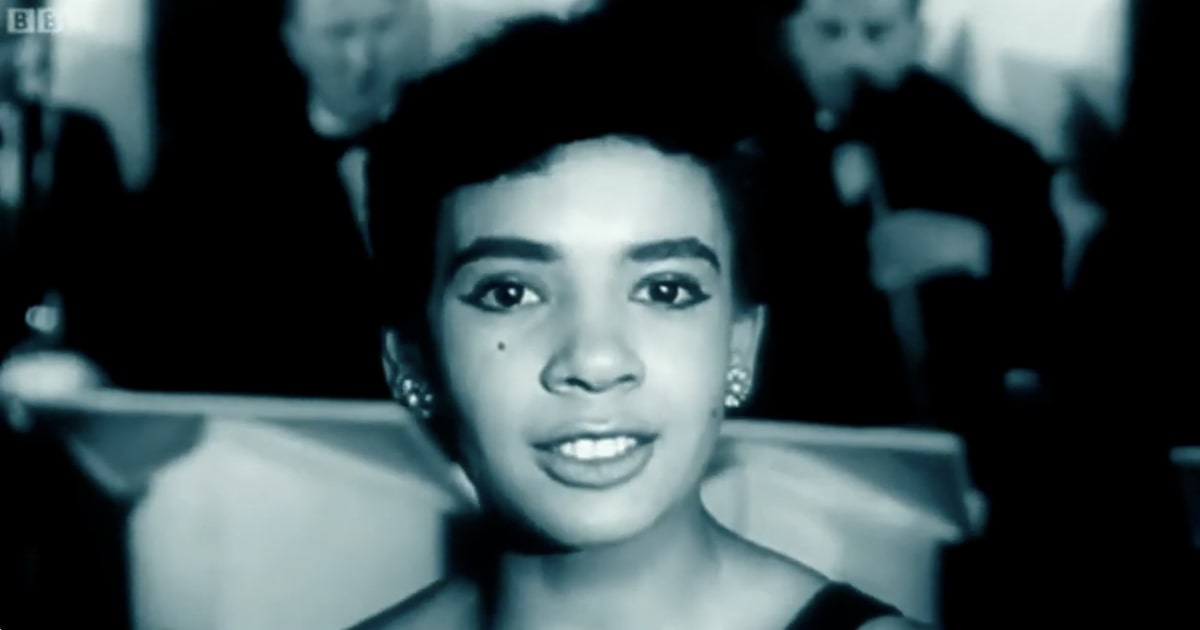
The girl from Tiger Bay (and Splott) was an anomaly, and in many ways wasn’t taken seriously as a result. But by 2022, journalist Vikki Tobak, author of ‘Ice Cold: A Hip-Hop Jewelry History’, had a scholarly take on those themes: ‘The role of adornment and how you presented yourself was so important, and I think you also see that across the Black community, where the way you dress and hold yourself has this additional layer of importance… traditionally, the lack of wealth, the lack of generational wealth, the lack of being able to have certain material opportunity, that takes on a whole different aspect when you add race to the picture.
‘Hip-hop has this beautiful messaging about transcending your circumstances, rising above. I think that ties all back into race as we kind of grappled with this imbalance of resources that is really part of a larger historic political story’.
As for how that relates more specifically to Bassey, Dic Mortimer argues that ‘her tax-exile in the lap of luxury in Monaco begins to look like a wise rejection of a British state which never did anything for its black people or Welsh people, when the alternative is shovelling money into Old Etonians’ craws’. For Mortimer, Bassey’s ‘sheer talent and determination’ have given her the license to live life ‘on her own terms’.
So that’s the positive slant. As for the negatives, both Bassey and bling have plenty…
Never Never Never
‘Her lack of black self-consciousness, epitomised by ill-advised tours of apartheid South Africa in the 1970s (it was actually the 1980s), speaks more of her upbringing by a white mother in the multiracial Cardiff docks than anything else,’
Mortimer argues, but the family actually moved to Splott when she was a baby, a part of Cardiff described by Bassey herself as ‘an all-white area’.
In 1972 she told After Dark magazine, ‘I’ve been asked many times to go to South Africa, but I won’t’ but by 1981 Bassey had changed her mind. She returned in 1984, causing much consternation. What caused the change of stance? Presumably, it was all about the rands…
Bassey’s money over morals outlook also became a fixture of mainstream 90s hip-hop. For a while at least, very few were asking the difficult questions about where the precious materials so conspicuously worn and rapped about had come from.
Kanye West’s 2005 hit ‘Diamonds from Sierra Leone’, which of course sampled Bassey’s ‘Diamonds Are Forever’, brought it into sharper focus. ‘Little is known of Sierra Leone and how it connects to the diamonds we own’ is West’s quote at the beginning of the video, and the horror-film images that follow are a world away from what Hype Williams was doing for The Notorious B.I.G. a decade earlier.
West was raised by a single mother too but he and Bassey don’t have a lot else in common. The contrast in backgrounds between sampler and samplee is a stark one; West’s mother Donda was an English professor in Chicago, Atlanta and, for a time, Nanjing, China, where her son learned Mandarin.
Bassey’s mother, Eliza Jane Start, was from New Marske in Yorkshire, and is believed to have moved to multi-racial Tiger Bay to escape the prejudice she experienced in the north of England. Start already had two mixed-race children by the time she moved to Cardiff in the 1920s, and went on to have another five before husband Henry Bassey exited her life (this is a whole other story, one which I don’t want to get into here, as it’s not what this article is about, but John L Williams’ 2010 biography ‘Miss Shirley Bassey’ has the details).
Mortimer’s assertion is that Bassey’s white mother explains her lack of black consciousness, but perhaps Start’s Englishness is also one of the main reasons for her daughter’s lack of Cymru-consciousness?
Despite efforts by some to present Bassey as a Welsh heroine, it’s pretty clear she doesn’t frame herself that way and her interview with Hattenstone is telling in that regard.
‘When she returns to Britain’ he wrote, ‘she’s shocked by the change’. “It’s sad that they just let it go to rack and ruin, Labour.” How? “Well, it’s violent, isn’t it? That’s all we read in the papers and see on television.” Why does she think this has happened? “We’re letting in too many people. We’re an island, for God’s sake. And the Britishness seems to have gawwwnnne.” She enunciates the word “gone” so poshly that it takes a while to work out what she’s saying. “The English are emigrating all over… there won’t be any English left.”
Bassey appears much more comfortable talking like a Reform politician than talking about issues of race…
‘It must have been tough for her mother – a white woman, a single mum, raising seven mixed-race children,’ Hattenstone suggested. “Yes… it must have been very hard for her.” Did she talk about it? “No.” Did Shirley or her siblings ever discuss their blackness? “No. You didn’t in those days.”
But, as she stated in 1972, “being coloured was never my problem, never has been. Our problem was more basic. A four-letter word: food.” Although, in the interview with Hattenstone one incident does come up; “I was the only coloured kid in the school and I swear the teacher I had was prejudiced. She set about me one day with a ruler, up and down my legs and my arms, so I just went pow! ‘cos the pain was awful. Just to stop the pain.”
It certainly wouldn’t be the last time Bassey hit someone who displeased her, although it might well be the most justified of her violent outbursts.
Goldfinger
Bassey had her first UK hit as a twenty-year-old in 1957 with her version of the ‘Banana Boat Song’ but 1964’s Goldfinger was the track that broke her in America. Ostensibly a James Bond theme, the song, as sung by Bassey, seems to have become unhitched from its origins. Certainly, if I hear the word ‘Goldfinger’ I’m much more likely to think of Bassey than of Bond. Something in the song’s lyrics seemed to attach itself to Bassey’s persona, forming an almost inextricable link. It’s hard to imagine anyone else singing it.
‘Big Spender’, released in September 1967 and arguably her signature song, only reached number 21 in the UK charts, which must have been disappointing considering she already had nine top-ten hits under her belt by that point. Her next single, a cover of the George Harrison Beatles song ‘Something’, was actually far more successful, reaching number 4.
Amazingly, another Bond theme ‘Diamonds Are Forever’ only scraped into the top 40, reaching number 38 in January 1972. But it’s one that’s provided the most obvious link to hip-hop, having been sampled multiple times, although Bassey’s voice is absent from most of them (as it is, incidentally, from my favourite use of a Bassey song in hip-hop; Public Enemy’s ‘Harder Than You Think’, which lifts the horns, drums and guitar from 1972’s ‘Jezahel’).
Despite the disappointing UK chart showings, her songs about jewels, precious metals and spending sprees seem to be the ones that have stuck to her most in the public imagination. For better or for worse, in her unabashed celebration of bling, there’s no doubt Bassey was at the vanguard of a culture that was to become one of modern music’s most dominant strands by the end of the last millennium.
She supposedly only answers to ‘Dame’, or ‘DSB’, but the ‘Godmother of bling culture’ feels to me a much more fitting epithet.
Support our Nation today
For the price of a cup of coffee a month you can help us create an independent, not-for-profit, national news service for the people of Wales, by the people of Wales.
Get more trusted Welsh news
Choose Nation.Cymru as a preferred source in Google News to see more of our journalism.



That is ‘out Shirl’all over,not ours not anybodies.