
Sinéad O’Connor: A Great Irish Life on St Patrick’s Day
Desmond Clifford
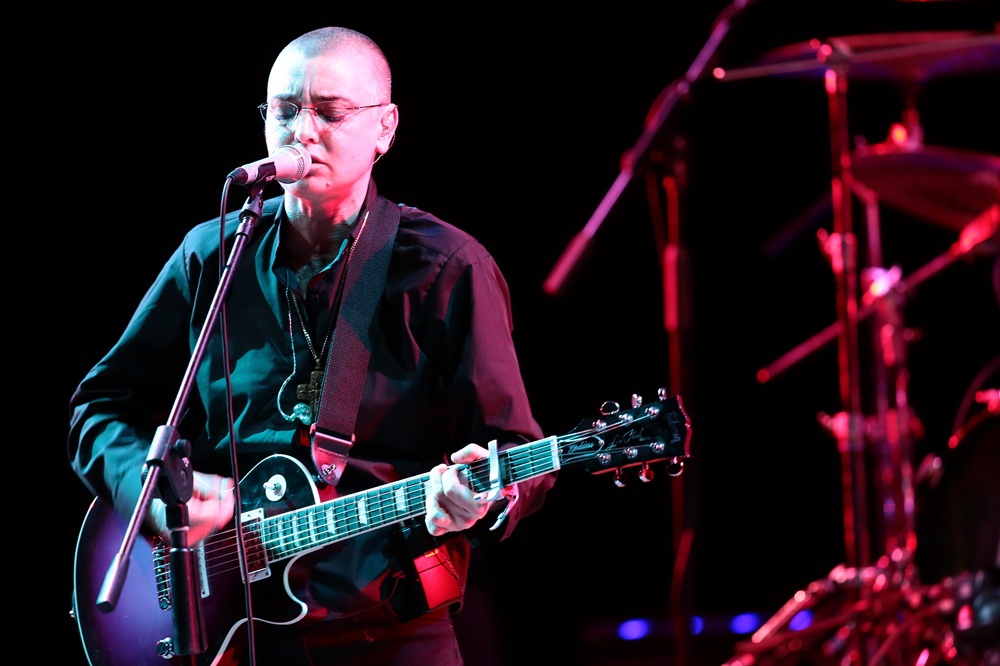
When Sinéad O’Connor died in 2023, I was sadder than I have ever been for a death of someone unknown to me. I never even saw her in concert, yet her passing affected me.
It was rude and untimely. She was 56 and had life left to offer – but no, the living was done.
It’s unsurprising Ireland produces so many musicians since you’re rarely very far from live music. Pop music, though, was a little slow to get going.
When the Beatles and Elvis changed everything, it took a while for conservative Ireland to cop on.
Sinéad’s memoir reveals that she didn’t much like traditional Irish music, although that didn’t stop her recording it. Neither do I really, but I’ve always felt coy about saying so.
It seems like bad manners, but Sinéad’s cultural insight is that authenticity trumps manners any day.
For decades Ireland was dominated by “showbands”, be-suited, bland male groups who performed ballads, country & western standards and, latterly, anodyne pop covers.
The showbands brought life and craic-of-sorts to Ireland’s weekends but stifled invention with predictability and sameness.
Ireland’s Establishment was happy: so long as people sang about ancient rebellion, it stifled the real thing.
Sinéad flowered at the time when something like an Irish music scene had emerged – a generation earlier she’d have sunk without trace.
Her voice was an unstoppable force and, like the Sirens for which Odysseus had himself tied the mast, just couldn’t be ignored. She was spotted young. It took her out of Ireland – which she wanted, desperately – and almost overnight she shot to the front rank of international music performers.
Her striking androgenous beauty was as rare as her voice. The world lay at her feet. The trouble was, she wanted music, but not stardom.
The industry offered both together but not one without the other.
In the early 90s Sinéad was everywhere. People of my age connect her with “Nothing Compares to 2 U”, the definitive version of Prince’s song. A simple video accompanied the song. The haunting vocal made her patron of break-ups. Hearts were broken by a tear, apparently real, rolling down her cheek.
It was like keening set to music.
Sinéad had quite a lot to cry about. Her childhood was often abysmal. Her mother was afflicted by severe mental illness which drove emotional cruelties towards her children.
She was hospitalised and the courts awarded Sinéad’s father custody. She got on better with her father, loved her stepmother and had mixed relations with her brothers and sisters.
Sinéad inherited her mother’s turbulence and mental illness swallowed long periods of her life. It never left her, it’s a story without a happy ending.
Sinéad was part of a generation of great change in Ireland. Her life and music were part of that change.
She was quintessence of Ireland. Her music was soaked in the history of colonial injustice followed by the home-made cruelties of independent Ireland.
When Sinéad sings about famine, child-abuse and injustice, you hear the pain. At moments, it can be too much to take.
Her voice was unique. The clarity of her notes could fill a stadium while at other times she whispers like a prayer.
Today, that kind of breathy singing is hugely in vogue, but I don’t remember anyone doing it before Sinéad. She was an original and influential on her successors.
Her range was enormous and so distinct from the deadening sub-Maria-Carey X-factor clones that dominated the pop space for a couple of decades.
Sinéad “destroyed” her conventional pop career when she ripped up a picture of Pope John Paul live on prime-time American television in 1992. This was too much, even for liberal Saturday Night Live.
Child abuse
Sinéad protested against child-abuse in Ireland, but she was ahead of time, and the world wasn’t yet ready to listen. A few years later the enormity of abusive collusion between Ireland’s Church and State was exposed before the world.
Sinéad was a visionary and used her voice to address what others didn’t want to talk about.
Her pop career was over, but she didn’t care. She was liberated. She made the music, for the most part, that she wanted to make.
People still bought her records. She was simply too good to be ignored.
See her online in her prime. I never really liked the Nothing Compares 2 U video. For all its emotion, I find it cloying.
Better still is to check out the live versions from about this time. No more powerful performance, voice and emotion together, exists in popular music. It’s overwhelming.
She says in her memoir that she was truly happy when singing live. You can see it, hear it, even as the tear forms in your eye.
Her personal life was chaotic. She had four children by four fathers. She married four times, only once to a father of one of her children.
She’s not at all defensive about this and said her father reckons he’d have had a better life if he’d done something similar.
Where possible she maintained good relations with the fathers of her children. Her domestic life was problematic at times, but Sinéad speaks in the tenderest terms about her children.
In her memoir she says: “Best day of my life was the day I first left Ireland, and any other day I left Ireland was the next best.”
Not the ideal declaration, maybe, to celebrate an Irish icon on St Patrick’s Day.
Very likely she meant it and it would dishonour her memory to parse falsely and re-attribute the meaning of her words. And yet.
She never broke her connection with Ireland and lived there on and off. In Sinéad’s Ireland there was much to detest, and she called it out when others were afraid to.
The anti-clerical and anti-establishment views for which she became notorious in the 1990s are commonplace and mainstream today.
If Sinéad had doubts about Ireland, she joined a distinguished tradition: Jonathon Swift, James Joyce, Samuel Beckett, Edna O’Brien, Sean O’Casey, Brendan Behan (“Ireland…a great place to get a postcard from.”).
Ireland is often portrayed in nationalist literature and art as a suffering woman, Cathleen Ni Houlihan, but mostly the portraying voices were male.
Suffering
Sinead sang of suffering – women’s, Ireland’s and the universal kind – and personified suffering in her own life. No one sang of Ireland with greater passion
Her song “Famine” (Universal Mother, 1994) was Ireland’s first rap record, complete with Eleanor Rigby samples. It describes Ireland’s colonial history with simple clarity and then lacerates independent Ireland for the abuses it afflicted on its women and children.
There were plenty in Ireland who didn’t want to hear from Sinéad.
It’s a tough pick, but “Universal Mother” is my favourite album. It has everything; beautiful ballads, rap, scorn, in-yer-face, history, religion, existentialism. Honestly, you could run a degree course on this album alone.
I also love “I’m Not Bossy, I’m the Boss” (2014), which, had we but known, turned out to be her last album. Whatever the chaos in her life, her voice was her voice.
Sinéad was deeply religious. She did it her own way but from start to finish she burned with the zeal of a medieval visionary.
Everything she did, she did with abandon. Her memoir, “Rememberings” (2021) records her life with searing intensity.
She wasn’t a great prose stylist (her brother Joseph O’Connor is an accomplished novelist) but her story is immense. Parts of her life were sheer torture. She died at 56. It was a relief – is that the right word? – for us, her fans, to discover it was natural causes.
Sinéad’s was a great Irish life. Her God-given voice drew on suffering that could have halted an army.
Independent Ireland was very ready to celebrate its history of violence and rebellion, but women were largely unheard and suffering children were silent.
Sinéad was foremost among those who gave them voice. I listen to her music regularly and am struck afresh by its pulsating life-force; I have to remind myself she is dead. It still doesn’t seem right.
Support our Nation today
For the price of a cup of coffee a month you can help us create an independent, not-for-profit, national news service for the people of Wales, by the people of Wales.


